

Egyptian statues tell the story of a remarkable civilization that thrived for over 4,000 years until the first few centuries AD. These massive sculptures served a purpose beyond mere decoration. Ancient Egyptians believed these statues could become eternal homes that housed the spirits of people they represented.
Religious and cultural practices shaped how ancient Egyptians created their statues, showing their deep connection with the concept of eternity. The massive statue of Ramesses II stands as a prime example from Egypt’s golden age, where he ruled for 67 remarkable years. You’ll find impressive pharaoh statues throughout the Grand Egyptian Museum and Abu Simbel Temple that worked both as propaganda tools and objects of worship. The Great Sphinx of Giza, which many believe represents Pharaoh Khafre, has become one of ancient Egypt’s most recognizable symbols. Many Egyptian sculptures show damaged noses – not from accidents, but from what experts believe were attempts to “deactivate” their spiritual powers.
The Purpose Behind Egyptian Statues
Ancient Egyptians built their magnificent statues for deep spiritual reasons. These weren’t just art pieces – they played a key role in religious practices. The sculptures acted as bridges between our world and the spiritual realm.
Statues as Vessels for the Soul
Ancient Egyptians thought the human soul had multiple parts. These included the ka (vital essence) and the ba (personality). Statues became homes for these soul parts after priests performed the “opening of the mouth” ritual. These sculptures worked like spiritual backup plans – if something happened to the mummy, the statue would take over.
Artists carefully crafted these sculptures to capture the perfect version of the dead person. They made them look young and strong to ensure the best possible afterlife. The statues worked as three-dimensional hieroglyphs that captured a person’s core qualities. This let their spirit live in them forever.
Role in Temples and Tombs
Egyptian temples used statues as temporary homes for gods who would show themselves during rituals and festivals. Priests held daily ceremonies where they burned incense and left food offerings. They believed this helped them talk to the gods.
Inside tombs, statues let the ka move between the burial chamber and mortuary chapel to get offerings. The statue didn’t eat these offerings physically – Egyptians believed it absorbed their energy supernaturally. Tombs also had shabtis – small figures with magical texts that would do work for the dead person in the afterlife.
Connection to the Afterlife
Statues played a crucial role in Egyptian beliefs about immortality and eternal life. They let the ba and ka come together to create the akh – the immortal, transformed self.
Egyptians placed protective god statues, especially those of Anubis (the jackal-headed god), in specific spots in tombs. These guarded the dead during their dangerous trip through the underworld. The funerary items and statues around the body had detailed sacred designs to get divine protection.
Egyptian statues went beyond simple art. They were magical tools that made eternal life possible, showing how deeply this civilization cared about living forever.
More hidden pyramids in Egypt.
Hidden Symbolism in Famous Egyptian Statues

The famous Egyptian statues hold deeper meanings that extend way beyond their physical presence. Ancient sculptors embedded complex messages through subtle symbols that only the educated elite of their time could understand.
The Seated Scribe: More Than a Bureaucrat
Archeologists found the Seated Scribe at Saqqara in 1850. This remarkable limestone figure, dated to approximately 2500-2325 BCE, shows how ancient Egyptians valued literacy. Crystal-inlaid eyes, detailed hands and a slightly overweight physique of the scribe represent intelligence, skill and high social status. Unlike royal sculptures that showed perfect bodies, this figure captures a realistic human with natural fat rolls. These features suggest someone who spent time in mental rather than physical work. The statue was placed in a tomb as a funerary sculpture to help the scribe carry his valuable skills into the afterlife.
Ramses II Statues: Power and Propaganda
Ramses II ruled for 66 years during the 19th dynasty and became skilled at using sculptures as propaganda. His massive statues at Abu Simbel sent clear messages about his divine power. Four huge 67-foot statues guard the temple entrance and show Ramses wearing the double crown of Upper and Lower Egypt. The hieroglyphic inscriptions on his Paris obelisk had special messages. Only nobles arriving by boat during festivals could see these claims about his “divine essence” and how “the gods had chosen him”. Ramses boldly placed his cartouches even on buildings he hadn’t built.
The Sphinx: Guardian or Riddle?
Pharaoh Khafre’s likeness appears on the Great Sphinx of Giza (2600-2500 BCE), which stood as a powerful guardian symbol. Ancient Egyptians named it “shesep-ankh” meaning “living image,” though Greeks later gave it its current name. The Sphinx protected the sacred Giza Necropolis as its main purpose. Its unique design combined a lion’s body for strength and courage with a human head for wisdom. These features represented the perfect qualities of divine kingship. The Sphinx faces east toward the rising sun, linking it to solar deities and endless cycles of rebirth.
Learn about Buddhist statues around the world.
The Mystery of Broken Noses and Missing Parts

Ancient Egyptian statues have a peculiar characteristic – their damaged condition stands out, and their missing noses catch everyone’s attention. Museum visitors have wondered about this strange pattern for centuries. They often ask why so many of these ancient sculptures lack noses.
Why Noses Were Targeted
The damage to noses wasn’t random or just because they stick out. Ancient Egyptians believed these statues gave supernatural beings a physical presence on earth. Bleiberg’s research shows that “the nose is the source of breath, the breath of life—the easiest way to kill the spirit inside is to suffocate it by removing the nose”. Breaking the nose stopped the statue from breathing and neutralized its power. The discoloration on intact noses of sarcophagi tells us something interesting – people placed incense there “to allow the breath of life to enter the soul of the deceased”.
Iconoclasm vs. Natural Erosion
People used to think time and weather caused this damage. A closer look shows these weren’t accidents at all. Bleiberg observed that “the consistency of the patterns where damage is found in sculpture suggests that it’s purposeful“. Flat relief carvings show targeted nose damage too – something nature couldn’t do. We learned that this destruction came from three main sources: tomb robbers who wanted protection from spiritual payback, political campaigns to remove traces of previous rulers, and religious movements that targeted “pagan” imagery.
Spiritual ‘deactivation’ of Statues
Ancient Egyptians saw these sculptures as bridges between human and supernatural worlds. They knew exactly which parts to damage to “turn off” their powers:
- Ears: Prevented statues from hearing prayers
- Arms: Left arms were damaged on offering-giving statues, right arms on offering-receiving ones
- Eyes: Blocked statue’s ability to see
- Royal symbols: Destroyed to verify legitimacy
These practices came from deep-rooted beliefs. A royal decree from the First Intermediate Period (circa 2170–2008 BCE) made serious threats: “As for anyone in this entire land who may do an injurious or evil thing to your statues… my majesty does not permit that their property nor that of their fathers remain with them”. Yet people who understood these statues’ spiritual importance kept “deactivating” them through the centuries. They did this to protect themselves, gain political power or convert others to their religion.
Try a Nile river cruise.
What the Materials and Poses Reveal
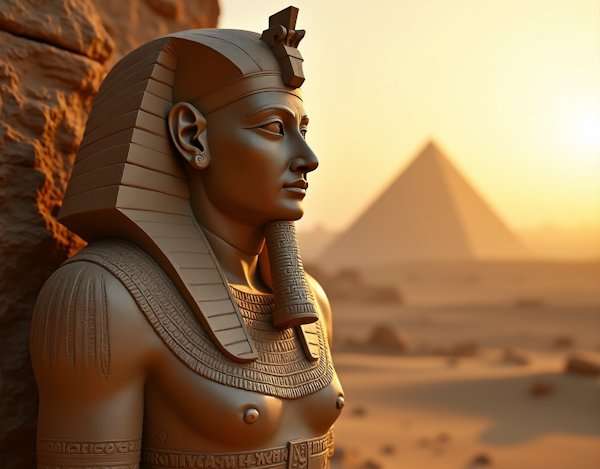
The physical characteristics of ancient Egyptian statues reveal deeper meanings and purposes beyond their artistic beauty. Each element from stone selection to body positioning followed specific conventions that sent subtle messages to viewers.
Stone Types and Their Meanings
Egyptian sculptures used materials that carried profound symbolic significance. Ancient Egyptians chose stones based on durability, appearance and spiritual properties. Royal monuments used red granite from Aswan quarries because its hardness and distinctive color represented power. Most large sculptures used softer limestone and sandstone due to their easier workability.
Ancient craftsmen created smaller, ornamental pieces from travertine (Egyptian alabaster). This stone became the most popular choice for small vessels and figurines from the Late Predynastic period through the Old Kingdom. Lapis lazuli and turquoise held special spiritual meanings – these stones’ names meant “joy” and “delight” in ancient Egyptian language.
Standing vs. Seated vs. Block Statues
Egyptian art history features the iconic standing pose with left foot forward prominently. This pose carried deep meaning – the left side symbolized “the heart, will, emotions and consciousness, the center of life itself.” A specific ritual called the “opening of the mouth” activated these statues for spiritual entities’ use.
Kings and officials showed their authority through seated statues that projected permanence and power. The Middle Kingdom saw the rise of block statues, a popular variant where figures appeared wrapped in cloaks with only their heads visible.
Facial Expressions and Body Language
Egyptian pharaoh statues showed serene, impassive facial expressions that reflected the ruler’s role as a wise and benevolent leader. The pharaoh’s body language conveyed specific messages. Royal authority manifested when arms crossed over the chest while holding kingship symbols (crook and flail).
Enemy scenes depicted submission through kneeling figures whose hair the pharaoh grabbed. Queen Tiye’s hand encircling King Amenhotep III demonstrated affection, which symbolized her care and tenderness toward her husband.
Appreciate Egyptian Statues
Ancient Egyptian statues are evidence of a civilization obsessed with immortality and spiritual connection. These magnificent sculptures surpassed simple artistic expression. Without doubt, they served as vessels for the soul and magical pathways to the afterlife, while acting as powerful tools for religious and political messaging.
The symbols carefully carved into works like the Seated Scribe, Ramses II monuments and the mysterious Sphinx created a sophisticated visual language. These pieces shared complex messages about power, divinity and immortality. On top of that, the pattern of broken noses and damaged parts suggests intentional “deactivation” instead of random destruction. This shows how strongly Egyptians believed in their statues’ supernatural powers.
The sort of thing I love is how Egyptian craftsmen chose specific materials and poses to express meaning. Red granite symbolized royal power and certain stances created spiritual bonds. These choices paint a picture of a culture where art had practical spiritual purposes beyond just looking beautiful.
Egyptian statues’ influence reaches way beyond their artistic value. These silent stone witnesses captured ancient Egyptians’ deep understanding of life, death and spiritual change. Their intricate symbolic language still speaks to us thousands of years later, though now we understand it through archeological study rather than religious practice. Note that when you see these ancient figures in museums, their broken noses and peaceful expressions reveal stories their creators never wrote down but encoded in stone forever.
FAQs
Q1. What was the primary purpose of ancient Egyptian statues?
Ancient Egyptian statues served as vessels for the soul, allowing the deceased to continue existing in the afterlife. They were believed to house the ka (vital essence) and ba (personality) of the person they represented, acting as a spiritual insurance policy in case the mummified body was damaged.
Q2. Why do many ancient Egyptian statues have broken noses?
The broken noses on Egyptian statues were often the result of intentional damage. Ancient Egyptians believed that damaging the nose would “deactivate” the statue’s spiritual power by preventing it from breathing. This practice was done for various reasons, including protection from spiritual retribution and political or religious motivations.
Q3. What do the different poses of Egyptian statues signify?
Different poses in Egyptian statues conveyed specific meanings. Standing statues with the left foot forward represented life and consciousness. Seated statues projected authority and permanence, typically depicting kings or officials. Block statues, where figures appear wrapped in a cloak, emerged during the Middle Kingdom and had their own symbolic significance.
Q4. How did ancient Egyptians use statues in their religious practices?
Statues played a crucial role in Egyptian religious practices. In temples, they served as temporary dwelling places for deities during rituals and festivals. Priests performed daily ceremonies before these statues, offering food and incense. In tombs, statues allowed the deceased’s ka to receive offerings and navigate between the burial chamber and mortuary chapel.
Q5. What can the materials used in Egyptian statues tell us?
The choice of materials in Egyptian statues was highly symbolic. Red granite, often used for royal monuments, conveyed power and durability. Softer stones like limestone were used for most large sculptures due to their workability. Precious stones like lapis lazuli and turquoise carried spiritual meanings associated with joy and delight. The material selection reflected the statue’s purpose and the status of the person it represented.


Leave A Comment