

Buddhist statues did not take their familiar human form at first. The Buddha’s presence appeared through basic symbols like footprints or an empty seat until the 1st century CE.
The rise of the first Buddhist statues brought a dramatic change that transformed Buddhist art. These sacred sculptures now carry deep meanings in their hand gestures and physical features. Long earlobes represent wisdom, and specific hand positions reflect different aspects of Buddha’s teachings. This piece reveals the rich symbolism and cultural importance of these revered figures that helps newcomers understand what Buddhist statues mean in traditions of all types.
The Origins of Buddhist Statues
Buddhist art came to life in northern India, Pakistan and Afghanistan. The earliest surviving pieces date back to several centuries after Siddhartha Gautama’s life.
Early Symbols Before Human Forms
Sacred symbols represented the Buddha’s presence in the earliest period of Buddhist art instead of human forms. Artists used the Dharma wheel, the Bodhi tree and the Indian lotus as aniconic representations. Empty thrones, footprints, and spaces beneath parasols served as powerful symbols of Buddha’s presence.
First Buddha Images in History
The emergence of human-form Buddha statues brought a remarkable transformation in Buddhist art. The first anthropomorphic representations appeared around the 1st century CE in two major centers: Gandhara and Mathura. The Gandharan school drew inspiration from Hellenistic artistry and created Buddha figures with wavy hair and toga-like robes that resembled Roman statues. The Mathura school developed its own Indian style with robust figures showing broad shoulders and rounded features.
How Statues Spread Across Asia
Buddhist statues made their way across Asia through two main routes:
- A Northern route emerged in the 1st century CE through Central Asia, Nepal, Tibet, China, Korea, Japan and Vietnam
- A Southern route flowed through Myanmar, Sri Lanka, Thailand, Cambodia, and Laos
Each region developed its own artistic interpretations as Buddhism spread. Chinese artisans adapted Gandharan and Central Asian styles while adding local elements like squared faces and almond-shaped eyes. Wooden Buddha images from the 2nd to 7th centuries found in Vietnam’s Mekong Delta show how far Buddhist art reached.
Northern India’s Gupta period (4th to 6th century) gave birth to what many call the “ideal image” of the Buddha that blended traits from various regions. These sculptures showed a distinctive downward glance and spiritual aura that inspired artists in Nepal, Thailand and Indonesia.
Common Types of Buddha Statues
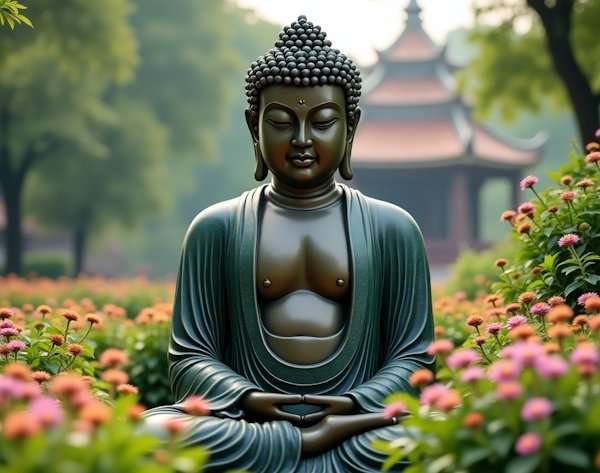
Buddhist statues come in three main forms. Each form carries its own spiritual significance and symbolic meaning. These sacred sculptures remind us of Buddha’s teachings and his trip to enlightenment.
Seated Meditation Poses
The seated Buddha represents the most common form you’ll find in Buddhist art. These statues capture peace, mindfulness and the path to enlightenment. You’ll see the seated position in several variations:
- Virasana (Hero’s Pose): Legs crossed with one foot turned upward
- Vajrasana (Diamond Pose): Both feet turned upward in full lotus
- Pralambanasana (European Sitting): Buddha seated upright in a chair
- Seiza (Japanese Style): Kneeling position on a mat
Seated Buddha statues display specific hand gestures called mudras. The Dhyana mudra shows hands resting in the lap and symbolizes wisdom, sometimes with an alms bowl. The Bhumisparsha mudra shows the right hand touching the earth and marks Buddha’s moment of enlightenment.
Standing Buddha Forms
Standing Buddha statues represent strength, protection, and active connection with the world. These figures stand with both feet planted firmly on the ground to show their readiness to teach and guide others. You’ll often see the Abhaya mudra (fearlessness) or Varada mudra (charity and compassion) in these forms.
Standing Buddhas appear in materials of all types, including bronze and stone, each creating its own visual impact. These versatile statues work well both indoors and outdoors, adding unique esthetic qualities to different spaces.
Reclining Buddha Statues
The reclining Buddha holds deep meaning as it shows Buddha’s final moments before entering parinirvana. These statues depict Buddha lying on his right side, with his head resting on a cushion or supported by his right hand.
Thai Buddhism interprets the reclining pose in three distinct ways:
- The Nirvana attitude
- Teaching the Rahu Asurin
- The Sleeping attitude
The world’s most impressive reclining Buddhas include the 182.9-meter statue at Winsein Tawya in Burma and the 46-meter Buddha at Wat Pho in Bangkok. The statue’s soles feature detailed mother-of-pearl inlays with 108 auspicious symbols that identify Buddha, including flowers, dancers and white elephants.
More of the best places to visit in China.
Key Features and Their Meanings
Buddhist statues contain deep symbolic meanings in every feature. Their artistic elements reflect spiritual teachings and Buddhist philosophy through careful representation.
Face and Expression
Buddhist statues show enlightenment and inner peace through their serene faces. A gentle smile balances life’s joys and sufferings. Their half-closed eyes show deep meditation and spiritual insight, while the full mouth shows eloquence in speech.
The facial features have specific marks that show enlightenment. The urna, a circular mark between the eyebrows, works as the third eye of spiritual insight. This unique feature lets the Buddha see beyond physical reality and represents higher wisdom.
Hand Gestures (mudras)
Mudras, the hand gestures in Buddhist statues, work as a rich visual language that shows specific teachings and states of mind. Each mudra represents different parts of Buddhist philosophy:
- Dharmachakra Mudra: Joined thumbs and forefingers in a wheel shape show the teaching of Buddhist law
- Abhaya Mudra: Raised palm facing outward shows protection and fearlessness
- Varada Mudra: Downward-facing palm represents compassion and charity
- Dhyana Mudra: Hands resting in lap show meditation and wisdom
Body Positions
Body positions in Buddhist statues show different levels of spiritual growth. A straight back shows discipline and dignity. Slender fingers represent mindfulness and precise actions. Long arms show generosity, while round heels represent balanced temperament.
The fine webs between toes and fingers have special meaning – they show how all beings connect. Specific guidelines shape the proportions and postures. Many seated positions create a triangle-like silhouette that represents stability.
Clothing and Ornaments
Buddhist traditions of all sizes show clothing and ornaments differently. Theravada Buddhist statues often have simple robes that highlight Buddha’s rejection of worldly goods. The exposed right shoulder shows without doubt his path to enlightenment by giving up material pleasures.
Mahayana Buddhist traditions, especially in Tibet, use detailed jewelry and headdresses. These decorations show enlightened qualities rather than wealth. The ushnisha, a bump on Buddha’s head, remains a universal symbol of supreme wisdom in all traditions.
Buddha statues’ elongated earlobes tell an interesting story. These stretched lobes remind us of Buddha’s noble past, while their emptiness shows his final letting go of worldly attachments. This feature carries a powerful message – people can grow spiritually while staying connected to their history.
Visit the Golden Triangle India.
Understanding Sacred Symbols
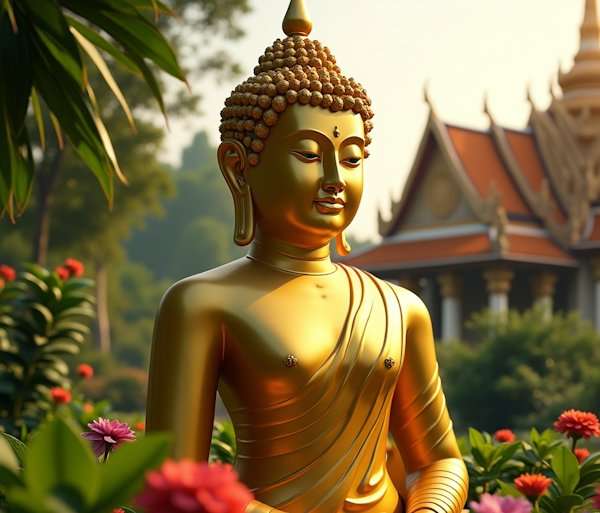
Sacred symbols on Buddhist statues mark enlightenment and spiritual attainment. These distinctive features set Buddha images apart in traditions and cultures of all types.
The Ushnisha (crown protrusion)
The ushnisha stands out as a three-dimensional oval-shaped protrusion at the crown of Buddha statues. This sacred symbol shows the achievement of spiritual enlightenment and marks the Buddha’s awakened state. Greco-Buddhist art of the Gandhara kingdom introduced the earliest depictions of the ushnisha in the 1st century.
Buddhist traditions show different versions of this crown protrusion. South Asian Buddhist countries often display a more schematic appearance with motifs like flames or lotus flowers instead of the traditional chignon. Some see it as a mysterious spiritual organ hidden from ordinary people’s view. Others consider it a vertical extension that reaches infinite heights.
The Urna (third eye mark)
The urna, a distinctive spiral or circular dot between the Buddha’s eyebrows, represents spiritual vision and heightened awareness. This mark of the third eye shows the power to see beyond our universe of suffering.
The urna’s spiritual meaning goes beyond decoration. In Buddhist practice, it symbolizes:
- The gateway to higher consciousness
- The Buddha’s awakened mind
- The power to see beyond material illusions
This mark represents intuitive wisdom and guides practitioners toward deeper understanding and compassion.
Extended Earlobes
The elongated earlobes on Buddhist statues reveal a powerful story of change. Ancient Indian men and women wore ear plugs from childhood. They started with small clay cylinders and gradually moved to plugs up to 6 centimeters wide.
Prince Siddhartha wore these ear ornaments as symbols of his noble status before becoming the Buddha. He removed these plugs when he gave up worldly life, which left his earlobes permanently stretched. This physical feature carries two meanings – it shows the Buddha’s noble past while the empty stretched lobes represent his rejection of material wealth.
These sacred symbols create a complete visual language of enlightenment together. The ushnisha shows supreme wisdom, the urna represents spiritual vision, and the extended earlobes remind us of the path from worldly attachment to spiritual freedom. Each mark shows evidence of the Buddha’s trip and teachings through centuries of artistic tradition.
Different Styles Across Cultures
Buddhist statues changed remarkably as Buddhism spread through Asia. Each region added its own cultural elements to these sacred sculptures.
Indian Influences
Two prominent Indian artistic traditions shaped the earliest Buddhist statues. The Gandhara school blended Greco-Roman esthetics with Buddhist symbolism. Their work showed youthful Buddhas with wavy hair and toga-like robes similar to Apollo statues. The Mathura school grew on its own path. They created images with expanded bodies filled with sacred breath (prana) and robes that exposed the right shoulder.
Artists reached what many call the peak of Buddhist sculpture during the Gupta period (4th-6th centuries). These masterpieces combined the best elements from both schools. The statues showed perfect proportions and robes that seemed transparent. The focus stayed on spiritual expression, and these works became models for artists in many Asian countries.
Chinese Adaptations
Buddhist sculpture flourished in China between the 4th and 10th centuries. This marked a time of intense artistic growth. The Pure Land tradition shaped how artists created Buddhist statues. Their work highlighted two important bodhisattvas: Avalokiteshvara (Guanyin) and Manjushri (Wenshu).
Chinese artists developed a more three-dimensional style during the Tang dynasty (618-907). Their strong connections with Central Asia through the Silk Road influenced this change. Chinese versions showed unique elements such as:
- Squared faces and almond-shaped eyes
- Thicker garments on slimmer bodies
- Formal Chinese gestures of reverence
Southeast Asian Variations
Buddhism’s spread across Southeast Asia created diverse artistic interpretations. Vietnamese artists developed their own approach to Buddhist figures. They paid special attention to Quan Âm, the Goddess of Mercy. These statues have multiple arms to show how they help many people at once, reflecting local views of compassion.
Thai Buddhist art stands out for its grandeur and gold leaf decorations. The statues use various poses and gestures to show specific teachings and moments from Buddha’s life. Thai temples now house some of the world’s most impressive Buddhist sculptures. The 46-meter reclining Buddha at Wat Pho in Bangkok serves as a prime example.
Nepalese artists brought their unique touch to Buddhist sculpture with careful attention to detail. Their work features the “Nepali eye,” an elongated shape that symbolizes wisdom and compassion. Nepalese Buddhist art uniquely combines Hindu and Buddhist imagery, showing how these faiths peacefully exist together in the region.
Several factors explain the varied appearances of Buddhist statues. Local artistic traditions, available materials and teachings from different Buddhist sects all play a role. These regional differences prove Buddhism’s flexibility and its power to embrace cultural expressions while keeping its spiritual core intact.
Proper Care and Placement
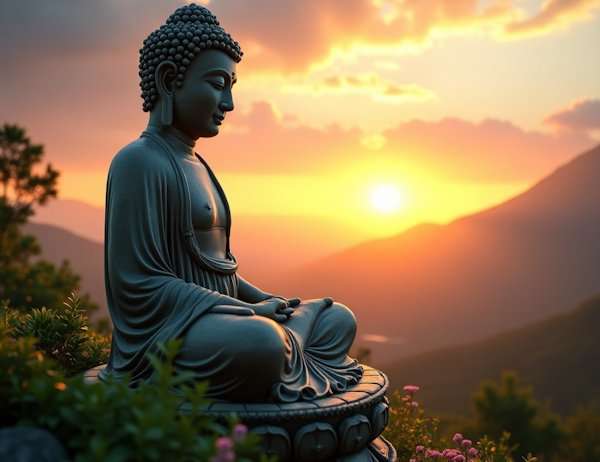
Buddhist statues need thoughtful care and placement because these sacred objects mean much more than simple decorations. They represent deep spiritual significance.
Choosing a Location
You need to pay attention to both spiritual and practical aspects when placing Buddhist statues. These sacred objects should face east. The morning sun’s first rays symbolically awaken consciousness. The spot you choose should look good and protect the statue from direct sunlight and extreme humidity that can damage its surface.
Some spots deserve extra attention. A Buddha statue that faces the front door from inside your home protects you from harmful influences. All the same, you should avoid certain locations:
- Bathrooms or areas near toilets
- Kitchens or food preparation spaces
- Areas beneath hanging laundry or electrical cables
- Spaces where larger objects might overshadow the statue
Cleaning and Maintenance
Buddhist statues need regular, mindful care to stay preserved. Different materials need specific attention, but some simple principles work in any situation. Regular dusting stops dirt from building up, which traditional beliefs link to negative energy.
Here’s how to clean your statue properly:
- Use a soft, dry cloth or gentle brush to dust it off
- Mix mild soap with warm water
- Clean with a well-wrung damp cloth
- Remove soap residue by rinsing really well
- Use a clean cloth to dry completely
Each material needs its own care. Wooden statues need protection from humidity changes. Metal pieces look better with occasional polishing. You should keep environmental conditions steady to preserve your statue.
Traditional Placement Rules
Traditional guidelines say proper elevation matters most. Buddhist statues should never sit directly on the ground or floor. You can use a platform, pedestal, or even a simple red cloth to elevate them properly. This shows respect and highlights their spiritual significance.
The way you point your statue carries deep meaning in Buddhist traditions. Inside a home, the figure should face inward, unless you want it to greet visitors or ward off negative energy. Garden statues should face your house to bring abundance and prosperity.
Space around the statue plays a vital role in proper placement. Keep the area around it free from clutter with nothing hanging above. This setup maintains the statue’s dignity and spiritual presence while making proper veneration possible.
The environment needs more than simple placement choices. Your statue needs stable temperatures and good airflow. Outdoor installations need extra care with protective coatings and seasonal maintenance to guard against harsh weather.
Proper care means more than just physical upkeep. These sacred objects deserve reverence, so clean them with a peaceful mind. This mindful attention helps preserve both the physical statue and its spiritual essence. You’ll create a space that works well for meditation and reflection.
Appreciate Buddhist Statues
Buddhist statues symbolize enlightenment, wisdom and spiritual transformation. Their serene faces and meaningful hand gestures tell stories that are deeply rooted in Buddhist philosophy and teachings.
These sacred sculptures have come a long way from their humble beginnings as simple symbols to become the detailed human forms we see today. A complete visual language emerges from the combination of poses, features and symbols that exceeds cultural boundaries while adapting to local artistic traditions.
Different regions may interpret these statues differently, but core elements remain unchanged. The ushnisha shows supreme wisdom, while the urna represents spiritual vision. Long earlobes remind us about the journey from material attachment to spiritual freedom. These shared elements bring Buddhist artistic traditions together under common spiritual goals.
Buddhist statues need proper care and mindful placement to maintain their physical and spiritual value. The right location, regular upkeep and respect for traditional placement guidelines help create perfect spaces for meditation and reflection. This knowledge allows these sacred objects to continue their age-old role as bridges between spiritual teachings and daily practice.
FAQs
Q1. What is the significance of different hand gestures in Buddhist statues?
Hand gestures, known as mudras, convey specific teachings and states of mind in Buddhist statues. For example, the Dharmachakra mudra represents teaching Buddhist law, while the Abhaya mudra symbolizes protection and fearlessness.
Q2. How do Buddhist statues differ across cultures?
Buddhist statues vary across cultures, reflecting local artistic traditions and interpretations. Indian styles emphasize spiritual expression, Chinese adaptations feature distinctive facial features and Southeast Asian variations incorporate unique elements like multiple arms or gold leaf adornments.
Q3. What are some key features to look for in Buddhist statues?
Important features include the ushnisha (crown protrusion) symbolizing enlightenment, the urna (third eye mark) representing spiritual vision and elongated earlobes signifying the Buddha’s journey from worldly attachment to spiritual liberation.
Q4. Is it appropriate to keep a Buddha statue at home?
Yes, it’s generally acceptable to have Buddha statues at home. However, proper placement and care are important. The statue should be elevated, face east if possible and kept in a respectful location away from bathrooms or areas beneath hanging objects.
Q5. How should one care for a Buddhist statue?
Proper care involves regular dusting, gentle cleaning with mild soap and water when needed and protection from direct sunlight and extreme humidity. Different materials may require specific care, such as occasional polishing for metal statues or protection from humidity fluctuations for wooden ones.













Thank you for this beautifully informative article on Buddhist statues. I really appreciated how you not only explored the artistic and cultural richness of these statues around the world but also highlighted their spiritual significance. The detailed descriptions and global perspective made this a truly enriching read. Grateful for the time and effort that went into creating this — it’s a wonderful resource for both travelers and those interested in Buddhism alike!
Regards,
Antique Buddhas