
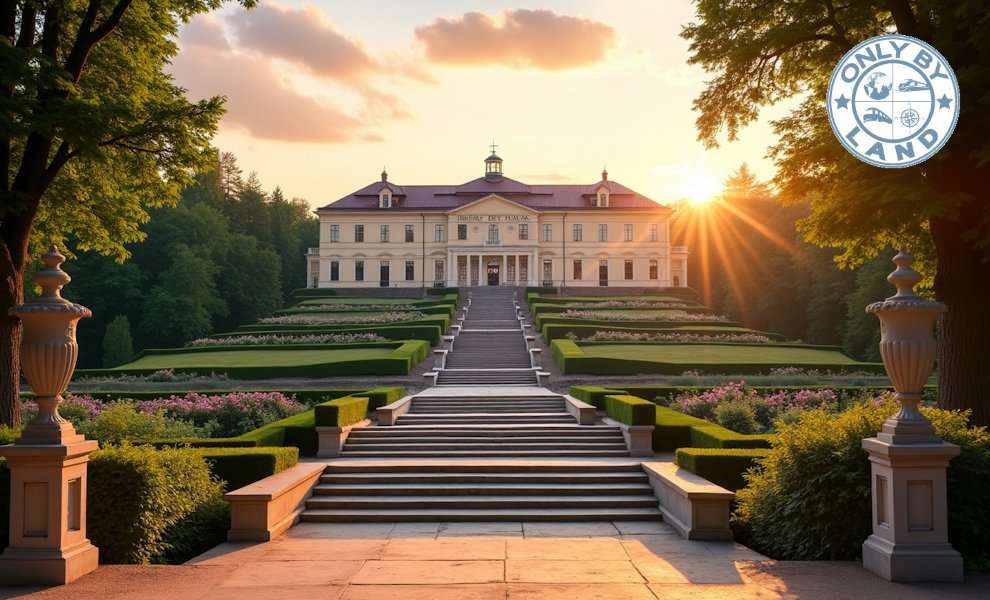
Potsdam is Prussia’s crown jewel, and its cobblestone streets echo with tales of emperors, spies and world-changing moments. Located just 45 minutes from Berlin, this UNESCO World Heritage city engages visitors with its remarkable palaces, gardens and cultural landmarks.
The magnificent Sanssouci Palace and the historic Cecilienhof, where world leaders shaped post-war Europe, are among the many attractions that draw history enthusiasts and casual tourists. Potsdam naturally combines its royal Prussian heritage with modern cultural sites that make it a must-visit destination for anyone in Germany.
This complete guide covers the 23 best things to do in Potsdam Germany. You’ll discover grand palaces, hidden gardens, fascinating museums, and architectural marvels. We’ve carefully selected each attraction to help you experience the city’s rich history, cultural significance and unique charm.
Sanssouci Palace and Park
Potsdam’s cultural heritage shines through the magnificent Sanssouci Palace, a masterpiece of Frederician Rococo architecture built between 1745 and 1747. Georg Wenzeslaus von Knobelsdorff designed this intimate summer residence with just 12 rooms. The palace embodies Frederick the Great’s desire for a private retreat rather than a grand display of power.
Palace History and Architecture
The palace’s design emerged from an interesting conflict between Frederick and his architect. Frederick made an unusual choice to build without a basement because he wanted direct garden access instead of following traditional palace architecture. This decision led to a single-story villa that beautifully showcases carved atlantes, caryatids and intricate sandstone decorations in true Rococo style.
Garden Highlights
A series of terraced vineyards leads up to the palace, with 168 glazed niches that once housed figs and trellised vines from Portugal, Italy, and France. The Great Fountain became part of the grounds in 1748 and can now shoot water jets 38 meters high. The park covers 290 spectacular hectares where natural beauty and architectural magnificence come together.
Visitor Information and Tickets
The park welcomes visitors free of charge from 8 a.m. until dusk. Palace entry options include:
- Single Palace Ticket: €14 (reduced €10)
- Sanssouci+ Combined Ticket: €22 (reduced €17)
- Family Ticket: €49 (valid for 2 adults and up to 4 children)
The palace uses timed entry slots, and visitors should book online in advance to avoid long lines.
New Palace (Neues Palais)
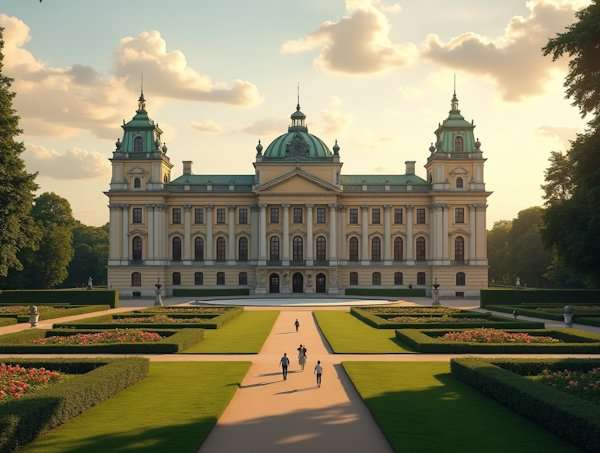
The New Palace stands proudly at the western end of Sanssouci Park. It ranks among the most impressive attractions in Potsdam, Germany. Built between 1763 and 1769, this grand structure showcased Frederick the Great’s Prussian power after the Seven Years’ War.
Palace Features and Design
The palace boasts remarkable architectural elements with its massive three-wing structure that spans 220 meters. A striking 55-meter high dome sits at the top, where the Three Graces hold the Prussian crown. The facade comes alive with over 400 sandstone statues and figures that tell stories from ancient mythology.
Interior Highlights
The palace’s interior reveals more than 200 rooms decorated in lavish Rococo style. These spectacular spaces include:
- The Grotto Hall – decorated with over 24,000 seashells, minerals, fossils, and gemstones
- The Marble Gallery – showcasing marble cladding and gold-framed ceiling paintings
- The Palace Theater – one of the finest examples of Rococo theater architecture
Guided Tour Options
Visitors can explore the palace through guided tours year-round. Available options include:
- Regular tours in German and English
- Group tours that accommodate up to 40 people
- Special language tours in Italian, Spanish, French, Polish and Russian
The palace also offers audio guides and tours through the SANSSOUCI app to improve visitor experience. Visitors should book in advance since entry is allowed only with guided tours.
Dutch Quarter (Holländisches Viertel)
The Dutch Quarter sits at the heart of Potsdam’s historic center, offering visitors a remarkable piece of Netherlands architecture on German ground. Built between 1734 and 1742, this unique neighborhood stands proud as Europe’s largest collection of Dutch-style buildings outside the Netherlands.
Historical Background
Frederick William I dreamed of bringing Dutch craftsmen to Potsdam, which led to the quarter’s creation. Dutch master builder Jan Bouman supervised the construction of 134 red-brick houses in four distinct blocks. While the original plan was to house Dutch immigrants, the area became home to a mix of French and Prussian traders, artists and military personnel.
Architecture Highlights
The neighborhood shows off its character through:
- Red-brick facades with white joints, left unplastered
- Beautiful shutters and curved gables
- Four blocks that Mittelstrasse and Benkertstrasse divide
Shopping and Dining
The Dutch Quarter has evolved into one of Potsdam’s liveliest cultural spots. Visitors can enjoy three major celebrations each year:
- Tulip Festival in April
- Pottery Market in September
- Dutch Christmas Market (Sinterklaas Festival) in December
Charming boutiques, art galleries, and cozy cafes now fill these historic buildings. History enthusiasts can visit the Jan Bouman House museum at Mittelstraße 8, which features original baroque details and 18th-century furniture.
Cecilienhof Palace
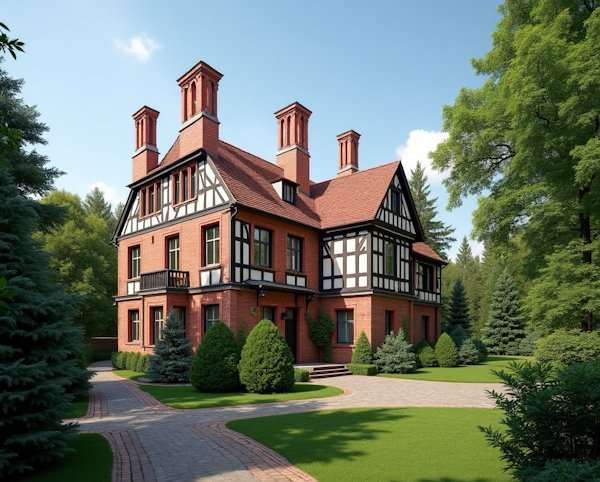
German aristocracy built Cecilienhof Palace, which now ranks among Potsdam’s most important historical sites. Emperor William II had this remarkable home built for his eldest son, Crown Prince William and his wife Cecilie from 1914 to 1917.
World War II History
The palace became known worldwide when it hosted the historic Potsdam Conference from July 17 to August 2, 1945. Allied powers met here to reshape post-war Europe. Stalin, Truman, and Churchill (who Attlee later replaced) made decisions that would shape Germany’s future and the post-war world order.
Palace Architecture
This impressive English Tudor-style palace covers 7,000 square meters with a facade stretching 4,000 square meters. Architect Paul Schultze-Naumburg’s design combines naturally with the surrounding landscape and includes:
- 176 luxury rooms with bay and stained windows
- 55 uniquely designed tall chimneys
- Five distinctive courtyards
Exhibition Highlights
The palace’s permanent exhibition tells the story of the historic Potsdam Conference. Visitors can explore the museum’s information in multiple languages and learn about:
- Original conference rooms and delegation workspaces
- Historical photographs and documents
- Multimedia guides available in 12 languages
The palace will close temporarily for renovations starting November 2024. Travelers should check the latest visiting information before planning their Potsdam trip.
Museum Barberini
Museum Barberini, located in Potsdam’s historic center, has grown faster into one of Germany’s most visited art museums since its inauguration in 2017. This world-class institution stands out especially when you have Europe’s largest collection of Monet paintings outside Paris.
Current Exhibitions
The museum organizes up to three special exhibitions annually and collaborates with international partners. Visitors can explore upcoming exhibitions like “Maurice de Vlaminck. Modern Artist Rebel” that runs until January 2025. “Kandinsky’s Universe: Geometric Abstraction” is scheduled for early 2025.
Permanent Collection
Museum Barberini’s extraordinary permanent collection features 115 masterpieces by 23 artists. The museum’s crown jewel is its collection of 40 Claude Monet paintings that makes Potsdam a premier destination for Impressionist art enthusiasts. Notable works include Monet’s “Water Lilies” (1914-17) and Signac’s “The Port at Sunset” (1892).
Visitor Information
The museum welcomes visitors every day except Tuesday, from 10 AM to 7 PM. Admission prices vary by day:
- Monday, Wednesday to Friday: €16
- Weekends and holidays: €18
- Reduced admission: €10 daily
The museum provides complete accessibility with elevators and barrier-free facilities. Visitors can boost their experience with the free Barberini App that offers audio guides in multiple languages and multimedia content about the exhibitions.
Filmpark Babelsberg
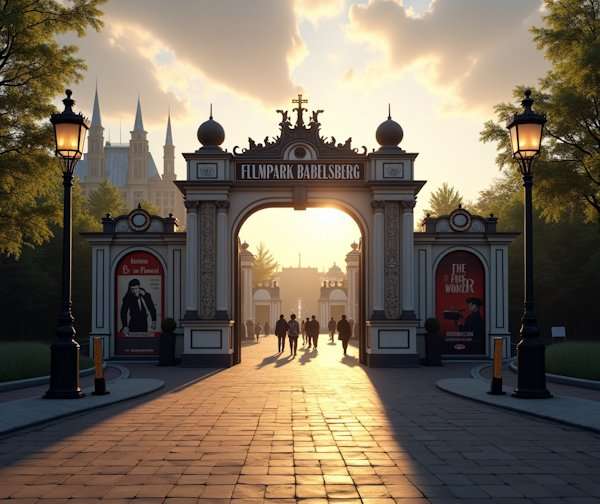
Filmpark Babelsberg sits just minutes from central Potsdam and welcomes visitors to the magical world of film and television. This entertainment hotspot gives you a chance to experience movie magic firsthand, making it one of Potsdam Germany’s most unique attractions.
Studio History
The park neighbors Babelsberg Studio, which holds the title of world’s oldest large-scale film studio and has been making movies since 1912. The studio’s legacy spans from Fritz Lang’s “Metropolis” to modern blockbusters like “The Matrix Resurrections”.
Attractions and Shows
You’ll find more than 20 film-related attractions and four live shows throughout the park. Visitors can enjoy:
- The 4D action cinema and interactive XD experience in the Dome of Babelsberg
- The Myth of Babelsberg Tour with its original props and backdrops
- The Sandman exhibition where you can take green-screen photos
- Stunt shows that reveal professional film techniques
Behind-the-Scenes Tours
The park reveals filmmaking secrets through hands-on experiences. School classes can get real film production experience through the “Backstage with the Stunt Crew” program. The Snapshot Factory lets visitors explore interactive sets from press walls to prison cells.
Visitors can enjoy the park from April 1 to November 4. The calendar features special events like Walpurgis Night, Animemesse and Horror Nights throughout the season. The park marked its 30th anniversary in 2023 with three new shows and added a spectacular stunt performance in the volcano.
Discover more German landmarks.
Alexandrowka Russian Colony
A remarkable cultural gem sits in Potsdam’s northern reaches – the Russian Colony Alexandrowka, 197 years old. This colony stands as a testament to the friendship between Prussian King Frederick William III and Tsar Alexander I.
Historical Significance
Russian singers of the First Prussian Regiment of the Guards found their home in this unique settlement that has 14 wooden houses and an Orthodox church. UNESCO recognized the colony’s worth in 1999. We preserved these Russian-Prussian cultural ties from the early 19th century exceptionally well.
Architecture Features
The colony showcases a distinctive design with a hippodrome pattern and St. Andrew’s cross layout. Some notable architectural elements stand out:
- Half-timbered homes show frontal semi-circular logs that mirror Russian designs
- Two-story buildings display decorative gable elements
- The gardens showcase hundreds of historic fruit varieties dating from 1272 to the late 19th century
Russian Tea House Experience
Building No. 1 now houses a Russian tea house where visitors can taste authentic traditional cuisine. This cozy spot features:
- Original Russian recipes like Bortsch, Tschi, and Soljanka
- Russian beverages straight from their homeland
- Traditional craftsmanship decorations that create a genuine dining atmosphere
House No. 2 transformed into a museum in January 2005. Visitors can explore the colony’s rich history and learn about its original Russian inhabitants’ lifestyle.
Belvedere on Pfingstberg
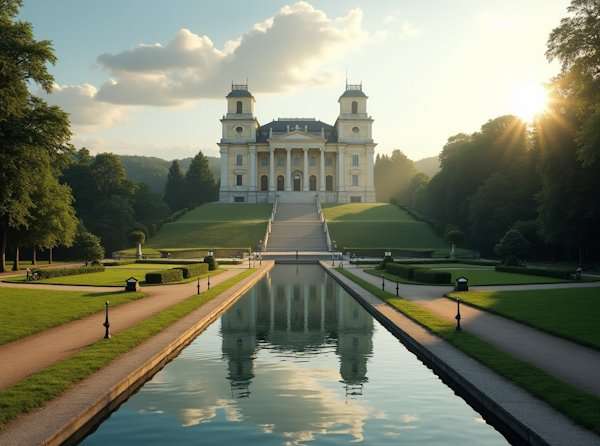
The Belvedere on Pfingstberg sits at Potsdam’s highest point and gives visitors an exceptional view of the city’s cultural heritage. King Friedrich Wilhelm IV commissioned this architectural marvel that took shape between 1847 and 1863.
Architectural Design
The palace draws inspiration from Italian Renaissance architecture and combines various design elements. Twin prospect towers rise above a high podium, while a three-sided courtyard with a central reflecting pool serves as its foundation. The bright sandstone facade masks its northern European roots and creates a Mediterranean feel.
Panoramic Views
At over 100 meters above sea level, the Belvedere lets you see Potsdam’s palaces, parks and the Havel lakes that stretch toward Berlin. Visitors need to climb several steps and a narrow iron spiral staircase to reach the observation deck. The thick tree canopy means these stunning views are only visible from the top level.
Visiting Tips
The palace opens to visitors from March to November with seasonal timings:
- March: Weekends only, 10 AM – 4 PM
- April to June: Monday and Wednesday-Friday 10 AM – 5 PM, Weekends 10 AM – 6 PM
- July to September: Extended weekend hours until 7 PM
Adult tickets cost €8, while reduced tickets are €6. Visitors can get audio guides in German and English or join guided tours that fit different group sizes.
Potsdam’s Brandenburg Gate
The Brandenburg Gate stands among Potsdam’s most impressive landmarks and shows evidence of military triumph and creative design. Built between 1770 and 1771, this magnificent structure celebrates Frederick the Great’s victories in the Seven Years’ War.
Historical Background
We designed the gate as a triumphal arch to replace a basic castle-style gateway from 1733. Frederick the Great wanted this grand structure built to mark his military success. He chose the Roman Arch of Constantine as the inspiration for its design.
Architectural Features
Two different architects created the gate’s remarkable dual-sided design. Key features include:
- City-facing side by Carl von Gontard with rendered facade and pilasters
- Outer side by Georg Christian Unger with Corinthian columns
- Two pedestrian entrances, added in 1843 helped manage the growing foot traffic
Photo Opportunities
The gate is perfect for photography, especially at sunset when golden rays light up its detailed facade. The surrounding Luisenplatz square got a makeover in 1999-2000 and adds to the scene with:
- Beautiful linden trees that frame the structure
- A central fountain that enhances photos
- Easy access through underground parking
Visitors can enter the city’s pedestrian zone through the gate and walk along Brandenburger Straße toward the Church of Peter and Paul.
Glienicke Bridge
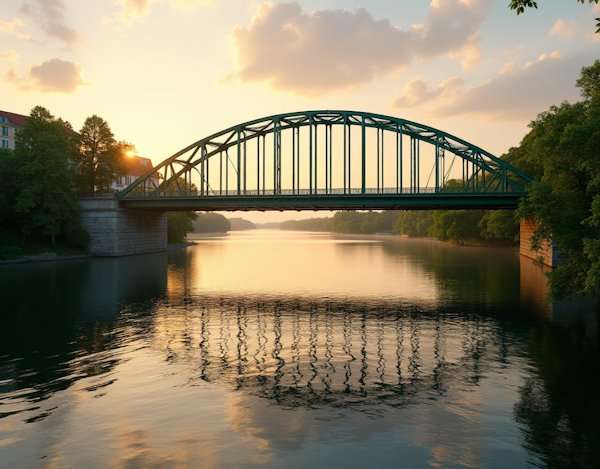
The Glienicke Bridge connects Berlin and Potsdam across the Havel River. This bridge became famous as the “Bridge of Spies” because of its key role in Cold War intelligence operations.
Cold War History
The bridge became most important after 1952 when East German authorities blocked West Berlin citizens from using it. This crossing point was special because the Soviets controlled it completely instead of the East German administration. Several historic spy exchanges took place here:
- The 1962 exchange of Soviet spy Rudolf Abel for U.S. pilot Gary Powers
- The 1985 swap of 23 American agents for Polish spy Marian Zacharski
- The final 1986 exchange with human rights campaigner Anatoly Shcharansky
Bridge Architecture
The steel structure we see today dates back to 1907. It’s actually the fourth bridge built at this spot. The bridge went through major rebuilding after World War II damage. A temporary wooden crossing served people until 1949. The bridge’s aging structure needed major repairs in the 1970s. West Berlin ended up paying for repairs on both sides.
Walking Tours
Today, visitors can learn about the bridge’s rich history through guided walking tours that connect different Cold War landmarks. These three-hour tours give a great explanation of the bridge’s role in spy exchanges and nearby historical sites. Visitors also get to see Cecilienhof Palace and other important Cold War locations that help them understand Potsdam’s diplomatic history better.
Spend Easter in Germany.
Babelsberg Park and Palace
Babelsberg Palace stands majestically above the peaceful Havel River and ranks among the most beautiful attractions in Potsdam, Germany. The palace became Emperor William I’s summer home after its construction in 1833.
Palace History
The stunning English Tudor architecture of the palace came from Karl Friedrich Schinkel’s design, which Ludwig Persius and Johann Heinrich Strack later modified. The palace took shape between 1833-1849 in two main construction phases. This historic building gained fame when Otto von Bismarck got his nomination as Minister President of Prussia here on September 22, 1862.
Park Features
Peter Joseph Lenné and Hermann Fürst von Pückler-Muskau created the vast palace grounds. Beautiful terraces showcase intricate mosaics, sculptures and colorful flowerbeds. The English-style gardens have winding paths that lead visitors to architectural gems like the Steam Engine Building and the Gothic Fountain.
Best Photo Spots
The park offers amazing spots for photography enthusiasts:
- The Flatow Tower built between 1853-1856 gives visitors sweeping panoramic views
- Riverside terraces capture stunning views of the Havel River and passing steamers
- The palace grounds show perfect shots of Glienicke Bridge in the distance
The palace’s facades and interiors are getting extensive renovations. This UNESCO World Heritage site, recognized in 1990, continues to preserve its historic charm.
Church of Peace
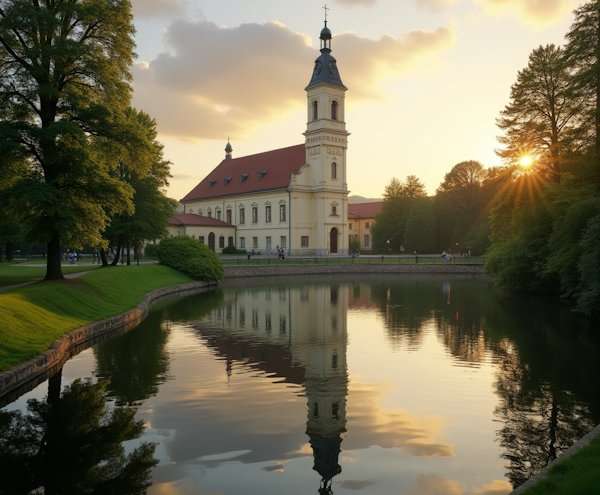
The Church of Peace stands in the peaceful Marly Gardens. King Frederick William IV started its construction in 1845, and builders completed this remarkable sanctuary in 1848. The church has become one of the must-see attractions in Potsdam, Germany.
Religious Significance
Frederick William IV and his wife Elisabeth Ludovika chose this church as their final resting place. We designed it as a house of worship that showcases the king’s deep spiritual connection and cultural commitment. A stunning 13th-century Venetian mosaic sits above the apse, showing Jesus, Maria, and John the Baptist.
Architectural Details
The medieval Basilica di San Clemente in Rome inspired the church’s design. Some notable features include:
- A 42-meter high campanile with seven open-air floors
- An altar canopy made from Siberian jasper, a gift from Tsar Nicholas I
- A triple-nave columned basilica structure
Visitor Guidelines
The church welcomes visitors year-round and helps you learn about Prussian royal history and religious architecture. Inside, you’ll find several interesting spots:
- The royal crypt under marble tablets in front of the altar steps
- An open porch (narthex) that leads to an inner courtyard
- A larger-than-life statue of Christ decorating the fountain
Keep in mind that the church still holds active religious services. Visitors should dress and behave appropriately during their visit.
Orangery Palace
The Orangery Palace stretches an impressive 300 meters through Sanssouci Park. This magnificent structure showcases the grandeur of 19th-century Prussian architecture. Built over 13 years from 1851 to 1864, the palace stands as one of Potsdam Germany’s most captivating attractions.
Palace Features
Rome’s Villa Medici and Florence’s Uffizi inspired this remarkable palace. Its standout features include:
- Twin towers with panoramic views
- Two big plant halls for winter storage
- The magnificent Raphael Hall with its 50 painting copies
- Royal guest apartments decorated with period furnishings
Garden Overview
Peter Joseph Lenné’s masterful design shines throughout the palace grounds. The Paradise Garden, created in 1843-44, displays exotic flowers and foliage plants. Distinct areas add character to the grounds. The Norse Garden features dark pines while the Sicilian Garden boasts palm trees, myrtles and fountains.
Guided Tours
Multiple language options make guided tours accessible to more people. The plant halls rank among Berlin-Brandenburg’s largest indoor event spaces and can hold up to 1,000 people each. The palace requires periodic renovation work, so visitors should check current accessibility before planning their trip.
Natural light streams through a skylight into the palace’s two-story Raphael Gallery, which houses an impressive collection of Renaissance art reproductions. The guest rooms showcase French Rococo style furnishings and once hosted notable visitors, including the kings of Italy and Romania.
Film Museum Potsdam
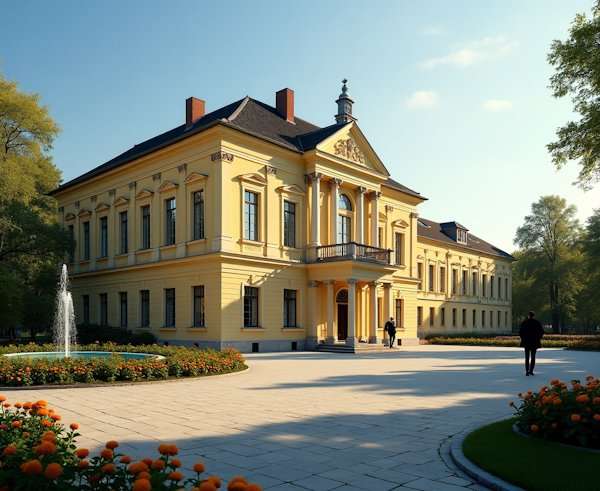
The historic Marstall building is home to Germany’s oldest film museum. This 42-year-old cultural gem has an amazing collection that includes over a million photographs, technical equipment and costumes. You’ll find it’s a must-visit spot when you’re in Potsdam, Germany.
Cinema History
The museum tells the story of the world’s oldest working film studio through its main exhibit “Dream Factory – 100 Years of Film in Babelsberg”. The collection takes you through different periods of film production from Bioscop, Ufa, DEFA and today’s Studio Babelsberg works.
Interactive Exhibits
Seven themed rooms let visitors experience the magic of filmmaking. Here’s what you can do:
- Step into a casting box to audition or see yourself in famous movie scenes
- Visit a soundproof room to play with music and sound effects
- See authentic props and film awards displayed in glass cases
Special Programs
The museum’s cinema is a cozy space with velvet chairs and historic projectors that shows films daily. Film enthusiasts can enjoy special screenings with international guests and unique silent films. These silent film events come alive with music played on the Welte cinema organ. Kids can catch special shows at the children’s cinema every weekend at 3 p.m., which makes this place perfect for family outings.
Try autumn in Germany.
Biosphere Potsdam
A remarkable tropical paradise welcomes visitors at Potsdam’s Volkspark. The Biosphere Potsdam spans 7,000 square meters and brings a vibrant rainforest ecosystem to life. This destination stands out as one of the most unique experiences in Potsdam, Germany.
Tropical Environment
Carefully controlled conditions create an authentic jungle atmosphere throughout the facility. Visitors can experience dramatic natural features such as:
- A thundering waterfall alongside two serene lakes
- Tropical storms that occur hourly with thunder and lightning
- Active geysers and mangrove swamps
Plant Species
This remarkable greenhouse showcases 20,000 tropical plants from 350 different species. The diverse collection features orchids, epiphytes and majestic trees that reach 14 meters high. The facility champions sustainability through exhibition areas that highlight rainforest protection and resource conservation.
Educational Programs
Visitors of all ages can enjoy detailed educational experiences at the Biosphere. The school programs feature:
- Adventure tours that engage the senses
- Guided tours exploring tropical flora and fauna
- Workshops that focus on rainforest and climate protection
Young visitors love the 60-square-meter butterfly house, which houses more than twenty species from Latin America and Asia. The facility also features various animals, from reptiles to insects and tropical birds. Visitors can even interact with some creatures under proper supervision.
Old Market Square

Potsdam’s Old Market Square sits at the heart of the city and stands as proof of European history and architectural excellence. This historic plaza dates back to the Early Middle Ages and became the city’s economic and political center.
Historical Buildings
Several notable structures around the square were rebuilt after World War II. The Old Town Hall, constructed between 1753 and 1755 by Jan Bouman, shows off its distinctive tower and contains a permanent exhibition about its past. The Knobelsdorff House connects to the Old Town Hall through a modern addition and reminds visitors of Sanssouci Palace’s architect.
Cultural Events
Life buzzes in the Old Market Square all year round with celebrations that draw both locals and tourists. The square’s events feature:
- Cultural picnics with live music performances
- Traditional festivals and exhibitions
- Workshops and guided tours
Dining Options
Visitors can enjoy great food at well-established restaurants around the square. The Café Central in the Old Town Hall and the Café in Museum Barberini serve delicious refreshments. These spots blend traditional German dishes with modern cuisine and create an authentic dining experience next to historic buildings.
A marble obelisk from 1753 marks the square’s center. It once displayed images of former rulers but now shows portraits of Potsdam’s architects. In spite of that, this space keeps its centuries-old role as a meeting point where old and new city life come together.
St. Nicholas Church
St. Nicholas Church stands tall above Potsdam’s Old Market Square and is one of the best examples of German classical architecture. Karl Friedrich Schinkel designed this Protestant church, which was built between 1830 and 1837.
Church History
The church’s story shows how tough Potsdam can be. The tambour was added between 1843 and 1850 and reaches 77 meters high. Ludwig Persius and Friedrich August Stüler led the construction team. The church took heavy damage from British air raids and Soviet artillery fire during World War II.
Architecture Style
The building shows off its classical elements beautifully. The floor plan looks like a Greek cross, and one arm extends into a half-round apse. Notable features include:
- A portal with four pillars that looks like ancient temples
- A dome that you can see from anywhere in the city
- A central plan building with classical style
Visiting Hours
You can visit the church any day of the week:
- Monday to Saturday: 9:30 AM – 5:00 PM
- Sunday: 11:00 AM – 5:00 PM (tower opens at noon)
- Last entry: 4:30 PM
The parish brings life to Potsdam’s culture with regular church services and excellent musical performances. The church tower gives you amazing views of the historic city center, making it a top spot to visit in Potsdam Germany.
Did you try German ice cream?
Nauener Gate
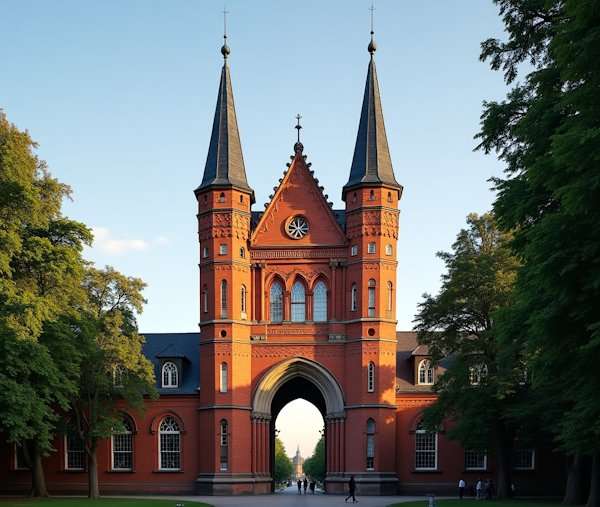
The Nauener Gate stands out as a Gothic masterpiece among Potsdam’s architectural treasures and fascinates visitors with its medieval charm. Built in 1755, this historic structure became the first example of English Gothic Revival architecture in Continental Europe.
Historical Significance
The gate’s story started around 1720, when its first version stood 400 meters from where it is now. Architect Johann Gottfried Büring ended up building the current gate based on Frederick II’s sketch, which became a defining moment in European architectural history.
Gothic Design
The gate’s unique features show the neo-Gothic style that emerged in the 18th century. These features include:
- Pointed arch arcade openings with grotesque heads as decorations
- Two plastered round towers topped with crenellations
- Conical stone points that crown the towers
The structure went through major changes in 1867 when we replaced baroque elements to improve its Gothic features. A thorough restoration in 1996-1997 brought the gate back to its historic look.
Photo Opportunities
The gate looks particularly beautiful at sunset, making it perfect for photos. The area around it has become a lively social spot with great angles to capture the gate’s Gothic details. The square has many cafes and restaurants that create a welcoming atmosphere for everyone.
Chinese House
The Chinese House stands tucked away in Sanssouci Park’s Deer Garden. This charming pavilion shows off the Chinoiserie movement that swept through European courts in the 18th century. Frederick the Great built this intimate retreat between 1754 and 1757 as his personal escape into a world of fantasy.
Architectural Style
The building features a unique trefoil shape that combines rounded central chambers with open spaces. Its exterior sparkles with life-sized gilded sculptures showing:
- Chinese musicians and tea drinkers dressed in fancy costumes
- Palm tree-shaped columns made from sandstone
- A gilded Chinese figure holding an open parasol at the roof’s peak
Interior Design
Stucco marble and gold-leaf decorations cover the walls of the circular central chamber. Thomas Huber’s ceiling painting from 1756 captures a lively Chinese gathering in a magical setting. The room’s walls showcase precious “Pekings” – silk coverings with bright floral patterns that came mostly from Prussian silk factories.
Garden Setting
The pavilion sits about 700 meters southwest of Sanssouci Palace, where it once added beauty to Frederick’s flower and vegetable garden. The Seven Years’ War disrupted Prussia’s finances, which stretched the construction to nine long years. Once finished, builders added a Chinese Kitchen nearby for small gatherings.
The designer took inspiration from Lunéville Palace’s Maison du trèfle, blending French architectural elements to create this special mix of European and Asian styles.
Charlottenhof Palace
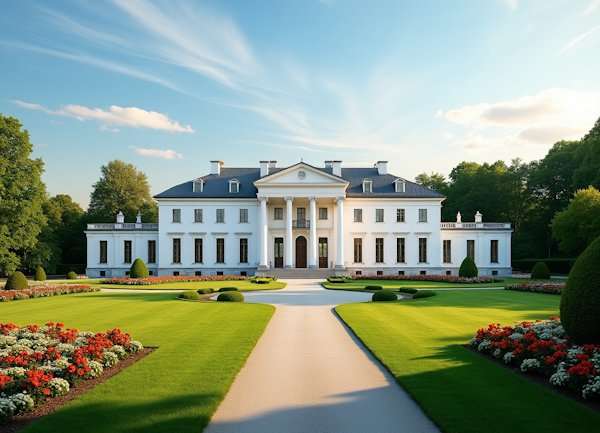
Crown Prince Frederick William commissioned the elegant Charlottenhof Palace as his summer residence. This intimate villa sits southwest of Sanssouci Palace and showcases architect Karl Friedrich Schinkel’s creative genius. The construction took place between 1826 and 1829.
Neo-Classical Design
The palace draws its beauty from Italian country houses and Roman villas that matched the crown prince’s artistic vision. Schinkel designed the structure with help from Ludwig Persius. The building stands out with its sloping, rusticated plinth and distinctive blue and white window shutters – a tribute to Princess Elisabeth’s Bavarian roots.
Interior Highlights
Ten rooms in the palace have managed to keep their original charm. Some remarkable features include:
- A unique tent room that looks like a Roman Caesar’s tent
- The Crown Princess’s writing cabinet with silver-plated furniture
- A dining room with a stunning gilded table
Garden Features
Peter Joseph Lenné revolutionized the surrounding landscape from a flat, marshy area into a picturesque English garden. The grounds blend geometric and natural designs to create an Italian-inspired atmosphere. The garden’s innovative design broke away from traditional landscaping and ended up setting new standards in garden architecture.
Crown Prince Friedrich Wilhelm lovingly called his palace ‘Siam’. Today, visitors can experience authentic 19th-century Prussian royal life here. The palace has kept its original interior design, making it one of the best-preserved attractions in Potsdam Germany. Perfect for a German tea.
New Garden
The expansive New Garden stretches between the peaceful waters of Heiliger See and Jungfernsee, covering 102.5 hectares. This beautiful park has been a cornerstone of Potsdam’s green spaces since 1787.
Landscape Design
The garden’s design broke away from baroque traditions and embraced the English landscape style popular in the late 18th century. Johann August Eyserbeck, a talented gardener from Wörlitz, created the original layout. Peter Joseph Lenné enhanced the design in 1816. The garden’s views blend seamlessly with nearby parks of Sacrow, Pfaueninsel, Glienicke, and Babelsberg.
Notable Features
The park’s architectural gems include:
- The Shell Grotto (1791-94), adorned with crystals
- The Gothic Library’s unique two-level structure
- The Castle Kitchen, built as a semi-submerged temple
- The Ice Cellar’s distinctive pyramid shape
Seasonal Highlights
Each season reveals new charms in this historic landscape. Visitors can explore the grounds daily from 8 a.m. until dark without paying admission. The park’s appeal stays strong year-round, with stunning views that stretch across the water. Friedrich Wilhelm II’s vision of a modern garden comes to life through enclosed spaces and small architectural elements that showcase the progress of landscape architecture.
Einstein Tower
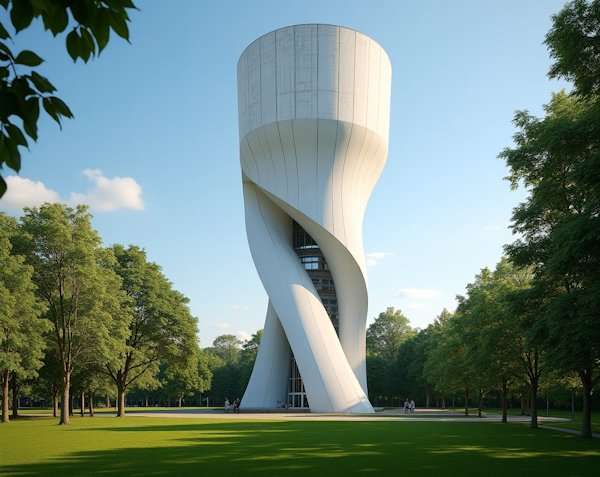
The Einstein Tower changed the scientific architecture landscape and stands as a groundbreaking solar observatory in Albert Einstein Science Park. Scientists started the project in 1917 to confirm Einstein’s theory of relativity, and this remarkable structure opened its doors in 1924.
Scientific History
The observatory’s main goal was to study the red shift of spectral lines in the sun’s gravitational field, which Einstein’s General Theory of Relativity predicted. Astronomer Erwin Finlay-Freundlich designed the facility that houses a sophisticated solar telescope with a 60cm diameter lens and 14m focal length.
Architectural Design
Architect Erich Mendelsohn created this expressionist masterpiece between 1917-1920. He produced many sketches to capture Einstein’s groundbreaking theories in architectural form. The structure features:
- A centralized observatory tower with distinctive window bands
- A wavelike platform housing laboratories
- A unique combination of reinforced concrete and brick construction
Observatory Features
The tower continues its scientific legacy through modern solar research. The facility keeps its original design elements, including a vertical shaft that directs light to basement laboratories. The spectrograph laboratory extends 14 meters behind an earthen wall and makes shared analysis of solar phenomena possible.
The observatory went through extensive renovation in 1999 during its 75th anniversary. Today, it works as both a solar observatory and visitor center that gives an explanation about astronomical research and innovation. The facility helps develop instruments for international solar research, including equipment for the European Space Agency’s Solar Orbiter space probe.
Potsdam Museum
The Potsdam Museum, located in the historic Old Town Hall at the Old Market, serves as the cultural life-blood that chronicles the city’s heritage. Visitors can explore 13,000 square meters of exhibition space and experience Potsdam’s fascinating past.
Local History
“Potsdam: Making City History,” the museum’s permanent exhibition, showcases over 500 original artifacts in 800 square meters. The collection clarifies the city’s development from the 19th to 21st centuries through thematic displays instead of chronological arrangements.
Exhibition Highlights
The museum’s dynamic program features notable exhibitions including:
- “The Raquette River: Past Present and Future”
- “China – Land of Silk and Dragons”
- “Flesh & Ink: Tattoo Histories”
Special Collections
Historical documents and photographs fill the museum’s extensive archives. The photographic collection contains more than 100,000 images that document Potsdam’s cultural, political and urban growth. Researchers can access detailed resources about local history in the library, including:
- Letters and journals
- Cemetery records
- Town records
- Historical yearbooks
The museum’s Forum of Art and History helps visitors participate through educational programs and themed events. This cultural institution has become both a guardian of local heritage and a vibrant community space, making it a must-visit destination in Potsdam Germany.
Comparison Table
| Attraction | Year Built/Established | Type | Key Features | Current Status/Use |
|---|---|---|---|---|
| Sanssouci Palace | 1745-1747 | Royal Palace | 12 rooms, terraced vineyards, Great Fountain | Active museum, UNESCO site |
| New Palace | 1763-1769 | Royal Palace | 200+ rooms, 55m high dome, 400+ sandstone statues | Museum with guided tours |
| Dutch Quarter | 1734-1742 | Historic District | 134 red-brick houses, 4 distinct blocks | Shopping/cultural district |
| Cecilienhof Palace | 1914-1917 | Royal Palace | 176 rooms, Tudor style, 55 chimneys | Museum (closing for renovation in 2024) |
| Museum Barberini | 2017 | Art Museum | 115 masterpieces, 40 Monet paintings | Active museum with rotating exhibitions |
| Filmpark Babelsberg | 1912 | Theme Park | 20+ film attractions, 4 live shows | Active entertainment venue |
| Alexandrowka | 1826 | Historic Colony | 14 wooden houses, Orthodox church | Museum and Russian tea house |
| Belvedere on Pfingstberg | 1847-1863 | Palace | Twin prospect towers, three-sided courtyard | Observation point/museum |
| Brandenburg Gate | 1770-1771 | City Gate | Dual-sided design, Roman-inspired architecture | City entrance/landmark |
| Glienicke Bridge | 1907 | Historic Bridge | Steel structure, Cold War checkpoint | Active bridge/tourist site |
| Babelsberg Palace | 1833 | Royal Palace | English Tudor style, terraced gardens | Under renovation |
| Church of Peace | 1845-1848 | Religious Building | 42m campanile, royal crypt | Active church/museum |
| Orangery Palace | 1851-1864 | Palace | 300m length, twin towers, Raphael Hall | Museum with guided tours |
| Film Museum | 1981 | Museum | 1 million+ photographs, 7 themed rooms | Active museum/cinema |
| Biosphere | Not mentioned | Indoor Garden | 20,000 tropical plants, waterfall, butterfly house | Active educational facility |
| Old Market Square | Medieval origin | Historic Plaza | Old Town Hall, cultural venues | Active city center |
| St. Nicholas Church | 1830-1837 | Religious Building | 77m tambour, Greek cross layout | Active church |
| Nauener Gate | 1755 | City Gate | Gothic Revival style, twin towers | Historic landmark |
| Chinese House | 1754-1757 | Garden Pavilion | Gilded sculptures, trefoil shape | Museum |
| Charlottenhof Palace | 1826-1829 | Royal Villa | 10 rooms, tent room, Italian design | Museum |
| New Garden | 1787 | Park | 102.5 hectares, multiple architectural elements | Public park |
| Einstein Tower | 1924 | Observatory | Solar telescope, expressionist design | Active research facility |
| Potsdam Museum | Not mentioned | Museum | 13,000 sq m exhibition space, 100,000+ photos | Active museum |
Enjoy the Things to do in Potsdam
Potsdam is evidence of European history, architecture, and culture. Each attraction, from the magnificent Sanssouci Palace to the Einstein Tower, tells a unique story of Prussia’s golden age and Germany’s development.
The city’s 23 major attractions offer an array of experiences. Royal palaces like Charlottenhof and Cecilienhof showcase Prussian grandeur. Scientific landmarks such as the Einstein Tower highlight Potsdam’s contributions to human knowledge. The Dutch Quarter and Alexandrowka Russian Colony reflect the city’s multicultural heritage that creates diverse architectural styles and cultural influences.
Visitors find a city that keeps its historic charm while adopting contemporary culture. Film enthusiasts head over to the legendary Babelsberg Studios. Art lovers admire Museum Barberini’s impressive collection. Nature enthusiasts wander through Sanssouci Park’s meticulously kept gardens and the New Garden.
Potsdam knows how to blend historical preservation with modern vitality, making it a must-visit destination for travelers seeking authentic German experiences. The city continues to fascinate visitors through its perfect balance of royal heritage, state-of-the-art culture, and natural beauty that proves worthy of its UNESCO World Heritage status.
FAQs
Q1. How much time should I allocate for visiting Potsdam?
Most visitors spend one to two days exploring Potsdam. This allows enough time to see the main attractions, visit key museums, enjoy the local cuisine and experience the city’s charm.
Q2. What makes Potsdam a must-visit destination?
Potsdam is renowned for its magnificent palaces and elegant gardens, which earned it UNESCO World Heritage status in 1990. The city’s rich history, beautiful architecture, and cultural significance make it one of Germany’s most popular tourist destinations.
Q3. What are the main attractions in Potsdam?
Potsdam is famous for its palaces and parks, covering about 500 hectares and including 150 historic buildings. Key attractions include Sanssouci Palace, the Dutch Quarter, Cecilienhof Palace and the Biosphere Potsdam. The city also boasts numerous museums and cultural sites.
Q4. Is Potsdam easily walkable for tourists?
Yes, Potsdam is very pedestrian-friendly. Many of the city’s main attractions are within walking distance of each other. Guided walking tours are available, offering a comprehensive overview of key sites like the Old Market, New Market and Dutch Quarter within a couple of hours.
Q5. What unique experiences does Potsdam offer visitors?
Potsdam offers a blend of historical and modern experiences. Visitors can explore royal palaces, stroll through beautiful gardens, visit world-class museums like Museum Barberini and even tour the famous Babelsberg Film Studio. The city also hosts various cultural events and festivals throughout the year.










Leave A Comment