
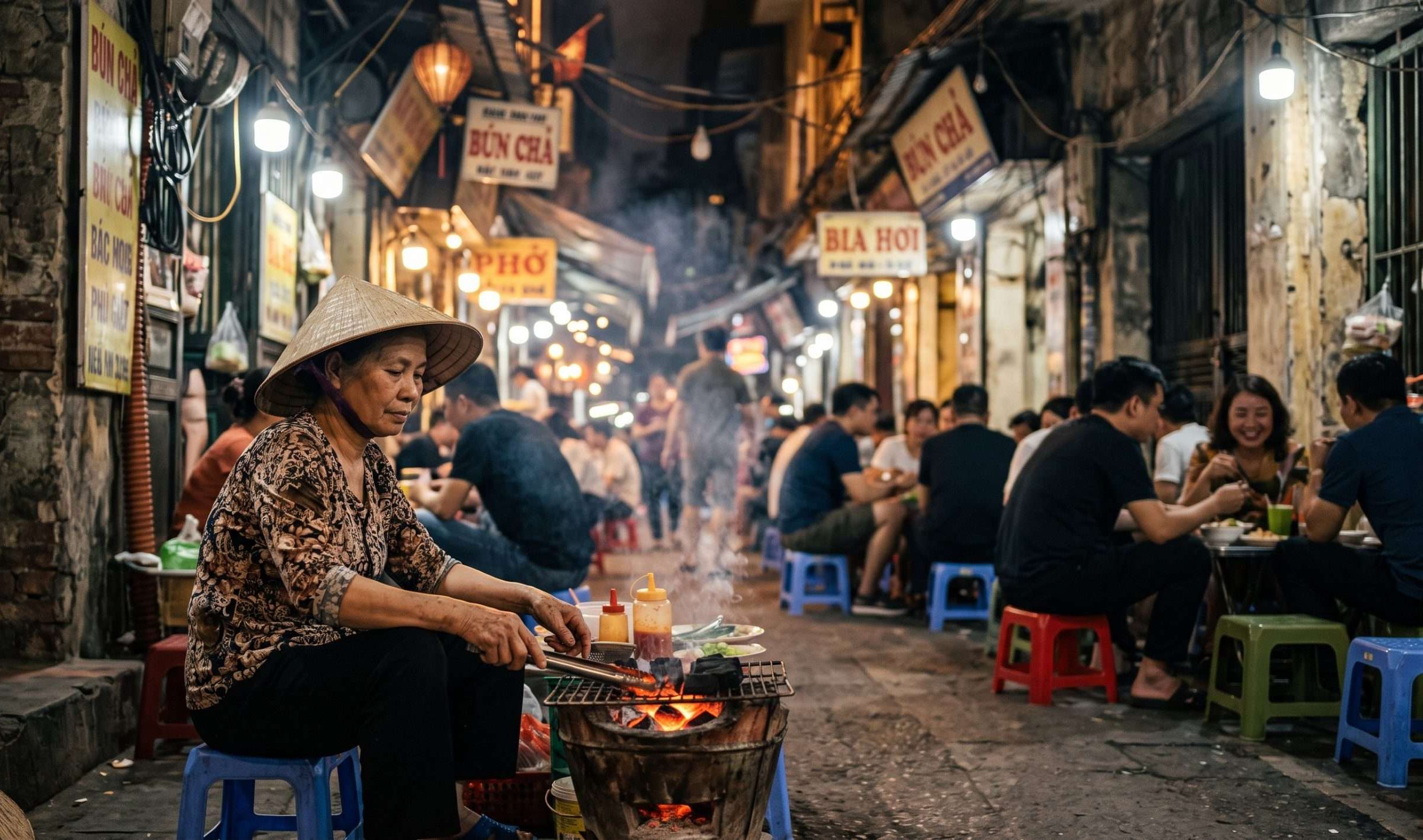
Trading the dense tourist infrastructure of your Day 1 Hanoi Old Quarter arrival for the agricultural and industrial perimeters of the capital requires a shift in operational tactics. Moving past the standard downtown loop means navigating dusty ceramic production hubs, 300-year-old laterite communes, and hyper-local pavement grills where high-turnover seating dictates the safest meals.
Destination Reality Check:
- Booking Window: Secure guided transport for outer-city village trips at least 48 hours in advance, as specialized heritage guides for Duong Lam are limited in number.
- Peak Crowd Hours to Avoid: 11:30 AM to 1:30 PM in the craft villages. The midday tropical sun radiating off the concrete and brick kilns makes outdoor walking tours miserable.
- Transit Tip: Attempting to reach the Bat Trang ceramic hub via public Bus #47 is cheap but painfully slow and confusing. Booking a private transfer or a small-group van saves two hours of frustrating transit time across the Red River bridges.
Hanoi Craft Village Half-Day Excursion: Bat Trang Pottery Making & Ceramic Market
The Breakdown: Bat Trang is an active industrial production zone, not a curated outdoor museum. This half-day circuit pulls you off the commercialized main street—which is packed with generic souvenir shops selling identical glazed mugs—and routes you into the narrow, dusty alleys housing multi-generational family kilns. You walk through the production lines, watch local masters fire the clay, and sit down at a manual kick-wheel to shape and paint your own piece.
Why Book This Tour vs. Going Solo: Independent travelers usually end up dropped off at the main market building, completely missing the actual family workshops hidden deep within the residential labyrinth. An organized small group gets you behind the storefronts and directly into the hands-on workspaces without needing to negotiate entry or workshop fees in Vietnamese.
Logistics & Mobile Photo Pro-Tips:
- Best Time & Lighting: Book a morning departure (8:00 AM). The ceramic kilns generate massive ambient heat, and the tin-roofed workshops become sweltering ovens by early afternoon.
- The Money Shot: Position yourself low and to the side of the potter’s wheel. Switch to your 2x or 3x telephoto lens to compress the shot, focusing sharply on the wet clay and the artisan’s muddy fingertips while throwing the busy, cluttered background of the workshop into a soft blur.
- Mobile Pro-Tip: The air in Bat Trang is filled with fine clay dust and exhaust from delivery motorbikes. Keep your phone in a pocket when not actively shooting, and wipe the camera lenses with a microfiber cloth frequently to prevent hazy, low-contrast photos.
- Footwear & What to Wear: Wear closed-toe, wipeable sneakers. You will be walking through active production zones with wet clay on the floors, jagged pottery shards, and uneven brick paths.
Booking Details: Hanoi Craft Village Half-Day Excursion: Bat Trang Pottery via GetYourGuide | Duration: 4 hours | Cancellation: Free up to 24 hours before | Bat Trang Pottery Tour
Duong Lam Ancient Village & Mia Pagoda Full-Day Heritage Tour
The Breakdown: Located 50 kilometers west of the capital, Duong Lam feels like a 17th-century agricultural time capsule. The architecture relies on laterite—a porous red stone dug from the local earth—and timber frames, standing in stark contrast to the French colonial balconies of central Hanoi. This full-day itinerary features a cycling or walking circuit through the ancient communal houses, a traditional home-cooked lunch inside a heritage property, and a stop at Mia Pagoda to view its 287 historic statues.
Why Book This Tour vs. Going Solo: There is no direct rail link to Duong Lam, and hiring a local taxi for a full day of waiting incurs massive standby fees. Furthermore, the value of the village lies in its history; without a local guide to translate conversations with the heritage homeowners or explain the communal courtyard structures, you are just looking at old red walls.
Logistics & Mobile Photo Pro-Tips:
- Best Time & Lighting: Late afternoon provides the most striking visual conditions. The setting sun hits the porous red-brown laterite stone, warming up the ancient textures and casting long, dramatic shadows down the narrow dirt lanes.
- The Money Shot: Stand at the end of a long village alleyway and use your 1x main lens. Position the sloping tiled roofs and the textured red walls to form leading lines drawing the viewer’s eye directly toward the traditional wooden village gates.
- Mobile Pro-Tip: When shooting inside the dark, wooden interiors of the heritage homes or Mia Pagoda, turn off your camera’s automatic flash. Flash flattens the rich wood grains and creates harsh reflections. Instead, brace your phone against a solid wooden beam and let the Night Mode automatically balance the low ambient light.
- Footwear & What to Wear: Wear comfortable, breathable trail runners. You will be walking on uneven laterite stone, dirt paths, and ancient brick courtyards for several hours. Dress modestly for the Mia Pagoda visit, ensuring shoulders and knees are covered.
Booking Details: Duong Lam Ancient Village & Mia Pagoda Tour via GetYourGuide | Duration: 8 hours | Cancellation: Free up to 24 hours before | Duong Lam Village Tour
Hanoi Evening Hidden Alleys Street Food Walking Tour with Egg Coffee
The Breakdown: Transitioning back into the city, this evening route abandons sit-down restaurants for the pavement. Led by an English-speaking local, you navigate a 6-to-8 stop circuit through unmarked residential alleys, eating exactly what the neighborhood eats. The menu rotates based on vendor availability but typically hits bun cha (grilled pork and noodles), pho cuon (fresh rolled rice noodles), banh mi, nom bo kho (green papaya salad with dried beef), and culminates in a hidden loft cafe for Ca Phe Trung (hot egg coffee).
Why Book This Tour vs. Going Solo: It conquers first-timer hygiene hesitation. A seasoned local guide knows exactly which stalls have the highest turnover—guaranteeing fresh ingredients—and steers you away from lukewarm buffet trays or tourist-priced menus. You also skip the anxiety of figuring out the unspoken ordering etiquette at aggressive, fast-paced street stalls.
Logistics & Mobile Photo Pro-Tips:
- Best Time & Lighting: Depart around 6:00 PM. This aligns perfectly with the evening rush hour when the street side grills are operating at maximum capacity, filling the alleys with smoke and atmosphere.
- The Money Shot: For the iconic egg coffee, arrange the cups on the small wooden table near a light source. Shoot top-down (flat lay) at 1x or 2x, capturing the dense, golden meringue-like foam resting over the dark robusta coffee in its warm water bath bowl.
- Mobile Pro-Tip: To capture the aggressive sizzle of the bun cha pavement grills at night, set your phone to 1x and tap the screen directly on the hot, glowing charcoal embers to lock exposure. If you let the phone auto-expose for the dark alley, the fire will blow out into a massive white flare. The rising smoke caught in the streetlights adds incredible cinematic depth.
- Footwear & What to Wear: Wear closed-toe shoes with excellent rubber grip. Hanoi’s tiled alleyways and sidewalks become incredibly slick at night from cooking grease, discarded lime wedges, and dishwater.
- Practical Gear: Bring travel packs of wet wipes and hand sanitizer, as street stalls rarely provide napkins. Carry small denominations of Vietnamese Dong (10k, 20k, 50k notes) in case you want to purchase extra localized snacks or beers outside the tour inclusions.
Booking Details: Hanoi Evening Hidden Alleys Street Food Tour via GetYourGuide | Duration: 3 hours | Cancellation: Free up to 24 hours before | Hanoi Street Food Tour
Frequently Asked Questions
Is the ice safe to drink at Hanoi street food stalls? Yes, commercial tubular ice (machine-made with filtered water) is standard across Hanoi and safe for consumption; simply avoid large, irregular chunks of block ice chipped off with an ice pick.
How far away is Duong Lam from central Hanoi? The village is roughly 50 kilometers west of the Old Quarter, taking between 90 minutes and two hours by car depending on the severity of the capital’s outbound traffic.
Do I need to bargain in the Bat Trang ceramic market? Prices in the main, large-scale market building are negotiable and bargaining is expected, but the private family workshops and studios deep in the village usually operate on firm, fixed prices.
Are there bathroom facilities on the street food tour? Public restrooms are rare, but your guide will know exactly which cafes and larger vendors on the route have clean, accessible toilets in the back for paying customers.
Strategic Itinerary Sequencing
To maximize a final day in the north, schedule either the Bat Trang or Duong Lam excursion for your morning block. Coming off the rugged altitude drops of your Day 5 Sa Pa mountain transit or the humid vertical climbs of your Day 4 Ninh Binh karst routes, a slow-paced village walk provides necessary physical recovery. Return to central Hanoi by 3:00 PM to rest and recharge devices before launching into the evening street food tour at 6:00 PM, concluding your northern loop with a final cup of dense egg coffee before heading to the airport.


Leave A Comment