
Do the Arrival Admin Before the Flight, Not After Landing
Japan feels much easier when the first hour is already planned. Complete the Visit Japan Web before departure, since the official service is used for immigration and customs procedures. Save your QR code, passport details, hotel name, and first address somewhere you can open them quickly. It is important to keep the address in English and Japanese, especially if you need help from airport staff, taxi drivers, or hotel reception.
A little cash is still useful for lockers, older shops, small restaurants, and rural stops.
Build One Simple Arrival Folder
Create one phone folder with your QR code, hotel address, flight details, airport transfer, and first train route. Install an eSIM for Japan before departure so maps, translation, and messages work before you start looking for airport WiFi. This small setup can save real time when you are tired, carrying luggage, and trying to leave the airport smoothly.
Prepare for Japanese Transport Before you Face a Major Station
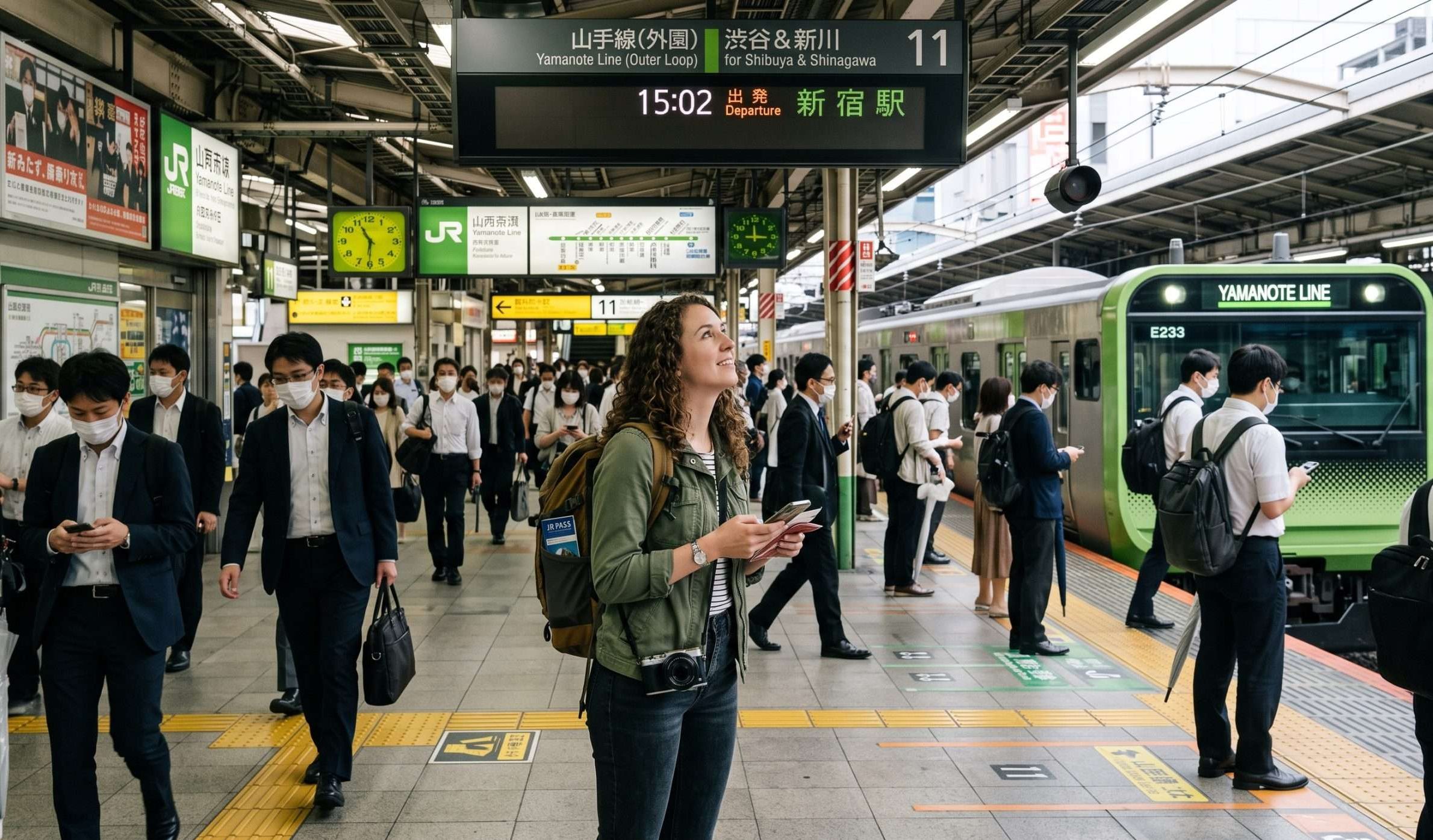
Japan’s trains are efficient, but first-time visitors often underestimate the size of stations. Shinjuku, Tokyo, Osaka, and Kyoto stations can involve long walks, multiple exits, and platforms that are easy to mix up.
IC cards are useful because they work on many trains, buses, vending machines, in convenience stores, and for small daily purchases. Check before flying whether a physical card or mobile version works best for your phone. If you plan Shinkansen rides, airport transfers, or day trips, save the route and ticket details in advance.
Think About Luggage Before you Pack
Japan is much easier with a lighter bag. Coin lockers help for short stops, but city-to-city travel is smoother when you avoid dragging large suitcases through busy stations. If your route includes Tokyo, Kyoto, Osaka, Hakone, or Hiroshima, plan whether to use luggage forwarding or travel with one smaller case.
Set up Your Phone for the Moments When Japan Gets Confusing
Japan is organized, but visitors still depend on their phones constantly. You may need Google Maps for station exits, translation for menus, hotel messages for check-in, and search tools for restaurants with changing hours.
A Japan eSIM should support those practical tasks, not just browsing. A travel eSIM also makes sense if Japan is one stop on a longer Asia route.
Before flying, download offline maps for your first area and save restaurant, hotel, and transport confirmations.
Keep Maps, Translation, and Calls Ready When Plans Shift
An eSIM from Jetpac across 200+ destinations uses prepaid pricing and can save travelers up to 70% compared with roaming. Hotspot sharing is unrestricted, and 4G or 5G is available where supported. Even after the main data pack runs out, WhatsApp chat, Google Maps, and Uber can still remain usable on eligible plans. In-app calls start from $1.99 for five minutes, and qualifying flight delays of 1 hour or more can include lounge access when registered at least 24 hours before departure.








Leave A Comment