
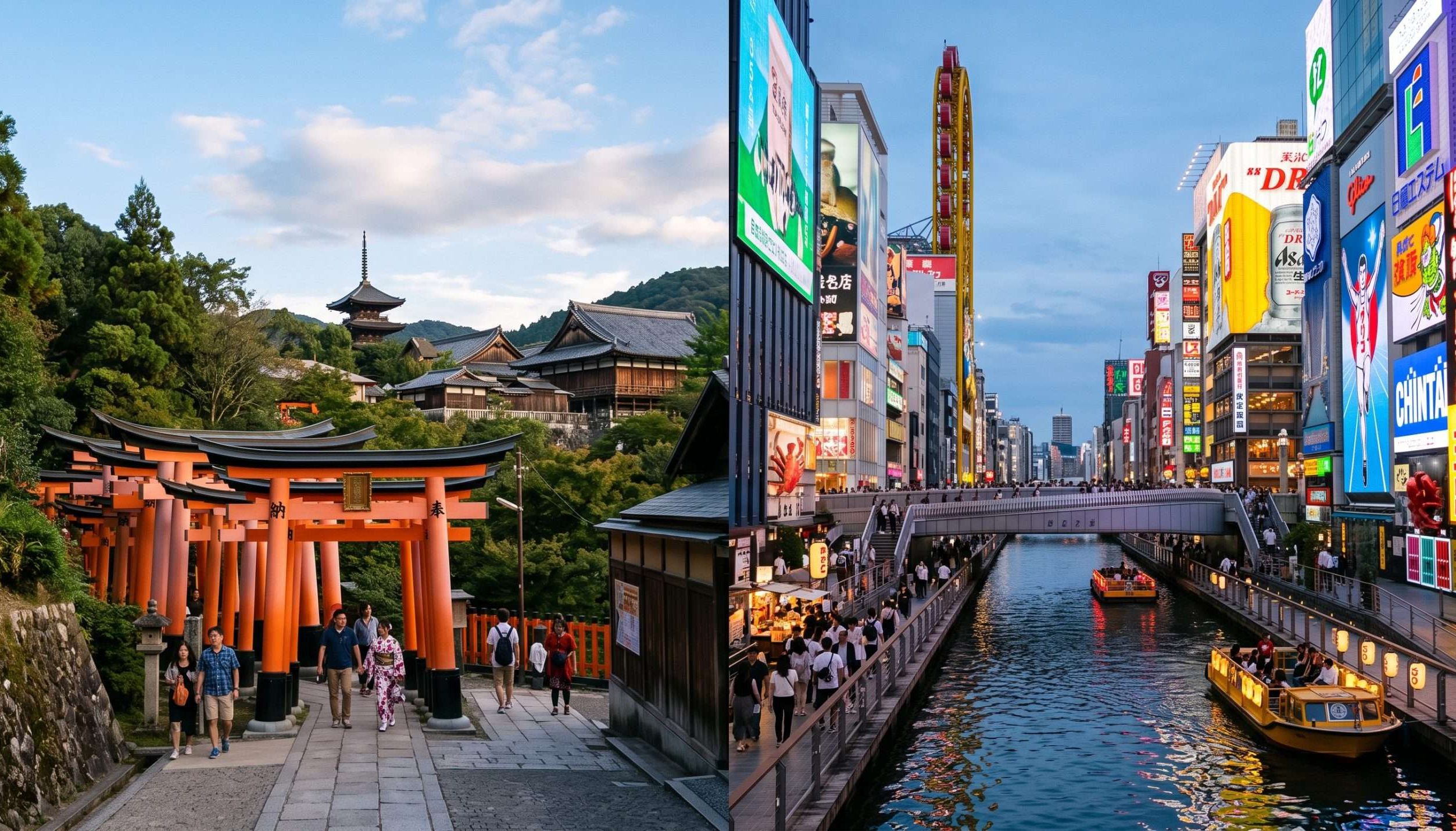
Kansai is one of the easiest regions in Japan to explore without constantly packing and unpacking. Two of its most celebrated cities, Kyoto and Osaka, sit close enough together for travellers to experience both during a single week. Yet their personalities are strikingly different. Kyoto is filled with temples, gardens, traditional streets, and centuries of history, while Osaka feels energetic, informal, food-focused, and unmistakably modern.
A seven-day itinerary allows enough time to appreciate both cities without turning every morning into a race. The trick is to give each destination its own character rather than treating them simply as stops on the same route.
Beginning in Kyoto
Kyoto makes a natural starting point for travellers who want to ease into the region’s cultural heritage. The former imperial capital contains an extraordinary concentration of temples, shrines, gardens, traditional houses, and historic districts. Start with a gentle introduction rather than attempting the biggest attractions immediately. Gion provides an atmospheric setting for a first walk, particularly in the quieter streets away from the busiest routes. The Kamo River is another pleasant place to pause. Walking along its banks gives visitors a chance to adjust to the city while enjoying an open landscape after a flight or long journey.
Temples Without the Rush
Kyoto has enough temples and shrines to fill several holidays, but seeing too many in quick succession can make them blur together. Fushimi Inari Taisha is one of the city’s most recognisable sights, thanks to its seemingly endless rows of vermilion torii gates. Visitors do not need to complete the entire mountain trail to enjoy the experience. Kiyomizu-dera offers another memorable stop, combining historic architecture with elevated views across the city. Visiting earlier in the day can make the experience more comfortable, particularly during busy seasons.
Arashiyama’s Riverside Setting
Set aside another morning for Arashiyama. The area is known for its bamboo grove, but there is much more to discover beyond those famous paths. The Katsura River provides a scenic backdrop, while nearby temples and gardens offer quieter alternatives to the busiest sections. A leisurely walk through the district works particularly well for travellers who want a day with less structured sightseeing. Stop for lunch, browse small shops, and enjoy the changing views rather than trying to fit every attraction into a single route.
Kyoto’s Traditional Streets
Some of Kyoto’s charm lies in its smaller streets and preserved neighbourhoods. Higashiyama is a good example, with historic lanes connecting temples, shops, tea houses, and traditional buildings. The area can become busy, so stepping away from the principal routes can reveal a calmer side of the neighbourhood. Photography enthusiasts will find plenty of details worth noticing, from tiled roofs and wooden façades to stone walls, lanterns, and carefully maintained gardens.
A Taste of Kyoto
Food provides another way to understand Kyoto. The city is known for refined dishes, seasonal ingredients, tofu-based cuisine, sweets, and beautifully presented meals. Nishiki Market offers an approachable introduction to local flavours. Visitors can browse stalls selling pickles, seafood, snacks, tea, and other ingredients. A simple breakfast or lunch from a small local establishment can be just as rewarding as an elaborate dinner. Giving yourself time to eat slowly also provides a useful break between sightseeing stops.
The Short Journey to Osaka
After several days surrounded by Kyoto’s historic atmosphere, the move to Osaka provides an immediate change of pace. The Kyoto to Osaka train connection makes it easy to travel between the cities without sacrificing a large portion of the day. Because the journey is relatively short, visitors can leave Kyoto after breakfast and still have most of the day available in Osaka. This close connection also means travellers do not necessarily have to change hotels if they prefer a single base. However, staying in both cities can provide a more immersive experience, particularly for those who enjoy exploring after dark.
First Impressions of Osaka
Osaka has a lively, approachable personality. The city is famous for food, entertainment, shopping, and its busy streets, creating a clear contrast with Kyoto’s more contemplative atmosphere. Dotonbori is an obvious starting point. Bright signs, restaurants, bridges, canals, and crowds create an energetic introduction to the city. The best approach is to explore at a comfortable pace. Grab a snack, wander along the canal, and watch the neighbourhood come alive as evening approaches.
Osaka Castle and Its Grounds
History remains an important part of Osaka’s identity, even though the city feels considerably more modern than Kyoto. Osaka Castle is one of the city’s best-known landmarks. The surrounding park provides valuable open space and can make a pleasant change after spending time in crowded shopping districts. The castle itself has been rebuilt over the centuries, but the site remains closely connected with the history of Osaka and Japan’s political past.
Discovering Osaka’s Food Culture
Osaka is often described as one of Japan’s great food cities, and eating should be part of the itinerary. Okonomiyaki and takoyaki are two obvious choices, while ramen, udon, grilled dishes, sushi, and countless regional snacks provide plenty of alternatives. Kuromon Market is another interesting stop for visitors who enjoy seeing ingredients and prepared foods displayed in one lively setting. Instead of planning every meal around famous restaurants, leave room for spontaneous discoveries. A small shop with a queue of local customers may become one of the trip’s best meals.
A Different Kind of Evening
Osaka becomes especially lively after sunset. Neighbourhoods such as Namba and Dotonbori fill with illuminated signs, restaurants, entertainment venues, and people meeting friends. This makes the city an excellent place to slow down after a day of sightseeing. There is no need to visit another major attraction. An evening stroll followed by a casual meal can provide a more authentic sense of the city’s social rhythm than another museum visit.
Family-Friendly Experiences
Kansai works well for families because the region offers considerable variety. Kyoto provides gardens, temples, traditional crafts, and scenic walks, while Osaka has aquariums, entertainment attractions, parks, and interactive experiences. Children may particularly enjoy seeing trains arrive at busy stations or sampling unfamiliar foods at markets. Short travel distances also help. A seven-day holiday does not need to involve long transfers every day, leaving more energy for actual exploration.
Where to Stay in Kyoto
Accommodation in Kyoto should be chosen with transport and evening plans in mind. Staying near a major station makes regional excursions easier, while central neighbourhoods provide better access to restaurants and historic streets. A traditional ryokan can offer a memorable cultural experience, although travellers should check the rules and room arrangements if travelling with young children. For longer stays, a comfortable hotel or apartment-style accommodation may provide greater flexibility.
Picking a Base in Osaka
In Osaka, areas around Namba and Umeda are particularly convenient for visitors. Both provide extensive transport connections, restaurants, shops, and access to other parts of the city. Namba is especially useful for travellers who want to be close to evening entertainment and Dotonbori, while Umeda offers a major transport hub and a more business-oriented urban environment. Choosing accommodation close to a station can save considerable time over the course of a week.
A Balanced Seven-Day Plan
A simple itinerary could give four days to Kyoto and three to Osaka. This allows enough time for the major cultural sights without leaving Osaka as an afterthought. Another option is three nights in Kyoto followed by four in Osaka, particularly for travellers planning day trips from the latter. There is no universal formula. The right division depends on whether your priorities lean more towards history and gardens or food, entertainment, and contemporary city life.
Adding a Day Trip
Kansai’s excellent transport connections make a day trip possible without disrupting the main itinerary. Nara is an obvious choice from Kyoto or Osaka, with temples, historic sites, and its famous free-roaming deer. Travellers with more time might also consider Himeji, known for its spectacular castle. If adding an excursion, avoid filling every remaining day with additional destinations. One carefully chosen trip is usually more enjoyable than several rushed outings.
Seasonal Considerations
Spring and autumn are particularly popular for Kyoto, thanks to cherry blossoms and colourful foliage. These periods can also bring significant crowds, so early starts become more valuable. Summer is warmer and more humid, but festivals provide a lively cultural atmosphere. Winter tends to be quieter and can bring a different charm, particularly when temples and gardens are dusted with snow. Osaka remains enjoyable throughout the year, making it a useful complement to Kyoto during any season.
Leaving Room for Discovery
The strongest Kansai itinerary does not account for every minute. Some of the best experiences can happen between planned attractions. A quiet Kyoto alley, an unexpected Osaka food stall, a riverside sunset, or an interesting local shop can become more memorable than a carefully scheduled stop. Allowing flexibility also means the trip can adapt to weather, tiredness, opening times, or simple changes of mood.
Two Cities, One Region
Kyoto and Osaka demonstrate how varied Japan can be within a relatively small geographical area. One offers a window into centuries of religious, artistic, and imperial history, while the other celebrates food, entertainment, commerce, and contemporary urban life. Experiencing both in one week creates a natural contrast without requiring complicated travel arrangements. The result is a holiday that feels varied from beginning to end.
Conclusion
A week in Kansai is long enough to appreciate both Kyoto and Osaka while still leaving space for relaxed meals, neighbourhood walks, and spontaneous discoveries. Kyoto brings temples, gardens, traditional streets, and cultural heritage, while Osaka adds lively markets, modern attractions, historic landmarks, and an unforgettable food scene. By dividing the stay thoughtfully and keeping the schedule flexible, travellers can enjoy two very different Japanese cities while benefiting from the region’s remarkably convenient connections.





Leave A Comment