
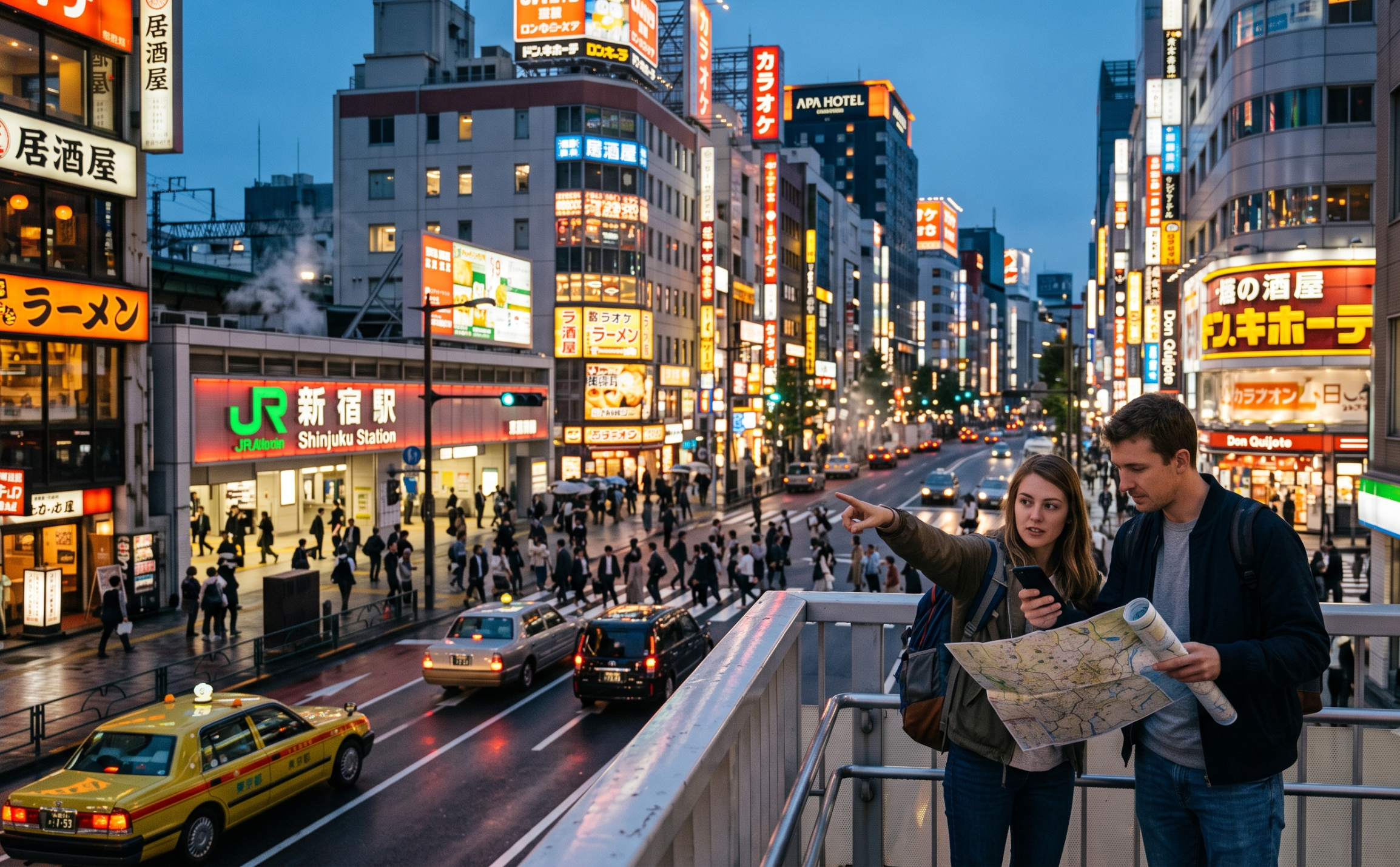
Tokyo has 23 wards, dozens of distinct neighborhoods, and roughly 15,000 hotels. Picking where to stay without a plan is how people end up commuting 40 minutes to every restaurant they actually want to eat at. The neighborhood you choose matters more than the hotel itself.
Understand How Tokyo’s Neighborhoods Actually Function
Tokyo isn’t organized around a single center the way Paris or London is. It has multiple hubs — Shinjuku, Shibuya, Ginza, Asakusa, Roppongi — each with its own character and purpose. Where you stay shapes everything: which train lines you use, how long you’re on your feet each day, and what kind of city you experience.
Think of it less like choosing a hotel and more like choosing which version of Tokyo you want to live in for a week.
Match Your Base to Your Priorities
If nightlife and convenience are your thing, Shinjuku is hard to beat. It sits at one of the world’s busiest train stations, which means you can get almost anywhere in 20 minutes. The west side is corporate and modern; the east side gives you Kabukicho and the famous Golden Gai alleyways.
Shibuya suits people who want to feel the pulse of younger Tokyo — fashion, street culture, the famous scramble crossing. Ginza is the opposite: polished, quiet at night, expensive, and close to Tsukiji’s outer market if you’re an early riser. Asakusa is the right call if you want older Tokyo — temples, craft shops, ryokan-style accommodation — but it sits in the east and can add travel time to western attractions.
Consider the Train Lines Before Booking
This sounds tedious, but it saves hours of frustration. Tokyo’s rail network is enormous and efficient, but not every line connects easily to every other. If most of your plans are in Harajuku, Omotesando, and Daikanyama, staying somewhere on the Yamanote Line makes sense. If you’re planning day trips to Nikko or Kamakura, proximity to specific terminals matters.
Look up your top five destinations on Google Maps before finalizing your hotel. Run a transit check and see what the actual commute looks like. A 10-minute difference in hotel price rarely matters as much as shaving 30 minutes off your daily travel.
Know What Type of Accommodation Fits Your Trip
Western-style hotels in Tokyo range from budget business chains like Toyoko Inn to full-scale luxury properties in Marunouchi and Shinjuku. If you’re booking through a company running Tokyo luxury tours, your accommodation is likely already curated around location, service quality, and access to specific experiences — which takes the guesswork out of this entirely.
Ryokan stays are worth considering even for a single night, particularly in neighborhoods like Asakusa or just outside the city in Hakone. The experience — tatami floors, yukata robes, multi-course kaiseki dinners — is genuinely different from anything a hotel offers. Book these well in advance; the good ones fill up months out.
Budget Isn’t Just About the Room Rate
A cheaper hotel in a less connected neighborhood often costs more once you factor in daily transport. A room in Shinjuku for 20,000 yen might save you 3,000 yen a day in train fares and two hours of commuting compared to a 15,000 yen option in a quieter outer ward.
There’s also the question of what’s walkable. In Omotesando or Nakameguro, you can spend an entire afternoon without touching the subway — cafes, restaurants, shops all within a short radius. That ease has real value, especially when you’re tired and just want dinner without a 20-minute train ride.
Don’t Overlook Smaller Neighborhoods
Yanaka, Shimokitazawa, and Koenji rarely show up in mainstream travel guides, but they’re worth knowing. Yanaka is one of the few parts of Tokyo that still feels like it did before the 1960s — narrow streets, old temples, independent shops. Shimokitazawa has a secondhand clothing and live music scene that’s unlike anything in the more touristy areas.
Staying in these neighborhoods isn’t practical for a first trip, but if you’ve been to Tokyo before and want something different, they offer a quieter, more local rhythm. Some smaller boutique hotels and guesthouses here are genuinely excellent and a fraction of the price of central options.
One Practical Rule Before You Book
Check the hotel’s proximity to a convenience store. This sounds minor until it’s midnight, you’re exhausted, and you want a cold beer, a rice ball, and some ibuprofen. Tokyo’s convenience stores — 7-Eleven, FamilyMart, Lawson — are open 24 hours and legitimately good. Being a two-minute walk from one is a small thing that improves a trip more than most amenities inside the hotel itself.
Choose your neighborhood first, then your property. That order of thinking will serve you better than any star rating.






Leave A Comment