
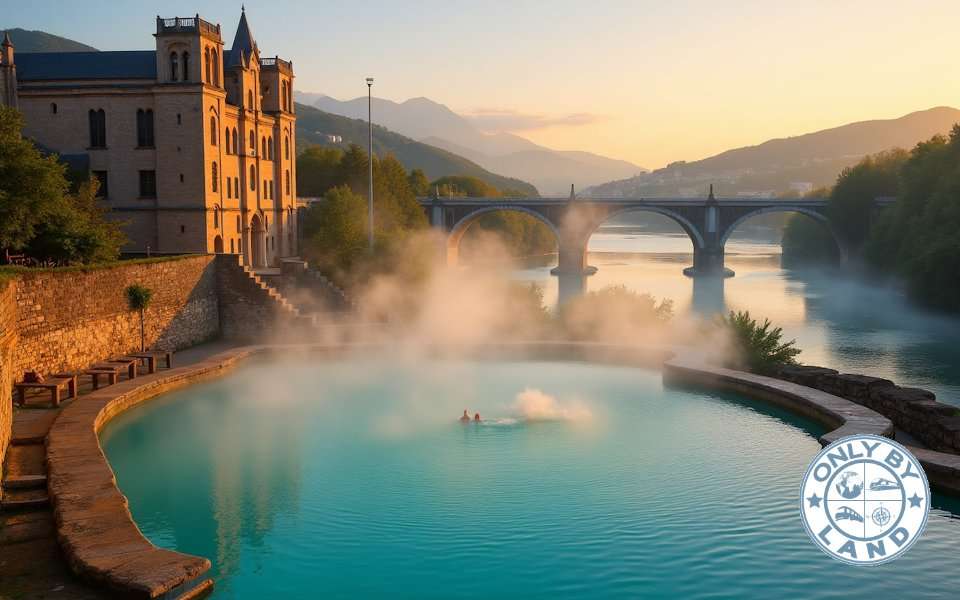
Ourense, a hidden treasure in Spain’s Galicia region, has captivated visitors with its ancient thermal springs for centuries. This charming city remains untouched by mass tourism and gives travelers a genuine Spanish experience.
The city seamlessly combines its Roman roots from 2,000 years ago with contemporary architecture. The impressive Millennium Bridge stretches 275 meters across the landscape, while the medieval Ponte Vella stands as a testament to history. Local residents call their city “Spain’s Frying Pan” because of its unique weather patterns. Visitors can explore the magnificent 12th-century Cathedral with its Paradise Portal or relax in the healing waters of A Chavasqueira and Termas Outariz thermal baths. Though Ourense is the only province in Galicia without access to the coast, its breathtaking scenery and rich cultural heritage make it just as appealing as its seaside neighbors.
Catedral de Ourense: A Romanesque Marvel
The majestic Catedral de San Martiño, founded in 550, stands as evidence of centuries of architectural progress in Ourense’s historic center. Moreover, the original Romanesque church was built during the 12th and 13th centuries. The cathedral’s development continued for more than eight centuries.
Catedral de Ourense History
The cathedral’s consecration in 1188 was one of the most important milestones in its construction. In fact, the structure went through many modifications that blended Romanesque and Gothic elements. The cathedral looks like a fortress with towers and battlements on its southern façade. This design reflects its troubled past, especially during the Count of Benavente’s attack in 1471.
Paradise Portico Highlights
The 13th-century Pórtico del Paraíso shows exceptional artistry inspired by Master Mateo’s work at Santiago de Compostela. Indeed, the portico features detailed sculptures. The central arch displays 24 elders from the Book of Revelation who carry period instruments as they converse. The columns show prophets with name labels and apostles holding books.
Cathedral Museum Collections
The Gothic cloister known as Claustra Nova has housed the museum since 1957. The museum’s prized possessions include the Missal Auriensis from 1494, Galicia’s first printed book. The extraordinary St. Rudesind’s Treasure is also part of the collection. It features pieces from the 10th-13th centuries, including rare Fatimid chess pieces made from rock crystal.
Best Time to Visit Catedral de Ourense
Visitors can explore the cathedral year-round with different seasonal schedules. Winter hours run Monday through Wednesday from 10 AM to 7 PM, with extended hours Thursday through Saturday. Regular tickets cost €7. Retirees pay €6.50 and youth tickets are €5. Audio guides in five languages give detailed explanations about the cathedral’s architecture and history.
As Burgas Thermal Springs
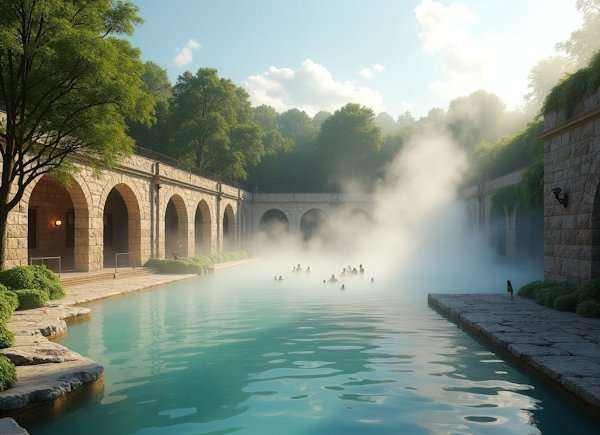
The remarkable thermal spring complex As Burgas sits at the heart of Ourense’s historic center. Water emerges here at temperatures exceeding 60°C. These ancient springs have shaped the city’s identity for thousands of years and remain a must-visit spot for anyone in Ourense.
As Burgas History and Legend
Roman settlers built “Aquis Auriensis” around these therapeutic waters. Recent archeological digs uncovered a pool-sanctuary from the 1st century AD and six votive stones. These stones were dedicated to Revve Anabaraego, a deity believed to live in the springs. The Romans built a bathhouse next to the sanctuary that became a gathering spot for citizens to discuss daily life.
Thermal Pool Facilities
The modern thermal facility covers about 200 square meters of outdoor space. Visitors will find changing rooms, lockers, and a wet sauna in the pool area. Staff maintains the water temperature between 38-40°C – perfect for therapeutic bathing. This unique facility stands as Spain’s only urban thermal pool where people can enjoy warm waters while taking in the views of historical monuments.
As Burgas Healing Properties
The springs produce medium mineralized waters rich in lithium with alkaline properties. These waters help with:
- Skin care improvement
- Muscle relaxation
- Better overall wellness
Visitor Tips for As Burgas
Here are some key guidelines to plan your visit:
- Medical Considerations: People with hypotension, hypertension, heart conditions, or pregnancy should check with their doctors first
- Timing: The facility runs Monday through Saturday with specific morning and afternoon sessions
- Cost: The thermal pool is free to use and storage lockers come at no extra charge
- Safety: The original fountains have water temperatures up to 65°C, so stay cautious around them
The site has three main parts: the 19th-century monumental fountain (Burga de Abaixo), the central esplanade with the thermal pool and the 17th-century Burga de Arriba. The complex earned recognition as a Site of Cultural Interest in 2007, highlighting its historical value.
Visit Santiago de Compostela.
Ponte Romana (Roman Bridge)
The Ponte Romana bridge spans the majestic Miño River and stands as proof of ancient engineering prowess. This architectural marvel stretches 370 meters in length. Built during Emperor Augustus’ reign in the first century, the bridge has evolved through centuries of careful preservation and reconstruction.
Ponte Romana Architecture
The bridge’s central arch remains its most impressive feature. It rises 38 meters above the water level with a width of 43 meters. The structure still has seven of its eleven primitive arches built from local granite that has stood strong through time. You can still see original Roman construction in the first arch on the left bank, which shows ancient building techniques. The bridge got its distinctive silhouette from pointed arches added in the 13th century, which now define Ourense’s skyline.
Historical Significance
The bridge is a vital link in the Roman Empire’s transportation network, connecting Bracara Augusta (modern-day Braga) to Asturica Augusta (Astorga) through route XVIII. Bishop Lorenzo and King Ferdinand III led the bridge’s first major changes in 1228-1229. Melchor de Velasco’s work in the 17th century brought the final improvements. The bridge’s historical value earned it the Historic Monument status in 1961.
Best Photo Spots
The modern Millennium Bridge gives photographers unmatched views of this ancient structure. Photographers can capture amazing architectural details from the pedestrian bridge upstream. Ultimately, the best lighting conditions appear early in the morning. The bridge’s reflection in the Miño River creates beautiful compositions when it lights up against the evening sky.
The bridge’s importance shows in its place on Ourense’s coat of arms. Since 1998, it has served as a pedestrian-only crossing. Visitors can now take their time to appreciate its architectural details.
Millennium Bridge Experience
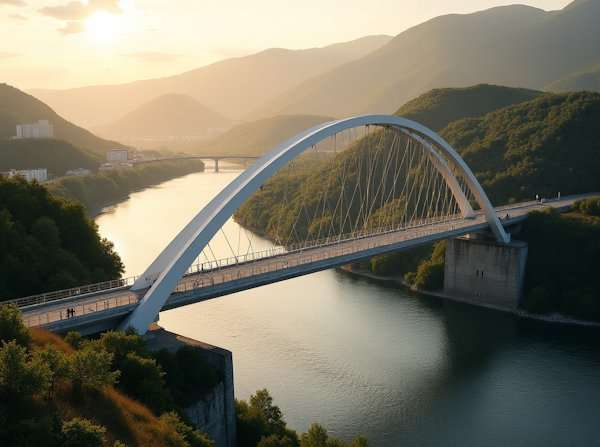
Architect Álvaro Varela designed the Millennium Bridge, which was completed in 2001. This remarkable structure spans 275 meters across the Miño River. The bridge stands as both a practical crossing and an artistic landmark for Ourense.
Bridge Design Features
A unique elliptical design gives the bridge its seagull-shaped silhouette. Built with concrete and steel, it has four traffic lanes and dedicated paths for pedestrians. The central span reaches 36 meters, held up by carefully matched steel straps. Water sports enthusiasts now enjoy an unexpected bonus – the Millennium Wave – created by the bridge’s construction.
Viewing Platforms
The bridge’s star attraction is its raised pedestrian walkway, which soars 22 meters above the river. Visitors can climb 100 steps to reach stunning views from this innovative feature. The walkway lets people see:
- The historic Roman Bridge upstream
- The Miño River winding below
- Ourense’s city landscape
- Rolling hills all around
Night Illumination Views
The Millennium Bridge comes alive at night with spectacular lights. Special lighting shows off the bridge’s architectural features and creates a magical display on the water below. The 23-meter width looks even more striking after dark. Lit-up walkways stand out beautifully against the night sky.
The bridge does more than just look good. Since its opening on September 1st, 2001, it has cut traffic on other city bridges substantially. The construction also helped turn the historic Ponte Vella into a pedestrian-only zone, which protects this ancient landmark for future generations. People quickly saw the bridge as a symbol of Ourense’s growth and its step into the new millennium.
Plaza Mayor Exploration
Plaza Mayor stands out among Ourense’s architectural gems with a unique feature – its sloping ground makes it one of the few inclined main squares in Europe. This historic city center naturally combines centuries of cultural heritage with modern urban life.
Plaza Mayor Architecture
The square has arcades on three sides that were once called El Espolón, a popular walking spot for nobles. Queralt’s Town Hall occupies the only side without arcades and features a classicist façade with the Catholic Monarchs’ coat of arms. Next to it, you’ll find the 12th-century Old Episcopal Palace, a Romanesque masterpiece that now houses the Provincial Archeological Museum.
Local Life and Atmosphere
The square serves as the city’s main meeting point and buzzes with activity. Local bars and restaurants now fill the arcaded areas, where people enjoy regional dishes under beautiful 18th and 19th-century façades. Fermín García’s modernist house, with its decorative tiles, shows the square’s diverse architectural styles.
Surrounding Attractions
Notable landmarks sit close to the square. The Cathedral’s southern façade looks over the nearby Praza do Trigo, where the beautiful Fuente Nueva fountain stands. In addition, the Gayoso family’s former Renaissance home adds charm to the adjacent Plaza de las Damas. The 18th-century Casa de los Temes represents another architectural highlight nearby.
Yellow lights bathe the square each evening, creating a magical atmosphere that visitors can best enjoy from the terrace bars. The square’s unusual slope comes from its location on an ancient Barbaña river terrace. Plaza Mayor continues to show Ourense’s rich history and modern spirit.
A Chavasqueira Thermal Baths
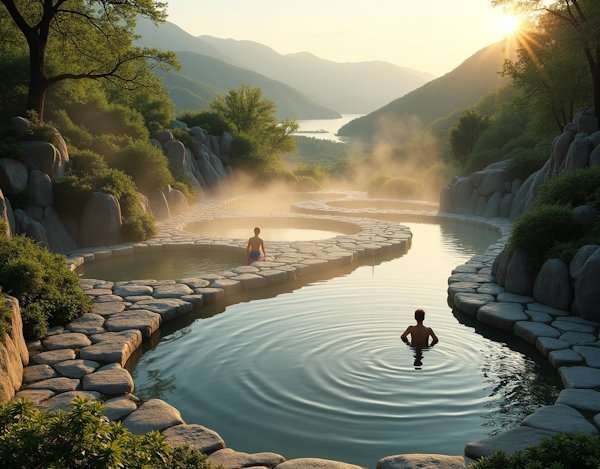
A Chavasqueira thermal baths blend traditional Japanese bathhouse design with natural healing waters. The baths sit along the scenic Miño River’s Thermal Route near the striking Millennium Bridge, giving visitors a chance to experience authentic thermal bathing in Ourense.
Pool Types and Temperatures
The thermal circuit features unique pools designed to meet different therapeutic needs:
- Rotenburo: Three outdoor stone pools maintain temperatures of 41°C
- Ofuro: An indoor stone bath at 39°C
- Templarium: A Zen-inspired sauna reaching 40°C with 70% humidity
- Sudarium: A Japanese-style sauna maintaining 45°C with 85% humidity
Two natural springs feed the complex with water temperatures of 60°C and 61°C. The waters contain medium mineralization rich in bicarbonates, sodium, fluoride, lithium, and sulfur.
Spa Services
A Chavasqueira goes beyond thermal bathing with detailed wellness services. Professional massages and specialized beauty treatments add to your experience. The facility comes equipped with changing rooms, toilets, and secure lockers.
A Chavasqueira Admission and Hours
You can visit the thermal station from 10:00 AM to 8:00 PM. Here’s what you need to know:
- Entry fee: 4.40€ for a 90-minute session
- Towel rental: 2€
- Required items: bathing suit, flip-flops, and towel
- Age restriction: No entry for children under 10
Getting there is easy with:
- Free parking at Campo da Feira
- Urban bus line L26
- Thermal train service (L19)
The baths’ history dates back to the 19th century. Cardinal Quevedo ordered its development to help patients seeking thermal cures. His stone pavilion still stands within the spa complex today.
Church of Santa Eufemia
The Church of Santa Eufemia stands as Ourense’s second-largest religious building and fascinates visitors with its exceptional Galician Baroque architecture. This remarkable structure began its construction in the mid-17th century under the masterful design of Friar Plácido Iglesias.
Baroque Architecture Features
The church’s most striking feature is its concave façade. Friar Plácido Iglesias created this unique architectural solution to adapt to the narrow street. The exterior blends rich details with curved lines that create an interplay of light and shadow. The façade shows distinctive Galician artistic elements – granite construction, giant-order columns, pinnacles and a split pediment with a cross.
Interior Highlights
The church’s layout follows a Latin cross plan with three long naves. The side naves are lower than the central one. A stunning Baroque altar commands attention in the sanctuary, with the 18th-century Cristo de la Esperanza at its heart. Moreover, the 19th-century additions of vaults and dome improve the church’s architectural grandeur. The central niche holds Santa Eufemia’s statue, added in the 20th century to honor the parish’s patron saint.
Historical Context
The church’s story began as a private foundation in the mid-17th century, but the façade took another hundred years to complete. It became the parish church of the Ourense diocese in 1767, right when Spain expelled the religious order. The church’s dedication to Santa Eufemia links to an intriguing local legend. The saint spread Christianity in the O Xurés area and faced martyrdom during Emperor Hadrian’s reign. A fascinating story from 1060 tells of a shepherdess who found the saint’s tomb. A hand reached out offering a ring that strangely affected the finder’s speech.
Things to do in Braga Portugal.
San Lazaro Park Relaxation
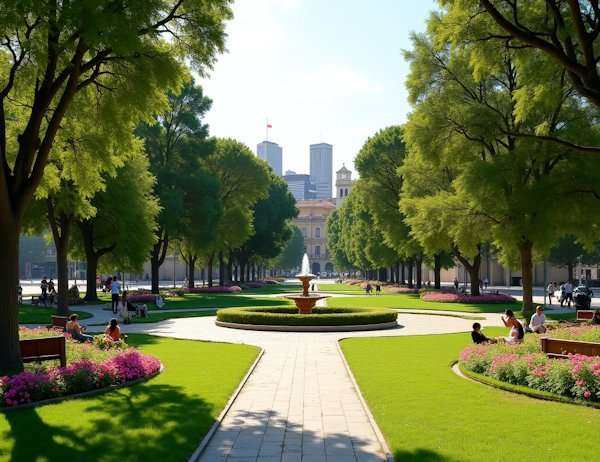
San Lazaro Park serves as the economic and commercial heart of modern Ourense. The park spans two distinct levels and gives visitors a peaceful retreat in the busy city center. This green sanctuary blends historical elements with modern amenities to create a welcoming space for everyone.
Park Attractions
A magnificent Baroque fountain from the Cistercian monastery of Oseira stands as the park’s centerpiece. Beautiful sculptures that tell the city’s cultural story dot the landscape. César Lombera’s iconic O Carrabouxo statue from 1992 shows a figure wearing a black beret absorbed in reading a newspaper. The park also features the striking Angel statue created by Francisco Asorey in 1951.
Seasonal Activities
Mature trees line the park’s streets and create natural shade over benches. These comfortable spots are perfect for:
- Picnics in the shade
- Quiet reading and relaxation
- Meeting with friends
- Year-round cultural events
Family-Friendly Areas
The park caters well to families with children of all ages. Two separate playgrounds keep different age groups safe while they play and have fun. Parents can watch their children from nearby comfortable seating areas.
Local heritage comes alive through unique artistic displays in the park. Ramón Conde’s compelling 2006 sculpture honors the Ourense Rallye with promoters seated in the legendary Alpinche car. The Castiñeira (chestnut seller) by Xosé Cid from 2001 celebrates women’s traditional craft roles. These artistic elements and practical features make San Lazaro a vital community space where history, recreation and city life naturally come together.
Outariz Thermal Complex
The Outariz Thermal Complex sits on the western bank of the Miño River. This largest thermal sanctuary in Ourense combines Japanese spa traditions with Celtic heritage. The peaceful retreat can welcome up to 180 visitors who come to enjoy therapeutic waters under the open sky.
Japanese-Style Pools
The complex takes its inspiration from traditional Japanese Onsen culture. Visitors can enjoy eleven outdoor pools and three indoor sanctuaries. The thermal experience offers two distinct circuits:
Zen Circuit creates a peaceful atmosphere through:
- Calm waters in wooden and oval stone pools
- Traditional Japanese rotenburo and ofuro baths
- Meditation-focused spaces
Celtic Circuit celebrates pre-Roman settlements with:
- Stone-crafted thermal baths
- Dynamic water features with bubbles and waterfalls
- Therapeutic streams that help relieve muscle tension
Outariz Facilities
The complex offers more than just thermal pools. Visitors can enjoy professional massage services and specialized beauty treatments, from aromatic baths to chocolate therapy. A Japanese-inspired bar sits on the upper level with a large outdoor terrace that looks over the Miño River. The menu includes authentic sushi and traditional refreshments.
Transportation Options
Visitors can reach Outariz in several ways:
- The Thermal Train leaves from Plaza Mayor and takes about 40 minutes
- Bus Line 5 runs to the Outariz/Reza parking area
- Two free parking zones welcome private vehicles
A visit typically lasts two hours and costs 5.70 euros. Pool temperatures range from 27°C to 45°C. The complex stays open until 11 PM. It stands out as the only private thermal resort on the Minho thermal route that allows nighttime bathing.
More on Comillas Spain.
Rua do Paseo Shopping
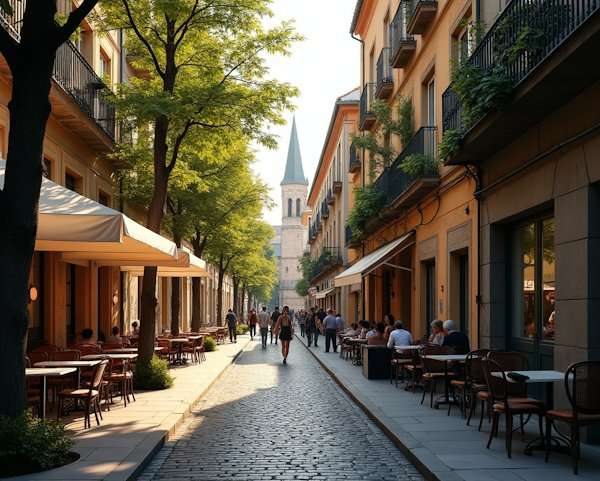
Rua do Paseo, Ourense’s top shopping destination, runs from Plaza Mayor to San Lazaro Park. This beautiful street came to life in 1873 when it connected the city center with San Lázaro field. Today, it welcomes people with a perfect mix of modern shops and historic buildings.
Local Boutiques
Designer stores and luxury boutiques fill the street’s elegant storefronts. Shops stay open from 10:00 AM to 21:00 PM Monday through Saturday. Quality retail stores line both sides of the street and sell everything from high-end fashion to beautiful handmade jewelry. Shoppers love the car-free environment that lets them browse peacefully.
Traditional Crafts
Skilled local artists show off their work in specialty shops along the street. The stunning Viacambre House stands out among many historic buildings. Small trees create cool spots of shade where people can stop while they check out authentic Galician crafts and local goods. You can walk the entire length of this beautiful avenue in about ten minutes.
Dining Options
Food lovers will find plenty of great places to eat along Rua do Paseo:
- Sibuya Urban Sushi Bar Ourense makes a great spot for family meals
- Tizar Gourmet Urban Food serves both sit-down meals and delivery
- Bar Orellas and La Estacion De Loman work well for budget-friendly meals
The street comes alive throughout the day. Cafes and ice cream shops give shoppers perfect spots to rest. Many restaurants like Milongas Parrillada Ourense and O Lar do Leitón offer takeout. Rua do Paseo’s mix of historic charm and modern shops makes it the perfect place to experience Ourense’s shopping culture.
Archeological Park
The Santomé Archeological Park, just three kilometers from downtown Ourense, reveals a remarkable coexistence of Celtic and Galician-Roman cultures. This site stands out as one of Spain’s prominent examples where two distinct civilizations lived side by side in time and space.
Ancient Settlements
A fascinating blend of Roman influences and indigenous traditions marks the hilltop fortress that thrived between the 1st and 5th centuries AD. Excavations in 2000 brought to light a complete district in the upper section. The site features:
- A central street with adjacent square
- Multiple overlapping houses from the 1st-2nd century AD
- A fortress tower that guards the hillfort entrance
Museum Exhibits
The Provincial Archeological Museum’s collections are truly exceptional. Their permanent exhibition, ‘Escola de Escultura,’ takes visitors through a timeline of remarkable artifacts. Notable exhibits include:
- The Bronze Age Statue-Menhir of Pedra Alta with its defense weapons
- The distinctive Triskelion of Castromao from the 1st century BC-1st century AD
- The Tábula de Hospitalidade that shows Roman influence
Guided Tour Options
Expert guides lead detailed tours of the archeological complex. Genuine Galicia hosts specialized thematic routes and educational excursions if you have groups. The site’s location above river Lonia offers breathtaking views of:
- The city panorama
- Natural stone formations carved by the river
- Ancient defensive structures
The park’s importance goes beyond its physical remains. Roman-influenced buildings from the mid-1st century AD dot the northern and western sections. Two houses show the characteristics of Roman villas built around central courtyards. The first house still has its atrium-style courtyard. The second house features a remarkable heated bench system based on the Roman hipocaustum, with preserved staircase steps that lead to an upper floor.
Claustro de San Francisco
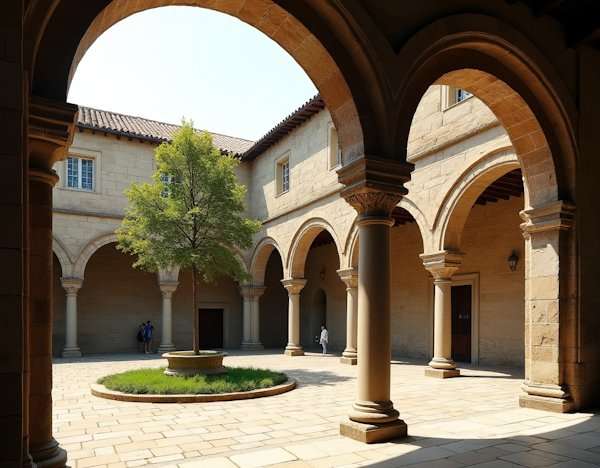
The Claustro de San Francisco stands as a masterpiece of Galician Gothic architecture in Ourense’s upper reaches. Built between 1325 and 1350, this remarkable cloister shows a smooth blend of Romanesque and Gothic styles.
Gothic Architecture
The cloister’s architectural brilliance demonstrates through 63 intricately designed arches that rest mainly on double columns. Each sequence starts and ends with single columns, which creates a unique rhythm throughout the structure. The cloister looks square but has an interesting quirk – no two sides have a similar number of arches. A wooden roof sits above the stone architecture and creates a perfect harmony of materials.
Historical Significance
A devastating fire destroyed the original Franciscan convent in Plaza del Corregidor. The order found its new home in this structure. The cloister changed over time, and became an infantry barracks in 1843. Military activities continued here until 1984, which marked a crucial period in the building’s story. The site’s cultural value earned it National Historic Monument status in 1923.
Preservation Efforts
The cloister has changed into Ourense’s premier cultural center over the last several years. Several major institutions now call this space home:
- The Municipal Auditorium, a contemporary performance venue
- The Ourense Nodal Library, 4 years old
- The Provincial Archive, which won awards for its rehabilitation work
Stone carvings on the cloister’s capitals show an amazing collection of mythological beings, animals and plant motifs. These decorative elements feature rare elephant carvings among scenes from the Old Testament. Preservation work completed about ten years ago will give these artistic treasures availability to future generations. The Sandoval family’s funerary chapel, reached through a festooned arch, stands as proof of the structure’s historical importance.
Praza do Trigo Exploration
Praza do Trigo fascinates visitors with its irregular shape near the Cathedral’s southern façade. The space functions more as a crossroads than a traditional square. This historic marketplace tells the story of Ourense’s commercial heritage through its elegant porticos and bourgeois houses.
Historical Buildings
The square features remarkable structures from different time periods. A standout among them is the 18th-century Temes House with its neo-Baroque decorative elements. One nearby building’s doorpost shows a trade and industry emblem that reveals its merchant owner’s past. Municipal offices now occupy these historic structures, and careful maintenance preserves their architectural value.
Local Markets
Praza do Trigo’s commercial history spans centuries. The square served as a grain market in medieval times. Its name changed to Plaza de las Platerías in the 16th century when many silversmiths set up their workshops here. Beautiful arcades line the square and remind visitors of its past as a busy marketplace for ceramics, silverware, and cereals.
Cultural Events
A charming courtyard called Dames’ Square extends from the main square. Medieval documents refer to this space as an ‘orangerie’. The Cathedral’s unfinished cloister might have been planned for this location, according to some historians. A beautiful granite fountain, the Fonte Nova, sits on a stairway that handles the uneven ground. The fountain came from the Monastery of Oseira and adds beauty to the square’s cultural heritage.
The square’s location provides stunning views of the Cathedral’s south facade. Praza do Trigo continues to serve as a crucial meeting point of Ourense’s historical, commercial, and cultural life. The city shows its steadfast dedication to blending its rich history with modern needs by preserving the square’s medieval character while housing municipal offices.
Jardín Botánico Visit
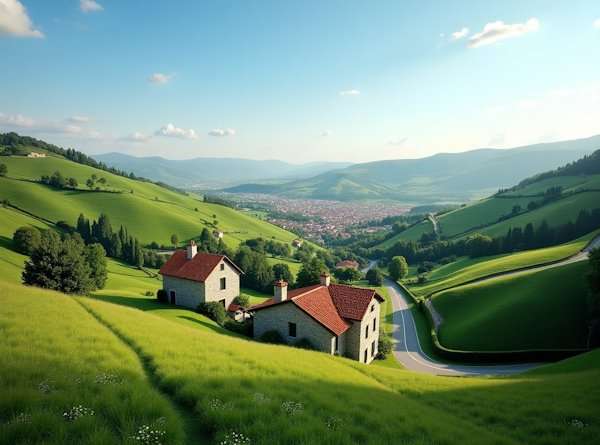
Montealegre, a vast forest park in Ourense, stands as Europe’s most northwestern Mediterranean forest. This 37-acre botanical haven became a forest and botanical park in 2011. Visitors can experience Spain’s rich flora in this remarkable setting.
Plant Collections
The garden’s biodiversity is impressive with over 240 plant species and 132 different fauna species. The Mediterranean ecosystem creates perfect growing conditions for many plant communities. A research center in the park helps with environmental studies and promotes a better understanding of local ecosystems. The facility has children’s orchards among other spaces where visitors can experience nature directly.
Seasonal Blooms
The garden displays changing flower patterns throughout the year that create dynamic landscapes. Visitors can observe nature up close on well-laid-out paths through landscaped areas. The garden’s design will give year-round blooming cycles that attract many bird species. You’ll find several key features in the park:
- A reception and research center
- Scenic viewpoints
- An open-air auditorium carved from a former quarry
- A stone pergola
- A small pond and greenhouse
Garden Activities
The botanical garden provides detailed educational programs all year round. The seasonal schedule includes:
- Guided visits
- Environmental workshops
- Educational activities for various age groups
The park’s cultural importance extends beyond its plants as it hosts the traditional Magosto festival. Its high position offers stunning views of Ourense, where three rivers meet in the valley below. Photography lovers will find countless chances to capture natural beauty, especially during morning hours when sunlight streams through the Mediterranean forest canopy. The park welcomes guests every day of the week and provides a peaceful escape from city life.
Muíño da Veiga Thermal Area
The Muíño da Veiga thermal area sits at the base of a restored wooden mill. This outdoor bathing sanctuary lies next to the Miño River. Visitors can enjoy five different pools that provide therapeutic benefits in a natural setting.
Natural Hot Springs
Several springs feed the thermal complex with water temperatures between 65°C and 72°C. These springs rank among the hottest thermal waters in Spain. The water contains valuable mineral deposits:
- Alkalines and bicarbonate-sodium
- Fluoride compounds
- Essential silicates
The largest pool covers 200 square meters, while a second pool spans 130 square meters. Two smaller pools measure 55 and 45 square meters. A cold-water pool allows visitors to experience contrast bathing.
Historic Mill
The complex gets its name from a wooden watermill (muíño in Galician) that shows evidence of traditional architecture. This restored mill adds a cultural dimension to the natural wellness experience. The core team watches over the facility to ensure clean conditions and proper bathing protocols.
Riverside Location
The complex blends naturally with the riverside vegetation, right on the Miño River’s bed. Visitors can find peaceful spots in the large recreational green space between their thermal soaks. Modern facilities make visits comfortable with:
- Changing rooms with lockers
- Well-maintained toilets
- Shower facilities
Visitors can enjoy the thermal area from 9:00 AM to 9:00 PM daily. The site remains free to access, but guest limits help everyone have a comfortable experience. Guests can park nearby or take a scenic 2-kilometer riverside walk. The location provides stunning sunset views that make it perfect for both day and evening visits.
Comparison Table
| Attraction Name | Type | Key Features | Historical Period/Year | Notable Characteristics | Operating Hours/Access | Entry Fee |
|---|---|---|---|---|---|---|
| Catedral de Ourense | Religious Monument | Paradise Portico, Gothic cloister, Museum | Founded 550 AD | Romanesque and Gothic architecture with fortress-like design | Mon-Wed 10AM-7PM | €7 General |
| As Burgas Thermal Springs | Thermal Complex | Thermal pool, changing rooms, wet sauna | Roman era (1st century) | Waters reach 60°C+, medium mineral content | Mon-Sat (specific sessions) | Free |
| Ponte Romana | Historic Bridge | 7 original arches, 370m length | 1st century AD | Central arch reaches 38m, pedestrian use since 1998 | 24/7 Access | Free |
| Millennium Bridge | Modern Bridge | 275m length, elevated walkway | Completed 2001 | Distinctive seagull shape, 22m viewing platform | 24/7 Access | Free |
| Plaza Mayor | Historic Square | Arcaded sides, Town Hall | 18th-19th century | Sloping main square with arcaded bar areas | – | Free |
| A Chavasqueira Thermal Baths | Thermal Complex | Japanese-style pools, saunas | 19th century | Bath waters 39-41°C, Japanese design elements | 10AM-8PM | €4.40/90min |
| San Lazaro Park | Urban Park | Baroque fountain, sculptures, playgrounds | Est. 1873 | Split-level design, family areas | – | Free |
| Outariz Thermal Complex | Thermal Complex | 11 outdoor pools, 3 indoor sanctuaries | – | Japanese and Celtic-inspired bathing areas | Until 11PM | €5.70 |
| Archeological Park | Historical Site | Celtic and Roman settlements, museum | 1st-5th centuries AD | Evidence of two civilizations | – | – |
| Claustro de San Francisco | Gothic Monument | 63 arches, cultural center | 1325-1350 | Gothic-Romanesque blend, paired columns | – | – |
| Jardín Botánico | Botanical Garden | 240+ plant species, research center | Est. 2011 | 37-acre Mediterranean woodland | Daily access | – |
| Muíño da Veiga | Thermal Complex | 5 distinct pools, restored watermill | Not mentioned | Water temperature 65-72°C | 9AM-9PM | Free |
Enjoy the Things to Do in Ourense
Ourense is a captivating Spanish city where ancient thermal springs blend with architectural treasures from the past 2,000 years. The city’s thermal heritage comes alive through its many available springs and baths. You can find everything from the historic As Burgas to the modern Outariz complex. These natural wonders, along with the most important landmarks like the Romanesque Cathedral and the striking Millennium Bridge, give visitors a rich experience.
The city’s attractions provide great value. Most thermal areas are free to visit and meet high quality standards. You can admire the Gothic beauty of Claustro de San Francisco or take a stroll through Jardín Botánico’s Mediterranean forest. The Archeological Park reveals ancient settlements that tell the city’s story. History buffs and wellness seekers will appreciate how Ourense combines historical sites, thermal experiences and modern comforts without the tourist crowds you find elsewhere in Spain.
Ourense ended up showing that Spain’s hidden gems often create the most extraordinary experiences. The city’s special microclimate, healing waters and well-preserved heritage sites make it a perfect stop on any northern Spain journey.
FAQs
Q1. What are the must-visit thermal baths in Ourense?
Ourense offers several exceptional thermal experiences, including As Burgas in the city center, A Chavasqueira with its Japanese-inspired design and the expansive Outariz Thermal Complex. These baths feature various pools with temperatures ranging from 39°C to 72°C, offering unique therapeutic benefits.
Q2. Is Ourense’s Cathedral worth visiting?
Absolutely. The Catedral de San Martiño, dating back to the 6th century, is a stunning example of Romanesque and Gothic architecture. Its Paradise Portico, Gothic cloister and museum housing rare artifacts make it a significant cultural and historical attraction in Ourense.
Q3. What’s special about the Millennium Bridge in Ourense?
The Millennium Bridge, completed in 2001, is a modern architectural marvel spanning 275 meters across the Miño River. Its distinctive seagull-shaped silhouette and 22-meter high viewing platform offer spectacular views of the city and surrounding landscape, especially when illuminated at night.
Q4. Are there any free thermal baths in Ourense?
Yes, Ourense offers several free thermal bathing options. As Burgas in the city center and Muíño da Veiga by the Miño River are both free to access. These areas provide authentic thermal experiences without any entry fee, though they may have capacity limits.
Q5. What unique cultural experiences can I have in Ourense?
Ourense offers diverse cultural experiences, from exploring the Gothic Claustro de San Francisco to visiting the Archeological Park showcasing Celtic and Roman settlements. You can also wander through the inclined Plaza Mayor, shop on Rua do Paseo or enjoy local festivals like the Magosto in the Botanical Garden.



Leave A Comment