
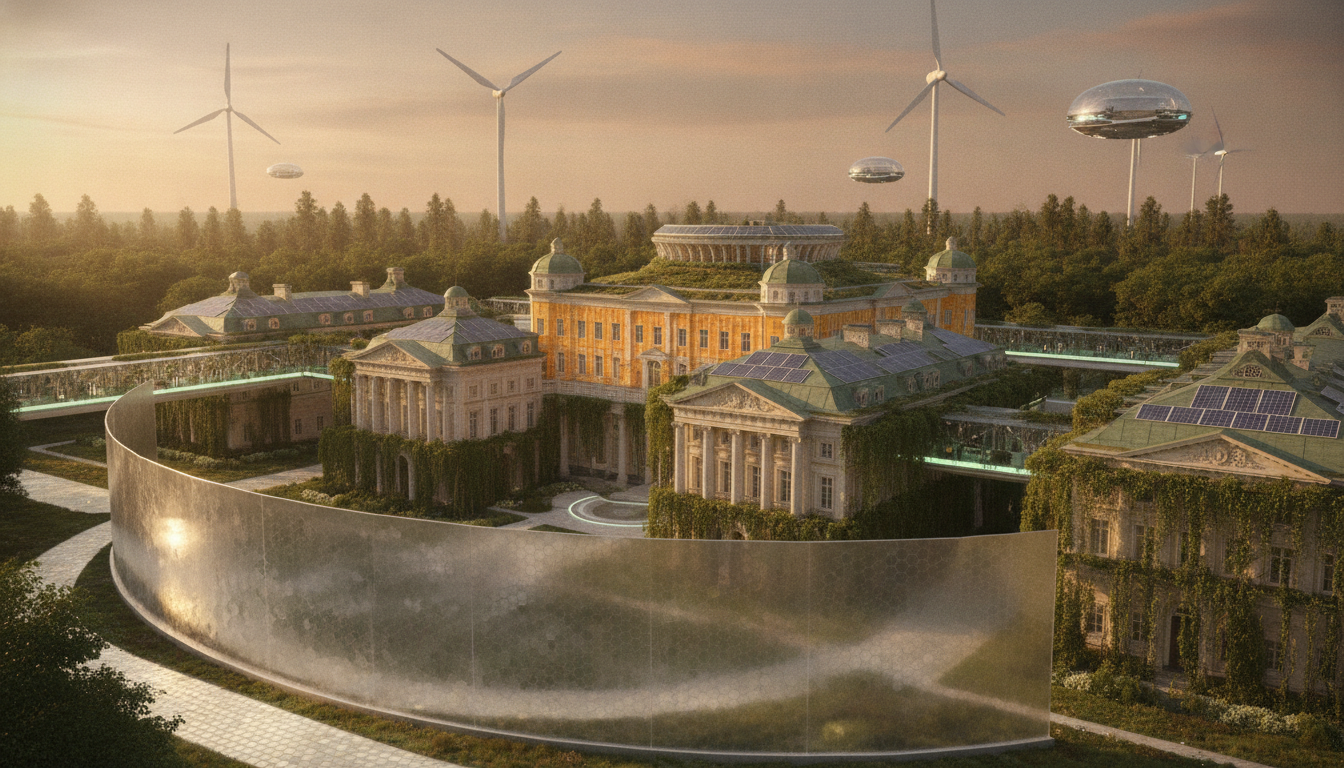
I once stood outside Catherine Palace, looking at the gold leaf shimmering in the St. Petersburg sun. I wondered how such delicate beauty could last another century. This curiosity started this whole journey.
Imagine thirty years ahead. The 500-hectare imperial estate could run on clean energy, self-repairing surfaces, and heat from the earth. It’s a dream, but it’s intriguing.
This piece is a “what if” story, not a press release. Russia’s climate plan gets a “Poor” score from outside trackers. It leans on forests to offset emissions, not real industrial changes. So, achieving carbon-neutral status seems like a fantasy.
Yet, the idea of combining old-world craftsmanship with modern tech is captivating. In the next parts, I’ll share seven ideas to make this dream a reality. From protecting the Amber Room with nano-glazes to using hydrologic vaults under the Great Pond. It’s a blend of past and future that’s worth imagining.
Key Takeaways
- This article is a speculative, opinion-driven look at what a carbon-neutral imperial estate could resemble decades from now.
- Russia’s real-world emissions strategy is currently rated “Poor” by independent climate trackers, relying mostly on forestry offsets.
- The vision imagines a fully self-sufficient, 500-hectare heritage sanctuary powered without fossil fuels.
- Seven concepts will be explored, including nano-mineral glazes, geothermal heating, and rainwater harvesting systems.
- The Amber Room and Great Pond serve as central symbols connecting historic craftsmanship with future-facing engineering.
- Readers should approach this as a creative thought experiment rather than an official preservation roadmap.
1. Tsarskoe Selo Future 2050: A New Standard for Living Heritage
Imagine an imperial estate that runs without any outside power. That’s the dream behind Tsarskoe Selo Future 2050. It’s a bold plan to preserve heritage in a new way.
Tsarskoe Selo is more than just a palace. It’s a huge 500-hectare area near St. Petersburg. It has palaces, gardens, ponds, and pavilions that have seen a lot. By 2050, it will be a self-sustaining, carbon-neutral place.
So, what does this look like? It means making its own energy, not using the grid. It will use its own water, not city water. And it will use new materials that respect old craftsmanship.
This idea is really exciting. It combines old imperial art with modern environmental tech. It lets old and new coexist beautifully.
But, vision and execution are different. Russia hasn’t always followed through on environmental plans. Making Tsarskoe Selo self-sustaining by 2050 will need a lot of effort.
“Heritage sites that fail to adapt to climate realities risk losing the very fabric they were built to protect.”
Even as a dream, Tsarskoe Selo Future 2050 sets a great example. Here’s how it plans to change:
| Category | Current State | 2050 Vision |
|---|---|---|
| Energy Source | Municipal grid power | On-site geothermal and renewable systems |
| Water Management | City water supply, limited runoff capture | Closed-loop pond and stormwater harvesting |
| Facade Materials | Traditional lime plasters, periodic repainting | Breathable nano-molecular protective glazes |
Even if not all of this plan works, it changes what we think of preservation. Living heritage is about keeping places alive and self-sufficient for future generations.
Best places to visit in Europe in June.
2. The Amber Room’s Invisible Armor: Nano-Molecular Glazes and Gilded Preservation
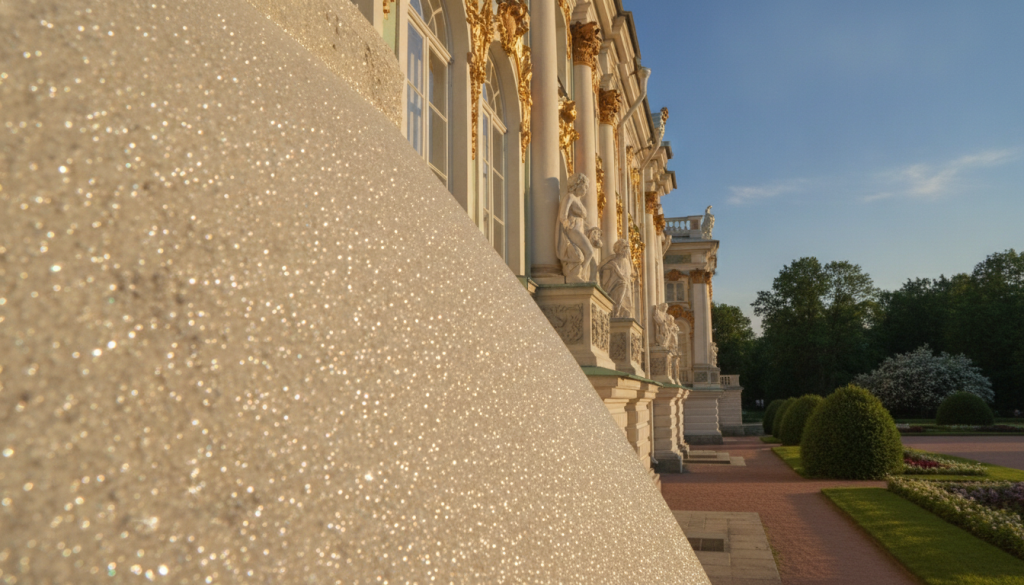
Protecting something precious can be done in a way that’s almost invisible. This is the case with Catherine Palace. I learned a lot about this during my last visit. It’s amazing how they keep the room safe without changing its look or feel.
The secret lies in chemistry that most visitors won’t even notice. Catherine Palace Amber Room preservation uses thin, invisible coatings. No need for glass boxes or visible sealants. It’s all about the quiet work of molecules.
Non-Invasive Mineral Masonry Glazes on the Rastrelli Baroque Facade
The facade of Catherine Palace was designed by Bartolomeo Rastrelli in the 1750s. It still amazes everyone today. But, it wasn’t made to withstand modern pollution or the wear and tear of time.
Non-invasive mineral masonry glazes are the solution. These coatings bond with the stone at a molecular level. It’s like a second skin that the stone barely feels.
This method is different from older ways of restoration:
- The glaze goes into microscopic pores, not just sitting on top
- It protects against UV damage without changing the facade’s color
- It doesn’t need scaffolding or invasive drilling for application
- It can be reapplied in thin layers over time
This last point is really reassuring. It means you don’t have to choose between keeping things original and making them last.
Letting Historic Stone Breathe While Halting Amber Oxidation
Old stone needs to breathe. A conservator told me that trapping moisture inside can lead to rot and mold. Sealing it too tight can cause more problems than it solves.
“The goal isn’t to freeze a building in time. It’s to let it age on its own terms, just slower and safer.”
Amber also darkens and dulls over time due to oxidation. This is a slow chemical reaction caused by air and light. It starts off subtle but can change how the amber looks over time.
A breathable nano-molecular layer could slow down this oxidation. It won’t stop time, but it can give the amber panels and gilded trim more time to stay beautiful.
This approach is all about restraint. Nobody’s trying to make the Amber Room look new again. They want it to age gracefully, like a 300-year-old palace should. This balance between science and humility is the real innovation here.
3. Climate Engineering Within the Walls: Alexander Palace and Catherine II’s Private Rooms
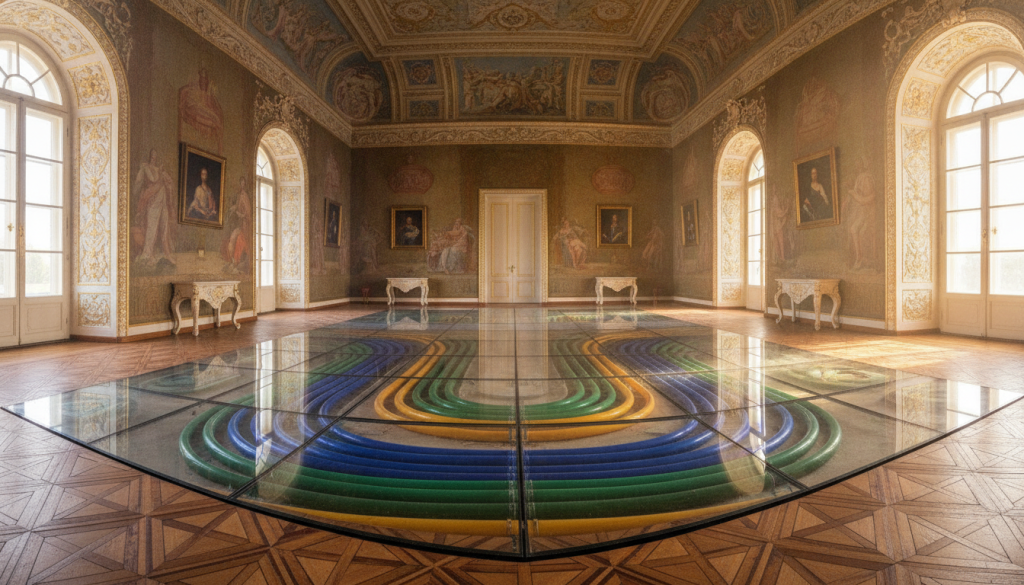
Walking into a 200-year-old room that feels warm is magical.
I felt this magic myself when I visited the Alexander Palace in winter. Outside, it was freezing. But inside, the air was calm and warm against the old walls.
This warmth isn’t a coincidence. Underneath the palace lies a Alexander Palace geothermal microclimate system. It keeps Catherine II’s rooms cozy, no matter the season.
Floor-Integrated Geothermal Loops Against Baltic Freeze-Thaw Cycles
Winter near the Baltic coast is harsh. Cold seeps into stone and old walls.
I’ve felt this cold in historic buildings across northern Europe. The freeze-thaw cycle damages materials. Water freezes, expands, and thaws, causing damage.
The solution in Alexander Palace is simple. It uses underground warmth, where temperatures stay steady.
- Loops beneath the flooring draw consistent warmth from the ground
- This keeps interior surfaces stable, avoiding sudden temperature changes
- Materials expand and contract less, reducing structural stress
- Damage from freeze-thaw cycles decreases over time
This system is not flashy. You won’t see it on any tour. But that’s the point.
Stabilizing the Golden Enfilade’s Delicate Microclimate
The Golden Enfilade is breathtaking. Its gilded moldings and painted ceilings are like something from a dream.
This beauty needs careful control of humidity and temperature. Gold leaf and paint can damage easily if conditions are not right.
The geothermal system helps here too. It keeps humidity stable, protecting the space from extreme weather.
“The greatest glory of a building is not in its stones, nor in its gold. It is in its Age.”
In the Golden Enfilade, you see the importance of age. It’s not just about keeping things old. It’s about careful engineering that keeps history alive.
That’s the story of Tsarskoe Selo’s climate strategy. The technology is hidden, but the history is preserved. Visitors feel the warmth, not the machinery behind it.
4. Beneath the Parks: Subsurface Hydrologic Heritage Engineering
Some of the smartest conservation work at Tsarskoe Selo happens where no camera ever points: beneath the parks themselves.
Catherine Park and Alexander Park stretch across hundreds of acres, dotted with pavilions, bridges, and the famous Great Pond. Underneath all that landscaped beauty runs a hidden network of vaults, pipes, and filtration chambers. This is subsurface hydrologic heritage engineering in action, and it’s quietly changing how historic estates manage water.
I love projects like this because they respect the original design. Nobody digs up Catherine the Great’s gardens to bolt on visible infrastructure. Engineers work below grade instead, letting the surface stay exactly as visitors expect it to look.
Great Pond Snowmelt Capture and Closed-Loop Reservoir Stormwater Harvesting
Winters here bring heavy snow, and spring thaw sends meltwater rushing across the grounds. For centuries, that runoff simply drained into the Great Pond or soaked into the soil, slowly eroding old pathways along the way.
Now the estate captures nearly all of it. Snowmelt and rainfall funnel into underground collection points scattered through both parks. From there, water travels through filtration chambers before landing in a closed loop reservoir stormwater harvesting system built for this purpose.
The process breaks down into three simple stages:
- Collection: Surface drains and permeable inlets pull runoff from lawns, paths, and rooftops without disturbing the historic grade.
- Filtration: Sediment traps and natural filter beds clean the water before storage, protecting pumps and pipes downstream.
- Storage: Sealed underground reservoirs hold the filtered water, ready for reuse instead of draining into local waterways.
This closed loop matters because it keeps pollutants out of the Great Pond, a body of water that’s defined the estate’s identity since the 18th century. It also cuts how much water the property needs to pull from municipal supplies to run its mechanical systems.
Turning Captured Water into Zero-Emission Heating and Cooling
Collecting the water is only half the story. What happens next turns a simple drainage fix into a genuine utility.
The stored water feeds heat exchange loops that regulate temperature across parts of the estate. Water holds heat efficiently, so the system uses it to warm buildings in winter and cool them in summer, all without burning fuel or leaning hard on the power grid.
I find this detail worth sitting with. A drop of snow that lands on a garden path in January might end up warming a gallery wall by February. That’s the kind of full-circle thinking that makes zero-emission heating feel less like a slogan and more like a working system people actually rely on.
| Stage | Function | Heritage Benefit |
|---|---|---|
| Collection | Captures snowmelt and rainfall from lawns and paths | Prevents erosion of historic walkways |
| Filtration | Removes sediment before storage | Protects the Great Pond’s water quality |
| Storage | Holds filtered water in sealed underground reservoirs | Reduces reliance on municipal water sources |
| Reuse | Feeds heat exchange loops for climate control | Delivers zero-emission heating and cooling |
5. Borrowing from the Bleachers: What Stadium Porous Asphalt Drainage Teaches Palace Conservators
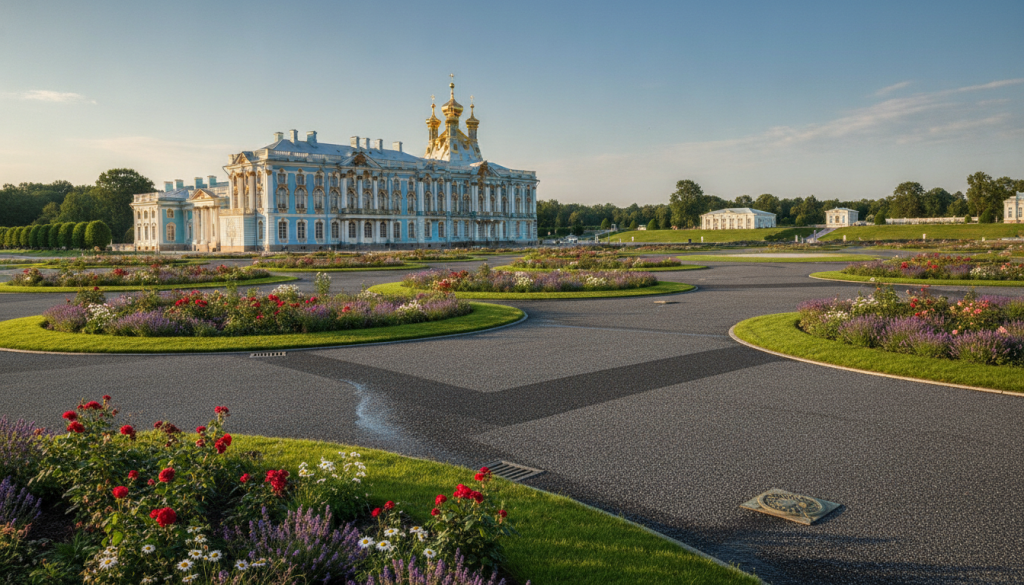
At first glance, a college football stadium and a Romanov palace seem worlds apart. Yet, they share a secret: how they handle rainwater. This insight came from exploring sports venue engineering. It’s a lesson palace conservators are eager to learn.
Traditional pavement lets water collect and then flow away. Porous asphalt is different. It has tiny gaps that let water drain straight into a gravel layer below. This prevents flooding and keeps the area dry.
For years, arenas and parking lots have used this method. It helps manage huge crowds and sudden rain without creating puddles. This solution is surprisingly useful in other settings too.
It’s like what NATO does with fuel efficiency in combat zones. They apply these lessons to civilian logistics. Good solutions can cross industry lines.
“Innovation rarely respects industry boundaries. The best fixes often travel sideways, from one unrelated field into another.”
That’s what’s happening at Tsarskoe Selo.
Adapting Sports-Venue Runoff Science for Imperial Grounds
Conservators at Tsarskoe Selo didn’t just copy stadium designs. They had to adapt the science to fit their needs. A 300-year-old garden path has its own challenges.
They created modified surfaces that mimic stadium drainage. These surfaces blend in with the original stone. Visitors see nothing out of the ordinary. The technology is hidden in plain sight.
This kind of engineering is impressive. It works quietly, without drawing attention. That’s the goal.
| Feature | Stadium Application | Tsarskoe Selo Application |
|---|---|---|
| Surface Material | Standard porous asphalt | Custom stone-matched permeable composite |
| Primary Goal | Prevent puddling during events | Protect stone foundations from erosion |
| Runoff Destination | Municipal storm drains | Closed-loop reservoir system |
| Visual Priority | Functional, minimal aesthetics | Historically accurate appearance |
| Maintenance Cycle | Annual resurfacing | Seasonal inspection, decade-long lifespan |
Sports engineers focus on function. Palace conservators aim for function and invisibility. This shapes every choice, but the science remains the same.
I love finding these connections. It shows that conservation doesn’t need to start from scratch. Sometimes, the best solution comes from outside, like a stadium parking lot, and is adapted for a Tsar’s garden path.
6. A UNESCO Model Worth Exporting: Why Pushkin’s Museum-Reserve Sets the Global Bar
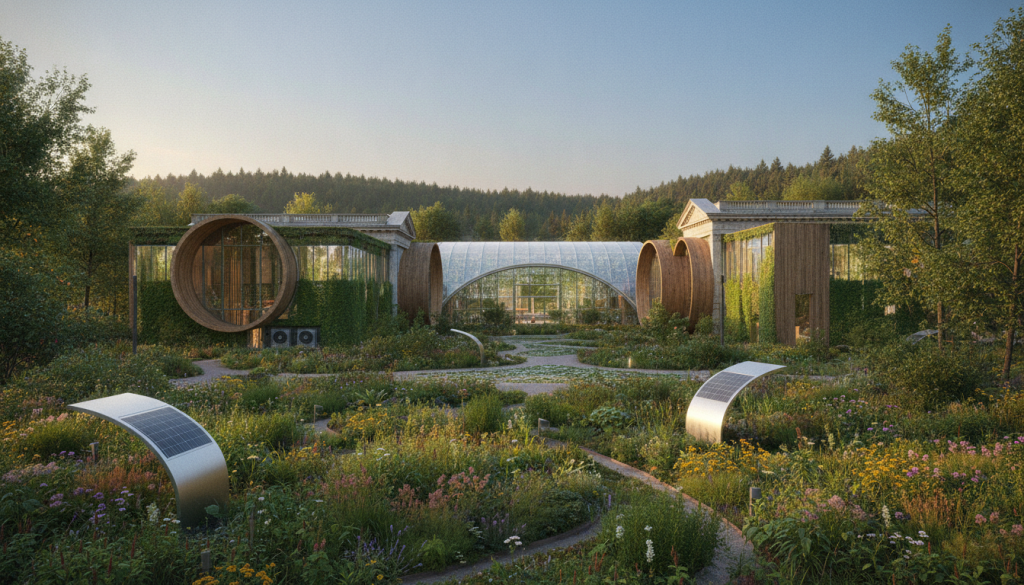
Calling Pushkin’s UNESCO museum reserve a global bar for heritage sustainability is bold. It might even seem a bit naive.
Climate trackers rate Russia’s national net-zero target as “Poor.” This is because of ambitious paper commitments with little action. Russia has been absent from climate leadership for decades, blamed on fossil fuel lobbying and weak policies.
So, imagining Tsarskoe Selo State Museum-Reserve as a net-zero showcase by 2050 is an aspiration. It’s a vision based on what’s technically possible, even if the national picture is unclear.
Despite the gap, Pushkin’s museum-reserve could still achieve a lot. A single UNESCO property can move faster than an entire country with the right funding and will.
Balancing Imperial Authenticity with Autonomous Sustainability
Walking through Catherine Palace, you won’t see any solar panels. That’s on purpose.
The strategy is to keep sustainable systems hidden from visitors. Geothermal loops and mineral glazes are used without changing the palace’s look. Captured stormwater heats the palace instead of being stored in a tank.
This approach is smarter than adding solar panels to an 18th-century roof. Authenticity and autonomy don’t have to fight each other — they just need engineers to hide their work.
Visitors see the same golden enfilade Catherine the Great walked through. Behind the walls, the building runs on systems she couldn’t have imagined.
Could Versailles or Schönbrunn Follow Tsarskoe Selo’s Lead?
This is something I keep thinking about. Versailles and Schönbrunn have stronger support from their countries than Tsarskoe Selo does from Russia.
On paper, either palace could reach net-zero faster than Tsarskoe Selo, with the right support.
“Heritage sites succeed at sustainability when local execution outpaces national policy, not the other way around.”
Site-level ambition, not a country’s climate score, decides if a palace reaches net-zero.
Here’s how the three compare on a few key measures:
| Site | National Climate Backing | Visible Green Tech | UNESCO Status |
|---|---|---|---|
| Tsarskoe Selo (Pushkin, Russia) | Weak, rated “Poor” nationally | None; fully hidden systems | Inscribed, 1990 |
| Versailles (France) | Strong, EU-backed | Minimal, largely retrofitted | Inscribed, 1979 |
| Schönbrunn (Austria) | Strong, EU-backed | Some visible solar, garden zones | Inscribed, 1996 |
I’d love to see Versailles or Schönbrunn take this challenge seriously. They have the funding and framework to move faster than Pushkin’s team.
But right now, it’s Tsarskoe Selo pushing the concept furthest, national climate score or not.
7. Conclusion
Standing outside the Catherine Palace, the gold leaf shines in the afternoon light. It’s amazing to think about the wonders inside. Amber-safe glazes and hidden geothermal floors are just the start.
Underneath, underground water vaults quietly heat and cool the palace. This mix of Russian artistry from the 1700s and modern technology is incredible.
But, let’s be real. Most of this tech already exists. The real challenge isn’t creating new inventions. It’s finding the money, patience, and political will to preserve our heritage.
Will Tsarskoe Selo reach its 2050 goals? We don’t know yet. But imagining this future is important. It shows us how to keep palaces like St. Petersburg’s alive for centuries.
If you can visit Tsarskoe Selo, do it. Some places are so special, they deserve our protection and our awe.



Leave A Comment