
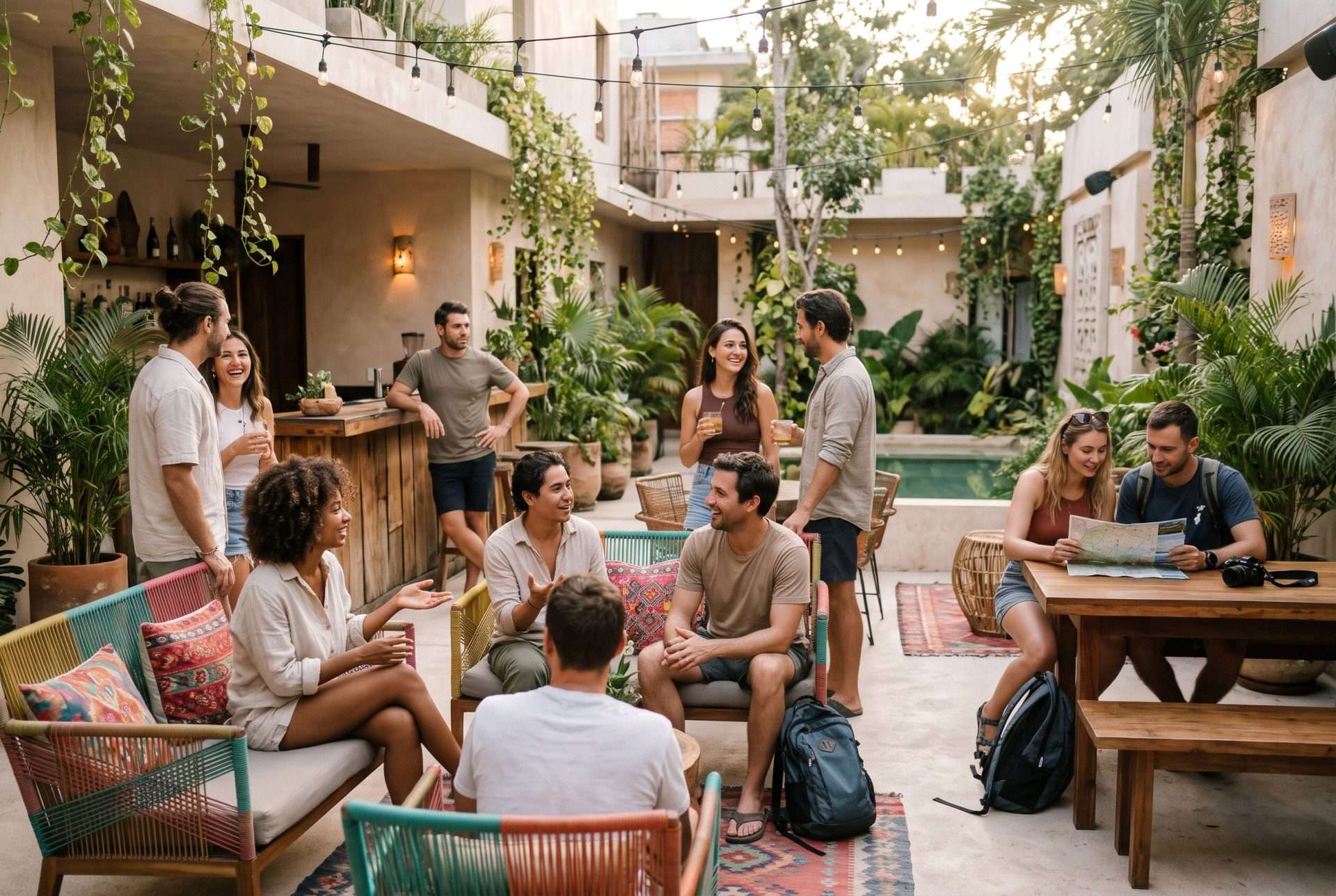
At 7 on a Thursday evening, the lobby of a small hotel in Amsterdam fills up around a long wooden table. A woman from Toronto is three days into a two-week trip and eating alone. Across from her, a man from Lisbon is in town for a conference and has no plans for the night. Ten minutes later they are sharing a bottle of wine with two other guests, because the hotel set the table for 12 and put a sign-up sheet at reception. Nobody in the scene planned to meet anyone.
Solo Travel in Recent Surveys
A Harris Poll conducted with Mastercard found that 39% of international travelers had already taken a solo trip and 35% were considering one. In that poll, 20% of all travelers said their most recent trip was taken alone. Google searches for solo travel reached a record high in the United States in 2026, according to Axios. In Britain, the travel association ABTA found that 27% of travelers planned to go alone on their next trip.
An Opodo survey of 9,000 travelers, reported in August 2026, found that freedom was the main reason among British solo travelers, cited by 32%. Another 30% went alone because friends or family were not available, and 21% said they wanted to meet new people. Among 25- to 34-year-olds, 47% named freedom as the main reason, up from 35% in a 2023 poll. The 21% who wanted to meet people are the group with the most reason to choose a hotel by its common areas as well as its rooms. Afterward, 47% said a solo trip had made them feel more capable, and 32% said it had given them more room to think.
Boutique Hotels and Luxury Spending
The hotels that draw these travelers are often small and expensive. Virtuoso, a network of travel agencies, reported in August 2026 that its overall sales were running more than 20% ahead of the previous year, with hotel sales up 24.5%. The average nightly rate for luxury hotels in the United States booked through its advisors rose from $790 in 2019 to $1,445 in 2026, an increase of more than 80%. Virtuoso’s data covers only its own advisors, though it points to strong demand for luxury travel in 2026.
Those prices also shape who is in the lobby. Guests at a 60-room boutique hotel share at least a price bracket, while a large business hotel spreads the same number of people across several restaurants and a gym. A small hotel usually has one bar and one dining room, so guests who stay in for the evening end up in the same place.
Lobbies Built for Conversation
Zoku Amsterdam, which opened in 2016 as a home and office hybrid with hotel service, treats the hotel as a social hub, with communal dinners, a casual café diner and a games room. The founder of the design firm White Space told the same publication that the lobby is the new public square.
Hotel brands are also responding to the rise in solo guests. The Hoxton added compact Shoebox rooms for single occupancy, along with open lobbies and local events that encourage guests to talk to one another. Moxy hotels, owned by Marriott, replaced traditional check-ins with bar counters and host regular communal events. Kimpton hotels hold an evening wine hour in the lobby, which gives a solo guest a reason to come downstairs. In many city hotels the lobby also serves as a workspace during the day, so the guest who was answering email at 3 p.m. is often still at the next table at 7.
All-Inclusive Resorts With Group Programming
At Club Med, most activities are held in groups on a first-come basis, so guests who sign up for sailing or a cooking class meet others with the same interest. A writer for Matador Network who stayed at two of the company’s all-inclusive resorts in the Dominican Republic found that evenings were built around themed happy hours and dance parties in the central areas, and that staff, whom Club Med calls GOs, often ask to join guests at their table for lunch or dinner.
Both of those resorts also have adults-only areas, including the Emerald Jungle at Michès, home to Club Med’s first swim-up bar, and the Zen Oasis at Punta Cana. These separate single travelers from families for part of the day. The drawback for many solo guests is price, since resorts often charge a single supplement for a room occupied by one person, so the solo rate needs checking before booking.
Hotels Compared With Resorts
A city boutique hotel has guests who arrive and leave on different days and spend most of their time out in the city, so a conversation at the bar may be the only one two people have. A resort keeps the same group of guests together for a week, with shared meals and evening events, so a person met on the first day is likely to be seen again on the third and the sixth. Small-group tours and cruises with shared dinner tables follow the same pattern, since the same faces return at every meal.
That repetition makes it easier to get to know someone gradually, and it also makes an awkward first conversation harder to escape. Travelers who want both options sometimes split a trip, spending a few nights in a city hotel and the rest at a resort.
Safety in Shared Spaces
Meeting strangers in a hotel bar has the same risks as meeting them anywhere else. An Opodo survey found that 40% of British travelers packed safety items, such as first aid supplies and emergency contacts, and that 44% of women traveling alone prioritized health and safety essentials, compared with 34% of men. Some hotels offer optional phone check-ins for solo guests, train staff to be approachable and monitor public spaces more closely. Respondents in the Opodo survey also said that booking tickets in advance and having offline maps made their first hours in a new city calmer.
A room number is best kept private, and new acquaintances are best met in the lobby or the bar. A friend at home should know about any plans that take a guest away from the hotel. Hotel staff can also call a taxi or confirm that a guest has returned, if asked in advance. A drink ordered at the bar and kept in hand is safer than one handed over by someone met an hour earlier.
The Question Before Booking
A hotel with a long table and a wine hour makes it easy to talk to strangers, and a resort with group sailing makes it easier still. Both still depend on who else is staying that week. Before booking, a single traveler can ask one question about the third evening of the trip. Where will I want to be sitting, and with whom?













Leave A Comment