
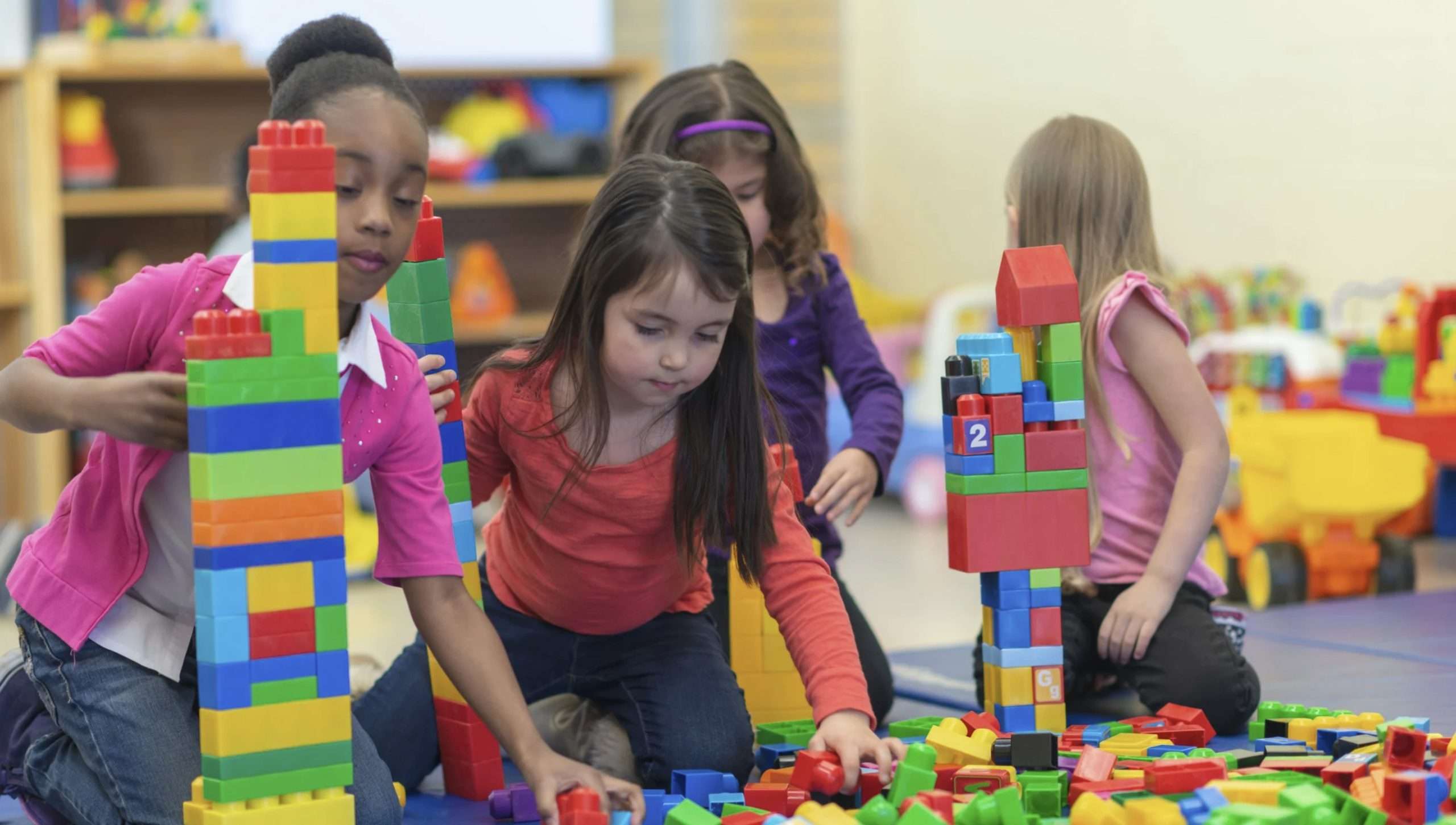
Right now, your child’s brain is forming connections at a pace you wouldn’t believe. And here you are, trying to figure out the best way to nurture this growth, without falling into the trap of flashy gadgets or endless screen time. That’s where Montessori brain games come into play. These activities aren’t just another educational fad. They’re grounded in research and designed around how kids actually learn, not how we think they should.
Consider this: by their sixth birthday, children in Montessori programs demonstrated measurably better outcomes in reading, mathematics, executive function, and understanding social dynamics. Ready to discover fifteen games that’ll sharpen your child’s mind without turning your home into a toy warehouse?
Understanding What Makes Montessori Games Different
Montessori takes a fundamentally different approach to play. Most conventional toys keep kids entertained; that’s about it. But Montessori activities for kids engage their minds in ways that build genuine capability.
The Self-Correction Principle
Here’s the brilliant part: Montessori materials let children spot their own errors. Think about a puzzle. The piece either belongs there or it doesn’t. No parent hovering overhead to point out mistakes. This autonomy builds genuine confidence in problem-solving that sticks with them for years.
Real Materials Over Plastic Fantasies
Browse through options for storing all your baby stuff, and you’ll notice something about quality Montessori items: they’re crafted from wood, metal, and natural fibers. Not plastic. Why does this matter? Authentic materials give sensory information that plastic simply cannot deliver. Weight. Temperature. Texture. These variations train a child’s developing senses to make finer discriminations.
Sequential Complexity That Respects Development
Each activity naturally leads to the next one. Neural pathways form through practice and are measured by increases in difficulty. You won’t find games that leave your child frustrated or bored; they’re carefully calibrated to offer challenges without overwhelm.
Early Foundation Games (18 Months to 3 Years)
Toddlers need activities that establish basic mental frameworks. These early brain development games create the foundation that everything else builds upon.
Object Permanence Box
Picture a simple wooden box. Your toddler drops a ball into a hole. It vanishes. Then reappears in a drawer underneath. Seems elementary, right? But this teaches cause-and-effect while reinforcing that objects continue existing even when invisible, crucial groundwork for later abstract reasoning.
Color Sorting with Everyday Items
Raid your kitchen for colored bowls and objects that match. Your toddler sorts by color, establishing categorization abilities they’ll eventually apply to mathematics and language. Begin with just two colors. Add more once they’ve mastered the basics.
Nesting and Stacking Activities
Cups that fit inside each other. Blocks that are organized by size. These teach seriation, recognizing graduated differences. This ability connects directly to number concepts and measurement skills they’ll need in formal education.
Preschool Power Games (3 to 6 Years)
Preschoolers can handle activities demanding multiple cognitive skills at once. These educational games for children develop the executive functions that researchers link to academic achievement.
Practical Life Pouring Exercises
Transferring materials looks like basic play. It’s not. This develops concentration, coordination between hand and eye, and sequential thinking. Begin with dry ingredients like rice before advancing to water. Children master movement control while extending their attention spans.
Pattern Block Designs
Geometric pieces that combine into patterns lay the foundations for spatial reasoning and geometry. Research shows Montessori students exhibited higher asymmetry in the left hemisphere, which is related to semantic encoding. Kids begin by replicating simple arrangements, eventually inventing their own elaborate designs.
Sandpaper Letters and Numbers
Running fingers over textured letters merges tactile sensation with visual and motor learning. This multi-sensory method helps children absorb letter shapes and numerical forms far more effectively than worksheets do.
Sound Matching Cylinders
Fill small containers with rice, dried beans, and tiny bells. Children shake each one, then match pairs purely by listening. This refines auditory discrimination while building the focused attention that phonics instruction requires.
Elementary Challenge Games (6 to 9 Years)
Older children benefit from Montessori thinking skills activities that engage abstract reasoning and sophisticated problem-solving. These prepare them for the demanding academic work ahead.
Binomial and Trinomial Cubes
These three-dimensional puzzles resemble abstract sculptures. Actually? They’re concrete representations of algebraic equations. Children solve them through pattern recognition now. Years down the road, they’ll grasp the mathematical theory behind them.
Geography Puzzle Maps
Wooden puzzles representing continents and nations develop spatial memory alongside world geography knowledge. Kids trace the shapes to make their own maps, linking physical manipulation with abstract representation.
Mathematical Bead Chains
Skip counting becomes tangible when your child arranges bead chains. One hundred beads organized into ten bars make multiplication patterns both visible and touchable. This hands-on experience makes abstract mathematical concepts suddenly comprehensible.
Classification Card Games
Organizing animals by taxonomy. Grouping leaves by shared characteristics. This cultivates scientific thinking. Children learn careful observation, pattern identification, and systematic information organization, applicable across every academic discipline.
Cross-Age Montessori Brain Games
Certain activities adapt beautifully across developmental stages, scaling to each child’s level. These versatile choices work perfectly for families with kids of different ages— something many local childcare providers prioritise when creating flexible programs that support siblings at various developmental stages.
The Silence Game
This mindfulness exercise challenges children to become completely still and listen deeply. Young ones might manage half a minute. Older children can maintain silence for several minutes. It simultaneously builds impulse control and sharpens auditory awareness.
Walking on the Line
Mark a line on your floor with tape. Have your child walk it with care, perhaps balancing objects or following specific movement patterns. This deceptively simple activity develops body awareness, focus, and motor planning. Increase difficulty by having them carry a cup of water or walk heel-to-toe.
Command Cards for Executive Function
Write multi-step directions on index cards. Children read them, memorize the sequence, then complete the tasks without checking back. Start with two steps. Gradually extend complexity as their working memory strengthens.
Setting Up Your Home Environment
You don’t need to transform your entire house. Strategic adjustments create effective learning spaces.
Accessible Storage Solutions
Position materials on low shelves within your child’s reach. Transparent containers let them identify contents without removing everything. Swap activities weekly to sustain engagement without creating decision paralysis.
Prepared Activity Trays
Organize each game on its own tray containing all necessary components. This structure enables independent work while teaching proper cleanup and material return. It streamlines tidying up considerably.
Common Implementation Mistakes to Avoid
Even parents with excellent intentions sometimes accidentally sabotage these activities’ effectiveness. Watch out for these pitfalls.
Over-Helping and Interrupting
Kids require space for productive struggle. Intervening too quickly robs them of opportunities to build persistence and develop problem-solving approaches. Resist the urge. Let them work through it.
Skipping Demonstration
Model how to use each material before expecting independent engagement. Employ slow, purposeful movements with limited verbal instruction. This careful presentation clarifies expectations effectively.
Pushing Too Much Complexity Too Soon
Honor where your child currently functions. If they’re frustrated rather than appropriately challenged, the activity likely exceeds their readiness. Return to something simpler and revisit later.
Tracking Your Child’s Progress
Formal assessments aren’t necessary to recognize development. Look for these signs indicating growing cognitive capacity.
Increased Concentration Spans
Monitor how long your child maintains focus on individual activities. This duration should progressively lengthen with consistent practice.
Self-Correction Without Prompting
When children begin fixing errors independently without seeking help, they’re internalizing the learning process itself. This autonomy represents the ultimate objective of Montessori brain games.
Spontaneous Pattern Recognition
Listen for observations where children identify patterns or draw connections between separate activities. This learning transfer demonstrates their brain making crucial cognitive advances.
Wrapping Up Your Journey with Montessori Learning
Montessori brain games won’t work miracles overnight. But they’re extraordinarily effective at establishing the cognitive foundation your child requires for lifelong learning. These fifteen activities barely scratch the surface, once you internalize the underlying principles, learning opportunities appear everywhere around you.
Choose one or two games matching your child’s present capabilities and observe their concentration, independence, and problem-solving abilities flourish. Keep perspective here: this isn’t about achieving perfection or checking boxes. It’s about equipping your child with tools to become a confident, capable thinker who greets challenges with genuine curiosity instead of apprehension.
Your Questions About Montessori Brain Games Answered
Can these games honestly hold my child’s attention against tablets and video games?
Absolutely, though initial adjustment takes patience. Children accustomed to constant digital stimulation need transition time to appreciate slower-paced engagement. Begin modestly and acknowledge incremental progress.
Do I need expensive materials to practice Montessori methods at home?
Definitely not. Numerous activities utilize household objects or straightforward homemade materials. Prioritize a few quality items over purchasing everything simultaneously.
What if my child attends traditional school? Will this confuse them?
These activities enhance any educational framework. The cognitive abilities they develop transfer seamlessly to any learning context without generating confusion.
















Leave A Comment