
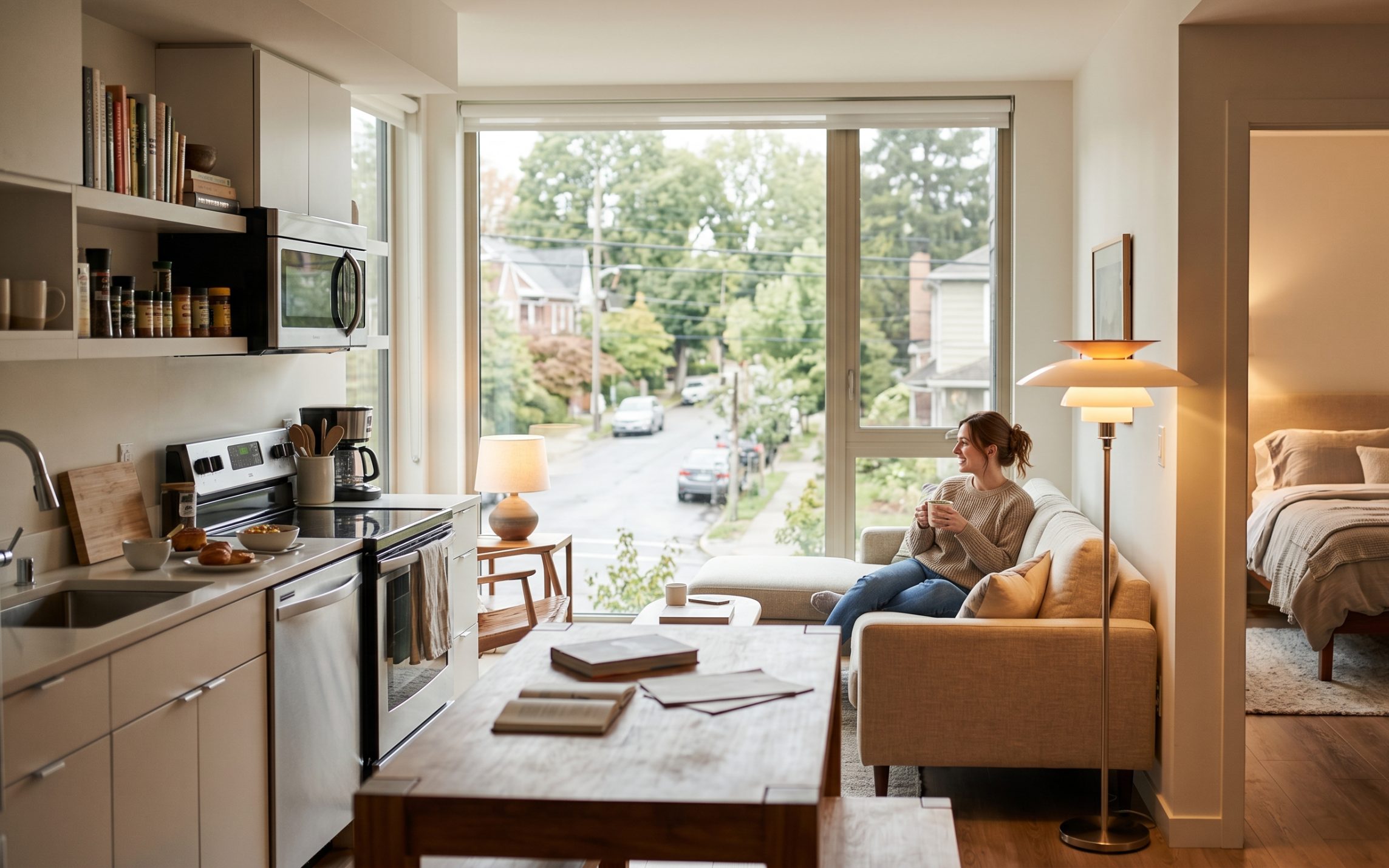
When was the last time you stayed in a hotel and actually felt comfortable? Not clean. Not convenient. Comfortable, in that way that makes you want to linger over morning coffee instead of rushing out to breakfast. The answer might surprise you: that comfort isn’t a hotel problem anymore. It’s a choice problem. More travelers are discovering that short term apartment rentals offer something traditional hotels simply can’t match: the feeling of living somewhere rather than passing through it.
Key Takeaways
- Hotels optimize for turnover; apartments optimize for staying put. That difference shows up in every detail, from kitchen storage to lighting to where you can actually relax.
- Urban travelers now prioritize functionality and livability over classic hotel amenities. A washer-dryer beats a spa pass for anyone staying more than three nights.
- Location matters differently in an apartment than a hotel. Being near the action is one thing; being able to cook, work, and recharge in that neighborhood is another entirely.
- Design-forward group accommodations have raised the bar for what shared travel spaces can deliver.
Why It Matters
Travel is changing because our expectations have changed. The hotel formula (bed, desk, bathroom, elevator, housekeeping every other day) was designed for the traveling salesman of 1962. It hasn’t evolved much. Meanwhile, remote work, flexible travel timelines, and friend groups coordinating trips across time zones have made the hotel model feel increasingly inflexible.
This shift isn’t subtle. Travelers who spend four nights or more in a city aren’t just booking apartments because they’re cheaper. They’re booking them because apartments let them live like locals, work without feeling like they’re in a corporate box, and actually enjoy the rhythm of a neighborhood. A hotel strips away friction at the cost of stripping away comfort. An apartment adds a day or two of complexity upfront but pays dividends the moment you settle in.
The real insight is this: travelers aren’t abandoning hotels because apartments are trendy. They’re switching because apartments solve a problem hotels created and never bothered to fix.
The Hidden Comfort Factors Hotels Never Addressed
Hotels obsess over thread count and marble bathrooms. Here’s what they actually miss.
Storage That Doesn’t Require Origami
A hotel room has a closet designed to hold a three-night wardrobe and a suitcase that needs to stand upright. An apartment has drawers. Shelves. Space to actually unpack. This sounds trivial until you’re on day five of a trip and your clothes are still living out of a suitcase because there’s nowhere to put them. That low-level friction compounds. By day seven, you feel less like you’re staying somewhere and more like you’re camping in your own suitcase.
Apartments assume you’re not rushing out the door. That assumption changes everything.
Kitchens That Do More Than Exist
A hotel room has a coffee maker and maybe a microwave. An apartment has an actual kitchen. No, you’re not planning a four-course meal. But the ability to make breakfast without leaving the room, brew real coffee, store leftovers, or fix a snack at 10 PM shouldn’t require a luxury suite charge. The kitchen is where comfort stops being an amenity and starts being infrastructure.
Lighting You Can Actually Control
Hotel lighting is a crime scene. One overhead fixture floods the room in harsh fluorescent. One bedside lamp offers theatrical darkness. Apartments have multiple light sources, dimmers, and actual thought given to how humans move through and use the space. By day three, that lighting difference becomes visceral. You can think clearly in an apartment. You can relax. In a hotel, you’re either blinded or squinting.
Actual Separation Between Where You Sleep and Where You Live
A hotel room is one rectangle. Your bed, your desk, your sitting area, your bathroom, all jammed into 400 square feet with no boundaries. An apartment has a bedroom separate from a living room. You can close a door. You can work without staring at where you sleep. You can have friends over without everyone being three feet from your unmade bed. That separation is structural. It’s also profoundly psychological.
How Apartment Living Changes Travel Behavior
When travelers move into an apartment rather than checking into a hotel, their behavior shifts in ways hotels never anticipated.
They cook. Not always, not every meal, but they cook sometimes. A pasta night. A breakfast that doesn’t come from a room service menu. The act of cooking grounds you in a place. It makes the city feel less like a backdrop and more like where you actually live.
They settle into neighborhoods. A hotel puts you downtown, in the heart of the action. An apartment puts you in an actual neighborhood. You find the coffee shop three blocks over. You discover the restaurant that locals actually go to. You walk the same streets twice and start recognizing faces. That’s not tourism. That’s living.
They work better. Remote workers who’ve stayed in both describe the same thing: apartments are better for focus. The desk is separate. The noise is different. There’s a division between living space and working space. A hotel room collapses that boundary. The bed is 15 feet away. The minibar is laughing at you. In an apartment, work feels like work and not like you’re pretending to be professional in a sleeping bag.
They stay longer. Not always in the same city, but the friction drops so much that extended trips become viable. A four-night hotel stay feels maximized. A four-night apartment stay feels like you’re just getting started.
The Group Travel Wildcard
Apartments transform group travel entirely. Hotels force groups into separate rooms and hope they bump into each other in hallways and lobbies. Apartments put groups in shared living spaces where the entire group can eat together, work together, recharge together. For groups planning trips to Miami, New Orleans, or the Twin Cities, affordable luxury vacations that emphasize shared accommodations eliminate the coordination chaos that kills most group trips before day two.
When a friend group books six hotel rooms, you get six separate experiences. When the same group books one spacious apartment, you get one shared experience. The difference in trip quality is almost shocking.
A Concrete Example: The Three-Day Business Trip That Became a Week
Consider a business traveler booked for three days in Nashville for a conference. Hotel math: three nights in a downtown business hotel, minimal time in the room, meals out, done.
Now consider that same traveler booking an apartment in the same neighborhood. Night one arrives as scheduled. But on night two, after the conference day ends, the apartment feels comfortable enough that the traveler decides to stay through the weekend. They work from the apartment desk on Friday instead of from the hotel lobby. They find a restaurant three blocks away that they actually want to return to. They cook breakfast on Saturday morning. They realize Nashville feels less like a work obligation and more like a place worth knowing.
Three days became five. That doesn’t happen in hotels. Hotels optimize you out the door. Apartments optimize you in.
Actionable Takeaways
- For trips longer than three nights, budget for an apartment. The nightly rate might be higher, but total friction is lower, and your actual trip quality will be better.
- Prioritize location over amenities. A walkable neighborhood with an apartment beats a high-rise hotel with a mediocre address every time.
- Choose buildings or companies that manage consistency. Scattered, random apartments create uncertainty. Managed buildings ensure standards.
- For group trips, go bigger on space, not more rooms. One six-person apartment beats three hotel rooms for every metric except individual privacy, which groups don’t actually need.
- Check for kitchens and actual separation between bedroom and living areas. These aren’t luxuries. They’re the features that let apartments beat hotels.
Conclusion
Hotels optimized themselves into a corner. They perfected the overnight box and never asked whether that box was actually comfortable long-term. Apartments simply asked the right question: what does it feel like to actually live here? Once travelers experience that difference, going back to hotels starts feeling like a step backward. The shift isn’t about trend-chasing. It’s about finally getting travel accommodations that were designed for how people actually travel now.















Leave A Comment