
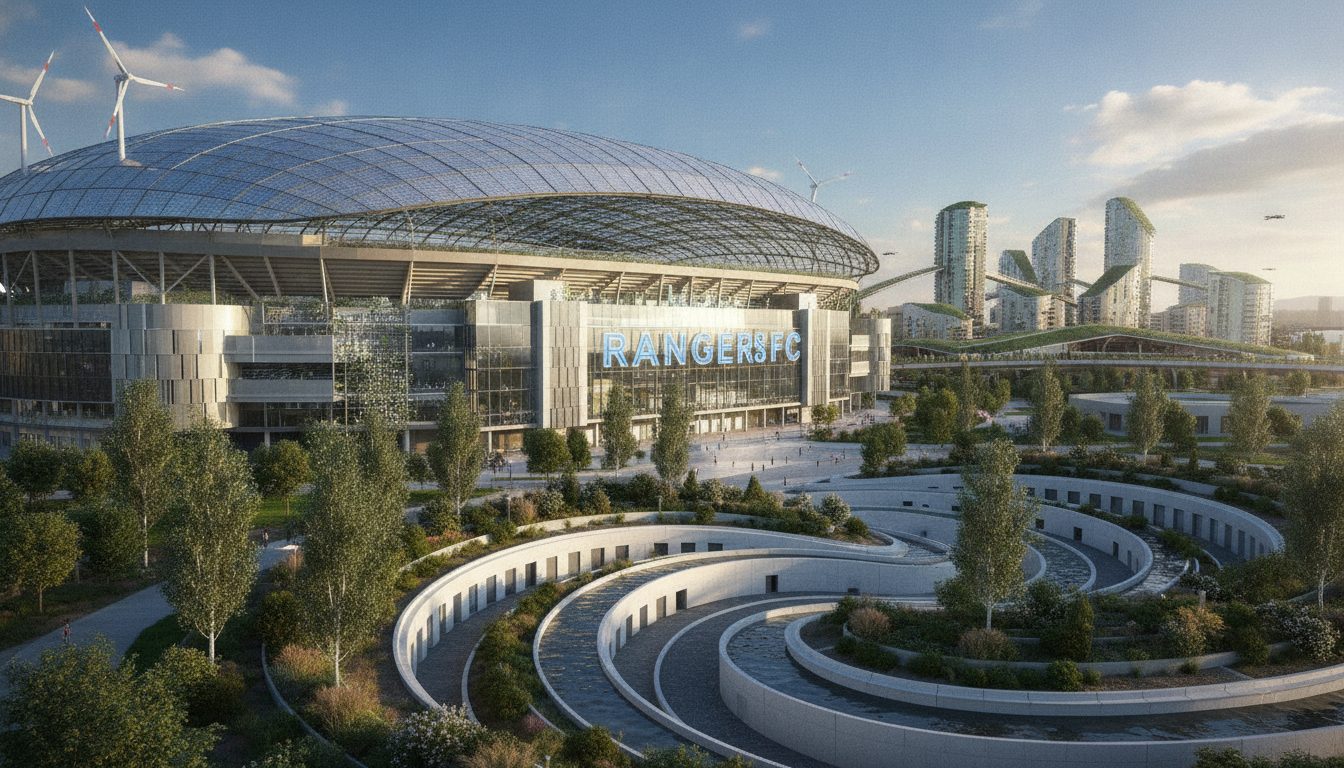
I stood on Edmiston Drive last week, looking up at a familiar building. Rain fell sideways, like it always does in Govan. But something felt different this time.
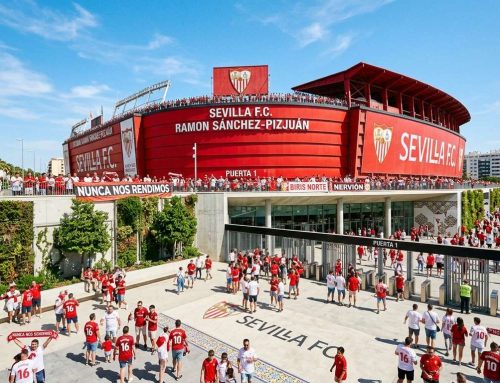
The old red brick still reached for the sky, just as Archibald Leitch designed it in 1928. Thin solar skins across the roofline caught what little sunlight broke through the clouds.
This isn’t a renovation story. It’s a resurrection.
Rangers F.C.’s 51,000-seat home has become a model for carbon-negative engineering. Fifty thousand fans now do more than just cheer. Their footsteps power floors under the concourse.
Rainwater feeds hydrologic vaults under the pitch, echoing the Clyde that built this city. I never expected a football ground to feel this alive.
I want to show you every part of this place. From the historic terraces to the hidden wiring. It’s a story of how a stadium can work with the planet, not against it.
Key Takeaways
- Rangers F.C.’s historic 51,000-seat home has achieved carbon-negative status through decades of careful retrofitting.
- Archibald Leitch’s 1928 Main Stand remains fully preserved, protected under listed building status.
- Solar-woven canopy skins generate clean energy across the roofline without altering the original silhouette.
- Kinetic flooring converts crowd movement and match-day energy into usable electricity.
- Underground hydrologic vaults capture Glasgow rainfall, connecting the venue to the River Clyde basin.
- Govan’s working-class identity and community spirit remain intact despite the extensive technological overhaul.
Reimagining Ibrox Stadium Future 2050: A Blueprint for Carbon-Negative Arenas
When people ask me about a carbon-negative stadium, I tell them to look at Ibrox.
By 2050, Rangers F.C.’s stadium in Glasgow’s Govan district will show us how old sports venues can fight climate change. This change didn’t happen quickly.
The World Green Building Council started its Advancing Net Zero campaign after the 2015 Paris Climate Agreement. They aimed to make buildings carbon-free by mid-century. Their Net Zero Whole Life Carbon Roadmap gave a guide for building in a new way.
Ibrox took this guide and went further. A carbon-negative arena doesn’t just stop emissions at zero. It actually removes more carbon from the air than it releases, from start to finish.
This is what’s inside these walls. It’s not science fiction. It’s the result of years of ambition in the construction world.
Preserving Archibald Leitch’s Legacy Amid Radical Transformation
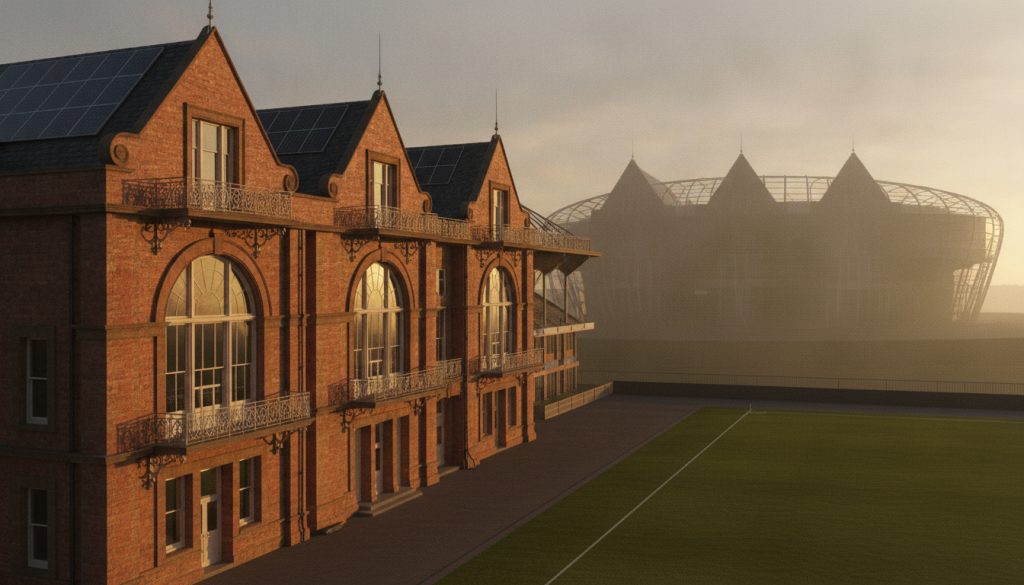
I first saw the Main Stand and felt a connection to 1928. The transformation to a net-zero stadium didn’t erase history. Instead, it respected and worked with it.
The Archibald Leitch Main Stand Listed Building and Its Criss-Cross Ironwork
The Archibald Leitch Main Stand listed building is Ibrox’s heart. Built in 1928, it’s a Category B-listed building in Scotland. This status means its facade couldn’t be changed, no matter the plans for 2050.
Leitch’s criss-cross ironwork balconies are iconic. They’re seen as one of the most recognizable stadium features globally. Keeping them was not just a choice, it was a must.
Breathable Nano-Molecular Mineral Glazes: Protecting Brick Without Sealing It
Glasgow’s weather is tough on old brick. Rain, wind, and freeze-thaw cycles damage it over time. The team needed a solution that blocked moisture but didn’t suffocate the brick.
Breathable nano-molecular mineral glazes were the answer. These coatings seal the brick’s surface but let vapor escape. This way, the brick stays protected without losing its original feel.
- Blocks rain and pollution without trapping moisture inside the wall
- Preserves the brick’s original texture, tone, and century-old character
- Extends the stand’s structural lifespan without a single re-render
This small technology is making a big impact. It’s ensuring Leitch’s work remains visible for another century.
The Solar-Woven Roofline: Powering Ibrox From Above
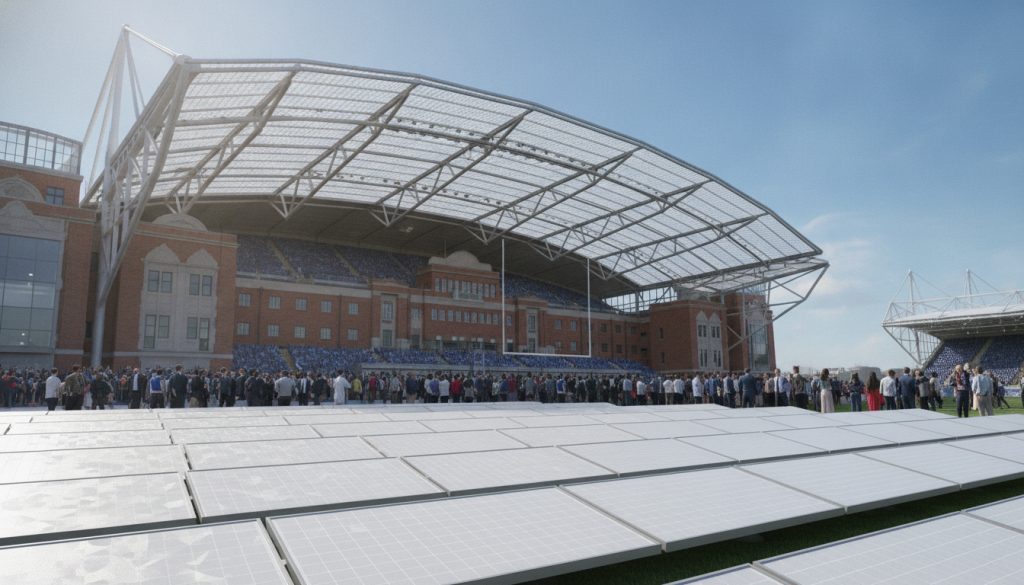
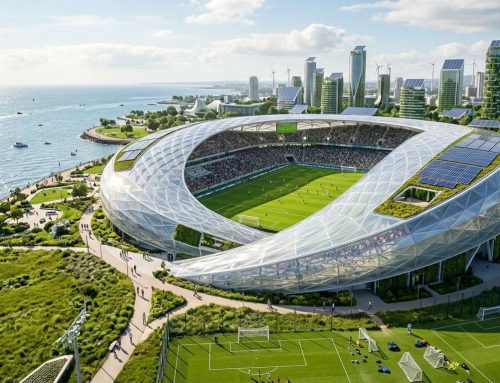
Looking up at Ibrox in 2050, you won’t see a roof. Instead, a solar skin will cover the sky. I stood on the pitch during a design walkthrough and was amazed. It truly took my breath away.
The engineering team aimed for this reaction. They didn’t just build a roof. They created a machine that captures light, feeds the grass, and powers the grid.
Cantilevered Club Deck and Goalpost Roof Engineering
The cantilevered Club Deck hangs over the stands without columns blocking the view. This is a remarkable achievement for a stadium built in 1899.
Above it, the goalpost roof structures stand like twin arches. They give Ibrox its unique look. These structures also distribute weight and wind load, and they’re designed for solar capture.
PTFE Membrane Solar Roof Technology and Bio-Photovoltaic Skins
The roof panels use PTFE membrane solar roof technology. This thin, translucent material lets daylight through while generating electricity.
Inside the membrane are bio-photovoltaic skins. These organic solar cells convert sunlight without the bulk of traditional glass panels. The result feels almost weightless, like sailcloth on steel bones.
Sunlight Management for a Living Hybrid Grass Pitch
Solar power is great, but grass needs sun too. Too much shade, and the hybrid grass pitch struggles in a Scottish winter. Too little, and the stadium misses its energy goals.
“We didn’t want to choose between grass and grid. We wanted the roof to give both what they needed, at the right time of day.”
The design team solved this with a dynamic transparency gradient in the membrane. It changes light transmission based on season, sun angle, and turf health data.
| Roof Zone | Primary Function | Key Benefit |
|---|---|---|
| Cantilevered Club Deck | Column-free structural support | Unobstructed sightlines for premium seating |
| Goalpost Roof Arches | Load distribution and solar geometry | Maximizes panel exposure angle |
| PTFE Solar Membrane | Energy generation with light transmission | Powers stadium without shading the pitch |
| Bio-Photovoltaic Skin | Organic solar conversion layer | Lightweight, low-glare energy capture |
Sound and Motion as Renewable Assets
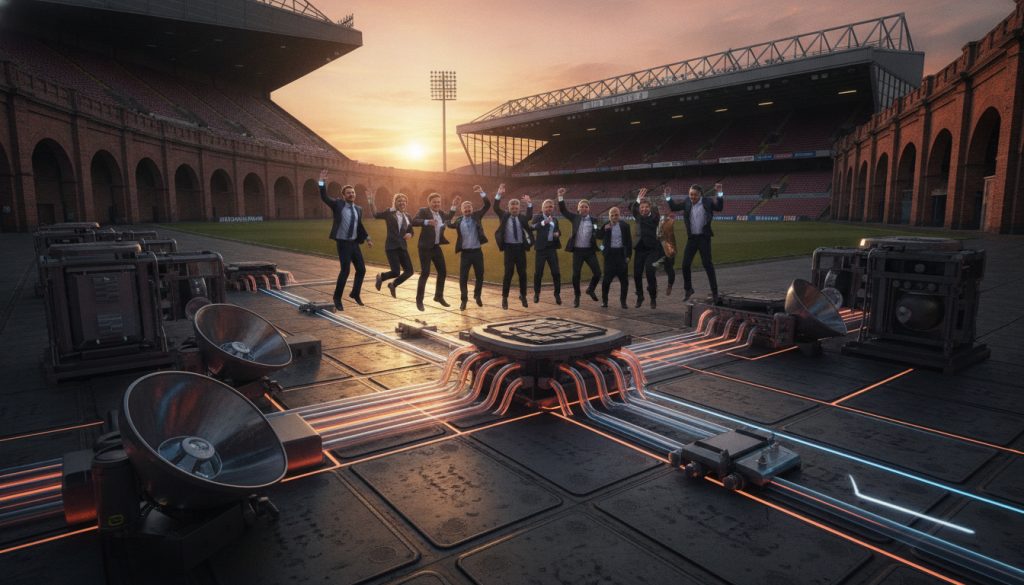
At Ibrox, some of the smartest engineering doesn’t use solar panels or water pipes. It’s in the noise and motion of the fans. This part of the redesign is amazing. It treats crowd energy as fuel, not something to manage.
Acoustic Canopy Baffles in the Copland and Broomloan Stands
Under the roof in the Copland or Broomloan sections, you’ll see something new. Acoustic canopy baffles are built into the roof. They catch crowd noise and send it back down to the pitch.
This keeps the loud atmosphere of Ibrox intense. It’s not lost in modern open-air design.
Stadium Kinetic Energy Crowd Harvesting Beneath the Terraces
Underneath the stands, quiet engineering is happening. A network of flooring converts every movement into electricity. This is through stadium kinetic energy crowd harvesting systems in the terrace substructure.
- Fan movement compresses embedded piezoelectric plates beneath walkways and terraces.
- Pressure is converted into low-voltage electrical charge.
- Charge is routed to on-site battery storage for stadium lighting and operations.
This isn’t just a novelty. It’s part of a shift in major venues. Renewable energy financing for sports stadiums is becoming common. Clubs are funding upgrades through fan-driven output.
On match day, knowing every celebration helps power the stadium changes the experience. It’s not lost energy. It’s part of the machine.
Govan’s Clyde Basin Hydrologic Shield: Rethinking Water as Infrastructure
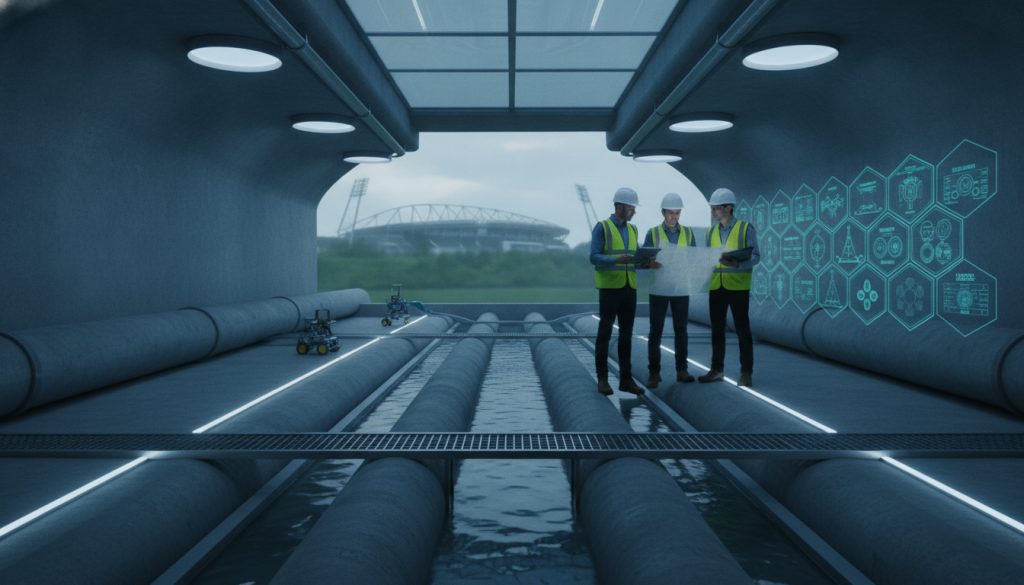
I’ve seen many stadiums that see rain as a problem. But Ibrox is different. It captures every drop of rainwater, treating it as a valuable resource.
This approach makes sense. Govan is near the River Clyde, where water once drove the economy. The Govan Clyde Basin Hydrologic Shield uses water to promote a greener future.
Subsurface Hydrologic Vaults and Closed-Loop Reservoir Stormwater Harvesting
Underneath the stadium, a network of vaults captures most of the rain. Instead of going into sewers, the water is stored.
The closed loop reservoir stormwater harvesting system reuses this water. It’s filtered and used again, turning rain into a reliable resource.
Zero-Emission District Heating and Cooling Loops
The stored water is used for heating and cooling the stadium. It’s a smart way to keep the temperature right without using fossil fuels.
This method doesn’t burn any fossil fuels. It uses water’s natural heat to warm or cool the stadium, keeping it comfy for fans while reducing emissions.
| Feature | Traditional Stadium Drainage | Govan Clyde Basin Hydrologic Shield |
|---|---|---|
| Rainfall Capture Rate | 10-20% (rest lost to sewers) | Near 100% of basin runoff |
| Water Reuse | None, single-use discharge | Continuous closed-loop cycling |
| Heating/Cooling Source | Gas boilers, electric chillers | Zero-emission water-based loops |
| Environmental Impact | Contributes to urban flooding risk | Reduces flood risk, cuts carbon output |
Engineering Resilience: Structural Dampening for a Modern Urban Arena
There’s a part of Ibrox that never makes it into anyone’s camera roll. Yet, it does more work than the roof or the pitch combined. I’m talking about the structural bones hidden beneath the stands. These parts keep everything steady when 50,000 people jump, sing, and stomp at the same time.
A stadium built in 1928 was never designed for that kind of energy. Modern crowds move differently. They create rhythmic force that can stress a structure in ways early engineers never imagined.
Urban Sports Arena Structural Dampening Systems
This is where urban sports arena structural dampening steps in. These systems absorb shock and vibration before they ever reach the structure’s weaker points.
Think of shock absorbers on a car, just scaled up for a stadium. Tuned mass dampers and flexible steel joints soak up the bounce of thousands of fans celebrating a last-minute goal.
Without them, that same energy would eventually stress joints, cracks, and connections that were never engineered for it.
Balancing Heritage Masonry With Load and Vibration Flexibility
The tricky part is protecting the heritage masonry I mentioned earlier. The same brick and ironwork that gives Ibrox its soul.
Engineers had to find load flexibility without disturbing a single century-old brick. New steel supports run alongside original masonry, transferring vibration away from fragile material instead of through it.
It’s quiet, unglamorous work. But it’s exactly what lets history and modern engineering share the same address.
Why Rangers F.C.’s Net-Zero Stadium Model Matters Beyond Glasgow
I often compare Ibrox to projects in the U.S. Seeing one stadium lead on climate change sparks a pattern. The Rangers FC net-zero stadium is not just a Scottish project. It’s a global shift, and American teams should take note.
Rangers FC Net Zero Stadium as a Global Template
Thinking about Climate Pledge Arena in Seattle reminds me of Govan. That project combined Amazon, The Climate Pledge, and more. They built a super sustainable arena.
Ibrox shows the same approach works even with old structures. Rangers FC didn’t start from scratch. They added new tech to their historic stadium.
Public-private collaboration is the only way to deliver net-zero infrastructure at the pace the climate crisis demands.
Lessons for American Stadium Retrofits and New Builds
Many U.S. stadium owners see sustainability as a cost, not a benefit. Ibrox shows the opposite. Here’s what American teams can learn:
- Use old steelwork for solar panels, not for demolition.
- Use crowd energy and stormwater as everyday features, not just extras.
- Work with public agencies and private engineers from the start, like Seattle and Glasgow did.
By mixing old heritage with new tech, Ibrox shows stadiums can last for centuries. This is true whether in Govan or Green Bay.
Conclusion
Standing outside Ibrox, I think about one thing. The brick still breathes. The roof still shelters. Now, they also generate power.
Archibald Leitch’s ironwork didn’t get torn down. Instead, it was part of a new system. This system values heritage. It uses rain to heat the building and fan noise to power the grid.
I’ve seen many stadiums, old and new. Most have to choose between keeping their character or moving forward. But Ibrox shows it’s possible to do both. It’s a hundred-year-old stand and a net-zero power plant in one.
If your city has an old arena, look at Ibrox. It’s not about copying, but showing what’s possible. Govan didn’t forget its past to build its future. It found a better way to use what was already there.


Leave A Comment