
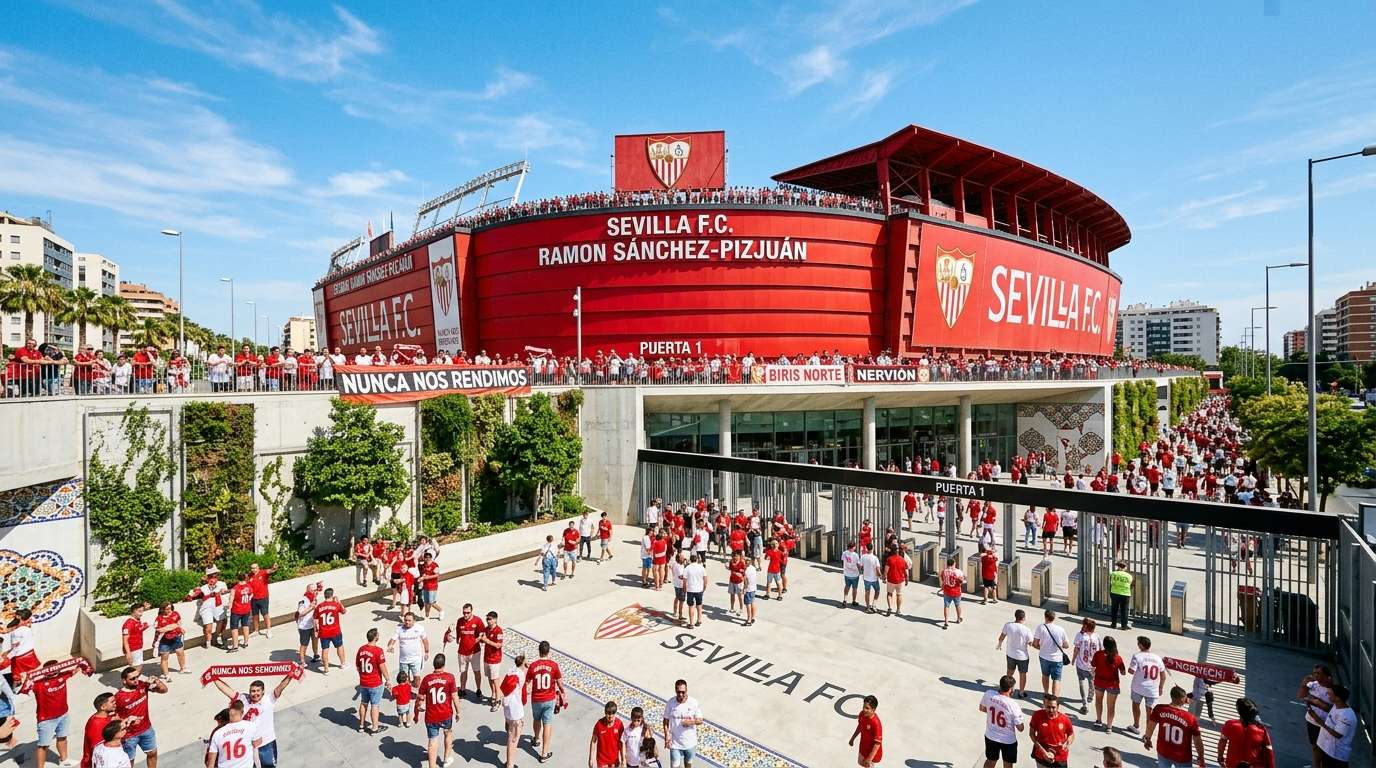
I picture the red and white bowl glowing under a hot Seville sky in 2050, with the Ramón Sánchez-Pizjuán humming like a quiet power plant. I am a traveler and photographer, so I see this place first through a lens. Everything below is my own vision of what the stadium could become, not a set of approved club plans.
The stadium opened on 7 September 1958, and the vision starts from a 43,883-seat home. Picture a building that could be carbon-negative, which means it removes more carbon dioxide from the air than it releases over its life. I promise four things: the real plan, the roof, the mosaic, and the fans of Sevilla FC in Nervión.
Everything here starts with a real plan on the ground today, so that is where I begin.
Key Takeaways
- Sevilla FC plans a full rebuild on the same Nervión site.
- The new stadium is planned for 55,000 seats, up from about 43,000.
- Home games may move to La Cartuja for a while, but not for good.
- The 1982 mosaic is the heritage piece to protect.
- The 2050 climate features are a vision, not a club plan.
- Gol Norte becomes one steep stand, and it is the heart of the noise.
Ramon Sanchez-Pizjuan Future 2050 Starts With a Real Rebuild
The short answer is that Sevilla FC plans to knock down the current stadium and rebuild on the same spot in Nervión. The club says the stadium’s location in the Nervión district stays the same, so the Sevilla FC stadium location does not change. These renovation plans are a full rebuild, not a patch-up.
The current stadium holds 43,751 seats and opened on 7 September 1958. Demolition is set to begin on June 1, 2026, and construction should finish in 2028. The project is put at €350 million, with €40 million from the LaLiga CVC deal plus outside financing.
Do not assume Sevilla FC is leaving Nervión for good: matches may use La Cartuja for a while, but the club says it will not move there permanently.
The loan is meant to be repaid by future stadium income. That means the new building has to earn money on more days than match days.
If you plan a visit before demolition, check the match calendar first, because home games could shift to La Cartuja.
What the New Bowl Will Hold and How It Will Feel
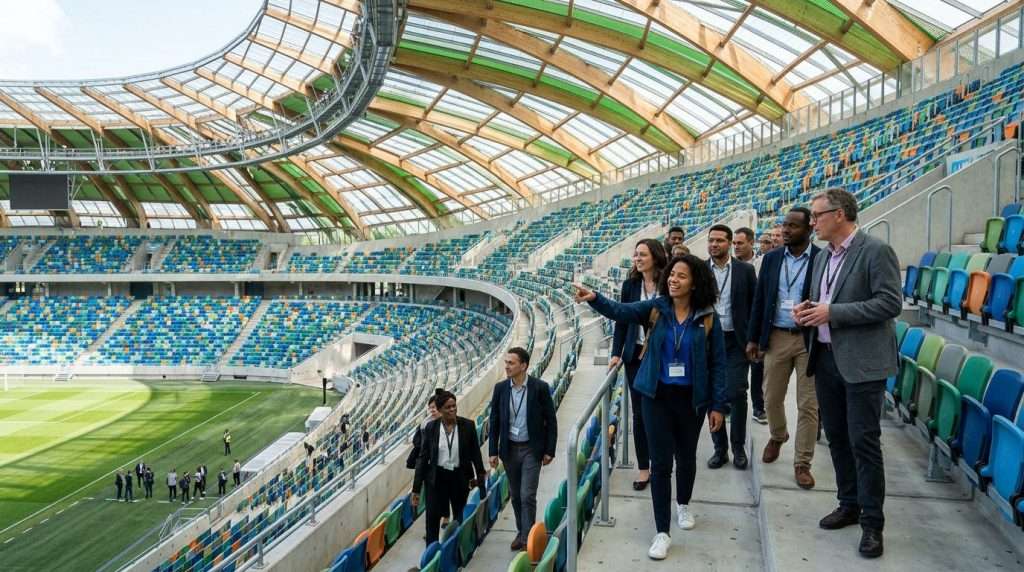
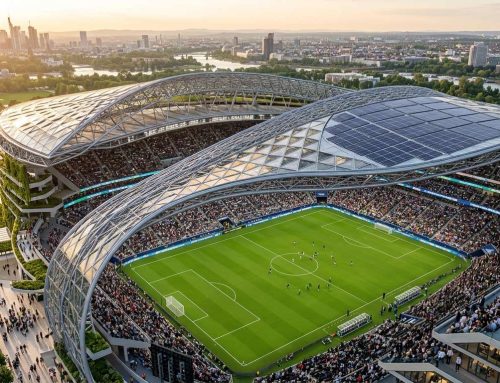
The new stadium is planned to hold 55,000 people, about 12,000 more than today. Sevilla’s new stadium capacity answer is simple: 55,000 seats. The concept comes from architect César Azcárate of IDOM.
Here is how the two stadiums compare.
| Seats | Roof | Parking | Use | |
|---|---|---|---|---|
| Current stadium | About 43,000 | 1982 roof over the main stand only | Street and nearby lots | Match days and tours |
| New stadium | 55,000 | Full roof over all stands | Two-level underground | 365 days a year |
Capacity and a Steeper Bowl
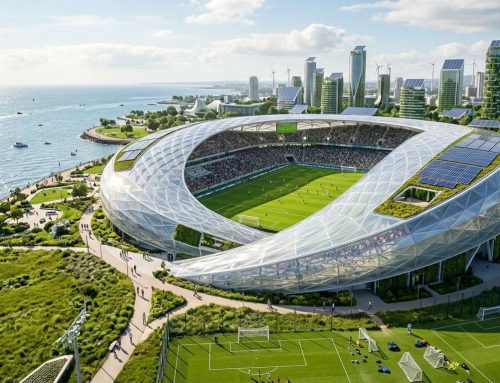
The pitch is lowered so the height stays the same, and the bowl gets steeper. A steeper bowl puts fans closer to the action and keeps the atmosphere tight. A full roof over all stands should trap the sound.
A Stadium That Works All Year
The new stadium works 365 days a year, with a museum, shop, event rooms and tours. Stadium tours already approach 100,000 visitors a year. As a photographer, I would plan a stadium tour for a quiet morning, since tours are growing fast.
How a 2050 Roof and Glazes Could Protect the 1982 Mosaic
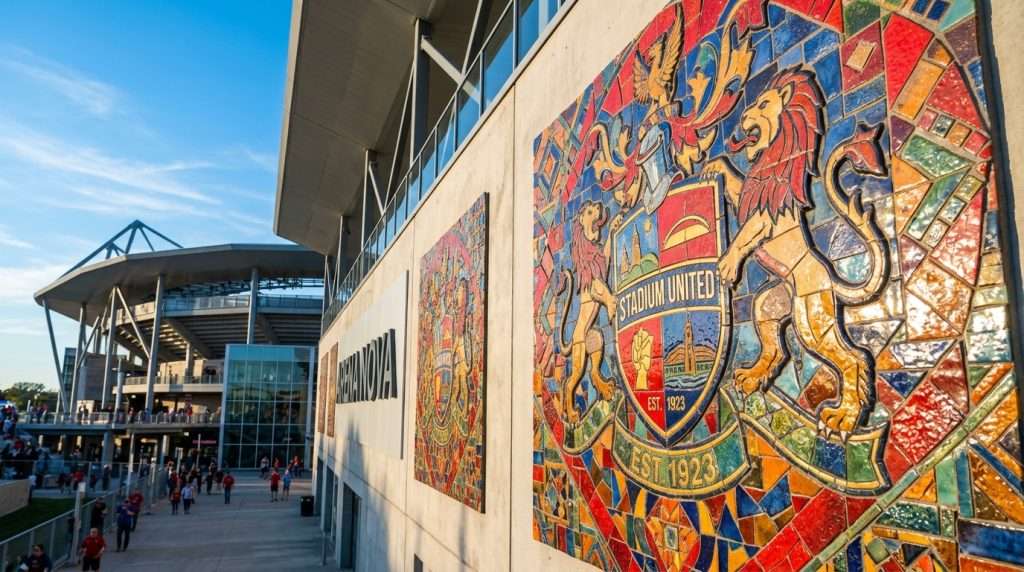
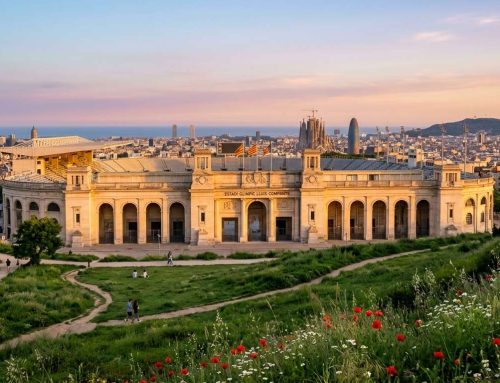
The mosaic over the main entrance is almost 480 square metres of ceramic, and heat is its biggest enemy. Santiago del Campo’s mosaic was unveiled on 23 April 1982. It holds the crests of 58 teams that had played Sevilla there by 1982.
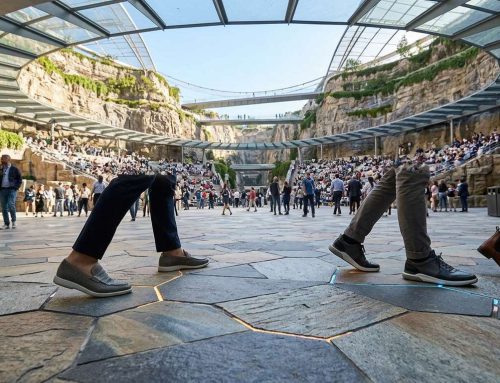
Picture 45°C heatwaves in a 2050 vision, not a club plan. Breathable nano-mineral glazes could slow tile crazing and concrete carbonation while keeping the authentic look.
Shielding Santiago del Campo’s Mosaic from Heat
A clear coat that lets old tile breathe would keep the colors true. I would never want a glossy shell over a piece of history. The goal is protection that no visitor can see.
A Roof That Makes Power and Lets Grass Grow
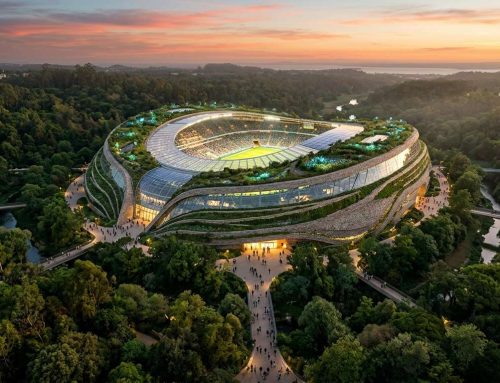
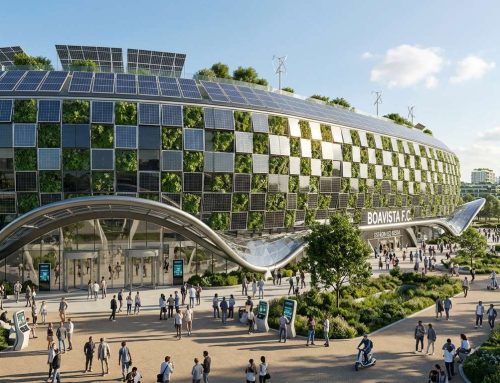
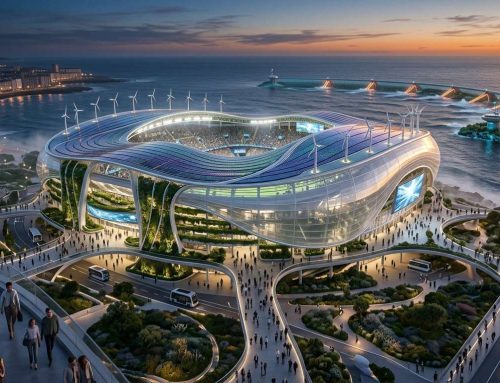
Building-integrated photovoltaics can replace conventional materials in roofs, skylights and façades. A 2015 semi-transparent perovskite cell reached about 12.7% efficiency and 79% transmittance at 800 nm. In my vision, translucent bio-photovoltaic membranes make power and filter light to the turf, while hidden flood vaults catch heavy rain and feed closed-loop cooling.
Bring a wide lens, because the mosaic is best photographed in soft morning light.
Estadi Olimpic Lluis Company future.
Gol Norte and the Fans Who Could Power It

Gol Norte is where the noise of Sevilla comes from, and the plan makes it one steep red wall. It becomes one continuous stand with no structural divisions, inspired by Dortmund and London. The new stadium keeps its nickname, La Bombonera de Nervión.
Here are four things I would look for on a visit:
- The single steep red wall of Gol Norte
- The three-tier layout of Gol Sur, Fondo and Preferencia
- Hospitality in the middle tier
- Under-floor plates where jumping fans could feed a microgrid
The plates are a vision for 2050, not a club plan. Do not expect plates to run a stadium alone, since they would only add a little power.
Fan energy is a bonus, not a power plant: the real gain is a crowd that feels the stadium answer back.
Stand in Gol Norte at least once, because the jump of 10,000 fans is something you feel in your boots.
Estadio Benito Villamarin future.
Conclusion
I think this is a rare chance to see a stadium before and after a rebuild. The stadium is real and changing, and the 2050 ideas are a dream I would love to see grow from it.
The mosaic and Gol Norte are the soul to protect. Whatever the new building adds, those two give it a face and a voice.
Book a match or a tour in Nervión soon, and bring a camera.







Leave A Comment