
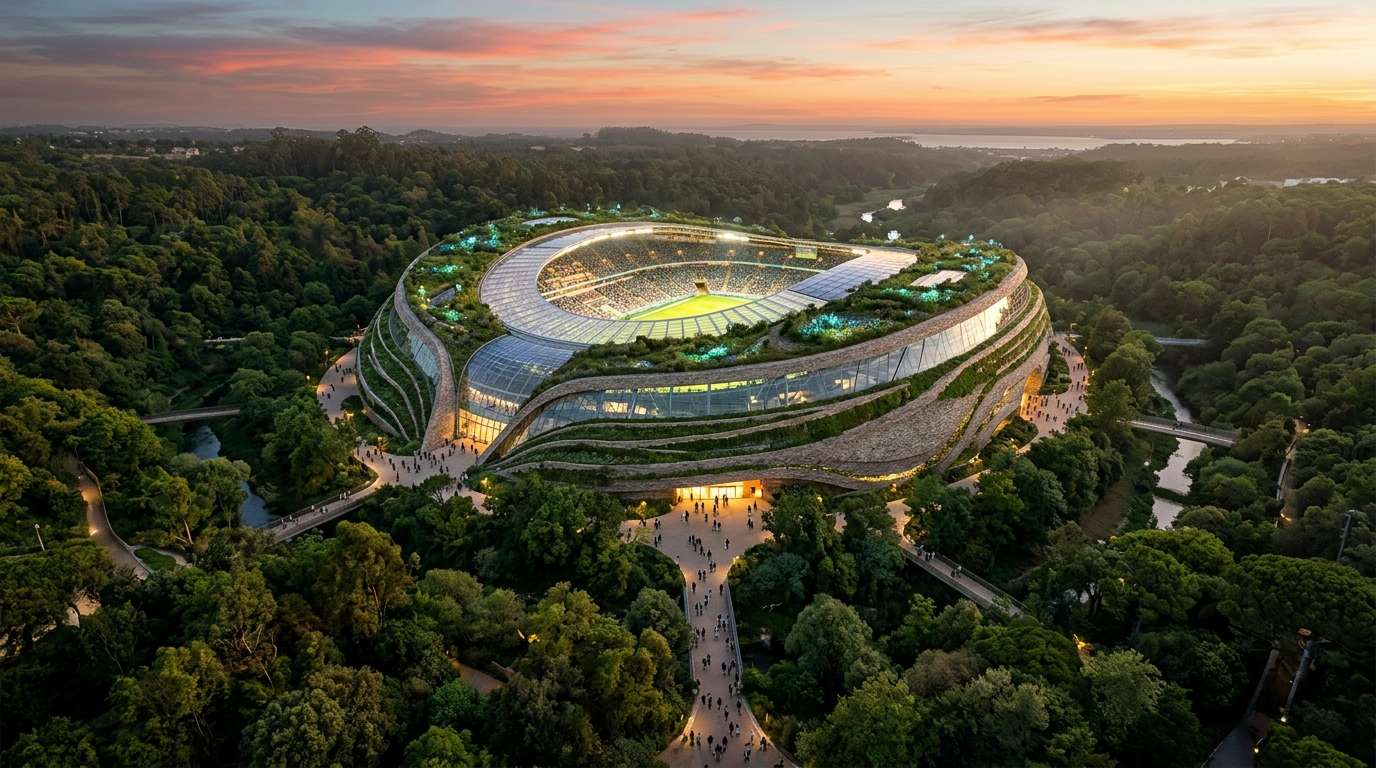
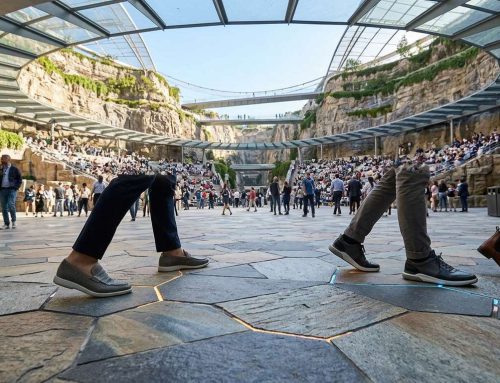
I stood beside a limestone bowl outside Lisbon, Portugal, and felt I had entered tomorrow. Builders carved this horseshoe stadium into the Jamor Valley in 1944. Today, it suggests a future beyond soccer finals: Estadio Nacional Portugal future 2050.
This piece is part dream and part research. I’m a traveler who fell for this stone amphitheater and wondered what it could become. What if this aging stadium turned into a carbon-negative sanctuary for 37,500 fans?
That question has a clear basis. In 2008, researchers Fadigas, Costa, Morgado, Coelho, Henrique, Dias, and Dionisio presented a study at the GreenKeys Conference in Sofia. They mapped Jamor Valley’s green-space potential before net-zero stadiums became a serious topic.
I want to explore three engineering stories that keep drawing my attention. How can ancient stone survive another century? How can a storm-prone basin handle Atlantic deluges?
Can kinetic energy from thousands of stomping feet power this place? Consider this my honest, imagined future for Estádio Nacional, grounded in real science and reaching toward 2050.
Key Takeaways
- By 2050, Estádio Nacional do Jamor could transform into a carbon-negative sports sanctuary rooted in real landscape science.
- The vision builds on the 2008 Jamor Valley Park study by Fadigas, Costa, Morgado, Coelho, Henrique, Dias, and Dionisio.
- Three engineering pillars drive this transformation: stone preservation, hydrologic water management, and kinetic energy harvesting.
- The 1944 limestone horseshoe bowl seats 37,500 fans and could become a model for sustainable stadium design worldwide.
- This piece blends honest reporting with speculative imagination about where stadium sustainability is headed.
- Jamor’s natural amphitheater shape offers unique advantages for rainwater retention and renewable energy capture.
1. A Living Monument: Estadio Nacional Portugal Future 2050
I walked through Jamor’s old stone gates and stopped before reaching the pitch. Cork oaks lined the ramp, while machinery hummed softly underground.
This is the Estadio Nacional Portugal future 2050 up close. Trees grow into the stands, while the original 1944 limestone walls remain weathered but proud. Hidden systems filter rainwater, store solar power, and cool concourses without visible pipes.
A museum freezes a place in time. This stadium does the opposite. It still welcomes 37,500 fans on match day, echoes with Taça de Portugal final chants, and breathes between matches.
Rain falls, and the bowl absorbs it. Sunlight reaches the canopy, while panels between branches turn it into clean electricity. The structure works like a living organism around decades of sporting history.
While researching sustainable city planning, I read about the GreenKeys project. Presented at the Urban Green Spaces conference, its core argument stayed with me.
Green infrastructure cannot be treated as decoration added after the real planning is done. It has to be woven into a city’s long-term legacy from the very first sketch.
That is what Jamor’s woodland bowl tries to prove. The forest is not landscaping around a stadium. The forest and stadium form one system.
I’ve toured many stadiums that add solar panels and call themselves green, but Jamor chose another path. The design team did not focus on shrinking the building’s footprint. They asked how to hide it in the landscape while still holding tens of thousands of fans.
Here is a quick look at how this shift compares with a typical modern stadium:
| Feature | Typical Modern Stadium | Jamor Woodland Bowl (2050) |
|---|---|---|
| Relationship to landscape | Built on cleared land, greenery added later | Forest integrated into the seating structure itself |
| Energy approach | Grid-dependent, occasional solar add-ons | Carbon-negative, self-sustaining microgrid |
| Water management | Standard drainage into city sewers | Closed-loop harvesting and natural filtration |
| Historic preservation | Often demolished and rebuilt | Original 1944 limestone walls retained and shielded |
| Seating capacity | Varies widely by venue | 37,500 seats, unchanged from the original heritage design |
Standing there, I understood why Jamor feels different from every heritage venue I have toured. It lets visitors hold history and progress together beneath one canopy.
The Estadio Nacional Portugal future 2050 vision promises a stadium that keeps score and memory. It also keeps the planet’s balance sheet in the black.
2. From 1944 Limestone to 2050 Legacy: Why Jamor’s Bones Still Matter
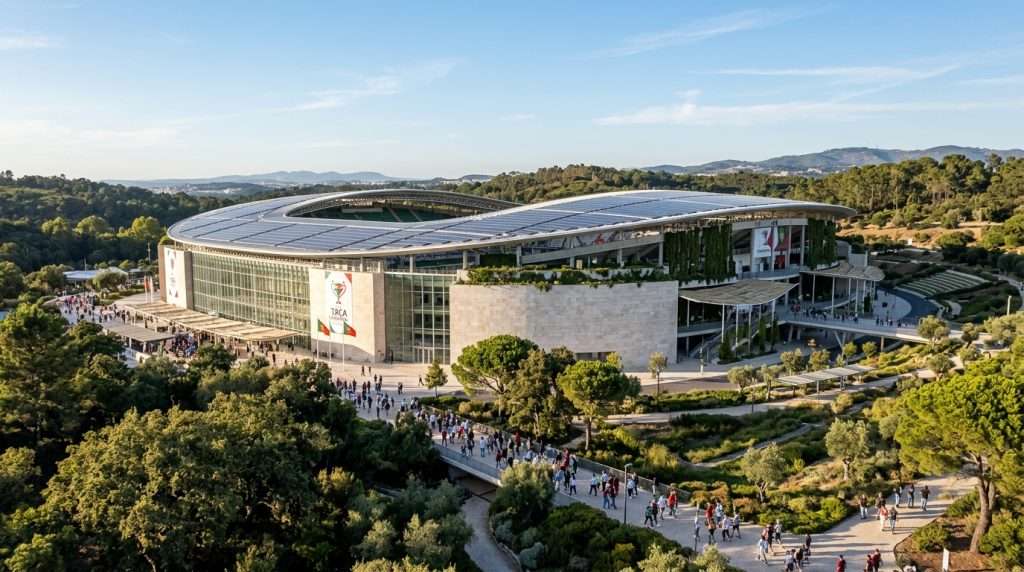
I keep returning to one question about Jamor’s future: how can we reinvent this stadium without erasing its stone-built soul?
Estádio Nacional opened in 1944, built from limestone ashlar blocks and granite tiers that still stand today. Portuguese builders made it to last, long before carbon footprints or piezoelectric flooring entered public debate. Walking through Jamor’s horseshoe bowl, you can feel decades of football history in every worn step.
That history explains why nobody seriously proposed tearing it down. A venue with such weight in Portuguese sport could not become another glass-and-steel arena. The emotional and cultural stakes were too high.
The Lisbon Lions and the Weight of Sporting Memory
Jamor’s story connects with major moments in Portuguese football, including the era fans still call the Lisbon Lions. Sporting Clube de Portugal’s golden generation made this stadium sacred ground for a generation of supporters.
Every Taça de Portugal final played here added another layer to that memory. You don’t just demolish a place like that. You find a way to let it keep breathing while giving it new lungs.
A stadium that forgets its own history isn’t honoring progress — it’s erasing memory.
That idea guided the entire 2050 renovation plan. Engineers and preservationists worked together, treating the original limestone and granite as treasures worth protecting.
Taça de Portugal’s Net-Zero Stadium Milestone
This milestone excites me. In 2050, Jamor is set to host the Taça de Portugal final as Portugal’s first net-zero certified historic stadium. That makes Jamor the taca de portugal net zero stadium, built from quarried stone and determination more than eighty years ago.
Think about what that milestone means. A stadium can keep its original bones while running on renewable energy, closed-loop water systems, and carbon-negative design. Few historic sports venues worldwide can claim that combination.
This snapshot shows how Jamor’s identity changes from its origin story to its 2050 legacy:
| Feature | 1944 Original | 2050 Transformation |
|---|---|---|
| Primary Material | Limestone ashlar, granite tiers | Original stone preserved with breathable mineral coatings |
| Energy Source | None (manual operations) | Net-zero renewable microgrid |
| Seating Capacity | Roughly 50,000 (historic estimate) | 37,500 seats integrated into forest design |
| Sporting Legacy | Early host of Taça de Portugal finals | First net-zero certified historic Taça de Portugal venue |
I love projects like this because they prove preservation and innovation can work together. Jamor’s limestone walls are not relics to avoid; they support a new kind of sports venue.
That tension between old stone and new ideas makes this story worth telling.
3. Stone Shields Against the Atlantic: Non-Invasive Mineral Masonry Glazes
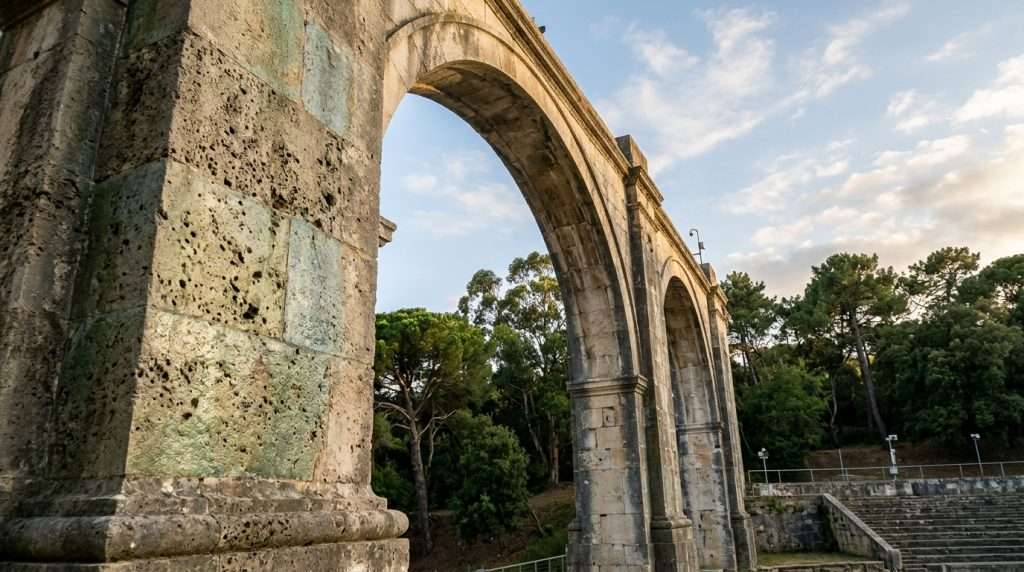
I remember standing near Oeiras’s old limestone stadium walls, where salty, thick air hit me first. The air seemed green because moss climbed stone standing since 1944.
Ocean moisture does more than wet the surface. It sinks into limestone ashlar and granite tiers, swelling and shrinking in tiny pores until the rock cracks and flakes.
Engineers restoring the stadium found a fix that works with nature, not against it. They call it a non-invasive mineral masonry glaze, like sunscreen for stone.
Guarding the Monumental South Arch from Bio-Erosion
The south arch is the stadium’s most photographed feature, and it deserves the attention. It curves over the original entrance like a stone rainbow, weathered after eight decades of coastal weather.
Years of Atlantic wind drove moss spores into its surface. Left alone, the moss would keep damaging the limestone and widening cracks each rainy season.
The non invasive mineral masonry glazes are brushed directly onto the arch without grinding or sandblasting first. They seal off pathways moss uses to spread while letting stone breathe underneath, stopping bio-erosion and spalling before either takes hold.
Preserving Authentic Patinas in Oeiras’s Humid Climate
Oeiras stays humid almost year-round, and that humidity gives old stone its character. Soft gray streaks and golden undertones on Jamor’s granite tiers formed over time.
Removing that patina erases decades of visual history in one afternoon. Nobody wanted that, so the glaze sits invisibly on the surface without bleaching or flattening its color.
I’ve seen restoration work elsewhere leave historic stone sandblasted and lifeless. Jamor avoided that trap and kept its weathered, lived-in look intact.
How Breathable Glazes Differ from Traditional Sealants
Old-school sealants trap moisture inside stone like plastic wrap around a sandwich. Trapped water has nowhere to go, builds pressure, and cracks the surface from within.
Breathable non invasive mineral masonry glazes work differently. They let vapor escape while blocking liquid water and biological growth, which matters along this damp coastline.
The same moisture battle affects historic forts worldwide, including Castillo San Felipe del Morro’s future-proofing in Puerto Rico. There, salt air creates nearly identical preservation headaches.
| Feature | Traditional Sealants | Non-Invasive Mineral Masonry Glazes |
|---|---|---|
| Moisture Handling | Traps water inside the stone | Releases vapor, blocks liquid intake |
| Patina Preservation | Often bleaches or alters color | Keeps original weathered look |
| Bio-Erosion Resistance | Limited; can trap moss spores | Actively discourages moss growth |
| Long-Term Stone Health | Higher risk of spalling and cracking | Reduces spalling over decades |
| Reapplication Needs | Frequent, every few years | Infrequent, lasts far longer |
4. Taming the Jamor River: Subsurface Hydrologic Heritage Engineering
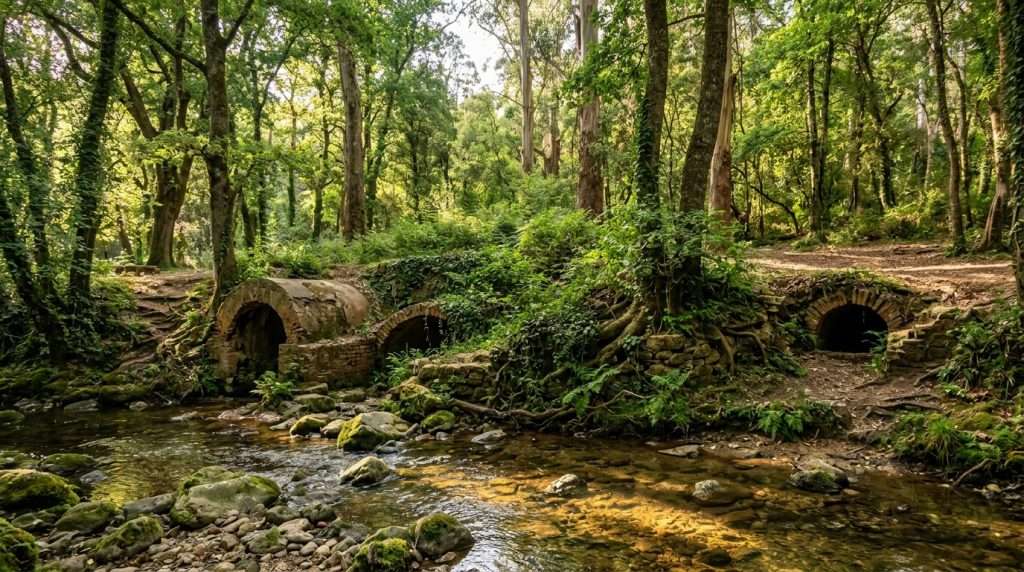
Underground at Jamor, a quiet system protects the stadium and nearby river during every match. Families spread blankets in the picnic woods, while children chase soccer balls before kickoff. They may never guess what lies beneath their feet.
That is the purpose of subsurface hydrologic heritage engineering. It works quietly, protecting the stadium and nearby river without interrupting a single picnic.
Automated Retention Vaults Beneath the Picnic Woods
Imagine concrete chambers beneath the shaded groves where fans relax before games. These automated retention vaults wait quietly under the soil for heavy rain.
When seasonal storms hit the Jamor River basin, sensors trigger valves that redirect the surge into these vaults. The system is designed to capture 100% of seasonal flash deluges, keeping the historic pavilions and surrounding park dry during Lisbon’s heaviest downpours.
This idea is not new. Researcher Elvira Pensa studied similar designs in her paper about water capture in green urban landscapes.
“Water sustainable management in urban green spaces requires systems that work invisibly, protecting both infrastructure and ecology without disrupting public use.”
That philosophy guides Jamor’s vaults. They work without demanding attention.
Closed-Loop Reservoir Stormwater Harvesting for Heritage Pavilions
After the vaults catch the water, it does not simply sit there. The design uses closed loop reservoir stormwater harvesting, filtering and reusing every drop instead of pumping it away.
Filtered runoff flows into a central reservoir built for the heritage pavilions across the Jamor complex. These century-old structures receive a steady, reliable water supply without using the city’s municipal grid.
Here is a simple breakdown of how the cycle moves from storm to supply:
| Stage | Location | Function | Outcome |
|---|---|---|---|
| Capture | Picnic woods vaults | Collect flash flood runoff | Zero surface flooding |
| Filtration | Underground treatment units | Remove sediment and debris | Clean, reusable water |
| Storage | Central closed-loop reservoir | Hold filtered water on standby | Year-round supply |
| Distribution | Heritage pavilions | Feed cooling and irrigation systems | Reduced municipal water use |
Zero-Emission Cooling Loops in Practice
Here, the whole system comes together. Stored water does not remain in reserve. It flows through pipes that cool the heritage pavilions during Lisbon’s warm summer months.
No extra electricity is used to chill these historic spaces. The zero-emission cooling loops use stored groundwater’s natural temperature. They circulate it through radiant systems embedded in pavilion walls and floors.
I find this part genuinely clever. A storm that once caused flooding now keeps a 1944 building comfortable in August, without one watt of extra power. That is engineering quietly serving history.
5. Turning Fans into Fuel: Stadium Kinetic Energy Crowd Harvesting

It sounds like science fiction, but Jamor is turning the idea into a real plan. This stadium kinetic energy crowd harvesting project could light the grounds.
Picture matchday at Estádio Nacional. The horseshoe tiers shake as fans leap up, and feet pound centuries-old stone stairways. When a goal arrives, 37,500 people jump together like one living organism.
That energy does not vanish into the Oeiras air. In the stadium’s 2050 vision, systems capture, store, and reuse it.
Piezoelectric Plates Under the Horseshoe Tiers
Under the historic horseshoe curves, engineers plan to install piezoelectric plates — thin panels that make electricity under pressure.
This is not brand-new science. Train stations in Tokyo use similar tiles beneath turnstiles. Rotterdam dance floors power club lights with dancers’ footsteps, while Pavegen’s tiles light walkways in London and Washington, D.C.
Jamor’s difference is its scale. Plates span stone stairways and horseshoe tiers, where thousands of fans move together. Each jump, stomp, and exit sprint adds power, and a packed house quickly increases the total.
| Application | Technology | Typical Output | Real-World Example |
|---|---|---|---|
| Train station floors | Piezoelectric tiles | 5–8 watts per footstep | JR East stations, Tokyo |
| Dance club floors | Sustainable dance flooring | Up to 20 watts per dancer | Club WATT, Rotterdam |
| Sidewalk pavers | Pavegen kinetic tiles | 2–4 watts per footstep | London & Washington, D.C. walkways |
| Stadium horseshoe tiers (concept) | Under-tier piezoelectric plates | Estimated 50–100 watts per celebration jump | Estádio Nacional 2050 design |
Powering the Lisbon Lions Monument Microgrid
All that captured energy needs a destination. At Jamor, it enters the Lisbon Lions monument microgrid.
This small, self-contained grid keeps the tribute to Benfica’s 1962 European Cup winners glowing after dark. It also powers nearby pavilions and walkway lights throughout the Jamor complex.
Rather than drawing from the national grid, the monument uses power made by nearby fans. This closed loop turns memory into momentum, literally.
There’s something poetic about that — 1962’s ghosts glow through 2050 crowds, who were unborn when that team made history.
From Celebration to Clean Electricity
Fans need not change their habits. They show up, cheer, jump, and celebrate as usual.
The stadium manages the rest. Under-floor sensors turn motion into current. Battery banks store it, and the microgrid sends it where needed most.
A last-minute winner in the Taça de Portugal final might send clean power into the rig above the pitch. No fuel burned, no emissions released — only stomping feet and raw joy doing double duty.
Sports’ loudest, wildest moments can also produce useful power when the stage is built well.
6. The Woodland Bowl as Carbon Sanctuary: Net-Zero Design Philosophy
Between the picnic woods and horseshoe tiers, I stopped seeing Jamor as a stadium. I saw it as a sanctuary. That shift matched the 2050 design team’s goal: fewer emissions and a stadium behaving like a forest hosting football.
This is where Estadio Nacional Portugal future 2050 becomes more than a renovation project. It becomes a clear philosophy. Every material, seat angle, and tree canopy answers one question: can a stadium give more to the planet than it takes?
Integrating 37,500 Seats into a Living Forest
The numbers sound ambitious. Thirty-seven thousand five hundred seats fit within a real woodland canopy instead of sitting beside it. I’ve seen “green stadiums” plant a few parking-lot trees and stop there.
Architects wove the seating bowl through existing tree lines instead of clearing them. They mapped canopy gaps before pouring any section. The result feels less like an amphitheater cut from a forest and more like a forest holding a crowd.
The idea is not entirely new, though Jamor uses it at a scale I have not seen elsewhere. Researcher Alexander Tetior explored a similar concept years ago. He argued that green space should live inside architecture, not just surround it.
“Additional green territories can and should be integrated directly into the structure of buildings, not merely placed around them.”
Jamor applies that theory by building a stadium around it. Seating tiers curve around root systems. Walkways pass beneath low branches instead of removing them.
Even sightlines changed, keeping canopy cover above specific sections. The forest remains part of the stadium experience.
When I first saw this layout, I thought it was conceptual art, not a construction plan. The engineering is remarkably literal. The trees are not decoration; they are key partners in the stadium’s climate strategy.
Measuring Carbon Negativity at Scale
This matters to anyone who values real numbers over marketing. Net-zero means a building cancels its own emissions. Carbon negative means it removes more carbon than it produces.
Jamor’s 2050 design targets the second category, not the first. Matchday emissions are measured through three connected systems: kinetic energy floors, closed-loop water systems, and expanded tree canopy.
Together, they aim to remove more annual carbon than 37,500 fans, staff, and operations produce.
| Metric | Conventional Stadium Model | Jamor Woodland Bowl (Projected) |
|---|---|---|
| Matchday CO2 output | High, grid-dependent | Offset onsite, same-day |
| Canopy coverage | Minimal or decorative | Integrated into seating structure |
| Carbon capture source | External offset credits | Living forest plus stormwater systems |
| Annual carbon balance | Net positive emissions | Net negative, verified annually |
I like that the team did not simply plant trees and stop there. They built a framework that checks results each season. It compares projected carbon capture with onsite air-quality data.
- Onsite sensors track canopy carbon absorption through the full match calendar.
- Kinetic and solar inputs get subtracted from total grid demand, not estimated after the fact.
- Independent audits confirm the stadium’s negative balance rather than relying on self-reported figures.
It is humbling to see a stadium repair a small part of the atmosphere while hosting memories. That detail makes me want every future building to ask Jamor’s question.
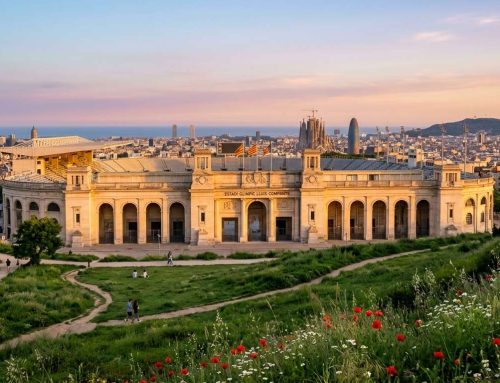
Estadi Olimpic Lluis Companys future.
7. What Jamor Teaches Every Aging Stadium
Estádio do Jamor shows that old bones and new ideas can work together. I left Oeiras with a bigger question. Can the estadio do jamor preservation approach reach beyond one limestone bowl in Portugal?
Every historic stadium I’ve explored, from dusty South American arenas to creaking European grandstands, faces a quiet crisis. Jamor’s preservation model offers a practical blueprint worth studying.
The Preservation-Versus-Innovation Debate
Purists make a fair point. They want the untouched stone, original seats, and worn concrete ramps that carried generations of fans. They believe a stadium’s soul lives in its unaltered details.
Realists see it differently. Climate change doesn’t negotiate with nostalgia. Rising humidity, stronger storms, and crumbling infrastructure force hard choices. Standing still may mean losing the monument entirely.
Jamor’s answer sits somewhere in the middle, which is why it matters:
| Priority | Preservation Camp | Innovation Camp |
|---|---|---|
| Structural authenticity | Keep original limestone visible | Add breathable protective glazes |
| Climate resilience | Minimal intervention | Subsurface flood and cooling systems |
| Visitor experience | Traditional seating layout | Kinetic energy harvesting upgrades |
| Long-term funding | Heritage grants only | Mixed green-tech investment |
I don’t think either side is wrong. Jamor found a way to let both arguments succeed at once.
Could This Model Work Beyond Portugal?
The GreenKeys project caught my attention. The initiative works across several European cities. It balances heritage identity with modern, sustainable development, and Jamor shares that ambition.
Many stadiums around the world now face this same crossroads. I keep thinking about places like:
- Maracanã in Rio de Janeiro, still wrestling with maintenance costs decades after its World Cup glory
- Soldier Field in Chicago, balancing landmark status with modern NFL demands
- Twickenham in London, where tradition and expansion constantly collide
- The Rose Bowl in Pasadena, nearly a century old and still searching for a sustainable future
None of these venues can copy Jamor exactly. Climate, budget, and local regulations all differ. But the underlying principle feels universal: treat history as an asset, not an obstacle, and build sustainability around it.
That, to me, is the real takeaway. Jamor redefines monument longevity by letting a stadium breathe, adapt, and host new memories without losing old ones.
I don’t claim to have the final answer. I will watch every aging stadium I visit with Jamor’s lesson in mind.
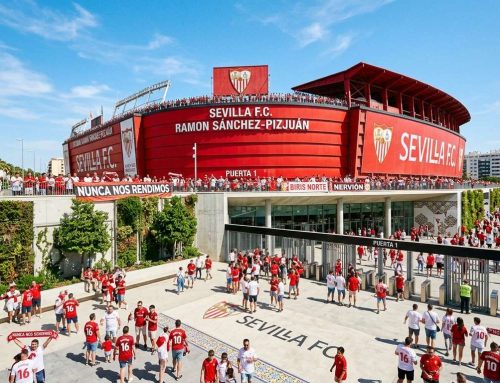
Estadio Benito Villamarin future.
8. Conclusion
I left Jamor thinking about how rare it is to honor the past while building something truly new. The 1944 limestone arches stand beside hidden water vaults, fan-powered microgrids, and a forest bowl that takes in carbon.
That blend makes Estadio Nacional Portugal future 2050 worth watching. It is more than a renovation story or sustainability checklist. It shows how a stadium can honor history while answering climate, energy, and water questions we are starting to ask.
Inside that stone horseshoe, among eucalyptus and pine, I saw more than a museum piece; I saw a blueprint. Jamor shows that respecting a monument does not mean freezing it in place. It means giving it room to work, serve people, and teach lessons for the next century.
If you plan a Portugal trip soon, put Oeiras on your list. Walk the Jamor valley, look up at the south arch, and picture what Estadio Nacional Portugal future 2050 will look like once fully realized. I plan to go back myself, camera ready, and watch history and innovation stand side by side.


Leave A Comment