

I still remember the first time I craned my neck and lost my breath beneath quartz spires piercing the clouds. I wondered how this ancient stone kingdom might look decades from now, in the Zhangjiajie future 2050.
That question drew me back to research this place. Picture a solarpunk vision where towering sandstone pillars become more than scenery. They become living infrastructure that quietly powers a net-zero future for the whole region.
By mid-century, this UNESCO treasure could prove that nature and engineering need not compete. Nearly 3,000 stone pillars, miles of glass skywalks, and seasonal monsoon rains could support a self-sustaining mountain biome.
I’ll guide you through hidden water vaults carved into canyon walls. We’ll explore footstep-powered bridges that turn tourist energy into usable electricity.
I’ll also show you breathable mineral coatings that protect fragile cliffs from erosion. Stay with me—we’re climbing toward something genuinely visionary.
Key Takeaways
- Zhangjiajie’s 3,000 quartz sandstone pillars are being reimagined as part of a living, carbon-neutral ecosystem.
- Canyon hydrologic vaults capture and store monsoon rainfall for sustainable water use.
- Glass skywalks are being engineered to harvest kinetic energy from millions of footsteps.
- Nano-mineral glazes help protect the cliffs while allowing natural rock surfaces to breathe.
- The long-term goal pairs ancient geology with cutting-edge civil engineering for full autonomy.
- This transformation positions the park as a global model for extreme-terrain conservation.
1. Zhangjiajie Future 2050: A Living Monument Reimagined
When James Cameron’s team searched for Pandora’s floating mountains, they found Zhangjiajie’s quartz sandstone peaks. I stood on a skywalk, watching pillars hover in mist, and realized this place needed no Hollywood magic. It already looked otherworldly.
That is why I believe Zhangjiajie future 2050 matters to China and everyone who loves wild, dramatic landscapes. By 2050, this famous stone forest may still tower over the valley. It may run on its own power, filter its water, and heal after each storm. That vision is taking shape now.
I have traveled through enough of Hunan to see tourism surging back and sometimes breaking old records. Shaoshan, Mao Zedong’s hometown and a center of China’s “Red Tourism” movement, drew crowds after COVID that surpassed pre-pandemic numbers. The province is investing serious money and planning decades ahead, rather than simply hoping sites survive.
Here is a quick snapshot of visitor trends at several Hunan landmark destinations since the pandemic eased:
| Heritage Site | Pre-Pandemic Visitors (2019, approx.) | Recent Visitors (2023, approx.) | Growth Trend |
|---|---|---|---|
| Zhangjiajie National Forest Park | 7.4 million | 9.1 million | Rising steadily |
| Shaoshan (Mao’s Hometown) | 24 million | 30+ million | Record-breaking surge |
| Wulingyuan Scenic Area | 6.8 million | 8.5 million | Strong recovery |
Those numbers are not just bragging rights for Hunan’s tourism board. They send a clear signal. When visitor numbers return this strongly, a province invests in protecting the sights people travel far to see.
That is the backdrop for everything coming next in Zhangjiajie’s future. Engineers and conservationists are not treating this as a short-term tourist trap. They are building a self-sustaining mountain biome where ancient stone and invisible green technology work side by side.
For budget travelers and adventure seekers, the takeaway is simple. The pillars in today’s photos inspired an alien world on screen, and they are not going anywhere. If anything, Zhangjiajie 2050 promises a more impressive future, quietly powered behind the scenes while the view stays wild and jaw-dropping.
2. Wulingyuan Sandstone Pillar Preservation: Shielding 3,000 Monoliths from Time
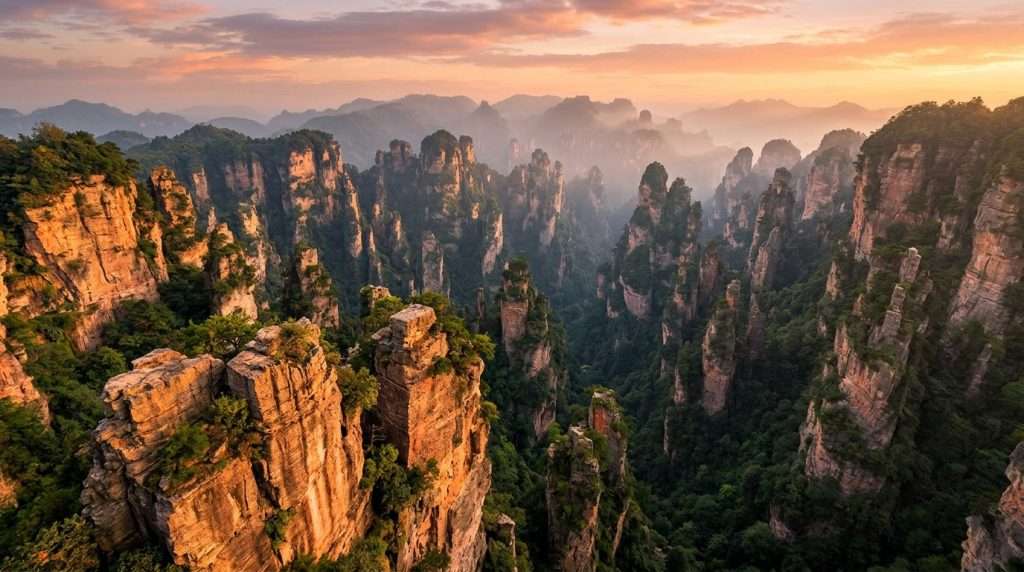
You might think rock this massive could survive anything. Yet quartz sandstone has a weakness that has harmed Wulingyuan for thousands of years. I learned this beneath one of the park’s tallest pillars, wondering how solid rock could seem fragile.
Wulingyuan sandstone pillar preservation protects roughly 3,000 individual towers across the park. Each formed from ancient quartz sandstone, shaped by wind and water over millions of years. The soft, porous stone that makes these pillars striking also makes them vulnerable.
2.1 Freeze-Thaw Fissures and the Threat to Quartz Sandstone
This surprised me most. Water seeps into tiny pores and hairline cracks inside the sandstone. When temperatures drop, that water freezes.
Ice expands by almost 9 percent inside solid rock, where it has nowhere to go.
I’ve watched this happen to boulders on cold mountain trails out West. A harmless summer crack can split wide open by spring. After hundreds of winters, fissures can run deep through a pillar’s core.
Wulingyuan sits high enough for winter nights to fall below freezing. Days warm again, repeating this freeze-thaw cycle throughout the cold months. Monsoon rains soak the stone each summer, adding moisture and temperature changes.
Left unchecked, this process causes spalling, when thin stone layers flake from the surface. It also widens natural joints between pillar sections, eventually freeing large pieces of a monolith.
2.2 Breathable Non-Invasive Mineral Masonry Glazes in Action
How can researchers protect thousands of rock formations without hiding their beauty? They use non invasive mineral masonry glazes, a thin, breathable coating that works with the stone.
Unlike old sealants, these mineral glazes do not trap moisture inside the rock. They let water vapor escape while blocking liquid water. The sandstone keeps breathing, but rain cannot enter the pores and restart the freeze-thaw cycle.
That detail matters to me as a photographer. The glaze matches each pillar’s natural amber patina. From the trail below, visitors would never know it was there.
| Protection Method | Moisture Handling | Visual Impact |
|---|---|---|
| Traditional sealant | Traps moisture inside stone | Glossy, unnatural sheen |
| Mineral masonry glaze | Lets vapor escape, blocks rain | Matches natural amber patina |
| No treatment | Full exposure to freeze-thaw cycles | Authentic but rapidly deteriorating |
Crews apply the glaze in thin layers to exposed rock faces and vulnerable joints. They often work by hand on ropes along the cliffs. The result is fewer fractures, less spalling, and pillars that should stand for generations of hikers.
3. Guarding Tianmen Arch and the Bailong Elevator from Monsoon Decay
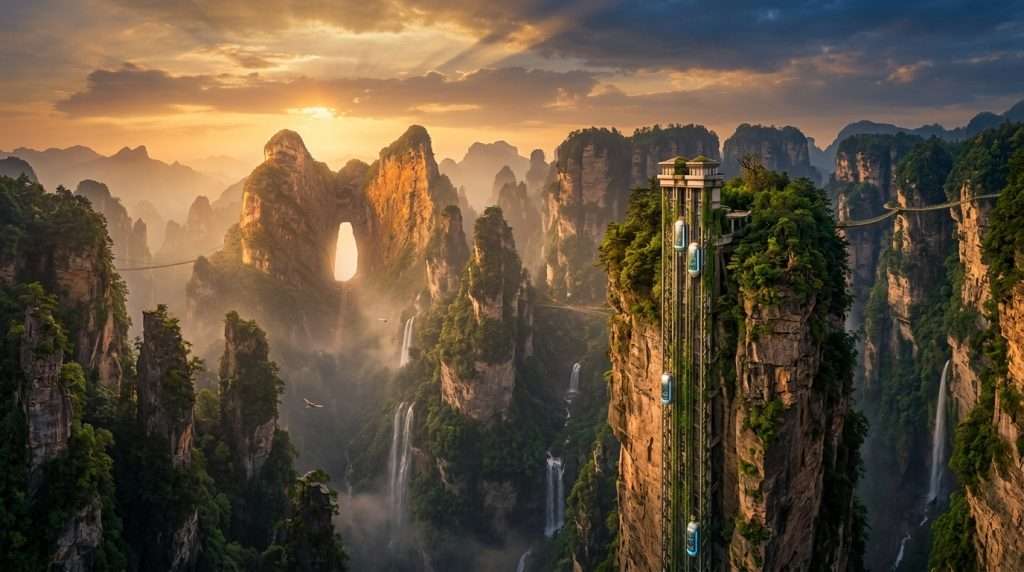
The first time I rode the Bailong Elevator, I felt suspended above a cliff, trusting steel and engineering. The glass box climbs 330 meters straight up a sheer rock face. Watching the valley drop beneath my feet felt terrifying and thrilling.
But this is more than a tourist attraction. It is infrastructure that must survive Hunan’s brutal monsoon season year after year. Heavy rain, constant humidity, and relentless moisture are the real enemies, not earthquakes or crowds.
Any serious plan for Zhangjiajie future 2050 must treat these landmarks as equally fragile. The Bailong Elevator and natural Tianmen Arch look nothing alike. One is steel, and one is stone, but both face the same wet climate.
3.1 Steel Caisson Corrosion Control at the Bailong Elevator
Think of the elevator’s steel caissons as a ship’s hull, bolted into a mountain instead of floating. Saltwater is not the threat here; constant rain, fog, and humidity are.
Modern corrosion control for structures like this usually layers several defenses together:
- Zinc-rich primers that sacrifice themselves before the steel rusts
- Epoxy sealants that block moisture from ever reaching bare metal
- Cathodic protection systems that use electrical currents to stop oxidation
- Routine ultrasonic thickness testing to catch weak spots early
I’ve talked to engineers who compare this process to preventative dentistry. You do not wait for a cavity. You catch the problem before it starts. The same philosophy applies to a 330-meter steel shaft hanging off a mountain.
Without proactive maintenance, monsoon season could slowly make the Bailong Elevator a serious safety risk. Nobody wants that, especially the thousands of visitors who ride it every day during peak season.
3.2 Preserving the Authentic Amber Patina
Now let’s talk about the stone side, because my photographer brain kicks in. Tianmen Arch has a gorgeous amber-gold patina formed through centuries of weather. It is the kind of color that makes a sunrise shot look otherworldly.
The worst conservation choice would be scrubbing that patina away for protection. An artificially cleaned cliff face loses what made it special in the first place.
“The best conservation work is the kind nobody notices,” a stone conservator once told me during a trip through Hunan’s karst country.
That idea guides breathable nano-mineral glazes. These coatings seal out moisture and slow weathering. They also let the stone breathe, without shine or a plastic look.
Here’s how the two different conservation challenges stack up side by side:
| Feature | Bailong Elevator (Steel) | Tianmen Arch (Stone) |
|---|---|---|
| Main threat | Rust and metal fatigue from humidity | Spalling and cracking from freeze-thaw cycles |
| Protection method | Zinc primers, epoxy coatings, cathodic systems | Breathable nano-mineral glazes |
| Visual goal | Structural safety without visible bulk | Preserve the authentic amber patina |
| Maintenance style | Ultrasonic inspection and recoating | Periodic reapplication of invisible sealant |
Both approaches share one goal: keep the structure safe without changing its appearance or visitor experience. That balance shapes any vision for Zhangjiajie future 2050: landmarks that stand safely and still look like themselves.
I’ll admit, it reassures me to know the cliffs I photograph are protected without disguise. The rust-proofing happens quietly behind the scenes. The patina remains exactly as weather made it over hundreds of years, showing conservation done right.
4. Subsurface Hydrologic Heritage Engineering Beneath Golden Whip Stream
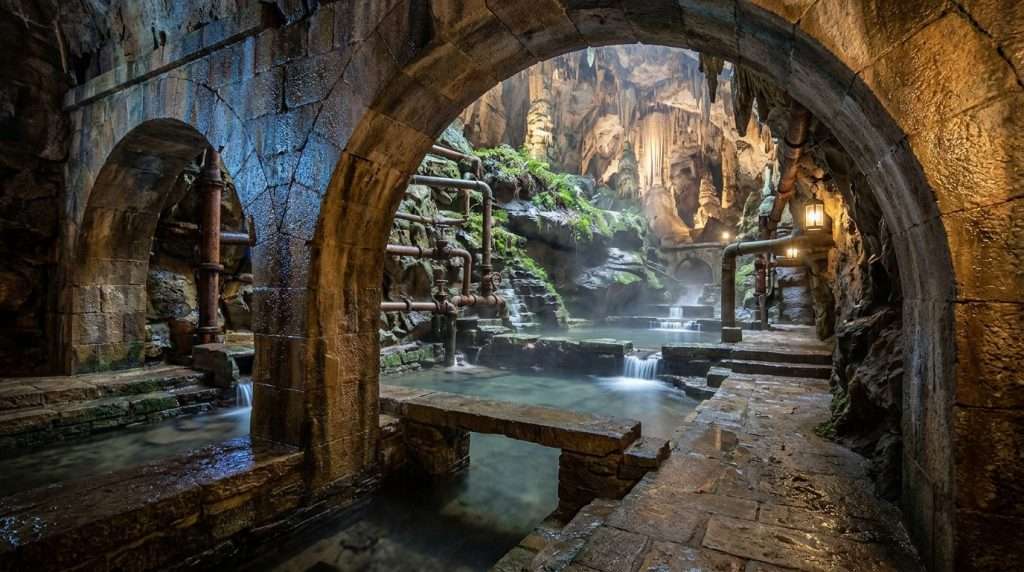
Most visitors walking beside Golden Whip Stream never guess an engineered world lies beneath their feet. I’ve crossed those shallow waters more times than I can count, snapping photos of limestone spires reflected in the current. I never imagined that a sudden mountain storm could turn this gentle stream into a raging torrent within minutes.
That’s the problem Zhangjiajie’s planners set out to solve with subsurface hydrologic heritage engineering. Alpine storms can dump intense rainfall in a short burst, and without help, that water would erode centuries-old rock formations. The solution works quietly underground, hidden from visitors on the trail.
4.1 Automated Retention Vaults Capturing 100% of Alpine Flash Floods
Beneath the streambed, a network of automated retention vaults forms the backbone of this subsurface hydrologic heritage engineering system. These chambers open and close based on real-time rainfall sensors, capturing runoff before it reaches the surface in damaging volumes.
The goal is ambitious: capture 100% of alpine flash flood water during peak storm events. This keeps the sandstone pillars and footpaths along Golden Whip Stream safe, even when skies open without warning.
I find this detail genuinely fascinating. Visitors can admire scenery and miss the quiet machinery that keeps it intact. The vaults work silently, so most hikers cross above without noticing them.
4.2 Closed Loop Reservoir Stormwater Harvesting for Cliffside Cooling
Captured water does not sit idle in storage. Through closed loop reservoir stormwater harvesting, chilled runoff is redirected into cooling loops serving cliffside viewing platforms across the park.
Rather than use electric cooling systems, the platforms use water that might otherwise go to waste. The sealed loop releases no untreated water into the stream and draws nothing from outside sources.
Water that once threatened to erode the valley now cools the very platforms built to admire it.
It is a small, elegant cycle. Rain becomes protection, and protection becomes cooling. The platforms cool without burning a single extra watt of energy on the mountainside.
Next time I’m standing on a shaded cliffside platform in Zhangjiajie, I’ll think about that trapdoor beneath Golden Whip Stream. From above, the stream still looks peaceful and unassuming, but I now understand what happens below.
5. Tianmen Mountain Net Zero: Rethinking Energy on a Vertical Landscape
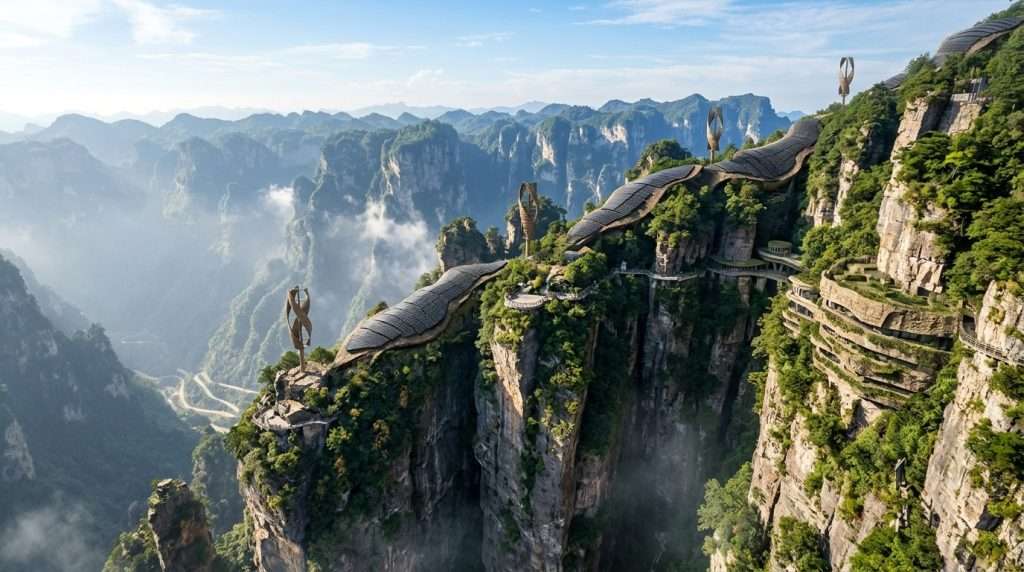
On the cable car, I wonder how anyone could power this steep, remote place without harming the land. The tianmen mountain net zero challenge has no easy answer. There’s no flat ridge for a solar farm or open valley for wind, only cliffs, cloud forest, and air dropping thousands of feet.
That challenge shapes Tianmen Mountain net zero planning. You cannot bulldoze this sacred mountain to install standard clean-energy systems. Instead, the 2050 vision replaces one giant power source with dozens of quiet, small-scale sources woven into the terrain.
Picture micro-turbines along ridgelines, spinning as gusts naturally funnel through mountain passes. Thin, flexible solar laminates could cover cable car stations and south-facing rock faces without changing the skyline.
- Small geothermal loops tapping the steady, cool temperature inside the mountain’s caves
- Battery storage pods built into existing structures, including the towers near the Bailong Elevator
- Smart microgrid wiring that links every node, so power generated in one spot can serve another the moment it’s needed
These systems cannot work alone. Together, they form a flexible, resilient grid that follows the mountain’s layered strength instead of using brute force. Similar ideas appear in off-grid U.S. cabins and remote national park outposts, scaled for a UNESCO-listed peak.
To learn how early travelers recorded this rugged terrain before engineers imagined microgrids, read the historical expedition records. They show how little the raw landscape has changed, even as technology evolves.
Powering a vertical landscape this way requires patience and trial and error. It also invites a creative idea: capturing energy from sun, wind, stone, and visitors crossing the mountain’s famous glass bridge.
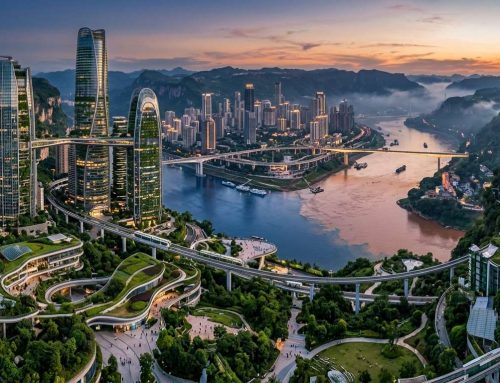
Chongqing vertical city future.
6. Grand Canyon Glass Bridge Kinetic Microgrid: Power from Every Footstep
Standing on the Grand Canyon glass bridge feels wild, especially when your footsteps help power the grid. Engineers built this system into the Zhangjiajie Grand Canyon Glass Bridge.
I admit my legs wobbled too much to think about electricity during my first crossing. Now, knowing what happens beneath the glass changes how I see the crossing.
The Grand Canyon glass bridge kinetic microgrid uses a simple idea: turn human movement into usable power. Thousands of visitors cross daily, and each step sends a small energy burst into the ground. Zhangjiajie’s planners decided not to waste that energy.
Piezoelectric Pavers Beneath the Glass Bridge
Piezoelectric pavers sit beneath the bridge’s walking surface. These pressure-sensitive panels turn footsteps’ kinetic energy into small electric charges. One step produces little power, but thousands of daily crossings quickly add up.
Here’s what makes this system practical for a site like Zhangjiajie:
- The pavers require no external power source to function—they generate electricity purely from pressure.
- They sit discreetly under the glass flooring, invisible to visitors focused on the canyon view below.
- The collected energy feeds directly into a localized microgrid serving nearby lighting and sensors.
- Maintenance stays minimal since the pavers have no moving mechanical parts that wear out quickly.
I see it as the bridge quietly doing a second job. While visitors snap photos and brace themselves against the glass floor, the structure harvests kinetic energy. It’s a small, elegant solution that matches the bridge’s larger identity as a thrill ride and engineering showcase.
The 999-Step Stairway as a Clean Energy Corridor
Beyond the bridge waits Zhangjiajie’s famous 999-step stairway, which tests calves and lungs alike. I once saw those steps as punishment after a long sightseeing day. Now I see them as part of a larger energy system.
Engineers extended the same piezoelectric technology into parts of the stairway, turning each hard step into another microgrid contribution. Hikers climbing up and tourists descending generate steady power along the entire corridor.
This stretch does more than move people from point A to point B. It acts as a clean energy corridor, combining thousands of small gains into power for site infrastructure.
“Every step a visitor takes becomes a small act of energy production, turning foot traffic into a renewable resource without visitors even noticing.”
What strikes me most is how this approach reflects the spirit of sustainable tourism. Rather than adding solar panels or wind turbines, the design hides renewable power within visitors’ normal activities. You walk, climb, and breathe hard near the top; below, your effort quietly becomes electricity for Zhangjiajie’s future.
7. Borrowing from Stadiums: Porous Asphalt Drainage Lessons for Mountain Trails
While walking Zhangjiajie’s trails, I remembered a stadium parking lot I had toured years earlier. The ground felt spongy beneath my boots, but I did not know why until a local guide explained.
The idea comes from sports venue engineering. Stadiums handle thousands of fans and sudden downpours, so they use porous asphalt to keep walkways safe and dry.
It looks like regular pavement but contains tiny, connected air pockets. Rain sinks through it into the ground instead of sitting on the surface.
This design solves two problems at once. It prevents puddles during storms and supports heavy foot traffic without cracking or shifting.
Zhangjiajie’s trail engineers faced the same challenge on a wilder scale. Mountain rain does not trickle; it pours, creating sudden stormwater drainage demands that can strip topsoil within minutes.
They adapted stadium-grade porous asphalt for viewing platforms and well-worn trail sections. Rainwater now soaks into the ground almost as quickly as it falls, rather than rushing downhill and eroding ancient stone steps.
These benefits go beyond dry hiking shoes. Here is what this stadium technology does for the park:
- Reduces surface runoff that would otherwise wash away soil around sandstone pillars
- Protects centuries-old stone steps from constant water erosion
- Improves footing on steep, wet trails during monsoon season
- Lowers long-term maintenance costs by preventing pavement cracking
I love moments when two different worlds—a packed football stadium and a remote mountain park—solve the same problem in the same way. It reminds me that good engineering ideas travel well, whatever the setting.
8. Conclusion: Hunan’s Blueprint for Natural Monument Longevity
After days of hiking, I stood beside Golden Whip Stream with one clear thought: Zhangjiajie future 2050 is not a distant sci-fi dream. It is already taking shape in stone glazes, buried flood vaults, and footstep-powered walkways I crossed myself.
What moves me most is how naturally this preservation work fits the landscape. The sandstone pillars still look wild and ancient. The Bailong Elevator still rockets up the cliff face like something from a movie.
Quiet engineering works below, helping keep these sights standing for the next generation of hikers.
I’ve seen this pattern across Hunan. Shaoshan, Chairman Mao’s birthplace, has seen visitor numbers rise again in recent years as China restores and protects historic sites. That is no coincidence. The province knows its landmarks are worth protecting, from cultural monuments to 3,000 sandstone pillars rising into the clouds.
If Zhangjiajie future 2050 fulfills current plans, it will be more than a Chinese success story. It could become a working model for every national park and natural wonder facing climate pressure and crowds. For now, I’m keeping my boots ready.
This mountain range earned a place on my must-return list, and I think it may earn one on yours.






Leave A Comment