
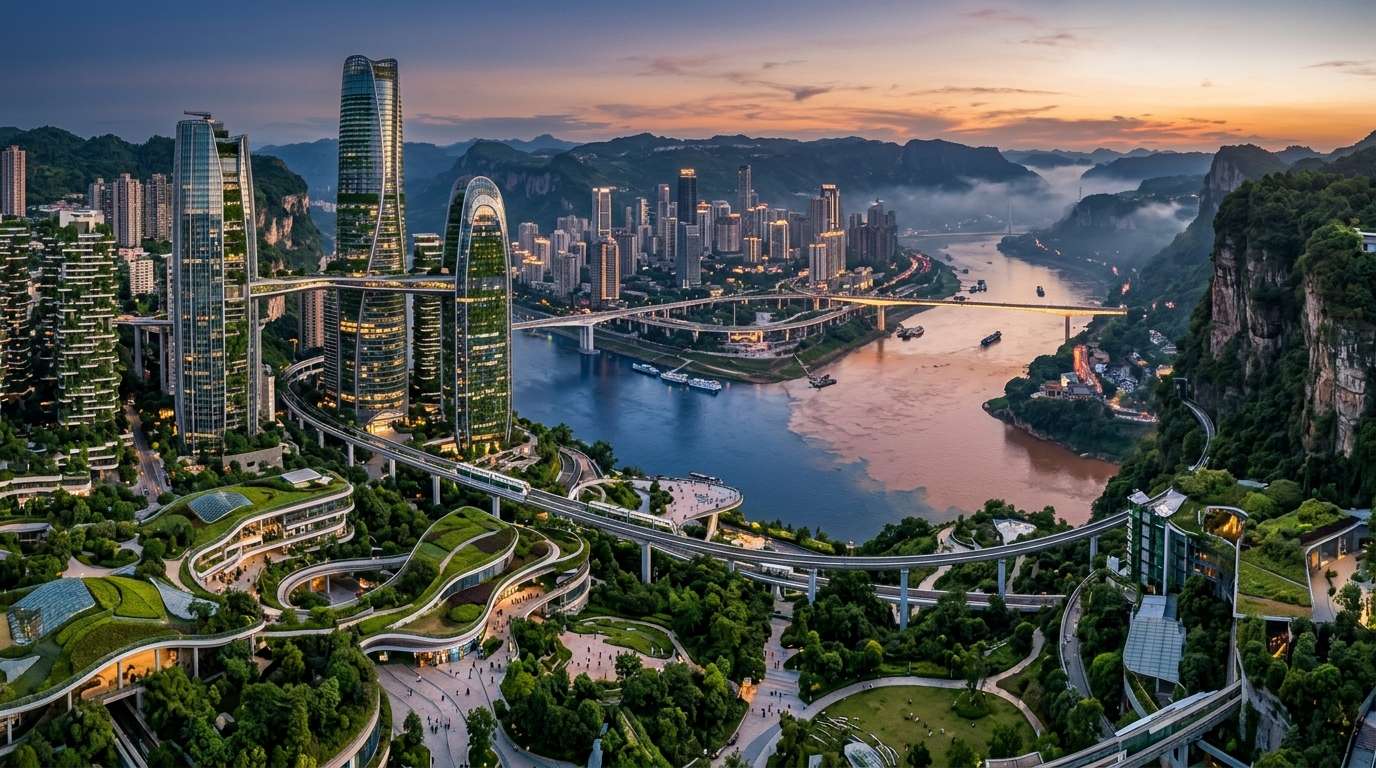
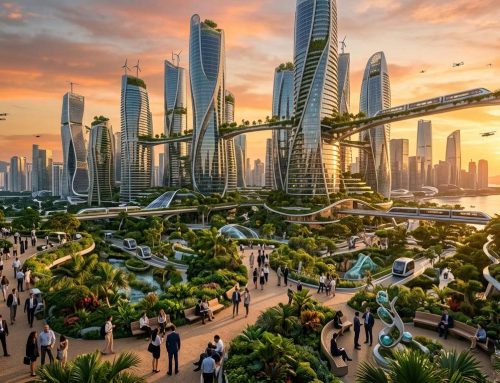
I stood at a limestone overlook, staring down at a skyline that seemed to defy gravity. This view introduced the Chongqing vertical city future 2050: a city above two roaring rivers. It felt like stepping into a sci-fi film set in ancient China.
Chongqing rejects the usual urban plan. Houses stack eleven stories high on stilts, bridges hang between skyscrapers, and escalators replace sidewalks. This is a metropolis built sideways and upward, not outward.
That first glimpse raised a question: what happens when a steep, crowded, hot city chooses carbon neutrality? By 2050, this mountain metropolis plans to show the world how.
In the next few sections, I will explain this vision’s main pillars. These include cliffside stilt architecture, modern flood defenses, hydrologic vaults guarding rising waters, and cooling systems for brutal summer heat.
I will also show how kinetic walkways turn millions of footsteps into usable power. Together, these innovations shape the Chongqing vertical city future 2050, an autonomous mountain biome unlike anything else on Earth. Consider this your invitation to explore it with me.
Key Takeaways
- Cliffside design turns steep terrain into a model for multi-level urban planning.
- Stilt-style diaojiaolou architecture inspires modern flood-resistant construction techniques.
- Hydrologic retention vaults manage floodwaters where the Yangtze and Jialing rivers meet.
- Nano-mineral glazes and breathable materials help cool buildings during scorching summers.
- Mountain skywalks capture kinetic energy from millions of daily footsteps.
- The plan targets full carbon neutrality and energy independence within three decades.
- Combined systems create a self-sustaining mountain biome instead of a sprawling metropolis.
1. A Mountain City’s Gamble on Becoming the World’s Vertical Blueprint
I remember looking up at a highway passing through an apartment tower’s 20th floor. I thought, this city follows no normal rules.
Most cities spread across flat, open land. Chongqing never had that choice. Steep cliffs and the meeting point of the Yangtze and Jialing rivers boxed it in from the start.
So builders went up, down, and sideways. Roads stack on top of roads. Bridges cross at completely different elevations, while buildings grow from solid rock.
When I first studied this city’s maps and plans, I saw only accidental clutter. I was wrong. Its tangled vertical form became raw material for something far bigger than expected.
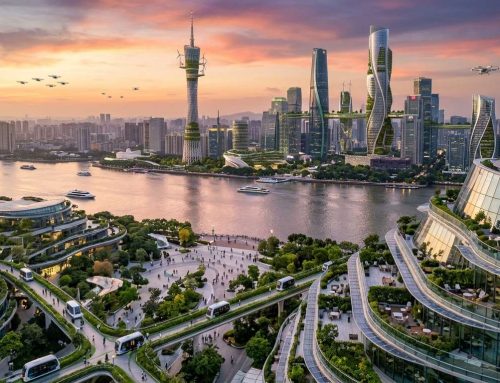
Planners now see Chongqing’s cramped, cliff-bound geography as a built-in advantage, not a limitation. The Chongqing vertical city future 2050 plan turns decades of improvised stacking into deliberate engineering. It aims to show that dense, three-dimensional cities can manage floods, heat, and growth without endless outward sprawl.
| Factor | Typical Flat Metropolis | Chongqing’s Vertical Model |
|---|---|---|
| Land use pattern | Outward sprawl across available land | Stacked development across multiple elevations |
| Flood response | Surface drainage systems alone | Layered retention built into terrain and structures |
| Transit connections | Mostly single-level road networks | Multi-tier roads, bridges, and skybridges |
| Growth strategy | Expand city limits over time | Build upward and downward within a fixed footprint |
Nothing here is guaranteed to work perfectly. Building a city’s future on systems created at this scale, for the first time anywhere, is a genuine gamble. I like that its engineers seem to understand this, treating 2050 as an adaptation experiment, not a finished success story.
2. Why Chongqing Vertical City Future 2050 Matters Beyond China
I did not expect a mountain city in China to change how I view climate risk at home. Chongqing’s vertical blueprint changed my view quickly.
This is not only a story about skyscrapers clinging to cliffs. It previews choices that growing, flood-prone cities will eventually face, including Denver, Lisbon, and your hometown.
The Global Shift Toward Three-Dimensional Urbanism
Cities everywhere are running out of room to spread sideways. Planners from Singapore to Toronto now build upward and downward, stacking homes, transit, and green space in layers.
China has supported this shift with strong policies. In 2020, President Xi Jinping pledged to peak carbon emissions before 2030 and reach carbon neutrality before 2060.
The idea of an “ecological civilisation” entered China’s constitution. This made sustainable engineering a national duty, not a side project (Pia, Made in China Journal, 2022).
That policy backbone appears in China’s energy sector roadmap to carbon neutrality. It treats cities like Chongqing as testing grounds for large-scale, low-carbon growth.
Lessons for Flood-Prone, Heat-Stressed Megacities Worldwide
Jakarta is sinking. Miami floods on sunny days without storms. Dhaka faces monsoon surges and brutal heat waves in the same year.
These cities share Chongqing’s double threat: rising water below and intense heat above. The Chongqing vertical city future 2050 model tackles both through layered design, from stilted riverside structures to automated flood vaults under streets.
- Jakarta: sinking land paired with rising seas
- Miami: chronic sunny-day flooding from tidal surge
- Dhaka: monsoon flooding layered on top of extreme urban heat
Worldwatch Institute’s State of the World 2016 made a similar argument years ago. Urban resilience requires one connected system for water management, cooling, and renewable energy.
Chongqing’s experiment suggests these cities need not choose between floods and heat. They can design for both at the same time.
3. Hongyadong Stilt House Preservation in an Age of Extreme Heat
When I first climbed Hongyadong’s wooden steps, I forgot the skyscrapers behind me. Ten stories of cedar and tile clung to the cliff as if they had grown there. It felt older than anything else in Chongqing and, honestly, more alive.
That feeling explains why hongyadong stilt house preservation sits at the heart of the city’s 2050 plan. Summers now reach 42°C, and such heat can quickly damage old timber. Planners saw that saving this skyline mattered as much as building new towers around it.
Before exploring the engineering, it helps to understand what is being protected. These buildings are not decoration. They are working history, still standing on wooden legs that supported riverside merchants centuries ago.
The Cedar Diaojiaolou Frames as Living Heritage
Diaojiaolou means “hanging foot building,” and the name makes perfect sense when you see one. Cedar posts stretch down the cliff face, lifting whole structures above the slope. No single steel bolt holds the main frame together.
Builders used interlocking joinery, passed down through generations of Sichuan and Chongqing carpenters. No nails, no glue, just wood fitted into wood. Once you understand how much weight these joints carry, the design becomes quietly impressive.
Extreme heat attacks this system in ways concrete never faces. Cedar beams expand and contract daily, while repeated 42°C stress cycles cause micro-cracks, warping, and loose joints. Yangtze humidity swings worsen the damage, inviting rot and termites into stressed wood.
Conservation teams now use breathable timber treatments and discreet humidity sensors inside support beams. The goal is simple: keep the frames flexible through heat swings without removing their original texture and color.
Balancing Tourism, Authenticity, and Climate Survival
Hongyadong draws huge crowds, especially after sunset, when lanterns turn the structure gold. I admit I was one of those tourists, phone out and completely charmed. Yet that popularity strains a heat-stressed frame that is centuries old.
More foot traffic brings vibration, body and electronic heat, and pressure to modernize for comfort. I have watched other heritage sites become glossy, theme-park versions of themselves. I hope Chongqing avoids that path here.
“Heritage that cannot adapt to its environment eventually disappears from it.”
So far, the approach looks encouraging. Engineers added hidden moisture barriers and fire-resistant coatings without touching the visible cedar grain. Timed entry during peak heat hours protects tourists and timber.
| Preservation Challenge | Impact of 42°C Heat | 2050 Plan Response | Current Outcome |
|---|---|---|---|
| Timber shrinkage | Loosened joints, visible cracking | Breathable nano-sealants on cedar surfaces | Reduced crack rate across main frames |
| Pest infestation | Accelerated termite activity in humidity spikes | Non-toxic botanical treatments | Lower infestation reports since treatment |
| Overcrowding | Added heat load and structural vibration | Timed entry during peak afternoon hours | Smoother visitor flow, less beam stress |
| Fire risk | Dry timber plus lantern wiring | Discreet fire-retardant coatings | Zero major fire incidents reported |
What strikes me most is how invisible most of this work remains. Today, you can walk through Hongyadong and still feel you entered old Chongqing, not a climate-control facility in costume. That balance, more than any single fix, defines hongyadong stilt house preservation.
4. Non-Invasive Mineral Masonry Glazes: A Quiet Revolution in Stone Care
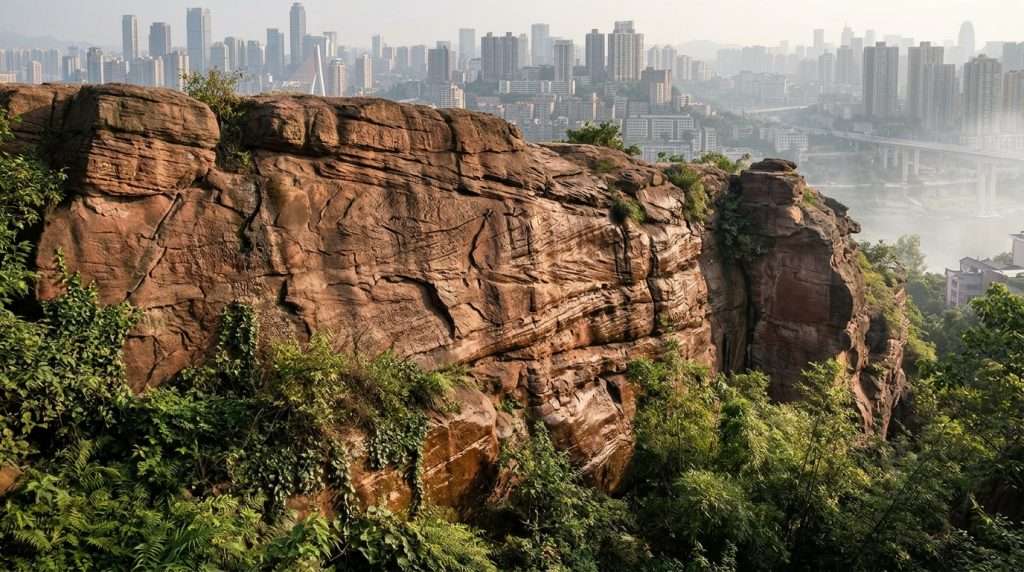
Nobody takes photos of masonry glaze. Yet this invisible coating might be Chongqing’s quietest hero. I spent an afternoon with a local conservation engineer.
She showed me walls I’d passed a dozen times without noticing anything unusual. “That’s the whole idea,” she told me. The work is meant to disappear.
Non invasive mineral masonry glazes are thin, breathable coatings made from natural mineral compounds, not plastic resins. Workers brush or spray them onto timber beams and sandstone walls across the old city. Unlike traditional sealants, these glazes do not trap moisture inside.
They let stone and wood breathe while blocking Chongqing’s brutal mix of heat, humidity, and acidic air pollution.
How Breathable Nano-Mineral Coatings Halt Rot and Fracture
I’ll geek out a little here. Traditional waterproofing seals a surface completely. That sounds smart until trapped moisture has nowhere to go.
In this climate, humidity swings against intense heat. Trapped water slowly tears timber and stone apart from inside.
These non invasive mineral masonry glazes work differently. The particles bond at a microscopic level, blocking liquid water and pollutants while letting vapor escape. This breathability stops fracturing that cracks sandstone and halts fungal rot eating through old cedar beams.
The payoff is simple: structures standing for centuries gain a few more decades, with no visible reinforcement bolted on.
Protecting Sandstone Escarpments Without Erasing Patina
I’ve photographed plenty of old stone walls on my travels. Authentic walls always carry some weathering. Chongqing’s cliffs receive that same respect.
Conservators apply these mineral glazes so the rock keeps its lived-in texture. The coating slows erosion without removing stains and soft edges that give the escarpments character.
It protects several features without disturbing them:
- Original tool marks from centuries-old stonework
- Natural color gradients from mineral seepage
- Surface texture that gives cliffside photos their depth
Nothing here looks sterile or “restored.” It just looks like it has been given permission to keep aging honestly.
5. Raffles City and the New Thermal Skin of Vertical Chongqing
The first time I saw Raffles City above the river confluence, I stopped walking. Eight glass towers curved together like a ship moving through fog. It looked more like a movie set than a real building.
Its dramatic shape is not the real story. The real story happens inside that glass skin, shaping the Chongqing vertical city future 2050 and its architectural needs.
Engineering Glass and Steel for 42°C Summers
Chongqing summers are harsh. Temperatures regularly climb past 42°C, turning glass towers into greenhouses without careful engineering.
Raffles City’s design team tackled that problem early. They used low-emissivity coatings to reflect solar heat while allowing natural light inside.
Instead of using only air conditioning, the building has a double-skin facade. This air buffer between panes pulls hot air upward through engineered vents.
The design cuts cooling loads without harming the sleek, ship-like silhouette. Smart design handles work that air conditioning once managed alone.
Where Modern Towers Meet Centuries-Old Cliffscapes
Near Raffles City, you can still see sandstone cliffs and old stilt structures. They define Chongqing’s older neighborhoods, creating a sharp but meaningful contrast.
This city is not erasing its past to build its future. It is adding thermal-smart architecture to terrain inhabited for centuries.
That juxtaposition is what makes Chongqing’s story different from most vertical city experiments. Towers like this do not replace nearby cliffs and courtyards. They rise alongside them.
Walking from Hongyadong’s wooden balconies to Raffles City’s glass towers takes maybe fifteen minutes on foot. You pass centuries of building techniques, and everything somehow works together. This shapes what the Chongqing vertical city future 2050 is quietly becoming: old bones wrapped in new skin.
6. Subsurface Hydrologic Heritage Engineering Beneath Chaotianmen
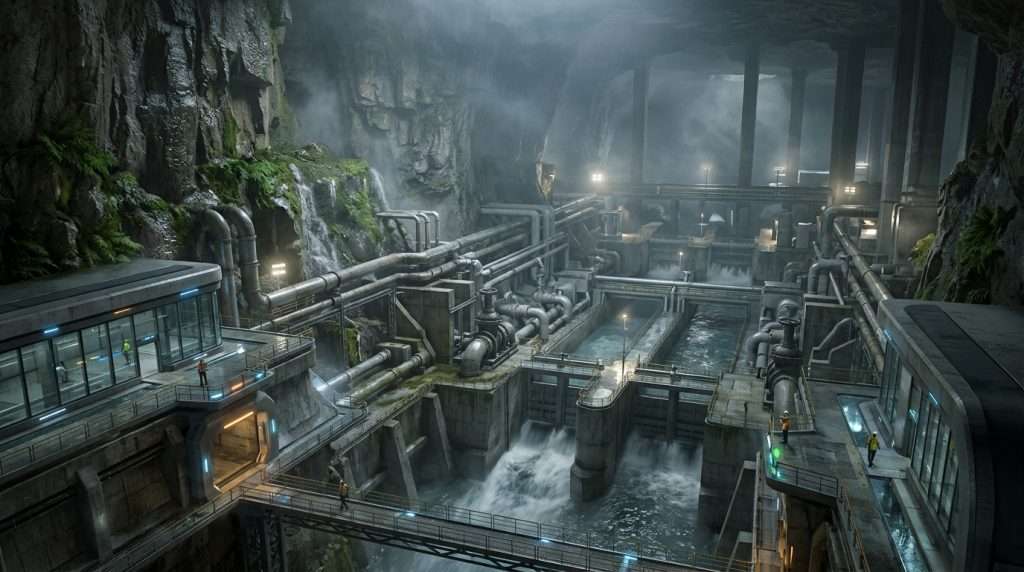
I never expected to find Chongqing’s most impressive sight underground, but Chaotianmen changed my mind. This historic dock, where the muddy Yangtze meets the greener Jialing River, hides engineering beneath its ancient stone steps.
Engineers call it subsurface hydrologic heritage engineering, a complex term made clear by its purpose. Rather than fighting floodwater above ground, the city manages it underground before it reaches the historic riverfront.
Automated Subterranean Retention Vaults Explained
Imagine hidden chambers carved into rock beneath Chaotianmen. These automated subterranean retention vaults work without anyone flipping a switch.
Sensors track water levels in real time. When storm runoff surges, gates open automatically and redirect the flow. When levels fall, the gates close smoothly.
I have visited river cities where heavy rain floods alleys and ruins shopfronts. Chongqing takes a different approach. The vaults control the chaos before it reaches the surface.
- Pressure and water-level sensors trigger automatic gate response
- Vaults redirect flow away from heritage structures above
- No manual operation needed during sudden storm surges
Capturing 100 Percent of Mountain Flash Floods
The headline achievement is big: these systems capture 100 percent of mountain flash floods flowing toward the riverfront.
Chongqing sits on steep terrain. Rainwater once raced downhill with nowhere safe to go, pooling around docks and historic buildings near the water’s edge.
Now, every drop is intercepted underground. This protects centuries-old structures above these hidden systems from sudden water damage.
Flood control that nobody sees is still flood control that works.
For a traveler like me, standing on solid ground at Chaotianmen feels strange. A flash flood could rush silently beneath my boots, yet the subsurface system contains it before it becomes a problem.
7. The Yangtze River Flood Shield as Urban Infrastructure
I kept asking why a flood barrier must work every day, not only during monsoon season. I found the answer along the Yangtze.
The Yangtze River Flood Shield isn’t a wall that sleeps until disaster strikes. It fits daily city life and works with reservoirs upstream from Chongqing. Together, they make flood defense feel more like a water utility than an emergency system.
Closed Loop Reservoir Stormwater Harvesting in Practice
Here is the clever part. Rather than letting storm runoff rush into the river, Chongqing captures it first.
Sensors track rainfall across the watershed. During storms, gates direct runoff into holding reservoirs instead of the main channel. From there, closed loop reservoir stormwater harvesting takes over.
Water moves through sediment traps and settling basins before reaching a tap or cooling pipe.
Nothing goes to waste. Rain that once flooded riverside markets now fills a controlled loop. It cycles among reservoirs, treatment stations, and storage tanks.
I found this part genuinely satisfying to learn about. Engineers are not fighting the river anymore. They borrow water from it, then return a cleaner, calmer version.
Turning River Water Into a Citywide Cooling Asset
Real benefits appear on hot days. Chongqing summers rise above 100°F, and air conditioning cannot cool such a dense vertical city.
So planners gave harvested water another job. After filtering, workers chill the water and pump it through zero-emission vertical capillary cooling loops. These loops snake through Chongqing’s multi-level districts. Cold water travels upward through buildings rather than downward through drains.
Flood control and climate control now share one pipeline instead of competing for funding.
“Water that would have drained away now keeps buildings livable,” a Chongqing municipal engineer told local reporters during a 2023 infrastructure briefing.
That sentence stayed with me. It shows why this system feels like a complete rethink of urban water.
8. Zero-Emission Vertical Capillary Cooling Loops
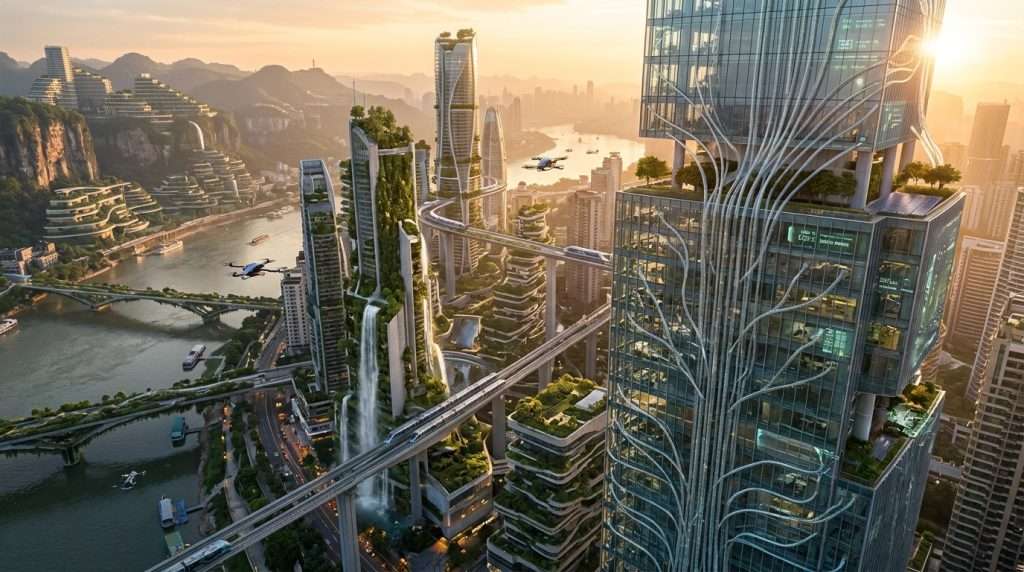
During a Chongqing heatwave, I entered a cool, silent lobby and saw no air-conditioning unit. No hum, rattling vents, or water dripping onto the sidewalk. An engineer explained that thin vessels cool the tower like our bodies, replacing one loud mechanical heart.
This is the basic idea behind capillary cooling loops, now a defining feature of the Chongqing vertical city future 2050 plan.
How Chilled Water Travels Through a Multi-Level District
The chilled river water pulled from the Yangtze does not merely sit in a tank. It flows through hair-thin tubing embedded in walls, ceilings, and floors across dozens of vertical levels at once.
Imagine capillaries spanning a whole district, rather than one building. As water circulates, it absorbs heat from each room and carries that warmth to a central exchange near the river.
There is no blast of cold air or compressor switching on and off. It just feels naturally cool, almost like the building is breathing on its own.
Decarbonizing Climate Control at Mountain Scale
Traditional air-conditioning compressors use huge amounts of electricity when outdoor temperatures rise past 42°C, often during Chongqing’s summer months.
Multiply that demand across hundreds of stacked towers clinging to cliffsides, and the climate problem becomes serious. Capillary loops avoid most of this load because water, not refrigerant gas, does the heavy lifting.
Across an entire mountain district, this shift offers one of the clearest paths. That path leads toward a genuinely carbon-neutral Chongqing vertical city future 2050. It shows how quiet infrastructure can make the loudest difference.
9. Stadium Porous Asphalt Stormwater Drainage and Everyday Resilience
Under Chongqing’s stadium parking lots, I found a hidden part of the city’s resilience plan. I chased skyline views and cliffside towers, nearly missing the quiet work beneath me. Stadium porous asphalt stormwater drainage proved practical.
Rethinking Pavement as a Flood Defense Layer
Standard asphalt sheds water quickly. It sends rain downhill toward storm drains that cannot always handle the flow. Porous asphalt takes a different approach.
Rainwater passes through its surface instead of pooling above it.
Beneath a stadium lot, crushed stone and gravel catch the water and slow it down. The layers store runoff briefly, then release it slowly into the soil. During Chongqing’s intense summer storms, this quiet layer prevents flash flooding before it starts.
Drivers heading to a game or concert never notice the engineering beneath their tires.
From Stadiums to Streets: Scaling Porous Infrastructure
What struck me most was how far this idea can travel. Chongqing planners moved beyond stadium lots. The same porous approach now covers sidewalks, plazas, and street-side parking across the city.
Each porous surface gives rainwater one less place to overwhelm the drainage network. Across hundreds of city blocks, those small changes quickly add up. This is resilience without spectacle.
Chongqing 2050 is not only about soaring towers or hidden underground vaults. Sometimes, resilience means rethinking the ground beneath our feet, one parking lot and sidewalk at a time.
10. Jiefangbei Kinetic Microgrid: Power Generated by the Crowd
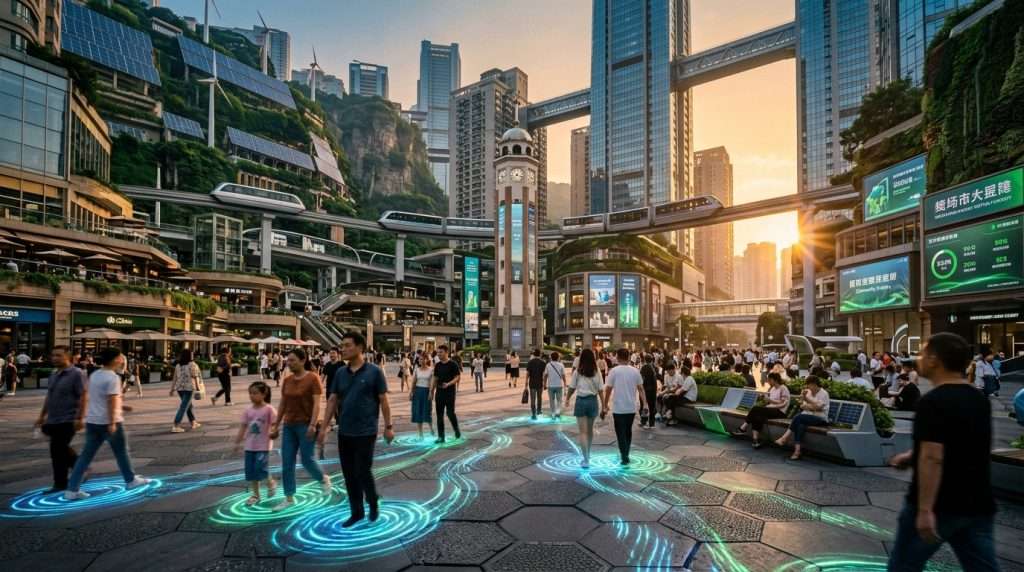
Jiefangbei has always buzzed with energy, but I never expected that energy to become literal.
This plaza sits at the heart of Chongqing’s shopping district, filled with shoppers, vendors, and tourists from sunrise to midnight. The Jiefangbei kinetic microgrid turns each footstep into a tiny burst of electricity. It then joins thousands of bursts into usable power for nearby districts.
It sounds almost too simple to work. Standing among the moving crowd, I realized I helped supply power simply by walking.
Piezoelectric Pavers Beneath the Plaza
Engineers installed piezoelectric pavers beneath Jiefangbei’s stone surface. These panels react to pressure. Each footstep makes the material flex and release a small electrical charge.
One step produces almost nothing. Jiefangbei gets heavy daily foot traffic, and that volume changes everything. Thousands of steps from thousands of visitors make the plaza a steady generator beneath their feet.
Every footstep is a vote for a cleaner grid, cast without anyone even noticing.
I found that idea thrilling. There was no noise or visible machinery, only ordinary movement doing extraordinary work.
Skybridges as Hidden Energy Corridors
Chongqing’s cliffside skybridges link different city levels. They help pedestrians cross gaps without long detours. I walked several bridges without knowing they had another purpose.
These structures carry foot traffic and capture vibration and footstep pressure. That energy flows into the same microgrid system powering Jiefangbei below. The bridges become hidden energy corridors within the city’s vertical layout.
The jiefangbei kinetic microgrid makes clever use of existing infrastructure. Nothing new had to be built only for energy capture. The system works alongside daily commuting.
| Location | Energy Harvesting Method | Power Source | Primary Benefit |
|---|---|---|---|
| Jiefangbei Plaza | Piezoelectric pavers underfoot | Pedestrian footsteps | Continuous low-voltage power generation |
| Cliffside Skybridges | Vibration and pressure sensors | Foot traffic and structural movement | Dual-use infrastructure, no extra footprint |
| Connecting Walkways | Embedded kinetic flooring | Daily commuter flow | Extends microgrid reach across districts |
Walking through Chongqing now feels different to me. Every crossing, staircase, and crowded plaza might quietly charge something nearby. The Jiefangbei kinetic microgrid turns ordinary travel into a small gift for the city’s clean energy future.
11. What Chongqing 2050 Reveals About the Limits and Promise of Vertical Cities
Every impressive system I studied in Chongqing raised one hard question: what happens when complex systems fail? I admire the city’s ambition, but years of travel taught me to question engineering marvels. The Chongqing vertical city future 2050 deserves praise and honest scrutiny because concrete and sensors cannot remove every risk.
Unresolved Risks and Engineering Trade-offs
Automated vaults, piezoelectric pavers, and capillary cooling loops seem flawless on paper. Yet every sensor, pump, and algorithm needs care, and someone must fund that work after the ribbon-cutting ceremony.
Scholars studying China’s development model have raised similar doubts. In the Made in China Journal in 2022, researcher Andrea Pia questioned the cost of techno-optimism, or “Prometheanism.” He defines it as the belief that human engineering can fully tame nature without cost.
“Chasing harmony with nature through ever more sophisticated infrastructure can quietly produce new dependencies and new vulnerabilities, even as it solves old ones.”
That tension matters here. A 2020 review in Resources, Conservation & Recycling by Ibn-Mohammed and colleagues found that technical systems can reduce resilience beyond a certain point. Chongqing has not crossed that line, but it deserves close attention.
A Blueprint Other Cliffside and River Cities Cannot Ignore
Still, I left Chongqing more hopeful than skeptical. No city builds perfect resilience, yet few attempt Chongqing’s combined response to flooding, heat, heritage, and energy.
Other river cities and cliffside settlements, from Southeast Asia to the American Southwest, face climate pressures I have seen firsthand. Few have combined so many solutions into one working system.
That’s what makes Chongqing 2050 worth studying, including its flaws. The Chongqing vertical city future 2050 shows why practical resilience matters. Engineering alone cannot save cities; layered, imperfect systems that are constantly adjusted may be our only realistic answer.
12. Conclusion
I began by studying a city hemmed in by cliffs and rivers. Now I believe its limits were never the problem. They were the spark.
From Hongyadong’s cedar frames to the piezoelectric pavers beneath Jiefangbei, each system connects to something larger. Stone glazes protect the past, while cooling loops and flood shields protect the present. Towers and skybridges point ahead, but no system works alone.
Chongqing will not become a flawless city, because no city does. What impresses me most is how directly it redefines vertical city longevity. It proves a rock-and-water city can breathe, cool itself, and generate its own power without losing character.
That makes Chongqing vertical city future 2050 worth watching. It is not finished; it remains a live experiment. Other river cities and cliffside towns will eventually study it, whether they plan to or not.
I return to this city during my travels, camera in hand, and always find something new carved into its slopes. I would tell any traveler or planner watching global urban shifts to do the same. Keep watching Chongqing; it shows where dense, climate-pressured cities may head next.





Leave A Comment