
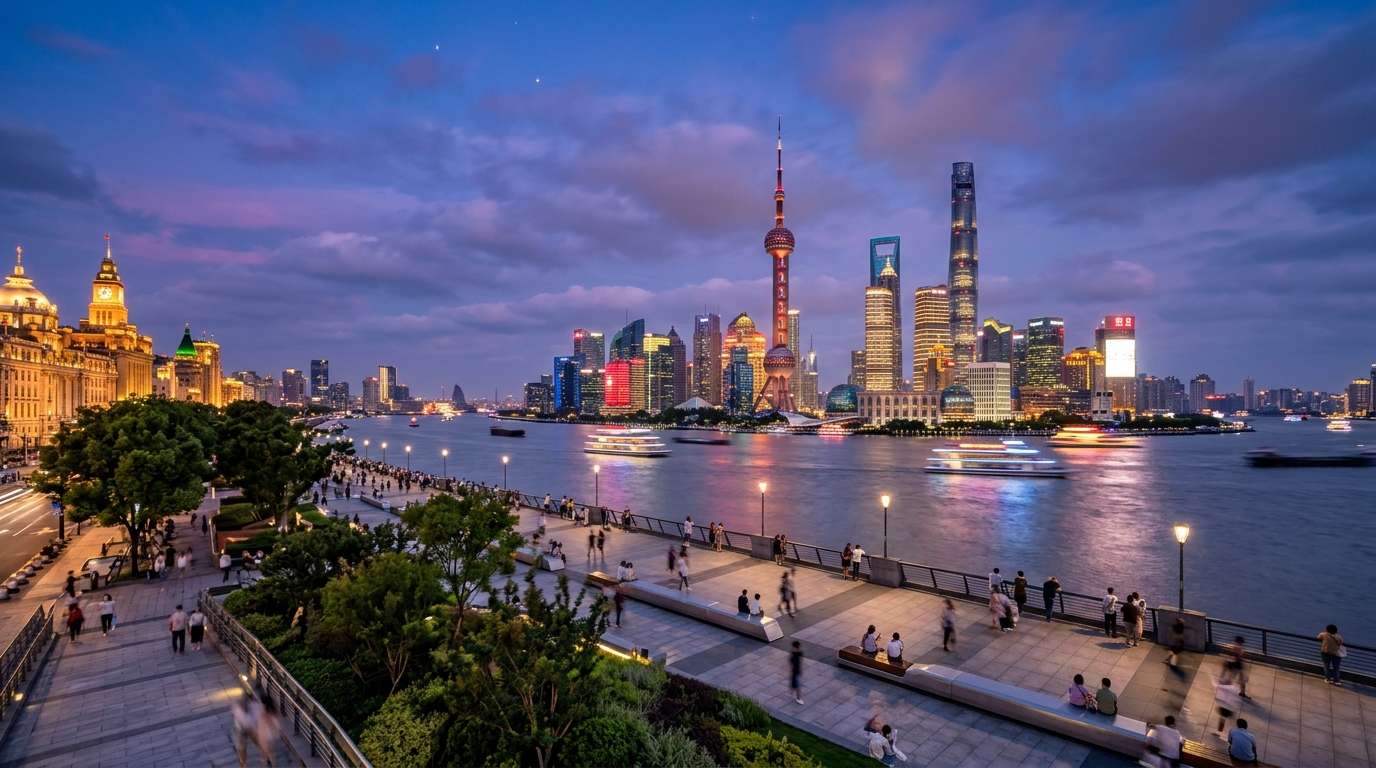
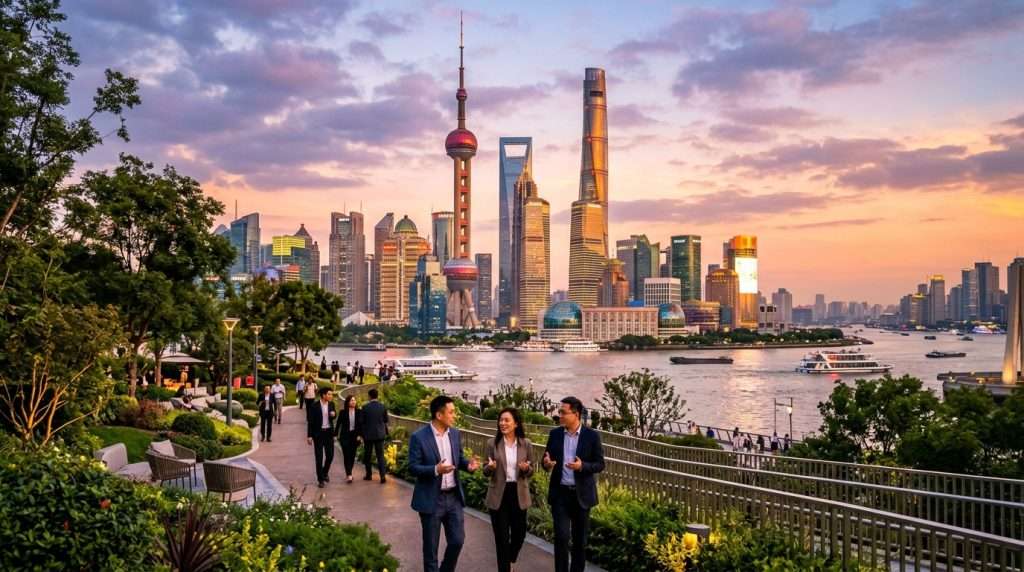
I stood on the Bund at dusk, watching the lights of Lujiazui flicker on across the Huangpu River. The twisted glass of Shanghai Tower glowed above the water, and the old limestone behind me still held the day’s warmth. I kept asking myself what this place will look like when I am old.
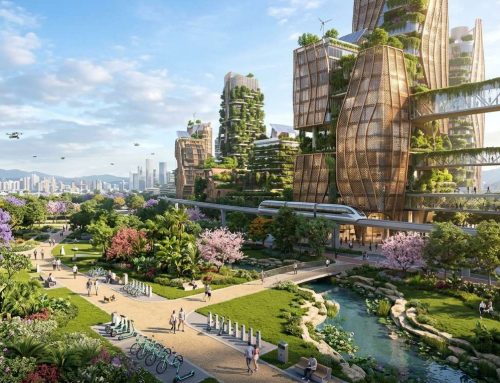
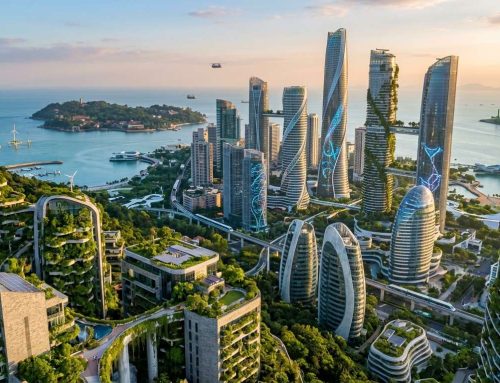
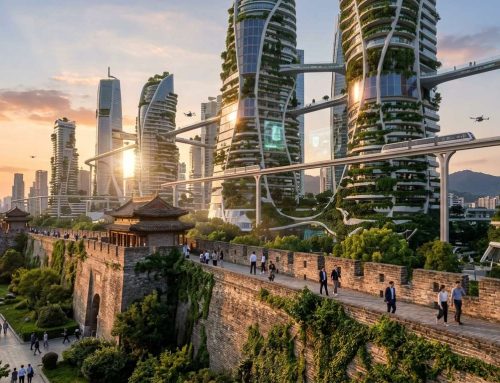
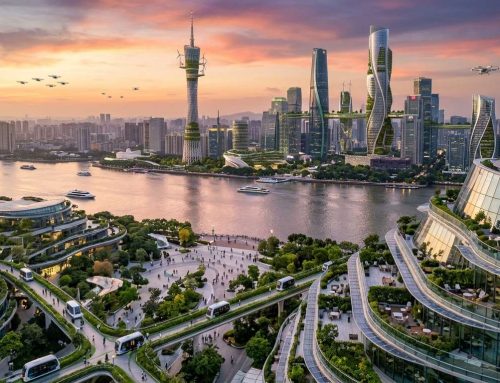
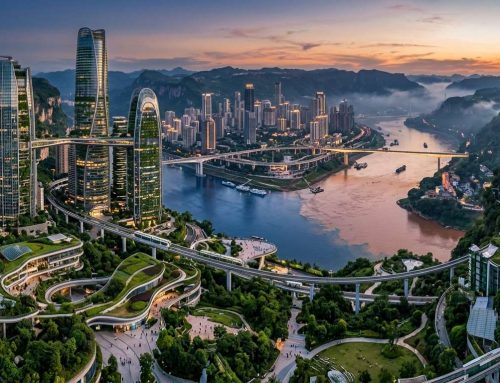
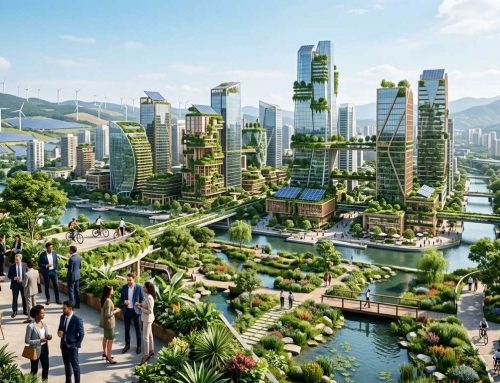
This article pictures the Shanghai future 2050 as a vision: Art Deco stone and curved glass shielded from typhoon gales. Retention vaults, piezoelectric pavers, geothermal cooling and nano-mineral glazes are ideas for that future, not things built today. I will keep that line clear between vision and hard projections.
One mistake I see travelers make is treating the skyline as the whole city. The real story sits in the streets, the water and the neighborhoods. I will walk you through the vision, the water risk, the old buildings, the transport and the people.
Key Takeaways
- Shanghai is a delta city, so water shapes almost every long-term plan.
- Many 2050 ideas are forecasts or concepts, not finished projects.
- Chongming, Pudong and Fengxian face the highest flood risk.
- Most protected industrial heritage sits on the waterfront.
- The metro reaches most sights, so skip the car.
- Visit in spring or fall to avoid July heat and typhoon season.
What Shanghai Future 2050 Could Look Like
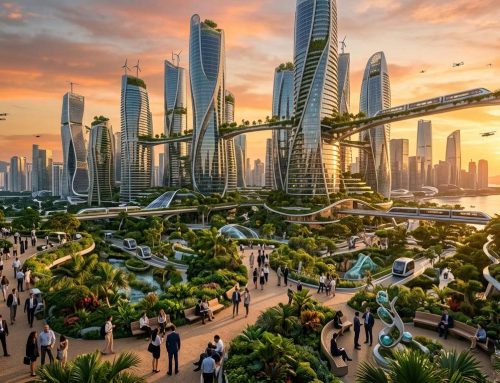
Short answer: by 2050 Shanghai is expected to run as one connected, sensor-rich, greener city. Shanghai future 2050 predictions point to smart infrastructure, autonomous transit, clean energy and green building skins. These are forecasts, and the built city today runs on metro and roads.
The wider world is moving the same way. The world’s urban population is expected to rise from 55% of the total in 2018 to 68% in 2050. China may look like a wealthier, more urban country by then, with megacities like Shanghai serving as models for city planning.
Here are the five pillars I keep seeing in predictions:
- AI-managed infrastructure
- Driverless transit
- Fast regional rail to Hangzhou and Nanjing
- Clean power
- Plants growing on tall buildings
Treat every 2050 rendering as a prediction, and trust only what already runs today.
Shanghai’s first metro line opened in 1993, and new lines have opened regularly since. That track record is why I take the transit parts of the vision more seriously than the flashy ones. When I visit, I judge a vision by the metro platform I am standing on, not the render.
How Shanghai Plans to Survive Rising Water
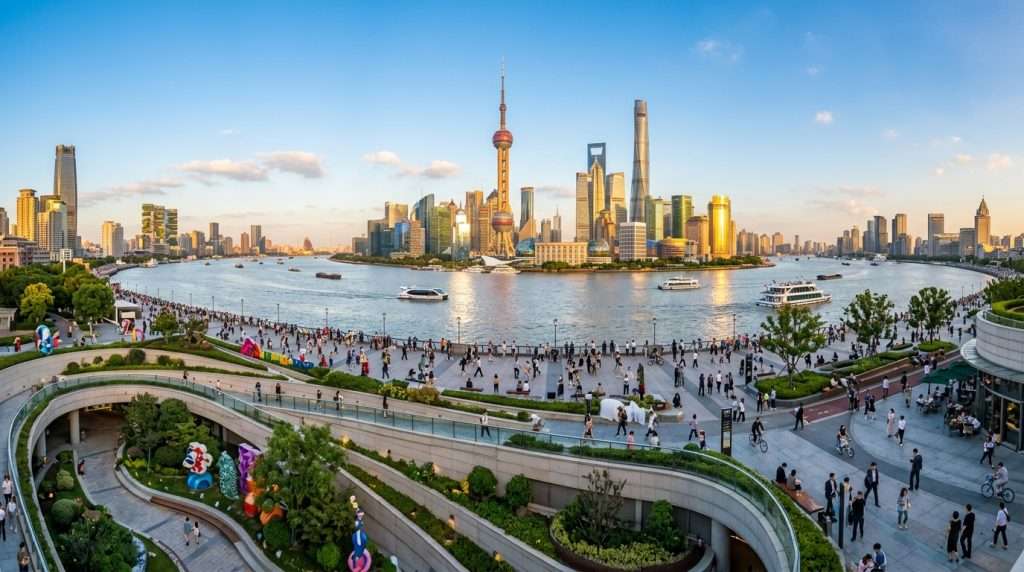
The biggest problem facing Shanghai is water, from above and from below. The vision answers with a floodwall at the Bund and underground retention vaults. The goal is to catch storm water and put it to work.
Sea-level rise and a sinking delta
Median relative sea-level rise in Shanghai by 2050 is projected at 45 cm to 50 cm. Land subsidence, the slow sinking of the ground, often from pumping groundwater and the weight of buildings, adds to that. A 2025 assessment rated 67.00% of the area very low risk, 17.87% low, 9.25% medium, 3.39% high and 2.48% very high.
The flooded area by 2100 grows fast as each threat stacks up:
| Scenario | Inundation area by 2100 (km²) |
|---|---|
| Sea level only | 361.32 |
| Plus subsidence | 460.97 |
| Plus storm surge | 1,331.91 |
Where the flooding hits hardest
Chongming District, Pudong New Area and Fengxian District are the high-risk zones. In the combined case, 54.5% of Chongming Island would be inundated by 2100. For a visitor, Chongming is the exposed island, so check typhoon forecasts before booking.
Underground vaults, floodwalls and geothermal cooling
My favorite idea is retention vaults beneath the Huangpu promenade and Suzhou Creek. They would capture typhoon surges and feed closed-loop geothermal cooling for the financial districts. The floodwall at the Bund would hold the line above ground.
Plan trips outside typhoon season and keep one flexible day for storms.
Protecting the Bund and Shanghai Tower from Typhoons
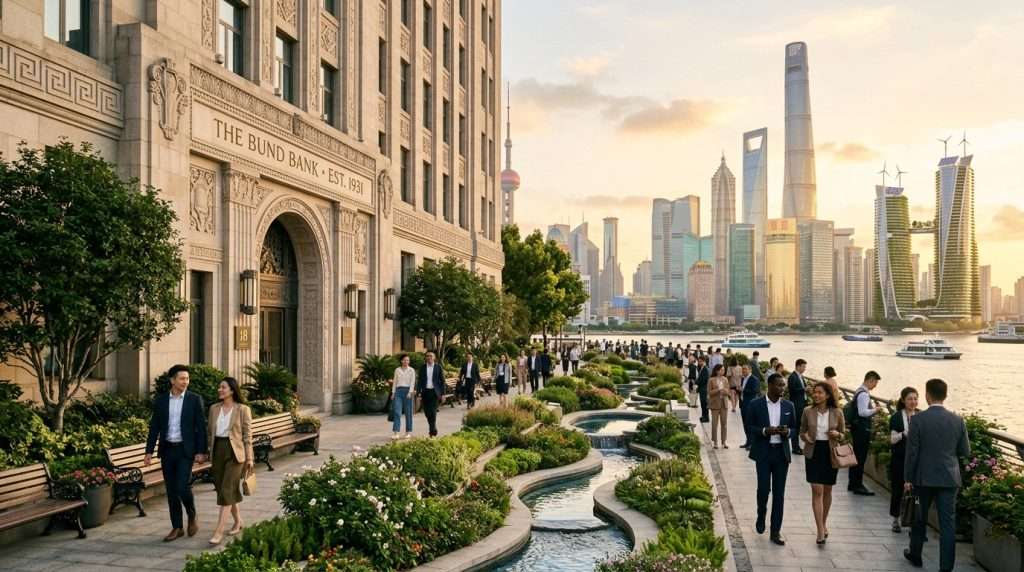
Of 229 protected industrial sites in Shanghai, 140 sit on the waterfront, right where the water is rising. Keeping them safe means protecting the stone and glass without erasing their age. The vision relies on a few gentle ideas, not heavy rebuilding.
One concept is breathable nano-mineral glazes. On 1920s Art Deco limestone along the Bund, they would stop spalling, where stone flakes off, while keeping the patina. The same idea could ease fatigue in the twisted double-skin glass of Shanghai Tower.
Another concept is piezoelectric pavers under the floor. Footsteps on the Bund floodwall and Lujiazui skywalks would turn into microgrid power. I like it because it uses people, not new land.
Here are four things I would photograph:
- Bund facades
- Shanghai Tower curtain wall
- Waterfront reuse sites
- Skywalks
Do not expect every old building to be a museum. Museums made up 11% of reuse cases, while cultural-creative clusters made up 31%, together 42%. Walk the Bund at dawn for clean light and few crowds.
Getting Around: Electric Cars, Metro and Rail
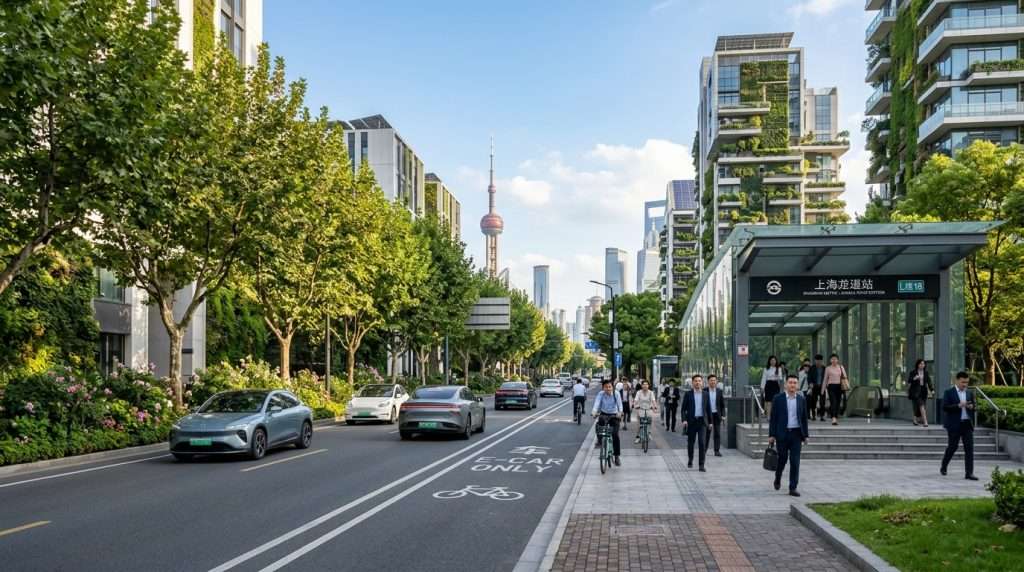
Almost 30% of Shanghai’s cars are electric or hybrid, and you can hear the difference. The city hosts 1.3 million new energy vehicles out of 4.5 million cars. Streets feel noticeably quiet because of it.
Shanghai became China’s first electric vehicle adoption pilot zone in 2011. Over 600,000 new energy vehicles were on its roads under license and charging incentives. Plug-in hybrids often burn gasoline for much more of their distance than expected.
The grid will need to grow. A study of nearly 10,000 vehicles found that replacing all gas cars with electric would need at least 30% more electricity generation. That is a big job for the city’s power system by 2050.
For travelers, the metro is my pick. The mistake is driving when metro stations reach most sights. Use the metro for sights and save taxis for late nights.
Who Will Live in Shanghai in 2050
Shanghai is home to over 24 million people, and the city is getting older. About 12.3 million have permanent residency, and 27% of them are aged 60 or above. A demographer estimates the city would need about 35 million people by 2050, up 45%, to balance workers and older residents.
| Group | Figure |
|---|---|
| Total population | Over 24 million |
| Permanent residents | About 12.3 million |
| Aged 60+ | 27% of residents |
| Aged 80+ | 5% of residents |
Aging means more spending on education and services, since the city must support both young families and older neighbors. It also shapes housing and community life.
Neighborhoods mix migrants and locals, and you notice it in the shops, accents and food. Eat where locals eat, because neighborhoods tell the real story.
What China’s Rise Means for Shanghai’s Next 25 Years
Projections say China passes the United States around 2035. So yes, China can beat the USA in economy by that crossover. The top five economies by US-dollar GDP in 2050 are projected to be:
- China
- The United States
- India
- Indonesia
- Germany
Why does it matter for Shanghai? Big projects like vaults, floodwalls and rail links are easier with a large economic base. A bigger economy gives the city more room to build.
A rising economy funds big plans, but only finished projects change what a traveler sees.
One practical tip: Shanghai has a humid subtropical climate, and July is very hot and humid. Visit in spring or fall for comfortable walking.
Conclusion
Shanghai in 2050 is a bet on resilience. Water risk shapes the plan, from floodwalls to storage under the riverbank. Old landmarks are being protected, not replaced, so the stone and glass I saw may still be standing for my grandchildren.
My next step for you is simple. Map a first visit around the Bund, Lujiazui and the metro lines between them. Pick your dates, ride the metro to the Bund and see it for yourself.




Leave A Comment