
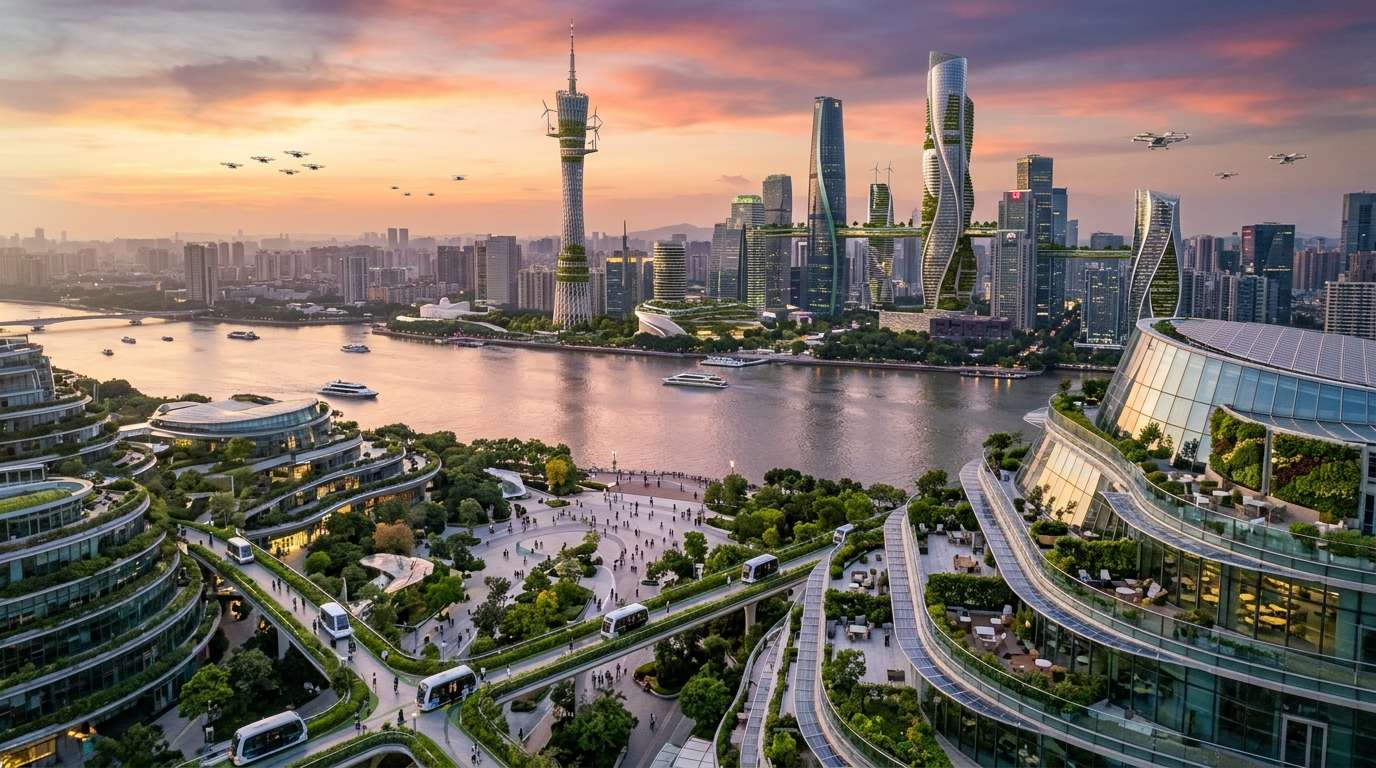
What does a river city become when it stops fighting water and starts working with it? For years, that question followed me through muddy deltas and flood-prone ports worldwide. That question helps explain Guangzhou future 2050.
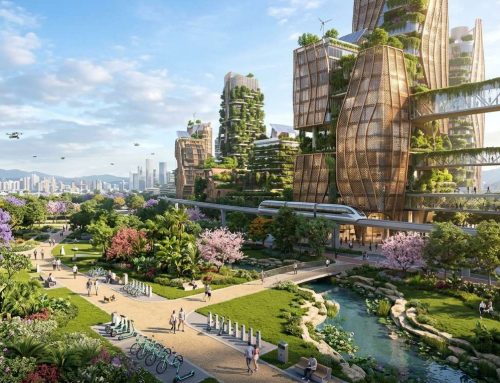
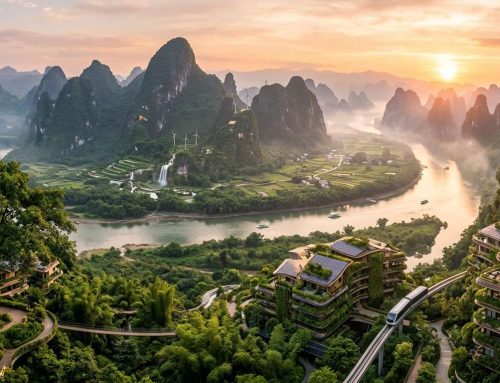
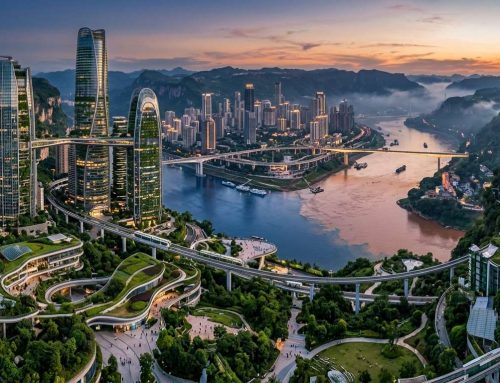
Then I found my answer along the Pearl River, where Guangzhou is quietly rewriting urban survival. This ancient trading hub built its wealth through Maritime Silk Road trade. Now, it is building a bolder future: a carbon-neutral biome woven directly into its waterways.
I came expecting old temples and busy docks. Instead, I found heritage buildings covered by invisible protective skins. Stormwater disappeared into underground sponge systems, while sidewalks generated electricity from footsteps alone.
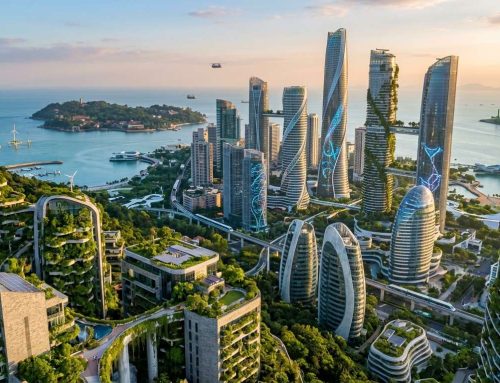
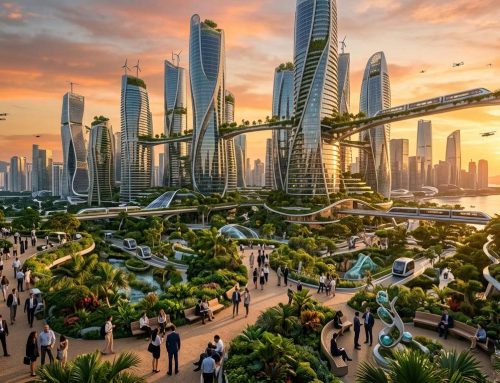
The Canton Tower still twists 604 meters into the sky, but now it anchors a living climate-smart infrastructure network. This isn’t science fiction — it’s a practical Guangzhou future 2050 blueprint. I will walk you through it piece by piece, as I would brief a fellow traveler before a journey.
Key Takeaways
- The city aims for a carbon-neutral urban biome, blending ancient trading heritage with cutting-edge sustainability.
- Heritage buildings get invisible protective coatings that fight humidity and pollution without changing their historic look.
- Underground sponge systems capture and filter stormwater, easing flood risk across the Pearl River Delta.
- Kinetic sidewalks convert millions of daily footsteps into usable electricity.
- The Canton Tower remains the symbolic anchor for a growing climate-smart infrastructure network.
- Maritime Silk Road history inspires modern engineering solutions, not just architectural style.
- This vision offers a practical model for other delta cities facing rising seas and extreme weather.
1. Guangzhou Future 2050: A Delta Metropolis Reimagined as a Living Biome
I’ve walked many riverfronts that display their history proudly, but Guangzhou displays its future too. Along the Pearl River, you can feel centuries pressing against a skyline built for tomorrow. By 2050, this city will not merely survive its delta location; it will thrive because of it.
Guangzhou has become a global masterclass in delta metropolis resilience. It turned maritime Silk Road roots into an autonomous, carbon-neutral urban biome, anchored by landmarks like the Canton Tower. That is no small achievement; it rewrites the city’s rulebook.
From Maritime Silk Road Legacy to an Autonomous Urban Ecosystem
Guangzhou’s story began long before skyscrapers. It was a trading port when ships carried silk, spice, and porcelain along routes connecting China with the world. Warehouses lined the river, and merchants from distant shores called this place home for months.
That trading spirit never left; it changed shape. Today, Guangzhou runs data, energy, and water routes, working together like organs in a living body. It’s genuinely remarkable to watch a city function less like infrastructure and more like an ecosystem.
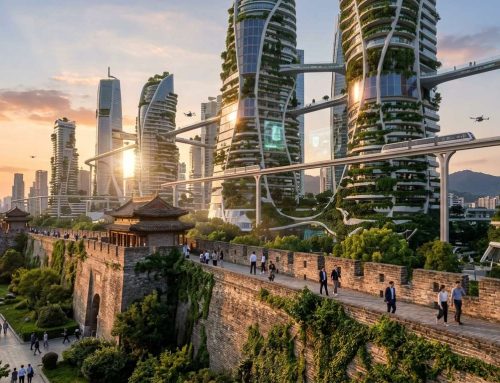
The Canton Tower symbolizes this shift. Later, I will explain its engineering, but picture a 604-meter structure serving as a landmark and living node. It belongs to a self-regulating urban network. Guangzhou did not abandon its past; it built the future directly on top of it.
Why Delta Cities Worldwide Need a New Resilience Paradigm
Delta cities are beautiful, productive, and incredibly fragile at once. Jakarta is sinking faster than almost any city on Earth. Miami fights saltwater entering its drinking water.
Rotterdam has spent generations holding back the sea. Dhaka floods nearly every monsoon season.
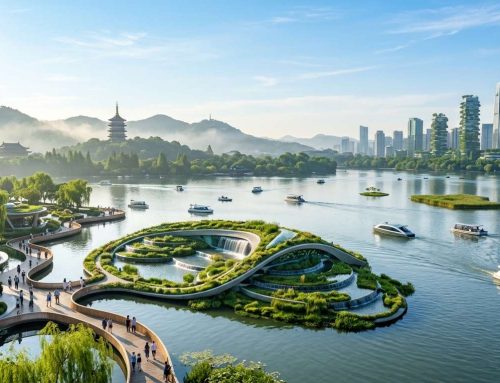
Guangzhou faced these pressures and chose a different path. Instead of fighting water, it learned to work with it. That approach forms the foundation of the Pearl River Delta sponge city concept, which I will explain later.
For now, understand this: a sponge city absorbs, stores, and reuses water rather than pushing it away. This shift changes infrastructure and the mindset behind it.
| City | Core Delta Challenge | Traditional Response | Guangzhou-Style Opportunity |
|---|---|---|---|
| Guangzhou | Monsoon flooding and land subsidence | River trade infrastructure | Pearl River Delta sponge city network |
| Jakarta | Sinking land from groundwater extraction | Coastal sea walls | Underground stormwater retention |
| Miami | Sea level rise and saltwater intrusion | Mechanical pump stations | Porous urban surfaces |
| Rotterdam | Elevation below sea level | Dike and levee systems | Water plazas and smart drainage |
| Dhaka | Seasonal river flooding | Embankment construction | Integrated sponge infrastructure |
This comparison does not rank cities. It points toward a shared future. Researchers studying the new urban world of 2050 have flagged delta regions among the planet’s most vulnerable places. Guangzhou chose to act early instead of waiting for a crisis to force its hand.
That is the real lesson. Delta cities do not need bigger walls. They need smarter systems, and Guangzhou is proving it one sponge-city solution at a time.
2. Guarding the Past: Non-Invasive Mineral Masonry Glazes for Heritage Survival
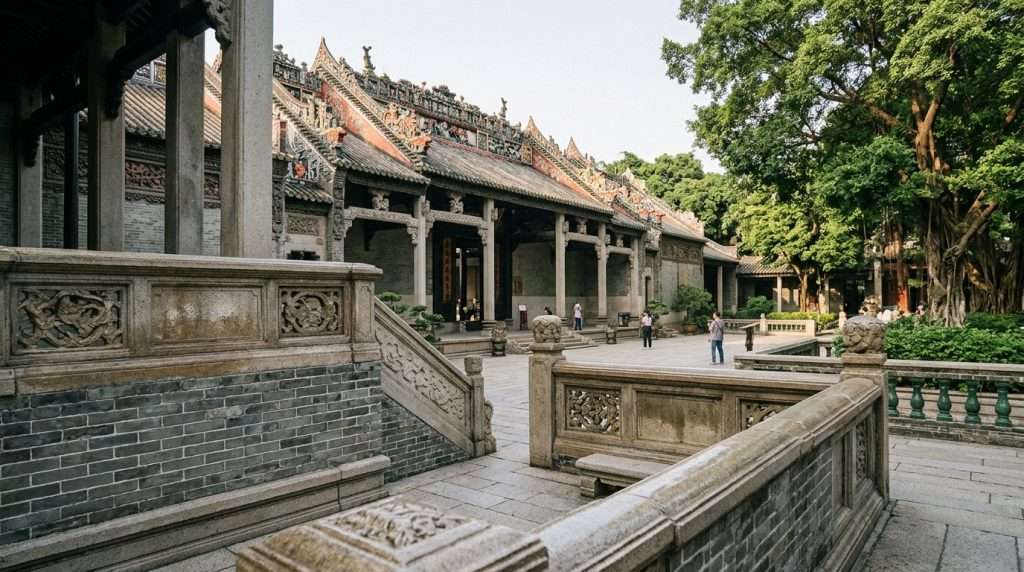
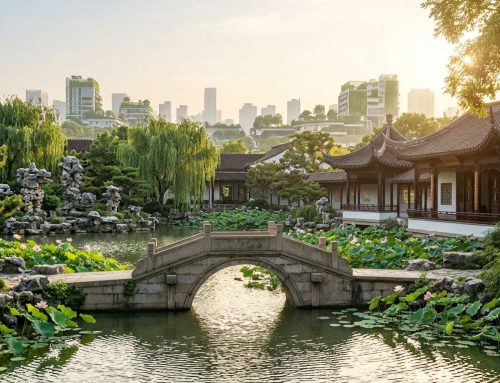
I remember standing in the courtyard, looking up at roof ridges that survived a century of Guangzhou storms. The grey-brick carvings looked razor-sharp, as if cut yesterday. A local conservator named non-invasive mineral masonry glazes as the secret, with a coating so thin people noticed it only when pointed out.
This part of my imagined 2050 journey fascinated me most. Guangzhou did not choose between old and new. It found a way for both to exist side by side, protected by the same quiet technology.
Chen Clan Ancestral Hall Preservation Against Typhoon Gales
The Chen Clan Ancestral Hall is one of southern China’s finest examples of Lingnan architecture. Its ceramic roof ridges and detailed brick carvings tell stories from past generations.
Typhoon season puts all that work at risk. Wind-driven rain enters porous brick, freezes, expands, and slowly destroys centuries of craftsmanship. It can damage the brick from the inside out.
Chen Clan Ancestral Hall preservation now uses a mineral glaze brushed directly onto the surface. The glaze does not seal brick like plastic or resin. It works more like a raincoat:
- Water beads up and rolls off instead of soaking in
- Original color and texture stay fully visible
- No new materials cover up the historic surface
- The structure keeps breathing, which prevents trapped moisture
Walking around the hall, I could not see where the glaze began or ended. That invisibility is the entire point.
Canton Tower Net-Zero Landmark: Armoring 604 Meters of Steel Diagrid
From the courtyard, I imagined crossing the city toward something completely different in scale. The Canton Tower net-zero landmark rises 604 meters above the Pearl River, wrapped in a steel diagrid like a woven basket.
Steel at that height faces salty river air, humidity, and constant wind stress. Over decades, these forces cause metal fatigue and corrosion. They can quietly weaken a structure before anyone notices a problem.
Engineers adapted the mineral glaze science used at the ancestral hall for industrial steel. The coating bonds to metal and creates a breathable barrier against moisture and salt. It does not trap condensation, which causes rust against the steel.
Watching a centuries-old idea protect one of Asia’s tallest towers felt like two timelines meeting in one material.
The Science Behind Breathable Nano-Mineral Glazes
I’ll be honest: the chemistry sounded intimidating at first. Once explained simply, it clicked fast.
These nano-mineral glazes use microscopic, usually silicate-based particles that form a porous surface mesh. The pores block liquid water droplets but let water vapor pass through.
That balance matters for three reasons:
- It stops rain and humidity from soaking into brick, stone, or steel
- It lets trapped internal moisture escape instead of building up
- It preserves the material’s natural patina, so nothing looks artificially restored
Buildings and structures keep breathing, just as they always have. Now, they are shielded from elements that once slowly wore them down.
Next time I pass a historic facade or gleaming tower, I will look closer. That faint satin sheen may be the only clue that something remarkable quietly does its job.
3. Pearl River Delta Sponge City: Subsurface Hydrologic Heritage Engineering
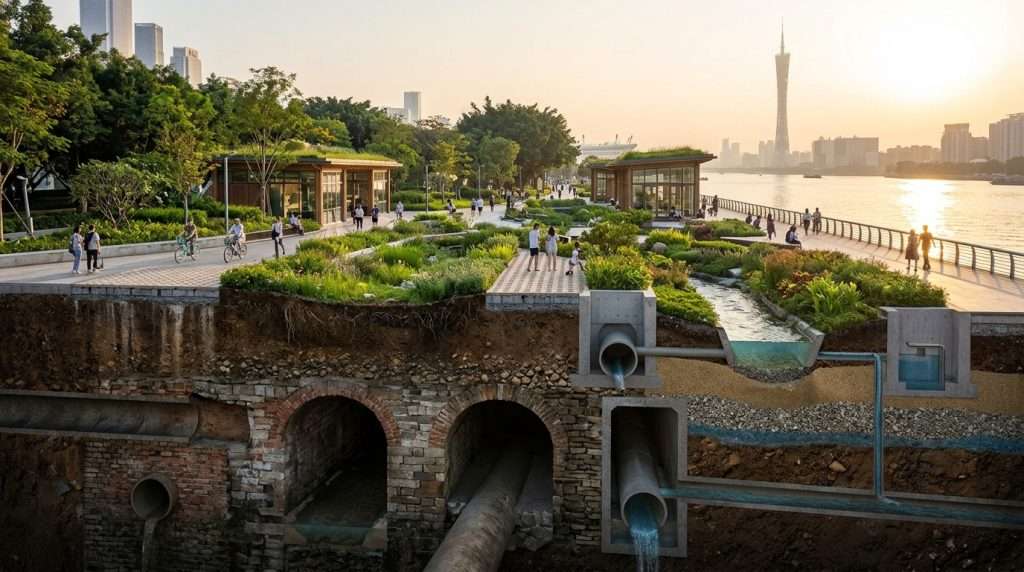
The Pearl River promenade seems ordinary until you learn what happens thirty feet below it. Guangzhou planners built more than a seawall and extra drains.
They created a hidden system that protects heritage sites and stores every drop of monsoon rain for later use.
I call this subsurface hydrologic heritage engineering, one of the delta city’s smartest ideas. Engineers send floodwater underground, filter it, and reuse it.
Automated Retention Vaults Beneath the Pearl River Promenade and Huacheng Square
Picture a concrete honeycomb buried beneath one of Guangzhou’s busiest public spaces. That is what lies beneath the Pearl River promenade and Huacheng Square.
These automated retention vaults respond to real-time rainfall sensors. During a typhoon surge, they capture nearly 100% of stormwater runoff before it reaches street level.
No person needs to flip a switch. Sensors detect rising water, gates open, and the system works quietly while people walk, shop, or photograph the skyline.
Closed-Loop Reservoir Stormwater Harvesting Feeds Geothermal Cooling
Here is where the story gets interesting. Captured stormwater does not simply wait in a tank for the next flood.
Guangzhou sends it through closed loop reservoir stormwater harvesting systems that filter and recycle it. The water then feeds zero-emission geothermal cooling loops for downtown towers.
A flood risk becomes free air conditioning. That’s the kind of practical innovation I wish more coastal cities would copy.
- Filtered stormwater reduces strain on the municipal water supply.
- Geothermal loops cut cooling costs for office towers near the river.
- Closed systems mean almost zero water waste during the dry season.
Stadium Porous Asphalt Stormwater Drainage as a Citywide Blueprint
Street-level engineering matters as much as underground systems. Guangzhou’s stadium surfaces use stadium porous asphalt stormwater drainage, which lets rain soak through instead of pooling.
After heavy rain, parking lots can become shallow lakes. This asphalt does the opposite, sending water into the surface within minutes.
The water joins the underground network protecting the promenade. City planners now use the stadium’s drainage system as a blueprint for other neighborhoods.
If parking lots and sports venues can absorb a downpour, ordinary streets should do the same.
“Sponge city infrastructure isn’t about stopping rain. It’s about giving water somewhere smart to go.”
Walking through Guangzhou, you would never guess how much flood defense lies underground. That is exactly the point.
Good infrastructure stays invisible until needed. This delta city has proven it can handle whatever monsoon season brings.
4. Powering the Streets: Piezoelectric Microgrids Along the Pearl River
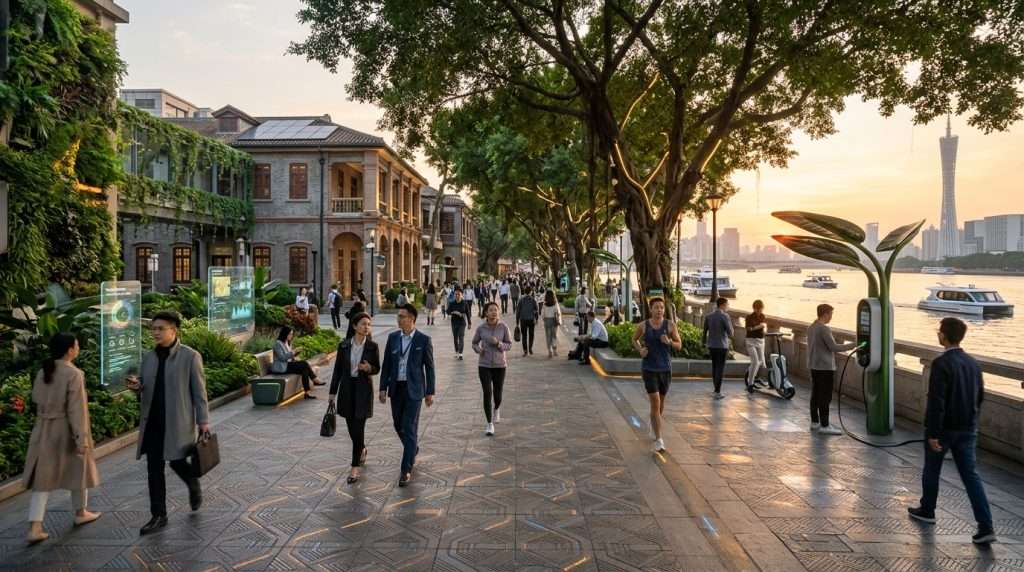
My first morning on Shamian Island began with an unexpected discovery: the ground beneath my feet was making electricity. I came for colonial buildings and banyan-tree shade, not an energy engineering lesson. But that is how Guangzhou future 2050 works: big ideas hide in ordinary places.
Shamian Island’s Under-Floor Piezoelectric Pavement Network
Shamian Island feels like a time capsule. Its tree-lined streets and 19th-century facades make it one of the city’s most photographed areas. You would never guess the pavement serves another purpose.
Beneath the stone walkways, a network of piezoelectric tiles collects energy. Each step applies pressure, creating a small electrical charge. It sounds too simple to work, yet it does.
I remember stopping mid-stride, delighted, when a local guide explained it. Every footstep I’d taken for the last hour had been contributing power somewhere nearby. That detail made me want to keep walking and see how much energy I could create.
Tourists take photos of the architecture, but I focused on the activity beneath my shoes. This playful system supports the city’s larger plan without changing people’s habits. They simply walk.
Scaling Pedestrian Energy Into the Downtown Microgrid
Here, the idea becomes infrastructure instead of a novelty. Energy captured on Shamian Island does not stay there. It feeds a downtown microgrid that draws power from foot traffic across several riverside districts.
Think about how many people cross this part of Guangzhou each day. Commuters cross bridges, tourists explore the promenade, and night crowds move between food stalls. Multiply thousands of footsteps by hundreds of thousands of visitors, and the totals grow.
What struck me most was how practical this felt, not merely charming. The city does not use foot traffic to replace power plants. It adds another layer to a mix that includes solar, geothermal, and stormwater-linked systems I had seen along the river.
That layered approach guides Guangzhou future 2050 planning. No single technology carries the whole load. Instead, many quiet systems work together, with pedestrian energy forming one unexpected part of the plan.
Standing on the Pearl River promenade at dusk, I watched joggers, street vendors, and families enjoying evening strolls. I smiled because every person was moving the city forward, literally, one step at a time.
5. Conclusion
As I revisit this delta city’s future, one idea stands out. Guangzhou future 2050 is not about choosing old or new. It is about joining them until heritage and innovation feel like one.
Breathable glazes on the Chen Clan Ancestral Hall and Canton Tower protect stone and steel while preserving their stories. The sponge city vaults beneath the Pearl River Promenade manage monsoon rains and keep streets calm and walkable. Piezoelectric pavement on Shamian Island turns everyday footsteps into real power for the grid. Each feature solves a different problem, but together they suggest a larger goal.
Guangzhou redefines delta longevity by treating climate pressure as more than a threat to manage. It treats rising water, typhoon winds, and growing energy demands as prompts for design. This change in thinking matters more than any single technology I described.
I admit this is one traveler’s vision, shaped by research, curiosity, and long hours studying Pearl River Delta maps. I have not walked these future streets yet. No one has.
Low-lying cities from Jakarta to Miami are seeking answers to the same questions Guangzhou asks today. Watch this delta with me. Real progress here could guide how the rest of the world builds along water.




Leave A Comment