
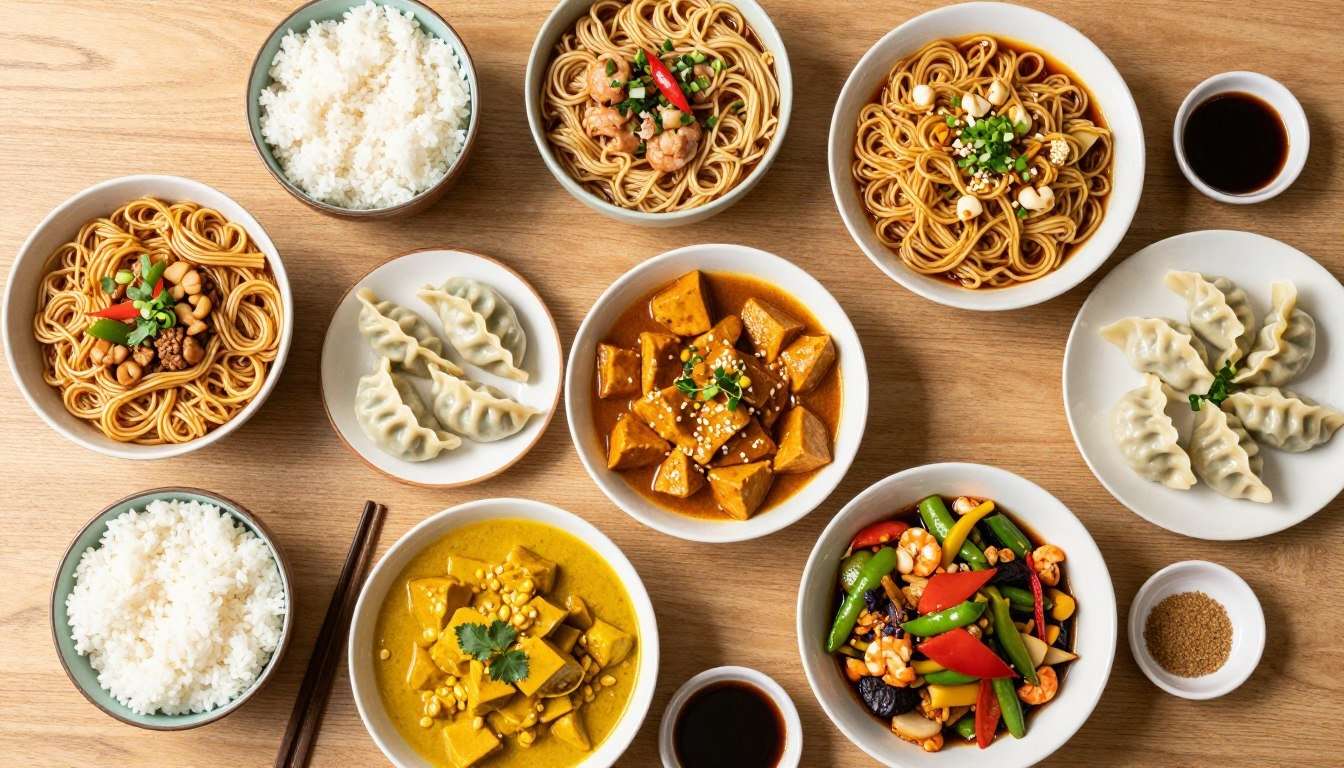
Defining “Most Popular” in Asian Cuisine
The diverse world of Asian cuisine offers countless contenders for the title of “most popular”
Before we can determine Asia’s most popular food, we must first establish what “popularity” means in this context. Is it the most widely consumed dish? The most culturally significant? The one with the greatest global recognition? Each of these metrics offers a different perspective on what constitutes popularity.
Metrics of Food Popularity
Consumption Volume
The sheer quantity consumed across Asia, measured by production statistics and dietary studies. This metric favors staple foods that form the foundation of daily meals.
Cultural Significance
The importance of the food in cultural traditions, celebrations, and national identity across multiple Asian countries and regions.
Global Recognition
How widely the food has spread beyond Asia to become recognized and adopted in international cuisine and street food scenes worldwide.
It’s important to note that Asia encompasses 48 countries across multiple regions, each with distinct culinary traditions. What’s popular in East Asia might be relatively unknown in South Asia, and vice versa. Therefore, when discussing “Asia’s most popular food,” we’re looking for dishes or food items that transcend regional boundaries and have achieved widespread adoption across multiple Asian cultures.
Rice: The Foundation of Asian Cuisine
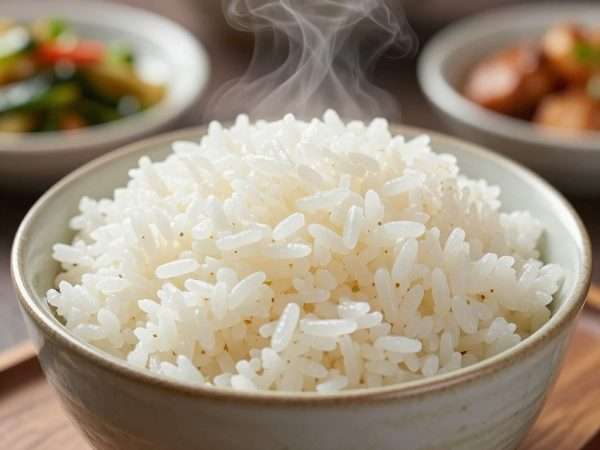
If we measure popularity by sheer consumption volume and cultural ubiquity, rice emerges as perhaps the strongest contender for Asia’s most popular food. From Japan to India, rice forms the foundation of daily meals for billions of people across the continent.
Rice by the Numbers
| Region | Rice Consumption (kg per capita annually) | Primary Rice Varieties | Cultural Significance |
| East Asia | 60-100 | Japonica, short-grain | Central to meals, religious offerings |
| Southeast Asia | 100-150 | Jasmine, sticky rice | National identity, ceremonies |
| South Asia | 70-90 | Basmati, long-grain | Festivals, religious significance |
Cultural Significance of Rice
Rice transcends its role as mere sustenance in Asian cultures. In many Asian languages, the words for “rice” and “meal” are the same, illustrating how central this grain is to the concept of eating itself. Rice is deeply embedded in cultural practices, religious ceremonies, and even language throughout Asia.
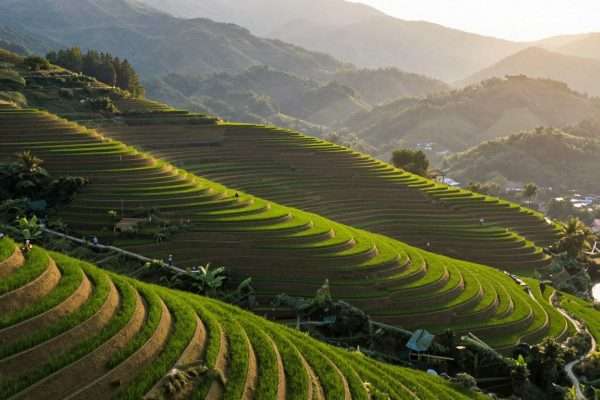
Terraced rice fields demonstrate the agricultural importance of rice across Asia
In Japan, the word “gohan” means both “rice” and “meal.” In China, parents traditionally greet their children not with “How are you?” but with “Have you eaten rice today?” In Thailand, people don’t say “Let’s eat” but rather “Let’s eat rice.” These linguistic connections highlight rice’s fundamental role in Asian food culture.
“Rice is not just food in Asia—it is life itself. It represents prosperity, fertility, and the connection between heaven and earth.”
Rice Varieties Across Asia
The diversity of rice varieties across Asia is staggering, with each region developing types suited to local growing conditions and culinary preferences:
- Jasmine Rice – Fragrant long-grain rice popular in Thailand and Southeast Asia
- Basmati Rice – Aromatic long-grain rice from India and Pakistan
- Sticky Rice – Glutinous short-grain rice essential in Northeast Thailand, Laos, and parts of China
- Japanese Short-Grain – Sticky rice perfect for sushi and everyday Japanese meals
- Himalayan Red Rice – Nutty, mineral-rich rice grown in high-altitude regions
Noodles: The Versatile Challenger
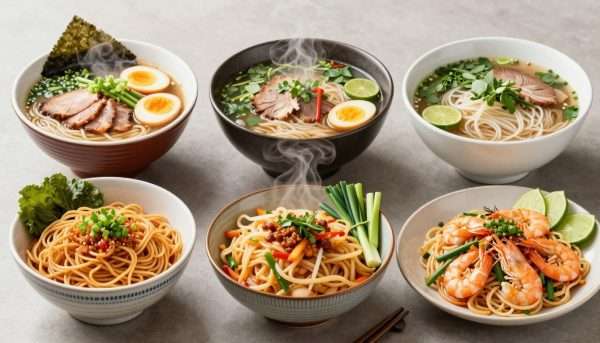
If rice is the foundation of Asian cuisine, noodles might be its most versatile expression. From the ramen shops of Tokyo to the street vendors of Bangkok, noodle dishes represent some of Asia’s most beloved comfort foods and have successfully conquered global palates.
The Ancient History of Asian Noodles
Noodles have a history in Asia dating back at least 4,000 years. Archaeological evidence from China’s Qinghai province revealed the world’s oldest known noodles, made from millet, dating to around 2000 BCE. The spread of noodle-making techniques throughout Asia created a remarkable diversity of noodle types and dishes.
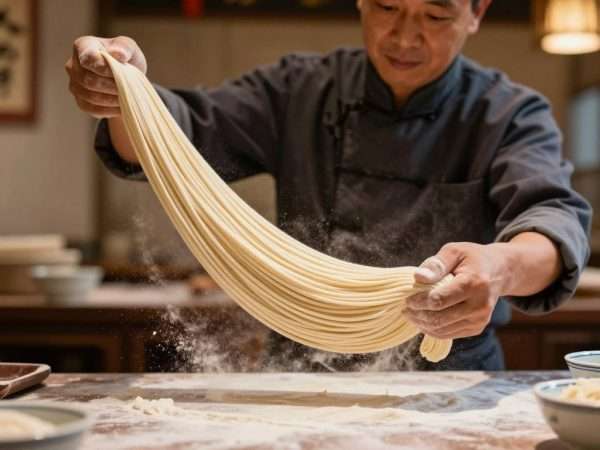
The art of hand-pulling noodles remains an important culinary tradition across Asia
Regional Noodle Varieties
East Asian Noodles
- Ramen (Japan)
- Udon (Japan)
- Soba (Japan)
- La Mian (China)
- Knife-cut noodles (China)
Southeast Asian Noodles
- Pho (Vietnam)
- Pad Thai (Thailand)
- Khao Soi (Thailand)
- Laksa (Malaysia/Singapore)
- Pancit (Philippines)
South Asian Noodles
- Sevai (India)
- Thukpa (Himalayan)
- Seviyan (Pakistan)
- String Hoppers (Sri Lanka)
- Chow Mein (Indo-Chinese)
Global Impact of Asian Noodles
Asian noodle dishes have achieved remarkable global popularity. Ramen, once a simple working-class meal in Japan, has become a global culinary phenomenon with specialized restaurants in cities worldwide. Vietnamese pho has similarly transcended its origins to become an international favorite. Even instant ramen, invented in Japan in 1958, has become a global staple consumed in over 100 countries.
“Noodles are the ultimate comfort food across Asia. Their versatility allows them to take on the flavors and ingredients of any region while maintaining their essential, satisfying nature.”
The case for noodles as Asia’s most popular food is strengthened by their remarkable adaptability. While rice tends to serve as a neutral base for other flavors, noodles themselves can be the star of the dish, taking on countless forms and preparations across different culinary traditions.
Curry: The Flavorful Competitor

While rice and noodles form the foundation of many Asian meals, curry represents the continent’s mastery of complex flavors and spices. The term “curry” encompasses a vast array of spiced, sauce-based dishes that have evolved distinctly across different regions of Asia.
The Curry Diaspora
What we broadly call “curry” originated in the Indian subcontinent but has traveled throughout Asia, evolving and adapting to local ingredients and tastes. Today, curry represents one of the most diverse food categories in Asian cuisine, with each region developing its own distinctive style:
| Region | Notable Curry Styles | Key Ingredients | Distinctive Characteristics |
| South Asia | Masala, Vindaloo, Korma | Garam masala, turmeric, dried chilies | Complex spice blends, often yogurt or tomato-based |
| Southeast Asia | Thai Green/Red, Massaman, Khao Soi | Coconut milk, lemongrass, galangal | Fresh herbs, balance of sweet, sour, salty, spicy |
| East Asia | Japanese Curry, Korean Curry | Curry roux blocks, carrots, potatoes | Milder, sweeter, thicker sauce consistency |
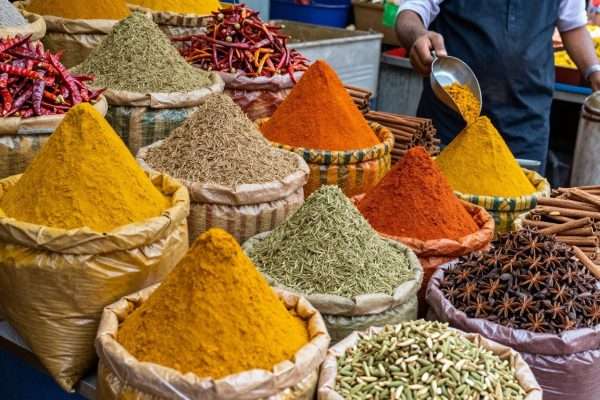
The diverse array of spices used in curry preparation across different Asian regions
Cultural Significance of Curry
Curry dishes hold profound cultural significance across Asia. In India, specific curries are associated with religious festivals, family celebrations, and regional identities. In Thailand, curry pastes are often made using traditional mortar and pestle techniques passed down through generations. In Japan, curry has become a national comfort food despite being a relatively recent addition to the cuisine.
“Curry is not just a dish but a concept that has united Asia through a shared appreciation for complex, spiced flavors while allowing each culture to express its unique culinary identity.”
Global Impact of Asian Curries
Asian curries have achieved remarkable global recognition. Indian curry houses are ubiquitous in the United Kingdom, where chicken tikka masala has been called a “national dish.” Thai curries have become staples on international restaurant menus. Japanese curry chains have expanded globally. This widespread adoption speaks to curry’s universal appeal despite its complex flavors.
Dumplings: The Universal Favorite
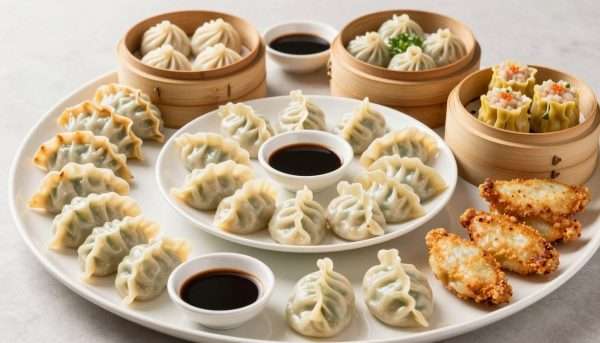
Dumplings represent another strong contender for Asia’s most popular food, appearing in various forms across nearly every Asian culinary tradition. These pockets of filled dough, whether steamed, boiled, pan-fried, or deep-fried, demonstrate remarkable diversity while sharing a common culinary concept.
Dumpling Varieties Across Asia
East Asian Dumplings
- Jiaozi (China)
- Xiaolongbao (China)
- Gyoza (Japan)
- Mandu (Korea)
- Baozi (China)
South Asian Dumplings
- Momos (Nepal/Tibet)
- Samosas (India)
- Modak (India)
- Pitha (Bangladesh)
- Kozhukattai (South India)
Southeast Asian Dumplings
- Shumai (Various)
- Harkao (Various)
- Kuih (Malaysia)
- Bánh Bột Lọc (Vietnam)
- Siomay (Indonesia)

Making dumplings is often a family activity during festivals and celebrations across Asia
Cultural Significance of Dumplings
Dumplings hold special cultural significance in many Asian traditions. In China, jiaozi are essential during Lunar New Year celebrations, symbolizing wealth and prosperity due to their resemblance to ancient Chinese currency. In Nepal and Tibet, momos are central to social gatherings. In Japan, families often make gyoza together as a bonding activity.
The versatility of dumplings allows them to serve as everything from everyday street food to special occasion delicacies. Their hand-crafted nature often connects them to family traditions and the passing down of culinary knowledge between generations.
“Dumplings represent the perfect union of simplicity and complexity in Asian cuisine. The basic concept—filling wrapped in dough—has spawned countless variations, each telling a story about the culture that created it.”
Street Food: The People’s Choice
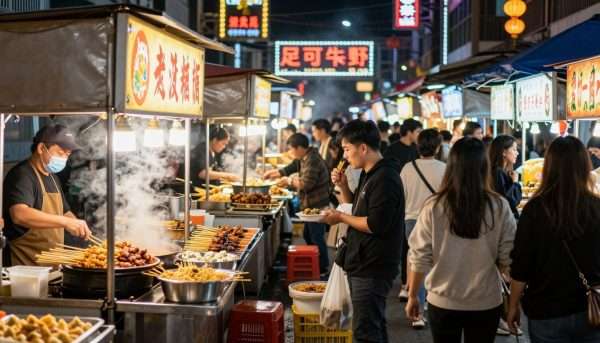
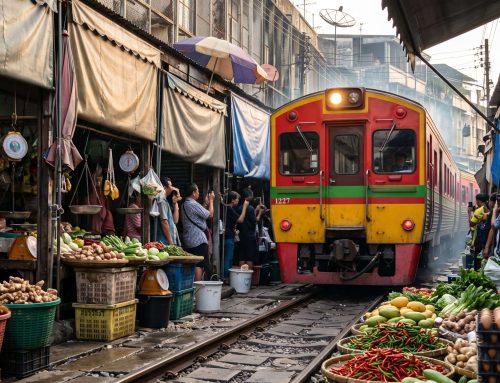
While not a single dish, street food culture represents a vital aspect of Asian culinary identity and popularity. From the hawker centers of Singapore to the night markets of Taiwan, street food offers some of Asia’s most beloved and accessible culinary experiences.
Street Food Capitals of Asia
Certain Asian cities have earned international recognition for their vibrant street food scenes:
- Bangkok, Thailand – Famous for pad thai, mango sticky rice, and boat noodles
- Taipei, Taiwan – Known for night markets offering stinky tofu, oyster omelets, and bubble tea
- Singapore – Renowned for hawker centers serving laksa, Hainanese chicken rice, and chili crab
- Penang, Malaysia – Celebrated for char kway teow, assam laksa, and cendol
- Delhi, India – Beloved for chaat, jalebi, and paratha
- Seoul, South Korea – Famous for tteokbokki, hotteok, and Korean fried chicken
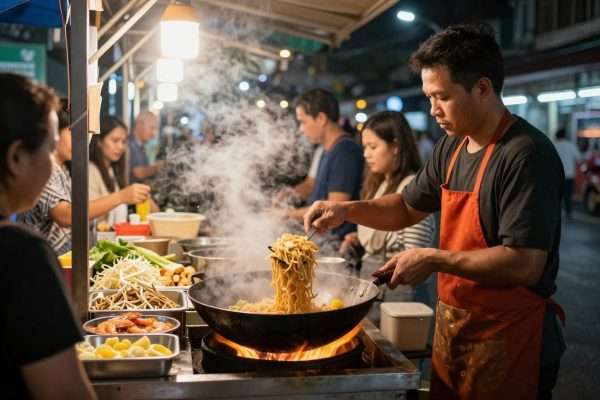
A street vendor prepares fresh pad thai in Bangkok, Thailand
The Cultural Importance of Street Food
Street food in Asia transcends mere convenience dining—it represents cultural heritage, culinary innovation, and social gathering spaces. Many of Asia’s most internationally recognized dishes originated as street food before gaining global popularity.
The accessibility of street food makes it a true measure of popularity among locals. These are the dishes people eat daily, the flavors that define everyday life rather than special occasions. From office workers grabbing lunch to families enjoying evening snacks, street food represents Asian cuisine in its most democratic form.
“To understand a city’s soul, eat its street food. In Asia, the humblest street vendors often preserve culinary traditions that high-end restaurants have forgotten or reinvented beyond recognition.”
Measuring True Popularity: Different Perspectives
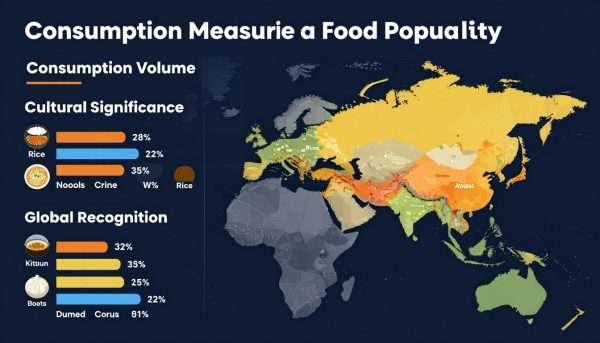
When determining Asia’s most popular food, different metrics yield different answers. Let’s examine how our contenders stack up across various measures of popularity.
By Consumption Volume
If we measure by sheer consumption volume, rice is the undisputed champion. It provides up to 80% of caloric intake in some Asian countries and remains the foundation of daily meals for billions across the continent. Noodles, while widely consumed, typically serve as occasional meals rather than daily staples in most regions (with some exceptions like parts of China).
By Cultural Significance
When considering cultural significance, rice again makes a strong case due to its central role in agricultural traditions, religious practices, and cultural identity across Asia. However, specific dishes like dumplings often play more prominent roles in festivals and celebrations, giving them heightened cultural importance during particular times of the year.
By Global Recognition
If global recognition determines popularity, specific dishes rather than staples tend to dominate. Curry dishes, particularly from India and Thailand, have achieved remarkable international presence. Japanese sushi, Chinese dim sum, Vietnamese pho, and Thai pad thai have become globally recognized representatives of Asian cuisine.
Regional Variations: Popularity Across Asia
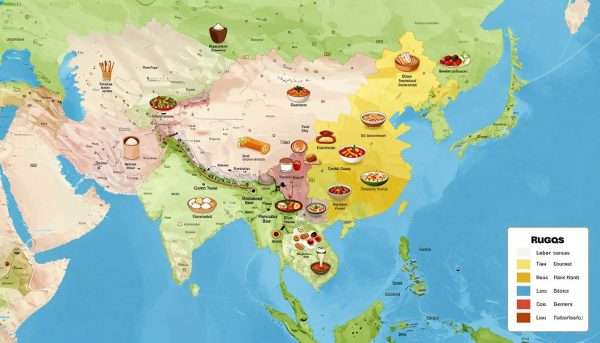
Asia’s vast geographic and cultural diversity means that food popularity varies significantly by region. What’s considered essential in one area may be relatively unknown in another.
East Asia
In East Asian countries like China, Japan, and Korea, both rice and noodles form dietary staples, though rice historically held greater cultural significance. Dumplings appear across all three culinary traditions in various forms. Curry, while popular, is a more recent addition to East Asian cuisine, particularly in Japan where it has been adapted to local tastes.
Southeast Asia
Rice dominates Southeast Asian cuisine, particularly in Thailand, Vietnam, and Indonesia. Noodle dishes like pad thai, pho, and laksa have achieved both local and international recognition. Curry dishes, especially those featuring coconut milk, are fundamental to Thai, Malaysian, and Indonesian cooking.
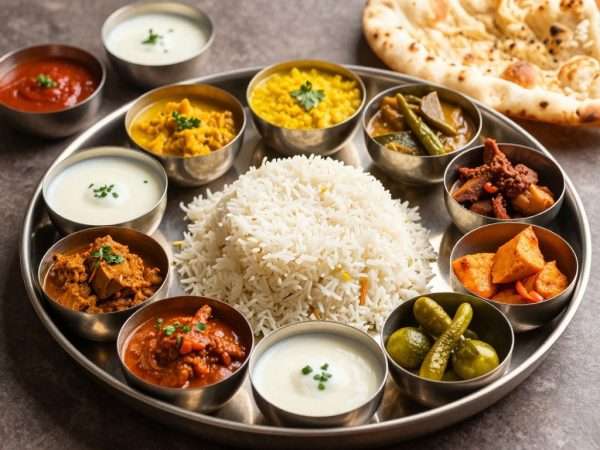
A traditional South Asian thali meal featuring various curry dishes served with rice
South Asia
In South Asian countries like India, Pakistan, and Sri Lanka, rice and wheat-based flatbreads share importance as staples. Curry dishes represent perhaps the most significant culinary contribution, with endless regional variations. Dumplings appear in forms like samosas and momos, though they’re less central to daily eating than in East Asia.
Central Asia
Central Asian cuisines in countries like Uzbekistan and Kazakhstan feature rice dishes like plov (pilaf) alongside noodles and dumplings such as manti. These regions represent interesting culinary crossroads between East Asian, South Asian, and Middle Eastern traditions.
Historical Perspective: Evolution of Asian Food Popularity

The popularity of different Asian foods has evolved significantly throughout history, influenced by agricultural developments, trade routes, colonization, and globalization.
Ancient Foundations
Rice cultivation began in China around 10,000 years ago and spread throughout Asia, becoming the foundation of many Asian cuisines. Noodles have a history dating back at least 4,000 years in China. Dumplings emerged in various forms across the continent as efficient ways to extend limited ingredients.
Trade and Cultural Exchange
The ancient Silk Road facilitated culinary exchange between East and West Asia, introducing new ingredients and techniques. Spices from South Asia traveled throughout the continent, influencing regional cuisines. Later, European colonization brought new ingredients like chili peppers from the Americas, fundamentally transforming Asian cooking.
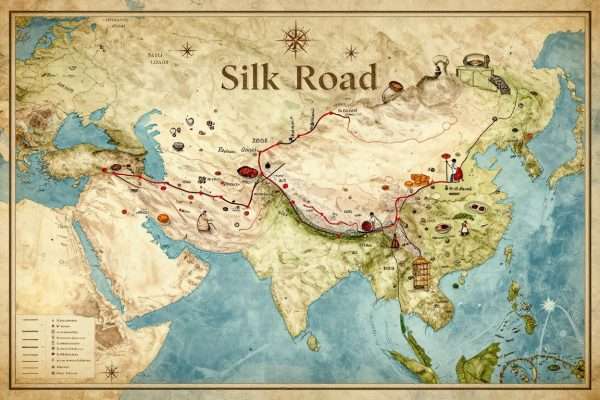
The ancient Silk Road facilitated the exchange of ingredients and culinary techniques across Asia
Modern Globalization
The 20th and 21st centuries have seen unprecedented globalization of Asian cuisines. Japanese sushi, Thai curry, Vietnamese pho, and Chinese dumplings have become international favorites. This global recognition has sometimes influenced how these foods are perceived within Asia itself, with some dishes gaining renewed appreciation after achieving international popularity.
“The story of Asian food is the story of human migration, trade, and cultural exchange. Each dish carries within it the history of how people have moved, adapted, and created meaning through food.”
The Adaptability Factor: Why Certain Foods Dominate
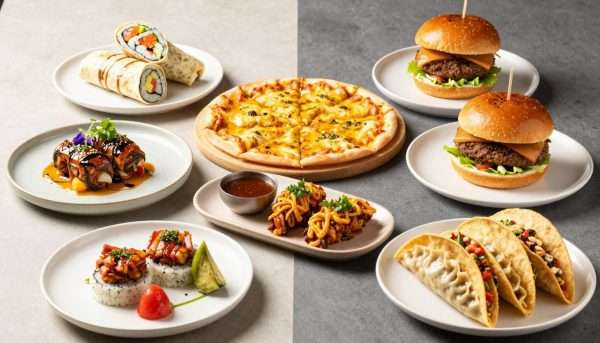
One key factor in determining Asia’s most popular foods is adaptability—the ability of a dish or ingredient to cross cultural boundaries and incorporate local tastes while maintaining its essential character.
Rice: The Ultimate Adaptable Staple
Rice demonstrates remarkable adaptability, serving as everything from a plain staple to an ingredient in desserts, alcoholic beverages, and snacks. Its neutral flavor allows it to complement virtually any cuisine, while different varieties have been developed to suit local growing conditions across Asia.
Noodles: Versatile Forms and Preparations
Noodles have adapted to countless regional preparations—from the wheat noodles of northern China to the rice noodles of Southeast Asia. They can be served in soups, stir-fried, cold as salads, or as wrappings for other ingredients. This versatility has allowed noodle dishes to thrive across diverse culinary traditions.
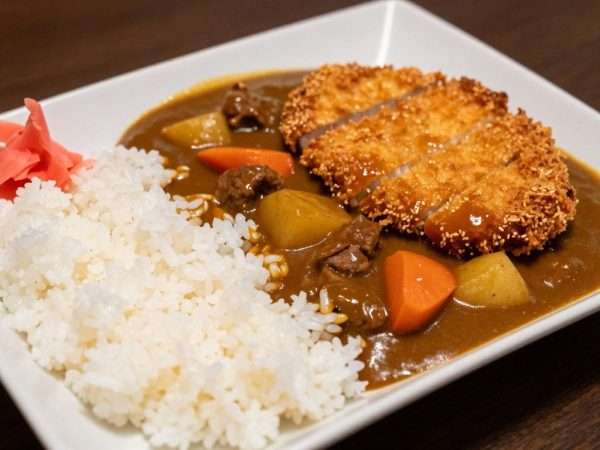
Japanese curry rice demonstrates how curry has been adapted to suit East Asian tastes
Curry: Endless Regional Variations
Perhaps no Asian food category demonstrates adaptability better than curry. From the fiery vindaloos of India to the coconut-based curries of Thailand to the roux-thickened curries of Japan, this cooking concept has been reimagined countless times while maintaining its essential identity as a spiced, sauce-based dish.
Dumplings: Universal Appeal in Different Forms
The basic concept of dumplings—filling wrapped in dough—has proven remarkably adaptable across Asian cultures. The fillings, wrappers, cooking methods, and seasonings vary dramatically, but the fundamental appeal of these bite-sized packages remains consistent.
Factors Promoting Food Popularity
- Adaptability to local ingredients
- Versatility in preparation methods
- Balance of familiar and novel flavors
- Accessibility to everyday cooks
- Ability to serve as both comfort food and special occasion dishes
Barriers to Food Popularity
- Reliance on rare or expensive ingredients
- Complex preparation techniques
- Extreme flavors unfamiliar to broader audiences
- Limited adaptability to dietary restrictions
- Poor transportability or short shelf life
Conclusion: Is There a Single “Most Popular” Asian Food?
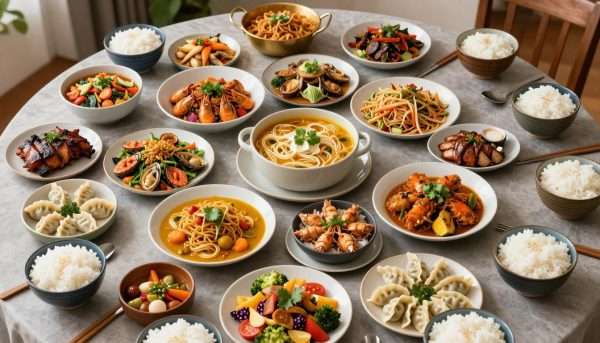
After examining the contenders for Asia’s most popular food across metrics of consumption, cultural significance, global recognition, and adaptability, we arrive at a complex answer to our original question.
If forced to crown a single “most popular” food across Asia, rice would likely claim the title based on its fundamental role in daily sustenance, cultural significance, and historical importance across most of the continent. It forms the foundation upon which much of Asian cuisine is built.
However, this singular answer fails to capture the rich diversity and complexity of Asian food culture. The continent’s culinary landscape is better understood as an interconnected ecosystem where different foods serve different roles:
- Rice and other grains provide the foundation and daily sustenance
- Noodle dishes offer comfort, convenience, and regional expression
- Curries and other complex dishes showcase flavor mastery and cultural identity
- Dumplings and street foods represent culinary ingenuity and social connection
What makes Asian cuisine so remarkable is precisely this diversity—the way different foods complement each other within culinary traditions that have evolved over thousands of years. The concept of a single “most popular” food perhaps imposes a Western competitive framework on culinary traditions that are inherently about balance, harmony, and complementary elements.
“The beauty of Asian cuisine lies not in any single dish but in the symphony of flavors, textures, and techniques that have evolved across this vast continent. To understand Asian food is to appreciate both its unity and diversity.”
Rather than seeking a definitive answer to “What is Asia’s most popular food?”, perhaps we should celebrate the remarkable culinary diversity that makes Asian food so beloved worldwide. Each dish tells a story of cultural exchange, adaptation, and the universal human connection to food as both sustenance and expression of identity.
Explore the World of Asian Cuisine
Want to deepen your knowledge of Asian culinary traditions? Subscribe to our newsletter for monthly insights into regional specialties, cooking techniques, and the cultural stories behind Asia’s most beloved dishes. Join our community of food enthusiasts and receive our free guide: “Essential Asian Ingredients: Your Starter Guide to Authentic Cooking.”
Frequently Asked Questions
Is rice consumed in every Asian country?
While rice is extremely widespread across Asia, it’s not equally dominant in all regions. In northern China, wheat-based foods like noodles and dumplings traditionally played a larger role than rice. In parts of Central Asia, other grains like wheat and millet have historically been more important. However, rice is consumed to some degree in virtually every Asian country and is the predominant staple in most.
Which Asian cuisine has become most popular globally?
Chinese cuisine was the first Asian food to achieve widespread global popularity, followed by Japanese and Thai cuisines. In recent years, Korean and Vietnamese foods have gained significant international recognition. Each has found success through different signature dishes—sushi from Japan, pad thai from Thailand, pho from Vietnam, and Korean fried chicken and barbecue from Korea.
Are there any Asian foods that are popular across the entire continent?
Beyond rice, few specific dishes are universally popular across all Asian regions due to the continent’s vast size and cultural diversity. However, certain food concepts like dumplings appear in various forms throughout Asia. Tea is perhaps the most universally consumed beverage across Asian cultures, though preparation methods vary dramatically.
How has globalization affected traditional Asian foods?
Globalization has had complex effects on Asian cuisines. On one hand, it has introduced Asian foods to global audiences, creating new markets and opportunities. On the other hand, it has sometimes led to simplification or adaptation of dishes to suit non-Asian palates. Within Asia, globalization has increased cross-regional culinary exchange, with Japanese ramen shops appearing in Bangkok or Korean fried chicken becoming popular in Taiwan.
What makes Asian street food so significant?
Street food in Asia represents culinary democracy—affordable, accessible food that reflects authentic local tastes rather than formal dining traditions. Many of Asia’s most internationally recognized dishes originated as street food. Street food vendors often preserve traditional techniques and recipes that might otherwise be lost, while simultaneously serving as laboratories for culinary innovation and fusion.















Leave A Comment