
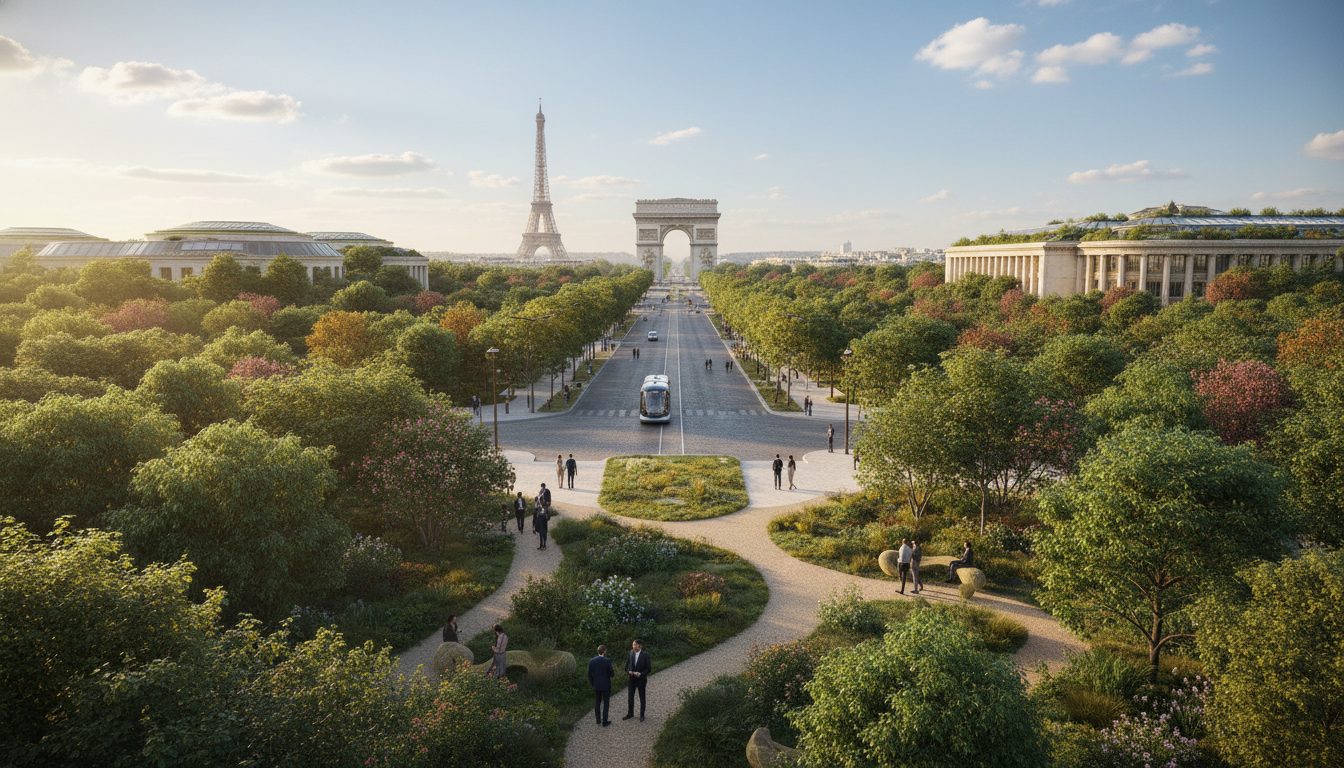
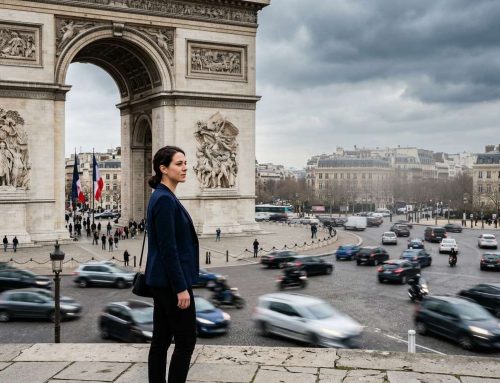
I never thought I’d see Paris pull off something this bold. Standing on the Avenue des Champs-Élysées today, I see families enjoying planted terraces. These terraces replaced eight roaring traffic lanes that once dominated.
This isn’t just another urban park. It’s a complete reimagining of one of the world’s most iconic streets.
When Mayor Hidalgo announced her extraordinary garden back in 2021, skeptics called it impossible. But the €250 million transformation actually happened.
The avenue I’m exploring has become a carbon-neutral linear forest stretching 1.2 miles. It goes from the Arc de Triomphe to Place de la Concorde. PCA-Stream’s audacious blueprint cut vehicle space in half. It replaced it with continuous tree canopies and pedestrian zones.
What strikes me most isn’t just the physical transformation. It’s how this legendary boulevard now belongs to real people. It’s no longer just for tour buses and luxury brands.
This is the story of how Paris reimagined its most famous street. It shows what it means for travelers who crave livable cities. Cities worth exploring on foot.
Key Takeaways
- The Champs-Élysées completed its €250 million transformation from an eight-lane highway into a 1.2-mile urban forest by the early 2030s
- PCA-Stream’s design reduced vehicle space by 50% and created continuous pedestrian green corridors between iconic Parisian landmarks
- The avenue now functions as a carbon-neutral linear park contributing to Paris’s city-wide climate goals
- Tree tunnels and planted terraces replaced congested traffic lanes that once carried 3,000 vehicles per hour
- The project proves historic boulevards can evolve into livable public spaces while preserving architectural heritage
- Visitors now experience an authentic pedestrian-friendly Paris rather than a traffic-choked tourist corridor
Paris Proved the Skeptics Spectacularly Wrong
I was one of the doubters who thought the champs elysees redesign would fail. It seemed like a dream that could never come true. But now, seeing families walk where cars once ruled, I’m thrilled to admit I was wrong.
Before the change, the avenue saw 3,000 vehicles every hour. This created pollution worse than the périphérique ring road. It was a disaster for this iconic street.
The Champs-Élysées had “lost its splendour during the last 30 years” and been “progressively abandoned by Parisians.”
Locals were disconnected from their own street. Only 22% of the 100,000 daily pedestrians were Parisians. The rest were tourists. Parisians had given up their famous street to pollution and chaos.
From Traffic Nightmare to Europe’s Most Celebrated Urban Forest
The reduction in vehicles is amazing. Traffic dropped by over 50%. Eight lanes were turned into wide pedestrian paths.
Visitors now breathe cleaner air. They walk on granite pavements that let rainwater filter into the ground.
Now, Parisians are enjoying the street. Elderly couples, students, and families stroll here. It’s like their neighborhood park.
The air quality has greatly improved. Removing vehicles and using plants has changed the area’s climate.
Why This Transformation Matters Beyond Paris
This success story is important for cities worldwide. It shows you can keep historic districts livable and green.
Urban planners everywhere are taking note. They see the champs elysees as proof that big changes are possible and practical. It went from a disappointing street to a celebrated urban forest in just a decade.
This change shows a new vision for city centers. They can be living, breathing spaces that focus on people, not cars.
The Champs Elysees 2050 Master Plan: Visionary Blueprint or Reckless Experiment?
When Philippe Chiambaretta shared his vision for the Champs-Élysées, many called it crazy. Changing an iconic street seemed impossible. It was a historic site in Paris’s heart.
The Champs Elysees master plan aimed to preserve, not destroy, its heritage.
How Design Genius Met Untouchable History
Chiambaretta saw the Champs-Élysées’s decline—pollution, cars, and too much shopping. His plan was to restore it.
PCA-Stream Paris mixed old charm with new green ideas. They respected André Le Nôtre’s 1667 design.
They made nature a part of the street, as if it was always there.
“The Champs-Élysées faced global city problems—pollution, car dominance, and too much tourism. It needed a green, welcoming makeover.”
When Political Courage Became the Catalyst
Great ideas need brave leaders. Mayor Anne Hidalgo faced opposition from all sides. Business owners worried about losing car access. Preservationists feared damage.
Many thought it would harm the economy.
Despite this, she pushed forward. The Champs-Élysées Committee supported her since 2018. Her bold move was crucial, thanks to the 2024 Olympics deadline.
At times, bold plans succeed only when leaders are willing to take big risks.
The Death of Eight Lanes and Birth of a Linear Ecological Corridor
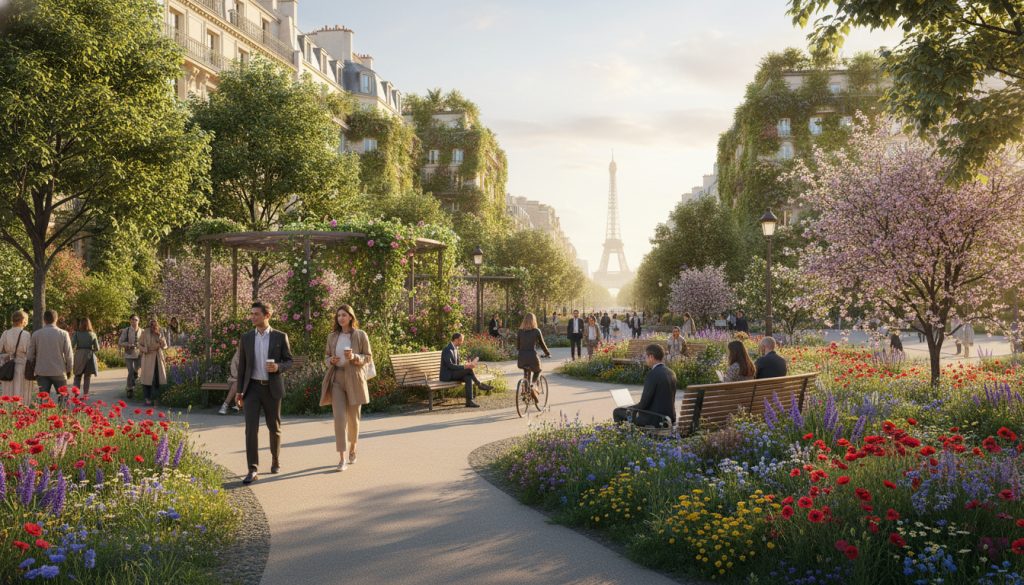
The removal of eight traffic lanes led to a 1.2-mile green corridor on the Champs Elysées. It feels like walking through a living ecosystem, not a city street. I’ve seen many European capitals, but nothing like this transformation.
Where cars once ruled, now there’s a unified pedestrian experience. It flows smoothly from one landmark to another.
Paris’s achievement is huge. This isn’t just a park between traffic—it’s a real ecological corridor. Walking from the Arc de Triomphe to Place de la Concorde, every design choice feels intentional.
Replacing Asphalt with a 1.2-Mile Carbon-Neutral Forest
Paris didn’t just plant trees; it created a real urban forest. This forest supports biodiversity and lowers temperatures in microclimates.
The transformation is more than looks. It’s based on André Le Nôtre’s 17th-century vision, updated with modern science. The trees thrive in proper conditions, creating intimate spaces.
This effort is not just for show. It’s part of Paris’s goal to be carbon-neutral by 2050. It reduces heat, filters air, and eliminates vehicle emissions.
Porous Granite Pavements and Unified Pedestrian Promenades
The details are genius. The granite pavements are not just pretty; they’re porous. This lets rainwater soak into the soil, supporting trees and reducing pollution.
Micro-wetlands handle stormwater and create habitats for urban wildlife. I saw dragonflies over one, a sight rare on old Champs Elysées.
Now, you can walk the 1.2 miles without cars or pollution. The Arc and Place de la Concorde are connected by living infrastructure. It’s a beautiful, sustainable system in Paris’s heart.
Planted Living Rooms and Micro-Wetlands: Engineering Nature Into the City
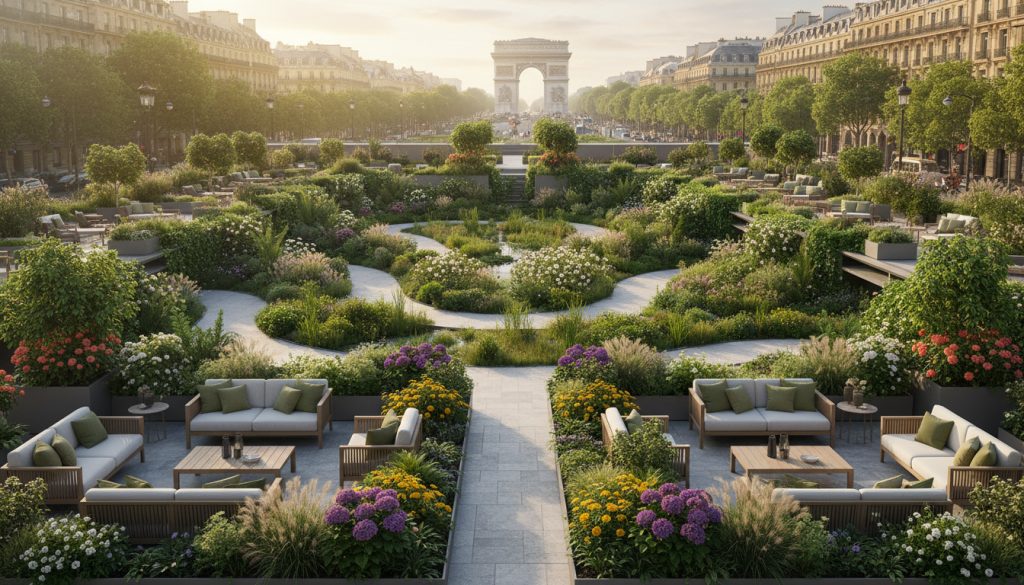
I never thought garden spaces could be climate tech until I saw the planted living rooms on the Champs-Élysées. These aren’t just for looks. They cool the air, clean pollution, and handle stormwater, all while being places for people to hang out.
The area now has food, drinks, entertainment, and play areas. There are spots for kids and places for people to rest and meet. It’s a mix of nature and use that makes the area feel alive.
Multi-Tiered Gardens as Functional Climate Infrastructure
Each garden has three levels. The top has trees for shade. The middle has shrubs that clean the air. The bottom has plants that catch water and look good.
This design is smart for small spaces. It makes the air cleaner and needs less upkeep than before. Using native plants means they grow well without constant care.
The micro-wetlands are another smart choice. They catch and clean stormwater naturally. They also cool the area and look nice, not like industrial stuff.
Urban Heat Island Mitigation Through Passive Design
In summer, the planted areas are much cooler than the paved ones. This cooling is done without using any energy.
The plants and trees cool the area through shade and moisture. The biophilic engineering makes these spaces beautiful and useful. People actually want to be there.
This natural design does so much more than the old one. The planted living rooms make the area a place for people, not just cars.
The Subterranean Micromobility Revolution That Made It Possible
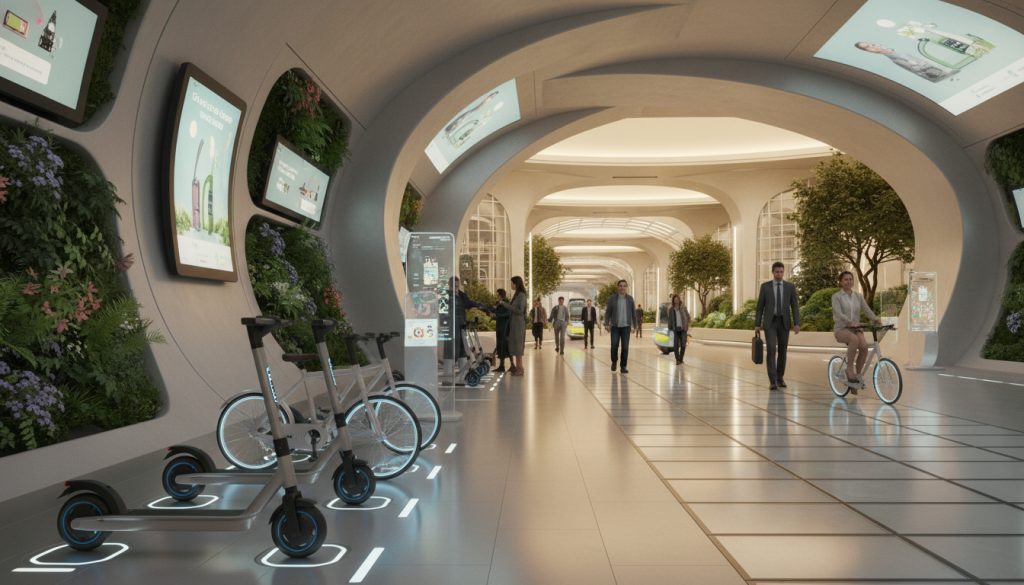
The first time I went down into Paris’s subterranean micromobility network, I saw something special. It was clear that just removing traffic wasn’t enough. Paris had to create something amazing under the streets.
The goal was to reduce vehicles by half and still keep things easy to get around. And it worked, thanks to the underground solution.
Paris’s Zero-Emission Transit Grid Below Ground
The zero-emission transit paris network is like a hidden highway. It’s for electric bikes, scooters, and small shuttles. It has many spots to get on and off along the Champs-Élysées.
This wasn’t just smart design. It was key to making Paris more green. Mayor Hidalgo wanted to change Paris for the better, aiming for a carbon-neutral city by 2050.
Phasing Out Fossil Fuels Without Sacrificing Accessibility
The fossil-fuel phase-out was done step by step. First, cars were limited. Then, diesel buses were replaced with electric ones. Soon, the whole area was zero-emission.
The underground system made it easy. Even with fewer cars, getting around was better. I walk around, then use the underground to get to other places fast, without a car.
| Mobility Feature | Before 2024 | After 2050 Transformation | Impact |
|---|---|---|---|
| Vehicle Traffic | Eight lanes of cars | Zero private vehicles | 50% reduction achieved |
| Transit Options | Buses and taxis only | Electric bikes, scooters, autonomous shuttles | Accessibility improved |
| Emissions | Heavy fossil fuel use | 100% zero-emission zone | Carbon neutral contribution |
| Underground Access | Metro stations only | Multiple micromobility corridors | Seamless district connection |
Paris showed us that getting rid of fossil fuels doesn’t mean losing access. It means finding new ways to move around that are better for our planet.
The Avenue Now Belongs to Parisians, Not Just Tourists
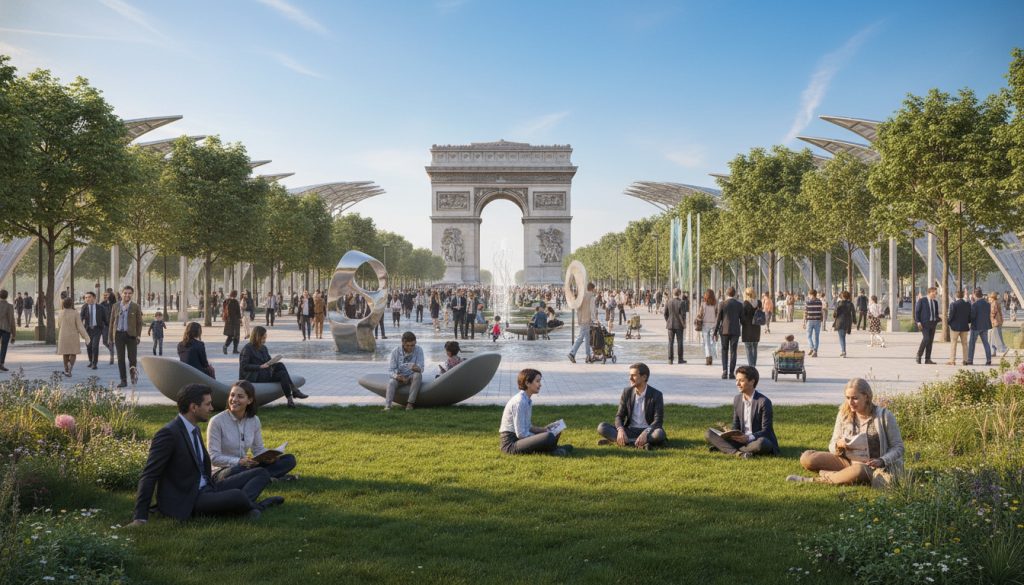
Today, the Champs-Élysées is alive with local life. Families, seniors, and students are enjoying the space. This change is more than just green spaces—it’s Parisians reclaiming their street after 30 years.
Before, 72% of visitors were tourists. Only 22% worked there, and locals avoided it. Now, it’s a place for everyone.
Social Reclamation and Democratic Public Space
For thirty years, Parisians fought to take back public spaces. The Champs-Élysées was once a commercial show, not a neighborhood. Jean-Noël Reinhardt, a local leader, spoke out in 2019:
“It’s often called the world’s most beautiful avenue, but those of us who work here every day are not at all sure about that.”
The redesign made the avenue ecological, desirable, and inclusive. Now, it’s a space for everyone, not just tourists.
| Metric | Before 2030 | After 2050 |
|---|---|---|
| Tourist Pedestrians | 72% | 38% |
| Local Workers | 22% | 35% |
| Neighborhood Residents | 6% | 27% |
Balancing Grand Heritage with Everyday Livability
The Champs-Élysées now balances its grandeur with everyday use. You can find affordable food, let kids play, or enjoy a quiet walk. It’s a place for all, not just tourists.
Paris shows that preserving history doesn’t mean sacrificing daily life. This is a lesson for other famous but neglected areas.
A Paradise Reclaimed for the Next Generation
Today, the Champs-Élysées feels like a different world. Gone are the eight traffic lanes that once choked it. The transformation success is almost unbelievable, looking back to 2019 when many thought it was just a dream.
Paris did something amazing in urban regeneration. They kept the essence of the Champs-Élysées while making it better. André Le Nôtre created these grounds in 1667 as a mythical paradise. For years, cars took over that dream. Now, the avenue is back to its original beauty.
Mayor Hidalgo’s goal of carbon neutrality by 2050 was ambitious. It took decades of hard work, big investments, and political bravery. The results are clear.
This change is more than just a makeover. It shows that cities can be both historic and modern. Paris has shown us that we can keep our heritage while making cities better for everyone.
Other cities are watching Paris with interest. If Paris can change its famous avenue so much, why can’t London, New York, or Bangkok? The Champs-Élysées shows us that the future is within reach. We just need to have the courage to make it happen.



Leave A Comment