
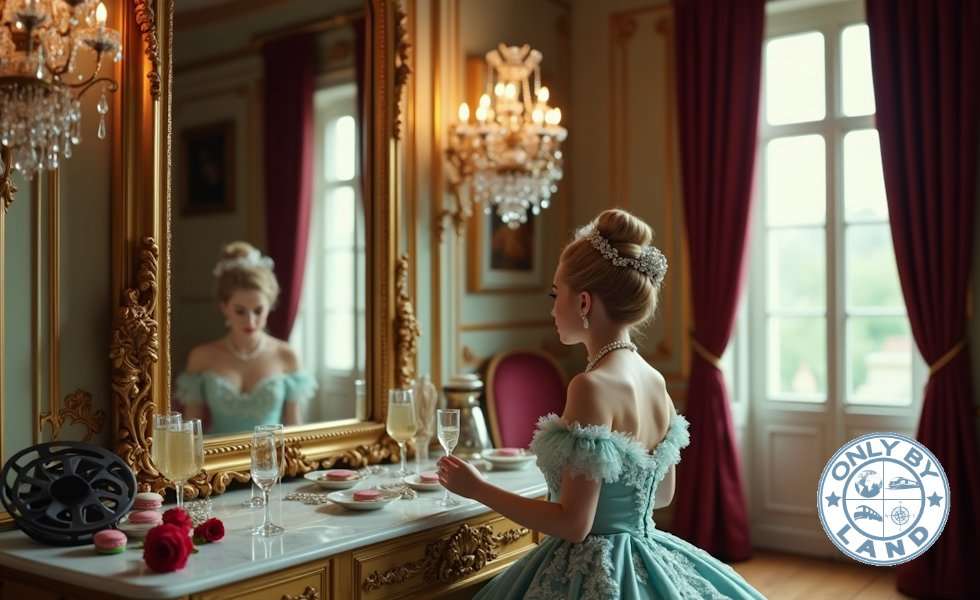
Marie Antoinette, France’s most controversial queen, has always captured filmmakers’ imagination.
Movies about Marie Antoinette range from grand Hollywood spectacles to intimate French dramas. These films show remarkably different versions of this infamous monarch. Sofia Coppola’s 2006 take with Kirsten Dunst showed her as a teenage rebel, while other films have depicted her as either a tragic heroine or a scheming royal.
These films give us a chance to see her remarkable life unfold. The story spans from her early days as a young Austrian princess at Versailles to her final moments during the French Revolution. Let’s look at seven essential Marie Antoinette films that bring her compelling story to life across different periods of cinema.
Sofia Coppola’s Marie Antoinette (2006)
Sofia Coppola’s reimagining of the French queen’s life offered a new viewpoint on period dramas and grossed USD 60 million globally against a USD 40 million budget.
Kirsten Dunst’s Portrayal of Young Queen
Kirsten Dunst brought Marie Antoinette to life as a naive teenager who found herself in the French court. Her performance captured the queen’s experience from a young 14-year-old Austrian duchess to France’s most controversial monarch. The actress showed Marie Antoinette’s emotional depth and presented her as a misunderstood figure rather than the villain many historical accounts portrayed.
Modern Take on Historical Drama
Coppola chose to skip the traditional historical epic approach. She focused on telling the story through impressionistic elements. The film stood out with these distinctive features:
- Contemporary music featuring bands like The Cure and New Order
- Subtle modern touches in costume and set design
- A focus on emotional storytelling over historical accuracy
Award-Winning Costumes and Visuals
The film’s stunning visuals earned costume designer Milena Canonero an Academy Award for Best Costume Design. Coppola’s creative vision started with a box of Ladurée macarons that inspired the film’s pastel color palette. The production team received rare permission to film at Versailles, which added authenticity to the lavish sets while keeping Coppola’s modern vision intact. Manolo Blahnik created the shoes, while artisans crafted hundreds of wigs to recreate the period’s elaborate hairstyles.
The film received mixed reviews at its Cannes premiere but has earned cult status and recognition for its creative approach to historical storytelling.
Learn about French history at Saint Denis Basilica.
Marie Antoinette (1938)

MGM created one of Hollywood’s most ambitious historical dramas with Marie Antoinette. The studio poured $2.9 million into the production, making it among the costliest films of the 1930s.
Norma Shearer’s Oscar-Nominated Performance
Academy Award voters recognized Norma Shearer’s brilliant portrayal of the French queen with a Best Actress nomination. She spent three months getting fitted for forty stunning costumes designed specifically for her character. Her wardrobe was incredibly heavy – the gowns alone weighed 1,768 pounds combined.
Classic Hollywood Grandeur
The film set new standards for production excellence. Costume designer Adrian traveled across Europe to study period fashion and source authentic materials. The production brought together remarkable talent:
- A former Imperial Russian Opera costume designer handled special millinery work
- Eight skilled Hungarian craftspeople created detailed handwork
- Fifty Mexican artists mastered sequin and intricate embroidery
The production team built the Versailles ballroom set at twice its actual size to create a more dramatic effect. They even shipped genuine French furniture to Hollywood, with some pieces reportedly coming from Versailles itself.
Historical Accuracy and Drama
The film balanced visual authenticity with dramatic storytelling. Adrian studied period paintings under microscopes to capture exact embroidery patterns. MGM transformed the Carthay Circle Theater’s gardens into a replica of Versailles for the premiere, showcasing their dedication to historical immersion. The massive investment paid off well – the film earned $1.6 million in U.S. and Canadian rentals, plus $1.3 million internationally.
Visit Conciergerie Paris.
Farewell, My Queen (2012)
Benoît Jacquot’s intimate portrayal of Marie Antoinette’s final days at Versailles is a chance to see history through a young servant’s eyes. The 2012 French drama tells the queen’s story during four significant days when the French Revolution started to unfold.
Diane Kruger as Marie Antoinette
Diane Kruger portrays Marie Antoinette with a compelling mix of charm and inner conflict. Her performance shows the queen’s complex personality – playfully unaware at times, deeply perceptive at others. Kruger connects with the role naturally, having moved to France from Germany at the same age as the Austrian-born queen.
Revolutionary Period Setting
The story unfolds during the turbulent days between July 14-17, 1789, when Versailles learns about the Bastille’s fall. The production team filmed in the actual Palace of Versailles, adding authenticity to their depiction of aristocracy’s decline. Director Jacquot employed both grand state rooms and narrow service corridors to show the stark class divisions of the era.
Behind Palace Walls Viewpoint
Sidonie Laborde, the queen’s reader played by Léa Seydoux, guides viewers through the private world of court life. The film reveals a world where:
- Servants watch through windows and doorways, showing the queen’s lack of privacy
- Court gossip and intrigue move freely between nobles and servants
- Relationships grow more complicated as the monarchy starts to fall
Critics praised the film for its fresh approach to this prominent historical story, particularly its intimate look at Versailles’ life during its final days as French power’s center.
The Affair of the Necklace (2001)
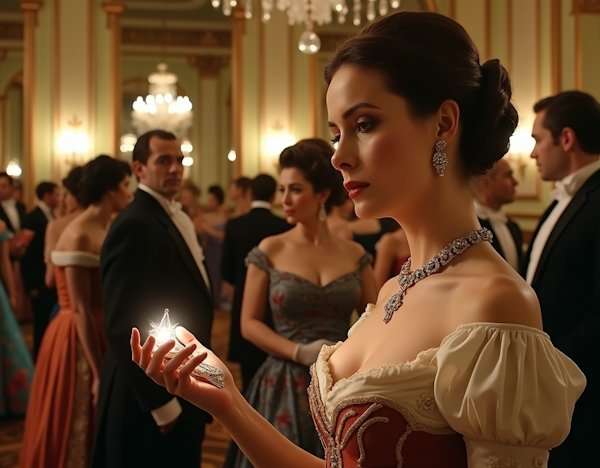
Charles Shyer’s historical drama tells the story of one of the most notorious scandals before the French Revolution. The film shows the famous Diamond Necklace Affair of 1785, a tale of deception that sealed Marie Antoinette’s fate.
Joely Richardson’s Royal Performance
Joely Richardson brings Marie Antoinette to life with a regal presence. The casting team chose her for her remarkable likeness to the French queen. She shows the queen’s growing isolation and vulnerability as the scandal takes shape. Richardson’s memorable lines reveal the monarch’s awareness of her falling popularity. “Why do the people hate me? ‘Wasn’t always so”, she asks.
Scandal and Intrigue
The story revolves around a confidence scheme with a 2,800-carat diamond necklace. Several key elements drive the plot:
- Jeanne de la Motte manipulates Cardinal de Rohan
- The Cardinal receives fake letters from the Queen
- A nighttime scheme unfolds in Versailles’s Grove of Venus
- The trial that engaged French society follows
Court Politics and Conspiracy
Court intrigue reveals the scandal’s political impact. The film demonstrates how this whole ordeal added to the French public’s disillusionment with the monarchy. The production stays true to key historical facts while taking some creative liberties. Cardinal Rohan burns letters and the queen’s original reaction to the jewelers’ claims remain authentic to history.
Explore these French street style tips.
La Révolution Française (1989) – Movies About Marie Antoinette
This ambitious six-hour epic stands as the most extensive cinematic portrayal of Marie Antoinette’s era, created to mark the French Revolution’s bicentennial.
Jane Seymour’s Portrayal
Jane Seymour brought remarkable depth to Marie Antoinette and transformed her character from a frivolous young queen to a dignified prisoner. Her performance captured the queen’s journey through three distinct phases: “frivolous and flirtatious” at first, then as a political figure, and finally as a “simpler, much stronger woman” who faced her fate. She showed her dedication to authenticity by filming emotional scenes in both English and French.
Revolutionary Timeline
The film’s structure spans the revolution through two parts: “Years of Hope” and “Years of Rage”. This detailed approach allowed for unprecedented historical detail that covered events from:
- The calling of the Estates-General
- The storming of the Bastille
- The royal family’s imprisonment
- The final days of the monarchy
Historical Context and Drama
The production team worked with experts who advised on everything from military matters to period-appropriate dining etiquette. The film featured an international cast including Peter Ustinov and Claudia Cardinale, and was shot in French, German and English. The production managed to keep neutrality in its historical view and earned praise from historians for its accurate portrayal of revolutionary events.
Furthermore, hidden gems in Paris.
L’Autrichienne (1990)
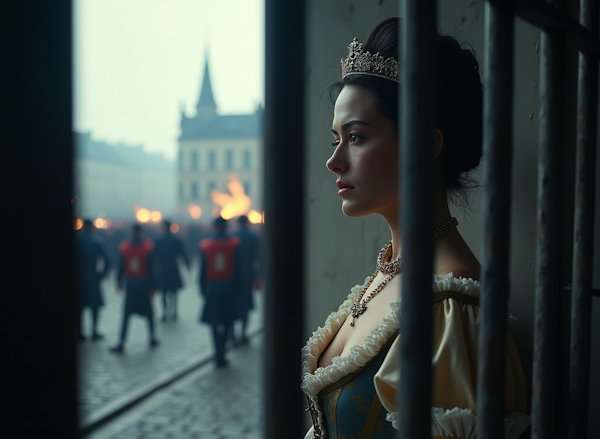
“L’Autrichienne” emerges as the most authentic portrayal of Marie Antoinette’s final days among numerous depictions of France’s last queen, drawing directly from historical court documents.
Trial and Final Days
Ute Lemper brings Marie Antoinette’s imprisonment in the Conciergerie to life with a powerful performance. The film reveals the queen’s private moments during her confinement. A touching scene shows her kissing her son’s yellow glove and lock of hair.
Political Drama
The queen’s trial unfolds with raw realism, based on actual court transcripts. The drama centers around:
- The queen’s dignified responses to accusations
- Her emotional struggles during imprisonment
- The political machinations behind the trial
- The inevitable march toward her fate
Historical Authenticity
This film stands out from other Marie Antoinette portrayals through its dedication to historical truth. André Castelot’s screenplay stays true to the original trial documents. Lemper shows Marie Antoinette’s complete humanity – her courage and fear – rather than the usual caricature of a frivolous royal or stoic victim.
The stark realism extends to the revolution’s brutality, showing historical events without idealization. This ground truth helps viewers connect with Marie Antoinette’s human story, making it a vital addition to French Revolution cinema.
Shadow of the Guillotine (1956)
Released in 1956, this French-Italian collaboration brought a distinctly European view to Marie Antoinette’s story and earned a prestigious Palme d’Or nomination at the Cannes Film Festival.
Michèle Morgan’s Performance
Michèle Morgan delivered a mesmerizing portrayal of Marie Antoinette, bringing natural poise and charisma to the role. Her performance shines especially in the queen’s final moments, where she masterfully conveys dignity and emotional depth while retaining royal composure.
Romance and Revolution
The film explores Marie Antoinette’s complex relationship with Count Axel de Fersen, played by Richard Todd. Their story unfolds against the backdrop of rising revolutionary tensions, presenting the queen as a woman caught between duty and personal desires. The narrative focuses on the significant period between 1789 and 1793, offering a nuanced view of the queen’s final years.
French Production Values
Shot at the Billancourt Studios in Paris, the film showcases remarkable attention to historical detail. The costume design stands out with:
- Accurate 1770s-style polonaise gowns
- Detailed recreations of the queen’s iconic court attire
- Precise reproduction of the famous Vigée-le Brun portrait dress
The production team’s commitment to authenticity extended to the sets designed by René Renoux, creating a visually rich backdrop that transported viewers to 18th-century Versailles. The film’s careful balance of historical accuracy and dramatic storytelling earned it recognition as one of the most compelling portrayals of the French queen’s life.
Discover these hidden coffee shops in Paris.
Comparison Table
| Movie Title | Year | Lead Actor/Actress | Key Focus/Viewpoint | Notable Production Details | Budget/Box Office | Notable Recognition |
|---|---|---|---|---|---|---|
| Sofia Coppola’s Marie Antoinette | 2006 | Kirsten Dunst | Young queen’s experience from teenager to monarch | First film to shoot at Versailles; Modern music soundtrack | $40M budget, $60M worldwide | Academy Award for Best Costume Design |
| Marie Antoinette | 1938 | Norma Shearer | Grand historical drama | 40 detailed costumes; Twice-size Versailles replica | $2.9M budget, $2.9M total rentals | Academy Award nomination for Best Actress |
| Farewell, My Queen | 2012 | Diane Kruger | Final days of Versailles (July 14-17, 1789) | Shot in actual Palace of Versailles | – | Critical acclaim for intimate portrayal |
| The Affair of the Necklace | 2001 | Joely Richardson | Diamond Necklace scandal of 1785 | Featured 2,800-carat diamond necklace story | – | Not mentioned |
| La Révolution Française | 1989 | Jane Seymour | Complete view of the revolution | Six-hour epic in multiple languages | – | Praised by historians for accuracy |
| L’Autrichienne | 1990 | Ute Lemper | Queen’s trial and final days | Based on actual court transcripts | – | Not mentioned |
| Shadow of the Guillotine | 1956 | Michèle Morgan | Period between 1789-1793 | Shot at Billancourt Studios, Paris | – | Palme d’Or nomination |
Enjoy the Movies About Marie Antoinette
Marie Antoinette’s complex character as a historical figure shines through in these seven films. Each interpretation adds something new to her story. The 1938 MGM production stuck to grand historical narratives, while Sofia Coppola brought a fresh modern take to the French queen’s life.
The French queen’s character comes alive differently in each portrayal. Kirsten Dunst captured her spirit as a rebellious teenager, while Ute Lemper portrayed her as a dignified prisoner. Filmmakers have brought her story to life in various ways – from spectacular Hollywood productions to intimate French dramas filmed at Versailles itself.
These films reflect the changing social attitudes and filmmaking styles in the last century. The story fascinates audiences worldwide, whether it focuses on her early court life, the diamond necklace scandal or her final Revolutionary days. Together, these interpretations paint a rich picture of a complex woman who continues to intrigue people today.
FAQs
Q1. Which movie offers the most historically accurate portrayal of Marie Antoinette?
“L’Autrichienne” (1990) is considered one of the most authentic depictions of Marie Antoinette’s final days. The film draws directly from historical court documents and trial transcripts, providing a realistic portrayal of the queen’s imprisonment and trial.
Q2. What is unique about Sofia Coppola’s interpretation of Marie Antoinette?
Sofia Coppola’s 2006 film “Marie Antoinette” offers a modern take on the historical drama. It features contemporary music, subtle modern touches in costume and set design and focuses on emotional storytelling rather than strict historical accuracy. The film won an Academy Award for Best Costume Design.
Q3. Are there any films that show Marie Antoinette’s entire life story?
“La Révolution Française” (1989) is a six-hour epic that covers the entire French Revolution, including Marie Antoinette’s journey from a young queen to her final days. It provides a comprehensive view of the historical events and the queen’s role throughout the revolutionary period.
Q4. Which actress is considered to have given one of the best performances as Marie Antoinette?
Norma Shearer’s portrayal of Marie Antoinette in the 1938 film earned her an Academy Award nomination for Best Actress. Her performance is notable for its dedication, with Shearer spending three months fitting forty elaborate costumes for the role.
Q5. Is there a film that focuses specifically on the Diamond Necklace Affair involving Marie Antoinette?
Yes, “The Affair of the Necklace” (2001) centers around the infamous Diamond Necklace scandal of 1785. The film explores this notorious event that contributed significantly to Marie Antoinette’s declining popularity and the public’s disillusionment with the monarchy.


Leave A Comment