

I stood in front of Wat Mahathat at sunrise last year. The first light hit those lotus-bud spires. This place has stood since the 13th century, the true cradle of Thai civilization. That’s when the question hit me. What will this ancient Siamese capital look like in three more decades?
Thailand just moved its net-zero target up from 2065 to 2050. They have an estimated $7.05 billion investment need by 2035. This pledge changes everything for a 70-square-kilometer UNESCO site built on centuries-old hydraulic engineering.
This isn’t a forecast from a lab. It’s my own grounded, speculative take on what happens when 800-year-old brick and modern climate physics meet head-on.
I picture nano-mineral coatings protecting fragile stucco. I picture the old Traphang reservoirs doing double duty as flood control and passive cooling. I picture a historical park that doesn’t just survive climate change but gets stronger because of it.
Key Takeaways
- Thailand accelerated its net-zero emissions goal from 2065 to 2050, with roughly $7.05 billion in projected investment needed by 2035.
- The ancient site spans 70 square kilometers and relies on centuries-old hydraulic systems originally built to manage water and floods.
- Nano-mineral glazes could shield fragile stucco and brick chedis from heat, humidity, and erosion without altering their appearance.
- Restored Traphang reservoirs may serve double duty, controlling seasonal flooding while feeding zero-emission cooling systems.
- Passive, displacement-style cooling loops offer a way to manage heat without relying on fossil-fueled air conditioning.
- This vision blends 13th-century Siamese engineering with modern climate science to protect heritage for future generations.
1. Sukhothai Historical Park Future 2050: A Blueprint the World Cannot Ignore
Thailand has set a new goal to reach net-zero by 2050, fifteen years earlier than before. This change is huge, and Sukhothai Historical Park might be the key to achieving it. The country aims to cut emissions by 47% by 2035, compared to 2019 levels.
They now plan to reach net zero by 2050, not 2065. This is a big leap forward for any country. It will need $7.05 billion in funding by 2035 to make it happen.
Sukhothai is a 70 square kilometer site filled with ancient ruins. It’s a chance to make the Sukhothai Historical Park future 2050 vision a reality. This vision is about keeping history safe while fighting climate change.
Thailand is already working on this idea. The cement industry is testing new, low-carbon materials. These could be used to protect Sukhothai’s ancient buildings without changing their look.
Climate resilience and heritage preservation aren’t competing goals anymore — they’re becoming the same project.
This blueprint is exciting because it makes big ideas real. You can walk through, take pictures, and feel the history of Sukhothai.
2. The Silent Threat: Why Ancient Masonry Needed a Molecular Revolution

I once found myself next to a laterite stupa in Sukhothai, feeling the surface like sand. It dawned on me: these ruins aren’t just old. They’re fighting a losing battle against the tropics, day by day.
Thailand’s climate is harsh on 700-year-old masonry. Heat, rain, and humidity work together like a slow-motion demolition crew. For decades, restoration teams could only patch the damage, never stop it.
Tropical Decay: Algae, Moisture Delamination, and the Limits of Traditional Restoration
During rainy season, walk through the park and you’ll see it right away. Black-green algae streaks climb the laterite blocks. Stucco surfaces bubble and crack. Some pieces flake off entirely, revealing bare stone underneath.
This happens because moisture seeps behind the stucco layer and gets trapped. It has nowhere to go, so it pushes the surface apart from the inside. Restorers call this delamination, and it’s been Sukhothai’s quiet enemy for generations.
Traditional fixes never solved the root problem. Resurfacing covers the damage temporarily. Chemical sealants trap even more moisture inside. Patching just delays the inevitable crack. None of these methods let the stone breathe the way it was designed to.
Non-Invasive Mineral Masonry Glazes: How the Nano Shield Actually Works
A new generation of non-invasive mineral masonry glazes is changing heritage preservation.
It’s like an invisible molecular shield. These breathable nano-coatings block moisture and organic growth on the surface. But unlike old sealants, they don’t trap vapor inside the stone. The ancient lime stucco keeps breathing, just like it did centuries ago.
This isn’t just theory. Thailand’s cement industry is already testing similar low-carbon material solutions. This is part of the TCMA’s “The NEXT Chapter to Net Zero 2050” initiative.
The cement industry positions itself as a “Climate Solution Partner,” developing advanced construction materials while cutting 3.8 million tonnes of CO2 through clinker substitution.
This real-world momentum matters. It shows the material science behind these glazes isn’t a distant dream. It’s already moving from lab to landscape, one pilot project at a time.
3. Guarding the Icons: Wat Mahathat, Laterite Stupas, and Wat Si Chum’s Phra Achana

Some monuments you study, but others you never forget once you’ve stood in front of them. That’s exactly how I feel about Sukhothai’s two defining structures. One rises in a graceful spire above the old capital grounds. The other sits quietly inside stone walls, watching everyone who steps through its narrow doorway.
Wat Mahathat’s Lotus-Bud Chedi Under the Nano Shield
Ask anyone what separates Sukhothai from Ayutthaya or Chiang Mai, and I’ll point straight to the Wat Mahathat lotus bud chedi. That bud-shaped spire is the visual signature of the entire Sukhothai kingdom. No other Thai city built quite like this, and it’s the first image most visitors remember.
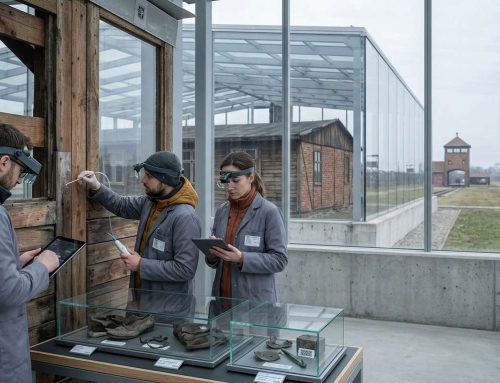
The nano-molecular glaze wraps around that delicate silhouette without changing its color or shape. Engineers apply it in a layer thinner than a human hair. It seals the old brickwork against another century of monsoon battering, while the original profile stays exactly as pilgrims saw it centuries ago.
The same coating extends across the laterite stupas scattered throughout the complex. Laterite stone is porous and prone to crumbling. The mineral shield fills those microscopic gaps before rainwater ever gets a chance to settle in and do damage.
Wat Si Chum Phra Achana Preservation: Safeguarding a 15-Meter Giant
Nothing prepared me for the moment I first glimpsed the Phra Achana through that narrow mondop opening. Fifteen meters of seated Buddha, staring back with a calm I still think about years later. It genuinely stopped me in my tracks.
Wat Si Chum Phra Achana preservation presents a completely different challenge than a slender chedi. A structure this massive moves moisture and structural stress in ways standard models simply can’t predict.
So engineers calibrated the entire coating system specific to a giant. Sensors track temperature shifts across the statue’s surface around the clock. Crews apply the glaze in careful sections, spread over weeks, so the surface never dries unevenly.
Standing there again, I don’t just see stone anymore. I see something worth every ounce of that patient, painstaking work.
4. Reviving the Traphang: Subsurface Hydrologic Heritage Engineering
I keep coming back to the traphang reservoirs because they tell a great story. Most visitors walk past these ponds without realizing their importance. These ponds were key to a 13th-century water system that supported a kingdom through floods and droughts.
By 2050, this ancient wisdom gets a modern twist. Engineers have rebuilt the reservoir network underground. This subsurface hydrologic heritage engineering works quietly beneath the ruins.
The 13th-Century Reservoir Matrix, Reimagined for a Warming World
The original traphang system managed the Yom River’s changes long before “sustainable engineering” was popular. Sukhothai’s builders created interconnected ponds to catch monsoon overflow and release it slowly during dry months.
Learn more about this system’s impact on ancient Sukhothai in the Sukhothai Historical Park records. Historians call it one of the most advanced hydraulic networks of its time.
Now, this system faces a warmer climate with heavier monsoons. The 2050 redesign doesn’t replace the ancient ponds. Instead, it strengthens them with modern materials while keeping the ponds visible.
Automated Retention Vaults and the 100% Monsoon Capture Standard
Underground, a network of automated retention vaults captures every drop of monsoon runoff from the Yom River. Sensors track rainfall in real time. Sluice gates open and close automatically, directing water into hidden filtration chambers.
This results in a 100% monsoon capture standard. No floodwater escapes, and ancient stonework doesn’t sit in stagnant runoff.
- Smart sensors monitor river levels around the clock.
- Automated sluice gates redirect excess flow within seconds.
- Filtration chambers clean water before storage, all out of sight.
None of this shows on the surface. Visitors still see the same peaceful ponds their ancestors built eight centuries ago.
Closed-Loop Reservoir Stormwater Harvesting Fuels Zero-Emission Cooling
Here’s where the story gets even better. Filtered water from these vaults doesn’t just sit in storage. It cycles through a closed-loop reservoir stormwater harvesting system. This system powers zero-emission cooling for visitor centers and staff facilities across the park.
Ancient water systems were never obstacles to modern sustainability. They were blueprints for it.
I find this idea moving. The same ponds that once irrigated rice fields now cool buildings without using fossil fuels. That’s the kind of quiet innovation that makes Sukhothai’s 2050 vision feel less like science fiction and more like history finishing the job it started.
5. Beyond the Moat: Modern Drainage Science Meets Ancient Ground

As I rode my rented bike through Sukhothai’s parks, I thought about a better experience for visitors. The ancient moats and reservoirs are famous, but the hidden infrastructure is crucial too. It helps protect these ruins for the future.
I noticed puddles near brick foundations after rain. At first, they seemed small, but they can harm the ancient structures. They can cause decay, which the protective measures aim to prevent.
From Stadium Porous Asphalt Stormwater Drainage to Heritage Park Design
I found an interesting connection. Modern sports venues use stadium porous asphalt stormwater drainage systems. Rainwater filters through the pavement, avoiding puddles.
Now, Sukhothai’s walkways use the same idea. Porous asphalt is laid on paths, letting rainwater drain away from ancient walls. It’s a simple yet effective solution.
I love finding tech like this — it’s proven, practical, and works well. No need to invent new solutions when existing ones already solve the problem.
Solar-Paver Cycle Paths and the Sukhothai UNESCO Heritage Grid
The cycle paths were impressive. Solar pavers capture energy from sunlight and movement. This energy doesn’t disappear.
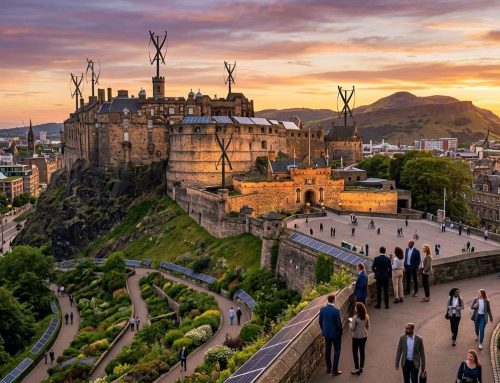
It powers the Sukhothai UNESCO Heritage Grid: a clean, decentralized energy system. It runs visitor services without fossil fuels. Lighting, charging, and tools all use this clean energy.
This system feels very practical. It’s not just theoretical tech. It’s efficient thinking, repurposed to protect an ancient city, one solar paver and path at a time.
6. Light Without Heat: Micro-Photonic Illumination of the Ruins

I walked into this section with a bias. I already loved Sukhothai at night.
Watching Loy Krathong lanterns on the reservoir water, I thought nothing needed to change. But the Sukhothai Historical Park future 2050 plan doesn’t care about my nostalgia. The science behind it is hard to argue with.
Non-Invasive Lighting and the End of Thermal Masonry Damage
Traditional floodlights throw off heat. This heat stresses ancient stone and causes cracking that we don’t notice until it’s too late.
Micro-photonic lighting systems fix this problem. They use focused, low-heat LEDs powered by solar-paver cycle paths in the park. This means no heat transfer to the stone surfaces.
- No heat buildup against fragile masonry
- Solar power keeps the entire lighting grid emission-free
- Sharper contrast and detail for evening photography
- Automated dimming reduces insect activity near carved reliefs
For visitors like me who come at dusk with a tripod, this is a win. We get sharper images without worrying about damaging the structures.
An Opinion on Illumination: Does It Enhance or Distract from Authenticity?
I’m not sure if dramatic lighting makes standing before the Phra Achana more emotional at sunset. Or if it takes away from the raw, weathered beauty that drew me in.
I don’t have a clear answer, and I won’t pretend to.
Preservation isn’t only about stone. It’s about protecting the feeling a place gives you.
Modern illumination can show off architectural details that moonlight alone can’t. But it can also make a quiet, contemplative ruin feel like a stage set.
Progress and atmosphere don’t always align neatly. Sukhothai’s planners will need to keep asking this question long after the lights go up.
7. Conclusion
I always end my travel pieces by asking why they matter. Sukhothai is more than old buildings to me. It’s where Thai script and governance began, marking the start of the Siamese nation.
The future of Sukhothai Historical Park looks bright. New technologies like nano-shield glazes and solar lighting are being used. These innovations aim to preserve the site without hiding its beauty.
This quiet effort is what excites me about Sukhothai’s future. It’s not just a museum. It’s a place where ancient wisdom meets modern science.
So, when planning a trip to northern Thailand, see Sukhothai as more than ruins. It’s a groundbreaking effort to merge history with innovation.
Thailand’s goal of reaching net-zero starts with places like Sukhothai. Protecting the past means embracing the future, one step at a time.



Leave A Comment