

Europe’s haunted places reveal dark histories spanning centuries, with tortured souls and mysterious phenomena that captivate modern visitors. Ireland stands as Europe’s most haunted country. Visitors at notorious sites like Loftus Hall and Crumlin Road Gaol frequently encounter paranormal activities.
The continent’s eerie locations include Romania’s imposing Bran Castle, dubbed Dracula’s Castle. This infamous fortress links to Vlad the Impaler’s brutal legacy of executing over 80,000 people. The chilling Paris Catacombs house approximately 6 million human remains. London’s Highgate Cemetery holds 170,000 souls in 53,000 graves, while the Tower of London bears witness to 900 years of torture and execution.
Adventurous souls seeking supernatural encounters will find these haunted European sites fascinating. Edinburgh’s Mary King’s Close lies buried beneath the Royal Exchange, holding countless untold stories. Hungary’s abandoned ghost town of Derenk stands frozen in time, its tragic past refusing to fade away. This piece explores 13 spine-chilling destinations that curious travelers can visit in 2025. Each location offers a unique glimpse into histories that refuse to rest quietly.
Bran Castle, Romania

Bran Castle, one of the famous haunted places in Europe, sits majestically on a steep hill between the Bucegi and Piatra Craiului Mountains in central Romania. The Teutonic Knights built a wooden fortress here in 1211, but Mongols destroyed it in 1242. King Louis I of Hungary then commanded builders to create a stone castle, which they completed in 1388.
History of Bran Castle
The castle served as a strategic military fortress that protected against the Ottoman Empire and worked as a customs checkpoint between Transylvania and Wallachia. Many owners held the castle’s keys through the centuries. People often link the castle to Vlad the Impaler, but historians haven’t found solid proof he lived here. He passed through the area a few times and might have spent a brief time as a prisoner within its walls.
Queen Marie of Romania brought new life to the castle after receiving it as a gift in 1920 when Transylvania joined Greater Romania. She turned this fortress into her favorite royal home by adding modern touches like hydroelectric power. She also created an English Park with two ponds and a tea house. The communist regime took control after her death in 1938, but Princess Ileana’s heirs got it back in 2009.
Ghost Stories of Bran Castle
Ghost hunters from all corners of the world come to experience Bran Castle’s supernatural side. Queen Marie’s spirit tops the list of reported sightings, as many believe she still watches over her cherished home. Guests have spotted her ghost inside the castle and around its gardens.
The White Lady’s tale adds another layer of mystery. This spirit, believed to be a noblewoman who met her end within these walls, appears near the chapel and courtyard in flowing white clothes. Witnesses often feel sudden cold spots during these encounters.
The castle walls hold another dark secret – a monk’s spirit who met his end bricked alive inside them. People walking through the chapel and narrow corridors say they hear whispers and feel cold touches. Strange orbs of light, dark figures, and mysterious voices caught on recordings add to the castle’s eerie reputation.
Visiting Bran Castle
You can explore this most haunted places in Europe every day from 9:00 AM to 6:00 PM. The castle opens at noon on Mondays and closes earlier at 4:00 PM during winter. You’ll find it at Strada General Traian Moșoiu 24 in Bran. Busses run from Brasov every hour on weekends and every thirty minutes on weekdays.
Entry costs €16.50, and buying tickets through the official website helps you skip the summer crowds. The castle’s many staircases make it tough for wheelchair access.
This spooky landmark draws more than 500,000 visitors each year. The castle comes alive with music festivals, Halloween celebrations and special night tours that let brave souls experience its supernatural atmosphere after dark.
Leap Castle, Ireland

Image Source: European Waterways
Leap Castle stands as one of the most haunted places in Europe. This medieval fortress sits about 6 kilometers north of Roscrea in County Offaly, Ireland. Its ancient stone walls hide dark secrets from centuries of bloodshed and supernatural events.
History of Leap Castle
The O’Bannon clan built the main tower around 1250 AD, naming it “Léim Uí Bhanáin” or “Leap of the O’Bannons”. The castle’s foundation dates back to the Iron Age (500 BCE) and possibly earlier Neolithic times, according to archeological findings.
Gerald FitzGerald, Earl of Kildare, attempted to capture the castle in 1513. He returned in 1516 and damaged parts of the structure. The castle’s darkest moment came after Mulrooney O’Carroll’s death in 1532. A brutal family feud led to the whole ordeal where one brother killed his sibling, a priest, during mass in what became the “Bloody Chapel”.
The castle changed hands through marriage to the Darby family in 1642. They kept it until the Irish Civil War in 1922 when it burned down. Musician Seán Ryan and his wife Anne bought the castle in 1991. They continue their restoration work today.
Ghost Stories of Leap Castle
The castle houses many spirits – about 30 different entities roam its halls. The Elemental (known as “It”) strikes the most fear. Mildred Darby, a previous owner, described it as “about the size of a sheep” with a decomposing face and “black cavities for eyes.” A rotting corpse’s smell follows this creature.
Other prominent spirits include:
- The Red Lady – The O’Carrolls captured and assaulted her, then killed her baby. She now wanders the halls with a raised dagger after taking her own life
- Emily and Charlotte – Two young girls play in the castle halls. Emily died from falling off the battlements, while Charlotte moves with her deformed leg
- The Murdered Priest – He appears in the Bloody Chapel’s doorway. Light sometimes glows from the windows at night
Workers found something horrific during renovations – an oubliette. This dungeon had sharp wooden spikes at its bottom, surrounded by human remains.
Visiting Leap Castle
Sean Ryan welcomes guests who want to explore this haunted place in Europe. You can reach him at +353868690547 or seanfryan@outlook.com. The castle asks for an €8 donation from each adult to help with restoration.
Guests can explore the available parts of the castle freely. Ryan shares his knowledge and personal supernatural experiences with visitors. Lucky visitors – or unlucky ones – sometimes experience their own paranormal encounters.
Highgate Cemetery, London

Image Source: Wikipedia
Highgate Cemetery stands among lush overgrowth and ornate Victorian monuments in North London. This hauntingly beautiful necropolis is renowned as one of the most haunted places in Europe. The 183-year-old cemetery, part of London’s “Magnificent Seven” cemeteries, serves as home to both famous residents and spectral inhabitants.
History of Highgate Cemetery
London’s burial crisis sparked the creation of Highgate Cemetery when the city’s population exceeded one million in the early 1800s. Architect Stephen Geary designed the cemetery and Right Reverend Charles Blomfield dedicated it to St. James. The grounds were split between the Church of England with fifteen acres and Dissenters with two acres.
Victorian society embraced the cemetery as a fashionable burial ground that featured Gothic tombs crafted with wealth and pageantry. The cemetery’s architectural marvels include the Egyptian Avenue, the Circle of Lebanon built around an ancient Cedar of Lebanon and the Terrace Catacombs with space for 825 bodies in 55 vaults.
World War I changed everything. Many staff members left for military service, and the cemetery struggled. The once-pristine grounds became a wild, overgrown jungle by 1960 when bankruptcy was declared.
Ghost Stories of Highgate Cemetery
The “Highgate Vampire” incidents of 1969-1970 cemented the cemetery’s supernatural reputation. David Farrant spotted “a gray figure” on December 24, 1969. His sighting triggered numerous reports of apparitions and led to a vampire hunt. Hundreds stormed the cemetery on Friday the 13th of March 1970.
Regular ghostly sightings include:
- A spectral cyclist near the gates
- The “Gray Lady” – a Victorian-era woman gliding among tombstones
- A tall man in a hat who appears and vanishes
- A shrouded figure staring skyward that disappears when approached
The grounds echo with banshee wails, whispers, mysterious bells and unexplained footsteps.
Visiting Highgate Cemetery
Highgate Cemetery now holds about 170,000 people in 53,000 graves across 37 acres. The cemetery splits into East and West sections. East Cemetery welcomes independent exploration while West Cemetery requires guided tours.
Gates open daily from 10am to 5pm (March-October) and 10am to 4pm (November-February). East Cemetery entry costs £4.50 for adults and £0.50 for children aged 8-17. West Cemetery tours cost £14.00 for adults and £7.00 for children. These tickets include East Cemetery access.
The Highlights Tour showcases West Cemetery’s iconic Egyptian Avenue, Circle of Lebanon and Terrace Catacombs. Visitors should book tours four weeks ahead.
The Catacombs of Paris, France
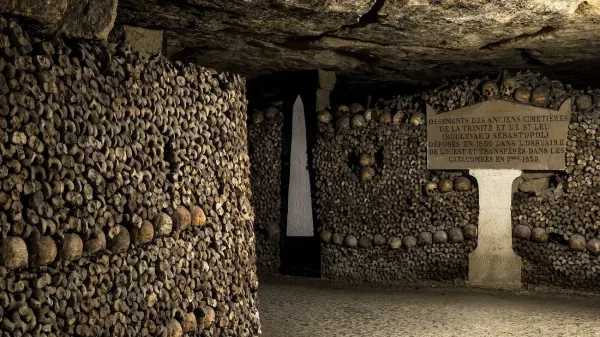
Image Source: Les catacombes de Paris
The infamous Catacombs rank among the most haunted places in Europe, hidden beneath the bustling streets of Paris. This eerie underground maze serves as the final resting place for over six million former Parisians. Their bones create haunting patterns that stretch for miles under the City of Light.
History of the Catacombs of Paris
These ancient limestone quarries date back to the 13th century. Paris faced a severe public health crisis during the late 18th century because its cemeteries became dangerously overcrowded and unsanitary. The city’s officials made a bold decision to move millions of remains to the abandoned quarries beneath the streets. Les Innocents became the first cemetery to be emptied in 1786. Gravediggers worked through the night to relocate bones to their new underground sanctuary. This massive project lasted twelve years until they emptied all designated cemeteries. The ossuary opened its doors to the public on July 1, 1809 and quickly became a dark attraction that drew prominent figures like Napoleon III and the Emperor of Austria.
Ghost Stories of the Catacombs
Countless unexplained encounters have built the Catacombs’ reputation for paranormal activity. People who visit often report whispers that echo through tunnels, ghostly figures that vanish into thin air and temperatures that suddenly plummet. The most bone-chilling tale comes from the 1990s. Cataphile explorers found an abandoned video camera with disturbing footage of a man who seemed to lose his mind in the tunnels – nobody knows what happened to him.
Local tales tell of walls that try to lure visitors deeper into the maze after midnight until they lose their way completely. Philibert Aspairt’s ghost stands out as the most famous spirit. This hospital doorkeeper entered the Catacombs in 1793 but got lost after his candle went out. People found his body eleven years later, identified only by his hospital keys. His spirit now roams the tunnels every November 3rd.
Visiting the Catacombs
The Ossuary of Denfert-Rochereau, the public section of the Catacombs, welcomes visitors daily from 10:00 AM to 5:00 PM. You should book tickets online in advance since they limit daily visitors. A chilling inscription greets visitors: “Arrête, c’est ici l’empire de la mort” (“Stop, this is the empire of death”).
The journey takes you down 130 steps into this underground city of the dead and you’ll climb 83 steps to exit. The tunnel network stretches roughly 320 kilometers under Paris, though visitors can only access a small section. The site lacks elevator access and features narrow passages with high humidity. People with mobility issues or claustrophobia should think twice before visiting.
Houska Castle, Czech Republic

Image Source: McGee’s Ghost Tours
The 13th-century Houska Castle stands deep in the Czech forests, built over what locals believe is an actual gateway to hell. Unlike other haunted places in Europe, this castle’s builders didn’t focus on keeping threats out—they wanted to trap something inside.
History of Houska Castle
King Ottokar II of Bohemia ordered the castle’s construction between 1270 and 1280. Today it remains one of the Czech Republic’s best-preserved early Gothic structures. Historians have puzzled over the castle’s strange location for centuries, as it sits nowhere near water sources, trade routes or any strategic points. The castle served as an administrative hub to manage royal estates instead of a residence.
The castle changed hands many times through history. The building went through Renaissance-style changes in the late 16th century before deteriorating in the 18th century. A major renovation happened in 1823 and Princess Hohenlohe bought the property in 1897. Škoda’s President, Josef Šimonek, bought it in 1924, and his family still owns it today.
Ghost Stories of Houska Castle
Local legends tell of a bottomless pit at the site where winged monsters, demons and half-human creatures emerged to terrorize nearby villages. The authorities offered freedom to condemned prisoners if they agreed to be lowered into the hole. The first volunteer came back with white hair, aged decades in minutes and died insane shortly after.
The castle’s dark history grew darker when German SS forces occupied it from 1939 to 1945. Villagers reported strange lights coming from the fortress at night, which led to rumors about Nazi occult experiments. Any documents about these activities disappeared completely.
Visiting Houska Castle
Houska Castle opened its doors to visitors in 1999 and sits just 47 kilometers north of Prague. Guests often hear scratching sounds under the chapel floor and experience unexplained events. Ghost hunters flock to the castle, and special tours highlight its supernatural history.
Brave souls who want to explore one of the most haunted places in Europe can join guided tours featuring the chapel with its eerie demon-filled frescoes. The area beneath the chapel remains off-limits—authorities cite possible unexploded WWII ordnance as the reason.
Loftus Hall, Ireland

Image Source: Tripadvisor
Loftus Hall, Ireland’s most haunted house, sits on the windswept Hook Peninsula in County Wexford. This imposing mansion draws paranormal enthusiasts globally with its dark corridors and eerie atmosphere. Centuries of frightening tales still chill visitors who walk through its halls.
History of Loftus Hall
A Norman knight, Raymond le Gros, built the first castle on this site in 1170. The Black Death of 1350 led to its replacement with a structure that became Redmond Hall. The property’s fate changed during Oliver Cromwell’s conquest of Ireland in the 1650s. The wealthy English Loftus family seized it from the Redmonds and renamed it Loftus Hall.
John Henry Wellington Graham Loftus, the 4th Marquess of Ely, led major renovations from 1872 to 1884. Workers made a chilling discovery during these changes – infant skeletal remains lay hidden inside the Tapestry Room’s walls. The mansion’s purpose shifted over time. It served as a private home, then became a convent run by the Sisters of Providence (1917-1983) and briefly operated as a hotel in the 1980s. The Quigley family bought the property for $800,000 in 2011 and ran it as a tourist spot until 2020.
Ghost Stories of Loftus Hall
The hall’s most chilling tale emerged in 1775 when a mysterious stranger arrived seeking shelter from a storm. The Tottenham family welcomed this visitor, who showed special interest in young Anne Tottenham. A card game turned terrifying when Anne bent to pick up something she dropped. She found her mysterious guest had cloven hooves instead of feet.
The stranger reportedly turned into a ball of fire and burst through the ceiling, leaving sulfur’s distinct smell. The whole ordeal broke Anne’s spirit. She spent her remaining days locked in the Tapestry Room, dying in a seated position that her body kept even after death.
The property buzzes with other supernatural activities. Visitors report unexplained noises, sudden cold spots, furniture that moves by itself and ghostly appearances throughout the building. People believe Anne’s spirit still roams the halls, sometimes appearing in visitors’ photos.
Visiting Loftus Hall
Guests once enjoyed 45-minute interactive tours of the ground floor where guides shared the property’s dark past. The hall closed its doors to visitors in 2020 and changed hands in 2021. Renovation work started in 2022, and the property remains on the market as of 2025.
This historic mansion ranks among most haunted places in Europe. Former owner Aidan Quigley captured its essence perfectly: “There is always a feeling that you are not alone in Loftus Hall”.
Jack the Ripper Tour, London
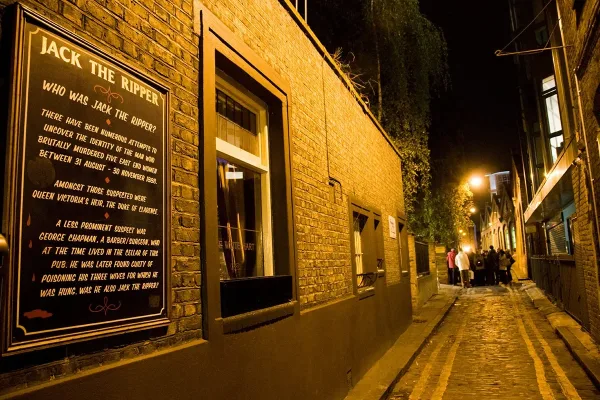
Image Source: London Top Sights Tours
The Jack the Ripper Tour stands out as one of the spookiest haunted places in Europe. You’ll walk through the dark streets of Victorian London’s East End. The experience takes you back to the fall of 1888, when a mysterious killer spread terror through the Whitechapel district.
History of Jack the Ripper
The infamous Ripper murders shook Whitechapel and Spitalfields in autumn 1888. Five victims lost their lives: Mary Ann “Polly” Nichols (August 31), Annie Chapman (September 8), Elizabeth Stride and Catherine Eddowes (both September 30), and Mary Jane Kelly (November 9). The killer’s identity remains one of history’s biggest mysteries, despite the police’s best efforts. Local legends tell that the Ripper jumped to his death from Westminster Bridge on New Year’s Eve 1888. His ghost now repeats this fatal leap every year.
Ghost Stories on the Tour
Each murder site has its own supernatural tales. Witnesses say they’ve seen Catherine Eddowes’s mutilated form in Miter Square’s gutter on her death anniversary. The corner sometimes glows red. Annie Chapman’s spirit seems to haunt both Hanbury Street and the Ten Bells pub. People feel cold spots and strange wind gusts. The locals used to hear Elizabeth Stride’s screams echo through Berner Street for months after her death.
What to Expect on the Tour
Tower Hill serves as the perfect meeting point. Here, guides explain how the rivalry between Scotland Yard and City of London Police hurt the investigation. The tour guides are experts – many have written books and are known Ripper scholars. They lead you through winding cobblestone alleys and share detailed stories of each murder. You’ll see original Victorian photos and can compare them to today’s streets. Some tours, like “Ripper-Vision,” use projectors to show images right where these terrible events happened.
These two-hour walking tours give you a bone-chilling look into one of London’s darkest periods. The experience makes it a must-see spot for anyone interested in famous haunted places in Europe.
Fontanelle Cemetery, Naples

Image Source: Cimitero delle Fontanelle Napoli – Cimitero delle Fontanelle
The Fontanelle Cemetery lies hidden in Naples‘ Materdei district. This massive tufo quarry holds about 40,000 human remains and stands as one of the most unusual haunted places in Europe. The cemetery showcases a remarkable bond between the living and the dead.
History of Fontanelle Cemetery
The cemetery’s dark story began in the 16th century. Spanish authorities started moving remains to this abandoned quarry because church burial grounds were overcrowded. Naples’ churches couldn’t handle more bodies as people wanted burial spots in their local worship places. Undertakers would dig up old remains to make space for new ones. They moved bones to the cave secretly at night.
A devastating plague hit Naples in 1656. The disease killed between 150,000 to 300,000 people. The city’s population dropped from 400,000 to roughly 150,000. Thousands of unnamed plague victims ended up in the cave during this terrible time. The site became the city’s official cemetery for the poor after another cholera outbreak in 1837.
Father Gaetano Barbati took charge in 1872. He started a big organization project and divided the scattered remains into three areas: the Nave of Priests, the Nave of the Plague Victims and the Nave of the “Pezzentielli” (the poorest citizens).
Ghost Stories of Fontanelle Cemetery
The sort of thing I love about Fontanelle is the “anime pezzentelle” (abandoned souls) cult that grew naturally in Naples. Catholic beliefs say souls without proper burial rites stay stuck in purgatory. Local people started to “adopt” specific skulls. They cleaned them, named them and placed them in decorated wooden boxes while praying for their peace.
“The Captain” stands as the most famous skull. A chilling tale tells of a young man who disrespected the cemetery. The Captain’s angry spirit killed him later at his wedding. People also talk about Concetta’s skull that stays mysteriously shiny while others collect dust. Many believe it “sweats” from suffering in purgatory.
Visiting Fontanelle Cemetery
The cemetery opened its doors again in 2010 after restoration work and peaceful protests by locals. This 30,000 square meter bone vault draws visitors who want to see its unique place in European burial culture. Cardinal Corrado Ursi had closed it in 1969. He thought the cult had turned into fetishism that went against Catholic teachings.
The Real Mary King’s Close, Edinburgh

Image Source: The Real Mary King’s Close
The Real Mary King’s Close sits beneath Edinburgh’s Royal Mile. This perfectly preserved 17th-century street remained sealed off from the world for hundreds of years. People now think it’s one of the most haunted places in Europe. Visitors can explore this underground time capsule and learn about Edinburgh’s dark past, filled with stories of plague, murder, and restless spirits.
History of Mary King’s Close
The street got its name from Mary King, a successful businesswoman who lived there in the 1630s. Life buzzed through this narrow street as merchants and craftsmen ran their businesses. Families made their homes in cramped apartments above the shops. The close played a vital role in Edinburgh’s busy commercial heart throughout the 17th century.
Everything changed when a devastating plague hit the city in 1645. Many believe the residents were sealed inside and left to die, but that’s just a myth. People lived in the close until the early 18th century. The construction of the Royal Exchange (now the City Chambers) changed everything. Workers demolished some parts while using others as foundations. This process preserved a piece of Edinburgh’s history underground.
Ghost Stories of Mary King’s Close
The close has its share of supernatural residents. Annie’s story stands out among them all. This young girl’s spirit, who died during the plague, makes her presence known in a room full of toys left by visitors. Guests often feel cold spots without explanation. They hear footsteps on empty stairs and feel like someone watches them.
Something interesting happened in 2001. Japanese psychic Aiko Gibo sensed a spirit in Annie’s Room. She said the spirit belonged to a sick girl abandoned by her family who still searches for her doll. Mr. Chesney’s ghost also roams these halls. This former resident still seems upset about losing his property.
Visiting Mary King’s Close
You can only see this underground attraction through guided tours that last about an hour. The close sits at 2 Warriston’s Close on the Royal Mile. Tours start daily from 10:00 AM. Book ahead if you want to explore this famous haunted place in Europe, especially during summer. Remember to watch your step – the place has narrow stairs and uneven floors.
Burg Berstein, Austria

Image Source: Tripadvisor
Burg Bernstein, an 800-year-old fortress, sits at Austria’s easternmost edge where the Alps melt into Hungarian plains. This haunted castle blends history, ghost stories and luxury stays in the “Bucklige Welt” (hilly world). Brave travelers can spend the night here among spirits that still walk its halls.
History of Burg Bernstein
The castle rose in the 12th century as a guardian of the Holy Roman Empire’s borderlands against eastern invaders. Known first by its Hungarian name Borostyánkö, the castle stayed under Hungarian control until the Treaty of Trianon moved it to Austria after World War I. The castle changed hands many times through history. The wealthy Batthyany family left their mark by creating the magnificent Rittersaal (Knights’ Hall) with its stunning equestrian reliefs.
Eduard Almásy bought the castle in 1892, and his family owns it to this day. The castle’s most famous resident was László Almásy, a desert explorer and pilot who inspired Michael Ondaatje’s novel “The English Patient” and the Oscar-winning film with Ralph Fiennes.
Ghost Stories of Burg Bernstein
The castle ranks among the most haunted places in Europe with two famous spirits. The White Lady, known as Caterina Frescobaldi, met a tragic end. Her husband buried her alive for adultery in the 15th century. Guests staying in the Tantalouis or Vinzenz rooms tell stories of her icy touch and white ghostly form.
Red Ivan brings even more terror to the castle. Also called Raging Wolf or Schlosshansl, this brutal 13th-century knight killed a bishop by beating him to death. People say this evil spirit appears with flaming red hair and a sinister laugh, often showing up next to children’s beds.
Visiting Burg Bernstein
The castle now serves as a charming family-run hotel with nine restored rooms. Each space captures medieval life without modern distractions – no TV, WiFi or room keys. Candlelight bathes the Knights’ Hall dining room in a warm glow.
Guided tours run from May 1st through October 5th, Wednesday to Sunday at 11:00 AM. Adult tickets cost €20.50. Tours take you through the Renaissance hall’s impressive stucco work, the chapel, defensive walls, dungeon and one of the region’s oldest horse chestnut trees. A glass of Almásy sparkling wine waits at the tour’s end.
Sabathowka, Poland

Image Source: Lamus Dworski – WordPress.com
The mystical Świętokrzyskie Mountains of Poland hide Sabathowka, known locally as Łysa Góra. This haunting peak carries ancient witchcraft lore and draws visitors seeking unique supernatural experiences among haunted places in Europe.
History of Sabathowka
Łysa Góra stands 594 meters above sea level as part of the Łysogóry range near Nowa Słupia. Historical records show this site served as a sacred ground for pagan Slavic cults before Christianity spread through Poland. Archeological evidence points to centuries of continuous ritual use at this location. The Catholic Church tried to suppress these pagan customs because they threatened Christianity’s position in the region. The mountain’s supernatural reputation lived on through generations, making it one of the most famous haunted places in Europe.
Witchcraft Legends of Sabathowka
Local legends tell stories of Łysa Góra as the primary meeting spot for witches and their Sabbaths. These witches would light ceremonial bonfires and create mysterious potions at the mountain’s peak. The most fascinating tales describe how witches mounted their broomsticks and glided down from the mountain as roosters crowed at midnight, carried away by gentle evening breezes.
Demonology scholars disagree about the timing of these witches’ Sabbaths. Some historical accounts point to Saturday-only gatherings, which explains the name “Sabbath.” Others suggest these meetings happened three times each week. Modern historians believe these Sabbaths were actually celebrations of pagan holidays like Kupala Night. These traditional June fire rituals took place at Łysa Góra and other locations such as Babia Góra in the Beskids.
Visiting Sabathowka
Modern travelers can step into this magical realm where witchcraft legends thrive. Sabathowka stands apart from other haunted places to visit in Europe that focus on ghosts or torture. The site offers glimpses of ancient pagan traditions and witchcraft. Visitors eager to connect with Poland’s mystical past can create their own magical moments surrounded by stunning mountain views where centuries-old folklore continues to captivate guests.
Crumlin Road Gaol, Belfast

Image Source: City Tours Belfast
Crumlin Road Gaol, built in 1845 as HMP Belfast and known locally as “the Crum,” ranks among Northern Ireland’s most haunted places. This prison’s dark history continues to captivate paranormal enthusiasts across Europe.
History of Crumlin Road Gaol
The imposing Victorian-era prison was designed to hold up to 550 prisoners but ended up housing around 25,000 people during its 150-year operation. The cells held men, women, and children, along with several notable political figures such as Éamon de Valera, Martin McGuinness and Bobby Sands. The prison added an execution chamber in 1901, where seventeen prisoners met their fate before its last use in 1961. The building sat abandoned after closing in 1996 until 2010, when restoration work turned it into a museum and tourist attraction.
Ghost Stories of Crumlin Road Gaol
Visitors and staff have reported numerous unexplained phenomena that built the prison’s paranormal reputation:
- Empty corridors echo with disembodied voices and footsteps
- Doors slam shut and objects move on their own
- A ghostly prison warden still makes his rounds in B-Wing
- Two spectral children—a boy and a girl named Isabelle—reveal themselves to visitors
B-Wing’s padded cell houses a dark entity known to physically interact with visitors through pushing or touching. A mysterious “gray figure” haunts the underground tunnel connecting to the Courthouse across the street, with multiple sightings by former staff members. Participants in a 2016 Halloween investigation witnessed a heavy steel door close by itself and captured unusual sounds on their recording equipment.
Visiting Crumlin Road Gaol
Daily guided tours take visitors through the facility’s paranormal hotspots. Halloween season brings special paranormal tours that share the chilling stories of different areas. Ghost hunting enthusiasts can join four-hour paranormal investigations from 10:00 PM to 2:00 AM and use specialized equipment in the gaol’s most active areas. These adult-only investigations require participants to wear warm clothing and flat shoes.
Sighisoara, Romania

Image Source: Reflections Enroute
The medieval citadel of Sighisoara stands proudly in Transylvania’s heart. This UNESCO World Heritage Site blends centuries-old vampire legends with dark history to create one of the most haunted places in Europe.
History of Sighisoara
Saxon settlers founded this remarkable medieval town in the 12th century. Sighisoara showcases a unique blend of Latin Western and Byzantine Eastern influences. UNESCO recognized its heritage status because of its authentic Transylvanian Saxon architecture and culture that spans 800 years. The town grew into a bustling hub for craftsmen and artisans. More than 30 professional guilds once called this place home. The vibrant colors and cobblestone streets take you back to times when people believed spirits roamed freely.
Dracula Legends in Sighisoara
Sighisoara’s charm goes beyond its beautiful architecture – it’s the birthplace of Vlad Tepes III in 1431. He was born in a modest yellow building now called Casa Vlad Dracul. This notorious ruler of Wallachia became famous for his brutal punishments, especially impalement. His enemies feared him so much that stories claim he drank his victims’ blood. His family name “Dracul” means “dragon” or “devil” in Romanian, making “Dracula” mean “son of Dracul.” Historians still debate whether Vlad directly inspired Bram Stoker’s fictional vampire. Some believe Irish mythology played a bigger role in Stoker’s creation.
Visiting Sighisoara
Travelers looking for haunted places to visit in Europe love Sighisoara’s atmosphere after sunset. The mighty Clock Tower from the 13th century looms overhead, once serving as both a prison and torture device museum. The Covered Stairs, a wooden staircase with 176 steps leading to the Church on the Hill, draws visitors with reports of supernatural activity. The Dracula Investigation exhibition brings Vlad’s dark history to life through shadowplay and unique storytelling. A nighttime walk through the citadel feels like stepping into a horror movie – it’s the perfect way to experience this medieval Transylvanian treasure.
Comparison Table
| Location Name | Country | Type of Site | Historical Period | Main Ghost/Spirit Stories | Visitor Access | Notable Features |
|---|---|---|---|---|---|---|
| Bran Castle | Romania | Castle/Fortress | Built 1211 | Queen Marie’s spirit, White Lady, wandering Monk | Daily 9AM-6PM (€16.50) | Vlad the Impaler’s legacy, hydroelectric power, English Park |
| Leap Castle | Ireland | Castle | Built 1250 AD | The Elemental, Red Lady, Emily & Charlotte’s spirits | Private tours by appointment (€8) | Deadly oubliette with wooden spikes, Bloody Chapel |
| Highgate Cemetery | UK | Cemetery | Est. 1839 | Highgate Vampire, Gray Lady, mysterious cyclist | Daily 10AM-5PM (£4.50-£14) | 170,000 souls in 53,000 graves, Egyptian Avenue |
| Catacombs of Paris | France | Underground ossuary | 13th century | Philibert Aspairt’s wandering spirit, whispering walls | Daily 10AM-5PM | Resting place of 6 million remains, 320km of tunnels |
| Houska Castle | Czech Republic | Castle | Built 1270-1280 | Winged creatures, demonic entities | Open since 1999 | Gateway to hell beneath, Nazi occult experiments |
| Loftus Hall | Ireland | Mansion | Built 1170 | Anne Tottenham’s restless spirit, Devil’s appearance | Currently closed (as of 2025) | Hidden infant remains, former religious convent |
| Jack the Ripper Tour | UK | Walking tour | 1888 events | Catherine Eddowes’ presence, Elizabeth Stride’s echoes | Regular evening tours | Victorian-era photographs, Ripper-Vision technology |
| Fontanelle Cemetery | Italy | Ossuary | 16th century | Anime pezzentelle (adopted souls), The Captain’s spirit | Reopened in 2010 | 40,000 skeletal remains, skull adoption rituals |
| Mary King’s Close | UK | Underground street | 17th century | Annie’s presence, Mr. Chesney’s shadow | Guided tours only | Hidden street beneath Royal Mile |
| Burg Bernstein | Austria | Castle | 12th century | White Lady (Caterina Frescobaldi), Red Ivan’s spirit | Tours Wed-Sun (€20.50) | Knights’ Hall by candlelight, traditional setting |
| Sabathowka | Poland | Mountain peak | Ancient times | Witch gatherings, ancient rituals | Open to public | 594m high, traditional witch sabbath site |
| Crumlin Road Gaol | UK | Prison | Built 1845 | Warden’s ghost, two child spirits, gray apparition | Daily tours, ghost hunts | 17 execution sites, courthouse tunnel |
| Sighisoara | Romania | Medieval citadel | 12th century | Dracula’s legacy | Open to public | Vlad Tepes’ birth house, Clock Tower |
Appreciate the Most Haunted Places in Europe
Europe stands as a wealth of haunted destinations that tell chilling stories through supernatural phenomena. These locations have gathered tales of restless spirits, tragic deaths, and unexplained events over centuries. Visitors today remain fascinated by these stories. Bran Castle’s connection to Vlad the Impaler and the bone-lined walls of Paris Catacombs with six million souls make these sites more than tourist spots. They act as windows to Europe’s deep bond with mortality, tragedy and the supernatural.
These 13 haunted locations draw people in because they are easy to visit. You can join guided tours of Mary King’s Close or take part in paranormal investigations at Crumlin Road Gaol. Highgate Cemetery welcomes independent exploration. Modern visitors can walk the same halls where ghosts still roam and feel the eerie atmosphere that created countless ghost stories.
The supernatural landscape of Europe rewards brave travelers. Ancient castles built over supposed gateways to hell stand next to underground ossuaries. Millions of human remains create haunting displays in these places. These spots blend historical value with spine-tingling atmosphere, making them perfect spots for paranormal enthusiasts.
Your next European adventure should include these 13 haunted destinations. All but one of these locations remain open throughout the year, though Loftus Hall stays closed to visitors. Special events pop up around Halloween. Walking through these haunted corridors while listening to tales of their ghostly residents will leave lasting memories. These experiences might even follow you into your dreams.
FAQs
Q1. What is considered the most haunted location in Europe?
While many places claim this title, Bran Castle in Romania is often cited as one of Europe’s most haunted locations. Associated with Vlad the Impaler and Dracula legends, it’s said to be home to several ghosts, including Queen Marie’s spirit.
Q2. Are there any haunted places in Italy that tourists can visit?
Yes, one of the most notorious haunted places in Italy is Fontanelle Cemetery in Naples. This vast ossuary houses approximately 40,000 human remains and is known for its unique “anime pezzentelle” cult, where locals would adopt and care for specific skulls.
Q3. Which European country is known for having the most ghost sightings?
Scotland is often considered to have the highest concentration of reported ghost sightings in Europe. Its abundance of ancient castles, historic buildings and rich folklore contribute to its reputation as a hub for paranormal activity.
Q4. Can visitors participate in ghost hunts or paranormal investigations at these haunted locations?
Yes, many haunted locations offer special ghost tours or paranormal investigations. For example, Crumlin Road Gaol in Belfast conducts four-hour paranormal investigations from 10:00 PM to 2:00 AM, allowing visitors to use ghost-hunting equipment in the prison’s most active areas.
Q5. Are there any haunted places in Europe associated with witchcraft?
Sabathowka (Łysa Góra) in Poland is renowned for its association with witchcraft. According to local legends, it served as a gathering place for witches who conducted their Sabbaths at the mountain’s summit, brewing potions and performing rituals.














Leave A Comment