

The Great Wall of China spans 13,170 miles across the terrain, making it the world’s longest wall. These magnificent structures will change as time passes.
The iconic Eiffel Tower draws millions of visitors each summer, while the Taj Mahal stands as a testament to a 20-year construction feat. Famous landmarks worldwide now face ongoing threats from climate change, excessive tourism and natural wear. The Great Barrier Reef, the planet’s largest coral system, battles serious ecological challenges. Many major landmarks we take for granted today could look substantially different by 2025.
You might dream of exploring the ancient Colosseum that once held 50,000 spectators or standing at Machu Picchu’s breathtaking height of 8,000 feet. This piece emphasizes 25 remarkable landmarks that deserve a spot on your travel bucket list. These iconic sites showcase centuries of human achievement and nature’s wonders – but time runs short to experience them in their present form.
Eiffel Tower, Paris

The Eiffel Tower stands proudly at 330 meters (1,083 ft) and has become Paris’s ultimate symbol since its debut at the 1889 World’s Fair. This wrought-iron masterpiece draws nearly 7 million visitors each year, making it the world’s most visited paid monument.
Landmark Overview
The “Iron Lady” consists of 18,038 iron pieces joined by 2.5 million rivets. She weighs 10,100 tons yet looks as delicate as lace. Visitors can explore three levels using elevators or stairs. The first and second floors house restaurants, while observation decks let you take in breathtaking views of Paris.
Historical Significance of Eiffel Tower
The tower celebrated the French Revolution’s centennial and took just 2 years, 2 months and 5 days to complete. Artists called it “useless and monstrous” and the tower was meant to stay up for only 20 years. Gustave Eiffel saved his creation by proving its scientific value through radio transmissions and weather experiments.
Best Time to Visit Eiffel Tower
You’ll find smaller crowds:
- After 5 PM or in the evening
- On weekdays (especially Tuesday through Thursday)
- Outside peak season (late June to early September)
- Away from school vacation periods (February 8-March 9, April 5-May 4, July 5-August 31, 2025)
Travel Tips for Eiffel Tower
Book your tickets online 60 days ahead to avoid long entrance lines. Set aside 3-4 hours for your visit, particularly during summer. Walking down the stairs from the second level beats waiting for elevators and gives you amazing views of the tower’s structure.
Eiffel Tower in 2025: What Might Change
The first-floor terrace will become a “suspended garden” from May 28 to September 15, 2025. The top floor will close for renovation from January 6-February 7. A commission now studies the possibility of adding women scientists’ names to the tower.
Why Eiffel Tower Is a Must-See
Magic happens every hour when the tower sparkles for five minutes. Food lovers can enjoy the Michelin-starred Le Jules Verne restaurant. This iconic landmark showcases engineering excellence that changed construction techniques forever, blending technical achievement with timeless beauty.
Taj Mahal, India

The Taj Mahal stands as evidence of eternal love, rising gracefully from the Yamuna River’s banks in Agra, India. This magnificent structure attracts over 7 million visitors annually.
Landmark Overview
The ivory-white marble mausoleum serves as the centerpiece of a 17-hectare complex. Beautiful formal gardens, a mosque, and a guest house surround it, enclosed by crenelated walls. UNESCO designated it as a World Heritage Site in 1983, recognizing it as “the jewel of Islamic art in India and one of the universally admired masterpieces of the world’s heritage”.
Historical Significance of Taj Mahal
The fifth Mughal emperor Shah Jahan commissioned this monument in 1631 to honor his beloved wife Mumtaz Mahal, who died during childbirth. The construction brought together 20,000 artisans from India, Persia, and beyond. They took 22 years to complete the project, which cost approximately 32 million rupees (equivalent to 52.8 billion rupees or $827 million in 2015). The monument symbolizes undying love and showcases the artistic achievements of the wealthy Mughal Empire.
Best Time to Visit Taj Mahal
The most pleasant weather occurs from October to March (15-25°C), offering clear skies perfect for photography. Sunrise creates the most magical experience as the marble’s colors change with the morning light. The monument welcomes visitors daily except Fridays, with weekdays typically seeing smaller crowds than weekends.
Travel Tips for Taj Mahal
Visitors should book tickets online before their trip—1,100 rupees ($15) for foreigners and 50 rupees for Indian nationals. The East Gate usually has shorter queues. Here’s what visitors need to know:
- Come at least one hour before sunrise to avoid crowds
- Bring minimal belongings to speed up security checks
- Use provided covers or take off shoes before entering the mausoleum
Taj Mahal in 2025: What Might Change
Authorities have created a pollution-free zone around the monument due to environmental concerns. The new visitor management systems now include fines for stays longer than three hours. Teams continue their work to protect the marble façade from air pollution.
Why Taj Mahal Is a Must-See
The Taj Mahal showcases architectural perfection through its symmetrical design, reflecting pool and intricate inlaid semiprecious stones that create an almost otherworldly beauty. Visitors experience something photos cannot capture as the monument’s colors change throughout the day.
Great Wall of China

The Great Wall snakes across northern China like a massive stone dragon. This incredible structure stretches 21,196.18 kilometers (13,170.70 miles) in total length, making it the largest defense project humans have ever built.
Landmark Overview
The Great Wall isn’t one continuous structure. It’s a network of fortifications built along China’s historical northern borders. The Ming dynasty (1368-1644) built the most extensive and best-preserved sections. These parts run about 8,850 kilometers (5,500 miles) from Liaodong in the east to Gansu province in the west. The wall has constructed barriers covering 70 percent of its length, while natural barriers like rivers and mountain ridges make up the rest.
Historical Significance of Great Wall
The wall’s earliest sections date back to the 7th century BCE, built to guard China against northern nomadic tribes. Around 221 BCE, Emperor Qin Shi Huang connected the existing defensive walls. The wall did much more than just defend – it controlled trade along the Silk Road and helped cultural exchange between farming and nomadic civilizations. It stands today as a powerful symbol of Chinese unity and resilience.
Best Time to Visit Great Wall
Spring (April-May) and autumn (September-November) give visitors the best weather conditions. These seasons bring temperatures between 10-25°C (50-77°F) and clearer skies. Autumn rewards visitors with stunning views of mountains covered in red, golden and brown foliage. Crowds surge during Chinese holidays, especially May 1-3 and October 1-7, so plan your visit outside these dates.
Travel Tips for Great Wall
Here are some quieter sections you might enjoy:
- Jiankou: Photographers love its dramatic scenery and challenging hiking trails
- Simatai: The only place where you can visit at night (17:30-21:00)
- Jinshanling: Perfect for peaceful hikes away from tourist crowds
Great Wall in 2025: What Might Change
The Ming Great Wall has lost about 22% of its structure. Sandstorm erosion threatens to destroy around 60 kilometers in Gansu province within the next 20 years. Many watchtowers, especially in western sections built from mud instead of brick and stone, continue to crumble.
Why Great Wall Is a Must-See
UNESCO named it a World Heritage Site in 1987, and people voted it one of the New Seven Wonders of the World in 2007. This architectural marvel stands as a testament to over 2,000 years of Chinese history, showing the nation’s ingenuity and cultural identity.
More Argentina landmarks.
Machu Picchu, Peru

Machu Picchu, one of the world’s most extraordinary archeological sites, sits majestically in the Andes Mountains at 7,970 feet (2,430 meters). The site attracts approximately 1.5 million visitors annually.
Landmark Overview
The 15th-century Inca citadel rests between two sharp peaks—Machu Picchu (“Old Peak”) and Huayna Picchu (“New Peak”). This impressive complex stretches across 5 miles and features more than 3,000 stone steps connecting its various levels. The site’s architecture showcases dozens of stepped agricultural terraces, an aqueduct system, plazas, residential areas and sacred temples built with masterful stonework.
Historical Significance of Machu Picchu
Emperor Pachacuti’s royal estate came to life around 1450 during the Inca Empire’s golden age. The site lay abandoned a century later, possibly during the Spanish conquest, though the conquistadors never discovered this mountaintop citadel. Hiram Bingham’s famous 1911 expedition revealed this hidden treasure that teaches us about pre-Columbian engineering excellence.
Best Time to Visit Machu Picchu
The best visiting conditions are:
- April and October bring fewer crowds and pleasant weather
- Clear skies and ideal photography conditions mark the dry season (April-October)
- Crowds thin out early morning (first busses at 5:30 AM) or late afternoon (after 2:00 PM)
Travel Tips for Machu Picchu
Tickets sell out quickly, so book three months ahead due to strict daily visitor limits. Visitors should spend 2-3 days in Cusco to adapt to the altitude. A certified guide will become mandatory for all visitors in 2025. Remember to pack a reusable water bottle since plastic bottles aren’t allowed inside.
Machu Picchu in 2025: What Might Change
The site will enforce stricter entry regulations by 2025, limiting daily visitors to 4,500 during low season and 5,600 during high season. Visitors must follow designated circuits with four-hour timed entry slots. A new 22-mile paved highway along the Urubamba River will substantially reduce travel times.
Why Machu Picchu Is a Must-See
UNESCO named Machu Picchu a World Heritage Site in 1983, and people voted it one of the New Seven Wonders of the World in 2007. The site stands as a testament to Inca engineering brilliance. Their sophisticated urban planning shines through excellent soil management, hydrological engineering and architectural precision—achievements made without wheels, written language or metal tools.
Statue of Liberty, USA

The Statue of Liberty stands as a mighty symbol of freedom in New York Harbor. Her iconic torch rises 305 feet above the harbor. This magnificent copper statue has become one of America’s most cherished symbols since 1886.
Landmark Overview
Lady Liberty weighs 450,000 pounds and rests on a star-shaped granite pedestal within Fort Wood’s walls. The fort’s eleven-pointed structure dates back to 1808-1811. The statue’s copper skin has naturally turned from reddish-brown to its signature green color through exposure to air, water and pollution.
Historical Significance of Statue of Liberty
French sculptor Auguste Bartholdi designed this remarkable gift from France to mark America’s 100 years of independence. The statue also celebrated freedom from slavery after the Civil War. Workers started building it in France in 1875 and shipped the pieces to America in 1885 for assembly. President Grover Cleveland led the dedication ceremony on October 28, 1886.
Best Time to Visit Statue of Liberty
The most pleasant times to visit are April-June and September-November when crowds are smaller. Tuesday through Thursday see fewer visitors than weekends. The best experience comes from catching the first morning ferry (around 8:30 AM in summer) or showing up after 2:00 PM.
Travel Tips for Statue of Liberty
Here’s what you need to know:
- Book tickets through Statue City Cruises, the only official vendor, at least 60 days ahead
- Show up 30 minutes before your ferry departure for security checks
- Pick a meeting point when you arrive since cell service can be spotty
- An early start lets you see both Liberty and Ellis Islands in one day
Statue of Liberty in 2025: What Might Change
A major $27.5 million renovation project at the statue’s base will wrap up by late 2025. The work includes a new 50,000-square-foot terreplein walking surface, fixed exterior stairs and better waterproofing. Liberty Island stays open during construction, but visitors should expect some pathway closures and noise.
Why Statue of Liberty Is a Must-See
The statue represents a chance for millions seeking a better life. The Statue of Liberty Museum adds to the experience with historical exhibits and displays the original 1886 torch. Crown access gives visitors an exceptional view of New York Harbor, but you’ll need advance reservations.
Colosseum, Rome

Rome’s ancient center showcases the magnificent Colosseum, one of the world’s most iconic landmarks that welcomes approximately 14.7 million visitors annually.
Landmark Overview
The Flavian Amphitheater, its official name, stands as a masterpiece of stone and concrete spanning 620 by 513 feet (189 by 156 meters). This architectural marvel housed between 50,000-80,000 spectators through its clever network of 80 entrances. The stunning façade rises three stories high with arcades framed by columns in Doric, Ionic and Corinthian orders.
Historical Significance of Colosseum
Emperor Vespasian started construction between 70-72 CE and his son Titus completed it in 80 CE. The arena hosted gladiatorial contests, wild animal hunts, mock naval battles and public spectacles for centuries. The Colosseum’s massive scale and engineering excellence symbolized Rome’s dominance.
Best Time to Visit Colosseum
You’ll find the best times to visit are:
- Early morning (before 9 AM) when crowds are minimal
- Late afternoon (after 2 PM) offers better lighting
- October through March sees fewer visitors
- Weekdays work best, especially Tuesday to Thursday
Travel Tips for Colosseum
Book your tickets online at least three months ahead to skip long lines. Show up 15 minutes before your time slot. Wear comfortable shoes and carry water since you’ll do lots of walking. Bring your ID as tickets are nominative. Photographers should plan their visit during golden hour to capture dramatic shots.
Colosseum in 2025: What Might Change
The Jubilee Year 2025 will draw about 35 million Catholic visitors to Rome. Getting tickets will become very difficult. Construction projects near the Colosseum will continue, though they’re not related to the Jubilee. Tourist taxes will rise to €5-12 based on where you stay.
Why Colosseum Is a Must-See
This architectural masterpiece showcases ancient Rome’s engineering brilliance through its innovative concrete design. It still holds the title of world’s largest standing amphitheater after 2,000 years. The Colosseum gets more visitors and thus encourages more tourism revenue than any other Italian site—exceeding $63.30 million yearly, proving its lasting appeal among global landmarks.
More Mexico landmarks.
Sydney Opera House, Australia

The Sydney Opera House stands majestically white against Sydney Harbor’s blue waters. Its distinctive shell-shaped roof design has made it one of the world’s most photographed landmarks, attracting over 8.2 million visitors annually.
Landmark Overview
This architectural masterpiece showcases dramatic sail-shaped shells that serve as both roof and walls, crafted from precast concrete panels. The building’s complex houses multiple performance spaces including a 2,679-seat Concert Hall, the Joan Sutherland Theater with 1,507 seats and several smaller theaters for various performances. The structure sits proudly on Bennelong Point (formerly Tubowgule) and pays tribute to the land’s traditional Gadigal custodians.
Historical Significance of Sydney Opera House
Danish architect Jørn Utzon’s winning design from an international competition in 1957 sparked the beginning of construction in 1959. The project faced many challenges along the way. The building’s cost jumped from an original estimate of USD 7 million to USD 102 million. Queen Elizabeth II officially opened the completed structure in 1973. The Opera House earned its UNESCO World Heritage status in 2007.
Best Time to Visit Sydney Opera House
The best months to visit are October, November, late February and March with their sunny weather and low humidity. Crowds tend to be smaller on weekdays compared to weekends. Photographers will find the most favorable lighting conditions early morning or late afternoon.
Travel Tips for Sydney Opera House
- A 60-minute guided tour helps you understand the building’s history and design
- Book your performance or tour tickets ahead of time
- Security allows only handbags—large bags aren’t permitted
- You can reach the venue by walking from Sydney’s city center or taking a train, bus or ferry to Circular Quay
Sydney Opera House in 2025: What Might Change
A USD 150 million renovation enhanced the Concert Hall’s acoustics with new sound reflectors in 2022. Rising sea levels in Sydney pose a serious threat, with projections showing an increase of up to 56 centimeters by 2050. The venue leads in sustainability and now runs on 100% renewable electricity.
Why Sydney Opera House Is a Must-See
The Opera House combines architectural brilliance with world-class performances that range from opera and symphony to contemporary music. Its groundbreaking design changed modern architecture by using computer-aided design for complex shapes. Visitors can enjoy spectacular harbor views, dine at excellent restaurants, and see a professional recording studio inside the building.
Petra, Jordan

Petra, one of the New Seven Wonders of the World, lies carved into rose-red sandstone cliffs in southern Jordan. The site spans 102 square miles, and this is a big deal as it means that most visitors underestimate its true size.
Landmark Overview
The “Rose City” earned its nickname from its pink sandstone cliffs. Petra has many remarkable structures carved right into the rock faces. The famous Treasury (Al-Khazneh) stands as its centerpiece. The massive Monastery (Ad-Deir) sits atop 1,000 ancient steps. Visitors can explore the Royal Tombs, a 3,000-seat amphitheater and an advanced water system that helped people thrive in the desert.
Historical Significance of Petra
The Nabataean Kingdom made Petra its capital in the 4th century BCE. The city grew into a major trading hub connecting Arabia, Egypt and the Levant. At its peak, 20,000 people called Petra home. Romans took control in 106 AD and named it Arabia Petraea. The city declined after an earthquake hit in 363 AD and trade routes changed. Swiss explorer Johann Ludwig Burckhardt found it again in 1812.
Best Time to Visit Petra
The weather feels perfect during spring (March-May) and autumn (September-November) with temperatures between 20°C to 30°C (68°F to 86°F). Winter brings fewer tourists but cooler weather and some rain. Summer temperatures soar above 40°C (104°F), making exploration tough.
Travel Tips for Petra
- Get the Jordan Pass – it covers visa fees, Petra entry and access to 40 attractions
- Split your visit into several half-days instead of full days – people usually walk over 20,000 steps daily
- Bring water and start early (6-7am) to avoid crowds and heat
Petra in 2025: What Might Change
Regional conflicts have caused tourism numbers to drop, though Jordan stays safe. Visitors in 2025 will likely see Petra with fewer crowds than before the pandemic.
Why Petra Is a Must-See
The Treasury’s facade just starts the adventure. Petra’s size lets you spend days exploring canyons, tombs and temples. The site shows how human creativity conquered harsh desert conditions through one of history’s most advanced water engineering systems.
Christ the Redeemer, Brazil

Christ the Redeemer stands majestically on Corcovado Mountain in Rio de Janeiro. This iconic statue has become Brazil’s most recognizable symbol that represents Christian faith and the Brazilian people’s welcoming spirit.
Landmark Overview
The massive Art Deco statue of Jesus Christ reaches 30 meters (98 feet) high on an 8-meter (26 feet) pedestal. Its arms stretch an impressive 28 meters (92 feet) wide. The statue’s builders used reinforced concrete and covered it with thousands of triangular soapstone tiles. The structure weighs 635 metric tons. Visitors can see panoramic views of Rio de Janeiro from the statue’s location at the peak of 700-meter (2,300 ft) Corcovado mountain in Tijuca National Park.
Historical Significance of Christ the Redeemer
Princess Isabel first proposed the statue in 1888. The construction started in 1922 as part of Brazil’s independence centennial celebration. French-Polish sculptor Paul Landowski created the design while Brazilian engineer Heitor da Silva Costa led the construction with French engineer Albert Caquot. Romanian sculptor Gheorghe Leonida crafted the face. The original design showed Christ holding a globe and cross, but they changed it to the open-armed figure we see today. The construction lasted nine years (1922-1931). Brazilian women helped attach the soapstone tiles by hand.
Best Time to Visit Christ the Redeemer
You’ll find smaller crowds on weekdays, especially Tuesday through Thursday. The first tram at 7:20 AM gives you the best chance to see the monument with fewer people. The late afternoon light works great for photos. The weather tends to be better from May through September.
Travel Tips for Christ the Redeemer
You can reach the statue four different ways:
- Corcovado Train: A scenic 20-minute ride through Tijuca Forest
- Shuttle Vans: Regular service from Rio’s main spots
- Hiking: A 2-3 hour trail through Tijuca Forest (bring a companion)
- Private Tours: Skip the lines and get extra benefits
Christ the Redeemer in 2025: What Might Change
Experts predict visitor numbers will grow by 20% in 2025. A tourist death in March 2025 from lack of medical services might lead to management changes. The Archdiocese of Rio de Janeiro or city municipality could take over. Safety measures now include on-site ambulances. New visitor management systems could help handle the growing tourism.
Why Christ the Redeemer Is a Must-See
This landmark earned its place among the New Seven Wonders of the World in 2007. You’ll get amazing views of Rio from what many call the world’s first open-air sanctuary. The statue has five maintenance holes that lead to its fascinating interior. A small chapel sits beneath the statue, dedicated to Brazil’s patron saint, adding spiritual significance to your visit.
Angkor Wat, Cambodia

Angkor Wat stands as the world’s largest religious monument, covering 400 square kilometers in Cambodia’s northern Siem Reap province. This magnificent temple complex draws 2.6 million visitors each year.
Landmark Overview
A massive moat measuring 1,300 by 1,500 meters surrounds Angkor Wat. The temple’s five lotus-like towers showcase Khmer architecture at its finest, symbolizing Mount Meru – the sacred mountain in Hindu mythology. One perfect square kilometer houses the main temple. Three rectangular galleries nest inside each other and rise in terraces. The archeological park’s grounds contain temples, hydraulic structures and ancient roads.
Historical Significance of Angkor Wat
Khmer King Suryavarman II built this Hindu temple in the 12th century to honor Vishnu. The site later became Buddhist by the century’s end. The Khmer Empire ruled from Angkor for centuries, with territory reaching from Thailand to Vietnam and into Southern China. French explorer Henri Mouhot found the site again in the 1840s. UNESCO named it a World Heritage site in 1992.
Best Time to Visit Angkor Wat
The weather feels most pleasant from November through February, with temperatures between 20-30°C (68-86°F). The rainy season from May to October brings fewer crowds and green landscapes. Photographers get their best shots at sunrise (5:00-7:00 AM) or late afternoon (3:00-6:00 PM). Weekday visits mean smaller crowds than weekends.
Travel Tips for Angkor Wat
A one-day pass costs $37, three days cost $62, and seven days cost $72. Buying tickets online helps avoid long lines. The complex’s size surprises many first-time visitors. Good shoes and water bottles are must-haves. A guide can help you learn about the temple’s history and meaning.
Angkor Wat in 2025: What Might Change
The northern embankment’s restoration marks phase eight of a major project ending in early 2025. About 60% of the structure needs repairs, including several sandstone stairs that fell into the moat. Workers are building a dam, pumping water and making the foundation stronger.
Why Angkor Wat Is a Must-See
Angkor Wat shows off an amazing civilization’s achievements. The temple walls tell stories through countless sculptures and bas-reliefs of important events and daily life. This site shaped Southeast Asia’s cultural, religious and symbolic growth.
Visit these Portugal landmarks.
Acropolis, Greece

The Acropolis, a symbol of Classical Greece, sits 150 meters above Athens on a rocky outcrop. This magnificent citadel welcomes about 1 million visitors each year.
Landmark Overview
The ancient citadel covers 3 hectares (7.4 acres). Its architectural masterpieces include the Parthenon, Propylaea, Erechtheion and Temple of Athena Nike. Visitors will find impressive Doric columns, intricate sculptures, and the famous Caryatid maiden statues that support the Erechtheion’s porch throughout the complex.
Historical Significance of Acropolis
People have lived on this hill since the 4th millennium BCE. The site’s golden age came under Pericles in the 5th century BCE, when builders created most of its iconic structures. The Acropolis reshaped the scene as rulers changed—Byzantine rulers turned temples into Christian churches, Ottoman occupiers made them mosques, and a devastating Venetian bombardment in 1687 ignited stored gunpowder.
Best Time to Visit Acropolis
Spring (March-May) and autumn (September-October) bring pleasant temperatures and smaller crowds. Weekday visits, especially on Tuesdays or Thursdays, are less crowded. The best times to arrive are at opening (8:00 AM) or after 4:00 PM.
Travel Tips for Acropolis
Book your tickets online before your visit to skip the long queues. The southeast entrance near the Acropolis Museum often has shorter lines. You’ll need comfortable shoes with good grip since marble surfaces can be slippery. An elevator helps visitors with mobility challenges reach the summit.
Acropolis in 2025: What Might Change
A new €6.3 million welcome area will improve visitor facilities. Daily visitor numbers are limited to 20,000. Ticket prices are a big deal as it means that they’ll jump from €20 to €30 year-round starting April 2025.
Why Acropolis Is a Must-See
The Acropolis represents architectural excellence and stands as democracy’s birthplace. Its structures are the foundations of Western civilization’s intellectual heritage. Athens’s golden sunset views from this historic vantage point will take your breath away.
Niagara Falls, USA/Canada
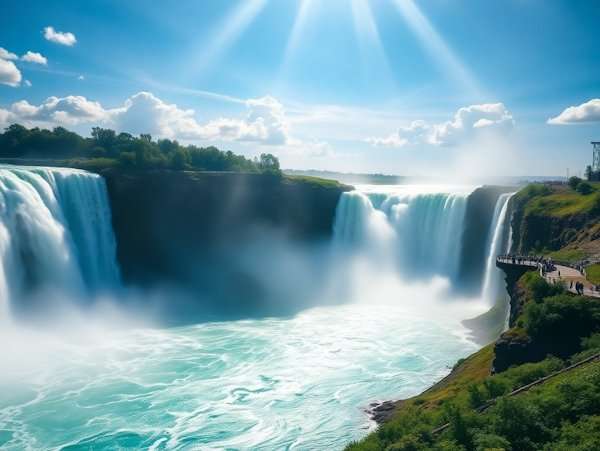
Niagara Falls, with its three powerful cascades – Horseshoe Falls (Canadian Falls), American Falls and Bridal Veil Falls – draws visitors to the international border between the United States and Canada.
Landmark Overview
Lake Erie drains northward into Lake Ontario at Niagara Gorge’s southern end, creating these magnificent falls. Water crashes over the falls at an amazing rate of 168,000 cubic meters every minute during peak hours. North America’s most powerful waterfall is Horseshoe Falls, which flows at 2,400 cubic meters per second. The water appears distinctly green because the river’s erosive force creates about 60 tons of dissolved salts and ground rock each minute.
Historical Significance of Niagara Falls
Wisconsin glaciation created these falls roughly 10,000 years ago. The falls continue to erode backward through the landscape. The erosion rate has slowed to 30 centimeters yearly, down from the previous 0.9 meters per year. Geologists predict the falls will disappear in about 50,000 years after eroding the final 32 kilometers to Lake Erie.
Best Time to Visit Niagara Falls
Summer months from June through August bring perfect weather with temperatures in the low 80s, but expect large crowds. You’ll find fewer tourists and nice weather if you visit during April-June or September-November. The most peaceful time to see the falls is early morning on weekdays, especially Tuesday through Thursday.
Travel Tips for Niagara Falls
The Canadian side gives you the best views with hotels facing the falls directly. You can get closer to the rushing waters from the American side. Remember to bring your passport when crossing countries. Children under 15 can use birth certificates instead.
Niagara Falls in 2025: What Might Change
Toll rates will rise to $6.00 USD for passenger vehicles crossing the Rainbow, Whirlpool-Rapids, or Lewiston-Queenston bridges starting May 2025. The USA Niagara Development Corporation plans to spend $85.80 million on improvements in 2025. These changes will improve areas like Hydraulic Power Plaza and Gorge Gateway Park for visitors.
Why Niagara Falls Is a Must-See
The falls’ natural power amazes visitors from various viewing spots. Local residents say, “You still can’t go wrong on the American side. I think it’s still beautiful”. This iconic landmark keeps evolving with improvements on both sides while preserving its natural beauty.
Alhambra, Spain
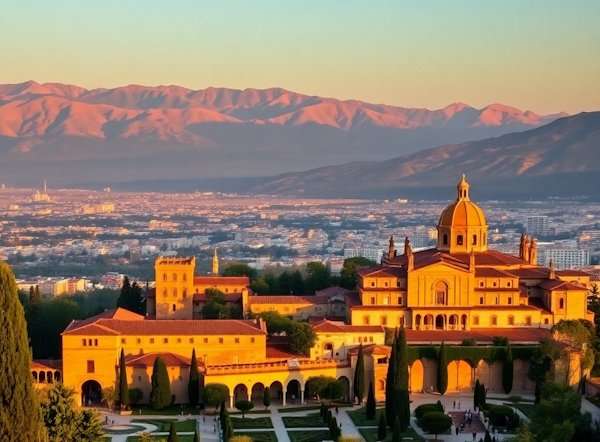
The Alhambra stands majestically on a rocky hill above Granada, Spain. Its reddish walls hide one of the world’s best-preserved Islamic palaces. Nearly 3 million people visit this architectural marvel each year.
Landmark Overview
The magnificent fortress-palace complex stretches across a hilltop with three main sections: the military zone (Alcazaba), the palatine city (Nasrid Palaces) and the summer retreat (Generalife). The name comes from Arabic, meaning “red castle or vermilion” – a nod to its striking towers and walls. Visitors will find beautiful Islamic architecture inside, with colorful tile mosaics and meticulously maintained gardens.
Historical Significance of Alhambra
The palace started as a military fortress in the 9th century. Muhammad I Ibn al-Ahmar, the first Nasrid ruler, turned it into a royal residence when he began restoration in 1238. His son Muhammad II carried on the work. Later kings Yusuf I and Muhammad V added the most beautiful features, including the Hall of Lions. The Catholic Monarchs made it a Christian court after conquering Granada in 1492.
Best Time to Visit Alhambra
The gardens bloom beautifully from April through June, making it the perfect time to visit. You’ll see fewer crowds early in the morning (8:30 AM) or late afternoon. Tuesday through Thursday are usually quieter than weekends or holidays.
Travel Tips for Alhambra
You should book tickets 60 days ahead since they sell out fast. The Puerta de la Justicia entrance gets you to the Nasrid Palaces faster. Remember to bring your passport – it’s required for entry. Good walking shoes with grip are essential because you’ll walk a lot on uneven ground.
Alhambra in 2025: What Might Change
The palace will have stricter entry rules in 2025. New services will help with safety issues after recent events. Teams continue to preserve the detailed wooden ceilings and plasterwork.
Why Alhambra Is a Must-See
The Alhambra offers more than amazing architecture – it’s a window into Islamic Spain’s golden age. The honeycomb vaults, striking tilework and detailed calligraphic inscriptions showcase the best of Islamic art. The Generalife gardens provide unique views of Granada that you won’t find anywhere else.
Great Barrier Reef, Australia
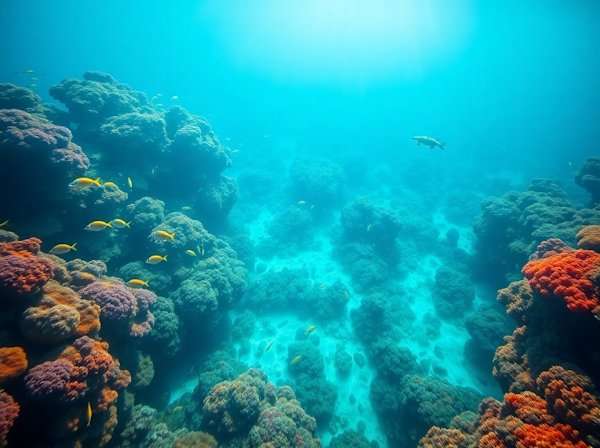
The turquoise waters of the Coral Sea hide an amazing sight. The Great Barrier Reef stretches over 2,300 kilometers along Australia’s Queensland coast. This natural wonder stands as Earth’s largest coral reef system.
Landmark Overview
The Great Barrier Reef covers 344,400 square kilometers – about the same size as Japan. You’ll find more than 2,900 individual reefs and 900 islands here. This living structure teems with incredible sea life. The reef hosts more than 1,625 fish species, 630 types of starfish and sea urchins, 14 sea snake species and all but one of the world’s marine turtle species. This natural marvel is so massive that astronauts can spot it from space. Living organisms built this structure, making it the largest of its kind on our planet.
Historical Significance of Great Barrier Reef
The Great Barrier Reef might be the world’s youngest reef system, but its story began 600,000 years ago. The reef we see today took shape just 9,500 years ago. Aboriginal and Torres Strait Islander peoples share a deep bond with these waters that goes back over 60,000 years. The reef holds profound cultural and spiritual meaning for them. Today, more than 70 Traditional Owner groups maintain their strong ties to this Sea Country.
Best Time to Visit Great Barrier Reef
The reef shines brightest from June through October. Visitors enjoy temperatures between 15-25°C, clear skies and crystal-clear waters. These months also bring migrating whales to the area. Swimmers should know about “stinger season” from November through May. Box jellyfish fill coastal waters during this time, so everyone needs to wear protective stinger suits.
Travel Tips for Great Barrier Reef
- Lock in your rooms and tours three months early, especially during busy seasons
- Pick your starting point based on what you want to see—Cairns and Port Douglas for the north, Whitsundays for the middle and Bundaberg for the south
- Try glass-bottom boat tours with snorkeling if you’re not a strong swimmer
- Show respect for marine life – never touch coral or take anything home
Great Barrier Reef in 2025: What Might Change
The reef faces tough times ahead. Rising ocean temperatures have triggered several mass coral bleaching events since 2016. Visitors in 2025 will likely see the effects of that year’s bleaching event – the sixth since 2016 and second year in a row. Extreme weather brings more flood plumes that affect water quality, especially in central areas.
Why Great Barrier Reef Is a Must-See
The reef’s stunning beauty tells only part of its story. This natural treasure adds about USD 6.40 billion yearly to Australia’s economy. A visit to this underwater paradise lets you experience one of nature’s masterpieces before climate change reshapes its fragile ecosystems.
Grand Canyon, USA

The Colorado River carved the Grand Canyon over millions of years, revealing Earth’s geological history through multicolored rock layers that span 1.8 billion years.
Landmark Overview
This remarkable chasm stretches 278 miles with a one-mile average depth, displaying diverse ecosystems as elevation changes. Weather patterns shift due to the canyon’s immense size, creating a landscape that transforms from pristine evergreen forest to stark desert. The Grand Canyon’s exceptional beauty earned it UNESCO World Heritage Site status in 1979. The area later became an International Dark Sky Park.
Historical Significance of Grand Canyon
Ancient peoples lived in this region for at least 4,000 years, while some evidence points to human presence from 10,500 years ago. Europeans first explored the area in 1540, but tourism really took off after the Santa Fe Railroad reached Grand Canyon Village in 1901. President Theodore Roosevelt visited in 1903 and declared, “Let this great wonder of nature remain as it now is”. The area finally gained national park status on February 26, 1919.
Best Time to Visit Grand Canyon
- March-May: Temperatures range from 50s-70s with fewer pre-summer visitors
- June-August: Peak season brings long, sunny days and temperatures between 40-85°F
- September-November: Visitor numbers drop with temperatures from mid-20s to mid-70s
- December-February: Quiet season sees temperatures from teens to mid-40s
Travel Tips for Grand Canyon
The park doesn’t require reservations, but lodges and campgrounds fill up fast. Visitors face 45-minute to 2-hour waits at the South Entrance between 10 AM and 4 PM. The East Entrance (Desert View) offers shorter wait times. While the South Rim welcomes visitors year-round, the North Rim operates from May 15 through October 15.
Grand Canyon in 2025: What Might Change
Backcountry permit fees will rise in 2025, with below-rim costs increasing from $15 to $24 per person nightly. Construction will close the North Rim’s Bright Angel Point Trail for the 2025 season. The South Rim plans to improve visitor facilities and expand shuttle services.
Why Grand Canyon Is a Must-See
The Grand Canyon combines natural majesty with adventure opportunities through its hiking trails and scenic viewpoints. Each rock layer tells Earth’s story, while the dark skies offer amazing stargazing in North America. Roosevelt’s words still ring true – it remains “absolutely unparalleled throughout the wide world”.
Sagrada Familia, Spain

Barcelona’s Sagrada Familia stands as Antoni Gaudí’s greatest architectural achievement. This basilica started construction in 1882 and continues to evolve. Millions of visitors come each year to see its transformation.
Landmark Overview
This remarkable Roman Catholic basilica features 18 soaring spires that represent biblical figures—the 12 Apostles, four evangelists, the Virgin Mary, and Jesus Christ. Jesus Christ’s spire will reach 172.5 meters after completion. This will make it the world’s tallest church. The interior showcases tree-like columns and stained glass windows that bathe the space in colored light. Three grand façades (Nativity, Passion, and Glory) tell different stories from Christian theology.
Historical Significance of Sagrada Familia
Architect Francisco de Paula del Villar started construction in 1882. Antoni Gaudí took charge in 1883 and revolutionized the project. He blended Gothic and Art Nouveau elements into his unique style. The basilica was nowhere near complete at the time of Gaudí’s death in 1926. Construction moved slowly after that. The Spanish Civil War brought more challenges as anarchists destroyed many original plans. Pope Benedict XVI consecrated the church and made it a minor basilica in 2010.
Best Time to Visit Sagrada Familia
The best visiting times are:
- November-February: 9:00 AM-6:00 PM weekdays with smaller crowds
- March & October: Hours extend to 7:00 PM with average crowds
- April-September: Open until 8:00 PM with perfect natural lighting
- Tuesday through Thursday: Fewer visitors than weekends
Travel Tips for Sagrada Familia
A simple entry ticket costs €26. Book online at least 60 days ahead. The official website provides audio guides through a mobile app. Most people spend 1.5-2 hours to see the basilica. Tower access costs an extra €10 and offers amazing views.
Sagrada Familia in 2025: What Might Change
Jesus Christ’s tower will reach completion by 2025’s end. This magnificent structure will showcase a four-armed cross. The cross will stand 17 meters tall and 13.5 meters wide, covered in glass and white enameled tiles. The Chapel of the Assumption’s construction begins in 2025.
Why Sagrada Familia Is a Must-See
Sagrada Familia is without doubt an architectural marvel that has no equal “in the entire history of art”. The design removes straight lines and mirrors nature’s forms. The stained glass creates beautiful light patterns throughout the interior. Gaudí’s famous words about the construction timeline ring true: “My client is not in a hurry”.
Leaning Tower of Pisa, Italy

The Leaning Tower of Pisa stands at a 3.97-degree tilt that seems to defy gravity. This architectural wonder attracts about 500,000 visitors each year.
Landmark Overview
The bell tower reaches 55.86 meters (183 feet) on its low side and 56.67 meters on its high side. Its beautiful white marble construction showcases eight stories with semi-circular arches, decorative arcading and a hollow cylinder center. The tower sits in Pisa’s Square of Miracles (Piazza dei Miracoli) and serves as the cathedral’s campanile among other stunning monuments like the Duomo and Baptistery.
Historical Significance of Leaning Tower
The tower’s construction started in 1173 but ran into trouble when it began sinking into soft soil made of sand, clay and shells. Wars and money problems caused frequent work delays, which turned out to be helpful as the ground had time to compress and prevent collapse. The construction lasted 199 years. Engineers tried to fix the lean by building taller stories on the shorter side, but this made the tilt worse. When builders finished the tower in the 1300s, they installed seven bells that each played a different musical note.
Best Time to Visit Leaning Tower
The best months to visit are April and May when the weather is nice and crowds are manageable. October is another great time. You’ll find fewer people early in the morning at 9:00 AM or after 6:00 PM. The quietest days are usually Tuesday and Wednesday.
Travel Tips for Leaning Tower
Make sure to book ahead – tickets cost €18 if you buy them there. Kids under 8 can’t climb the tower’s 273 steps. The tower opens from 8:00 AM to 6:00 PM in winter and 8:30 AM to 10:00 PM in summer. Take time to check out the cathedral and baptistery too.
Leaning Tower in 2025: What Might Change
The tower should stay stable for at least 200 more years thanks to major repairs done in 2001. The structure has finally stopped moving for the first time since it was built.
Why Leaning Tower Is a Must-See
The tower’s unique architecture and amazing views from the top make it special. It has survived four major earthquakes since 1280. Engineers found that the soft soil causing the lean actually helps protect the tower during earthquakes.
Mount Fuji, Japan
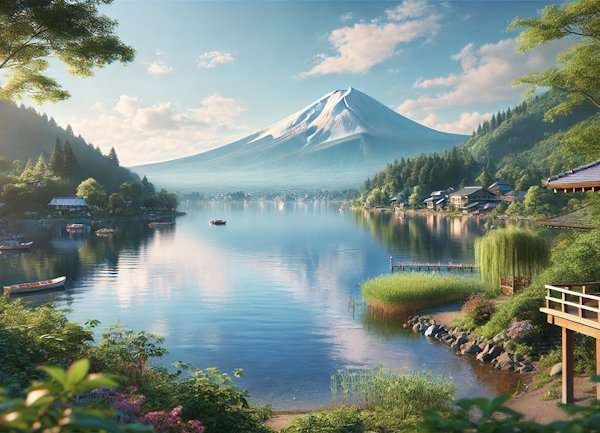
Mount Fuji stands 3,776.24 meters (12,389 ft) tall. This magnificent peak is Japan’s highest mountain and ranks among the world’s most recognizable natural landmarks.
Landmark Overview
This active stratovolcano sits between two prefectures—Shizuoka and Yamanashi—about 100 km southwest of Tokyo. The Shizuoka side, “Omote-Fuji” or “female Fuji,” shows off gentle slopes. The Yamanashi side, “Ura-Fuji” or “male Fuji,” displays a broader, more square profile. Snow covers this perfectly symmetrical cone for five months each year, making it Japan’s enduring symbol.
Historical Significance of Mount Fuji
The Ainu people first worshiped this sacred mountain. Mount Fuji stands proudly with Mount Tate and Mount Haku as Japan’s “Three Holy Mountains”. UNESCO named Fujisan a Cultural World Heritage Site in 2013. The organization praised how it “inspired artists and poets and been the object of pilgrimage for centuries”. The mountain’s role evolved from a feared volcanic site to become part of Japan’s soul.
Best Time to Visit Mount Fuji
Climbers can tackle the mountain from early July to mid-September, though exact dates depend on the trail. The best climbing conditions come between July and early September with mild temperatures and clear views. Photographers love October through February. These months let them capture the “Diamond Fuji” phenomenon as the sun lines up with the peak. April brings cherry blossoms that frame the snow-covered summit beautifully.
Travel Tips for Mount Fuji
The summit welcomes climbers through four color-coded trails:
- Yoshida Trail (yellow): Most popular, beginner-friendly with many mountain huts
- Fujinomiya Trail (blue): Shortest but steepest route
- Subashiri Trail (red): Less crowded with forest hiking sections
- Gotemba Trail (green): Most difficult, time-consuming
Mount Fuji in 2025: What Might Change
The mountain will introduce a ¥4,000 ($26) climbing fee on all four trails in 2025. Visitors without mountain hut bookings cannot enter through fifth station gates between 2 PM and 3 AM. The Yoshida Trail now limits daily climbers to 4,000 and everyone must register online before their climb. These rules help protect the mountain and enhance visitor experiences.
Why Mount Fuji Is a Must-See
Mount Fuji represents Japan’s spiritual essence and cultural identity. The surrounding area provides year-round activities. Visitors can enjoy the Fuji Five Lakes or watch the “Double Diamond Fuji” as lake surfaces mirror the perfect alignment of sun and mountain. Japanese wisdom says that “a wise person will climb Mt. Fuji once in their lifetime, but only a fool would climb it twice”.
More landmarks in Japan.
Comparison Table
| Landmark | Location | Annual Visitors | Key Features/Dimensions | Year Established | UNESCO Status | Changes by 2025 |
|---|---|---|---|---|---|---|
| Acropolis | Athens, Greece | 1 million | 3 hectares area, features Parthenon, Propylaea, Erechtheion | 5th century BCE | – | New €6.3M welcome area, ticket price increase to €30 |
| Alhambra | Granada, Spain | 3 million | Features Alcazaba, Nasrid Palaces, Generalife | 9th century, expanded 1238 | – | Tighter entry rules, new safety measures |
| Angkor Wat | Siem Reap, Cambodia | 2.6 million | 400 sq km complex, surrounded by 1.3×1.5km moat | 12th century | 1992 | Ongoing northern embankment restoration |
| Christ the Redeemer | Rio de Janeiro, Brazil | – | 30m tall, 28m arm span, 635 metric tons | 1922-1931 | – | 20% more visitors expected, improved safety measures |
| Colosseum | Rome, Italy | 14.7 million | 620×513 feet, 50,000-80,000 capacity | 70-80 CE | – | More tourists expected during Jubilee Year |
| Eiffel Tower | Paris, France | 7 million | 330m tall, 10,100 tons weight | 1887-1889 | – | First-floor terrace redesign, top floor renovation |
| Great Barrier Reef | Queensland, Australia | – | 344,400 sq km, 2,900 reefs, 900 islands | 600,000 years old | – | Effects of 2025 bleaching event continue |
| Great Wall | China | – | 21,196 km total length | 7th century BCE | 1987 | Ongoing deterioration, 22% already lost |
| Leaning Tower of Pisa | Pisa, Italy | 500,000 | 55.86m tall, 3.97-degree tilt | 1173-1372 | – | No major changes, structure stable |
| Machu Picchu | Peru | 1.5 million | 7,970 feet elevation, 5-mile span | 1450 | 1983 | Tighter entry rules, guided tours now required |
| Mount Fuji | Japan | – | 3,776.24m tall | – | 2013 | New ¥4,000 climbing fee, limited entry times |
| Niagara Falls | USA/Canada | – | 168,000 cubic meters/minute flow | – | – | Higher toll rates, $85.8M improvement budget |
| Sagrada Familia | Barcelona, Spain | – | 172.5m planned height | 1882 | – | Jesus Christ tower completion, Chapel construction |
| Statue of Liberty | New York, USA | – | 305 feet tall, 450,000 pounds | 1886 | – | $27.5M base rehabilitation project |
| Sydney Opera House | Sydney, Australia | 8.2 million | Multiple venues including 2,679-seat Concert Hall | 1959-1973 | 2007 | – |
| Taj Mahal | Agra, India | 7 million | 17-hectare complex | 1631-1653 | 1983 | New visitor systems, pollution control measures |
Enjoy World Landmarks
Time shapes our world’s most treasured landmarks. These architectural and natural wonders have stood strong through centuries of change. Now they face new threats from climate change, overtourism and natural wear. Many iconic sites will look substantially different after 2025 because of renovation projects, conservation efforts and environmental challenges.
Famous landmarks worldwide tell their stories through stone, marble and living ecosystems. The Eiffel Tower lights up the night sky while the Taj Mahal shows off its perfect symmetry. The Great Wall’s winding path across mountains stands as proof of human achievement. Natural wonders like the Great Barrier Reef and Niagara Falls showcase Earth’s raw power and beauty. These natural sites face growing threats from environmental pressures. No photograph can capture the feeling of seeing these places in person.
Smart travelers should plan their visits before major changes happen in 2025. Several landmarks have announced new visitor rules, renovation work and conservation plans. The Acropolis will raise its ticket prices, and Mount Fuji will start charging mandatory climbing fees. The Sagrada Familia’s tallest spire will finally reach completion, changing its famous outline after more than 100 years of work.
Seeing all 25 landmarks might seem like a big task, but each place offers something special based on what interests you most. Ancient wonders like Petra and Angkor Wat amaze visitors just as much as modern marvels like the Sydney Opera House. These experiences help us learn about human creativity and nature’s beauty. The chance to see these landmarks in their current state won’t last forever – future generations might see something quite different. World landmarks keep changing, but they never lose their power to inspire wonder.
FAQs
Q1. What are some of the top landmarks to visit in 2025?
Some iconic landmarks to prioritize visiting in 2025 include the Eiffel Tower in Paris, Taj Mahal in India, Great Wall of China, Machu Picchu in Peru and the Great Barrier Reef in Australia. These sites may undergo changes or face environmental challenges in the coming years, making it important to see them soon.
Q2. Why is it important to visit these landmarks before 2025?
Many world-famous landmarks are implementing new visitor restrictions, undergoing renovations, or facing environmental threats. Visiting before 2025 allows you to experience these sites in their current state before potential significant changes occur due to conservation efforts or natural deterioration.
Q3. What changes can visitors expect at some landmarks in 2025?
Several landmarks will see changes in 2025. For example, the Acropolis in Greece will increase ticket prices, Mount Fuji in Japan will introduce mandatory climbing fees and the Sagrada Familia in Barcelona will complete its tallest spire, altering its iconic silhouette.
Q4. How can travelers best prepare for visiting these landmarks?
To best prepare, book tickets well in advance, especially for popular sites with visitor restrictions. Research the best times to visit to avoid crowds and get optimal weather conditions. Consider hiring local guides for deeper insights, and be aware of any new regulations or fees implemented at specific landmarks.
Q5. What makes these landmarks worth prioritizing on a travel itinerary?
These landmarks offer irreplaceable historical, cultural and natural value. They represent extraordinary human achievements or showcase Earth’s natural wonders. Experiencing them firsthand provides a deeper appreciation for human creativity and natural splendor that cannot be fully captured through photographs or descriptions.












Hi, I check your blog regularly. Your humoristic style is witty, keep it up! Moreover, this world landmarks blog doesn’t miss the spot!
Thank you Wanston. Enjoy your travels.