
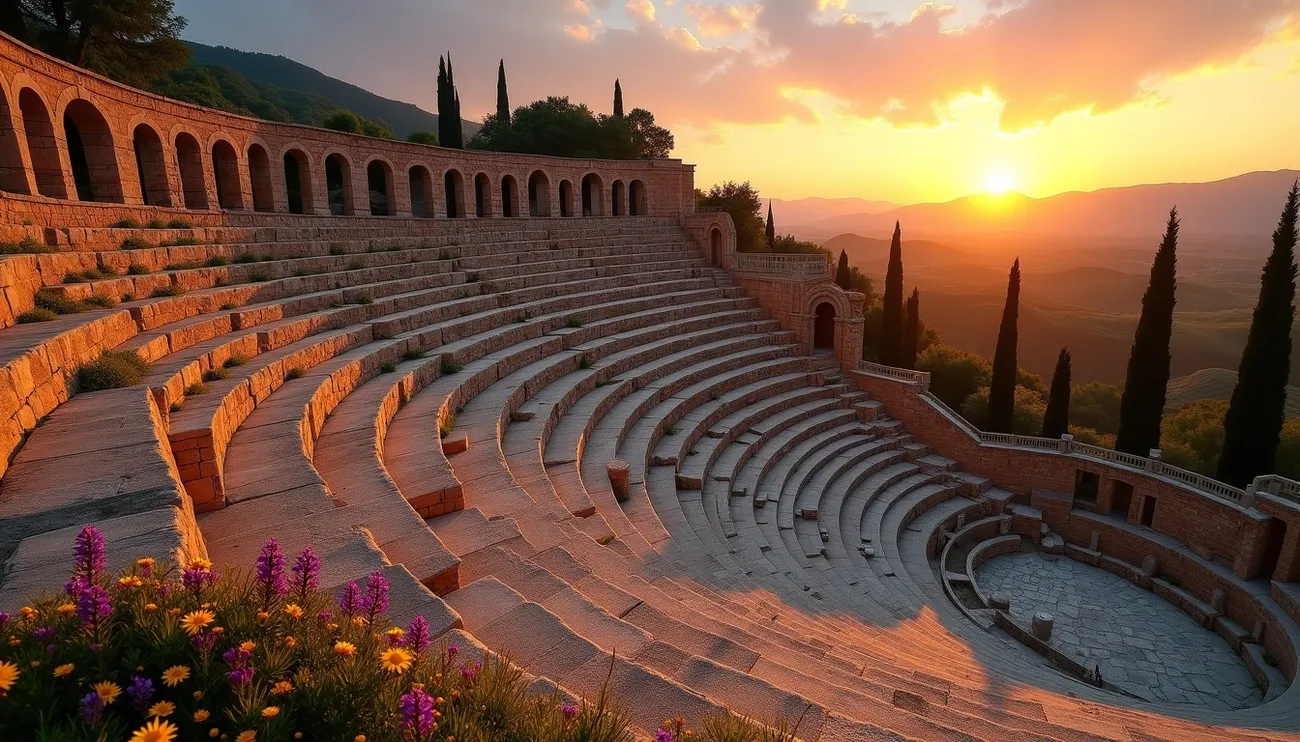
The mighty Colosseum and other Roman ruins still engage visitors thousands of years after their construction. This architectural marvel once held up to 80,000 spectators at a single event. Many travelers rush to these famous landmarks, but Europe and the Mediterranean hide countless architectural treasures.
Roman Empire’s architectural influence reaches way beyond the famous ruins on tourist maps. Hadrian’s Wall stands as a testament to Roman engineering, stretching 73 miles across northern England. The public baths showcase remarkable breakthroughs with their advanced under-floor heating systems. These preserved Roman sites give us a window into Roman daily life and show us their entertainment venues and infrastructure.
Rome’s tourist-packed streets house the famous Baths of Caracalla and the pristine first twelve miles of Via Appia. Yet a world of lesser-known Roman treasures awaits exploration. History enthusiasts planning their 2025 travels can explore these 23 hidden gems to experience ancient Roman ruins’ grandeur without the crowds.
Diocletian’s Palace, Split

Image Source: en.wikipedia.org
Diocletian’s Palace stands as one of the most impressive yet underappreciated ancient Roman sites in the Mediterranean region. This massive fortress-like structure sits in the bustling coastal city of Split, Croatia. The palace represents a rare imperial residence that evolved into a living city through thousands of years.
Historical Significance of Diocletian’s Palace
Emperor Diocletian’s retirement home was built between 295 and 305 CE. He became the first Roman emperor who chose to step down from his position. The palace’s architecture marked a crucial point in Roman history by blending elements of a luxury villa, military camp and typical Roman city. The palace’s construction showed power moving eastward during the late Roman period and set the stage that led to Constantinople’s establishment.
Architectural Features of Diocletian’s Palace
The original palace complex stretched across 30,000 square meters with a rectangular layout and towers jutting from its walls. The impressive Peristyle square dominates its core—a colonnaded courtyard that served as the ceremonial entrance to imperial apartments. The palace structure has:
- The octagonal domed mausoleum (now St. Domnius Cathedral)
- A grand vestibule with its remarkable domed ceiling
- Jupiter’s Temple (later converted to a baptistery)
- Extensive cellars that mirror the upper floors’ layout
Why Diocletian’s Palace is a Hidden Gem
UNESCO recognized this site as a World Heritage monument in 1979. Notwithstanding that, the Colosseum and Pompeii often overshadow this palace. The site is a chance to experience one of the few best preserved Roman ruins that still function as a living urban space. Visitors can explore ancient Roman walls while experiencing a vibrant modern city. Shops, restaurants and apartments blend seamlessly into the ancient structure.
Visiting Diocletian’s Palace in 2025
The palace welcomes visitors throughout the year. Spring and fall provide the most comfortable visiting conditions without summer crowds. The palace’s integration into Split’s urban fabric means no general entrance fee exists. Individual sites within the complex charge separate fees. History enthusiasts planning a 2025 visit should book a guided tour. This helps them understand this remarkable ancient Roman site’s architectural complexity and historical significance better.
Grottoes of Catullus, Lake Garda
The southern shore of Lake Garda holds a remarkable archeological treasure. A massive Roman villa known as the Grottoes of Catullus sits at the northern tip of the Sirmione peninsula. This impressive structure spans two hectares and stands as northern Italy’s largest Roman villa.
Historical Significance of the Grottoes of Catullus
The grand villa’s construction dates between the late 1st century BC and early 1st century AD. People mistakenly named it after Veronese poet Gaius Valerius Catullus. Research shows the villa was constructed after Catullus’ death and likely belonged to Verona‘s aristocratic Gens Valeria family. General Lacombe-Saint-Michel from Napoleon’s army conducted the first complete studies in 1801. The National Superintendence took control of the area in 1948 after major excavations started in 1939.
Architectural Features of the Villa
This rectangular masterpiece measures 167 × 105 meters with distinctive wings projecting from its north and south sides. The builders created large support structures and carved into the rocky bank to handle the natural slope. The villa originally stood three stories tall. Today, visitors can best see the middle and lower floors. A sprawling garden fills the central space, where roughly 1,500 olive trees now grow. The villa’s thermal sector added around the 2nd century’s start features multiple rooms and a swimming pool.
Why the Grottoes are a Hidden Roman Site
The site blends history and natural beauty without Rome’s typical tourist crowds. Only 215,961 people visited in 2013, making it a hidden gem for international travelers. Renaissance explorers gave it the name “Grottoes” when they mistook the plant-covered ruins for natural caves. The Archeological Museum opened in 1999 and is a great way to get insights through its collection of artifacts, mosaics and architectural pieces from the villa.
Best Time to Visit the Grottoes
Early mornings before 11:00 AM or evenings after 5:00 PM have fewer visitors. Summer season runs from late March through late October. The site welcomes visitors Tuesday to Saturday, 8:30 AM to 7:30 PM and Sunday afternoons from 2:00 PM to 7:30 PM. Winter hours shift to 8:30 AM until 5:00 PM Tuesday through Saturday, with Sunday morning hours from 8:30 AM to 2:00 PM. The site stays closed every Monday.
Visit Durres Amphitheater, Albania.
Saalburg Roman Fort, Germany
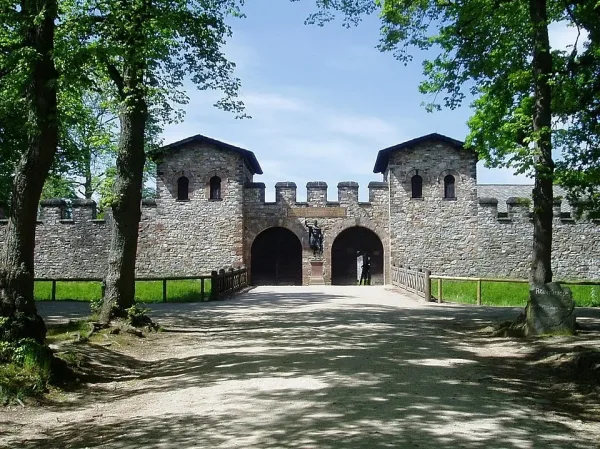
Image Source: en.wikipedia.org
The Saalburg Roman Fort proudly overlooks the main ridge of Germany’s Taunus mountains. This extraordinary example of ancient Roman ruins came back to life through careful reconstruction. The Romans built it to guard a mountain pass, making it a vital part of their northern frontier, the Limes Germanicus.
Saalburg’s Role in Roman Frontier Defense
The fort served as a vital border fortress between the Roman Empire and Germanic tribal territories for about 150 years starting in the 2nd century AD. The Romans built a simple wood-earth enclosure around 90 AD. They expanded it around 135 AD to house the Cohors II Raetorum civium Romanorum equitata—a unit of 600 foot soldiers and riders. The military settlement grew bigger and supported up to 2,000 people who lived in the fort and nearby village.
Reconstruction and Museum Features
Saalburg stands as Germany’s most completely reconstructed Roman fort. Kaiser Wilhelm II began the mission to rebuild the fort in 1897. Workers faithfully reconstructed it on its original stone foundations between 1897-1907. Today’s visitors can explore restored defensive walls, principia (headquarters), horrea (warehouses), praetorium (commander’s residence) and authentic barracks. The museum showcases an impressive collection of Roman artifacts. Weapons, jewelry, clothes, shoes and period currency fill its displays.
Why Saalburg is a Hidden Gem
Saalburg’s unique status makes it special among Roman sites. It remains the world’s only fully rebuilt Roman fortress. UNESCO recognized it as part of the World Heritage Upper Limes site in 2005. Visitors can also explore nearby sections of the original Limes. Ancient watchtowers, palisades and ditches still stand.
Saalburg Ticket Info and Pricing
The fort welcomes visitors based on seasonal timings. From March through October, it opens Tuesday through Sunday, 10:00 AM to 6:00 PM. November through February sees shorter hours from 10:00 AM to 4:00 PM, and it stays closed on Mondays. Adult tickets cost €7, while children and students pay €3. Families can get the best deal with a €14 ticket.
Tarraco Amphitheater, Spain
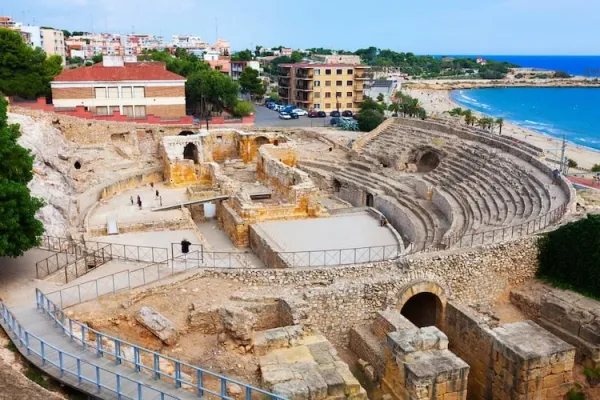
Image Source: History Hit
The roman ruins of Tarraco Amphitheater create one of Spain’s most dramatic archeological scenes. Mediterranean waves crash below this spectacular structure that overlooks the sparkling sea. Built in the 2nd century AD, the elliptical arena hosted gladiatorial fights, wild animal hunts and public executions.
Historical Significance of Tarraco
Tarraco stood proud as the capital of Hispania Tarraconensis, the largest Roman province in the Iberian Peninsula. This bustling hub of administration and commerce became Hispania’s center for Imperial cult worship. The amphitheater holds deep Christian significance. Bishop Fructuosus and his deacons Augurius and Eulogius met their fate here in 259 AD during Emperor Valerian’s persecution. Their martyrdom by fire made this site a cornerstone of early Christian history.
Architectural Features of the Amphitheater
Roman engineering excellence shines through the amphitheater’s design. The structure spans 130 by 102 meters and could hold 15,000 spectators. The builders carved the stands directly into bedrock, using the natural seaward slope. Beneath the arena floor, a network of passages once held gladiators and wild beasts. Today, visitors can see foundation remains of a 6th-century Visigothic basilica and a 12th-century Romanesque-Gothic church on the arena floor.
Why Tarraco is a Must-see Roman site
Tarraco stands apart from crowded Roman sites with its perfect blend of architectural magnificence and historical value. The amphitheater belongs to the Archeological Ensemble of Tarraco, which UNESCO recognized as a World Heritage Site in 2000. The seaside setting adds stunning views that make these impressive ruins even more remarkable.
Tips for Visiting Tarraco in 2025
Adult tickets cost €5, while seniors, students, and youth (12-17) pay €2.50. Children under 12 enter free. A joint ticket at €15 lets you explore five attractions. Ramp entrances make parts of the site available, though some areas need stair climbing. The Tarraco Viva festival in May offers exciting gladiatorial reenactments.
Maison Carrée, Nîmes
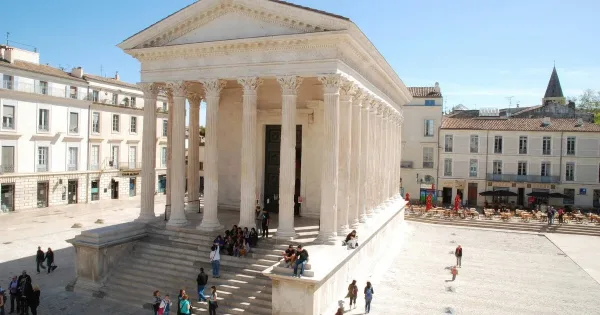
Image Source: UNESCO World Heritage Center
The best preserved Roman temple in the world stands in France. The Maison Carrée has survived almost perfectly since the 1st century CE. This limestone masterpiece in Nîmes looks nearly the same as it did two millennia ago.
Historical Background of Maison Carrée
The temple honors Gaius and Lucius Caesar, Emperor Augustus’s grandsons and adopted heirs who died young. Built between 4-7 AD, it became a temple of imperial cult in the Roman colony of Nemausus. The structure represented the shift from republic to empire and showed the prosperity that Pax Romana brought.
Architectural Brilliance of the Temple
The temple showcases beautiful Corinthian columns in a pseudoperipteral hexastyle design. A 2.65-meter podium raises it above the public square’s activity. The building spans 26.42 by 13.54 meters, making it almost twice as long as wide. The deep porch at the front sets it apart from ancient Greek designs.
Why Maison Carrée is Underrated
The temple earned UNESCO World Heritage status in 2023, yet many travelers pass it by. This architectural marvel has inspired many neoclassical buildings worldwide. Thomas Jefferson’s Virginia State Capitol stands as a prime example.
Visiting Tips and Ticket Info
Visitors can enter for €6.50. Opening hours change with the seasons. A 3D film about Nîmes’s origins plays every thirty minutes.
History lovers should visit these places.
Theater of Orange, France
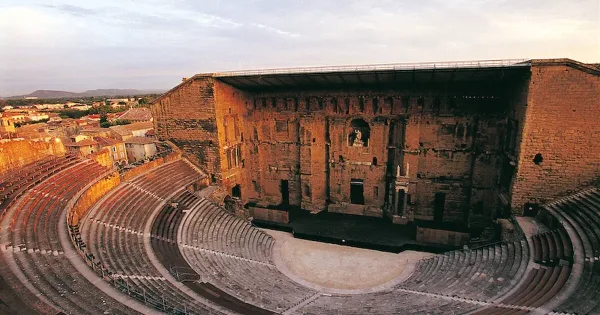
Image Source: UNESCO World Heritage Center
The Theater of Orange stands majestically in southern France, representing one of the most extraordinary Roman ruins that exist today. This architectural marvel, built in the 1st century CE, amazes visitors with its remarkable condition.
Cultural Importance of the Theater of Orange
The ancient theater earned its status as a UNESCO World Heritage Site in 1981 and played a key role in spreading Roman culture through Gaul. The venue could hold 9,000 spectators who sat according to their social status and enjoyed tragedies, comedies and various shows. The theater served different purposes through centuries – a defense structure during wars and a prison in the French Revolution – before returning to its original role in the 19th century.
Preservation and Acoustics
The theater’s crown jewel is its massive stage wall that stretches 103 meters long, stands 37 meters high and measures 1.8 meters thick. Louis XIV called this scaenae frons “the most beautiful wall in my kingdom,” and it creates perfect acoustics. Modern visitors can experience Roman theatrical architecture almost exactly as it stood centuries ago.
Why it’s a Hidden Roman Treasure
The Theater of Orange stands out among ancient Roman sites because of its stage wall – the only one in Western Europe that keeps its original height. Visitors can discover Roman theatrical brilliance here without the crowds that flock to more famous Roman ruins.
Best Time to Attend a Performance
The Chorégies d’Orange festival, 1869 old, brings this ancient Roman site to life. Summer evenings give you a chance to enjoy world-class opera in this acoustic masterpiece.
Conimbriga, Portugal

Image Source: Humphreys Travel
Portugal’s archeological treasure, Conimbriga, gives history enthusiasts a window into some of the most impressive Roman ruins on the Iberian Peninsula. This ancient site sits 16 kilometers from Coimbra and shows exceptional preservation through centuries of weathering.
History of Conimbriga as a Roman Settlement
The site started as a Celtic settlement in the 9th century BC and changed dramatically when Romans arrived in 139 BC. The city thrived under Emperor Augustus with a new forum, baths and aqueduct. It reached its peak during the 1st and 2nd centuries. Germanic Suebi forces captured the settlement in 468 AD, which forced many residents to seek refuge in nearby Coimbra.
Mosaics and Urban Layout
The site’s most stunning features are without doubt its vibrant mosaics, ranked among Europe’s best preserved. The House of Fountains spans 569 m² with colorful mosaic floors that show hunting scenes, Bacchus and mythological figures. The House of Cantaber stands nearby as one of the western Roman empire’s largest houses, featuring 40 rooms and an advanced heating system.
Why Conimbriga is a Hidden Gem
Scientists have excavated just 10% of this ancient city, yet it stands as Portugal’s best-preserved Roman site. Visitors can explore grand public baths, a vast forum, and a 3.4-kilometer aqueduct beyond the magnificent homes.
Visiting Conimbriga in 2025
Entry costs €4.50, and children under 12 get in free. The site welcomes visitors daily from 10 AM to 6 PM.
Porta Nigra, Trier
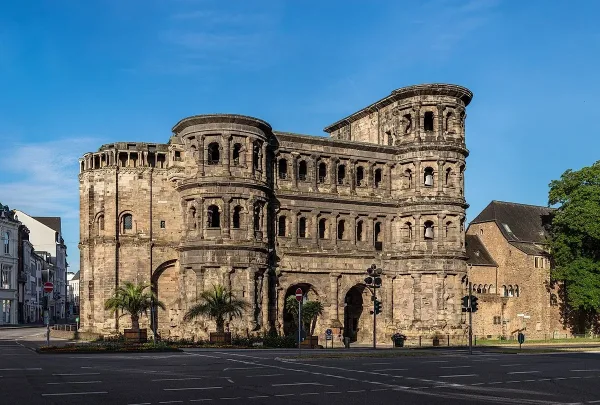
Image Source: en.wikipedia.org
The imposing Porta Nigra, a colossal Roman gate, dominates Germany’s ancient city of Trier and proves Roman engineering excellence through nearly two millennia. Originally built around 170 AD, this remarkable structure continues to amaze visitors.
Historical Role of Porta Nigra
The “Black Gate” earned its name from darkened sandstone and protected one of four entrances to Augusta Treverorum (Roman Trier). The gate’s purpose shifted dramatically after a hermit monk Simeon made it his home in the 11th century. His death in 1035 led to the gate’s transformation into a church. Napoleon later commanded its restoration to original Roman form in 1804.
Architectural Uniqueness
The structure stands as the best preserved Roman city gate north of the Alps. Its construction used iron clamps without mortar and features two four-storied semicircular towers that surround a narrow interior courtyard. The gate’s northern stones remain unfinished, which made installing movable gates impossible.
Why Porta Nigra is a Hidden Roman Ruin
Porta Nigra’s unique design blends fortification with palace architecture elements. This combination creates an unmatched structure among preserved Roman city gates. History enthusiasts can learn about Roman defensive engineering here without facing Italy’s overwhelming crowds.
Ticket Info and Accessibility
Adults pay €6.00 for admission, while children’s tickets cost €3.00. The gate’s opening hours change with seasons – summer hours run from 9 AM-6 PM, with shorter hours during winter.
Aqueduct of Segovia, Spain
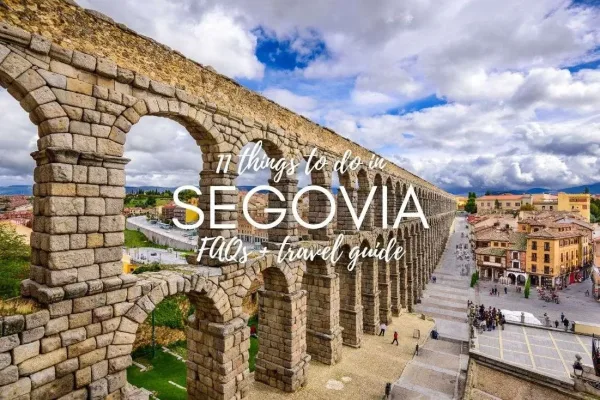
Image Source: NEXT LEVEL OF TRAVEL
The ancient Roman aqueduct towers 30 meters above Segovia’s skyline and stands as proof of Imperial Rome’s engineering brilliance. Constructed around the first century AD, this magnificent structure carried water from the Frío River across 15 kilometers to reach the city.
Engineering Marvel of the Segovia Aqueduct
The aqueduct’s construction showcases remarkable precision with 25,000 granite blocks fitted perfectly without mortar. Its impressive structure features 167 arches across two tiers and maintains a careful gradient that ensures smooth water flow. The aqueduct’s efficiency allowed it to channel 180,104 cubic feet of water daily at 2.5 feet per second.
Preservation and Structure
The aqueduct earned its place as a UNESCO World Heritage Site in 1985. Time has tested this ancient structure through various challenges. An invasion in 1072 damaged 36 arches, but restoration work in the 15th century brought them back to their former glory. The aqueduct continued to serve its purpose until 1973.
Why it’s a Hidden Roman Engineering Feat
This best preserved Roman aqueduct still amazes engineers and historians after 2,000 years. Yet it remains less known than Rome’s iconic monuments despite its technical excellence.
Tips for Visiting Segovia
Plaza del Azoguejo offers the best views of this towering structure at its highest point. Visitors can explore the site any time of year without paying an entrance fee.
Hadrian’s Wall, UK

Image Source: Wikipedia, the free encyclopedia
Hadrian’s Wall stretches across northern England’s rugged landscape. This massive stone barrier stands as Rome’s most ambitious frontier defense system in Britain. Emperor Hadrian began its construction in 122 CE, building it 73 miles from coast to coast at the island’s narrowest point.
Historical Significance of Hadrian’s Wall
The wall marked Rome’s northernmost frontier between Roman Britannia and the untamed Caledonian tribes. This impressive structure became a symbol of imperial might that went beyond military defense. A complex network of ditches, berms, and military installations controlled movement and trade between territories.
Key Forts and Walking Routes
The wall’s most remarkable forts include Housesteads with its well-preserved barracks and latrines and Vindolanda, which is known for its wooden writing tablets. Hikers can enjoy spectacular views of Northumberland National Park along the Hadrian’s Wall Path National Trail. Many visitors prefer to explore shorter segments between major forts due to the trail’s length.
Why it’s a Hidden Roman Frontier
This ancient structure is no match for more famous Roman ruins. Yet it gives visitors a chance to experience history in open countryside instead of city surroundings. While its remote location might discourage casual tourists, history buffs find the journey worthwhile.
Best Sections to Visit in 2025
The central sections near Housesteads and Sycamore Gap showcase dramatic landscapes and the wall’s best-preserved segments. Visitors can learn about frontier life at the Vindolanda and Roman Army Museum complex.
Verona Arena, Italy
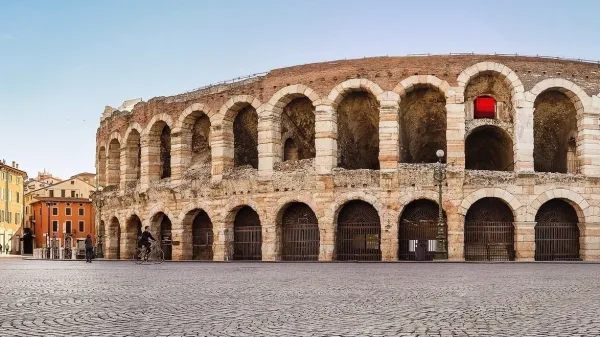
Image Source: Hellotickets
A pink limestone marvel stands proudly in Verona’s historic center—the Roman amphitheater known as the Arena dating from 30 AD. This remarkable structure predates Rome’s Colosseum by forty years and still hosts performances after nearly two millennia.
History of the Verona Arena
The Arena’s construction took place during Emperor Augustus’s reign, outside Verona’s city walls. Its walls witnessed gladiatorial battles, wild animal hunts and public executions through the ages. The structure suffered damage from an earthquake in 1117, and locals used the fallen stones to rebuild their homes. The 16th century brought systematic restoration efforts that continue today.
Architectural Features and Performances
The Arena originally boasted three tiers of arches reaching 30 meters high, though only two remain. Pink and white stone from nearby Valpolicella creates the elliptical structure’s excellent acoustics. The 1913-old summer opera festival draws nearly 500,000 visitors each year.
Why it’s a Lesser-known Roman Amphitheater
The Arena ranks as Europe’s third-largest surviving Roman amphitheater, yet Rome’s Colosseum often steals the spotlight. The structure’s exceptional state and active use make it a unique cultural gem.
Tips for Attending Events
Skip the cheap stone step seating during longer opera shows. The €80 seats offer better back support and comfort. Summer nights can be tricky—temperatures drop substantially after 11pm, so pack light layers.
Mérida Roman Theater, Spain
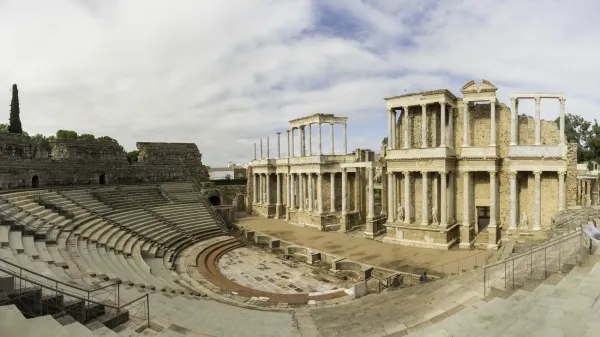
Image Source: en.wikipedia.org
The 2048-year-old city of Emerita Augusta stands as Spain’s most impressive collection of Roman ruins. This UNESCO World Heritage site and former capital of Roman Lusitania gives visitors an amazing window into life during imperial times.
Cultural Role of Mérida in Roman Hispania
Augustus created Mérida as the capital of Lusitania province to house Roman veterans. The city mirrored Rome’s grandeur and displayed imperial power through its magnificent architecture.
Theater and Bridge Architecture
The magnificent Roman Theater, built by Agrippa between 16-15 BCE, welcomed 6,000 spectators. The theater’s crown jewel remains its spectacular double-tiered columned stage backdrop adorned with Corinthian capitals. The Roman Bridge stretches an incredible 792 meters, making it antiquity’s longest surviving bridge.
Why Mérida is a Hidden Roman City
People call this gem “Little Rome” because of its remarkable collection of ancient Roman sites, yet it sees fewer tourists than Italian ruins. The theater stayed buried deep underground for centuries, with just its “seven chairs” visible until excavation work started in 1910. Today, this venue hosts the prestigious International Festival of Classical Theater.
Visiting Tips and Pricing
A Historical-Archeological ticket costs €17 (€8 reduced) and lets you explore all monuments. Theater performance tickets cost between €6-€80. Sites open from 9:00 AM to 6:30 PM in winter and stay open until 9:00 PM during summer months.
Roman Agora, Athens

Image Source: en.wikipedia.org
The Roman Agora stands in Athens’ Plaka neighborhood, just north of the Acropolis. This remarkable site tells the story of two ancient superpowers’ complex relationship. Julius Caesar and Emperor Augustus funded its construction between 19-11 BC, making it a symbol of Rome’s cultural influence.
Roman Influence in Ancient Greece
Rome’s conquest of Greece during the 2nd and 1st centuries BC led to an interesting cultural exchange. The Romans embraced Greek culture extensively and left their distinctive mark on Greek cities. Athens needed a new marketplace because the Ancient Agora became too crowded. The Roman Agora filled this need, with a road along the Library of Pantainos colonnade connecting both spaces.
Key Features of the Agora
A peristyle-surrounded courtyard forms the rectangular site’s heart. Several remarkable structures make this space unique:
- The Gate of Athena Archegetis from 11 BC serves as the western entrance
- The octagonal Tower of the Winds, which experts call the world’s oldest meteorological station
- The Fethiye Mosque from the 17th century stands on early Christian Basilica ruins
Why it’s a Hidden Roman Site in Greece
The Acropolis and Ancient Agora often steal the spotlight, yet this site teaches us about Athens’ development during the Roman period.
Best Time to Visit
The site sees fewer visitors early in the morning or late afternoon. Opening hours vary by season – summer (April-October): 8am-8pm; winter (November-March): 8am-5pm.
Ephesus, Turkey
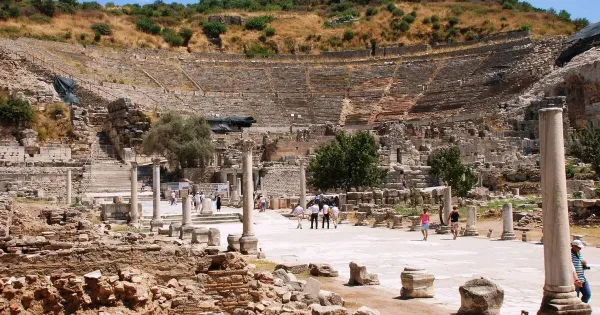
Image Source: UNESCO World Heritage Center
Ephesus, a remarkable proof of Roman imperial might, lies peacefully on Turkey’s western coast. This archeological wonder showcases some of the most impressive Roman ruins you’ll find outside Italy.
Ephesus as a Roman Metropolis
The city reached its golden age when Emperor Augustus made it the capital of proconsular Asia. The population peaked between 33,000-56,000 residents. The city’s advanced aqueduct system stood out as an engineering marvel that delivered 120 liters of water every second through multiple channels.
Library of Celsus and Other Ruins
The magnificent Library of Celsus, dating back to 125 CE, housed an impressive collection of 12,000 scrolls. Today, visitors can admire its beautifully restored facade with four statues that symbolize wisdom, excellence, intelligence and knowledge. The Great Theater could hold 25,000 people, possibly making it the ancient world’s largest amphitheater.
Why Ephesus is a Hidden Roman gem
UNESCO recognizes Ephesus as a World Heritage site, yet this remarkably preserved Greco-Roman city remains off most tourists’ radar. Archeologists have uncovered only 4-5% of the whole site.
Tour Tips and Pricing
Visitors pay 40 Euros to access the main site, while full access including the Terrace Houses costs 52 Euros. Summer hours from May through November run 8:00 AM to 8:00 PM. Winter schedule from December through April operates 8:30 AM to 5:30 PM. Kids under eight get free entry with proper ID. You might want to think over booking a guided tour to skip the lines.
Side, Turkey

Image Source: Turkey Tour Organizer
Side, located on Turkey’s Mediterranean coast, showcases a remarkable blend of Roman ruins and modern resort life. Ancient structures merge naturally throughout the peninsula.
Roman History of Side
Rome took control of Side in 78 BC after Servilius Vatia defeated local brigands. The city experienced its second golden age through its connection with the Roman Empire. Emperor Augustus placed Side in the Roman province of Galatia in 25 BC. The population reached 60,000 inhabitants. The city thrived through olive oil trade and became the Mediterranean’s leading slave-trading center.
Theater and Temple of Apollo
The massive theater complex dates back to the 2nd century and matches Aspendos in size. It accommodates 15,000–20,000 spectators. The structure’s unique architecture features a stage building with three floors that showcase Antonine Period baroque decorations. Most visitors explore the theater before heading to the Temple of Apollo, built around 150 AD. Five restored columns stand beautifully at the harbor’s edge with the Mediterranean as their backdrop.
Why Side is a Hidden Roman site
Side’s ruins blend with daily life, unlike many crowded ancient roman sites. The area features remnants of colonnaded streets, Roman baths and a nymphaeum. Many sections remain unexcavated, which gives authentic glimpses into Roman coastal life.
Visiting Side in 2025
The Temple of Apollo area welcomes visitors without an entrance fee. The ruins look spectacular at sunset as ancient columns create silhouettes against the Mediterranean sky.
Hierapolis, Turkey
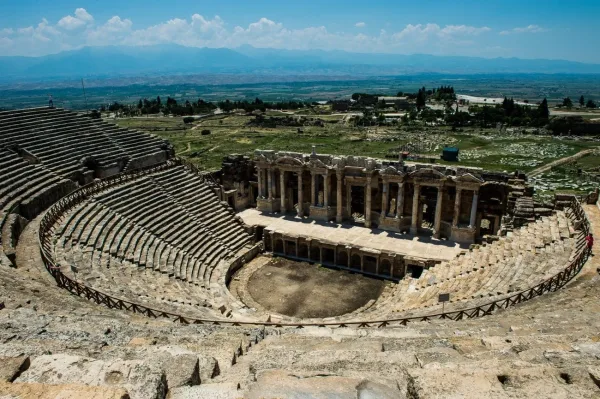
Image Source: Med-O-Med
The remarkable Greco-Roman spa city of Hierapolis stands majestically on the white travertines of Pamukkale. Built in the late 2nd century BCE, this UNESCO World Heritage site beautifully combines natural wonders with Roman ruins.
Roman Spa Culture in Hierapolis
The city thrived as a healing sanctuary where ancient doctors prescribed thermal water treatments to their patients. Modern visitors can swim in the Cleopatra Pools’ mineral-rich waters (36-57°C) among ancient fallen columns. These same springs served the Romans’ wool processing needs.
Theater and Necropolis Features
A massive earthquake in 60 AD led to the construction of the city’s well-preserved theater. Eight stairways divide its 50 rows of seating that could hold 15,000 spectators. The site houses one of Turkey’s largest necropolises, which spreads through the northern, eastern, and southern parts of the ancient city. This vast cemetery displays burial structures of all types, from decorated sarcophagi to tumuli and family tombs that look like small temples.
Why Hierapolis is a Hidden Roman Ruin
Hierapolis stands out because it pairs ancient roman ruins with spectacular natural features. Roman engineering brilliance shines through the complex canal system that once carried thermal waters throughout the city.
Tips for Visiting with Pamukkale
Start your journey at Hierapolis before heading to the travertines. A golf cart rental makes sense since the site has little shade. Your ticket gives you access to both sites, but Cleopatra’s Pools need a separate payment.
Chester Roman Amphitheater, UK
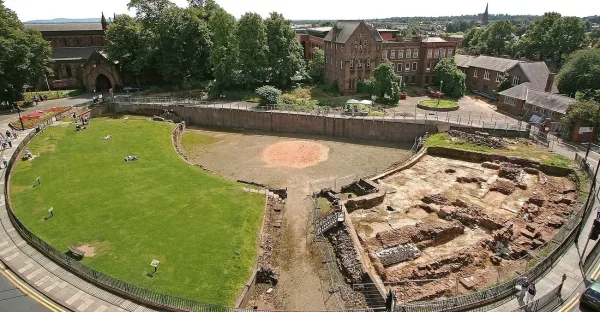
Image Source: English Heritage
Chester Roman Amphitheater stands as Britain’s largest stone-built Roman performance venue. This amazing oval arena sits away from the busy tourist spots and gives history lovers a real taste of Roman Britain’s military power.
Chester’s Roman Military History
Chester, known as Deva Victrix in Roman times, grew into a key fortress between 70-80 CE. Legio II Adiutrix briefly controlled the site in the late 70s before Legio XX Valeria Victrix took command. Historians guess that Chester could have become Roman Britain’s capital if the Romans had conquered Ireland.
Amphitheater and City Walls
The grand amphitheater went through several building phases. The second structure reached 40 feet high with a stone ellipse spanning 320 by 286 feet. This massive arena held 8,000 spectators and featured dungeons, stables and food stands. Chester’s defensive walls remain Britain’s most complete Roman and medieval fortification, stretching almost 2 miles around the city.
Why Chester is a Hidden Roman Site
Today, you can see just two-fifths of the amphitheater. This makes it a perfect spot to explore Roman history without crowds. The north entrance once housed a shrine to Nemesis, the goddess of retribution, which shows the site’s deep cultural roots.
Visiting Tips and Museum Info
The Grosvenor Museum displays finds from Britain’s largest archeological dig here in 2005. The Deva Roman Center lets you step into a Roman soldier’s boots. You can visit the site any time during daylight hours.
Antiquarium of Seville, Spain
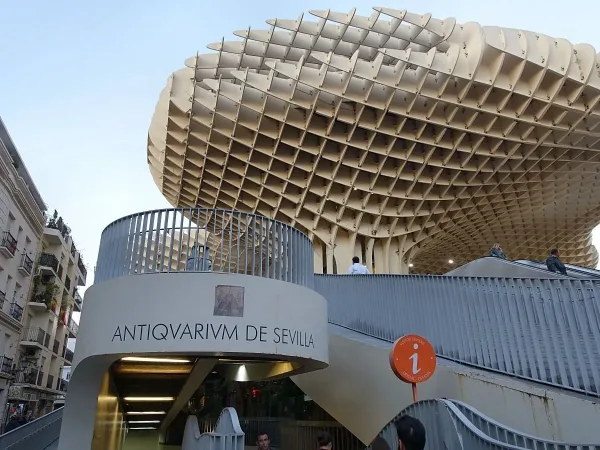
Image Source: Tripadvisor
Seville’s iconic Metropol Parasol structure houses an archeological treasure that remained hidden until 2003. The Antiquarium showcases impressive Roman ruins that construction workers found by chance during excavation work planned for a parking garage.
Discovery of Roman Ruins in Seville
A routine construction project turned into a major archeological discovery as workers found remnants dating from the first century BC to the 12th century AD. The city officials stopped the parking garage development and decided to make these valuable ruins part of the Metropol Parasol design. This modern complex’s distinctive mushroom-shaped shades now cover markets and cultural spaces above this underground historical treasure.
Mosaics and Fish Salting Factory
The archeological site features 11 distinct areas, including seven houses with pristine mosaic floors. The Casa de la Columna from the 5th century AD stands out with its magnificent mosaics that display laurel wreaths and diadems—symbols of imperial victory. Visitors can see huge Roman fish salting vats (salazones) from 150 BC. These tanks are twice the size of similar ones in Spain, which shows Seville’s importance in ancient food production.
Why the Antiquarium is a Hidden Gem
Most travelers haven’t yet discovered this extraordinary historical site. The colorful mosaics here come from minerals that workers mined in Rio Tinto and Aznalcollar. The museum’s symbol shows two kissing birds on a reconstructed wall mosaic.
How to Visit in 2025
The Antiquarium welcomes visitors Tuesday through Saturday from 10 AM to 8 PM and Sundays from 10 AM to 2 PM. Adults pay just €2 for admission, while children under 16 get in free. Real Alcázar ticket holders can also visit at no extra cost.
Comparison Table
| Site Name | Location | Century Built | Main Features/Purpose | Notable Architectural Elements | Current Status/Use | UNESCO Status |
|---|---|---|---|---|---|---|
| Diocletian’s Palace | Croatia | 295-305 CE | Imperial residence | Octagonal domed mausoleum, Peristyle square, extensive cellars | Living urban space | Yes (1979) |
| Grottoes of Catullus | Italy | Late 1st BC – Early 1st AD | Roman villa | Rectangular structure (167x105m), thermal sector, swimming pool | Archeological site | – |
| Saalburg Roman Fort | Germany | 90 AD | Border fortress | Defensive walls, principia, horrea, praetorium | Fully reconstructed museum | Yes (2005) |
| Tarraco Amphitheater | Spain | 2nd century AD | Entertainment venue | Elliptical arena (130x102m), underground passages | Archeological site | Yes (2000) |
| Maison Carrée | France | 4-7 AD | Temple | Corinthian columns, 2.65m podium, pseudoperipteral design | Preserved temple | Yes (2023) |
| Theater of Orange | France | 1st century CE | Theater | 103m long stage wall, 37m high scaenae frons | Active performance venue | Yes (1981) |
| Conimbriga | Portugal | 139 BC (Roman arrival) | Roman settlement | House of Fountains, House of Cantaber, public baths | Archeological site | – |
| Porta Nigra | Germany | 170 AD | City gate | Two four-storied towers, narrow courtyard | Preserved gate | – |
| Aqueduct of Segovia | Spain | 1st century AD | Water transport | 167 arches, two-tiered arcade, 25,000 granite blocks | Preserved monument | Yes (1985) |
| Hadrian’s Wall | UK | 122 CE | Frontier defense | 73-mile barrier, forts, ditches | Archeological site | – |
| Verona Arena | Italy | 30 AD | Amphitheater | Pink limestone construction, two tiers of arches | Active performance venue | – |
| Mérida Roman Theater | Spain | 16-15 BCE | Theater | Double-tiered columned stage, Corinthian capitals | Active theater venue | Yes |
| Roman Agora, Athens | Greece | 19-11 BC | Marketplace | Gate of Athena, Tower of the Winds | Archeological site | – |
| Ephesus | Turkey | Roman period | City/Capital | Library of Celsus, Great Theater (25,000 capacity) | Archeological site | Yes |
| Side | Turkey | 78 BC (Roman control) | City/Port | Theater (15,000-20,000 capacity), Temple of Apollo | Archeological site | – |
| Hierapolis | Turkey | 2nd century BCE | Spa city | Theater (15,000 capacity), extensive necropolis | Archeological site | Yes |
| Chester Amphitheater | UK | 70-80 CE | Entertainment venue | 40-foot high stone ellipse, 8,000 capacity | Partially visible ruins | – |
| Antiquarium of Seville | Spain | 1st century BC | Urban settlement | 11 archeological areas, mosaic floors, fish salting vats | Underground museum | – |
Appreciate Roman Ruins
Roman ruins lie hidden across Europe and the Mediterranean. These remarkable sites show us how ingenious and influential the Roman Empire truly was. You’ll find amazing structures like Diocletian’s Palace with its octagonal domed mausoleum and the beautifully preserved Maison Carrée temple. These spots give history lovers a genuine taste of the past without the usual tourist crowds.
The engineering brilliance of ancient Romans shines through these off-the-beaten-path locations. Look at the Aqueduct of Segovia – its granite blocks fit perfectly together without mortar and have stood strong for 2,000 years. The Theater of Orange features perfect acoustics thanks to its towering stage wall, which stands as the only one in Western Europe at its original height.
Mérida, known as “Little Rome,” shows how far Roman culture spread with its monuments that rival Italy’s own. The Romans were masters at using natural features, as seen in Hierapolis where they built clever canal systems for thermal waters.
These hidden treasures might not be as famous as the Colosseum, but many hold UNESCO World Heritage status. Britain’s largest Roman performance venue sits in Chester, while Hadrian’s Wall lets you explore Roman history across wild landscapes instead of packed city streets.
The value of these places goes beyond their beautiful architecture. They give us a glimpse into daily Roman life through Conimbriga’s vivid hunting scene mosaics and Seville’s ancient fish factory under the modern Metropol Parasol.
History enthusiasts planning their 2025 trips should think about these alternatives to overcrowded Roman sites. These ruins showcase Roman civilization’s reach and let visitors experience history without fighting through crowds. You can swim near sunken ancient columns in Hierapolis or watch an opera in Verona’s Arena. These hidden Roman gems offer amazing ways to step back into the ancient world.
FAQs
Q1. What is considered the most iconic Roman ruin?
The Colosseum in Rome, Italy is widely regarded as the most famous and iconic Roman ruin. This massive amphitheater, built in the 1st century AD, could hold up to 80,000 spectators and is a symbol of Imperial Rome’s power and engineering prowess.
Q2. Which hidden Roman site offers the best-preserved ruins?
Diocletian’s Palace in Split, Croatia is one of the best-preserved Roman ruins outside of Italy. This massive complex, built as a retirement home for Emperor Diocletian in the early 4th century AD, has evolved into a living city over millennia and offers visitors a unique blend of ancient architecture and modern urban life.
Q3. Are there any Roman ruins that are still functional today?
Yes, the Aqueduct of Segovia in Spain is an excellent example of Roman engineering that remained functional until modern times. This impressive structure, built in the 1st century AD, transported water to the city for nearly two millennia and is still standing today, showcasing the durability of Roman construction techniques.
Q4. Which Roman site offers the most unique natural setting?
Hierapolis in Turkey offers a remarkable combination of Roman ruins amid extraordinary natural features. Built atop the stunning white travertine terraces of Pamukkale, this ancient spa city allows visitors to explore well-preserved Roman structures while also experiencing the thermal springs that made the site famous in antiquity.
Q5. What is an underrated Roman site for experiencing daily Roman life?
The Antiquarium of Seville in Spain offers a fascinating glimpse into everyday Roman life. Discovered by chance in 2003, this underground museum showcases well-preserved domestic spaces, including houses with colorful mosaic floors and a large fish salting factory, providing insight into both the private and commercial aspects of Roman urban living.












Leave A Comment