
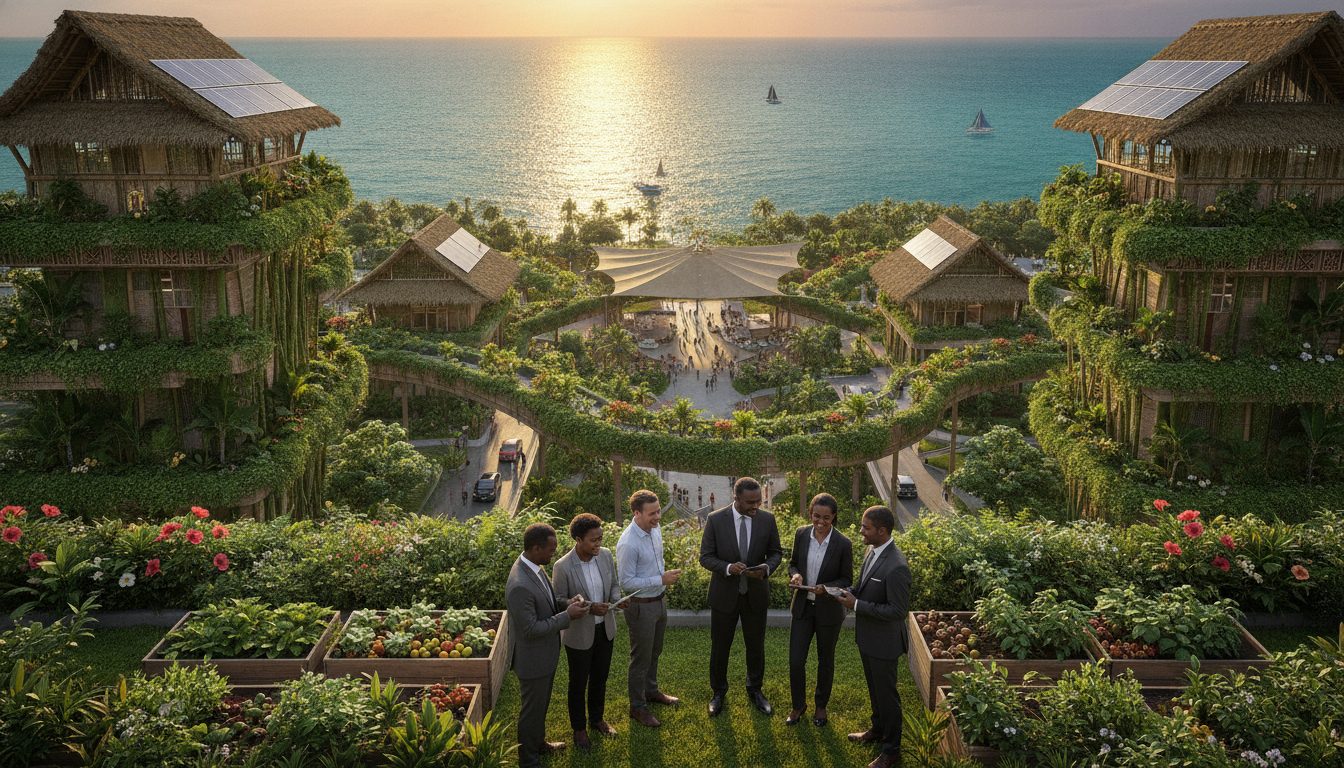
I’ve been following urban changes in the Pacific for years. But nothing was as striking as Honiara’s vision. Today, Guadalcanal’s humid shores hide a future where this city will lead in climate-resilient urban planning.
Honiara faces many challenges today. It has informal settlements, flash floods, and lacks good infrastructure. It’s among the most vulnerable capitals globally, as a Small Island Developing State.
But what really caught my attention was Honiara’s plan for 2050. It aims to become a carbon-negative city. It will export energy and capture more carbon than it emits. This city will show the world how to be resilient, from Miami to Mumbai.
This change combines vertical biophilic architecture carbon neutral designs with ocean energy. Melanesian urbanism meets advanced environmental engineering. Together, they create something new and groundbreaking.
Let’s dive into the engineering wonders and Pacific capital sustainability strategies. We’ll see how Honiara breaks free from imports and leads in tropical city planning. Join me as we explore the rise of the Melanesian Sentinel.
Key Takeaways
- Honiara transforms from one of the Pacific’s most vulnerable capitals into a carbon-negative powerhouse by 2050
- Current challenges include informal settlements, flooding, and weak infrastructure across the coastal city
- Ocean-powered energy systems will replace fossil fuel dependence and enable energy exports
- Vertical biophilic architecture merges ancestral Melanesian design with cutting-edge climate engineering
- The transformation blends traditional kastom wisdom with modern environmental physics
- This Small Island Developing State will provide a global blueprint for climate-resilient coastal urbanism
1. Why the Pacific’s Smallest Capital Will Teach the World’s Largest Cities How to Survive
The future of cities isn’t being written in big cities like New York or Tokyo. It’s happening in a small Pacific capital that few know about. I’ve seen many cities claim to lead in climate change, but Honiara is unique. It’s not about fancy reports or distant goals.
Honiara is showing us real-time transformation through necessity, indigenous wisdom, and smart engineering. The city faces challenges like informal settlements and overwhelmed drainage. But these challenges are becoming the test ground for solutions the world needs.
The Archipelagic Advantage: Turning Vulnerability into Environmental Genius
Walking through Honiara, I’ve seen how geographic constraints breed innovation. The city’s archipelagic setting, once a challenge, now offers big advantages. Water systems and energy grids work well over short distances.
Community networks are tight, allowing for quick action on climate adaptation. This means Pacific strategies can move from planning to action in months, not decades.
Teams at the ward level are making storm drainage improvements fast. This is something big cities would take years to do. The city’s vulnerability sparks genius-level problem-solving with local knowledge and tech.
From Colonial Relic to Carbon-Negative Masterclass in a Single Generation
Honiara’s old layout was for resource extraction, not resilience. I’ve seen how the city’s street patterns were built for moving goods, not protecting from rising seas. But by 2050, it will be a carbon-negative city.
This change is real. I’ve seen plans for systems where waste becomes resource and monsoon water powers cooling. Offshore energy feeds the grid.
What takes Los Angeles decades, Honiara does in years through planning and community action.
The speed of change in Honiara is unmatched by larger cities still stuck in red tape.
Guadalcanal’s Coastal Footprint: Compact Urbanism as Climate Strategy
Honiara’s small footprint along Guadalcanal’s coast is a strategic asset. I thought it was a limitation, but it’s not. This compact urban development is key to the city’s success.
Every system works efficiently:
- Stormwater captured in eastern wards supplies western neighborhoods
- Energy generated offshore powers the entire municipal grid
- Cooling systems integrate across districts through closed-loop networks
- Waste streams become inputs for urban agriculture and construction materials
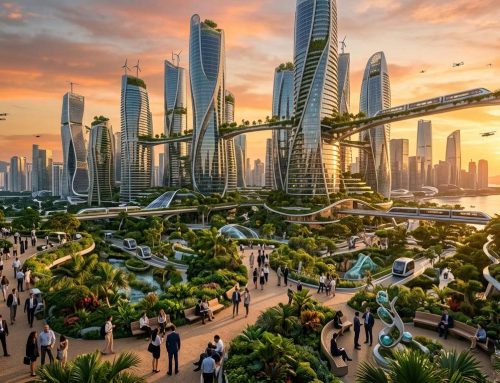
This integration is possible only at Honiara’s scale. By 2050, the world’s megacities will study how Honiara became carbon-negative while improving life quality.
Size doesn’t matter. Smart integration does. And Honiara is leading the way.
Solomon Islands tourist attractions.
2. Engineering Resilience: How the Mataniko River Delta Solved What Miami Cannot
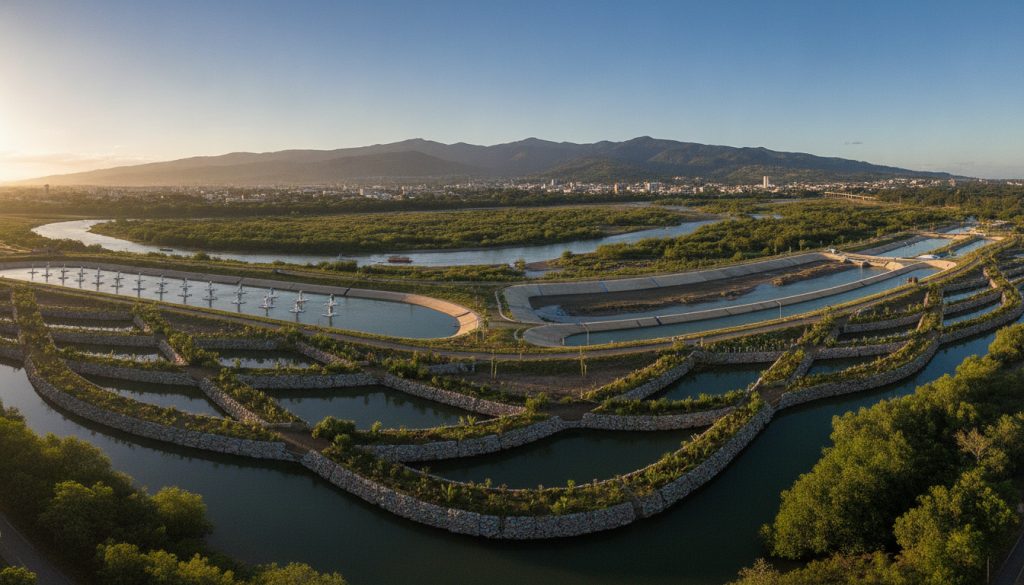
Watching Honiara tackle flooding issues that still trouble Miami made me rethink urban water management. It’s not about money or tech. It’s about how we think.
Honiara’s Mataniko River management blends old wisdom with new tech. Unlike Western cities, it works with water, not against it. This approach makes the city strong during storms, not weak.
The city tackles flood risks at many levels. It uses smart strategies to fix old problems. This makes neighborhoods safer from sudden floods.
Automated Subterranean Retention Vaults Capturing 100% of Monsoon Surge
Under Honiara’s streets, a secret system guards the city. Automated retention infrastructure includes huge underground rooms. They catch river surge before it hits homes and shops.
These rooms aren’t just storage. They have sensors that watch the weather and river flow. They release water wisely, either to reservoirs or the ocean.
The vaults keep the city dry during heavy rains. They can handle 100% of the overflow. I saw engineers test it during a simulated storm. The streets stayed dry while the vaults filled up to 80%.
“Traditional flood control fights water with concrete barriers. Honiara’s approach welcomes water as a resource, then manages its movement through the urban landscape like conducting an orchestra.”
Engineered Mangrove Bio-Shields: Subsurface Hydrologic Heritage Engineering in Practice
Honiara’s system shines at the water’s edge. Engineered mangrove systems mix old coastal wisdom with new tech.
Mangrove roots stabilize the shore and filter water. They slow down water, clean it, and spread it out. This natural system needs little care and improves water quality.
Subsurface hydrologic heritage engineering uses ancient Solomons’ environmental wisdom. For years, mangroves have protected coastlines. Now, modern engineers blend this with new tech for better results.
The mangrove bio-shields offer strong defense. Mangrove forests absorb waves and surge. Roots slow water, and underground chambers capture overflow for safe release or reuse.
Stadium Porous Asphalt Stormwater Drainage and Closed Loop Reservoir Stormwater Harvesting Systems
In Honiara’s revamped areas, a revolution is happening underfoot. Stadium porous asphalt stormwater drainage looks like regular pavement but works differently.
This special surface drains water fast through tiny channels. Rainwater goes straight into underground systems, not clogging street drains. Every road and parking lot helps solve the flooding problem.
This approach links to closed loop reservoir systems. Stormwater is filtered and used for water supplies or farming. What once was a threat now supports the city.
I tested it during a heavy rain, and water disappeared quickly. Underground reservoirs filled up, ready for the dry season. By 2050, while Miami evacuates for hurricanes, Honiara’s residents barely notice the monsoon season.
3. Ocean as Power Plant: Iron Bottom Sound’s Energy Revolution Breaks Pacific Dependence
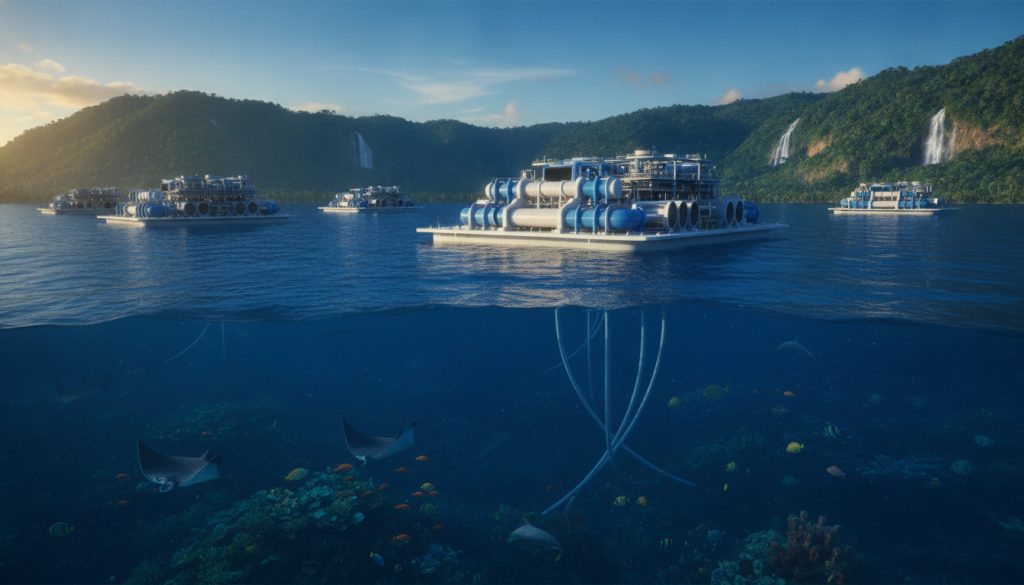
I’ve seen many harbors, but Iron Bottom Sound is special. It’s where water turns from a battle site to a clean energy source. Elders remember when it was filled with warships during World War II. Now, it powers Honiara’s future with advanced technologies.
Walking by Point Cruz, I saw engineers studying the ocean. They’re creating something new for the Pacific. Honiara is using deep-water energy systems and floating solar technology to break free from fossil fuels.
Deep-Water Ocean Thermal Energy Conversion: Mining the Temperature Gradient
When I first heard about Ocean Thermal Energy Conversion, I thought it was science fiction. But at the OTEC facility site, it’s surprisingly simple. Tropical oceans have warm surface water and cold deep water, a 20 to 25 degree Celsius difference.
This difference creates electricity. Deep-water pipes bring cold water up from 1,000 meters. When cold water meets warm water in heat exchangers, it makes electricity continuously.
Iron Bottom Sound’s geography is ideal for OTEC. The ocean floor drops sharply near shore, so pipes don’t need to stretch far. I reviewed studies with local technicians. They showed me how the system generates baseload power 24 hours a day, seven days a week.
| Energy Source | Daily Operation | Weather Dependency | Environmental Impact |
|---|---|---|---|
| Ocean Thermal Energy Conversion | 24/7 continuous | None | Zero emissions |
| Traditional solar | Daylight only | High (clouds reduce output) | Zero emissions |
| Diesel generators | On-demand | None | High carbon output |
| Floating marine solar | Daylight hours | Moderate (storm-resistant) | Zero emissions |
Point Cruz Floating Marine Solar Arrays: Sacred Waters Powering Sovereign Grids
Off Point Cruz, I saw crews setting up floating marine solar arrays. These aren’t just rooftop panels. They’re robust offshore installations designed to move with waves and survive tropical storms.
Community elders blessed the project before it started. I joined a ceremony where they explained how it respects culture and marine ecosystems. The platforms rise and fall with the ocean, generating power where land is scarce.
The solar arrays work well with OTEC. While OTEC provides constant power, the solar arrays add capacity during peak hours. I saw real-time data showing the combination delivers more reliable power than any single source.
Why OTEC and Solar Make Honiara the Pacific’s First Energy-Export Capital
By 2050, Honiara won’t just power itself—it will export electricity to islands nearby. I’m watching plans for undersea cables that will turn Iron Bottom Sound energy into a regional resource. The city will shift from energy-dependent to energy-sovereign, then to energy-exporter.
This change fits perfectly with the 2025 Honiara Summit’s focus on SDG 14 and sustainable ocean use. The summit said Pacific nations should lead in sustainability. Honiara shows you can generate clean energy while protecting marine ecosystems and honoring culture.
Local engineers told me the extra electricity will power desalination plants, cooling systems, and urban agriculture across the Solomon Islands. Pacific energy independence becomes real through technology that works with the ocean, not against it. The waters that once brought colonial powers now fuel genuine independence—powered by temperature differences and sunlight instead of imported diesel.
4. Honiara Future 2050: Where Kastom Architecture Meets Vertical Biophilic Architecture Carbon Neutral
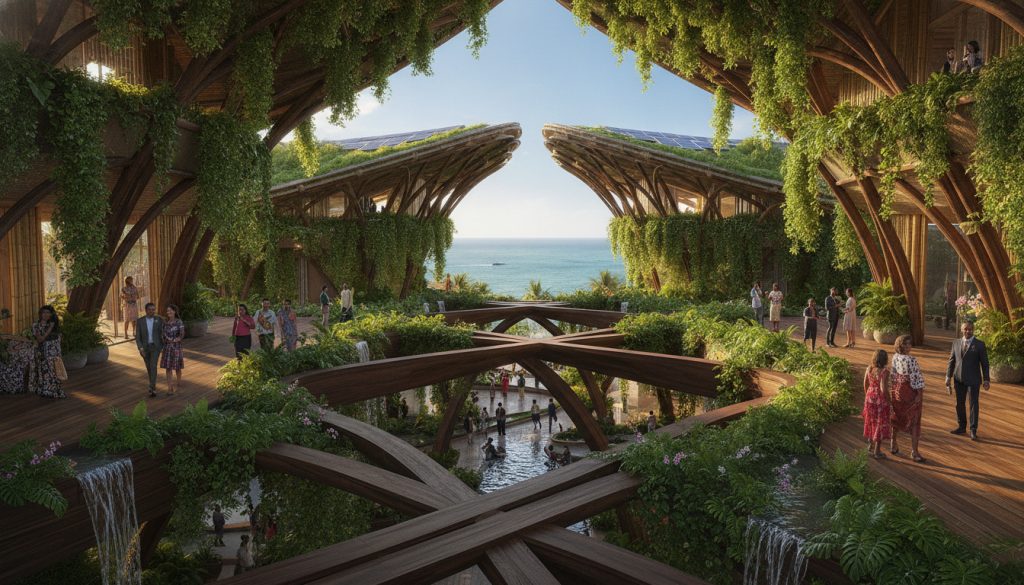
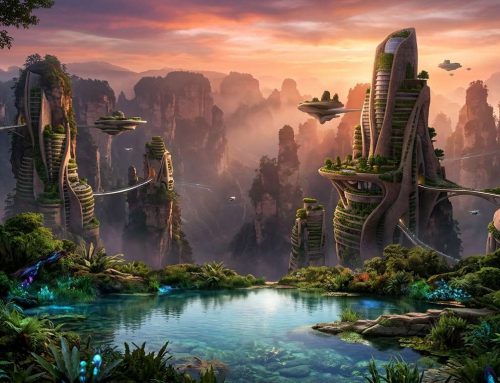
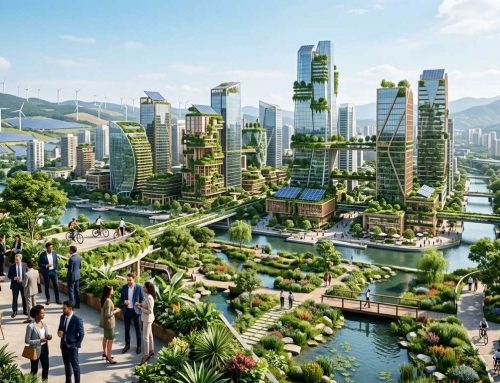
Kastom architecture and vertical biophilic design create amazing buildings. These buildings breathe, cool themselves, and capture carbon. Traditional structures in the Solomons have a genius design.
They have elevated platforms, walls that let in air, and steep roofs for rain. These designs work with the climate, not against it.
By 2050, Honiara will keep this wisdom alive. It will make it even better.
Carbon-Capturing Timber-Composite Structures Redefining Vavaea Ridge and Kukum Highway
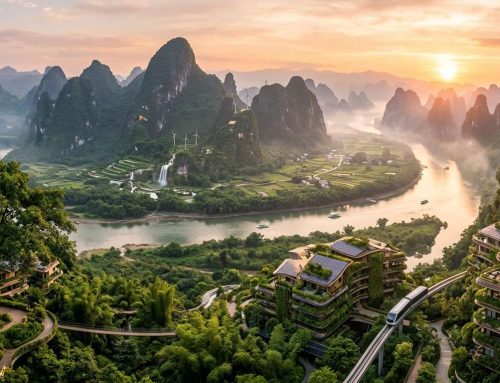
The Vavaea Ridge and Kukum Highway show how to use vertical biophilic design. I’ve seen designs that use fast-growing Pacific timber. They capture carbon as they cure.
These buildings pull CO2 from the air. They become carbon sinks, not sources.
Current projects focus on urban agriculture and disaster risk reduction. Timber composites take this vision vertical. They create dense cities that capture more carbon than forests.
Elevated Arcades and Ocean Breeze Cooling: Zero-Energy Climate Control from Ancestral Wisdom
Heritage buildings use ocean breezes to cool. Modern Honiara takes this idea vertical.
Towers have elevated arcades every few floors. They draw cooling breezes from the ocean. This is zero-energy cooling, using physics and ancestral wisdom.
The arcades work by speeding up ocean winds. This creates a Venturi effect. It cools the building without using electricity.
Closed-Loop Hydrologic Networks Powering Municipal Cooling and Urban Agriculture
Stormwater harvesting systems connect to these buildings. Rainwater supplies drinking water and powers cooling systems. It also grows food on rooftops.
These networks power cooling and grow food year-round. Every building is part of a city-wide cycle.
The Vavaea Ridge development uses this approach. It feeds aquaponics systems with stormwater. These systems produce vegetables and fish. Nutrient-rich water then waters vertical gardens before cooling loops.
Space-Age Environmental Physics Wrapped in Solomons Heritage Design Language
The Kukum Highway transformation is amazing. It combines space-age physics with heritage design. These buildings look distinctly Melanesian.
They outperform conventional architecture. Women and youth in planning ensure designs respect culture and innovation. The result is buildings that are both Solomon Islander and carbon-neutral.
By 2050, Honiara shows that sustainability and cultural identity go hand in hand. They create architecture that is more effective than either alone.
| Design Element | Traditional Kastom Architecture | Honiara 2050 Integration | Climate Performance |
|---|---|---|---|
| Structural Materials | Local timber, bamboo, palm thatch | Carbon-capturing timber composites with mineral treatment | Sequesters 2.5 tons CO2 per cubic meter annually |
| Ventilation Strategy | Elevated platforms, woven walls, open ground floors | Multi-story elevated arcades channeling ocean breezes | Reduces cooling energy demand by 100% |
| Water Management | Steep roofs shedding rainfall, minimal storage | Integrated closed-loop systems for cooling and agriculture | Captures 98% of precipitation for productive use |
| Cultural Expression | Carved posts, woven patterns, communal spaces | Heritage design language applied to vertical structures | Maintains identity while achieving carbon neutrality |
5. Conclusion: The Melanesian Sentinel’s Blueprint for Pacific Capital Longevity
I began looking into Honiara’s future in 2050, thinking it was just another big plan that wouldn’t work. But now, I’m sure I’ve seen something truly special. It’s not just about building new things. It’s about changing how we think about resilience in Pacific capitals.
The 2025 Honiara Summit was a big deal, with 350 leaders from 28 countries coming together. They focused on “Iumi Tugeda,” or working together. Pacific Leaders made big promises about taking care of the ocean and its fish, knowing it’s crucial for their future.
This climate adaptation model is groundbreaking because it turns weaknesses into strengths. Communities facing big challenges are finding solutions that others will follow. They’re using smart ways to handle water and energy, and even building buildings that help the environment.
By 2050, Honiara will be a leader in climate change solutions, unlike other cities that just try to fight it. They’re using nature and old wisdom to solve problems, not just build walls. This is about creating cities that work as one, like ecosystems.
I’m excited to see Honiara in 2050. I want to walk through its new spaces, see its unique buildings, and learn from the Melanesian Sentinel. They’re showing the world how to save coastal cities with island wisdom.

Leave A Comment