
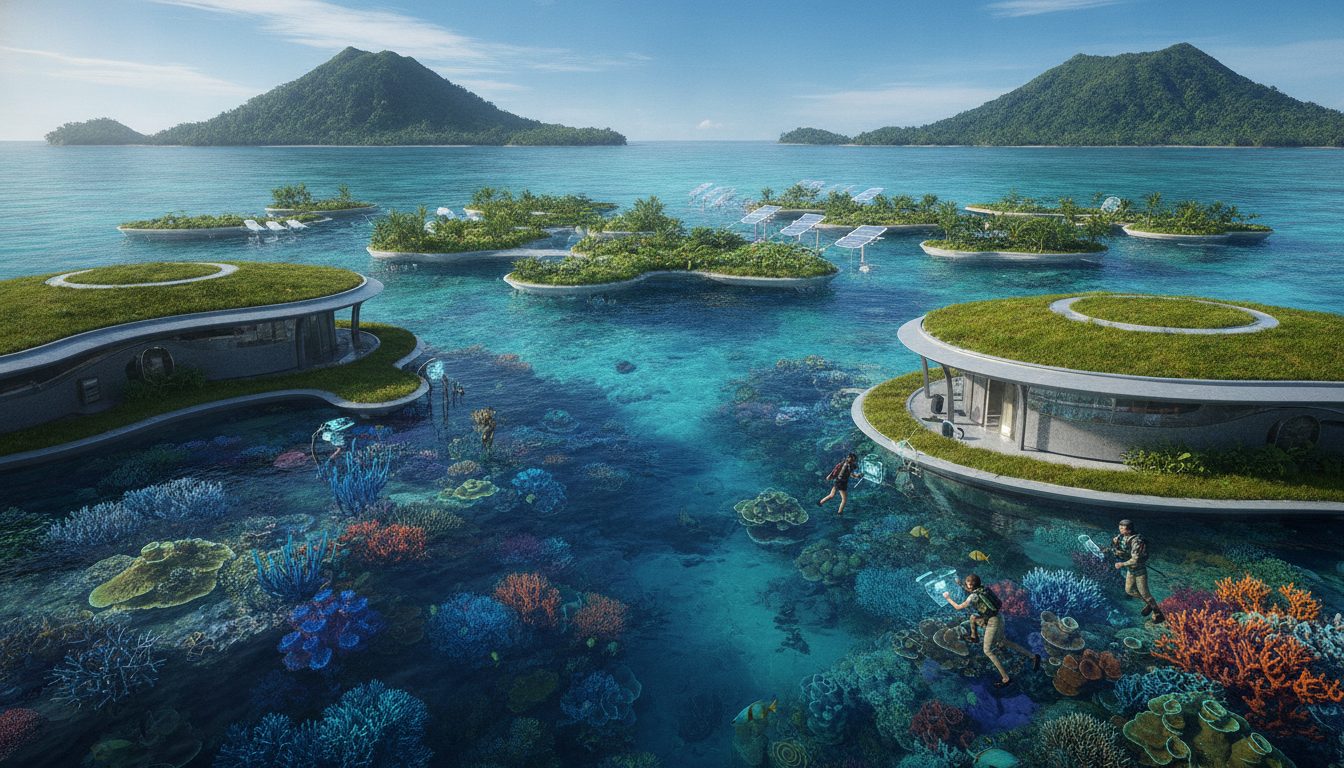
I’ve seen many island nations, but Fiji’s Great Sea Reef was unique. Standing there, I saw more than coral. I saw a blueprint for 330 South Pacific islands to become the world’s first carbon-negative ocean state.
This vision is not just dreams—it’s a detailed plan. The Fiji Low Emission Development Strategy aims for net-zero emissions by 2050. It plans for 100% renewable electricity by 2035. Fiji combines ancient ocean wisdom with modern marine science.
What works in Fiji can help others facing sea-level rise. They’re testing new ways to protect coastlines, like using coral to build seawalls. They’re also working on ocean energy systems that can power communities.
This plan is about more than just energy. It’s about keeping the ocean healthy and communities safe. It shows how to live in harmony with nature.
Key Takeaways
- The Republic of Fiji aims to achieve net-zero or net-negative emissions by 2050 through comprehensive decarbonization strategies
- The nation targets 100% renewable electricity generation across all 330 islands by 2035
- Ocean Thermal Energy Conversion (OTEC) and coral reef bio-engineering form the foundation of climate resilience infrastructure
- Traditional iTaukei marine stewardship practices are integrated with modern Blue Economy engineering principles
- The Low Emission Development Strategy covers transport, energy, agriculture, forestry, and waste sectors holistically
- Fiji’s archipelagic model provides scalable solutions for coastal and island communities globally facing climate challenges
Why Small Island Nations Will Author the Climate Survival Playbook We All Need
The playbook for our warming planet isn’t being written in big cities. I found it in 330 Fijian islands. Exploring Pacific island chains, I wondered why small nations were leading in climate change adaptation.
Sea levels don’t care about your size. Cyclones don’t look at your wealth.
These truths make island resilience unique. In Fiji, communities face threats that feel real. They innovate to survive, not debate science.
In 2018, Fiji launched its National Climate Change Policy (NCCP). It’s not just a defense. It’s a proactive plan, showing Fiji’s commitment under the Paris Agreement.
The policy has two main parts. It tackles immediate threats and plans for a low-carbon future. This invites other countries to follow.
Fiji’s approach is special. It came from teamwork between 14 government ministries and agencies. They worked together, guided by the Global Green Growth Institute.
This wasn’t just one group making decisions. Everyone worked together. This made the policy real and effective.
Fiji aims high. Its low emission development strategy sets ambitious targets. It plans for success, with or without help from others.
The timeline is impressive. Fiji has clear goals for 2050. The policy is full of specific plans and targets.
Small island nations must act fast. Their solutions will help others as the climate changes. Fiji’s ideas, like coral reef engineering, are useful everywhere.
These islands have a big role in climate talks. Fiji, with a tiny carbon footprint, leads in climate solutions. They show that necessity can drive innovation.
The 2018 policy also includes checks on progress. Fiji tracks its efforts closely. This shows their commitment to survival.
In Suva, I saw Fiji’s plans in action. Solar panels and coastal projects are changing the city. Fiji is showing the world how to adapt.
Talking to Fiji’s leaders, I learned about their strategy. They focus on both protecting communities and leading on climate change. This makes Fiji a leader, not just a victim.
The knowledge in these islands is crucial. As sea levels rise, Miami and others will need Fiji’s solutions. The next time a hurricane hits, Fiji’s ideas will help.
Small island nations face big challenges. But they are creating solutions that others will need. The next sections will show the technical innovations from Fiji’s 2018 policy.
I left the Pacific with a new understanding. Climate leadership isn’t about size. It’s about facing the problem and finding solutions. Fiji’s policy shows that even the smallest can lead.
Fiji Future 2050: Engineering the World’s First Carbon-Negative Ocean State
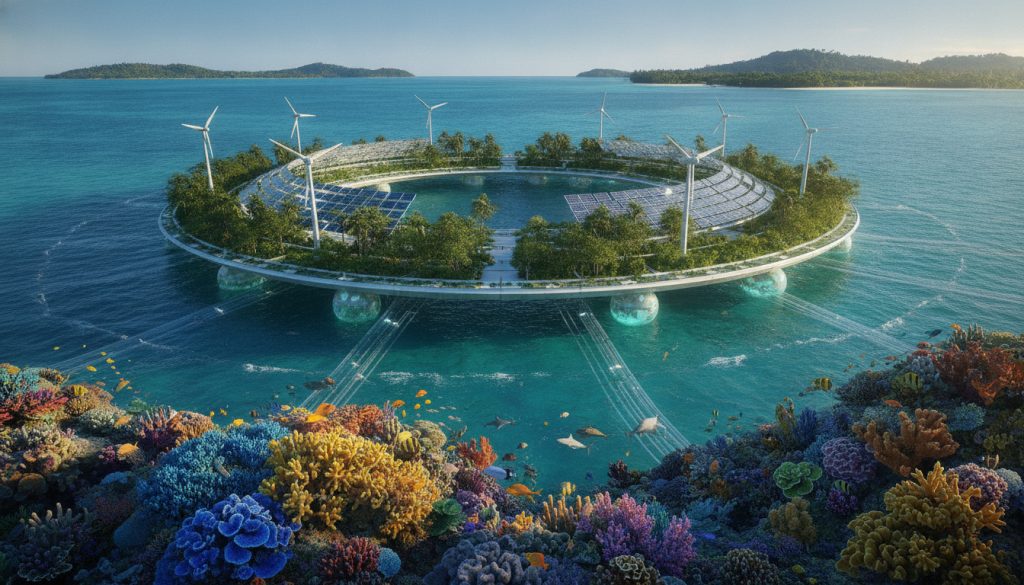
Creating a carbon-negative ocean state is ambitious. Yet, Fiji’s coral reef restoration under its turquoise waters shows it’s possible. I’ve seen many renewable energy projects worldwide. But Fiji’s approach is unique.
The Fiji future 2050 plan combines three systems as living infrastructure. Bio-mineralized coral matrices protect 330 islands from cyclones. They also rebuild marine ecosystems. A decentralized ocean microgrid uses sun, water temperature, and mountain streams for power.
Walking through coastal villages, I saw how engineered reefs saved homes from cyclones. These communities know climate tech is real—it’s about survival.
Bio-Mineralized Coral Matrices Outperform Concrete Seawalls by Every Metric
Diving in the Great Sea Reef changed my view on coastal protection. Traditional concrete seawalls line many coastlines. But they crack after just fifteen years, causing more problems.
Fiji’s bio-mineralization grows living limestone structures. It uses low-voltage currents to speed up reef building. This creates strong structures that coral colonizes in months.
The science behind this feels almost magical. Seawater has plenty of calcium and carbonate ions. The current changes pH just enough for mineral precipitation without harming life.
The Great Sea Reef is critical infrastructure through this technology. The Pacific Islands Ridge-to-Reef program connects coral reef restoration to watershed management. It shows that sediment pollution from deforested hillsides kills reefs faster than climate change.
I spent time with iTaukei communities who’ve understood this for generations. Their traditional land management protected watersheds. Healthy mountains meant healthy reefs and abundant fishing.
| Protection Method | Initial Cost per Kilometer | Lifespan | Wave Energy Absorption | Ecological Value |
|---|---|---|---|---|
| Concrete Seawalls | $4-6 million USD | 15-25 years | Reflects energy, causes scouring | Creates dead zones, zero habitat |
| Bio-Mineralized Coral Matrices | $1.5-2.5 million USD | Self-maintaining, indefinite | Absorbs and disperses through complex structure | Fishery habitat worth $8,000+ annually per hectare |
| Traditional Rock Revetments | $3-4 million USD | 10-20 years | Partial absorption, structural failure in major storms | Minimal habitat, disrupts sediment flow |
Bio-mineralized reefs outperform traditional seawalls in every way. They cost 60% less to build. They self-repair after storms and absorb wave energy through their complex structure.
This technology means healthier marine environments for photographers and divers. It also means homes standing after cyclones for coastal communities. I’ve seen this success firsthand on restored reefs.
“Coastal ecosystems can provide cost-effective protection from natural hazards while delivering multiple co-benefits including carbon sequestration, fisheries productivity, and tourism revenue.”
The Decentralized Ocean Microgrid That Ends Energy Colonialism
Energy colonialism is a problem I’ve seen everywhere. Diesel generators burn imported fuel, creating dependence. Fiji’s decentralized microgrid changes this model.
The goal is 100% renewable energy by 2035. The plan includes five 5 MW solar installations and 5 MW in Vanua Levu. These are floating lagoon platforms inside barrier reefs.
I visited a planned site in Nadi’s western lagoon. It maximizes sun exposure without using agricultural land. The reef system protects the arrays from storm damage.
OTEC technology is the next step for energy independence. It uses temperature differences in the ocean to generate power. Fiji’s location is ideal for OTEC.
The third part optimizes hydropower with ten mini-hydro systems in watersheds. I hiked to proposed sites in Viti Levu’s interior. Year-round rainfall feeds streams for turbines without disrupting rivers.
This is revolutionary because it integrates 1,100 solar home systems for remote communities. Lithium-ion batteries store excess solar production for nighttime use. The distributed approach creates resilience—when a cyclone damages one system, others keep operating.
- Floating Solar Arrays: 10 MW total capacity across six locations, protected inside barrier reefs
- Mini-Hydro Systems: 10 installations in mountain watersheds providing year-round baseload power
- Solar Home Systems: 1,100 units bringing electricity to isolated communities for the first time
- Battery Storage: Lithium-ion systems balancing renewable intermittency across the network
- Biomass Plants: Eight rehabilitated biofuel mills converting agricultural waste to electricity
I spoke with families in remote villages who’ve never had reliable electricity. Their current reality involves diesel generators running three hours per evening. Solar microgrids change everything: refrigeration, lighting, and phone charging.
The economic impact is huge. Energy independence means money stays in local communities. I calculated the numbers with a village chief—his community spends roughly $40,000 annually on diesel. That money could fund teachers, health workers, or small business development instead.
For travelers, this transformation means guilt-free island stays powered by sun and water. Every resort, guesthouse, and beach bungalow runs on clean energy. I’ve stayed in too many “eco-resorts” that greenwash diesel dependence—Fiji’s 2050 vision eliminates that hypocrisy.
Carbon-Negative Status Proves Small Can Lead
Achieving carbon-negative status is ambitious for a developing nation. Fiji’s calculations show it’s possible. The Low Emission Development Strategy targets net-zero emissions by 2050, then goes further into negative territory through massive carbon sinks.
The 30 Million Trees in 15 Years campaign is one of the world’s most ambitious reforestation efforts. I joined a planting day with a primary school in the Ba Province. Seven-year-olds explained which native species sequester carbon fastest while restoring biodiversity. This isn’t monoculture plantation forestry—it’s mixed indigenous forests rebuilding ecosystem complexity.
Tree species selection follows both carbon sequestration science and traditional ecological knowledge. Fast-growing pioneers like vesi and dakua establish canopy quickly. Slower hardwoods provide long-term carbon storage spanning centuries. The campaign engages schools, communities, and corporate programs, embedding climate action in cultural practice rather than treating it as government obligation alone.
Forest protection forms the second carbon strategy. Reducing deforestation emissions by 10% and logging degradation by 1% might sound modest. But these percentages represent significant carbon retention across Fiji’s forested watersheds. I hiked through protected forest reserves where sustainable management frameworks balance economic needs with climate imperatives.
The least understood but most powerful strategy involves blue carbon ecosystems—mangroves, seagrass beds, and coastal wetlands. They sequester carbon at rates 10 to 50 times higher per hectare than terrestrial forests. Mangrove roots trap sediment and organic matter, burying atmospheric carbon in coastal mud where it remains stored for millennia.
I waded through mangrove restoration sites where young trees planted three years ago now stand chest-high. The Pacific Islands Ridge-to-Reef program protects these coastal carbon sinks while improving upstream watershed health. Sediment flowing from deforested hillsides smothers both coral reefs and mangrove seedlings—integrated management addresses the whole system.
“Small island developing states are not small in their ambition, their innovation, or their determination to lead global climate action from the frontlines of climate impacts.”
The combined sequestration potential adds up to genuine carbon-negative status. Millions of new trees will absorb decades of carbon growth as they mature. Reduced deforestation prevents emissions equivalent to burning millions of liters of fuel. Blue carbon ecosystems continuously pull atmospheric carbon into coastal sediments.
When these carbon sinks exceed all emissions from transport, electricity, agriculture, and waste—even in ambitious development scenarios—Fiji crosses into negative territory. The forestry sector alone offsets more than current total national emissions once the 30 million tree target completes by 2030.
I’ve visited carbon offset projects across four continents, and most involve corporations in wealthy nations paying developing countries to not cut down forests. That dynamic bothers me—it treats poor nations as carbon sponges for rich world pollution. Fiji’s approach differs fundamentally: achieving carbon-negative status for national benefit, proving small island leadership means leading by example.
The implications extend far beyond Fiji’s shores. If a small Pacific nation developing its economy can reach carbon-negative status, what excuse do industrialized countries have? I’ve heard this question posed bluntly at climate conferences. The math and engineering prove it’s possible—the only missing ingredient is political will.
For adventure travelers and photographers like me, this creates profound meaning beyond beautiful landscapes. Every photo of restored reefs, every image of solar arrays floating in lagoons, every portrait of families planting native trees becomes documentation of what climate leadership actually looks like. This is the story our planet desperately needs—proof that ambition, engineering, and cultural wisdom can combine into genuine solutions.
Tourist attractions in Solomon Islands.
Urban Vale Biophilic Architecture Proves Suva and Nadi Don’t Need Air Conditioning
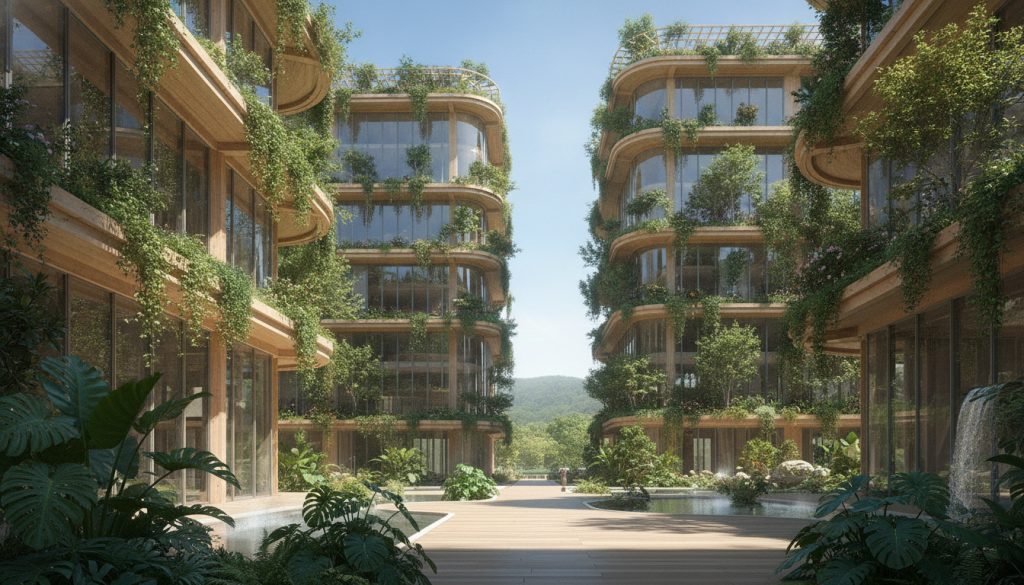
Fiji’s architectural revolution started when architects asked: how did people stay comfortable here for a thousand years before mechanical cooling? I’ve walked through enough sealed hotel towers across the Pacific, listening to air conditioning units battle tropical heat around the clock. The answer reshapes urban development across Suva and Nadi by 2050, proving that passive cooling eliminates the need for energy-hungry mechanical systems entirely.
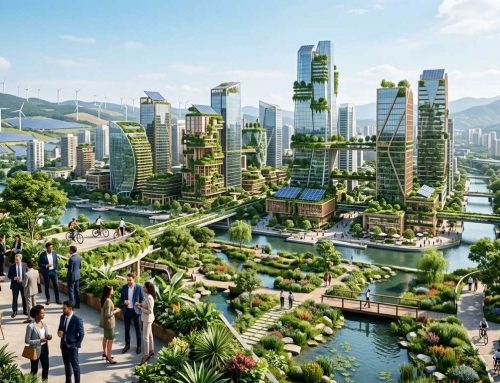
The urban centers deploy timber-composite vale biophilic architecture that fuses iTaukei environmental stewardship with modern engineering. These aren’t token gestures toward sustainability. They’re fundamental reimaginings of what tropical cities can become when cultural heritage provides climate solutions more sophisticated than imported technologies.
Walking through theoretical designs for Suva’s transformed core, I encountered buildings that breathe rather than seal. Wind-scooping facades channel trade winds through internal spaces. Living green walls transpire moisture while filtering air. The transformation proves that looking backward—toward traditional wisdom—creates the leap forward that climate adaptation demands.
Timber-Composite Technology Transforms Tropical Construction
Vertical biophilic architecture carbon neutral systems work through sophisticated engineering that turns buildings into carbon sinks. Cross-laminated timber (CLT) and laminated veneer lumber (LVL) create structural frames supporting 10-15 story buildings. Each cubic meter of engineered wood stores approximately one ton of CO2, making construction itself a climate solution.
Fiji’s sustainably managed forests feed this timber construction pipeline without triggering deforestation. The framework ensures harvest rates never exceed growth rates. Plantation and native species both contribute to the supply chain, creating economic opportunity while maintaining forest cover.
The vertical aspect addresses urban density without sprawl. Suva and Nadi need housing and commercial space, but expansion onto agricultural land or mangrove coastlines would undermine food security and coastal protection. Stacking floors vertically while maintaining passive cooling requires precise design parameters.
| Design Element | Technical Specification | Climate Function |
|---|---|---|
| Floor Plate Width | 12-15 meters maximum | Enables cross-ventilation through entire building depth |
| Perimeter Balconies | 1.5-2 meter projection | Shades facades from direct tropical sun exposure |
| Vertical Air Shafts | Central atriums 3-4 stories high | Creates stack-effect drawing hot air upward and out |
| Green Wall Coverage | 30-40% of facade area | Provides evaporative cooling and air purification |
The biophilic component integrates living systems throughout building envelopes. Rooftop gardens reduce heat island effect in urban cores. Vertical planted walls provide evaporative cooling that drops ambient temperatures 5-8 degrees Celsius. Internal courtyards bring daylight and vegetation deep into building cores, improving both thermal comfort and psychological well-being.
I’ve seen conventional concrete construction across countless Pacific islands—massive thermal mass absorbing tropical heat all day, then radiating it back at night. Hermetically sealed facades require constant air conditioning. The embodied carbon from cement production adds climate burden before buildings even open. These structures offer zero biodiversity value and create dependence on imported energy.
The carbon sequestration calculation for vertical biophilic architecture carbon neutral systems accounts for embodied carbon in construction, operational energy use, and carbon storage in timber construction plus integrated vegetation. When buildings store more carbon than their construction and fifty-year operation emit, urban development becomes climate solution rather than climate problem.
“The best time to plant a tree was twenty years ago. The second best time is now. The third best time is when that tree becomes a building that stores carbon for centuries.”
For travelers, this transformation means cities that feel alive rather than hermetically sealed. Natural ventilation carries the scent of tropical vegetation rather than recycled conditioned air. Sustainable buildings create environments where opening windows makes sense, where indoor and outdoor spaces flow together, where architecture enhances rather than fights the climate that makes Fiji extraordinary.
Indigenous Wisdom Meets Modern Urban Scale
The most powerful moment during my Fiji research came when an elder explained how ancestors positioned vale to capture the malumu—the southeast trade wind—while deflecting the cagi leka that brings heavy rain from the northwest. This wasn’t folklore. It was sophisticated climate engineering that modern architects rediscover through computer modeling and wind tunnel testing.
iTaukei design wisdom scales to modern urban density through systematic translation of vernacular principles. Elevated floors prevent flooding and enhance airflow by creating pressure differentials. Steep roofs shed torrential tropical rain while providing insulation through air gaps. Open floor plans eliminate dead air zones that trap heat and humidity.
The traditional architecture used natural materials that breathe and flex with humidity changes—bamboo, palm, hardwood joinery that expands and contracts seasonally. Contemporary architects translate these qualities into engineered systems. Local timber screens provide privacy and weather protection while maintaining airflow, replicating the permeable walls of traditional vale.
Strategic urban planning aligns with iTaukei design principles at city scale. Street grids orient to prevailing winds, channeling trade breezes through Suva’s downtown corridor. Building orientations maximize cross-ventilation while minimizing direct sun exposure. The cultural practice of communal outdoor living spaces informs biophilic atriums and shared verandas in apartment buildings.
- Traditional carpenters who understand timber joinery become specialists in engineered wood construction techniques
- Thatchers who manipulated palm fronds for waterproofing design living roof systems for modern buildings
- Communities who positioned vale for climate comfort become consultants for passive building design strategies
- Cultural practitioners who maintained environmental knowledge systems guide sustainable materials sourcing
The LEDS framework recognizes that investment in education and skill development must honor indigenous knowledge while building new technical capacity. This isn’t about preserving the past in museums. It’s about recognizing that cultural heritage contains climate solutions that imported technologies often miss.
What makes this approach powerful is the skills transfer it enables. The same environmental intelligence that created vale capable of withstanding Category 5 cyclones without mechanical systems now informs sustainable buildings engineered for accelerating climate extremes. Ancestral observation of microclimates, seasonal wind patterns, and material properties becomes data that validates and enhances computer simulations.
The fusion of indigenous knowledge with materials science creates architecture that’s both culturally authentic and climate advanced. Buildings become expressions of identity rather than generic international style boxes. They demonstrate that small island nations don’t need to choose between tradition and innovation—the most powerful solutions emerge when both inform each other.
By 2050, Suva and Nadi prove that tropical cities can thrive without air conditioning. The urban landscape transforms into a living demonstration of climate adaptation that respects cultural roots while reaching toward a viable future. Every timber-composite tower storing carbon, every building channeling trade winds through naturally ventilated spaces, writes a chapter in the survival playbook that all tropical and subtropical cities will eventually need.
Closed-Loop Hydrology and Zero-Emission Transit Solve What Conventional Infrastructure Cannot
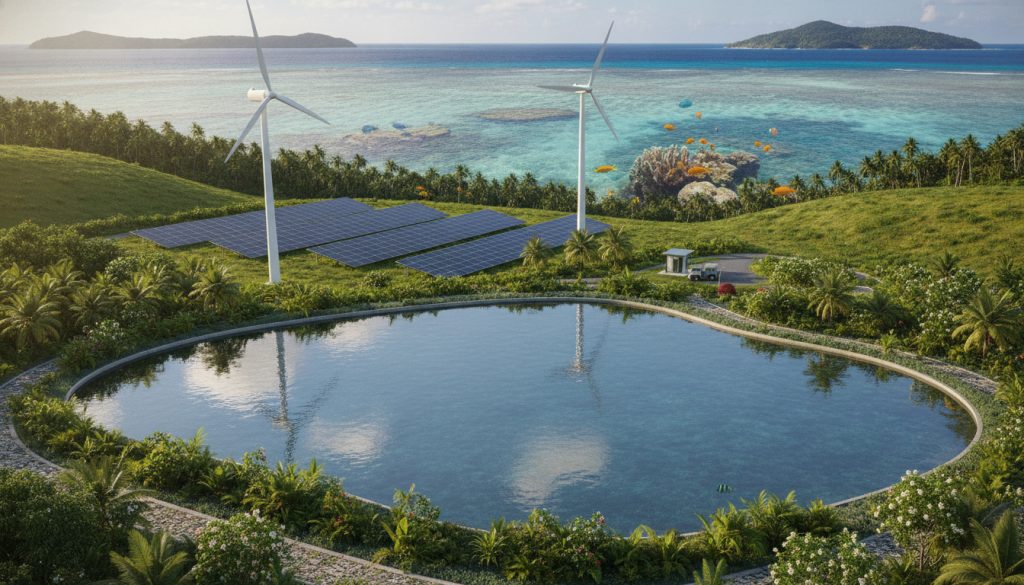
I’ve seen island nations face big challenges with water and transport. Fiji aims to solve these with new systems. They use rainwater and zero-emission transit to improve service and cut fossil fuel use.
These systems work together. Renewable energy powers electric vehicles and hydrogen for ferries. Captured rainwater irrigates crops and cools buildings.
These solutions tackle problems that expensive tech can’t solve. They work with tropical weather, not against it.
Subsurface Hydrologic Heritage Engineering Captures Every Tropical Raindrop
Tropical islands face a paradox. Droughts are followed by floods that overwhelm systems. Needed water rushes into the ocean during wet months.
Subsurface hydrologic heritage engineering stores rainwater for dry times. It uses three strategies that work together.
Rooftop retention starts with buildings. They channel rain into underground cisterns. Stadium porous asphalt stormwater drainage captures street runoff.
Large vaults store runoff in millions of gallons. They’re under parks and public spaces. This system adapts ancient Pacific island practices.
Ancient communities used rock cisterns and stone channels. Today’s closed loop reservoir stormwater harvesting keeps these principles alive.
Walking through this system shows its beauty. Suva streets have porous asphalt that lets rain soak in. Water flows through bioswales and into vaults, capturing 100% of wet season rainfall.
In dry months, stored water feeds cities. This stops supply interruptions. The system also cools buildings without using energy-hungry compressors.
The LEDS calls for a water infrastructure review. This approach creates resilience against droughts and floods. It’s sustainable water management for a changing climate.
Sustainable Agriculture From Harvested Sky Water
Island nations struggle with food security. They import staples, vulnerable to disruptions. Fiji’s vision uses harvested rainwater for self-sufficiency.
250 hectares of climate-resilient agriculture are the start. Subsurface water conservation allows year-round farming. Drip irrigation with retained stormwater supports multiple crops.
Climate-smart farming trains 500 farmers. These methods succeed in the tropics. They include polyculture, nitrogen-fixing species, and composting.
Traditional crops are key. They’re resilient to local climate variability. Farmers choose genetics adapted to their conditions.
| Agricultural Component | Target Metric | Climate Benefit | Food Security Impact |
|---|---|---|---|
| Farmer Training | 500 trained in climate-smart farming | Reduced chemical inputs | Knowledge transfer across communities |
| Organic Production | 25% increase with market access | Carbon sequestration in soil | Premium export opportunities |
| Climate-Resilient Hectares | 250 hectares adopted | Drought and flood tolerance | Year-round production capacity |
| Irrigation Enhancement | Gravity-fed distribution | Zero pumping energy required | Reliable water access |
Fiji’s steep terrain helps this approach. Gravity-fed irrigation serves valley farms without pumping costs. This enhances irrigation and boosts food security.
Instead of importing staples, Fiji grows taro, cassava, and breadfruit. These crops sustained communities before colonialism.
The organic production goal is to increase by 25%. This creates premium export chances. It’s sustainable agriculture that’s financially viable and resilient.
Disaster preparedness is key. Subsurface water reserves and diverse crops help communities recover quickly. Seeds and water keep people and animals alive after storms.
Hydrogen Hydrofoils and Electric Air Transit Connect 330 Islands Without Fossil Fuels
Connecting 330 islands without fossil fuels is now possible. Hydrogen fuel and electric aviation are ready for island use.
Hydrogen hydrofoils are ferry service’s future. They use hydrogen fuel cells for electric motors. At speed, they lift above water, reducing drag and energy use.
These hydrofoils run on green hydrogen from Fiji’s renewable energy. They emit only water vapor, faster than conventional ferries. Hydrogen is produced on larger islands and distributed across the archipelago.
For short hops, electric aviation offers zero-emission travel. Battery-electric aircraft connect island pairs within Fiji’s geography using renewable energy.
Lautoka’s zero carbon transport plan is a model. It includes electric buses, charging networks, and hydrogen for ferries. This program addresses all aspects of vehicle use, from making to disposing.
The vision for practical implementation is:
- Urban centers have electric bus networks that charge during solar peaks, offering free or low-cost transit
- Inter-island routes run hydrogen hydrofoils on hourly schedules, cutting travel time and eliminating diesel exhaust
- Outer island aviation uses electric aircraft for emergencies, government services, and tourism, without aviation fuel shipments
- Active transport infrastructure upgrades walkable communities and cycling networks in urban areas, reducing motorized trips
This transformation means guilt-free island hopping. Travelers enjoy hydrofoils and electric aircraft, knowing they’re not harming the climate.
The sustainable transportation network also addresses equity. Current diesel ferries favor profitable routes, leaving remote areas isolated. Zero-emission transit powered by local renewables makes frequent service to smaller populations affordable.
The NDC Investment Plan covers maritime, domestic aviation, and land transport. This ensures no mode is left behind. Hydrogen and electric vehicles are commercially viable elsewhere. The LEDS provides the policy framework. Now, it’s up to investment partnerships to make it happen.
This sustainable transportation vision improves service while cutting emissions. Residents enjoy faster, cheaper, more frequent connections between islands. This is a win-win for transformation.
Conclusion: Fiji’s Rebirth Rewrites What Island Nations Can Become
I’ve written about many climate projects, but Fiji’s 2050 plan is unique. It faces the hard truths head-on. The solutions, like bio-mineralized reefs and vertical towers, are real.
The policy framework is solid, thanks to the LEDS and NCCP. But Fiji’s own documents show the challenges. Budget shortfalls and rising debt are big hurdles.
COVID-19 recovery costs also compete with climate action funds. Yet, this honesty makes me more hopeful. Fiji isn’t hiding the fact that sustainable development is hard.
The government is asking for more climate finance. They’re also investing in education and skills to build local capacity. This shows their commitment to the cause.
Fiji’s blend of traditional knowledge and modern science is inspiring. This mix is what true climate leadership looks like. It’s a unique approach that others can learn from.
Small island nations like Fiji are leading the way. They have no choice but to find solutions. Island resilience is not just a goal; it’s a must.
If Fiji reaches 70% of its vision by 2050, it will show the world. Island nations are not just waiting for help. They’re innovating solutions that will benefit everyone. The ocean is not just a witness; it’s a teacher.


Leave A Comment