
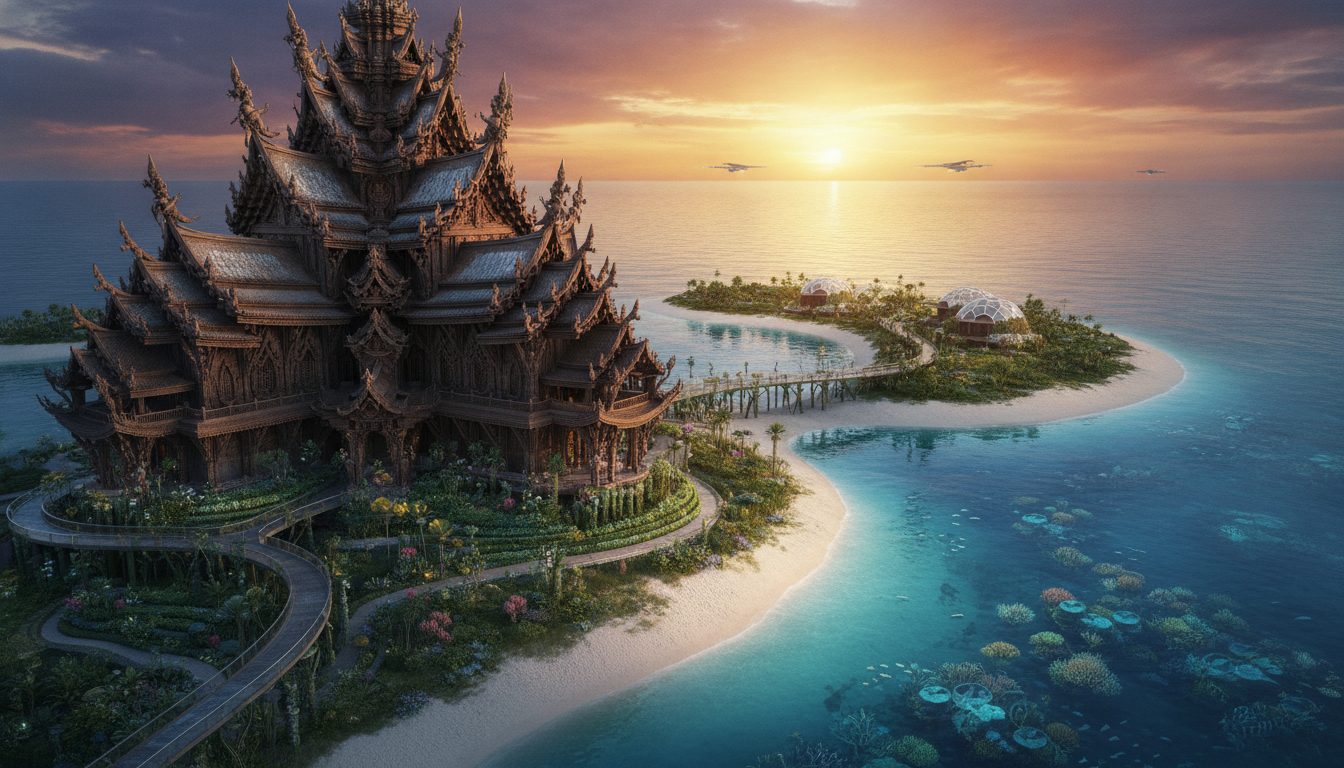
I remember standing at Rachawet Cape in Pattaya, looking up at a 105-meter wooden spire. The salt air was strong, and I wondered how teak could last through monsoons and high tides.
This memory made me think about the future. I imagine this giant standing thirty years from now, a true marvel in preserving wood by the sea.
This isn’t a formal plan or report. It’s my enthusiastic take, based on current trends in coastal design and wood science.
By mid-century, I see this landmark as carbon-neutral, with all its intricate details preserved. I imagine technology working with the sea to protect this craftsmanship.
Let’s dive into what this transformation could look like.
Key Takeaways
- The all-wood complex on Rachawet Cape could become a global model for maritime timber preservation by mid-century.
- Reaching carbon-neutral status may be possible without sacrificing traditional hand-carved craftsmanship.
- Advanced marine-shielding technology could protect the structure from salt spray and rising tides.
- This article is a personal, speculative exploration grounded in real engineering and architecture trends.
- Traditional Thai woodworking techniques may blend with modern coastal defense innovations.
- The piece invites readers to imagine bold, forward-thinking solutions for historic wooden landmarks.
1. Reimagining a Wooden Wonder: The Sanctuary of Truth Future 2050 Vision
In the 1980s, Lek Viriyaphan had a dream. He wanted to build a temple out of wood, without nails, on Thailand’s coast. His dream became the Sanctuary of Truth. By 2050, I see this wooden giant standing tall, meeting carbon-neutral goals while keeping every detail Lek Viriyaphan envisioned.
From Lek Viriyaphan’s Timber Architecture to a Carbon-Neutral Landmark
Lek Viriyaphan’s plan was to create four philosophical wings, all hand-carved using traditional Thai joinery. No steel. No nails. Just wood, shaped to fit together like a puzzle.
By 2050, I imagine teams have added invisible carbon-capture systems under those joints. The building’s bones stay untouched. Yet, it becomes carbon-neutral, keeping Lek Viriyaphan’s vision alive.
Why the 105-Meter All-Wood Complex Still Commands Global Attention
This all-timber complex stands 105 meters tall. It looks fragile against ocean winds. Yet, it endures every year.
That contrast is what draws me back, camera in hand. A massive wooden structure, on a cliff, is awe-inspiring. It makes people stop and stare.
2. The Hardwood Heart: Preserving Teak, Mai Daeng, and Mai Takhian for a Century More
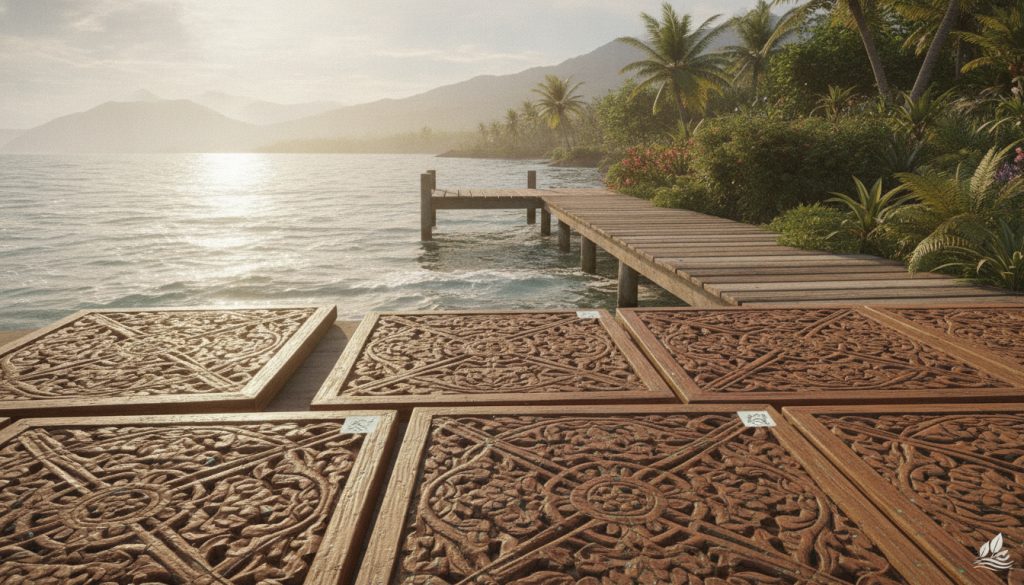
When I got close to the teak panels, I saw the chisel marks. It changed how I saw this place. Each groove told a story of patience and skill.
These weren’t just beautiful carvings. They were survivors of decades against salt air and humidity.
Builders chose teak, mai daeng, and mai takhian for their strength against rot and insects. But even the toughest hardwood has limits near the Gulf of Thailand.
Hand-Carved Craftsmanship Under Marine Climate Stress
Salt spray works slowly but relentlessly. It seeps into wood grain and pulls out natural oils that once protected the timber from decay.
Add constant humidity, harsh UV exposure, and daily temperature swings, and you get stress conditions most wooden structures never face. These carvings endure a climate that would break down ordinary timber within a single generation.
Every day, the wood faces:
- Airborne salt particles that corrode wood fibers
- Humidity swings between 60% and 95%
- Direct UV rays that bleach and weaken surface grain
- Thermal expansion from shifting coastal temperatures
Original craftsmen built in extra thickness, expecting slow surface wear over time. Even that foresight isn’t enough for another hundred years of exposure.
The Science Behind Marine Timber Bio-Preservation
This is where marine timber bio-preservation changes the equation. Engineers now apply targeted microbial treatments that colonize wood surfaces with beneficial organisms, crowding out the fungi and insects that cause decay from within.
These living defenses pair with controlled moisture management systems, keeping internal wood moisture steady no matter what the outside humidity does.
“Wood preservation isn’t about sealing timber away from nature. It’s about helping it coexist with the exact conditions trying to break it down,” notes a conservation engineer specializing in tropical hardwood restoration.
Paired with regular monitoring, this science could extend the life of every hand-carved surface by a century or more. That means future travelers, maybe even my own kids someday, could stand exactly where I stood and trace the same chisel marks I saw.
3. Breathable Bio-Polymer Nano-Glazes: A New Skin for Ancient Wood
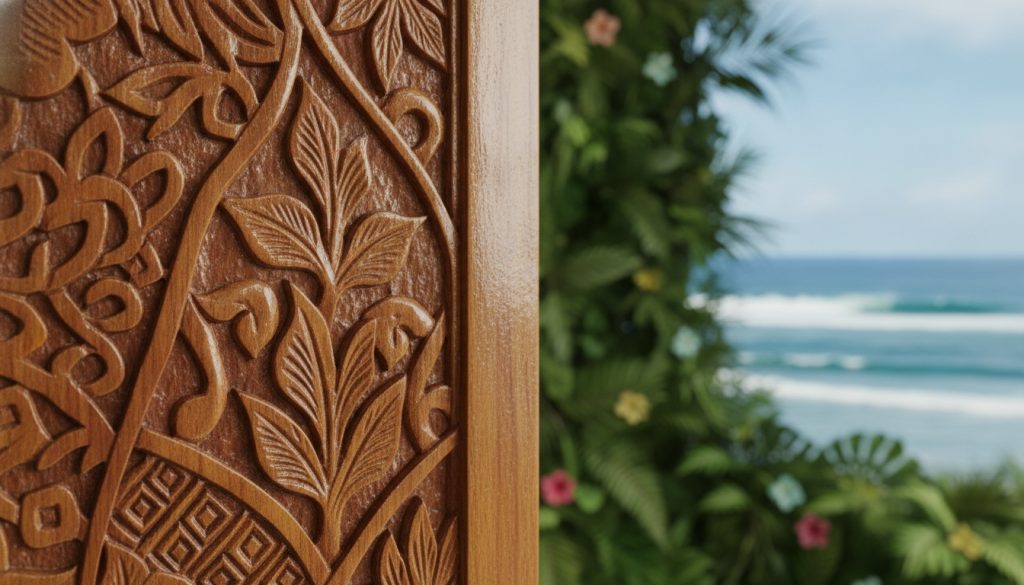
Protecting wood from the sea is tricky. If you seal it too much, it can die faster than salt does. This is what conservators face when trying to protect wood surfaces until 2050. They’re looking for a smarter solution, not a thicker one.
Now, engineers are testing bio-polymer nano-glazes. These are thin coatings that work with the wood, not against it. It’s like using sunscreen for wood instead of a plastic cover.
Halting Salt Degradation and Sun-Bleaching Without Suffocating the Grain
Salt crystals form inside wood when ocean air meets warm, dry wood. This cracks the grain from the inside. Add the sun, and the wood loses color and strength.
A nano-glaze stops these salt molecules at the surface. It works like a molecular filter. Water vapor and moisture still get through, so the wood breathes normally. Nothing gets trapped to rot or warp the grain.
Non-Invasive Mineral Masonry Glazes Versus Traditional Sealants
Traditional sealants create a hard shell over wood. This looks good for a while. But then, moisture gets trapped, and rot starts where you can’t see it.
Non-invasive mineral masonry glazes work differently. They bond mineral particles to the wood surface without blocking air. This keeps the wood breathing while protecting it from UV rays and salt.
| Coating Type | Breathability | Salt Protection | Typical Lifespan |
|---|---|---|---|
| Traditional Sealant | Low — traps moisture | Moderate | 3–5 years |
| Bio-Polymer Nano-Glaze | High — vapor permeable | Strong | 10–15 years |
| Non-Invasive Mineral Masonry Glaze | High — mineral-bonded | Very Strong | 15–20 years |
4. The Invisible Shield: Ionic Air Curtains Against Airborne Salinity

Protecting the Sanctuary of Truth might involve something you can’t see. Every plan for the Sanctuary of Truth future 2050 includes a hidden defense. It works in the air, not on the wood itself.
Salt from the Gulf of Thailand can settle on the wood. Engineers aim to stop it before it lands. They want to keep the wood safe from salt.
An ionic air curtain is the solution. It’s like the air blast you feel in a grocery store on a hot day. But instead of blocking heat, it charges and redirects salt particles.
Engineering a Perimeter Defense Ocean Air Cannot Penetrate
The idea might sound advanced, but it’s simple. Charged ions pull airborne salt away from the building. This keeps the wood safe.
A ring of emitters could surround the structure. They’re invisible unless you know where to look. This method protects without being obvious.
| Protection Method | Visibility to Visitors | Maintenance Needs | Salt Deflection Potential |
|---|---|---|---|
| Ionic Air Curtain | None | Low, automated sensors | High |
| Physical Windbreak Walls | High, alters sightlines | Moderate | Moderate |
| Chemical Sealant Coating | Low, slight sheen | High, needs reapplication | Moderate |
Balancing Invisible Technology With Sacred Architectural Aesthetics
There’s a challenge here. How do you protect a sacred landmark without making it look like an airport checkpoint?
Visitors don’t like visible technology at temples. It ruins the mood. No one wants to take pictures with sensors and cables around.
“The best conservation technology is the kind visitors never notice, because it never interrupts the story the building is trying to tell.”
This is the hope for the Sanctuary of Truth future 2050 concept. Whatever protects it should be silent, unseen, and out of frame.
5. Guarding Cape Ratchawete: Biomimetic Breakwaters Against Tidal Erosion
The ocean attacks the Sanctuary of Truth from above and below. For decades, it has been eroding the cliffs at Cape Ratchawete. Any plan for the Sanctuary of Truth future 2050 must consider the underwater base, not just the wood.
Coral-Inspired Design Beneath the Waves
Engineers are using coral reefs as inspiration. Coral reefs don’t fight waves head-on. Instead, they break up wave energy into smaller ripples.
Biomimetic breakwaters work in a similar way. They use submerged concrete modules with coral-like textures. These modules scatter tidal force, creating a defense system that works with the sea. The result is a defense system that works with the sea instead of against it, dissipating energy quietly rather than slamming into the coastline with a rigid wall.
Securing Coastal Cliffs for the Next Century of Storms
This approach doesn’t change what visitors see from land. No towering seawall interrupts the view of Cape Ratchawete’s dramatic cliffs. The reef-like structures stay hidden underwater, doing their job while the coastline keeps its wild, natural character.
Protecting the rock beneath the temple is just as important as protecting the timber above it. This submerged shield gives the cliffs a fighting chance against another hundred years of monsoon storms and rising tides.
| Coastal Defense Method | Visual Impact | Wave Energy Handling | Long-Term Durability |
|---|---|---|---|
| Traditional Concrete Seawall | High — visible barrier | Blocks waves directly | Prone to cracking under repeated impact |
| Rock Riprap Armor | Moderate — visible boulders | Absorbs some energy | Shifts and erodes over decades |
| Biomimetic Coral Breakwater | Minimal — fully submerged | Disperses energy naturally | Self-reinforcing, mimics reef resilience |
6. Subsurface Hydrologic Heritage Engineering: Capturing Every Monsoon Drop
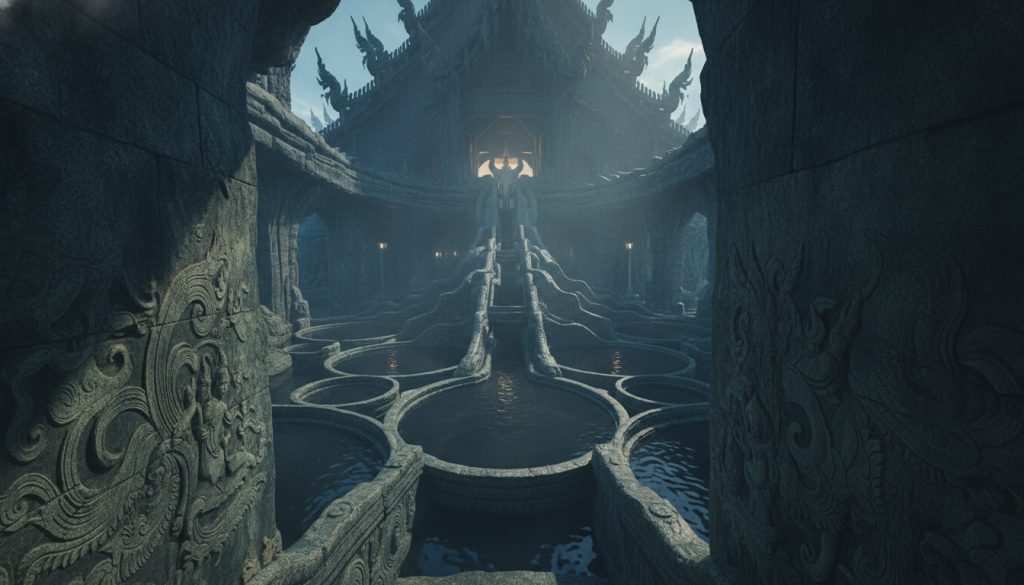
Turning a flood risk into a power source sounds like science fiction. But subsurface hydrologic heritage engineering makes it real for this timber sanctuary. I’ve seen monsoon rain hit coastal Thailand fast, eroding cliffs quickly. The 2050 plan turns this threat into an asset, hidden under the temple.
Instead of letting storm water erode Cape Ratchawete, engineers plan to catch it underground. This change makes a big difference for the wooden giant during wet months.
Bedrock Vaults and Closed-Loop Reservoir Stormwater Harvesting
Imagine hollowed-out chambers carved into the bedrock beneath the sanctuary. These vaults act like giant stone tanks, catching rain the moment it hits the roof.
Then, closed-loop reservoir stormwater harvesting takes over. Water is filtered and stored in the vaults. It’s then pumped back up for reuse, not dumped into the sea.
Nothing is wasted, and no flooding occurs at the base of the structure. The design aims to capture 100% of seasonal monsoon deluges. This is a bold claim for a site that once relied on luck.
What Prasat Sajja Tham Pattaya Can Learn From Stadium Porous Asphalt Drainage
Locals call this landmark Prasat Sajja Tham Pattaya. It’s mentioned in old temple records and maps. The building faces a drainage puzzle solved by modern stadiums decades ago.
Large sports venues use porous asphalt drainage systems. Rainwater passes through the surface, not pooling on top. This logic, applied to stone and timber, could help the sanctuary handle sudden downpours.
This cross-industry borrowing is clever. A heritage site learning from a football stadium is unexpected but makes sense.
Powering Zero-Emission Underfloor Cooling Across Four Philosophical Wings
Captured rain earns its keep here. Filtered water feeds a zero-emission underfloor cooling system. It runs beneath all four wings of the temple.
Cool water moves through hidden channels, cooling the wood without air conditioning or generators. Visitors feel the coolness underfoot, even in Pattaya’s hottest afternoons.
The same rain that once threatened to erode the cliffs now keeps the sanctuary cool and clean. This full-circle engineering is impressive.
| System | Water Handling Method | Primary Benefit |
|---|---|---|
| Traditional Runoff (Old Design) | Rain flows downhill and exits into the sea | None — accelerates cliff erosion |
| Closed-Loop Reservoir Harvesting | Bedrock vaults capture, filter, and store rainwater | Zero runoff waste, reusable water supply |
| Stadium Porous Asphalt Drainage | Surface layer lets water pass through instantly | Prevents pooling during heavy storms |
| Underfloor Displacement Cooling | Stored water circulates through hidden floor channels | Zero-emission climate control for all four wings |
7. Fusing Tradition and Innovation: What This Timber Citadel Teaches Global Architecture
When I look at the Sanctuary of Truth future 2050 plan, one thing catches my eye. It shows us that old skills and new tech must work together. Alone, neither can build this marvel.
The carpenters used only hand-cut joints, no nails. Their work still holds the structure strong today. With modern touches like glazes and air systems, it’s built to last for centuries, not just years.
Traditional Joinery Meets Space-Age Environmental Physics
The mortise-and-tenon joints from years ago still move with the weather. This is the beauty of traditional woodwork. It adapts to the air, not fighting it.
Adding nano-glazes and air curtains to this frame creates a new level of protection. The wood now resists salt and sun better than ever. It’s not about replacing old methods. It’s about enhancing them.
“Study nature, love nature, stay close to nature. It will never fail you.”
A Blueprint for Wooden Architectural Longevity Worldwide
This mix could help other wooden sites face their own challenges. Norway’s stave churches and Japan’s pagodas show how wood can endure. They face different dangers but share a common solution.
The lesson is clear: combine old wisdom with new tech. Wood can outlast almost any natural threat.
| Heritage Site | Location | Main Threat | Modern Solution |
|---|---|---|---|
| Sanctuary of Truth | Pattaya, Thailand | Salt air and sun exposure | Nano-glazes, ionic air curtains |
| Urnes Stave Church | Norway | Freeze-thaw wood rot | Breathable bio-based coatings |
| Horyu-ji Pagoda | Japan | Earthquakes, humidity swings | Seismic dampers, moisture sensors |
Seeing traditional craftsmanship and modern tech together gives me hope. It shows that heritage wood can keep its traditions while also surviving. This is a lesson worth sharing far beyond Pattaya.
8. Conclusion
Everything I’ve talked about is just a guess, not a real plan. There’s no official word on the Sanctuary of Truth’s future by 2050. My ideas come from watching how science and engineering are changing today.
The idea of a hand-built, nail-free temple is really appealing. It could stand up to rising seas and strong winds. If Lek Viriyaphan’s design lasts another century, it will show us how to save heritage sites from climate change.
I dream of the Sanctuary of Truth in 2050: green, strong, and still true to itself.
My advice is simple. Visit it now, while it’s still as Lek Viriyaphan envisioned. See the teak and carvings against the Gulf of Thailand. Feel the sea breeze and watch the carvers at work.
Keep an eye on this place in the coming years. It’s already teaching us about building wooden wonders that last.





Leave A Comment