

“The spiritual journey is individual, highly personal. It can’t be organized or regulated. It isn’t true that everyone should follow one path. Listen to your own truth.” – Ram Dass
New Age religions mix spirituality, alternative beliefs and metaphysics. This movement started in the 1970s and ’80s. It brings together people from different backgrounds, focusing on spiritual growth and world unity.
The New Age movement draws from many sources, like Rosicrucianism and Freemasonry. Figures like Carlos Castaneda and Helena Petrovna Blavatsky have shaped its ideas. Today, about one in three Americans is influenced by New Age beliefs, showing its wide reach.
In this guide, we’ll look at the core of New Age religions. We’ll explore their beliefs, practices and how they’ve changed our culture. This movement is changing how we see spirituality today.
Key Takeaways
- New Age religions blend spirituality, alternative beliefs and metaphysics
- The movement originated from modern esotericism in the 1970s and ’80s
- Key figures include Carlos Castaneda and Helena Petrovna Blavatsky
- One in three Americans accepts elements of New Age ideology
- New Age beliefs focus on heightened spiritual consciousness and global harmony
Origins and Historical Development

The New Age movement started in the late 19th century. Mysticism and esoteric teachings became popular. Helena Petrovna Blavatsky, a key figure, announced a New Age was coming.
This sparked interest in spiritual awakening and holistic living.
The Age of Aquarius and Astrological Significance
Astrology played a big role in shaping New Age beliefs. The idea of an Age of Aquarius, a time of spiritual growth, caught on. This concept drew from both Western and Eastern mystical traditions.
1960s Counterculture Movement
The 1960s saw a boom in New Age ideas. The book “The Teachings of Don Juan” became a hit in 1968. It mixed Native American wisdom with modern spirituality.
This era marked a shift toward personal growth and alternative lifestyles.
Evolution from Hippie Culture to Mainstream
In the 1970s, the New Age movement spread through occult and metaphysical groups. David Spangler’s work at the Findhorn Foundation was key. He wrote “Revelation: The Birth of a New Age” in 1976.
This book drew many to the movement.
| Decade | Key Development | Impact |
|---|---|---|
| 1960s | Counterculture Movement | Spread of Eastern philosophy |
| 1970s | Findhorn Foundation | New Age ideas formalized |
| 1980s | Mainstream Adoption | Widespread popularity in the US |
By the 1980s, New Age ideas had gone mainstream in the US. They blended with pop culture, health trends and self-help movements. This shift marked the New Age’s evolution from fringe to familiar.
Discover Traditional African religions.
Core Beliefs and Philosophical Foundations
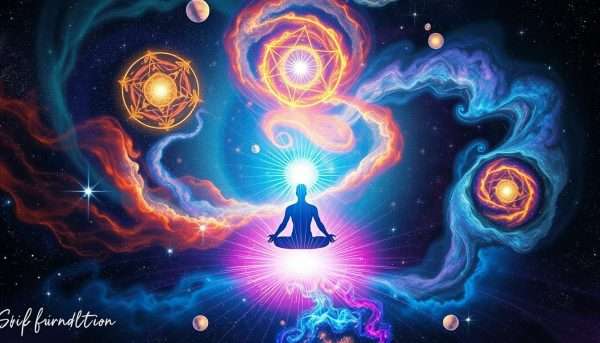
New Age religions have shaped modern spirituality since the 1970s. They focus on self-actualization, inner peace and cosmic consciousness. This movement combines ancient wisdom with modern ideas, creating a unique spiritual landscape.
Monistic and Pantheistic Worldview
New Age philosophy sees the universe as a unified whole. It believes in an interconnected and divine universe. Many see God as an all-encompassing force in everything, not separate.
Universal Energy and Consciousness
At the heart of New Age thought is universal energy and consciousness. Practitioners believe in a cosmic force connecting all beings. This idea drives practices like meditation and energy healing, aiming to align with this universal consciousness.
Self-Deification and Personal Power
New Age teachings focus on self-deification and personal power. They encourage individuals to tap into their inner divinity and realize their potential. This emphasis on self-awareness and love is central to New Age spirituality.
- Belief in reincarnation and destiny
- Emphasis on sacred nature and astrology
- Holistic approach to health and wellness
- Recognition of chakras and ethereal beings
Despite lacking mainstream academic research, New Age philosophy continues to influence many. Its flexible nature allows for diverse beliefs and practices. This attracts those seeking a more personalized spiritual path.
New Age Religions and Their Practices

New Age religions offer a variety of beliefs and practices. They mix elements from different traditions. This creates unique ways to live holistically and find self-actualization.
People in New Age movements often meditate, practice energy healing and try alternative therapies. These activities aim to improve physical, emotional and spiritual health. Some groups also focus on channeling messages from spiritual beings or exploring metaphysical ideas.
The popularity of New Age beliefs in the United States is significant:
- About 60% of American adults accept at least one New Age belief
- 40% believe in psychics and spiritual energy in physical objects
- 33% believe in reincarnation
- 29% believe in astrology
New Age beliefs often go hand in hand with traditional religious views. Six in ten Christians also hold New Age beliefs. Meanwhile, 75% of those who identify as spiritual but not religious share these ideas. Women, adults under 65 and those without a college degree are more likely to hold New Age beliefs.
New Age religions vary in structure. They range from loose affiliations to communitarian groups. While most have small followings, some have thousands or even millions of followers. This shows the appeal of alternative spiritual paths in today’s society.
Explore Ethiopian dance.
Eastern Mysticism Influence
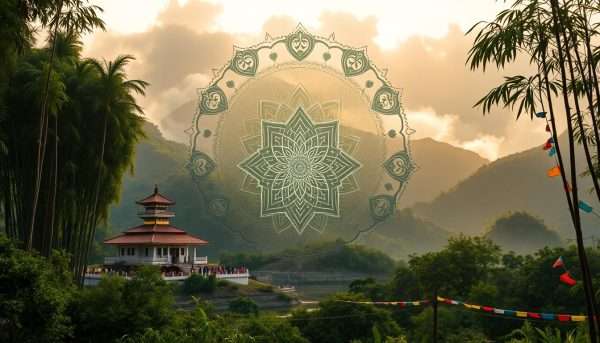
Eastern mysticism has a big impact on New Age religions. It combines teachings from Asia with Western spirituality. This mix started in the late 1800s when Vivekananda brought Vedanta to America at the 1893 World’s Parliament of Religions in Chicago.
Hindu and Buddhist Elements
New Age beliefs take a lot from Hindu and Buddhist teachings. These Eastern mysticism ideas include reincarnation, karma and seeking inner peace. The idea of maya, or the illusion of the physical world, is key in both Hinduism and Buddhism. Many New Age followers adopt this idea to find spiritual enlightenment.
Transcendental Meditation
Transcendental Meditation was introduced by Maharishi Mahesh Yogi in 1959. It became popular in the West for its promise of inner peace and self-realization. Famous people like Mia Farrow and the Beatles helped make it well-known.
Yoga and Spiritual Practice
Yoga is a big part of New Age spirituality. Paramahansa Yogananda brought yoga to the United States in the 1920s. Today, yoga mixes physical exercises with spiritual teachings, often using Eastern ideas like chakras and energy centers.
| Eastern Influence | New Age Adaptation |
|---|---|
| Karma and Reincarnation | Personal growth across lifetimes |
| Meditation | Mindfulness and stress reduction |
| Yoga | Physical fitness and spiritual alignment |
| Chakras | Energy healing and balance |
Let’s go back to the Viking Age.
Modern Spirituality and Healing Methods

In the 1980s, New Age healing became popular in American culture. It mixed spirituality, holistic living and self-actualization. This blend came from Eastern philosophies and Western traditions, along with alternative therapies.
Alternative Therapies
New Age healing includes many alternative therapies. These are acupuncture, homeopathy and aromatherapy. They aim to heal the whole person, not just symptoms. They use natural remedies and focus on energy balance.
Energy Healing Practices
Energy healing is central to New Age spirituality. Reiki, crystal therapy, and sound healing are well-known. They believe in adjusting the body’s energy fields to heal. Practitioners say they can bring balance and vitality.
Holistic Wellness Approaches
Holistic wellness is crucial in New Age healing. It combines physical, mental, and spiritual practices for well-being. This includes meditation, yoga and changing diets. The goal is to find harmony between body, mind, and spirit.
| New Age Healing Element | Description | Popularity (1980s-1990s) |
|---|---|---|
| Alternative Therapies | Acupuncture, Homeopathy, Aromatherapy | High |
| Energy Healing | Reiki, Crystal Therapy, Sound Healing | Medium |
| Holistic Wellness | Meditation, Yoga, Dietary Changes | Very High |
The New Age movement brought both hope and criticism. It challenged old views on medicine and religion. Today, many of its practices are part of mainstream wellness. This shows the lasting effect of New Age spirituality on health ideas.
Try a spiritual retreat in Bali.
Metaphysical Concepts and Teachings
New Age religions explore many metaphysical ideas and esoteric teachings. These beliefs question traditional views of reality. They delve into the mysteries of cosmic consciousness. The movement combines ancient wisdom with modern views.
At its heart, New Age metaphysics talks about a universal energy connecting all beings. It believes in a higher self or divine spark in each person. Many try to connect with this inner power through meditation, astral projection and past life regression.
New Age teachings also explore different dimensions or realities. Some groups work on developing psychic abilities or accessing the akashic records. These are seen as a cosmic library of all knowledge and experiences. The goal is to broaden one’s understanding of the universe and their role in it.
“The New Age Movement was driven by the goal to liberate humanity from orthodox religion and combine multiple wisdom paths and teachings to achieve universal unity.”
The table below shows some key metaphysical concepts in New Age spirituality:
| Concept | Description |
|---|---|
| Astral Projection | The practice of consciously leaving one’s physical body to explore other realms |
| Past Life Regression | Exploring previous incarnations to gain insight and heal present-life issues |
| Spirit Guides | Non-physical entities that offer guidance and support on one’s spiritual journey |
| Akashic Records | A metaphysical library containing all knowledge and experiences of every soul |
Key Figures and Influential Leaders
The world of spirituality and alternative beliefs has seen many influential figures shape its landscape. These leaders have played crucial roles in spreading ideas of self-actualization and personal growth.
Spiritual Authors and Teachers
Deepak Chopra is a prominent voice in modern spirituality. His book, “The Seven Spiritual Laws of Success,” reached the top-10 Best Sellers List on the New York Times. Paulo Coelho has sold over 150 million copies of his spiritual books in more than 150 countries.
Eckhart Tolle’s works, “The Power of Now” and “A New Earth,” are among the best-selling spiritual books globally. These authors have significantly contributed to the spread of alternative beliefs and self-help philosophies.
Contemporary Movement Leaders
Sri Sri Ravi Shankar launched the NONVIO movement in 2013 to promote non-violence. The Dalai Lama, Tenzin Gyatso, continues to travel globally at 78 years old, spreading Buddhist beliefs and teachings on compassion.
Celebrity Influences
Celebrities have also played a role in popularizing spirituality and alternative beliefs. Rhonda Byrne’s book, “The Secret,” re-popularized the belief in the law of attraction and positive thinking, gaining widespread attention through celebrity endorsements.
| Author | Book | Impact |
|---|---|---|
| Deepak Chopra | The Seven Spiritual Laws of Success | NYT Best Seller |
| Paulo Coelho | Various | 150 million copies sold |
| Eckhart Tolle | The Power of Now, A New Earth | Global best-sellers |
| Rhonda Byrne | The Secret | Popularized law of attraction |
Sacred Texts and Spiritual Literature
New Age spirituality draws from a wide range of sacred texts and spiritual literature. These writings are the base of esoteric teachings and metaphysical ideas. They shape today’s spiritual practices.
Ancient wisdom texts are key in New Age spirituality. The Vedas, written between 1500 and 500 BCE, include four parts: Rigveda, Yajurveda, Samaveda and Atharvaveda. These Hindu scriptures give deep insights into the universe and human life.
Buddhist texts like the Tripitaka guide on meditation and mindfulness. The Quran, with 114 chapters called Surahs, offers spiritual wisdom that many New Age seekers find meaningful.
Modern spiritual literature has broadened our understanding of esoteric knowledge. Books like “The Secret” by Rhonda Byrne and “The Celestine Prophecy” by James Redfield have become popular. They introduce metaphysical ideas to a wider audience.
| Time Period | Notable Works | Significance |
|---|---|---|
| Late 19th – Early 20th Century | “Science and Health with Key to the Scriptures” by Mary Baker Eddy | Central text of Christian Science |
| 1938 | “Think and Grow Rich” by Napoleon Hill | Influential self-help book with spiritual undertones |
| 1948 | “The Secret Science Behind Miracles” by Max Freedom Long | Explored Hawaiian spiritual practices |
| 1958 | “Self-Suggestion” by Max Freedom Long | Focused on personal development through spiritual techniques |
The variety of sacred texts and spiritual literature shows the open nature of New Age spirituality. With over 1,700 sacred books on religion, mythology, folklore and the esoteric, seekers have many resources for their spiritual journey.
Learn about the religions in Japan.
Relationship with Traditional Religions
New Age religions offer a unique view on spirituality, different from traditional faiths. This movement started in the 1980s and combines elements from Eastern mysticism and Western occultism. It focuses on personal growth and flexibility, unlike traditional religions.
Differences from Organized Religion
New Age beliefs put personal spiritual experiences first, not doctrine. They see God as everything or present in everything, unlike many traditional religions. This view is very different from the monotheistic beliefs of many faiths.
Syncretistic Elements
New Age movements mix practices from many spiritual traditions. They use astrology, tarot readings, and yoga for spiritual growth. The idea of reincarnation, from Eastern beliefs, is also key in New Age philosophies.
Interfaith Perspectives
New Age beliefs are different from traditional religions but often promote unity. Many believe in a future age of peace and global unity, called the Age of Aquarius. This vision of harmony fits with the movement’s focus on universal energy and consciousness.
Despite their differences, New Age beliefs have become part of mainstream culture. A study found that even religious Americans hold New Age beliefs. This shows the complex relationship between alternative beliefs and traditional faiths today.
Modern Cultural Impact
New Age religions have deeply influenced modern culture. They have changed how we view spirituality and holistic living. The digital age has made it easier for people to grow spiritually and find themselves.
Social Media and Digital Spirituality
Social media has become a place for people to find spiritual guidance. Instagram is filled with quotes and tips for meditation and crystal healing. Facebook groups bring people together, creating a sense of community in their spiritual quests.
Celebrity Endorsements
Hollywood stars and influencers have made New Age ideas popular. Gwyneth Paltrow’s Goop and Deepak Chopra’s teachings have brought alternative spirituality to the mainstream. Their support has encouraged many to try holistic living.
Mainstream Adoption
New Age ideas are now part of our daily lives. Mindfulness is used in workplaces to improve well-being. Yoga studios are everywhere and healthcare is using holistic therapies.
The influence of New Age spirituality is clear in our changing views on self-care and personal growth. As society evolves, the impact of these spiritual movements on us will continue to be significant.
Scientific and Esoteric Perspectives
New Age religions mix science with spiritual teachings. This blend aims to grasp cosmic consciousness from different angles. It combines quantum physics with spiritual beliefs, marking many New Age movements.
Esoteric knowledge comes from ancient Greek philosophy. It now includes mysticism, spiritualism and alternative healing. The Cambridge Dictionary says esoteric means “very unusual and understood or liked by only a few, especially those with special knowledge.”
Parapsychology and studying psychic phenomena are big in New Age circles. Some science groups have looked into meditation and metaphysics. This has led to debates about their science value.
“The relationship between the New Age Movement and esotericism is intimate and complex.”
The New Age Movement has made esotericism more popular. It draws from ancient traditions. Scholars see New Age as a part of Western esotericism’s growth. This shows the ongoing link between science and esoteric wisdom in our quest for reality and consciousness.
Appreciate the New Age Religions
New age religions have changed the spiritual scene. They offer different beliefs and practices than traditional faiths. These movements mix Eastern mysticism, Western esotericism and modern science to form unique paths.
The appeal of new age spirituality is its flexibility and focus on personal growth. It lets people explore their spirituality in a way that suits them.
New age ideas have made their mark on mainstream culture. They’ve changed how we think about wellness, consciousness and human potential. Social media and celebrity endorsements have helped spread these ideas far and wide.
However, these movements face criticism from science and religion. Critics say they lack solid evidence and clear teachings. This has sparked debates about their validity.
The future of new age religions is unclear. As society changes, these movements might evolve or disappear. Their impact on our views of spirituality and meaning in life is undeniable.
Whether people embrace or question new age beliefs, they continue to influence our discussions about faith, science and human existence. They play a significant role in shaping our modern world.













I’m a backpacker and I’m into this! Some people say I’m lost but I’m not.