
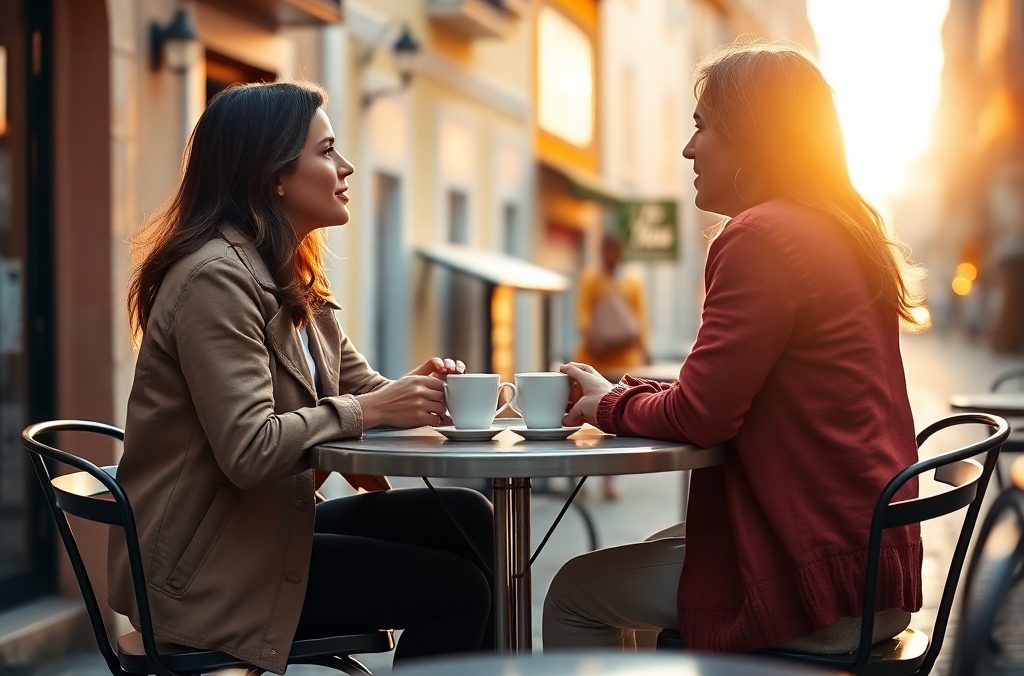
Two strangers sit across from each other at a small restaurant table in Lisbon. Neither planned for this. One got lost looking for a bookstore and asked for directions. The other was killing time before a flight home. They talked for 4 hours. That was 2019, and they are still together. Stories like this one circulate often among friends and on social media, and most people hear them with a mix of warmth and skepticism. The skepticism makes sense. Vacation romances have a reputation for burning out as soon as the plane lands. But the numbers tell a more complicated story, and so does the psychology behind why people connect so quickly when they are far from home.
Why People Fall for Each Other Away From Home
A 2025 survey commissioned by MEININGER Hotels, conducted by Appinio with 1,000 participants, found that over a quarter of respondents, about 26.2%, have fallen in love while on vacation. Nearly 40% said they believe it is easier to fall in love while traveling. That belief has some grounding in how the brain works.
Being in a new environment produces a mild stress response. Adrenaline rises. The body goes into a state of heightened alertness and arousal, and that physiological state makes people more open to attraction. You feel more alive, more alert, and those feelings color how you perceive the people around you. Someone you might pass by at the grocery store back home becomes someone worth talking to at a hostel bar in Barcelona.
Peer-reviewed research published in Annals of Tourism Research Empirical Insights found that higher self-expanding activities during vacations predicted higher romantic passion and relationship satisfaction after the trip ended. Self-expansion here refers to the feeling of growing, learning new things, taking in unfamiliar surroundings. Travel produces this state naturally. And when you go through that state alongside another person, the bond tends to feel stronger and more immediate.
Relationship Choices That Start in Unlikely Places
People pursue connection through all kinds of paths, and not all of them follow a conventional sequence. Some meet partners at work, others through friends, and a growing number seek specific arrangements online, where someone might find a sugar daddy or connect with a travel companion before ever boarding a plane. The starting point of a relationship tells you very little about where it ends up.
What matters more is how two people handle the transition from initial attraction to sustained commitment. A romance that begins in an airport lounge faces the same long-term questions as one that begins anywhere else.
The Chemistry Moves Fast
In the same MEININGER-commissioned survey, 71.8% of respondents who fell in love while traveling said they felt chemistry within a few days. That speed is unusually fast compared to how attraction typically builds in daily life, where interactions are broken up by work, obligations, and routine. On a trip, two people might spend hours together without interruption. They eat meals together, walk unfamiliar streets together, make decisions about where to go together. That concentration of time compresses what would normally take weeks into days.
This is where some of the criticism of vacation romance comes from. The argument is that compressed time creates a false sense of closeness. And there is truth in that. But compressed time does not mean the feelings are fake. It means the feelings have not been tested yet.
Most romantic cities in the world.
The Hard Part Comes After the Trip Ends
Of the respondents in the survey who fell in love while traveling, 45.8% described the romance as a shorter fling. That is the outcome most people expect. But 16.4% said their vacation romance turned into a long-term relationship. A separate survey found that 23% of Americans met their spouse during a trip. Those are not small numbers.
The transition from travel romance to something lasting requires a few things that have nothing to do with chemistry. There has to be a willingness to deal with logistics, sometimes including distance, different cities, or different countries. There has to be an honest conversation about what both people want once the suitcases are unpacked. And there has to be an acceptance that the version of someone you met while traveling is not the full picture. At home, people are tired. They work long hours. They have bad days. The version of a person you meet on vacation is real, but it is incomplete.
What the Psychology Actually Supports
The research on self-expansion is useful here. In early stages of any relationship, rapid self-expansion produces feelings of pleasure and arousal. Travel activates the same psychological mechanisms. So when you meet someone while traveling, you are essentially doubling down on a process that already makes new relationships feel intense.
The question is what happens when that intensity fades. Every couple faces this, regardless of how they met. The ones who last are the ones who can build a routine together that still holds their interest. That has less to do with where the relationship started and more to do with communication, compatibility, and willingness to put in sustained effort over time.
So, Can It Last?
There is no reason a relationship that starts during a trip is less viable than one that starts at a dinner party or on an app. The conditions of travel make early attraction more intense, and the data supports this. But intensity at the start is not a predictor of failure. It is a predictor of nothing, really, except that two people were paying attention to each other.
The 16.4% who turned a vacation romance into something long-term did so because they chose to. They figured out the logistics. They had honest conversations. They did the work that every lasting partnership demands, regardless of origin.













Leave A Comment