
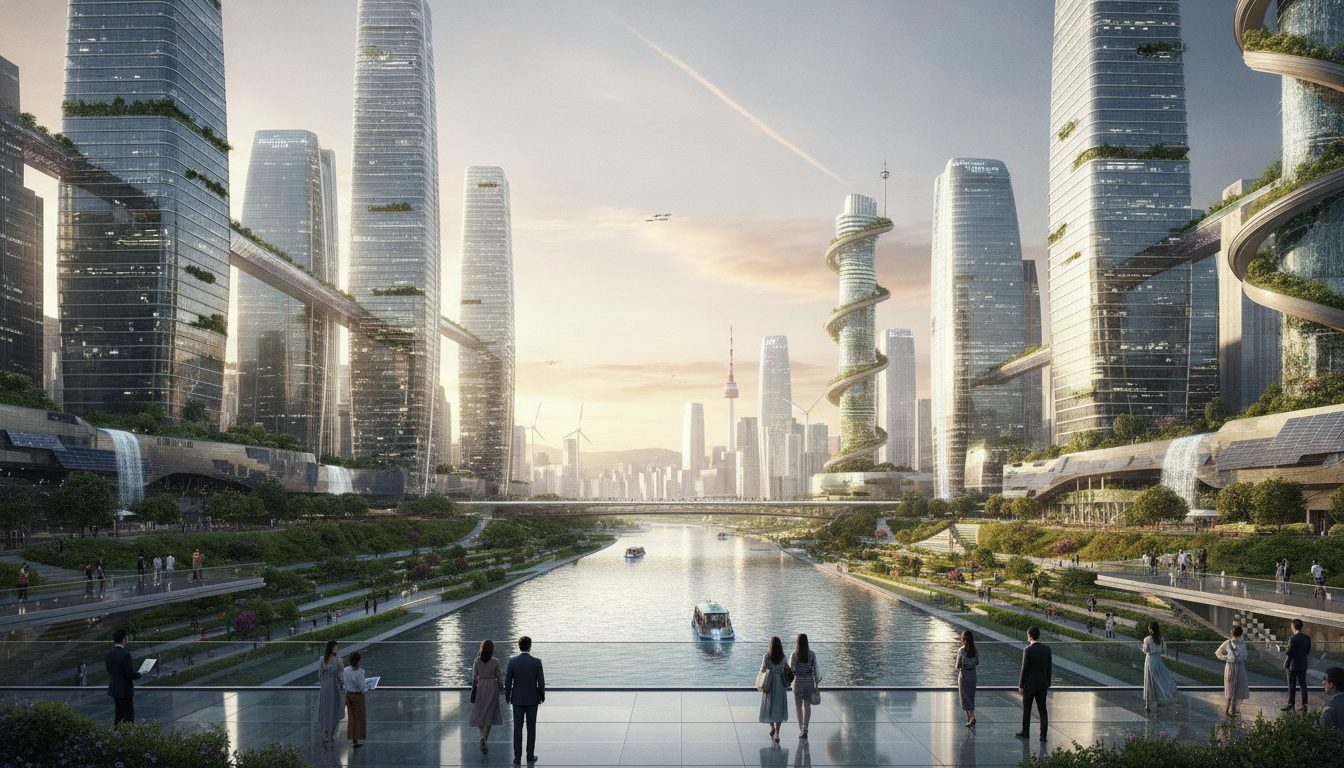
I once stood on a bridge over the Han River, watching barges pass beneath the skyline. I wondered what Seoul might look like in thirty years. This curiosity led me to explore urban planning, climate goals, and engineering wonders often overlooked by visitors.
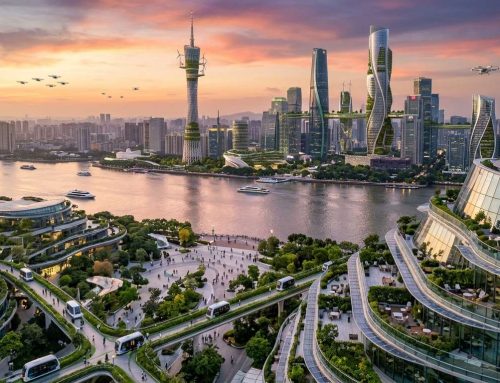
This isn’t just a dream of the future. Seoul, South Korea’s capital, has a clear plan to become a carbon-neutral megacity. It will move highways underground and transform concrete riverbanks into green spaces that protect against floods.
By the mid-21st century, Seoul plans to grow into a polycentric design. This means spreading out across several hubs instead of focusing on one crowded center.
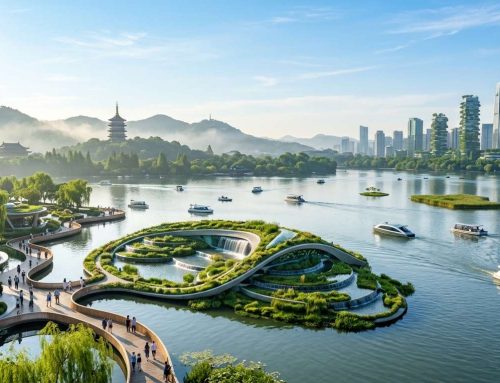
The Han River is at the heart of this vision. It serves as a flood barrier and a source of power for the city.
What struck me most was how ordinary the extraordinary felt on the ground.
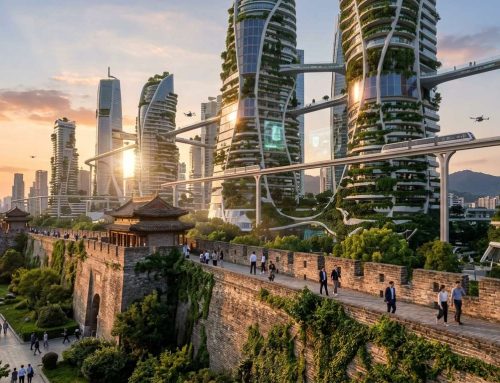
In Seoul, ancient palaces are just blocks away from underground transit. This blending of old and new is fascinating.
Key Takeaways
- Seoul aims to become a carbon-neutral megacity by 2050 while still supporting roughly 10 million residents.
- The city’s long-term plan reroutes highways underground, opening surface space for parks and public gathering areas.
- The Han River functions as both a flood defense system and a core piece of the urban energy network.
- A polycentric layout will spread growth across several hubs instead of one congested downtown core.
- Historic landmarks, including royal palaces, will be preserved alongside cutting-edge underground infrastructure.
- This transformation builds on policies and construction already underway, not speculative future technology.
1. Seoul Future 2050: A Blueprint for Resilient Megacity Urbanism
I remember standing on a rooftop in Itaewon, looking at Seoul’s future. The skyline was buzzing with ten million lives. I started learning about South Korea’s climate goals, and it surprised me.
In October 2020, President Moon Jae-in made a big promise. He said Korea would reach net zero emissions by 2050. This was the first time in East Asia for such a commitment. Lawmakers made it official with the Carbon Neutrality Act in August 2021, starting enforcement in March 2022.
A KRW 42.7 trillion Green New Deal budget followed. It focused on renewable energy and green urban changes. But, the Climate Action Tracker still rates Korea’s effort as “Insufficient.” This gap is what Seoul aims to close by 2050.
1.1 From Sprawl to a Polycentric, Carbon-Neutral Capital
Today, Seoul spreads out in all directions. It’s a maze of highways and high-rises. By 2050, Seoul plans to change this.
Instead of one big center, Seoul will have many self-sufficient areas. Each area will have clean power, jobs, schools, and green spaces. They will connect through green transit. It will be like a cluster of small neighborhoods working together.
| Category | Seoul Today | Seoul Future 2050 |
|---|---|---|
| Urban Structure | Single dense core, heavy sprawl | Polycentric network of self-sufficient hubs |
| Energy Source | Fossil-fuel reliant grid | Renewable-powered, carbon-neutral grid |
| Legal Framework | Carbon Neutrality Act enforced 2022 | Full net zero compliance achieved |
| Climate Rating | “Insufficient” per Climate Action Tracker | Global benchmark for climate policy |
1.2 Why the World Should Watch Seoul’s 10-Million-Citizen Experiment
No city faces the same test as Seoul. It has ten million people in a small area. Seoul faces aging infrastructure and climate challenges like New York and Tokyo.
If Seoul’s plans work, they offer a blueprint for other cities. That’s the real prize — showing that carbon-neutral cities are possible anywhere.
2. The 2050 Seoul Grand Plan: Burying Infrastructure to Reclaim the Sky
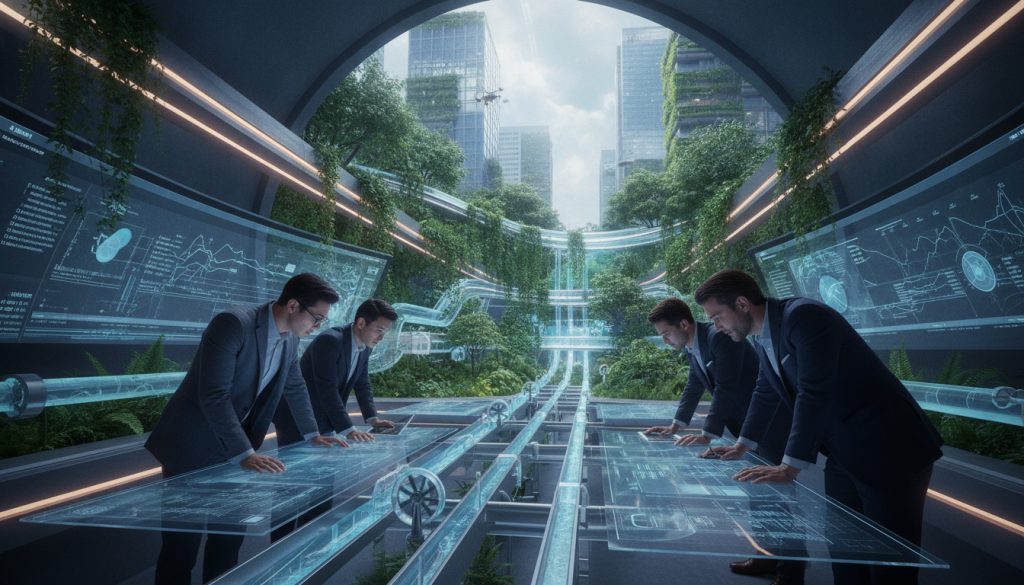
I still remember standing at a Seoul intersection, trying to imagine six lanes of traffic simply vanishing beneath my feet. That image sits at the heart of the 2050 Seoul Grand Plan. The city’s master blueprint is to turn its infrastructure inside out. Instead of building outward, planners are digging downward, sending rail lines and expressways into tunnels so the surface can breathe again.
The idea sounds simple on paper. Move the noise and exhaust underground, then hand the street level back to walkers, cyclists, and trees. In practice, it means rethinking a century of urban engineering, one buried layer at a time.
2.1 Subsurface Hydrologic Heritage Engineering and the Submerged Transit Web
Subsurface hydrologic heritage engineering sounds like a mouthful, but the concept is beautifully practical. Seoul’s engineers are weaving centuries-old waterways and drainage channels into the new underground transit web. Historic groundwater flows stay protected, while trains move millions of commuters beneath the streets.
This matters because Seoul’s original water system predates the concrete city by hundreds of years. Streams once fed rice paddies and cooled entire neighborhoods long before subway lines existed. By mapping these old channels first, engineers can route new tunnels around fragile aquifers instead of crushing them.
- Century-old stream beds rerouted to feed underground reservoirs
- Rail corridors realigned beneath historic groundwater paths
- Expressway tunnels sealed with permeable linings to shield aquifers
2.2 Green Pedestrian Decks Reconnecting the Bukhansan-Namsan-Han River Wind Corridors
Up above, the payoff becomes visible. Continuous green pedestrian decks now stitch together three landmarks that used to feel worlds apart: Bukhansan mountain, Namsan hill, and the Han River.
Before the plan, a six-lane highway sliced straight through this path. It trapped heat and blocked the natural wind corridor that once cooled the capital. Walking the new deck feels different. Mountain air drifts through tree canopies, crosses the reclaimed surface, and settles along the riverbank, cooling the city block by block.
Urban planners call these greenways wind corridors, and Seoul is betting heavily on them working exactly as designed.
| Corridor Segment | Landmarks Connected | Primary Function | Key Benefit |
|---|---|---|---|
| Bukhansan-Namsan Deck | Bukhansan Mountain to Namsan Hill | Elevated green walkway | Restores mountain airflow into the city core |
| Namsan-Han River Deck | Namsan Hill to Han River waterfront | Continuous tree-lined promenade | Channels cool river breeze upward through downtown |
| Subsurface Transit Spine | Underground rail hub network | Submerged commuter rail | Frees the surface entirely for pedestrian use |
3. Han River Renaissance: An Ecological Corridor Powering the City
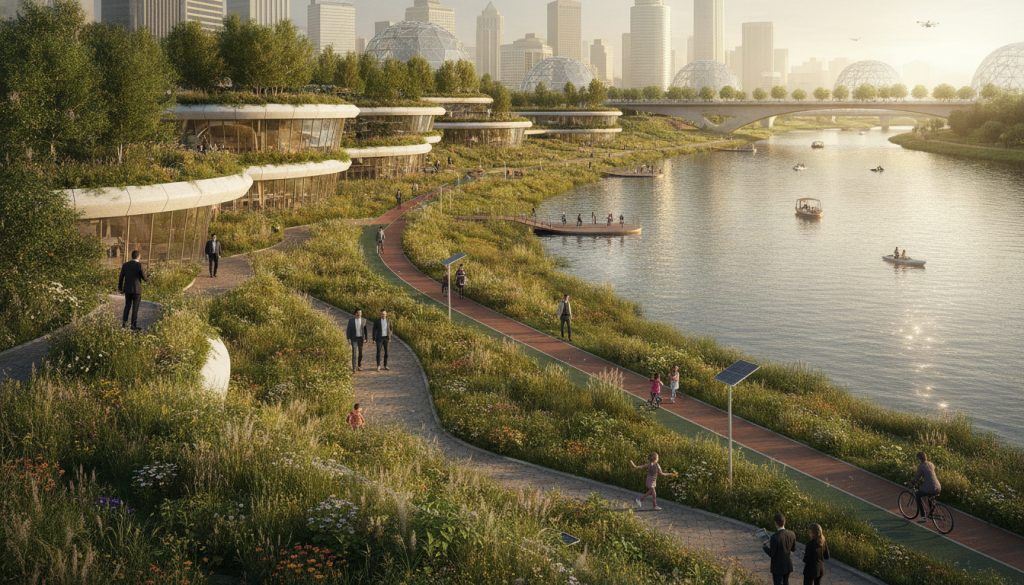
Every great city has a river that defines it. Seoul is making the Han River a power grid. I’ve seen its beauty at sunset many times. It looks like a postcard, not just infrastructure.
This river now does three things: it buffers floods, recycles water, and generates energy. Seoul’s planners didn’t just restore the Han for looks. They made it work harder than any single-purpose river.
3.1 Fluvial Flood Terraces and Closed-Loop Reservoir Stormwater Harvesting
Seoul used to worry about floods during monsoon season. Now, the riverbanks absorb the water. Stepped terraces let floodwater soak in, not surge downstream.
Behind these terraces, a system captures and filters rainwater. It’s called closed-loop reservoir stormwater harvesting. This water is then used for irrigation and park upkeep, reducing waste.
Seoul’s planners aim to restore the Han River’s natural state. They see it as a living system, not just a channel.
3.2 Closed-Loop Geothermal Heat Pumps Driving District Cooling in Yongsan and Yeouido
Underground, geothermal heat pumps quietly power the city. They use steady underground temperatures all year. This provides warmth in winter and cool in summer without extra fuel.
This energy feeds district cooling networks in Yongsan and Yeouido. These areas are dense and growing fast. One system cools thousands of buildings, saving energy.
The river you see from a bridge is also cooling office towers miles away. It’s the kind of work that makes Seoul livable for ten million people.
| System | Primary Function | Key Benefit |
|---|---|---|
| Fluvial Flood Terraces | Stepped, permeable riverbank buffers | Absorbs monsoon surges naturally |
| Closed-Loop Reservoir Stormwater Harvesting | Captures and recycles rainwater | Reduces runoff and reuses water for irrigation |
| Geothermal Heat Pumps | Draws stable underground temperatures | Powers district cooling, cuts AC energy use |
| District Cooling Network (Yongsan/Yeouido) | Distributes chilled water citywide | Lowers peak electricity demand in summer |
4. Yongsan Smart District: A Net-Zero Model for Vertical Living
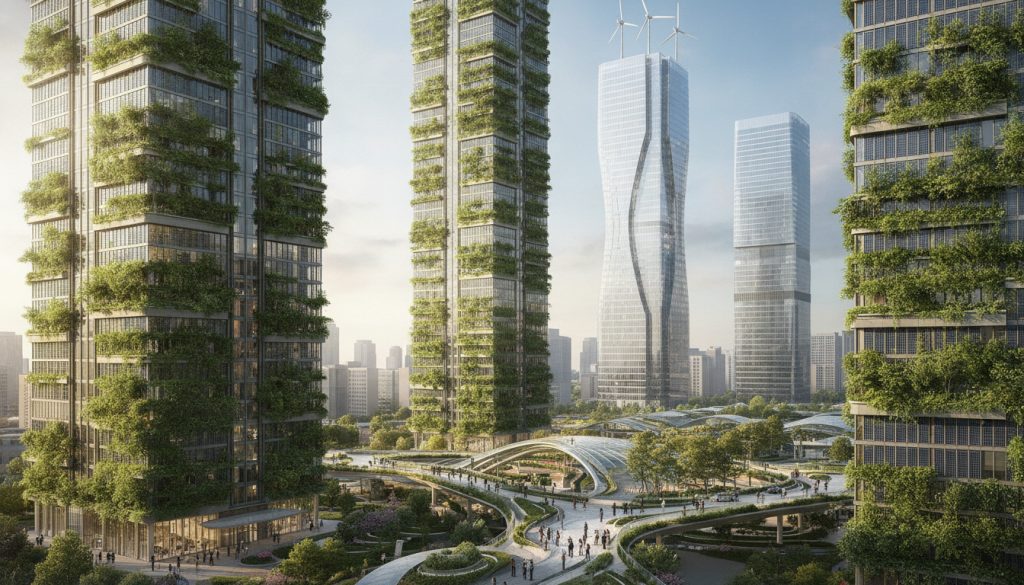
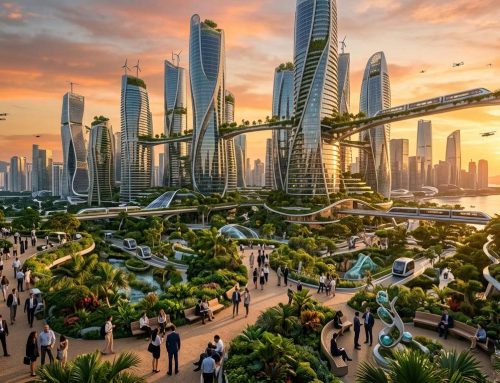
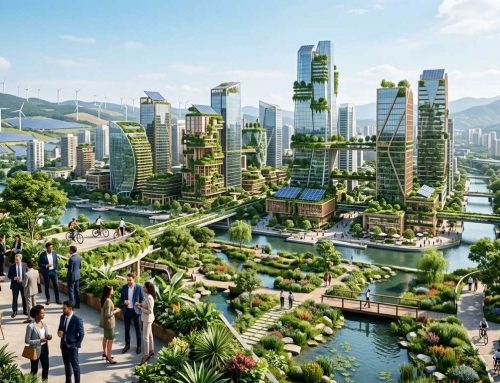
Yongsan is where Seoul’s dream of being net-zero comes to life. I walked through this area on a foggy day. The glass towers seemed to vanish into the clouds, covered in green.
This isn’t just a bunch of green buildings. It’s a smart plan for yongsan smart district net zero. It shows that you can have lots of people and still be green.
Vertical Biophilic Architecture and Carbon-Neutral High-Density Design
Every building I saw had its own garden. The living walls cool the buildings without using much energy.
The balconies looked like green stairs, giving each home a view of the sky. The buildings use vertical biophilic architecture carbon neutral methods. They choose materials that are good for the planet.
It feels like a living thing, not just a building. Standing there, you might forget there are thousands living in just a few blocks.
Stadium Porous Asphalt Stormwater Drainage and Smart Vertical Mobility Networks
The streets do their part too. They have stadium porous asphalt stormwater drainage systems. These let rainwater soak into the ground, not flood the drains.
When it rains, the streets dry up fast. The water disappears into the ground.
Getting around is smart too. Sky bridges connect buildings, and elevators and transit nodes move people around. It’s like a subway in the air.
- Sky bridges linking residential and commercial towers directly
- Automated elevators cutting wait times during rush hours
- Vertical transit nodes spreading foot traffic evenly across floors
These small changes help South Korea reach its net-zero goals. They make big policy changes something you can see and feel every day.
Gangnam Style filming locations.
5. Preserving 600 Years of Royal Heritage in a Climate-Resilient City
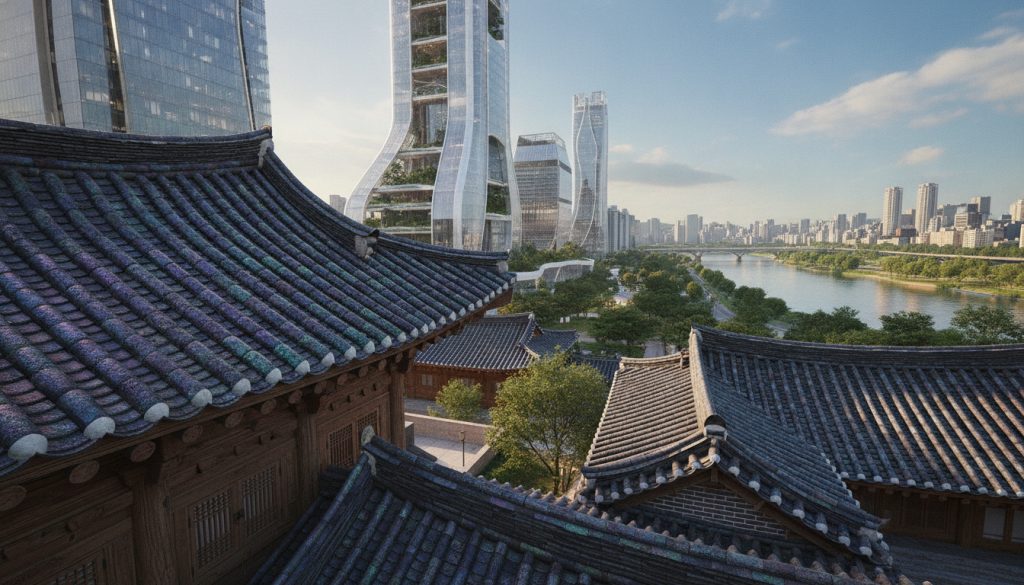
Watching a centuries-old hanok roof glisten near a glass skyscraper is mesmerizing. I’ve felt this magic in Bukchon Village at dawn. The tiles catch the first light, while construction cranes hum in the distance.
Seoul’s future isn’t just about tall buildings and tunnels. It’s also a promise to keep 600 years of Joseon-era history alive. This promise holds true, no matter the heat or storms.
5.1 Nano-Molecular Mineral Glazes Shielding Gyeongbokgung and Bukchon Hanoks
Gyeongbokgung Palace and Bukchon’s hanoks face a big challenge. Traditional materials like wood and clay aren’t made for today’s climate changes.
Now, engineers use nano-molecular mineral glazes on these surfaces. This coating fills in weak spots without blocking the material.
This seems almost magical. Wood and stone stay safe from heat, humidity, and pollution. Yet, they still breathe like they did centuries ago.
I find that balance genuinely impressive. It protects heritage without losing its authenticity.
5.2 Balancing Joseon-Era Legacy with Future High-Density Living
Can a city grow vertically and be carbon-neutral while saving royal-era neighborhoods? Seoul says yes.
It’s building smart vertical networks around historic areas. Zoning laws also keep skyscrapers away from palace rooflines.
“Heritage isn’t an obstacle to modern development — it’s part of the blueprint that gives a city its identity.”
Walking between Gyeongbokgung’s stone walls and Yongsan’s glass towers feels special. Neither one pushes the other out.
| Protection Approach | Traditional Wood Lacquer | Nano-Molecular Mineral Glaze |
|---|---|---|
| Humidity Resistance | Moderate, requires frequent recoating | High, resists moisture without trapping it |
| Pollution Shielding | Limited, surface degrades over time | Strong, blocks particulates at molecular level |
| Material Breathability | Reduced once fully sealed | Preserved, allows natural airflow |
| Maintenance Cycle | Every 2 to 3 years | Every 8 to 10 years |
6. Conclusion
I won’t pretend everything is settled. South Korea has set a goal to be net zero by 2050. But, the Climate Action Tracker says there are big gaps. These include incomplete emissions coverage and weak review cycles.
The country’s constitutional court has ordered lawmakers to fix this. They have until March 2026 to come up with new laws.
I don’t see this as a setback. Instead, it shows the work is already in progress. Seoul’s vision for 2050 isn’t just a dream. It’s a real goal the city is working towards, step by step.
What impresses me most is how everything is connected. The river restoration, the buried highways, and the biophilic towers in Yongsan. They all work together to keep the city moving, even as it gets warmer.
Seoul is blending smart vertical mobility with its rich history. If it succeeds, it won’t just be a Korean success story. It will be a model for cities all over the world.

Leave A Comment