

Habitat and Distribution of the Tacuazin
A tacuazin navigating its natural forest habitat at night
The tacuazin thrives across a vast geographical range spanning from eastern Mexico through Central America and into northern South America. These adaptable marsupials have established populations in countries including Mexico, Guatemala, Honduras, Nicaragua, Costa Rica, Panama, Colombia, Venezuela, Ecuador, Peru, Bolivia, and parts of Brazil.
Preferred Environments
These resilient creatures inhabit diverse ecosystems but show a particular preference for:
- Tropical and subtropical forests (both primary and secondary)
- Forest edges and clearings
- Agricultural areas near wooded regions
- Suburban environments with adequate vegetation
- Elevations ranging from sea level up to 2,200 meters
The tacuazin’s remarkable adaptability allows it to thrive in both pristine wilderness and human-modified landscapes. This adaptability stems from its omnivorous diet and ability to utilize various shelter types, from tree hollows to abandoned burrows and even human structures.

Distribution range of the tacuazin across Latin America
Behavior and Diet of the Tacuazin
The tacuazin leads a primarily nocturnal lifestyle, becoming active after sunset when it emerges to forage for food. During daylight hours, these marsupials seek shelter in various hiding spots to rest and avoid predators.
Nocturnal Habits
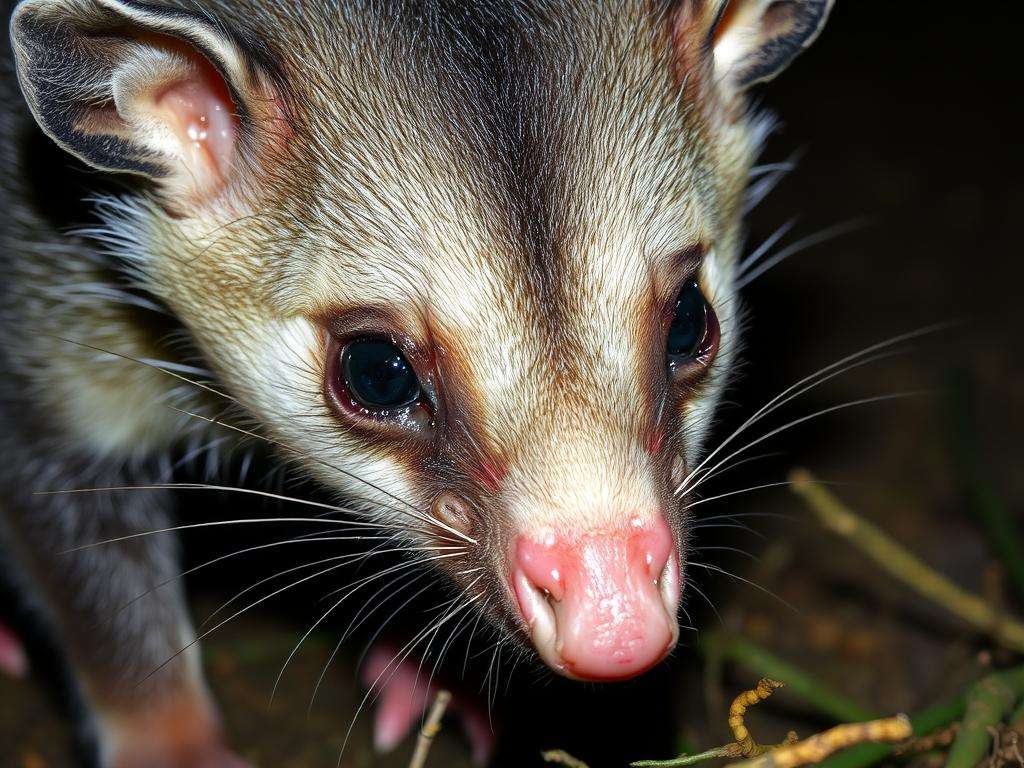
A tacuazin foraging at night, when these animals are most active
As night falls, the tacuazin becomes remarkably active. These creatures are excellent climbers, using their prehensile tails to navigate tree branches with ease. Though primarily terrestrial, they frequently explore arboreal environments in search of food and nesting sites.
When threatened, tacuazins employ a famous defense mechanism – “playing dead” or “playing possum.” This involuntary response involves the animal falling into a catatonic state, with its body becoming limp, mouth open and tongue hanging out. This behavior can last from a few minutes to several hours, effectively deterring many predators.
Omnivorous Diet
The tacuazin maintains a highly varied diet, contributing to its success across different habitats. Their food sources include:
- Fruits and berries
- Small vertebrates (mice, birds)
- Insects and other arthropods
- Carrion
- Eggs
- Crustaceans
- Snakes and small reptiles
- Human food scraps (in suburban areas)
This dietary flexibility allows tacuazins to adapt to seasonal changes in food availability and thrive in diverse environments. Their calcium requirements are particularly high, making calcium-rich foods essential for their bone health and overall wellbeing.

A tacuazin enjoying fruit, an important part of its varied diet
Ecological Importance of the Tacuazin
Despite often being viewed as pests, tacuazins fulfill crucial ecological roles that benefit their habitats and even human communities. Their contributions to ecosystem health are numerous and significant.
Natural Pest Control

Tacuazins help control insect populations in their habitats
Tacuazins consume large quantities of insects, including many agricultural pests. A single tacuazin can devour thousands of ticks and other parasites annually, helping to control populations of disease vectors. They also prey on venomous snakes and scorpions, reducing encounters between these potentially dangerous creatures and humans.
Seed Dispersal
As fruit consumers, tacuazins play a vital role in forest regeneration and plant diversity. Seeds that pass through their digestive systems often have improved germination rates. Their nocturnal movements across different habitats help distribute plant seeds to new areas, contributing to forest health and recovery.
The tacuazin’s role in seed dispersal makes it a “forest gardener,” helping maintain biodiversity and ecosystem resilience throughout Latin American forests.
Scavenging Services
By consuming carrion and food waste, tacuazins help clean their environments and recycle nutrients back into the ecosystem. This scavenging behavior reduces the spread of disease and contributes to overall environmental health.
Cultural Significance of the Tacuazin

Traditional representation of the tacuazin in Latin American folk art
Throughout Latin America, the tacuazin holds significant cultural importance, appearing in indigenous folklore, modern cuisine and even contemporary media. Its representation varies widely across different regions and cultures.
Indigenous Folklore
In many indigenous traditions, particularly in Mesoamerica, the tacuazin appears as a clever trickster figure. The name “tlacuache” comes from the Nahuatl language of central Mexico, where the animal features prominently in ancient myths. In some stories, the tacuazin is credited with stealing fire from the gods and bringing it to humans, similar to Prometheus in Greek mythology.
Culinary Traditions

A traditional dish prepared with tacuazin meat in rural communities
In rural areas across Latin America, tacuazin meat has long been part of local cuisine. Often described as having a unique flavor, the meat is prepared in various traditional dishes. While less common in urban areas today, tacuazin consumption remains culturally significant in some communities, particularly during special occasions and celebrations.
Modern Perceptions
Contemporary views of the tacuazin vary widely. In urban settings, they’re often considered pests when they raid gardens or kitchens. However, growing awareness of their ecological benefits has begun to shift public perception. Conservation education efforts increasingly highlight the tacuazin’s positive contributions to ecosystem health and biodiversity.
Conservation Status and Threats
The tacuazin (Didelphis marsupialis) is currently listed as “Least Concern” on the IUCN Red List, indicating that the species is not facing immediate extinction risk across its range. However, this status doesn’t mean the species faces no challenges.
Current Threats

Deforestation threatens tacuazin habitat across Latin America
Despite their adaptability, tacuazins face several significant threats:
- Habitat loss due to deforestation and urban expansion
- Vehicle collisions on roads that fragment their habitat
- Persecution by humans who view them as pests or threats to livestock
- Predation by domestic dogs and cats in suburban areas
- Secondary poisoning from rodenticides and pesticides
Conservation Efforts
While no specific conservation programs target tacuazins exclusively, they benefit from broader wildlife protection initiatives throughout Latin America. Educational outreach programs that highlight their ecological importance have helped improve public perception and reduce intentional killings.

Wildlife researchers monitoring tacuazin populations to assess their conservation status
Protected areas throughout the tacuazin’s range provide safe havens where these marsupials can thrive without human interference. Additionally, wildlife rehabilitation centers often care for injured tacuazins, helping to maintain local populations and educate the public about their value.
Protecting the Tacuazin: Our Role in Conservation
The tacuazin represents an important part of Latin America’s rich biodiversity. These remarkable marsupials maintain ecological balance through pest control, seed dispersal and scavenging. Their adaptability has allowed them to survive alongside human development, but they still face challenges that require our attention and action.

A thriving tacuazin in a protected forest ecosystem
Help Protect Wildlife Like the Tacuazin
By understanding and appreciating species like the tacuazin, we can contribute to conservation efforts that preserve biodiversity throughout Latin America. Learn more about wildlife conservation initiatives and how you can support habitat protection for these valuable creatures.
Whether you encounter a tacuazin in your garden or learn about them from afar, remember that these ancient marsupials have survived for millions of years, adapting to changing environments and playing crucial roles in their ecosystems. By protecting them and their habitats, we help ensure the health and diversity of Latin American forests for generations to come.
















Leave A Comment