
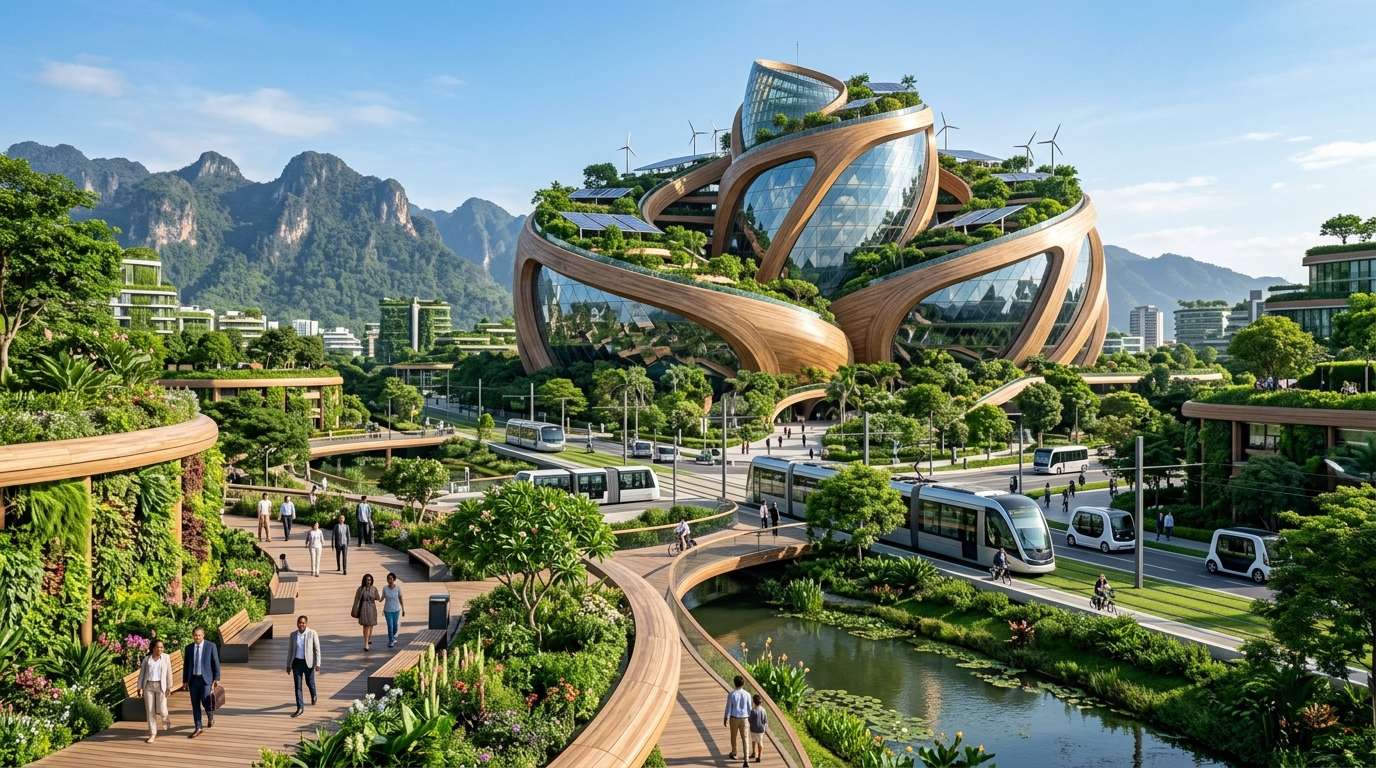
On my first afternoon in this northern Thai town, a horse-drawn carriage passed century-old teak shophouses. River damp mixed with incense from a nearby temple. Wooden viharns stood quietly in the heat, their carved eaves untouched by time.
That memory returns whenever I imagine the Lampang future 2050. What if, three decades from now, that same riverside quarter still smelled of teak and temple smoke? Could it also run entirely on clean power?
I’m not describing a tech fantasy pulled from nowhere. I’ve seen its early seeds: community tree-planting drives, local forest stewardship, and quiet civic pride in old buildings. Central Pattana’s One Million Trees reforestation project restores community forests here, moving toward a carbon-neutral heritage sanctuary.
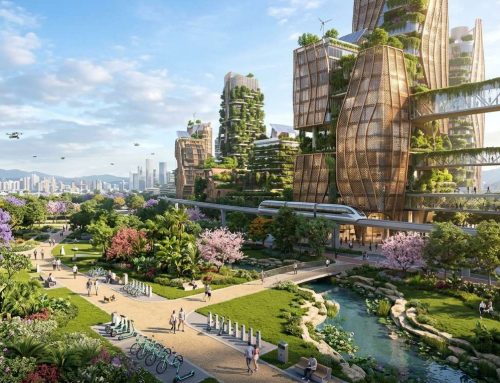
In this piece, I explore eight angles of that vision. This vision imagines a Lampang future 2050 where sacred Lanna carpentry meets space-age engineering. River floods could become power sources, and a night market could generate electricity with every footstep.
Key Takeaways
- This teak capital could serve as a working model for net-zero urban design in the coming decades.
- Central Pattana’s One Million Trees project already restores community forests nearby, with more than 800,000 trees planted toward a regional carbon sink.
- Local practices like Zero Burning and community forest stewardship point toward cleaner air across Northern Thailand.
- The Wang River’s seasonal floods and Kad Kong Ta’s foot traffic hint at untapped renewable energy sources.
- Heritage preservation and climate resilience can grow together instead of competing.
- Grassroots action, not just technology, offers the most believable path toward sustainability here.
1. Lampang Future 2050: A Global Masterclass in Timber Temple Resilience
Lampang’s creaky teak floors and horse-cart streets made me suspect this sleepy province held a bigger story.
When people mention Northern Thailand’s heritage scene, everyone points to Chiang Mai. Lampang rarely gets the spotlight. Yet its stubborn care for wooden buildings could make Lampang future 2050 Lanna country’s real headline.
The groundwork is already underway for a carbon-neutral future through Central Pattana’s Net Zero 2050 commitment. It sparked a reforestation partnership with the Mae Fah Luang Foundation near Chae Son Subdistrict. The partnership replants forest cover, feeds local rivers, and sustains Lampang’s teak supply, while “Share the Air” tackles PM2.5 pollution.
None of this feels like science fiction. It feels like a province quietly rehearsing for Lampang future 2050, one teak beam and clean-air program at a time.
2. Wat Phra That Lampang Luang Preservation: Nano-Mineral Glazes Guarding Sacred Teak
I still remember entering Wat Phra That Lampang Luang, surrounded by the scent of centuries-old teak. Soft golden light passed through the Viharn Luang’s carved eaves and lit floating dust. It felt like a living museum, where nothing stood behind glass.
That openness makes wat phra that lampang luang preservation difficult. You cannot protect old wood with plastic or airtight coatings. Northern Thailand’s humidity needs a way to escape.
Breathable Non-Invasive Mineral Masonry Glazes vs. Tropical Dampness
This is where non invasive mineral masonry glazes can help. Imagine a natural mineral coating that bonds with wood and stone without covering them tightly. It allows moisture to escape slowly while blocking fungi that cause rot in damp, tropical air.
Older sealants trapped humidity inside the wood. That sped up decay instead of preventing it. It’s a small shift in thinking, but it could mean the difference between a beam lasting another decade or another century.
Shielding the 15th-Century Viharn Luang’s Teak Frame
The Viharn Luang’s teak frame has survived since the 1400s through skilled work and steady care. A breathable glaze would not change the beams’ look or feel. It would give the timber an invisible shield against mold, insects, and rot.
I imagine future visitors touching the same carved pillars, unaware that a nano-thin shield quietly protects the wood underneath.
Arresting Bronze Spalling on the Gilded Chedi
Walk around the temple’s gilded chedi, and you may spot tiny flakes lifting from bronze elements near its base. Trapped moisture and salt cause bronze spalling as they move through metal over time.
A similar mineral glaze could slow this damage. It would not dull the chedi’s shine or change its sacred appearance. Instead, it could stop decay before it spreads across the gold leaf and bronze details.
Baan Sao Nak’s 116 Pillars: A Living Case Study
If you have time for one more stop in Lampang, visit Baan Sao Nak. This teak mansion has 116 pillars and shows the power of Lanna architecture.
Its size makes it an ideal testing ground. Conservators could test nano-mineral glazes on several pillars before treating an entire temple. They could watch the wood through monsoon rain and dry heat.
This small, careful experiment could shape how Thailand protects its grand wooden structures for generations.
| Feature | Traditional Sealants | Non Invasive Mineral Masonry Glazes |
|---|---|---|
| Moisture Handling | Traps humidity inside wood | Lets moisture escape gradually |
| Visual Impact | Often glossy or opaque | Nearly invisible, preserves natural texture |
| Longevity | Degrades faster in humid climates | Designed for long-term tropical exposure |
| Maintenance Needs | Frequent reapplication | Lower, less disruptive upkeep |
3. Subsurface Hydrologic Heritage Engineering Beneath the Wang River
My biggest surprise in Lampang was not a temple, but a cement plant. I drove past SCG’s Lampang facility expecting noise and dust, but found birdsong and running streams.
A local guide said SCG had built more than 50,000 check dams across the grounds and nearby hills since 2003. Wildfires that once flared roughly 200 times yearly had fallen to almost zero. Groundwater returned, and 43 surrounding communities now have steadier water supplies.
That story stayed with me. I wondered what might happen if Lampang used the same water-smart thinking beneath its historic riverside core.
Automated Subterranean Retention Vaults and 100% Flash Flood Capture
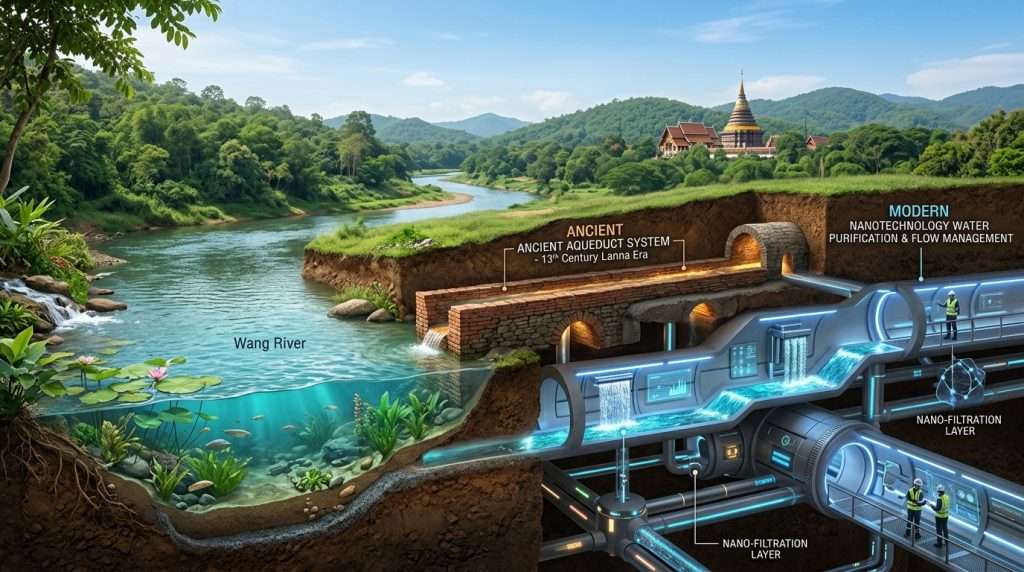
Imagine automated vaults buried deep beneath the Wang River’s alluvial soil. This is the heart of subsurface hydrologic heritage engineering, designed to catch monsoon runoff below ground.
Sensors would measure rainfall intensity in real time. During flash floods, the vaults would open automatically and capture 100% of seasonal overflow. This would prevent water from pooling against century-old foundations.
No diesel pumps would run. No visible equipment would clutter the old streets. Quiet, buried engineering would handle the hardest work.
Closed-Loop Reservoir Stormwater Harvesting in Practice
After capture, the water would not sit unused. A closed loop reservoir stormwater harvesting system would filter, store, and reuse it.
- Capture: Flash flood water enters underground vaults automatically.
- Filter: Sediment and debris get screened out through layered mineral filters.
- Store: Clean water moves into sealed subsurface reservoirs.
- Reuse: Filtered water feeds zero-emission capillary cooling loops across the old city.
Nothing would go to waste. Each drop that threatened a teak shophouse could help cool and protect it.
Wang River Flood Defense as a Heritage Shield
I kept thinking about the riverside buildings I photographed, with wooden pillars just feet from the water. Strong wang river flood defense means more than preventing damage. It could give these structures another century.
Underground storage would reduce pressure on old riverbanks during peak monsoon season. That means less erosion, fewer cracked foundations, and fewer emergency repairs. These historic buildings cannot simply be rebuilt from scratch.
This kind of preservation stays hidden from view. Yet it supports everything people can see above ground.
4. Zero-Emission Capillary Cooling: Reinventing Heritage Shophouse Comfort
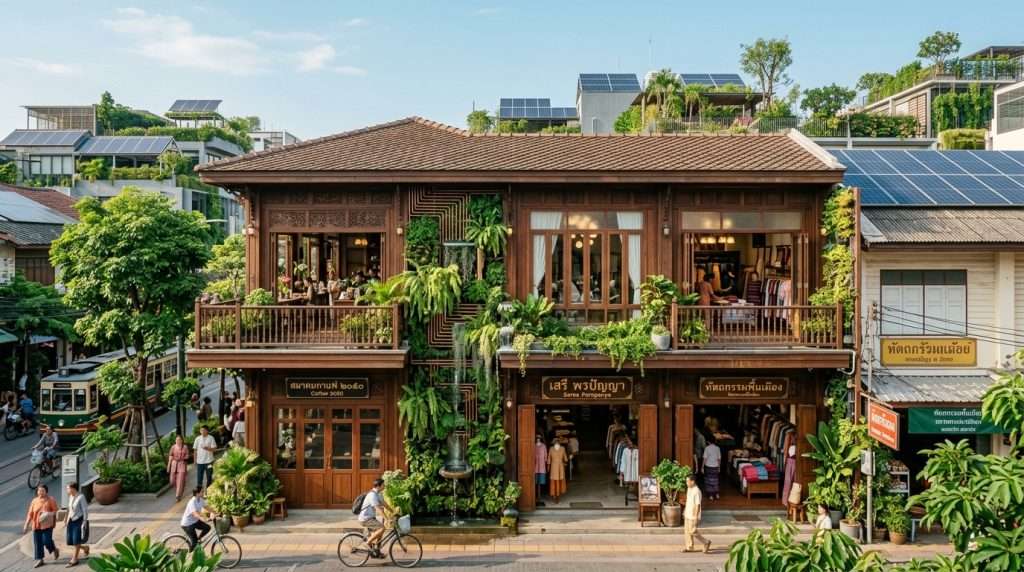
The same floodwater that protects Lampang’s temples may also help cool its old shophouses. I learned this while sweating through a 95-degree afternoon in Lampang’s old quarter. Then I entered a teak shophouse and felt the temperature fall without hearing a single AC unit buzz.
The answer lies underground. Filtered water collected in those subterranean vaults does more than prevent floods; it also cools buildings above.
From Filtered Floodwater to Passive Temperature Control
Here is the simple version. Water from the retention vaults moves through hair-thin capillary channels behind old walls, naturally absorbing heat. No pumps roar or compressors start as it pulls warmth from teak and plaster.
This quiet engineering trick supports the Lampang future 2050 vision. It reuses a resource already there instead of adding new infrastructure.
Cooling Historic Interiors Without Modern Intrusion
What I love most is what you don’t see. There are no bulky units bolted to carved facades or cables across wooden beams. The shophouses keep their original character while staying truly cool inside.
For travelers like me who seek authentic experiences, that balance matters. Comfort shouldn’t come at the cost of character, and Lampang’s approach shows both can coexist.
5. Piezoelectric Power: Kad Kong Ta Walking Street’s Energy Revolution

I remember my first walk along Kad Kong Ta, with flip-flops slapping warm teak boards as vendors called out specials. Lanterns lit century-old wooden shophouses, now cozy cafes. The air smelled of grilled pork skewers and river mist, making this northern Thailand walking street a favorite.
I recommend it to anyone visiting Lampang.
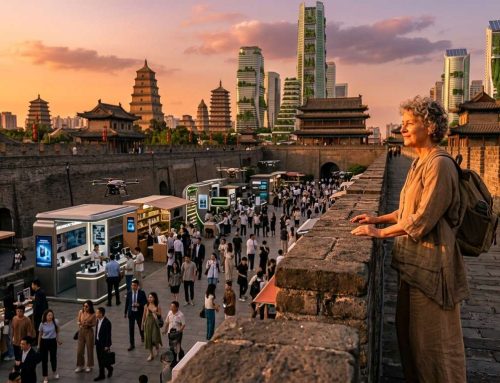
Now imagine that street powering itself with every footstep decades from now. This playful vision shapes Lampang future 2050: ordinary movement becomes clean energy.
Turning Pedestrian Footsteps into Clean Microgrid Electricity
Imagine hidden piezoelectric pavers beneath the market’s worn wooden planks. Each step presses tiny crystals inside, releasing a small electrical pulse. Thousands of nightly footsteps could create a steady power trickle for a local microgrid.
This system would not light the entire street by itself. However, it could charge streetlamp batteries or power small vendor stalls without extra wires.
Temple Courtyards as Unexpected Energy Hubs
I like imagining this idea reaching temple courtyards too. At Wat Phra That Lampang Luang, barefoot visitors could circle a golden chedi, pressing each slow step against ancient stone.
Sensors hidden beneath the stone could capture this gentle energy and help power courtyard lanterns at dusk. It feels like quiet magic: Lampang future 2050 lets devotion and tradition light the night, one footstep at a time.
6. Stadium Porous Asphalt Stormwater Drainage Meets an Ancient Citadel
While researching Lampang’s flood defenses, I kept returning to one surprising idea: modern stadium parking lots may offer an answer. NFL venues manage thousands of cars and sudden downpours without turning parking areas into swamps. They use stadium porous asphalt stormwater drainage, which lets rain pass through the surface instead of pooling above.
It may sound excessive for a quiet Thai temple town. Yet the engineering logic works well because Lampang faces the same monsoon problem: too much water and nowhere fast enough to go.
Adapting Large-Venue Drainage Science to Narrow Lanna Streets
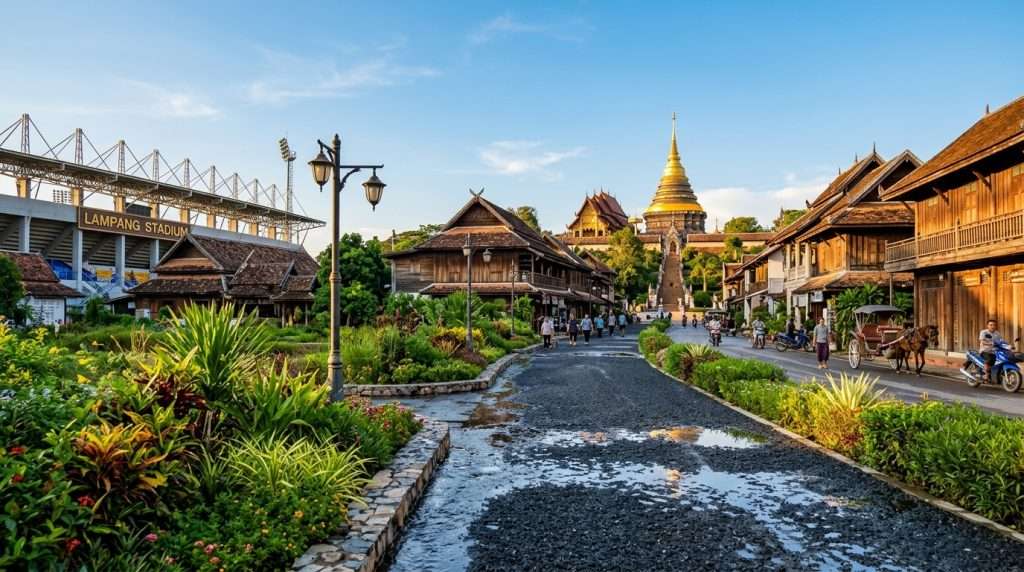
I’m no civil engineer, so I’ll keep this simple. Imagine a porous layer hidden beneath Lampang’s oldest cobblestone and brick paths.
Rain hits the surface, slips through tiny gaps, and drains underground instead of rising against centuries-old wooden thresholds. That difference alone could save countless teak doorframes from slow, silent rot.
The real challenge is scale. Stadium lots stretch across acres, while Lampang’s alleys barely fit two passing scooters. Engineers can adapt the same stadium porous asphalt stormwater drainage concept for these narrow corridors without changing one visible stone.
From above, nothing looks different. Below, water finally has somewhere to go, keeping the citadel’s ancient footing dry.
7. Lanna Teakwood Net-Zero Sanctuary: A Model for Global Heritage Cities
After examining every piece of this puzzle, one conclusion keeps surfacing. Lampang proves heritage and sustainability can coexist.
Glazes guard the old viharn, while vaults hide beneath the Wang River. Cooling loops run through century-old shophouses, and footsteps power a walking street at night. Together, these systems form a lanna teakwood net-zero sanctuary, where old wood and new science share one roofline.
I’m not inventing this out of nowhere. Central Pattana has already set a Net Zero 2050 goal across its property portfolio.
SCG Cement, headquartered right here in Lampang, has spent decades building check dams and recovering waste heat. It runs gasifier systems and sorts refuse-derived fuel from its own waste stream. That track record shows this exact province already welcomes serious environmental thinking.
Balancing Carbon Neutrality with Cultural Authenticity
None of this matters if it strips away what makes Lampang feel like Lampang. The mineral glazes stay invisible, water vaults sit underground, and energy tiles hide beneath worn teak planks.
A heritage site that loses its soul to save its carbon footprint hasn’t really been saved at all. Lampang’s approach keeps the temples, pillars, and market streets looking exactly as travelers remember them, just quietly reinforced from below.
Why Lampang’s Blueprint Could Travel Beyond Thailand
I keep thinking about other wooden towns facing the same clock. Luang Prabang’s monasteries fight monsoon rot every year. Kyoto’s old wooden quarters face fire and flood in equal measure.
Small European timber towns are watching insurance costs climb as storms grow fiercer.
Every one of these places could borrow from this same playbook:
- Breathable mineral coatings instead of sealants that trap moisture
- Hidden stormwater systems that protect foundations without changing the streetscape
- Passive cooling pulled from existing water sources
- Clean energy harvested from footsteps already filling market lanes
Lampang didn’t invent any of these ideas from scratch. It combined them, tested them on real temples and real pillars, and proved they could live alongside centuries-old teak. That’s a blueprint worth sharing far beyond northern Thailand.
8. Conclusion
I wrote this piece after walking Kad Kong Ta at dusk. At Wat Phra That Lampang Luang, I watched temple glazes catch the light. I also spoke with locals who remember when the Wang River flooded every rainy season.
Lampang future 2050 is not a government slide deck to me. It grew from seeing Central Pattana’s projects take shape and hearing how SCG’s material research already lives inside these old buildings.
That makes this version of Lampang future 2050 worth attention. The groundwork is real, even though my sketch of its future is one traveler’s hopeful guess.
If you care about places that age without disappearing, see Lampang now. Listen to the teak creak, as it has for centuries. Watch a small Lanna city quietly learn to hold onto itself while the world rushes forward.
Book the trip before 2050 arrives and decides for you.














Leave A Comment