The world is filled with breathtaking destinations waiting to be explored, from ancient wonders and vibrant cities to pristine natural landscapes.  Whether you’re seeking cultural immersion, adventure, relaxation or simply a new perspective, there’s something magical about discovering awesome places to visit that leave you in awe.  This guide takes you across all continents to uncover both celebrated landmarks and lesser-known treasures that deserve a spot on your travel bucket list. We’ve carefully curated 25 diverse destinations that offer unique experiences, stunning scenery and unforgettable memories.  Each location comes with practical travel advice to help you make the most of your visit.  So pack your curiosity and wanderlust as we embark on a journey to some of the most awesome places to visit around the globe!

Asia’s Must-See Wonders

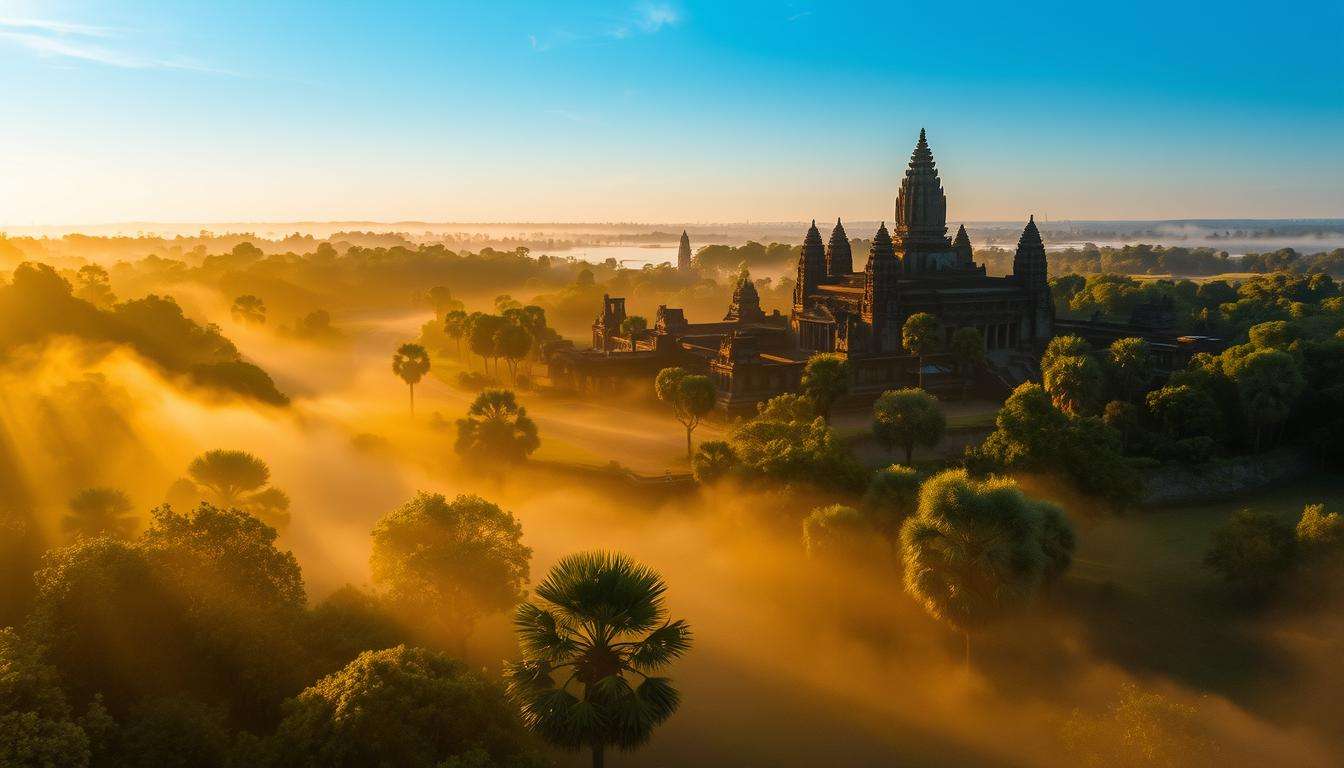
1. Angkor Wat, Cambodia

The magnificent temple complex of Angkor Wat stands as the world’s largest religious monument, stretching across more than 400 acres.  This UNESCO World Heritage site showcases the architectural brilliance of the Khmer Empire with its intricate bas-reliefs and towering spires.  Beyond the main temple, the surrounding archaeological park contains hundreds of ancient structures reclaimed from jungle overgrowth.

Pro Tip: Visit at sunrise to capture the iconic silhouette of Angkor Wat reflected in the lotus pools.  Purchase a three-day pass to explore at a relaxed pace, and hire a local guide who can explain the historical significance of the carvings and structures.  November to February offers the most comfortable weather with less humidity.

2. Kyoto, Japan

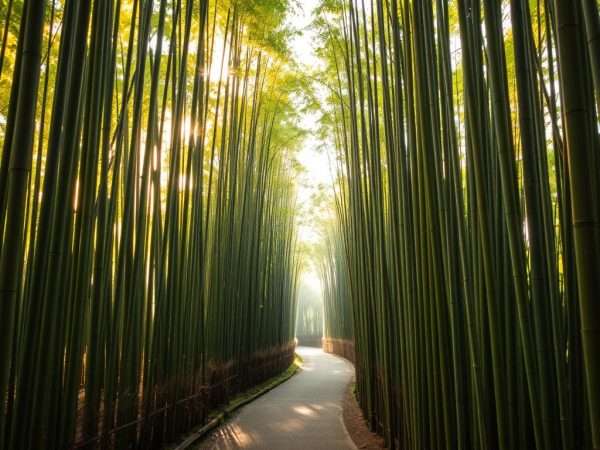
Bamboo Forest path in Arashiyama, Kyoto with morning light filtering through

While Tokyo embraces the future, Kyoto preserves Japan’s past with over 1,600 Buddhist temples, 400 Shinto shrines and 17 UNESCO World Heritage sites.  The former imperial capital offers a glimpse into traditional Japanese culture through its perfectly maintained gardens, geisha districts and ancient tea houses.  Don’t miss the golden pavilion of Kinkaku-ji, the thousands of vermilion torii gates at Fushimi Inari Shrine, and the meditative bamboo groves of Arashiyama.

Pro Tip: Avoid the peak tourist seasons of cherry blossom (late March to early April) and fall foliage (November) if you dislike crowds.  Instead, visit during May or October for pleasant weather and fewer tourists.  Rent a bicycle to navigate between temples efficiently and experience a traditional tea ceremony for cultural immersion.

3. Bagan, Myanmar

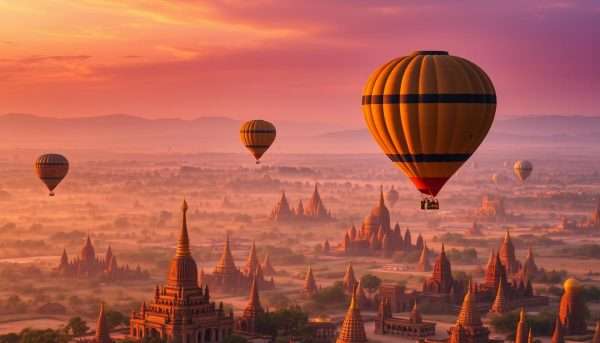
Hot air balloons floating over ancient temples at sunrise in Bagan, Myanmar

The archaeological zone of Bagan presents one of Asia’s most mesmerizing landscapes, with over 2,000 Buddhist temples, pagodas and monasteries scattered across a vast plain.  Dating back to the 9th century, these ancient structures create a surreal panorama, especially when viewed at sunrise or sunset.  Climb the terraces of temples like Shwesandaw or Pyathada for breathtaking vistas or take a hot air balloon ride for an unforgettable aerial perspective.

Pro Tip: The dry season from November to February offers the best weather for exploring, though it’s also the busiest period.  Rent an e-bike to navigate between temples efficiently while avoiding the dust of unpaved roads.  Pack modest clothing that covers shoulders and knees, as these are active religious sites requiring respectful attire.

Best Travel Guides.

4. Rajasthan, India

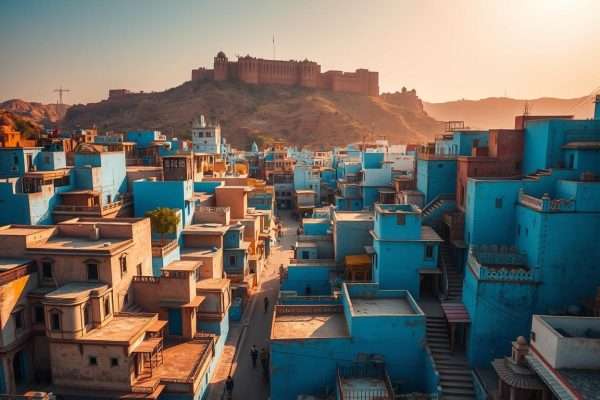
Colorful streets of Jodhpur's blue city with Mehrangarh Fort in the background, Rajasthan, India

India’s “Land of Kings” dazzles visitors with its opulent palaces, imposing forts, and vibrant culture.  From the blue-washed buildings of Jodhpur to the romantic lake city of Udaipur, Rajasthan offers a kaleidoscope of experiences.  Explore the massive Mehrangarh Fort, wander through the pink-hued streets of Jaipur or venture into the Thar Desert on a camel safari from Jaisalmer.  The region’s rich textile traditions, flavorful cuisine and colorful festivals add layers to its already impressive appeal.

Pro Tip: Visit between October and March when temperatures are pleasant.  The Pushkar Camel Fair in November offers a fascinating glimpse into traditional rural life.  Bargain respectfully at markets, starting at about 40% of the initial asking price.  Stay in a heritage hotel (converted palace or haveli) for an authentic experience of Rajasthani hospitality.

5. Ha Long Bay, Vietnam

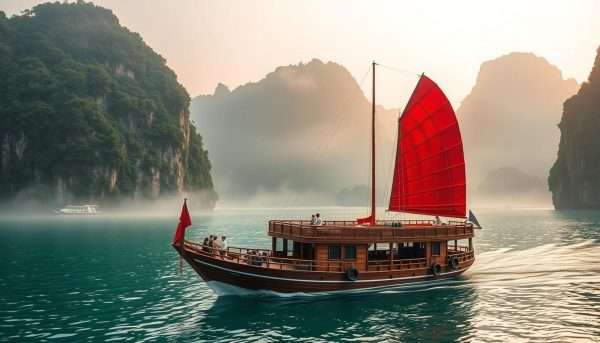
Traditional wooden junk boat sailing among limestone karsts in Ha Long Bay, Vietnam

The emerald waters and towering limestone karsts of Ha Long Bay create one of Southeast Asia’s most iconic seascapes.  This UNESCO World Heritage site features approximately 1,600 islands and islets, most uninhabited and unaffected by human presence.  Cruise through the bay to discover hidden caves, floating fishing villages and secluded beaches.  Kayaking around the karsts offers a more intimate experience with the bay’s natural wonders.

Pro Tip: Book an overnight cruise to experience the bay’s changing moods from dawn to dusk.  The shoulder seasons (April-May and September-October) offer the best balance of good weather and fewer crowds.  Choose a cruise company with strong environmental practices, as overtourism has become a concern in this delicate ecosystem.

Ready to Explore Asia’s Treasures?

Asia offers countless wonders beyond these highlights.  From the terraced rice fields of Bali to the ancient cities of the Silk Road, the continent rewards curious travelers with unforgettable experiences.

Discover More Asian Destinations

European Adventures

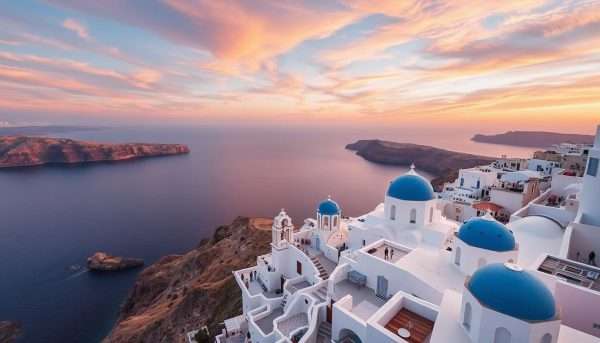
Aerial view of Santorini's white buildings and blue domes overlooking the caldera at sunset

6. Santorini, Greece

The crescent-shaped island of Santorini rises dramatically from the Aegean Sea, its whitewashed villages perched atop volcanic cliffs.  The result of a massive eruption around 1600 BCE, the island’s caldera offers some of the Mediterranean’s most spectacular views, especially at sunset from the village of Oia.  Beyond the postcard-perfect scenery, Santorini boasts fascinating archaeological sites, distinctive wines from volcanic soil, and beaches with red, black and white volcanic sand.

Pro Tip: Visit in May-June or September-October to enjoy pleasant weather without the extreme summer crowds.  Book accommodations with caldera views well in advance, as these sell out quickly.  Take the scenic hike from Fira to Oia (about 3-4 hours) for breathtaking views along the caldera’s edge and try the unique assyrtiko wines produced from grapes grown in the island’s volcanic soil.

7. Plitvice Lakes National Park, Croatia
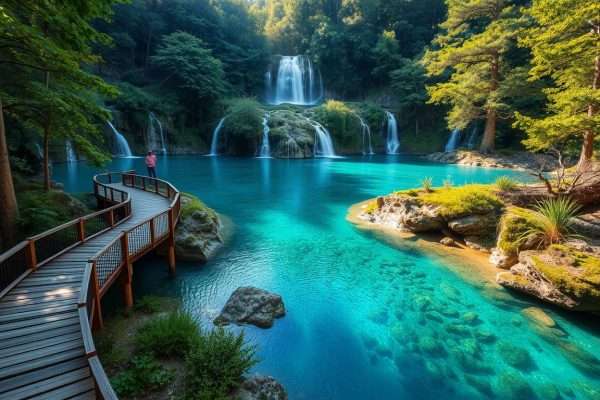
Wooden walkways winding through turquoise lakes and waterfalls at Plitvice Lakes National Park, Croatia

This natural wonderland showcases 16 terraced lakes interconnected by a series of waterfalls and cascades.  Wooden boardwalks wind through the park, allowing visitors to walk directly over the crystal-clear waters teeming with fish.  The mineral-rich waters continuously change color throughout the day, shifting between azure, green, gray and blue depending on the angle of sunlight and mineral content.  Surrounded by dense forests home to bears, wolves and rare bird species, Plitvice offers a perfect blend of accessibility and wilderness.

Pro Tip: Arrive early (before 8 AM) or late in the afternoon to avoid tour groups, especially during summer.  Visit in spring for the most powerful waterfalls or autumn for spectacular foliage with fewer crowds.  The park is equally magical in winter when waterfalls freeze into ice sculptures, though some sections may be closed.  Follow the suggested routes (A, B, C, H, or K) based on your available time and physical condition.

8. Cappadocia, Turkey

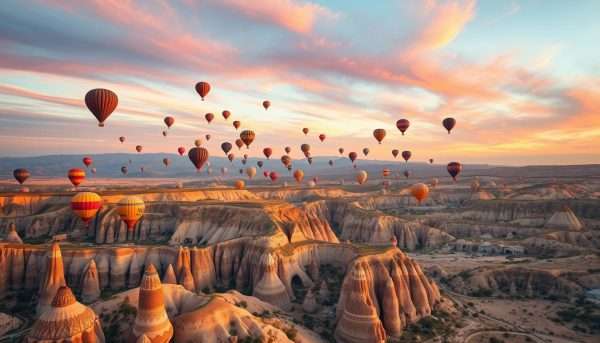
Hot air balloons flying over the unique rock formations of Cappadocia at sunrise

The otherworldly landscape of Cappadocia features “fairy chimneys” and honeycombed hills created by volcanic eruptions and erosion over millions of years.  Early Christians carved churches, monasteries and entire underground cities into the soft tufa rock, creating a fascinating historical legacy.  Today, the region is famous for hot air balloon rides that offer spectacular aerial views of this unique terrain, especially at sunrise when hundreds of colorful balloons dot the sky.

Pro Tip: Book your hot air balloon ride for your first morning in Cappadocia, allowing for rescheduling if weather conditions aren’t favorable.  Stay in a cave hotel for an authentic experience.  Visit the Open Air Museum in Göreme to see the best-preserved rock churches with Byzantine frescoes and explore the underground cities of Derinkuyu or Kaymakli to appreciate the ingenuity of ancient inhabitants.

9. Fjords of Norway

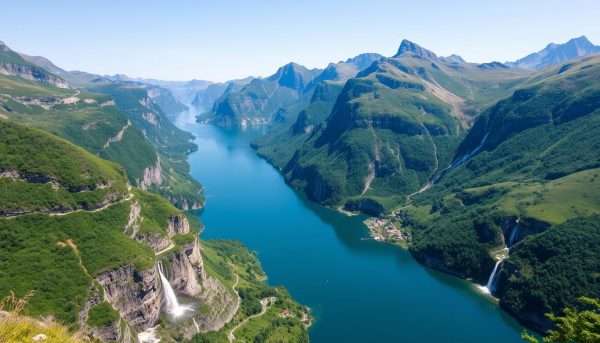
Dramatic view of Geirangerfjord with steep cliffs and waterfalls, Norway

Norway’s fjords represent some of Earth’s most dramatic landscapes, where narrow inlets of sea water stretch between towering cliffs carved by glacial activity.  The most famous, Geirangerfjord and Nærøyfjord, are UNESCO World Heritage sites featuring crystal-clear waters, cascading waterfalls and picturesque villages.  Whether explored by cruise ship, kayak, or hiking trails along the ridges, these majestic formations offer a profound connection with nature’s raw power and beauty.

Pro Tip: The summer months (June-August) offer the best weather and longest daylight hours for exploring the fjords.  Consider the Norway in a Nutshell tour if you’re short on time, as it combines train, bus and ferry travel through some of the most scenic areas.  For a more immersive experience, base yourself in Bergen or Ã…lesund and take day trips to different fjords.  The FlÃ¥m Railway provides one of the world’s most beautiful train journeys through fjord country.

Free AI Travel planners.

10. Sintra, Portugal

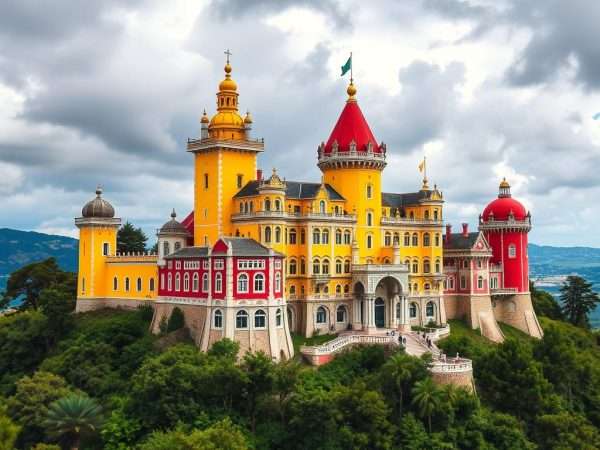
Colorful Pena Palace perched on a hilltop in Sintra, Portugal

Just 30 minutes from Lisbon, the fairytale town of Sintra feels worlds away from Portugal’s capital.  Set against the backdrop of the Sintra Mountains and lush forests, this UNESCO World Heritage site boasts an extraordinary concentration of romantic palaces, historic estates and mystical gardens.  The colorful Pena Palace, with its whimsical blend of architectural styles, stands as the crown jewel, while the mysterious Quinta da Regaleira with its initiation well and secret tunnels adds an element of intrigue.

Pro Tip: Stay overnight in Sintra to experience the town after day-trippers leave and to get an early start the next morning.  Visit Pena Palace first thing to avoid crowds, then explore the less-visited but equally fascinating Monserrate Palace in the afternoon.  Wear comfortable shoes with good traction, as the historic sites involve considerable walking on uneven and sometimes slippery surfaces.  The 434 bus connects the train station with the major attractions, but consider hiring a tuk-tuk for more flexibility.

Europe Awaits Your Discovery

From the sun-drenched Mediterranean to the dramatic landscapes of the north, Europe offers endless opportunities for exploration and adventure.

Explore More European Destinations

African Treasures

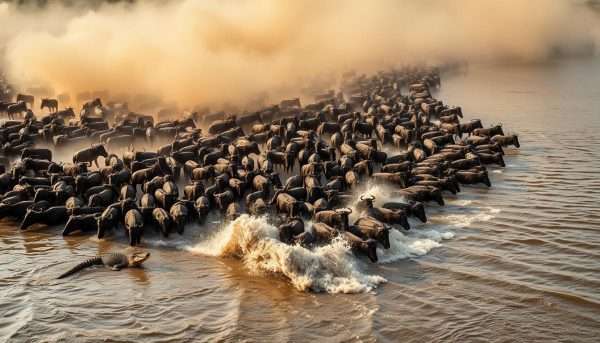
Wildebeest migration crossing the Mara River in Serengeti National Park with crocodiles waiting

11. Serengeti National Park, Tanzania

The Serengeti’s endless plains host one of nature’s most spectacular events: the Great Migration, where over 1.5 million wildebeest, zebra and gazelle follow seasonal rains in a continuous circuit through Tanzania and Kenya.  Beyond this wildlife spectacle, the park offers extraordinary game viewing year-round, with high concentrations of lions, leopards, elephants and countless other species.  The diverse landscapes range from open grasslands and acacia-dotted savannas to riverine forests and rocky outcrops (kopjes).

Pro Tip: For the Great Migration, visit the western corridor in June-July to witness river crossings, or the southern plains from January-March for calving season.  Book accommodations at least a year in advance for migration periods.  Consider combining the Serengeti with Ngorongoro Crater for an unparalleled safari experience.  Splurge on at least one hot air balloon safari for a breathtaking aerial perspective of the plains and wildlife at dawn.

12. Marrakech, Morocco

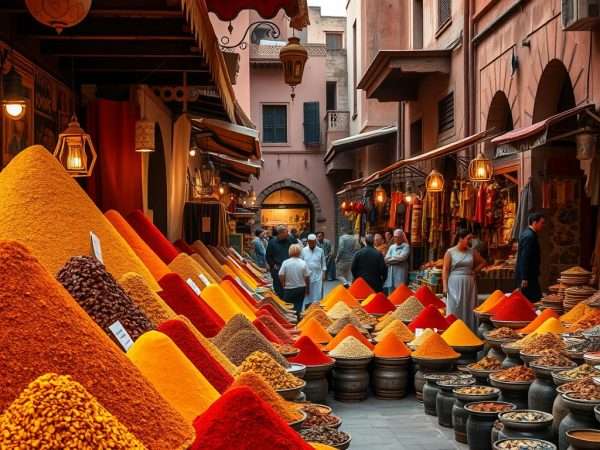
Vibrant spice market in the Medina of Marrakech with colorful displays and traditional architecture

The “Red City” of Marrakech captivates visitors with its sensory-rich medina, a labyrinthine UNESCO-listed old town where traditional life continues amid a maze of narrow alleys.  The central Jemaa el-Fnaa square transforms from a daytime market to an evening carnival of food stalls, storytellers and musicians.  Architectural treasures include the ornate Bahia Palace, the Ben Youssef Madrasa with its intricate Islamic designs, and the tranquil Majorelle Garden, later owned by Yves Saint Laurent.

Pro Tip: Visit in spring (March-May) or fall (September-November) for pleasant temperatures.  Hire a local guide for your first day in the medina to get oriented and learn about the history.  Negotiate prices for everything, but do so respectfully—start at about half the initial asking price.  Stay in a traditional riad (courtyard house) within the medina for an authentic experience.  Respect local customs by dressing modestly, especially when visiting religious sites.

13. Victoria Falls, Zambia/Zimbabwe

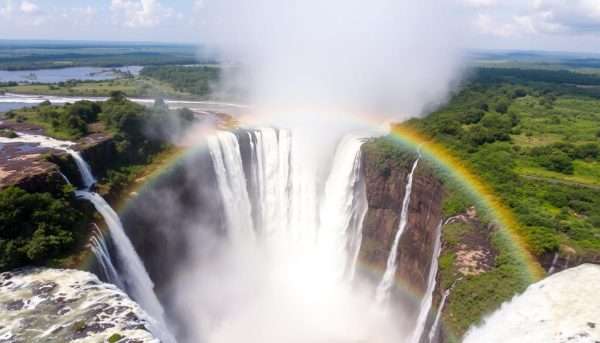
Aerial view of Victoria Falls with rainbow forming in the mist, border of Zambia and Zimbabwe

Known locally as “Mosi-oa-Tunya” (The Smoke That Thunders), Victoria Falls creates the world’s largest sheet of falling water, nearly twice the height of Niagara Falls.  The Zambezi River plunges into a narrow gorge, creating a spectacle visible from miles away as mist rises like smoke above the rainforest.  Beyond viewing the falls from various lookouts, activities include white-water rafting, bungee jumping from the Victoria Falls Bridge, helicopter flights over the falls and wildlife safaris in nearby national parks.

Pro Tip: Visit during high water season (February-May) for the most dramatic views, though be prepared to get soaked on the viewing paths.  For activities like white-water rafting and swimming in Devil’s Pool, the low water season (August-December) is better.  The falls can be viewed from both Zambia and Zimbabwe; consider getting a KAZA Univisa if you want to experience both sides.  Pack waterproof protection for cameras and phones if visiting during high water season.

14. Sossusvlei, Namibia

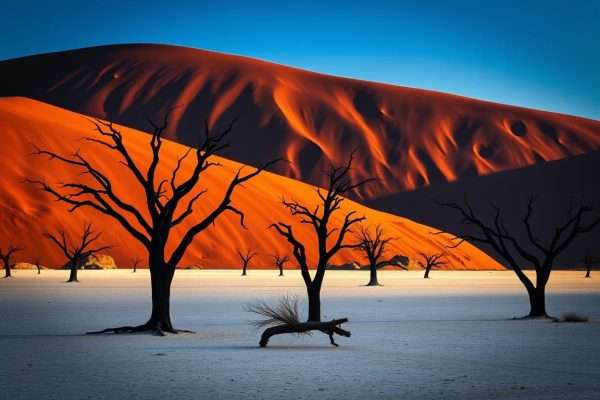
Dead trees against red sand dunes in Deadvlei, Sossusvlei, Namibia

The otherworldly landscape of Sossusvlei in the Namib Desert features some of the world’s tallest sand dunes, rising dramatically to heights of over 300 meters.  Their striking red-orange color intensifies at sunrise and sunset, creating a photographer’s paradise.  The area’s most iconic spot is Deadvlei, where 900-year-old dead camel thorn trees stand preserved on a white clay pan, creating a surreal natural art installation against the backdrop of rust-red dunes and deep blue sky.

Pro Tip: Stay inside Namib-Naukluft National Park at Sesriem to access the dunes at sunrise before the gates open to outside visitors.  Climb “Big Daddy” (one of the tallest dunes) early in the morning before the sand gets too hot.  Bring plenty of water, sun protection, and closed shoes that won’t fill with sand.  For extraordinary photography, visit during the full moon when the dunes are illuminated by moonlight, creating an ethereal landscape.

15. Okavango Delta, Botswana

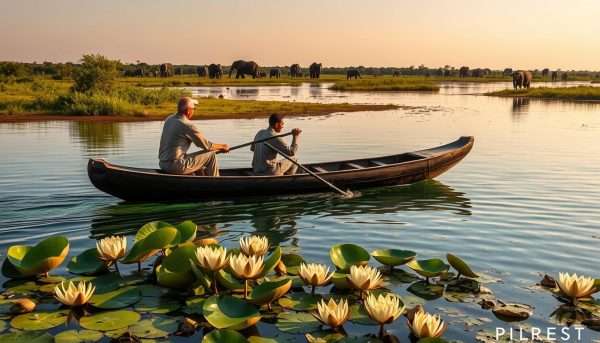
Traditional mokoro canoe gliding through water lilies in the Okavango Delta, Botswana

This inland delta forms when the Okavango River flows into the Kalahari Desert, creating a unique wetland ecosystem that supports an extraordinary concentration of wildlife.  Unlike most river deltas, it never reaches the sea, instead creating a maze of water channels, islands and floodplains that change seasonally.  The delta offers one of Africa’s most exclusive safari experiences, with opportunities to observe elephants, hippos, lions and hundreds of bird species from traditional mokoro canoes, on walking safaris, or from luxury camps.

Pro Tip: Visit during the flood season (June-August) when water levels are highest for the best mokoro (traditional canoe) experiences.  The shoulder seasons (April-May and September-October) offer excellent wildlife viewing with lower prices.  This is one of Africa’s most expensive destinations, but the unique ecosystem and low-impact tourism model justify the cost.  Consider combining the Delta with the Moremi Game Reserve and Chobe National Park for a comprehensive Botswana safari experience.

Africa’s Wonders Await

From wildlife spectacles to ancient cultures, Africa offers transformative travel experiences that will change how you see the world.

Discover More African Adventures

Wonders of the Americas

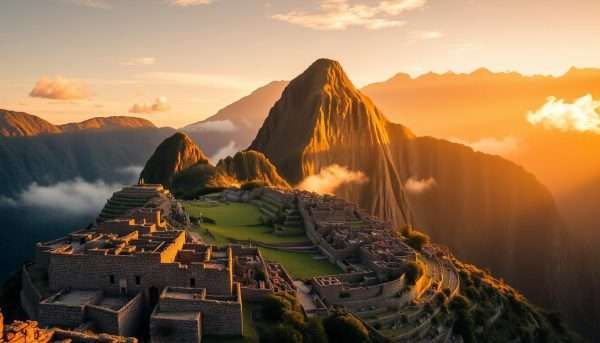
Sunrise view of Machu Picchu with Huayna Picchu mountain in the background, Peru

16. Machu Picchu, Peru

Perched high in the Andes Mountains, this 15th-century Inca citadel remained hidden from the outside world until its rediscovery in 1911.  The remarkably preserved stone structures, built without mortar yet able to withstand centuries and earthquakes, showcase the Incas’ architectural and engineering prowess.  Set against a backdrop of cloud forest and jagged peaks, Machu Picchu’s dramatic location adds to its mystique.  The site features temples, plazas, residential areas, and agricultural terraces, all precisely aligned with astronomical events.

Pro Tip: Book permits well in advance (up to 6 months), especially if you plan to hike the Inca Trail or climb Huayna Picchu.  Consider staying overnight in Aguas Calientes to reach the site early in the morning before day-trippers arrive from Cusco.  The shoulder seasons (April-May and September-October) offer fewer crowds and lower chance of rain.  Spend at least 3-4 days in Cusco beforehand to acclimatize to the high altitude.

17. Galápagos Islands, Ecuador

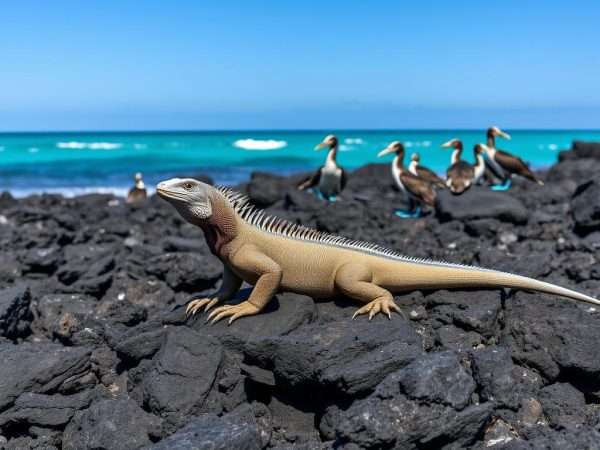
Marine iguana and blue-footed boobies on volcanic rocks in the Galapagos Islands

This remote archipelago, where Charles Darwin developed his theory of evolution, remains one of the world’s most remarkable wildlife destinations.  The islands’ isolation has led to the development of unique species found nowhere else, including giant tortoises, marine iguanas and flightless cormorants.  What makes the Galápagos truly special is the animals’ lack of fear toward humans, allowing for extraordinarily close encounters.  From snorkeling with playful sea lions and penguins to watching the elaborate mating dances of blue-footed boobies, the islands offer unparalleled wildlife experiences.

Pro Tip: Choose between a cruise or island-hopping tour based on your preferences—cruises access more remote islands, while land-based tours offer more flexibility and comfort.  The peak seasons are June-September and December-January, but wildlife is abundant year-round.  Each island has distinct ecosystems and species, so research which islands feature the wildlife you’re most interested in seeing.  Pack a good underwater camera, as some of the most memorable encounters happen while snorkeling.

18. Banff National Park, Canada

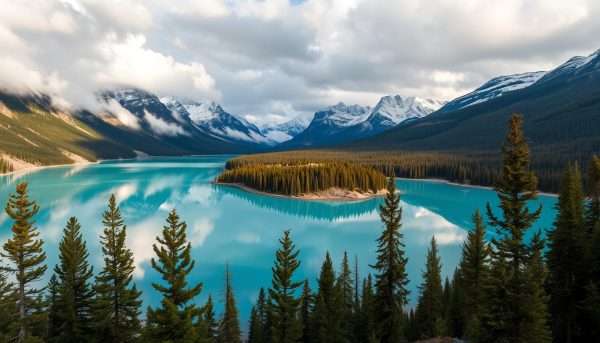
Moraine Lake with turquoise waters surrounded by snow-capped mountains in Banff National Park

Canada’s oldest national park showcases the majestic Canadian Rockies at their finest, with turquoise alpine lakes, dramatic mountain peaks and vast wilderness.  Lake Louise and Moraine Lake dazzle visitors with their impossibly blue waters set against snow-capped mountains.  The park offers world-class hiking, skiing, wildlife viewing and hot springs.  The charming town of Banff provides an excellent base with its mountain-chic atmosphere, featuring excellent restaurants, museums and the historic Fairmont Banff Springs Hotel.

Pro Tip: Visit in September for fewer crowds, comfortable temperatures and the golden larches (alpine trees) turning bright yellow.  For winter activities, January-March offers excellent snow conditions with fewer holiday crowds than December.  Drive the Icefields Parkway connecting Banff to Jasper National Park for one of the world’s most scenic road trips.  Use the park shuttle system during peak summer months to avoid parking challenges at popular sites like Moraine Lake.

19. Torres del Paine, Chile

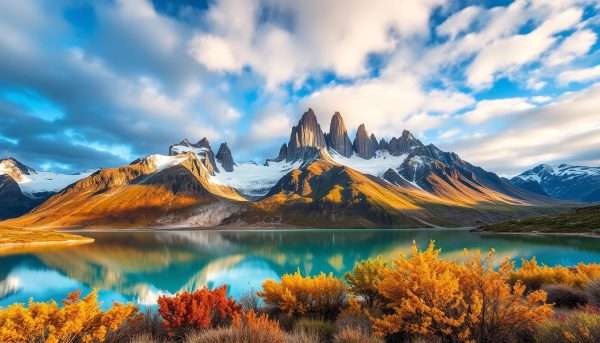
The iconic granite towers of Torres del Paine National Park reflected in a lake, Patagonia, Chile

This Patagonian national park presents some of South America’s most dramatic landscapes, where granite peaks, azure lakes, massive glaciers and golden pampas create a wilderness paradise.  The park’s centerpiece, the three granite towers that give it its name, rise majestically above a glacial lake.  The famous W Trek takes hikers through diverse ecosystems with views of the Southern Patagonian Ice Field, Grey Glacier and abundant wildlife including guanacos, condors and if you’re lucky, the elusive puma.

Pro Tip: The best hiking season is November to April (Southern Hemisphere summer), with December-February offering the longest daylight hours but also the strongest winds.  Book refugios (mountain huts) or campsites well in advance if hiking the W or O Circuits.  Pack for all four seasons in one day, as Patagonian weather is notoriously changeable.  Consider staying at one of the all-inclusive lodges like Explora or Tierra Patagonia if you prefer comfort and guided excursions over independent trekking.

Patagonia 10 Day Itinerary.

20. Cartagena, Colombia

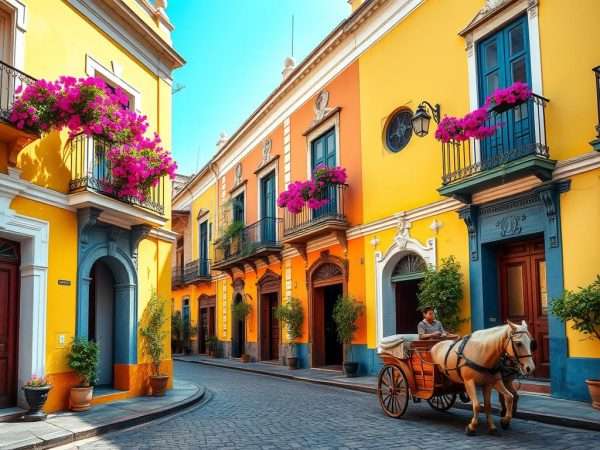
Colorful colonial buildings with flower-covered balconies in the walled city of Cartagena, Colombia

The jewel of Colombia’s Caribbean coast, Cartagena enchants visitors with its perfectly preserved colonial old town enclosed by 13km of centuries-old stone walls.  Colorful buildings with flower-draped balconies line cobblestone streets, while plazas filled with outdoor cafés invite leisurely people-watching.  Beyond the architectural beauty, Cartagena offers a vibrant cultural scene with influences from Spanish, African and indigenous traditions evident in its music, dance and cuisine.  The nearby Rosario Islands provide pristine beaches and coral reefs for day trips.

Pro Tip: Visit during the shoulder seasons (May-June or October-November) to avoid both the peak tourist crowds and the heaviest rains.  Explore the walled city early in the morning or in the evening when temperatures are cooler and the light is perfect for photography.  Stay in a boutique hotel within a restored colonial building for the full experience.  Take a cooking class to learn about the region’s unique fusion cuisine, which blends Caribbean, Spanish and African influences.

The Americas: From North to South

The American continents offer incredible diversity, from Arctic wilderness to tropical rainforests and everything in between.

Explore More American Destinations

Oceania’s Natural Splendors

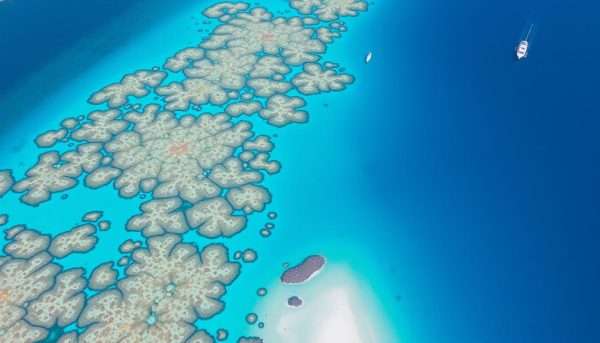
Aerial view of the Great Barrier Reef showing colorful coral formations and turquoise waters

21. Great Barrier Reef, Australia

The world’s largest coral reef system stretches over 2,300 kilometers along Australia’s Queensland coast, comprising nearly 3,000 individual reefs and 900 islands.  This UNESCO World Heritage site hosts an extraordinary diversity of marine life, including 1,500 fish species, 4,000 mollusk species, 240 bird species and endangered creatures like the dugong and large green turtle.  Snorkeling or diving in these waters reveals an underwater wonderland of colorful coral gardens, graceful manta rays, reef sharks and countless tropical fish.

Pro Tip: Visit during the Australian winter/spring (June-October) for the best visibility, calmer seas and fewer stinging jellyfish.  Consider a liveaboard dive trip to access the outer reefs, which offer better coral conditions and fewer crowds than those closer to shore.  If you’re not a certified diver, many operators offer introductory dives requiring no previous experience.  Cairns and Port Douglas are the main gateway towns, but the Whitsunday Islands provide a more upscale base with stunning beaches.

22. Milford Sound, New Zealand

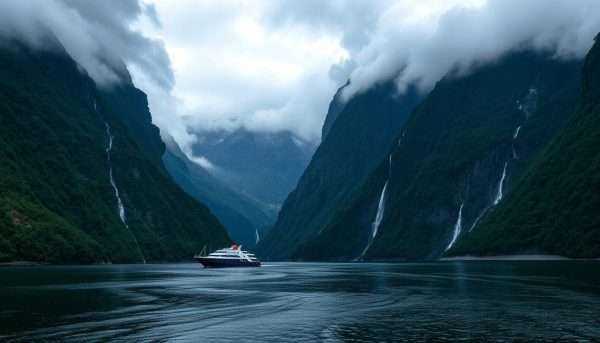
Dramatic fjord landscape of Milford Sound with Mitre Peak rising from the water, New Zealand

Often described as the “eighth wonder of the world,” this fjord on New Zealand’s South Island presents nature at its most dramatic.  Carved by glaciers during the ice ages, Milford Sound features sheer rock faces rising 1,200 meters from the dark waters, punctuated by waterfalls that plunge from hanging valleys.  Mitre Peak, the iconic mountain that dominates the landscape, creates one of the world’s most photographed vistas.  Wildlife sightings include dolphins, fur seals, penguins and occasionally whales.

Pro Tip: Contrary to popular belief, rainy days often provide the most spectacular experience, as hundreds of temporary waterfalls appear on the cliff faces.  Book an overnight cruise for the chance to experience the sound at dawn and dusk when day-trippers are absent.  The Milford Track, one of New Zealand’s Great Walks, offers a rewarding four-day hiking approach to the sound.  If driving from Queenstown, allow a full day and make stops at the many scenic points along the Milford Road.

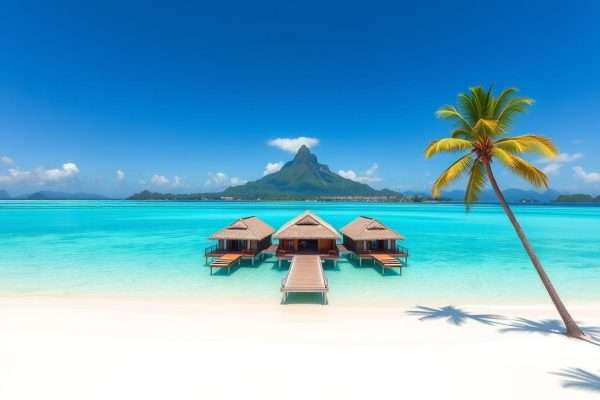
23. Bora Bora, French Polynesia

Overwater bungalows with Mount Otemanu in the background, Bora Bora, French Polynesia

This small South Pacific island epitomizes tropical paradise with its iconic overwater bungalows extending into a crystal-clear lagoon of impossible blue hues.  The island’s centerpiece, Mount Otemanu, rises dramatically from the center—the remnant of an ancient volcano now draped in lush vegetation.  The protected lagoon, enclosed by a coral reef, offers world-class snorkeling and diving among colorful fish and gentle manta rays.  With its combination of luxury resorts, pristine beaches, and laid-back Polynesian culture, Bora Bora represents the ultimate romantic getaway.

Pro Tip: May to October offers the driest weather, though this is also the high season with premium prices.  Consider the shoulder months of April or November for better value.  While the overwater bungalows are the signature accommodation, garden bungalows often provide better value with private plunge pools.  Book a sunset dinner cruise on a traditional outrigger canoe for a magical experience.  Bring plenty of reef-safe sunscreen, as it’s extremely expensive to purchase on the island.

Paradise Found in Oceania

The islands of the Pacific offer some of the world’s most pristine environments and unique cultural experiences.
Discover More Pacific Paradise Islands

Hidden Gems Off the Beaten Path

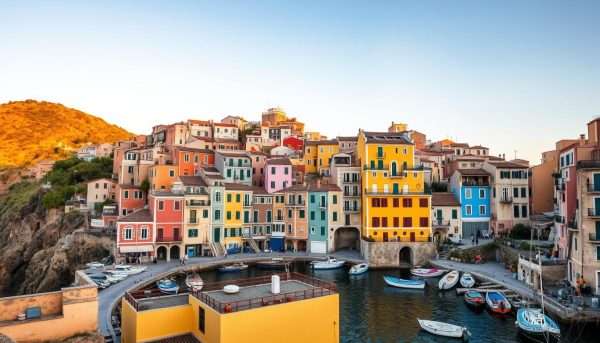
Colorful houses built into volcanic cliffs overlooking the sea in Procida, Italy

24. Procida, Italy

While tourists flock to Capri and the Amalfi Coast, this tiny island in the Bay of Naples remains refreshingly authentic.  A riot of pastel-colored houses tumbles down to a picturesque harbor where fishermen still mend their nets each morning.  Narrow lanes wind through the medieval village of Terra Murata, leading to panoramic viewpoints over the Mediterranean.  With its lack of major attractions, Procida invites visitors to embrace the simple pleasures of Italian island life: lingering over seafood lunches, swimming in hidden coves and watching the sunset with a glass of local wine.

Pro Tip: Visit in May-June or September when the weather is perfect for swimming but the Italian holiday crowds haven’t arrived or have departed.  Stay in the Marina Corricella area for the most picturesque setting.  The island is small enough to explore on foot or by renting a bicycle.  Take the ferry from Naples (about 40 minutes) rather than the more distant Sorrento.  For the best local experience, time your visit to coincide with the Sagra del Mare food festival in June.

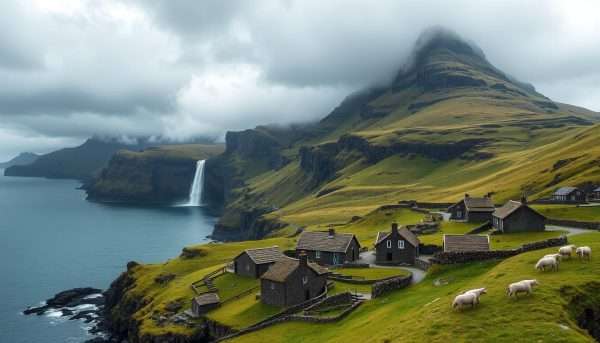
25. Faroe Islands

Village of Gásadalur with waterfall plunging into the sea, Faroe Islands

Halfway between Iceland and Norway, this autonomous archipelago offers some of Europe’s most dramatic and unspoiled landscapes.  Vertiginous cliffs plunge into the churning North Atlantic, waterfalls cascade directly into the sea and colorful villages with grass-roofed houses nestle in fjords.  The islands’ remote location and challenging weather have preserved both the pristine environment and the unique Norse-influenced culture.  Hiking trails lead to viewpoints that seem straight from fantasy novels, while the compact size makes it possible to experience diverse landscapes in a relatively short visit.

Pro Tip: Visit between May and August for the longest daylight hours and mildest weather, though be prepared for rapid changes in conditions regardless of season.  Rent a car to maximize your experience, as public transportation is limited.  Don’t miss the village of Gásadalur with its iconic waterfall, the cliffside bird colonies at Vestmanna and the optical illusion of Lake Sørvágsvatn appearing to hover above the ocean.  Book accommodations well in advance, as options are limited despite growing tourism.

Gay Dating Apps.

Discover Your Own Hidden Gems

Sometimes the most memorable travel experiences come from places you’ve never heard of before.  Keep an open mind and be willing to venture beyond the guidebook highlights.

Explore More Off-the-Beaten-Path Destinations

Essential Travel Planning Tips

Best Time to Visit

Research seasonal weather patterns, tourist crowds, and special events before selecting your travel dates.  Shoulder seasons (spring and fall) often provide the best balance of good weather, fewer crowds and reasonable prices.  For wildlife destinations, timing can be crucial to witness specific migrations or behaviors.

Accommodation Strategies

Book well in advance for popular destinations, especially during peak seasons.  Consider alternatives to standard hotels, such as locally-owned guesthouses, homestays or apartment rentals for a more authentic experience and often better value.  Location matters—sometimes paying more for central accommodation saves time and transportation costs.

Cultural Sensitivity

Learn basic phrases in the local language and familiarize yourself with cultural customs and etiquette before arrival.  Dress appropriately, particularly when visiting religious sites.  Ask permission before photographing people and be mindful of local sensitivities around certain topics or behaviors.

Sustainable Travel

Support local businesses, minimize plastic use, and consider carbon offset programs for flights.  Choose tour operators with strong environmental and social responsibility practices.  Respect wildlife by maintaining appropriate distances and never feeding animals.  Consider visiting lesser-known destinations to reduce pressure on overtouristed areas.

Universal Pro Tip: Create a digital folder with copies of important documents (passport, insurance, reservations) that you can access offline.  Share your itinerary with someone at home, including accommodation details.  Pack a basic first aid kit with any personal medications.  Always purchase comprehensive travel insurance that covers medical emergencies, trip cancellation and adventure activities if applicable.
Sightseeing Tour in Denver.

Your World of Adventure Awaits

From ancient wonders and vibrant cities to pristine natural landscapes and hidden gems, our planet offers endless opportunities for discovery and adventure.  These 25 awesome places to visit represent just a fraction of the extraordinary destinations waiting to be explored.  Whether you’re drawn to cultural immersion, wildlife encounters, architectural marvels or simply breathtaking scenery, the perfect journey is out there for you.

Remember that the most memorable travel experiences often come not just from the places themselves, but from the connections you make, the unexpected moments you encounter and the new perspectives you gain along the way.  Travel with an open mind, respect for local cultures and environments, and a spirit of curiosity—and you’ll find that the world has infinite wonders to reveal.

Which of these destinations will be next on your travel list? Wherever you choose to go, may your journeys be safe, enriching and filled with awesome discoveries that stay with you long after you return home.

Ready to Plan Your Next Adventure?

Get personalized travel recommendations, detailed itineraries and insider tips for these destinations and more.


Start Planning Your Journey