
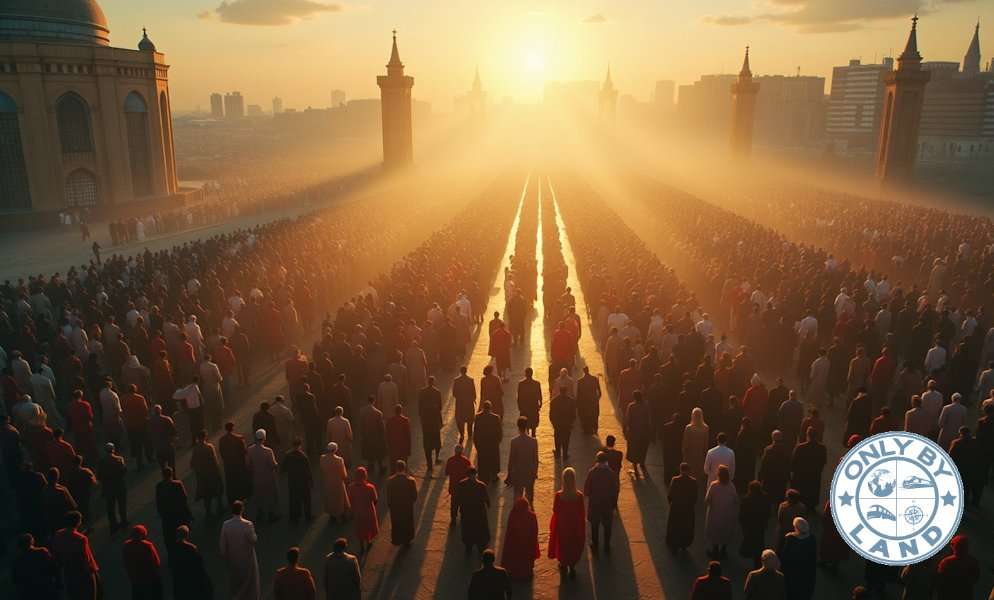
Religious beliefs and practices are changing at an unprecedented pace. This challenges many assumptions about faith in today’s world. Recent studies have revealed unexpected trends about the world’s fastest growing religion. The numbers tell a different story than what popular beliefs and media outlets suggest.
Major research organizations worldwide have conducted studies about the fastest growing religion. Their research delves into birth rates, conversion patterns and population movements. Modern technological progress, societal changes, and economic conditions play crucial roles in how religions expand in 2023. The results paint a complex picture beyond basic growth numbers.
The detailed analysis shows how religious growth patterns emerge from demographic trends, conversion rates and technology’s influence on faith communities. These elements work together to shape how religions grow and evolve. Their combined impact provides valuable insights into faith’s future across the globe.
Understanding Religious Growth Metrics

Religious growth measurement needs sophisticated demographic tools and methodologies that track changes in faith communities worldwide. Studies show that 84% of the world’s population identifies with a religious group. Projections suggest this figure could reach 90% by 2050.
Defining Religious Growth and Measurement Methods
Demographic researchers use multiple metrics to track religious growth through birth rates, mortality patterns and migration trends. The Pew Research Center’s detailed studies look at religious switching patterns in 70 countries. These studies give an explanation about how faith communities expand or contract. Measurements look at both numbers like attendance and quality aspects such as how intensely people practice their faith.
Key Factors Affecting Religious Demographic Changes
Religious demographic changes depend on several important factors:
- Birth Rates and Age Distribution: Muslim women have an average of 2.9 children, while non-Muslim women average 2.2 children. Christian women keep a birth rate of 2.6 children.
- Geographic Distribution: Religious growth changes by a lot based on region. Christianity declines in Western Europe but grows faster in sub-Saharan Africa.
- Religious Switching: Christianity saw the biggest switching-related changes between 2015 and 2020. About 13 million people left the faith while 5 million joined.
Common Misconceptions About Religious Growth Statistics
People often think religious decline happens everywhere. Reality tells a different story. Religious affiliation might drop in the UK, but most people worldwide keep some form of religious faith. There’s another misconception about religious community sizes. British people often think the Jewish population is millions larger than it actually is. This shows how people’s beliefs can differ by a lot from demographic facts.
Religious growth measurement now includes digital engagement metrics as faith communities build their online presence. Traditional metrics show weekly service attendance dropped from 44% in 2000 to 29% in recent years. This change pushes researchers to create new ways of measuring religious participation in the digital world.
The Demographics Behind Islamic Growth
The numbers tell a clear story about why Islam is growing faster than any other religion worldwide. Birth rates, age patterns, and where Muslims live combine to create unique growth that sets Islam apart from other faiths.
Birth Rates and Family Structures
Muslim families have unique patterns when it comes to having children, though these patterns keep changing. Muslim women around the world have 2.9 children on average, while non-Muslim women have 2.2. The numbers have changed quite a bit in Muslim-majority countries. The average number of children per woman dropped from 4.3 children in 1990-95 to 2.9 children in 2010-15. Muslim communities often have multiple generations living together or close by, which shapes their family structure.
Age Distribution Analysis
Muslims are much younger than other religious groups. Their median age of 23 years is well below the global average of 28 years. This young population means natural growth will continue steadily. Different regions show varying age patterns:
- Sub-Saharan Africa: median age of 17 years
- Middle East and North Africa: median age of 23 years
- Asia and Pacific: median age of 24 years
- North America: median age of 26 years
- Europe: median age of 32 years
Geographic Distribution Patterns
Muslims spread across the globe in distinct ways. 60% live in Asia and about 20% call the Middle East and North Africa home. India stands out with the third-largest Muslim population globally. China has more Muslims than Syria. The Muslim population will grow by 70% between 2015 and 2060, jumping from 1.76 billion to 3 billion. This growth will happen mostly in areas that already have large Muslim communities.
Young Muslims make up half of Europe’s Muslim population – those under 30 represent 50% compared to just 32% of non-Muslim Europeans. Muslim-majority countries will see their middle-aged population (45-59) grow from 12.1% to 16.3% by 2030. These age patterns will shape how the population grows in coming years.
Read about the Imam Reza Shrine in Iran.
The Reality of Religious Conversion

Religious conversion patterns are changing the global faith landscape in surprising ways. The Pew Research Center’s complete analysis of 70 countries shows that people switching religions has become a key driver of religious demographic changes.
Global Conversion Statistics
Christianity faces the biggest changes through conversion. Projections suggest a net loss of about 66 million adherents between 2010 and 2050. The numbers paint an interesting picture – while 40 million people are expected to join Christianity, 106 million will likely leave the faith. People with no religious affiliation will grow by 61 million through conversion.
Regional Conversion Trends
Different regions and age groups show unique conversion patterns. The United States has a dynamic religious landscape where people move both toward and away from religious affiliation. The research shows that:
- Young people between 15-29 make most religious changes
- People aged 30-65 are leaving religions at growing rates
- Location plays a big role – 20 states now have more unaffiliated residents than any single religious group
Factors Influencing Religious Switching
Several elements shape religious conversion decisions. Research shows these patterns depend on:
- Social Environment: Family bonds and community connections shape conversion choices strongly
- Education Levels: Different religious groups show varied conversion patterns based on education
- Geographic Location: Religious diversity and local laws affect conversion rates
- Political Context: Government rules and restrictions shape conversion possibilities in many nations
The “snowballing” effect of religious switching has grown stronger since the 1990s, especially among younger generations. Western countries show this clearly – about half of American adults have changed their religious affiliation at least once in their lifetime.
Discover these new age religions.
Technology’s Impact on Religious Growth
The digital revolution has changed how religious communities grow and connect. Recent studies show that 30% of U.S. adults search for religious information online. This marks a major move in how people connect with faith today.
Social Media and Religious Identity
Social media platforms have become vital spaces where people express their religious identity. Research shows that 17% of Americans share religious content on social media, and 42% see others’ prayer requests online. This online activity creates individual-specific religious experiences and many people now take what researchers call a “pick-and-choose” approach to faith.
Key digital activity stats among religious groups:
- 52% of highly religious Americans use apps to read scripture
- 28% use prayer reminder apps
- 20% watch religion-focused videos on YouTube and TikTok
Digital Evangelism Trends
Digital evangelism has become a powerful way to reach people. Religious organizations now make use of online platforms to spread their message and certain groups respond well to this approach. 31% of evangelical Protestants and those in historically Black Protestant traditions share religious content on social media. This shows how digital platforms have become essential for spreading faith.
Online Religious Communities
Virtual religious communities have changed how people practice their faith. 39% of regular online service viewers pray, sing or respond out loud during virtual services. Different religious groups show varying levels of online activity:
- Historically Black Protestant churches lead in digital activity, with 58% watching religious services online monthly
- Evangelical Protestants follow at 47%
- Mainline Protestants and Catholics show lower numbers at 28% and 24% respectively
These technological changes affect younger generations most. They often seek spiritual guidance through digital channels. Studies reveal that social media users are 50% to 80% more likely to accept varied religious beliefs and practices. This shows how technology shapes religious viewpoints and growth patterns.
Religious apps and digital platforms create new ways to explore faith, with 11% of Americans following religious leaders online. This digital shift has made religious content more available but challenges traditional authority within faith communities.
Future Projections and Implications

Research institutions predict a dramatic transformation in worldwide religious demographics by 2050. Muslims and Christians will make up almost equal portions of the world’s population. Christians will represent 31.4% while Muslims will reach 29.7%.
Population Forecasts to 2050
Demographic factors are reshaping the world’s religious makeup. Latest projections show:
- Christians will remain the largest group at 31% of global population
- The Muslim population will expand by 70% between 2010-2060
- People with no religious affiliation will decrease to 13% worldwide
- The Hindu population will grow by 34%
- Buddhist numbers will stay stable because of aging populations
Socioeconomic Implications
Religious adherence patterns reflect economic development levels in different regions. Studies reveal that higher economic progress leads to lower religious commitment. Yet this relationship isn’t straightforward, as countries with rapid growth tend to stay highly religious.
Religious restrictions have grown worldwide, with 57 countries now enforcing strict government controls on religion, up from 40 in 2007. These limits include:
- Bans on specific faiths
- Prohibition of conversions
- Restrictions on religious preaching
- Special treatment for certain religious groups
Potential Demographic Shifts
Sub-Saharan Africa has become a vital hub for religious expansion. High birth rates in this region boost both Christian and Muslim populations. Projections show that by 2060, sub-Saharan Africa will house more than four in ten Christians worldwide.
Christianity’s geographic center is moving rapidly. Europe and North America’s Christian populations will drop to less than one-quarter of global Christians by 2060. The Muslim population will likely grow faster than other major religious groups and might become the world’s largest religious group before 2100.
Age differences play a role in these demographic changes. Young people in 46 countries place less importance on religion than older generations. This trend varies by region though, with only Georgia and Ghana showing stronger religious commitment among younger populations.
Further reading on the fastest growing religions.
Appreciate the Fastest Growing Religions
Modern religious growth shows an intricate mix of demographics, technology and social change that questions what we believe about faith today. The numbers tell an interesting story about Islam’s growth. Higher birth rates and a young population with a median age of 23 years fuel this expansion.
The religious landscape will look quite different by 2050. Muslims and Christians will likely have similar shares of the world’s population. Sub-Saharan Africa emerges as a crucial region that reshapes these religious numbers. Digital platforms now give faith communities new ways to grow and stay connected.
These changes affect societies everywhere. Religious groups must embrace new technology while their core traditions remain intact. Population trends point to growing religious participation worldwide. However, developed and developing nations show different patterns.
Demographics and technology help us learn about why religions grow the way they do. They also show us how faith might shape human society in the future. These patterns will keep influencing global cultural, social, and economic changes throughout the 21st century.
FAQs
Q1. Which religion is currently growing the fastest worldwide?
Islam is currently the fastest-growing religion globally, primarily due to high birth rates and a young population demographic. Muslims have an average of 2.9 children per woman, compared to 2.2 for non-Muslim women.
Q2. How is technology impacting religious growth and engagement?
Technology is significantly influencing religious growth and engagement. About 30% of U.S. adults now search for religious information online, and many use apps for scripture reading and prayer reminders. Social media has become a platform for sharing religious content and forming online faith communities.
Q3. What are the projected religious demographics for 2050?
By 2050, Muslims and Christians are expected to comprise nearly equal shares of the world’s population, with Muslims reaching 29.7% and Christians at 31.4%. The religiously unaffiliated are projected to decline to 13% globally, while the Hindu population is expected to expand by 34%.
Q4. How does religious conversion affect global faith demographics?
Religious conversion is reshaping the global faith landscape. Christianity is experiencing the largest shifts, with projections indicating a net loss of approximately 66 million adherents between 2010 and 2050. Meanwhile, the religiously unaffiliated category shows substantial gains, with an expected net increase of 61 million people through conversion.
Q5. What role does Sub-Saharan Africa play in future religious growth?
Sub-Saharan Africa is emerging as a crucial region for religious growth, particularly for Christianity and Islam. High birth rates in this region are significantly contributing to expanding Christian and Muslim populations. By 2060, more than four in ten of the world’s Christians are projected to live in sub-Saharan Africa.


Leave A Comment