
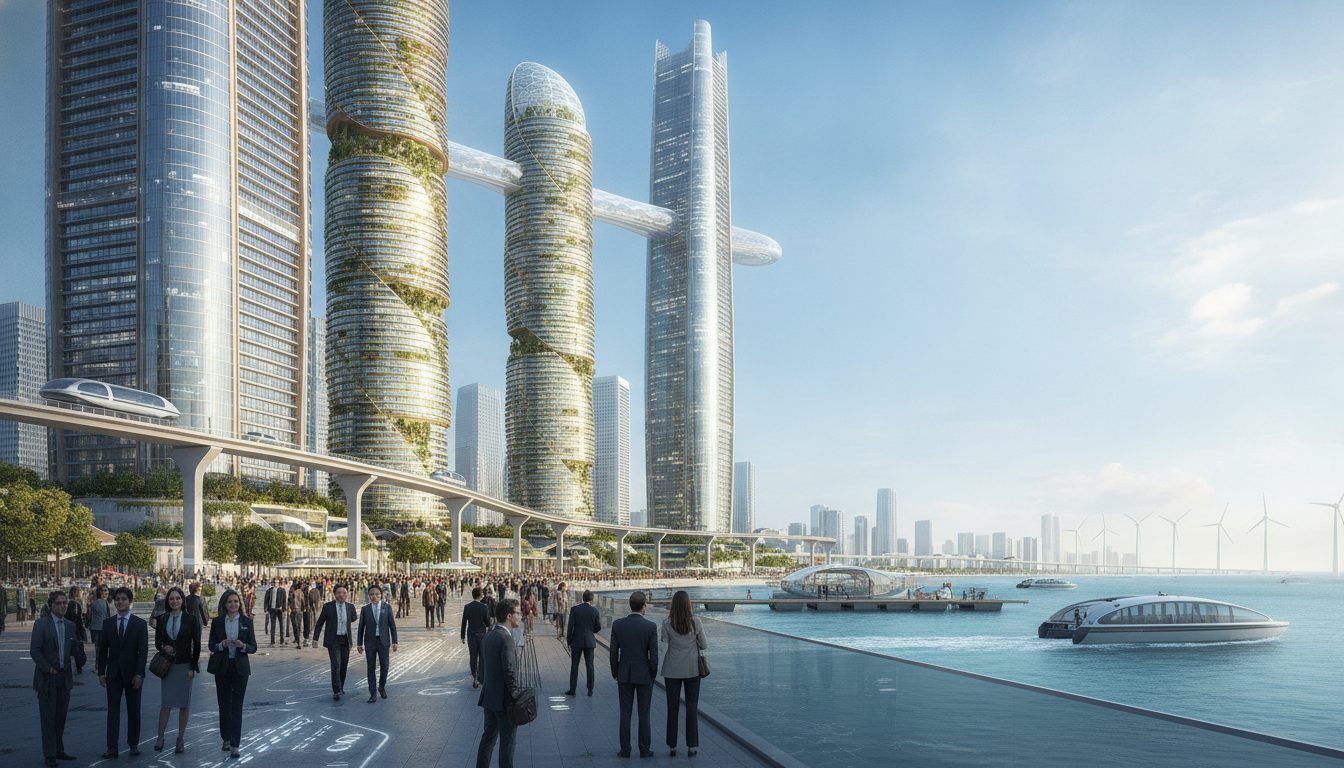
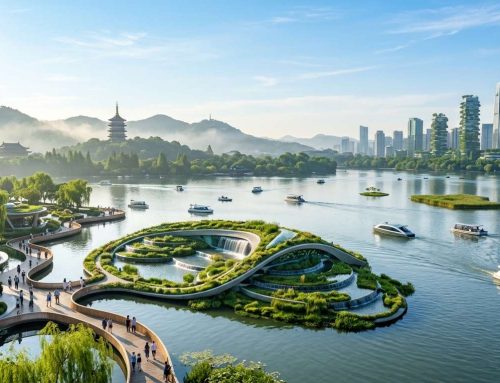
I remember learning that this city was built on land that didn’t exist fifty years ago. It really made me stop and think. Standing by the reclaimed shoreline, I wondered how to create a sustainable city from the sea.
This coastal Korean city is South Korea’s third-largest urban center. It aims for something big: becoming carbon neutral by mid-century. The city is working on its Green New Deal Projects and joined the Powering Past Coal Alliance. They plan to reach net-zero emissions by 2025 through green infrastructure and clean energy.
I want this to feel like a travel journal, not a lecture. No jargon, no fluff, just what I’ve seen. The Incheon Free Economic Zone shows how to make a smart city work.
I think American cities should pay attention. This isn’t theory, it’s happening now, step by step.
Key Takeaways
- Incheon targets full carbon neutrality by 2050 through its Green New Deal Projects.
- The city stands as South Korea’s third-largest urban center, built largely on reclaimed coastal land.
- Membership in the Powering Past Coal Alliance backs a serious commitment to phasing out coal power.
- Green infrastructure, clean energy, and electric vehicle expansion drive net-zero goals set for 2025.
- The Incheon Free Economic Zone (IFEZ) acts as the proving ground for large-scale smart-city design.
- American planners and travelers alike can draw practical lessons from this maritime rebuild.
1. Incheon Future 2050: A Vision Rising from Reclaimed Ground
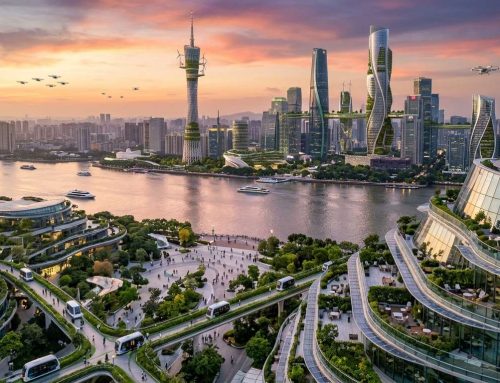
Building a city on reclaimed seabed is almost unbelievable. I saw it last year on Incheon’s coast. Cranes and glass towers were rising from the sea.
This isn’t just a renovation. It’s a bold experiment in creating a carbon-neutral city by 2050.
The Audacity of Building a Carbon-Neutral Metropolis from the Sea Floor
Incheon didn’t just dream big. It put real money and policy behind its goals. Korea’s National Assembly passed a law in 2010 to support this vision.
This law provided $83.6 billion for green projects. It showed Incheon’s commitment to a sustainable future.
Incheon also joined the Powering Past Coal Alliance. This move shows its serious commitment to clean energy. Korea aims to be carbon neutral by 2050.
Why the World Should Be Watching Incheon’s Experiment Closely
Incheon’s plans raise a key question. What if other cities need to follow this example? Rising seas are a pressing issue for cities like Miami and New Orleans.
Incheon is testing a new way of building cities. It’s a live experiment in sustainable urban planning. Few cities are taking such a bold step.
2. Songdo Smart City 2050: The Seawater Canal Network as Urban Lifeblood
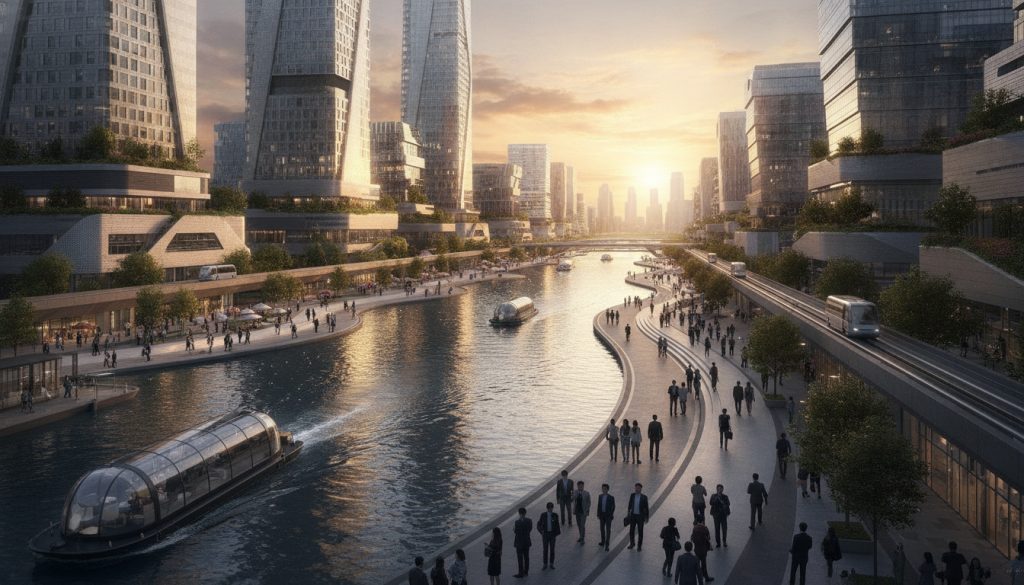
The first thing I noticed in Songdo wasn’t the skyline. It was the absence of garbage trucks.
Songdo International Business District started as a simple free economic zone. It grew into Korea’s first true smart city. The transformation still surprises me.
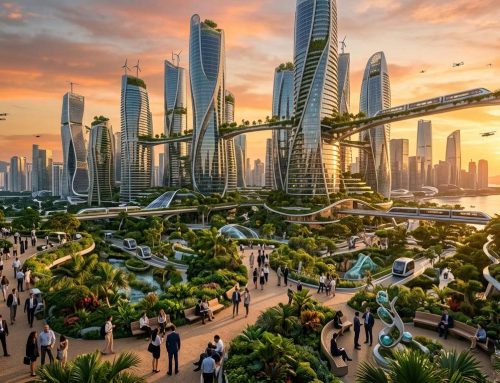
Buildings here talk to each other through sensors. They track traffic flow and energy use in real time. Walking along the canals, I felt like I was in a working prototype of Songdo smart city 2050.
Closed-Loop Marine Heat Exchangers and Zero-Emission District Cooling
Songdo’s canals aren’t just pretty water features. They double as a massive cooling and heating system pulled straight from the sea. Closed-loop marine heat exchangers move seawater through underground pipes.
They absorb heat from buildings in summer and release it back to the ocean. There’s no bulky cooling plant burning fuel. No emissions drift over the towers. It’s quiet infrastructure, doing serious work without asking for credit.
Pneumatic Waste Matrices: Reinventing Sustainable Resource Cycling
This part still amazes me whenever I explain it to friends back home. Songdo eliminated street garbage cans and collection trucks. Instead, waste gets sucked through underground pipes straight to processing centers.
No trucks means fewer emissions and quieter streets. This system has been running since the district’s early buildout. It’s not some untested concept dreamed up for marketing brochures.
Setting the Baseline for Coastal Smart Districts Worldwide
Songdo’s sustainability credentials go beyond clever engineering tricks. The district was chosen in 2012 to host the United Nations Green Climate Fund offices. This tells me global institutions already saw something worth backing here.
Research published through environmental engineering studies on urban water continues to reference Songdo’s canal model. Over 40% of Songdo’s total area stays reserved for green space, including a sprawling 40-hectare central park.
By 2050, I think other coastal smart districts will measure themselves against Songdo. They will look at seawater cooling, pneumatic waste cycling, and generous green space woven through dense towers.
| Feature | Traditional Urban Approach | Songdo Smart City 2050 Model |
|---|---|---|
| Cooling Systems | Fuel-powered central plants | Closed-loop marine heat exchangers |
| Waste Collection | Street trucks and bins | Underground pneumatic pipe network |
| Green Space Ratio | Often below 20% | Over 40% reserved parkland |
| Global Recognition | Rarely hosts international bodies | UN Green Climate Fund offices since 2012 |
3. High-Density Towers and the Vertical Biophilic Architecture Carbon Neutral Standard
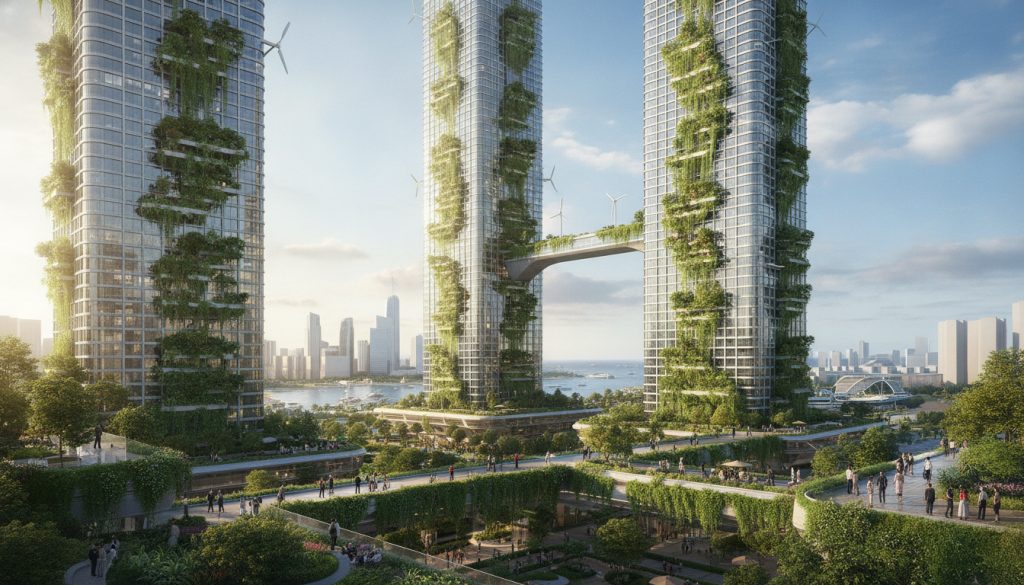
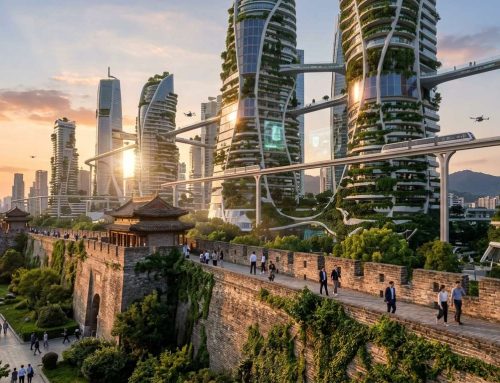
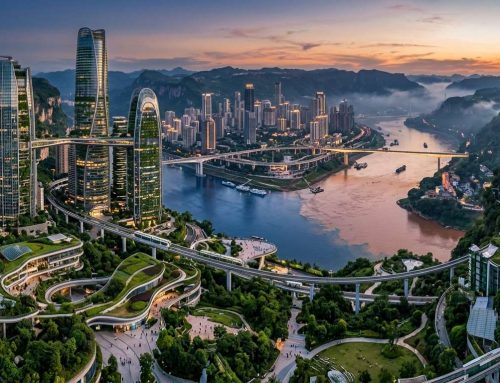
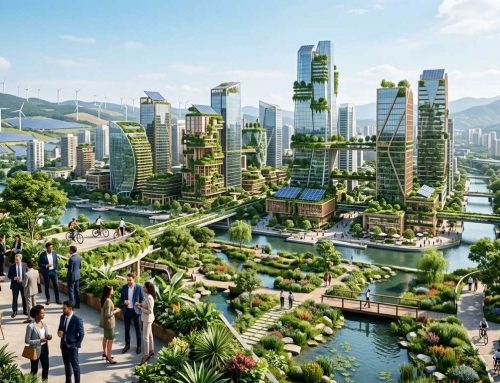
I’ve seen many cities, but Incheon’s towers stood out. They were covered in green, showing the city’s vertical biophilic architecture carbon neutral plan. Instead of just glass, nature was part of the design.
The towers connect to marine systems under the city. They use seawater for cooling and send waste underground. This makes the buildings feel like they’re part of a larger system, not just added on.
Living Facades and Sky Gardens as Everyday Urban Infrastructure
Walking by major towers, you’ll see plants on the walls. These aren’t just for looks. They help with insulation, air quality, and shade.
Sky gardens offer breaks from the concrete. They have real soil and trees high up. I loved stopping there to catch my breath and see the harbor.
Balancing Density with Livability in a City Built on Fill
Incheon has 28 buildings with LEED-NC certification. This is impressive for a city built on reclaimed land.
The city also cut greenhouse gas emissions by 42.6%. This earned Incheon a top award from Korea’s Ministry of Environment.
“Density without livability just builds cages, not homes.”
Lessons Incheon’s Towers Offer American High-Rise Development
American coastal cities are running out of space. Miami, Boston, and San Francisco still build old-style towers. They use lots of energy and have small rooftop gardens.
We don’t have to copy Incheon exactly. But we should learn from it. Incheon shows that green towers and livability can go together.
Gangnam Style filming locations.
4. IFEZ Yeongjong Aerotropolis: Incheon International Airport as an Eco-Hub
Airports rarely surprise me anymore, but the IFEZ Yeongjong Aerotropolis project changed that. It’s not just a terminal with shops. It’s a working eco-hub built around Incheon International Airport. It’s designed to function like a small, self-sufficient city.
Green Hydrogen Power at Continental Scale
The hydrogen ambition here is real. South Korea’s Green New Deal has set aside $61.9 billion for low-carbon hydrogen and more. This funding aims to create about 320,000 green-collar jobs across the country.
Yeongjong is at the heart of this effort. The goal is to have the airport run on green hydrogen for all air traffic. This is a big commitment, unlike most airports.
Autonomous Urban Air Mobility Sky-Corridors Linking the Region
The sky-corridor plan really excites me. Imagine autonomous air taxis flying from Yeongjong to vertiports across Incheon. No traffic jams or long shuttle rides.
By 2050, these Urban Air Mobility routes could cut down on ground congestion a lot. I’ve spent hours stuck in airport traffic. A short autonomous flight would be a welcome change.
Rethinking the Airport as a City, Not Just a Gateway
Think of the airport as a destination, not just a checkpoint. Yeongjong’s planners are on the same page. They’re building systems for power, transit, and mobility that work on their own.
This shift is important. A self-sufficient aerotropolis can handle growth, energy demand, and travel better than traditional terminals.
5. Yellow Sea Coastal Tidal Resilience: Engineering Against the Rising Sea
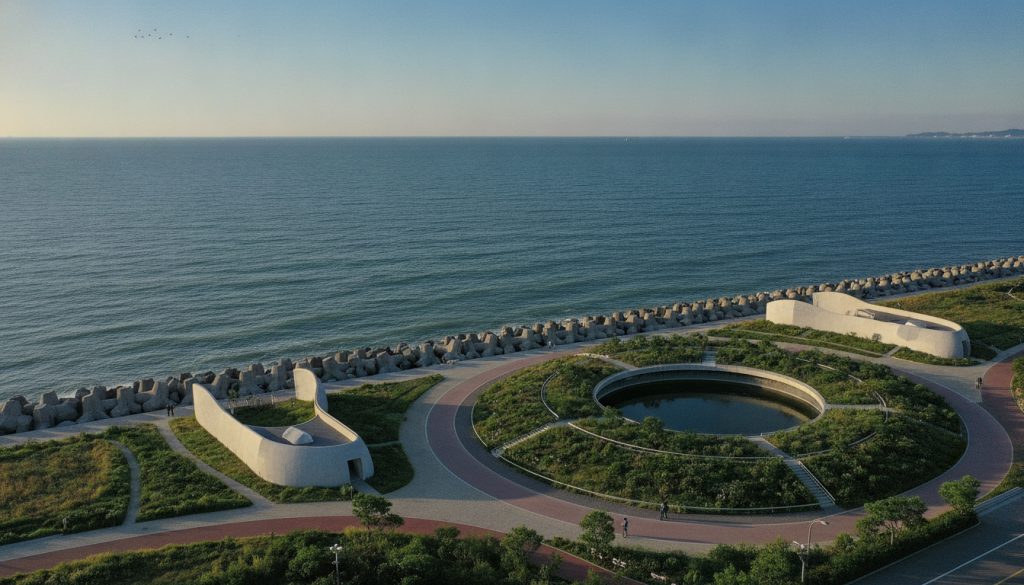
Building a city on land pulled from the ocean floor is a deal with the water. Incheon’s planners knew this from the start. Almost every neighborhood I walked through sits on reclaimed ground. This means yellow sea coastal tidal resilience is not just a buzzword—it’s survival infrastructure.
While touring the coastline, I often thought about this. The city looks calm and polished, but engineers are fighting a quiet battle against rising water.
Submerged Tidal-Surge Barriers Protecting Reclaimed Foundations
Under the waterline, Incheon has installed submerged tidal-surge barriers. These barriers absorb storm energy before it hits the shore. They work quietly, protecting the foundations of entire districts.
I couldn’t see them during my visit, but that’s the point. Good resilience engineering disappears into the background. That’s the goal behind this approach to tidal resilience along vulnerable reclaimed zones.
Subterranean Hydrologic Vaults and 100% Storm Runoff Capture
Typhoon season brings huge amounts of water to this coast every year. Incheon’s answer is underground: massive hydrologic vaults. These vaults capture 100% of storm runoff before it can erode reclaimed soil.
This is an ambitious goal, but it makes sense. Land built from fill needs extra protection from water pressure. These vaults act like a pressure valve for the entire city during heavy storms.
Safeguarding Cheongna’s Robotics Corridor from Coastal Threats
Cheongna is Incheon’s robotics and innovation hub, attracting serious investment and talent. But none of this growth matters if coastal flooding threatens the district’s foundations.
Planners see economic ambition and coastal resilience as one problem. Protecting Cheongna means protecting jobs, research labs, and manufacturing lines. It’s a smart pairing, and American coastal cities could learn from it.
6. Subsurface Hydrologic Heritage Engineering: Old Wisdom Meets New Water Systems
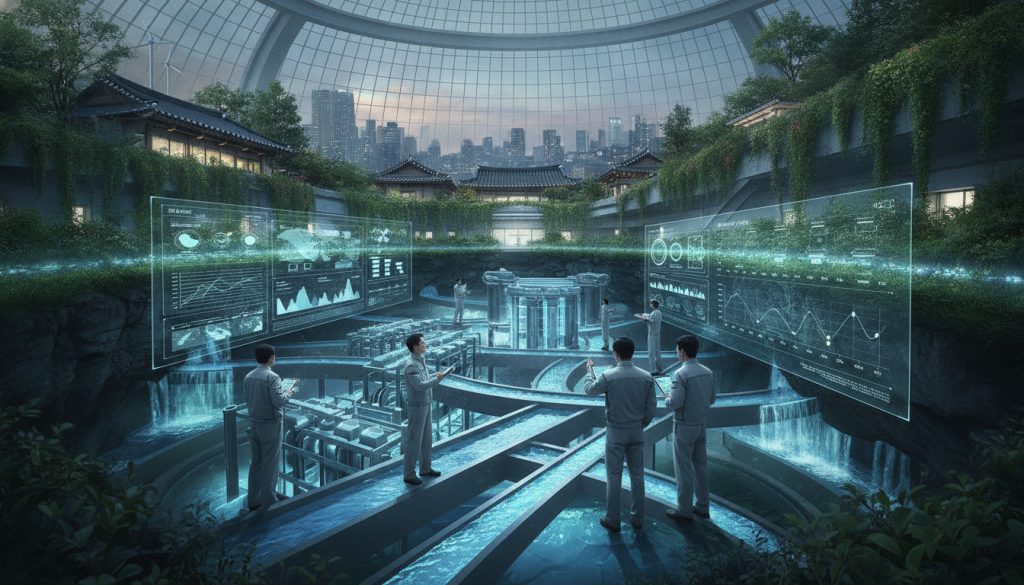
I keep coming back to this part of Incheon’s water story. It feels less like science fiction and more like common sense. Walking past hydrogen buses and vertical gardens, I learned how old irrigation logic shapes new drainage systems. It feels refreshingly human.
This is subsurface hydrologic heritage engineering in action. It might be the quietest yet most effective climate strategy in the entire city.
Closed-Loop Reservoir Stormwater Harvesting Across the City
Incheon captures rainwater instead of letting it go down storm drains. Closed loop reservoir stormwater harvesting collects runoff before it hits the sea. It stores it underground for irrigation, cooling systems, and non-drinking household use.
The city’s sustainable infrastructure report shows this water network is key. It ranks alongside waste collection, energy, and public transportation. This tells me Incheon treats water as real infrastructure, not an afterthought.
Stadium Porous Asphalt Stormwater Drainage as a Civic Model
My favorite discovery wasn’t a skyscraper. It was pavement.
The city’s stadium porous asphalt stormwater drainage system lets rainwater pass through the surface. It doesn’t pool on streets or overwhelm drains. It’s a simple idea that any city could copy without needing billions in funding.
Blending Traditional Korean Water Management with Modern Engineering
Incheon’s original water pipe design was built years ago. It was to stop wasted drinkable water from showers and toilets. That early thinking never disappeared.
It evolved into today’s layered system of tanks, filters, and porous surfaces. It’s proof that sustainable design doesn’t need to be futuristic to work.
Sometimes, it just needs to be smart, patient, and a little old-fashioned. For a deeper look at how these systems support Incheon’s broader climate goals, Incheon’s eco-friendly city planning offers useful context worth exploring.
7. U-City Digital Architecture and the Physics of a Space-Age Coastline
As I explored Songdo, I noticed small sensors everywhere. At first, I thought they were just security cameras. But they’re actually part of a citywide digital brain.
This brain makes the city work in real time. It’s a key part of the Incheon future 2050 vision.
Sensor-Driven Urban Nervous Systems Across IFEZ
Sensors are woven through Songdo’s buildings, roads, and utility lines. They watch traffic, energy use, and people moving around the clock.
This data turns into useful alerts for residents. They get info like when buses will arrive, energy use in buildings, or traffic warnings before they leave.
This is Korea’s big experiment in treating a city as one connected system, not separate parts.
Space-Age Environmental Physics: Climate Control at Metropolitan Scale
When you connect enough sensors, you can manage a whole district’s climate. This is what I mean by space-age environmental physics.
Incheon links its cooling systems, stormwater vaults, and sensors into one system. It adjusts temperature, humidity, and energy use across neighborhoods, not just buildings.
This kind of engineering is usually found on spacecraft or research stations. But it’s applied to a coastal city here.
An Opinion: What the United States Can and Cannot Realistically Replicate
Let’s be honest. I don’t think the U.S. can copy all of this, and we shouldn’t pretend we can.
“Songdo is a huge effort to create a smart city from scratch. But its success relies on planning that’s hard to do in the U.S.”
Our zoning laws are complex. Our land is owned by many private parties, not one authority. And we don’t spend as much on big infrastructure projects as Korea does.
But we can take small, smart steps. We can use sensors for traffic signals, smarter energy grids, and some stormwater ideas.
| System Component | Incheon’s Approach | U.S. Feasibility |
|---|---|---|
| Citywide sensor network | Centrally planned, built into new construction from day one | Difficult at full scale; possible in new master-planned districts |
| District-level climate control | Seawater cooling linked to sensor grid across zones | Unrealistic without unified utility ownership |
| Smart traffic and energy alerts | Real-time data feeding public and private systems | Highly achievable with existing U.S. tech infrastructure |
| Stormwater sensor integration | Combined with hydrologic vaults citywide | Feasible at city-block or campus scale |
So, that’s my honest opinion. Some of Incheon’s ideas work well here. But others are uniquely Korean, at least for now.
8. Conclusion
Looking back, I see Incheon building more than just a city. It’s creating a model for coastal living that’s green and sustainable. This isn’t just talk; it’s a real plan to live off the grid.
Not every part of this plan fits with what we do in the US. I mentioned that before and I still believe it. But ignoring what’s happening in Incheon would be a big mistake.
Incheon’s vision for 2050 is serious and already in action. It’s all about being carbon-neutral, investing in green tech, and building smart cities. This is a city designed to last, not just to start.
After researching this, I have more questions than answers. That’s a good sign. Incheon’s future is worth watching, and I’ll keep an eye on it.



Leave A Comment