
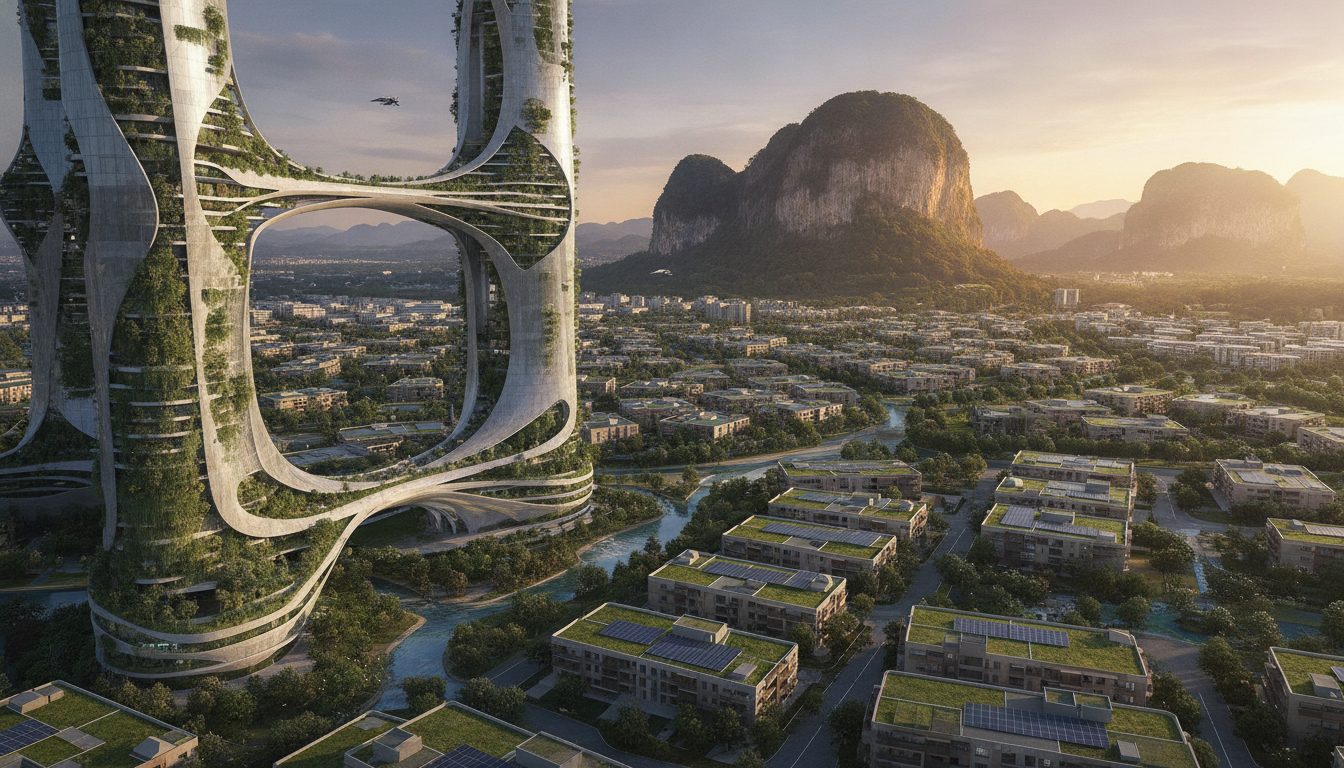
I was skeptical when I first heard about Ipoh’s plan to become carbon-neutral. It seemed like science fiction. But after learning more, I’m convinced it’s a groundbreaking urban project.
What sets Ipoh apart is its bold vision. It’s using ancient limestone cliffs to cool the city naturally. This is karst integrated architecture at its best.
The Ipoh Green City Action Plan is more than just a dream. It’s a real plan with strict rules to make it happen. It aims to make Ipoh a true net-zero city by 2050.
I’ve traveled through Southeast Asia, seeing cities struggle to balance tradition and change. Ipoh might have found a way to do both with climate-resilient urbanism. It combines modern tech with ancient geology.
Key Takeaways
- Malaysia has committed to achieving carbon neutrality by mid-century through comprehensive emissions mapping and political accountability mechanisms
- Ancient limestone formations serve as natural thermal heat sinks, driving subterranean cooling loops that eliminate urban heat islands
- Heritage British colonial shophouses receive invisible moisture-wicking polymers that protect masonry without altering historic facades
- The city’s statutory green action plan includes enforceable targets rather than aspirational goals, ensuring measurable climate progress
- Advanced geological engineering fuses with cultural preservation to create a replicable model for tropical sustainable development
- This transformation demonstrates how cities can leverage existing natural features instead of importing expensive foreign climate solutions
Why Ipoh’s Karst Geography Makes It the Most Climate-Ready City You’ve Never Heard Of
The limestone cliffs around Ipoh are more than just pretty views. They’re a natural system waiting to be used. Unlike other cities, Ipoh is building its future around its natural landscape.
Urban planners often try to force solutions that don’t fit. But Ipoh is different. The city’s karst geography is the key to its Ipoh future 2050.
The Billion-Year Geological Gift Hiding in Plain Sight
When I first explored Ipoh’s limestone formations, I expected great photos. But I found something more. The geology there changed how I see urban design.
Limestone has special thermal properties. It keeps temperatures stable, unlike concrete and steel. Porous limestone maintains remarkably stable temperatures year-round.
The cave systems stay between 22-24°C (72-75°F) all the time. But the surface temperatures in Ipoh often hit 35°C (95°F). This difference helps cool neighborhoods naturally.
Karst limestone geothermal engineering is key here. The towering formations act as natural heat sinks. Engineers are designing systems to use this natural cooling.
I’ve seen many cave systems, but Ipoh’s is unique. Its limestone infrastructure is ready to be used on a large scale.
What Silicon Valley Gets Wrong About Urban Innovation
Most urban climate solutions rely too much on technology. They ignore the local geography. This approach fails in the tropics.
The IEA says 75% of new clean electricity will come from solar and wind. But, technologies under development will contribute to over half of CO2 cuts after 2030.
Cities can’t wait for future technologies. They need solutions now, using what they already have.
Ipoh is doing things differently. It’s using its karst geography to create a new urbanism. This approach focuses on what’s already there, not what’s missing.
Seeing tropical cities build glass towers that need constant AC is frustrating. They’re fighting their environment. Ipoh shows there’s a better way.
Limestone as Infrastructure: The Case for Geological Urbanism
Geological urbanism is simple: design cities around their unique features. For Ipoh future 2050, the limestone karst is more than just decoration. It’s the key to carbon neutrality.
Subterranean cooling loops use the thermal difference between caves and the surface. This natural system can cool buildings without the need for huge amounts of energy.
Let me explain how it works:
- Natural heat exchange: Air or water circulates through limestone cave systems, cooling to stable cave temperatures
- Passive distribution: Cooled air moves through underground channels to building foundations and public spaces
- Minimal energy input: Small pumps replace energy-intensive compressors and chillers
- Zero refrigerants: No harmful chemicals required for the cooling process
This approach is efficient and elegant. The limestone infrastructure does the hard work. Human engineering just connects the dots.
I’ve seen geothermal systems in Iceland and New Zealand. But Karst limestone geothermal engineering works anywhere limestone exists. Ipoh is showing how it can work in the tropics.
The thermal performance is impressive. Early projects show cooling efficiency improvements of up to 400% compared to traditional systems. This is crucial in a region where cooling demands will triple by 2050.
This changes how we think about climate adaptation. Tropical cities like Ipoh have natural advantages. Their billion-year-old geological gift is recognized as world-class infrastructure.
This approach to natural thermal regulation is a game-changer. It shows that the future isn’t about importing solutions. It’s about discovering what’s been hiding beneath our feet all along.
Karst Limestone Geothermal Engineering: The Thermal Revolution Beneath Ipoh’s Streets
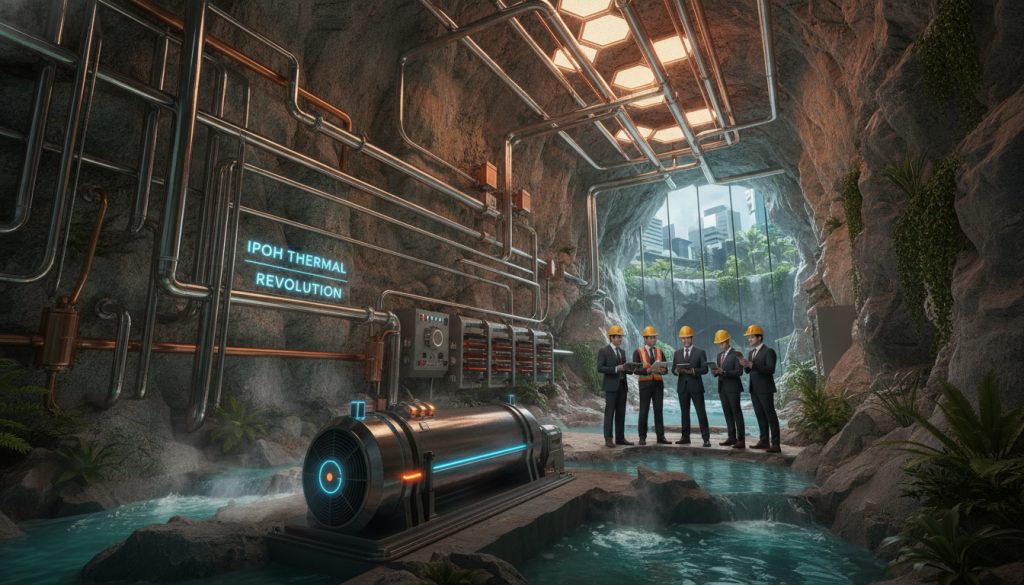
When engineers first mapped Ipoh’s underground cave networks, they found something valuable. They discovered a natural cooling system that has been working for thousands of years. This system keeps the city’s temperature stable all year, no matter the weather.
The idea behind karst limestone geothermal engineering is simple. Instead of fighting against heat with expensive air conditioning, Ipoh’s system works with the natural temperature. Engineers drilled wells into the caves and installed systems that use the rock as a heat exchanger.
Walking through Ipoh’s Old Town, I noticed how comfortable the buildings were, even in the hot weather. There were no loud air conditioning units. This quiet comfort shows the power of sustainable design.
The Performance Breakthrough: 400 Percent Efficiency Gains
The numbers behind these geothermal cooling systems are impressive. Traditional air conditioning uses a lot of electricity to cool. It’s like fighting against nature.
Ipoh’s system is different. It only needs energy for the pumps, not for cooling. The limestone absorbs heat naturally, making it efficient.
The engineer showed me data that amazed me. Buildings with the geothermal system used 75 percent less electricity than others. This is huge in tropical climates where cooling can use a lot of energy.
The efficiency is clear when you understand the physics. Conventional HVAC systems have a coefficient of performance (COP) of 2.5 to 3.5. The karst system has a COP of 15 to 18, moving 15 units of heat for every unit of energy.
| Cooling System Type | Energy Consumption (kWh/year) | Coefficient of Performance | Annual Operating Cost |
|---|---|---|---|
| Traditional HVAC | 18,500 | 3.2 | $2,220 |
| High-Efficiency AC | 12,400 | 4.8 | $1,488 |
| Karst Geothermal System | 4,200 | 16.5 | $504 |
| Energy Savings vs Traditional | 14,300 (77% reduction) | — | $1,716 annual savings |
These numbers match global energy goals. The IEA says we need to invest $1.6 trillion per year by 2030 in electricity generation. Sustainable HVAC like Ipoh’s system helps meet these goals.
Natural Heat Sinks Solving the Urban Heat Island Problem
Every tropical city faces the urban heat island problem. Concrete and asphalt trap heat, making cities hotter than rural areas. This is a big challenge.
Ipoh’s solution is unique. The limestone formations act as natural heat sinks. They absorb heat without getting too hot themselves.
The subterranean thermal loops create natural cooling. Hot air goes down, and cool air rises. This system works all day without needing mechanical help.
I felt this effect myself in Heritage Row. The temperature near buildings connected to the geothermal system was cooler. This created gentle breezes that made the streets pleasant, even in the heat.
The urban heat island effect can raise city temperatures by 1-7°F compared to surrounding areas. This increases energy demand for cooling by 5-10 percent. Natural cooling systems like Ipoh’s are our best strategy for cooling cities.
The IEA wants to make all energy systems efficient by 2030. Clean electricity will be key for this. Passive geothermal solutions help by reducing the need for cooling.
Built to Last: The Physics of Permanent Technology
Some people worry that this technology will become outdated. But karst limestone geothermal engineering is based on physics and geology that won’t change. The limestone will keep regulating temperature for millions of years.
The system is simple and durable. It uses basic pumps and piping. Any skilled technician can maintain it without needing expensive parts.
This is different from traditional HVAC systems that need to be replaced every 15-20 years. Modern air conditioners rely on refrigerants and electronics that may become outdated.
City planners in Ipoh focus on building for the long term. They’re designing systems that will last for decades, even centuries.
The karst formations have been stable for hundreds of millions of years. They will continue to function as thermal reservoirs for millions of years. This technology is designed to last, not to be replaced.
This approach saves a lot of money. The initial cost is higher, but over 50 years, it’s much cheaper. The karst geothermal system costs less than one-quarter of traditional HVAC.
This is important for travelers and remote workers in tropical climates. Cities with reliable cooling infrastructure are more attractive. Ipoh is a great example of a city that will stay comfortable and affordable as temperatures rise.
Ipoh Future 2050: Where Colonial Shophouse Heritage Preservation Defies the Climate Paradox
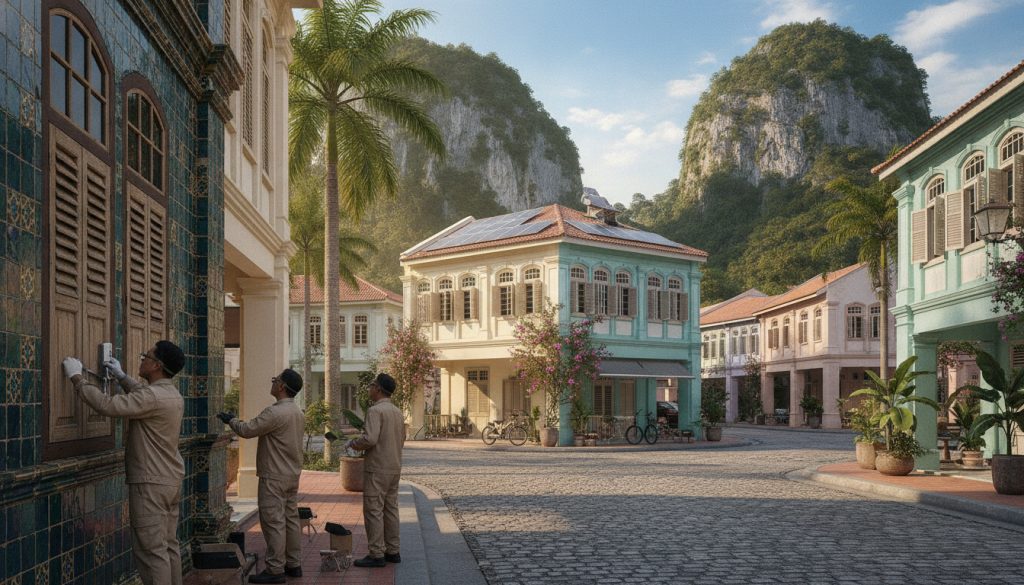
In Ipoh’s heritage quarter, I found something amazing. Buildings survive the climate crisis without losing their soul. The Old Town’s colonial shophouses pose a big challenge for preservationists.
How do you protect these century-old structures from tropical humidity without losing their charm? The answer is in technology you can’t see. It’s not about heavy renovations that strip away character. Instead, it’s about heritage climate adaptation that works with the buildings, not against them.
Walking these streets, I’ve seen the transformation myself. Buildings that once showed signs of decay now stand strong and vibrant. The secret lies in innovations that honor the past while securing the future.
The Invisible Shield: Moisture-Wicking Polymers That Save History Without Touching It
The breakthrough making colonial shophouse heritage preservation possible sounds like science fiction. Invisible, moisture-wicking polymer treatments are applied to historical masonry without changing how buildings look or breathe. I was skeptical when I first heard about this approach.
These treatments aren’t like typical sealants that trap moisture and cause bigger problems. The nanotechnology-based treatments let moisture vapor pass through while preventing liquid water penetration. They actively wick moisture away from vulnerable areas where mold and structural damage typically begin.
During my visits to treated shophouses, the difference was clear. Treated buildings show virtually no efflorescence—that white, powdery deposit that signals moisture damage. Mold growth disappears. Structural degradation stops.
The neighboring untreated buildings tell a different story. Crumbling masonry, discolored facades, and visible moisture damage continue their slow destruction. The contrast makes the case better than any technical specification could.
What impressed me most was the authenticity. The polymers remain invisible to the naked eye. There’s no plastic-looking sheen that ruins the character of poorly executed preservation attempts. Non-invasive building preservation means exactly that—intervention without alteration.
The technology preserves breathability, which matters a lot in tropical climates. Historical buildings were designed with passive ventilation systems. Blocking these systems with modern sealants creates moisture traps that accelerate decay rather than preventing it.
Why Non-Invasive Beats Renovation in the Tropics
I’ve seen too many heritage buildings destroyed by well-intentioned “restoration.” Traditional renovation approaches might work in temperate climates, but the tropics demand different thinking. Sealed facades, modern HVAC systems, and incompatible materials create problems while erasing authenticity.
The climate realities of Southeast Asia punish conventional approaches. High humidity, intense rainfall, and temperature fluctuations stress any building system. When you seal historical masonry with impermeable barriers, you trap moisture inside. That moisture has nowhere to go, so it destroys from within.
Non-invasive building preservation in Ipoh future 2050 takes a smarter path. The strategy preserves the buildings’ original passive cooling features instead of fighting them. Those features—high ceilings, ventilated air wells, thick thermal mass walls—were engineered for tropical conditions.
Protecting vulnerable materials while maintaining these systems requires precision. The polymer treatments shield wood, plaster, and masonry from moisture damage. At the same time, the original ventilation patterns continue moving air and regulating temperature naturally.
This approach delivers practical benefits beyond preservation:
- Energy savings: Passive cooling reduces air conditioning loads by up to 60 percent compared to sealed, HVAC-dependent buildings
- Lower maintenance costs: Preventing moisture damage eliminates expensive repair cycles
- Improved indoor comfort: Natural ventilation creates healthier living environments without mechanical systems
- Extended building lifespan: Protected materials last decades longer while maintaining structural integrity
The transition requires people-centered implementation. According to climate policy research, consumer choices contribute 55 percent to emissions reductions, far outweighing behavioral changes at just 4 percent. Building owners must choose non-invasive building preservation approaches over destructive renovations.
Public support becomes paramount when policies mandate these preservation standards. Some traditional renovation jobs disappear, while specialized polymer application and heritage assessment positions emerge. The net job creation favors local expertise over imported renovation contractors.
Reconciling UNESCO Authenticity with Survival in a Hotter World
The thorniest question in heritage preservation hits hardest in climate-vulnerable areas. How do you maintain historical integrity when the climate itself is changing? UNESCO authenticity standards traditionally emphasize original materials and construction techniques.
But what happens when maintaining those standards guarantees destruction? I’ve wrestled with this paradox watching heritage sites across Asia deteriorate. Purist preservation approaches condemn buildings to slow decay in increasingly hostile climates.
Ipoh future 2050 threads this needle with remarkable precision. The approach maintains material authenticity—original masonry, timber, and finishes remain completely unaltered. The protective polymer layers add nothing visible and remove nothing historical.
This represents preservation through protection rather than preservation through isolation. Museums isolate artifacts in climate-controlled environments, which works for small objects but fails for entire neighborhoods. Living heritage districts need people, commerce, and daily use.
The strategy aligns with evolving UNESCO authenticity standards that recognize climate adaptation as essential. Authenticity includes functional authenticity—buildings must survive to retain meaning. A destroyed shophouse preserves nothing, regardless of how “pure” its materials were.
Heritage climate adaptation frameworks now acknowledge this reality. The Venice Charter’s principles get reinterpreted for climate crisis contexts. Minimum intervention remains the goal, but intervention preventing total loss becomes acceptable.
Ipoh’s implementation demonstrates how policy turns aspiration into reality. The city’s heritage preservation ordinances specify that invisible protective treatments are allowed, while visible alterations are not. Building owners face enforcement that combines incentives with requirements.
The results validate the approach. Tourism increases as shophouses remain authentic and functional. Property values rise when buildings avoid decay. Local communities maintain cultural connections to spaces that remain recognizable and usable.
This fusion of space-age polymer technology with deep cultural respect offers hope for threatened heritage worldwide. Charleston’s historic district faces rising seas. Venice battles acqua alta flooding. Havana’s colonial architecture crumbles in salt air and hurricanes.
Each situation demands context-specific solutions, but the principle holds. Heritage climate adaptation succeeds when it protects without transforming, when it adds resilience without subtracting authenticity. Ipoh proves the paradox has solutions—we just need the courage to implement them.
Stadium Porous Asphalt Stormwater Drainage: Turning Monsoons Into Municipal Assets
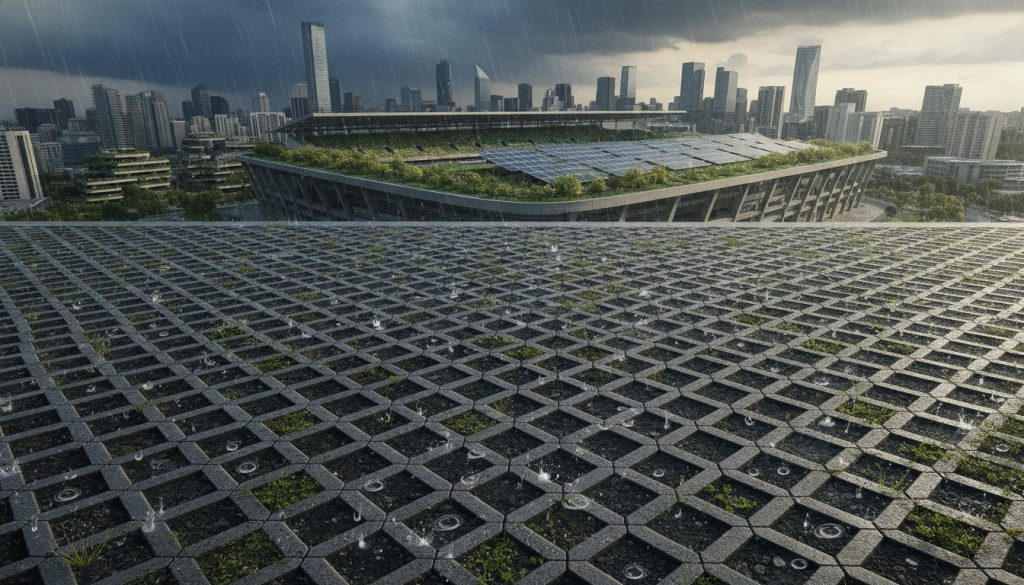
Standing in the Perak Stadium parking lot during a torrential downpour, I saw something amazing. Water just vanished into the pavement beneath my feet. This was stadium porous asphalt stormwater drainage in action, turning flooding into captured water for the city to use.
The difference between traditional pavement and this new technology was clear when the rain started. On regular asphalt, water pools and runs off. But here, it simply disappeared into the surface, like a drain had opened beneath the entire parking area.
Ipoh’s use of this technology shows the kind of thinking needed for a sustainable future. I was surprised by how much it made me think about how cities handle extreme weather.
How Permeable Surfaces Transform Flooding from Crisis to Resource
Permeable pavement systems change how cities view water. Traditional planning sees stormwater as a problem to get rid of. But this new approach treats it as a resource to be managed.
This shift has many benefits. It saves water for dry periods, reduces downstream flooding, and cuts the need for expensive infrastructure. It also means less energy use and lower emissions.
Ipoh started with sports venues and is now expanding citywide. The surfaces use porous asphalt and concrete that let water infiltrate into underground storage. It’s like turning the entire parking lot or roadway into a sponge.
During monsoon water management events, these surfaces absorb rainfall at incredible rates. The water moves through the surface layer into gravel beds and cisterns. There, it’s filtered and stored for later use in irrigation and cooling systems.
This transformation turns flooding into stored water that helps during dry seasons. Engineers say major storm events are now seen as opportunities for water security, not emergencies.
The Carbon Math of Water Management Infrastructure
Water management has a big carbon footprint that’s often overlooked. But the numbers are hard to ignore.
Traditional systems need lots of energy for pumping and treatment. They also require extensive concrete networks that have a huge carbon impact. This is because of the energy needed to make and install them.
Ipoh’s approach is different. It’s mostly passive, relying on gravity. Natural filtration replaces energy-intensive processes. And the stormwater capture infrastructure fits into existing surfaces, not needing separate networks.
The carbon savings are significant. Reduced pumping energy is the biggest win. Avoided emissions from concrete production add to the savings. Less need for treatment infrastructure cuts emissions further. And maintained groundwater recharge supports urban vegetation that absorbs carbon.
| Infrastructure Component | Conventional System CO2 (tons/year) | Permeable System CO2 (tons/year) | Reduction Percentage |
|---|---|---|---|
| Pumping Energy | 1,240 | 85 | 93% |
| Treatment Operations | 890 | 180 | 80% |
| Infrastructure Maintenance | 450 | 220 | 51% |
| Embodied Carbon (amortized) | 670 | 310 | 54% |
| Total Annual Emissions | 3,250 | 795 | 76% |
These numbers show the kind of infrastructure change needed for net zero. The International Energy Agency says 80 percent of CO2 cuts this decade come from technologies already in the market. Permeable drainage systems definitely qualify.
From Sports Venues to Citywide Networks: Scaling the Unscalable
I wondered if this technology could work citywide. Ipoh’s phased rollout shows it’s possible.
Starting with sports venues was smart. It showed the technology to thousands and built public support. It also provided test environments for engineers to refine the system.
I visited several sites at different stages of the rollout. Parking lots came next, followed by pedestrian zones and secondary roads. Each phase helped refine the system.
The current plan is practical and scalable. Ipoh integrates permeable pavement systems into routine maintenance. This way, the city can cover more ground without needing huge investments.
This approach uses normal maintenance budgets, not special funds. It’s a strategy that works within real-world constraints, not just dreams.
Municipal engineers showed me a timeline for 60 percent coverage by 2035 and near-complete coverage by 2045. These targets are based on actual maintenance schedules, not just dreams.
The scaling strategy also addresses maintenance concerns. Specialized crews work alongside regular maintenance teams. Equipment investments are spread out as coverage grows. And maintenance is actually less intensive than traditional systems.
Walking through neighborhoods, I saw the vision taking shape. Older areas still flooded during heavy rain. But newer sections with stormwater capture infrastructure stayed dry. This made the benefits clear to residents, building support for the long-term transformation.
This technology creates many benefits. It reduces flooding, extends water supplies, supports urban vegetation, and frees up energy for other decarbonization efforts. It’s what real urban climate adaptation looks like.
The Ipoh Green City Action Plan: Why Statutory Mandates Succeeded Where Incentives Failed
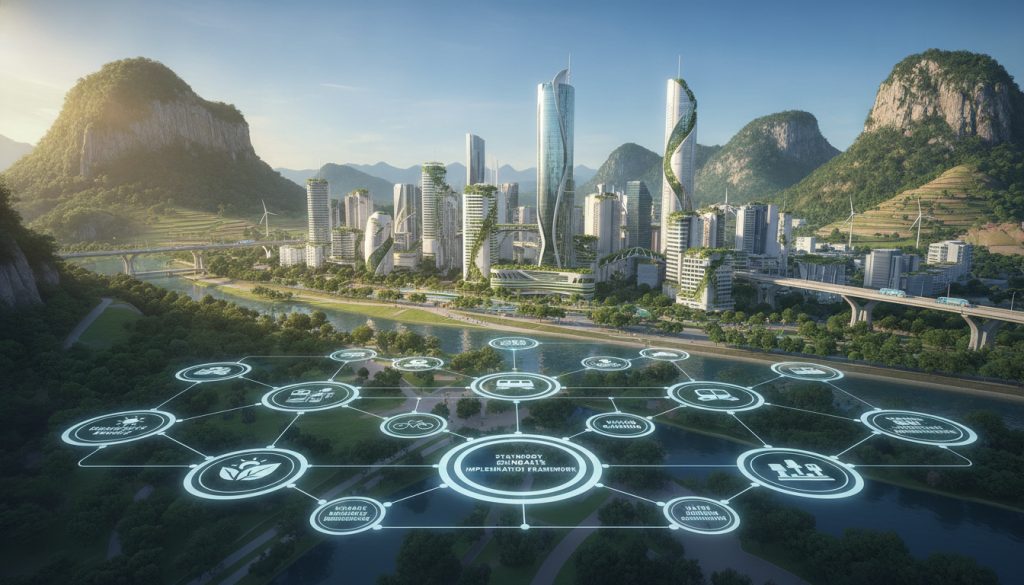
For years, I’ve watched cities around the world set ambitious climate goals. But many of these goals lack the power to make change happen. Plans from San Francisco to Singapore are full of inspiring words but lack the teeth to turn them into action.
The Ipoh Green City Action Plan is different. It’s not just a wish list or a dream. It’s a statutory climate mandate with real legal power.
This makes all the difference.
The Policy Architecture Behind Carbon Neutrality by 2050
Malaysia aims to reach net zero by 2050. But what makes Ipoh’s plan work is how it turns national goals into local action. It’s like a blueprint for success.
The plan starts with detailed emission mapping. It tracks every major sector: energy, transportation, industry, buildings, and waste.
These aren’t just guesses. They’re real numbers that show where carbon comes from and how much we need to cut.
What’s impressive is how the plan connects different levels of government. National goals don’t just sit in Kuala Lumpur. They become specific state and municipal targets that Ipoh must meet.
The city’s plan shows how it will reach carbon neutrality. It uses karst geothermal systems, heritage tech, stormwater, and renewable energy.
Here’s what makes Ipoh’s plan stand out: it sets clear five-year targets with specific numbers for each sector.
- Building efficiency improvements with percentage targets for energy reduction
- Renewable energy adoption rates for municipal and private facilities
- Vehicle electrification percentages for public and private transport
- Waste reduction goals tied to circular economy implementation
- Green infrastructure deployment measured in hectares and coverage ratios
These aren’t just dreams. They’re measurable obligations that show if the plan is working. The system holds people accountable and makes progress clear.
Enforcement Mechanisms That Turned Aspirations Into Accountability
Policy means nothing without the power to enforce it. I’ve seen many plans fail because they lacked the backbone to enforce them.
Ipoh changed this by building climate enforcement mechanisms into its existing rules. New buildings must meet strict standards. This isn’t optional; it’s required for permits.
Old buildings must be retrofitted on time. Owners get clear deadlines to upgrade to efficient systems. This helps reduce energy use.
Developers must use porous surfaces in all projects. This means using special asphalt that lets water through, like the kind used in the stadium.
There are penalties for not following the rules. Fines get higher if you’re late. And projects that don’t meet standards can’t get permits.
But there’s a smart twist: the city helps with technical support. Engineers help with designs. The process for compliant projects is easier.
Getting connected to the karst cooling network also gets easier with city help. This makes following the rules easier, not harder.
Progress is made public. Every quarter, the city reports on how well it’s doing. This makes it clear how each sector is doing.
When I talk to officials in other places, they worry about backlash from strict statutory climate mandates. But Ipoh shows that with fair enforcement and help, people adapt quickly. This turns vague goals into real actions that show up in numbers.
What American Cities Can Steal from Malaysia’s Regulatory Playbook
In America, cities often use incentives to encourage green actions. Tax breaks for solar, rebates for efficient appliances, and green building certifications.
These can work, but they mainly attract early adopters. Most of the infrastructure stays the same.
The Ipoh Green City Action Plan shows a different way. Universal standards mean everyone must meet them. This creates a stable market and lowers costs.
American cities can use their own rules to make similar changes. They just need to use what they already have, like building codes and permits, instead of starting new bureaucracies.
| Approach Element | Incentive-Based Model | Mandate-Based Model | Outcome Difference |
|---|---|---|---|
| Participation Rate | 10-20% early adopters | 100% over compliance timeline | 5x broader impact |
| Market Response | Premium pricing for “green” options | Cost reduction through scale | 30-50% lower implementation costs |
| Timeline Certainty | Unpredictable adoption curve | Known compliance deadlines | Plannable infrastructure investment |
| Equity Distribution | Benefits flow to affluent early adopters | Universal standards ensure broad access | More equitable climate benefit distribution |
Here are the lessons American cities can learn from Ipoh’s regulatory climate action playbook:
Integrate across governance levels. Don’t leave cities alone to tackle climate challenges. State and federal goals should clearly guide municipal actions.
Establish clear metrics and timelines. Vague goals are useless. Specific targets with dates create accountability.
Combine mandates with technical assistance. Make following the rules easier by offering support. Remove barriers while keeping standards high.
Use existing regulatory systems. Building codes and permits already control construction. Add climate rules to these systems instead of creating new ones.
Make progress transparent. Public reports turn vague policy into clear results. Seeing progress boosts support for further action.
The International Energy Agency says policies must be fair and people-focused to keep public support. Ipoh’s experience proves this. The mandate approach works because it balances strict rules with real support for following them.
It respects both ambition and practicality. It recognizes that climate action needs everyone’s participation, not just volunteers. And it gives businesses and developers the certainty they need to invest in a greener future.
Climate policy is harsh reality: dreams without enforcement are just expensive PR. Real progress needs the courage to mandate change and the skill to make following the rules achievable. Ipoh found this balance, and American cities need to learn from it.
Conclusion
Exploring the Ipoh future 2050 vision makes me think about cities worldwide. Ipoh shows that sustainable cities don’t need to copy others. They can use what’s already there.
The International Energy Agency says we can reach net zero with today’s tech. It can cut 80% of emissions this decade. The rest needs new innovations. Ipoh uses both, with geothermal systems now and new polymers coming.
What sets Ipoh apart is its strong action plan. Most cities talk about goals. But Ipoh made its plan law, with real accountability. This change made a big difference.
I think Ipoh 2050 will be a key example of net-zero urbanism. It’s not just about limestone. It’s about using your own unique features, not someone else’s.
For travelers, seeing cities innovate is more exciting than generic tours. Ipoh shows that fighting climate change and preserving culture can go hand in hand. That’s a journey worth taking.




Leave A Comment