
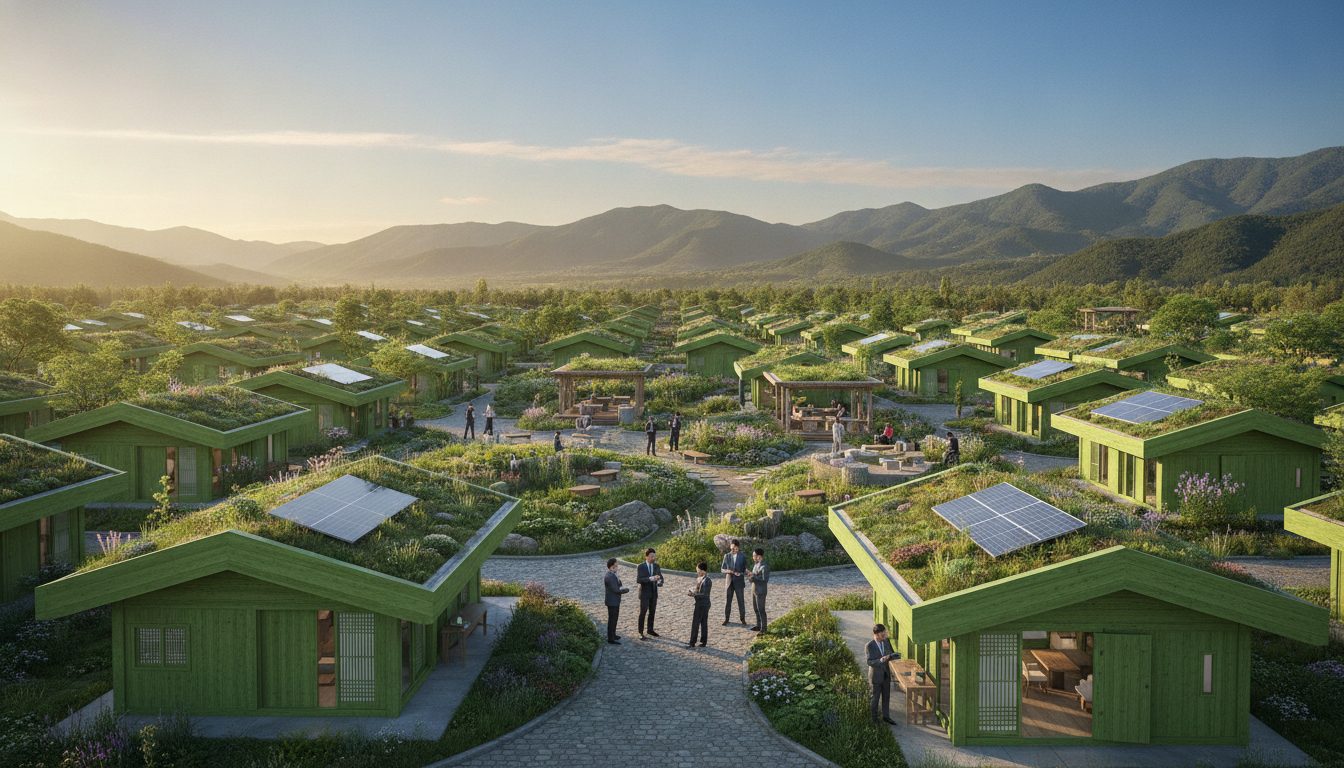
I never expected a 700-year-old village of wooden houses to become my favorite lesson in climate innovation. But that’s exactly what happened the first time I dug into this Korean gem.
Picture 800 traditional hanok homes, each topped with curved clay giwa roofs. These aren’t museum pieces sealed behind glass.
They’re living, breathing structures aiming for something remarkable: full carbon neutrality without sacrificing a single ounce of historic charm.
This local shift plays out against a much bigger national story. South Korea’s carbon neutrality pledge, championed by former President Moon Jae-in, became law through the Carbon Neutrality Act of 2021.
That national commitment set an ambitious tone for the whole country. This hanok community shows what it looks like on the ground.
What excites me most isn’t the policy paperwork, though. It’s watching six distinct engineering pillars work together seamlessly.
Mineral glazes, geothermal ondol heating, sponge-city hydrology, and zero-emission thermal loops all play a part. Ancient wisdom meeting modern science, right under one curved roof.
Can centuries-old building traditions really guide a whole region toward energy independence without losing their soul? I think this place proves they can.
Key Takeaways
- Jeonju Hanok Village aims to preserve 800 traditional wooden homes while achieving full carbon neutrality.
- South Korea’s Carbon Neutrality Act of 2021 provides the national framework behind local sustainability efforts.
- Curved clay giwa roofs now pair with hidden solar-nano glazes for clean energy generation.
- Underground ondol heating systems use geothermal loops instead of traditional wood-burning methods.
- Sponge-city hydrology helps manage stream runoff and reduce flooding risks throughout the village.
- The project shows that heritage preservation and modern climate goals can coexist successfully.
1. Jeonju Future 2050: Why This Hanok Village Became the World’s Heritage Blueprint
South Korea’s climate report card reads “insufficient” — but nobody told Jeonju Hanok Village.
The country’s Carbon Neutrality Act passed in August 2021 and took legal effect in March 2022. It laid out ambitious 2050 scenarios for the entire nation. On paper, it looked like a solid roadmap toward zero emissions.
Reality painted a messier picture. Climate Action Tracker rated South Korea’s overall progress as “Insufficient,” pointing to incomplete planning and stubborn coal dependency.
“South Korea’s climate targets and policies are not consistent with limiting warming to 1.5°C.”
While researching Jeonju hanok village preservation, I couldn’t help but think about this. Instead of waiting for national policy, this neighborhood built its own model. I’ve seen many heritage towns, but none like Jeonju.
Every red-pine beam stayed put. Every clay giwa roof tile kept its original curve. The real transformation happened underneath, quietly, where visitors never look.
This balance between visible heritage and invisible infrastructure is Jeonju’s secret to success as a carbon-neutral outlier.
| Aspect | National South Korea Approach | Jeonju Hanok Village Approach |
|---|---|---|
| Policy Timeline | Carbon Neutrality Act, enforced March 2022 | Localized retrofits started ahead of national mandates |
| Climate Action Tracker Rating | “Insufficient” | Held up as a model worth studying |
| Energy Strategy | Continued coal reliance | Geothermal, solar-photonic, zero-emission loops |
| Heritage Impact | Not applicable nationwide | 800 hanoks preserved intact |
By 2050, this five-century-old village became more than a tourist stop. It turned into a case study other historic cities now reference when they wonder if preservation and progress can coexist. I think every old town on my travel list should take notes.
2. Non-Invasive Mineral Masonry Glazes: The Silent Guardians of 800 Hanoks
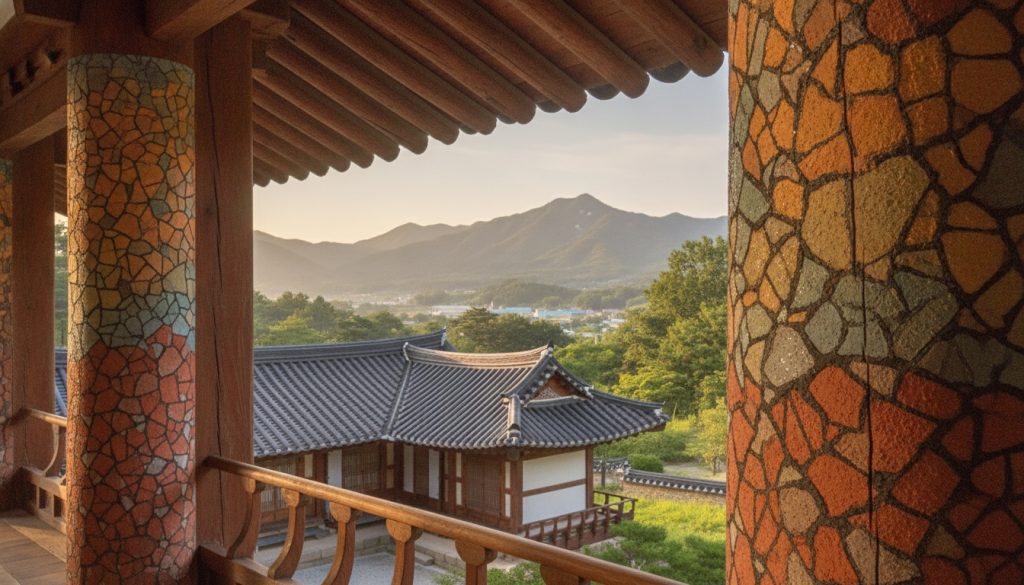
Jeonju’s 800 hanoks look just like they did centuries ago. I searched for any modern touches but found none. The wood and clay tiles remain unchanged, just like they have for generations.
The secret is non-invasive mineral masonry glazes. This coating protects without being noticeable. Once I understood how it works, I couldn’t stop thinking about it.
Breathable Nano-Mineral Seals on Red-Pine Pillars and Clay Giwa Roof Tiles
Red-pine pillars have supported these roofs for centuries. Korea’s harsh weather still takes a toll. Engineers needed a solution that protects without suffocating the wood.
The answer is a nano-mineral seal that bonds with the wood’s surface. It lets the wood breathe, releasing moisture instead of trapping it.
This detail is fascinating. Traditional sealants often cause rot by trapping moisture. This glaze does the opposite, keeping moisture and pollutants out while letting vapor escape.
The clay giwa roof tiles also get this treatment. Their appearance remains untouched.
Hidden Solar-Photonic Layers That Leave Joseon Silhouettes Untouched
Now, the story gets a bit sci-fi. These glazes contain a thin layer of solar-photonic film. It’s so thin, you can’t see it against the clay and wood.
I couldn’t spot it, and neither can anyone else in the village square. That’s the point. The rooftops’ silhouettes against the Jeonju skyline remain as they were in the Joseon Dynasty.
Yet, these hidden layers quietly power nearby lights and heating. No panels or wires interrupt the eaves.
It’s a strange feeling, honestly, knowing history and clean energy share the same surface. Even a local guide was amazed by the technology beneath the tiles she’d walked past for years.
Shielding Gyeonggijeon Shrine and King Taejo’s Portrait from Climate Weathering
The most meaningful application is inside Gyeonggijeon Shrine. This sacred site holds King Taejo’s portrait, the founder of the Joseon Dynasty. Protecting it is crucial to Korean heritage.
Humidity, UV exposure, and temperature changes threaten the artwork. The same mineral glaze technology protects the shrine’s interior without altering its architecture.
Standing before King Taejo’s portrait, I felt the importance of what this technology preserves. It’s not just wood and tile anymore. It’s memory, identity, and a founding story for future generations to see.
| Protection Layer | Applied To | Core Function | Visible Change |
|---|---|---|---|
| Nano-Mineral Seal | Red-pine pillars and giwa tiles | Blocks moisture and pollution while allowing breathability | None |
| Solar-Photonic Film | Roof tile substrate | Generates clean energy for local lighting and heating | None |
| Climate Buffer Coating | Gyeonggijeon Shrine walls | Stabilizes indoor humidity and temperature swings | None |
| UV-Filtering Overcoat | King Taejo’s portrait display case | Filters ultraviolet light exposure | None |
3. Geothermal Ondol 2.0: Reinventing Ancestral Comfort Without Compromise

I once sat on a heated hanok floor in Jeonju, amazed by its old-world charm. Ondol has kept Korean homes warm for ages, using wood fires and stone flues. Now, the Jeonju future 2050 plan reimagines this with clean geothermal energy.
This new system keeps hanoks cozy all year, using the earth’s temperature. It’s ondol reimagined for a net-zero future, keeping the traditional warmth we love.
Subterranean Networks Behind Modern Underfloor Heating and Capillary Cooling
Under the hanok village, engineers built a network of geothermal pipes. These pipes pull heat from the ground in winter. In summer, they cool the floors through capillary cooling.
This is like using the earth’s thermostat instead of fighting it. The same pipes warm floors in winter and cool them in summer. No noisy furnace or air conditioner is needed.
No cold spots, no overheated corners — just quiet comfort. Water flows through thin channels, spreading heat evenly across rooms.
This method also cuts energy use a lot. Engineers connected many hanoks to shared geothermal loops. This way, the whole village benefits from one efficient system, not hundreds of units.
Why Pre-Modern Wooden Joinery Survives the Retrofit Intact
Any preservationist would love this part. Hanok construction uses wooden joinery without nails. Drilling into this woodwork to add modern plumbing would damage it.
So, teams worked from below. They tunneled under foundations, putting geothermal pipes through the earth, not the wood above. Every beam and joint stayed just as the carpenters made them long ago.
This is a quiet engineering triumph. It protects heritage by working invisibly beneath it, not changing what skilled hands built long before.
This method left no visible changes to historic structures. Homeowners kept their original wooden floors and joints. They also got a heating and cooling system that will last another hundred years.
4. Jeonjuchun River Sponge City: Subsurface Hydrologic Heritage Engineering at Scale
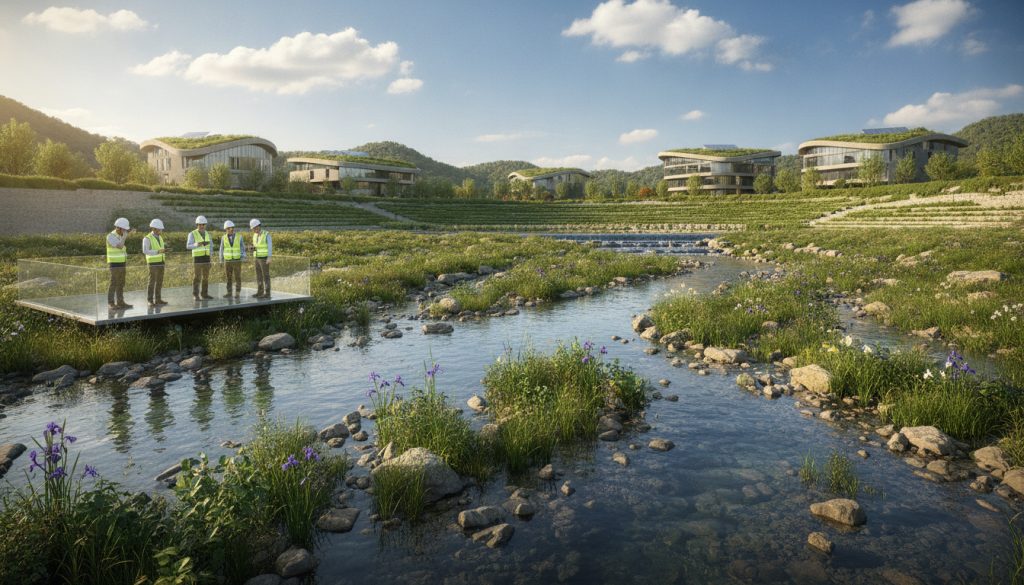
The first time I saw Jeonjuchun stream swell during a summer downpour, I was amazed. A hidden engineering marvel below the streets was quietly absorbing it all. Jeonju’s monsoon season can dump inches of rain in a single afternoon.
Instead of flooding 700-year-old hanoks, that water simply disappears into the ground. Locals call this system the Jeonjuchun River Sponge City. After spending an afternoon with local planners, I understood why the name fits so well.
Subsurface Retention Vaults Capturing 100 Percent of Monsoon Downpours
Beneath Jeonjuchun stream, engineers built an interconnected matrix of subsurface retention vaults. These concrete-and-gravel chambers stretch for miles under the hanok village.
During peak monsoon season, the vaults capture 100 percent of the downpour before it reaches street level. That’s a bold claim, but the numbers hold up against Korea’s heaviest rainfall records.
I found this detail remarkable. A village built mostly from wood and clay could easily rot under constant flooding. But this subsurface hydrologic heritage engineering system pulls water away from foundations within minutes.
The vaults sit far enough below ground that visitors never notice them. Walk through Jeonju’s alleys and you’d never guess an entire drainage network hums beneath your feet.
Closed-Loop Reservoir Stormwater Harvesting and Filtration Cycles
Captured rainwater doesn’t just sit underground and wait. Jeonju’s planners designed a closed loop reservoir stormwater harvesting system that keeps every drop working.
Water flows from the retention vaults into filtration reservoirs. Layers of sand, charcoal, and mineral substrate strip out sediment naturally, without any chemical treatment.
“A city should function like a sponge, absorbing rain and releasing it slowly, rather than rushing it away as waste.”
That old sponge-city philosophy plays out here daily. Once filtered, the water gets stored for reuse instead of discharged straight into the river.
This cycle feeds directly into the district’s thermal loops, a system worth exploring on its own. For now, what matters is simple: nothing gets wasted. Every liter of monsoon rain becomes a resource instead of a hazard.
What Stadium Porous Asphalt Stormwater Drainage Taught Jeonju’s Engineers
Here’s the detail that genuinely surprised me: some of this technology started at sports stadiums, not heritage sites.
Large venues rely on stadium porous asphalt stormwater drainage to handle sudden crowds and sudden rain without turning parking lots into lakes. Jeonju’s engineers studied that same porous-surface logic closely.
They adapted it for the narrow pedestrian paths running through the hanok village. The permeable walkways let rain seep through instantly instead of pooling on centuries-old stone.
It’s a clever cross-industry solution. Nobody expects stadium engineering to protect a 14th-century village, yet here it does exactly that, one footstep at a time.
5. Zero-Emission District Thermal Loops Powering the Slow-City Pedestrian Core

Jeonju’s pedestrian core looks like it’s from another time. You won’t see any pipes or machines. Yet, it’s all connected by a hidden system.
Mineral glazes, geothermal ondol, and sponge-city vaults all feed into this system. Filtered water powers a citywide heating and cooling network. Walking these streets, I felt like I was in Jeonju future 2050.
Turning Filtered Water into Community Heating and Cooling Networks
What stuck with me was the water’s journey. Water from the Jeonjuchun sponge-city vaults is used for heating and cooling.
Insulated pipes beneath the hanok district carry this water. Heat pumps exchange it for warm or cool air for buildings. In winter, it pulls warmth from the ground. In summer, it cools homes and shops.
This system is zero-emission, meaning no fuel burns. It keeps Jeonju’s air clean. The net-zero energy systems literature supports this approach for dense areas like the hanok district.
Pedestrian-First Streets Meet Space-Age Environmental Physics
Jeonju’s slow-city status is real. Cars are rare in the hanok village. People walk, cycle, or just enjoy the view.
This slow pace fits perfectly with advanced engineering. Underneath, a district thermal loop uses cutting-edge physics. Yet, it doesn’t change the historic feel above.
I kept thinking how strange it was that such quiet could be so advanced. As someone who travels slowly, I found it amazing. In Jeonju, sustainability and a slower life are the same idea, just engineered differently.
6. Conclusion
Walking through Jeonju’s alleys on my last evening, I thought a lot. It wasn’t just the mineral glazes or the hidden solar layers. It was the partnership between old wood and new physics.
South Korea’s national climate progress is still marked “Insufficient” by trackers. Yet, Jeonju shows us something important. A single village can lead the way, even when the national stage falls short.
I didn’t come here for a climate lesson. I wanted to see hanok roofs and enjoy quiet mornings with tea. Instead, I found a blueprint for heritage towns to thrive in the future.
The blueprint isn’t flashy. It’s hidden under ondol floors, in stormwater vaults, and on pine pillars. Jeonju teaches us that saving the past can be done quietly. Nobody even notices the future has arrived.









Leave A Comment