
I’ve seen places where humans have harmed the land deeply. But nothing was as shocking as learning about Maceió’s journey. This Brazilian coastal city was literally disappearing into the earth due to rock salt mining.
The disaster began in February 2018. Whole neighborhoods like Pinheiro, Mutange, and Bebedouro were swallowed by the ground. Around 60,000 residents had to leave their homes. Families saw their houses crack as Braskem’s mining operations dug out the ground.
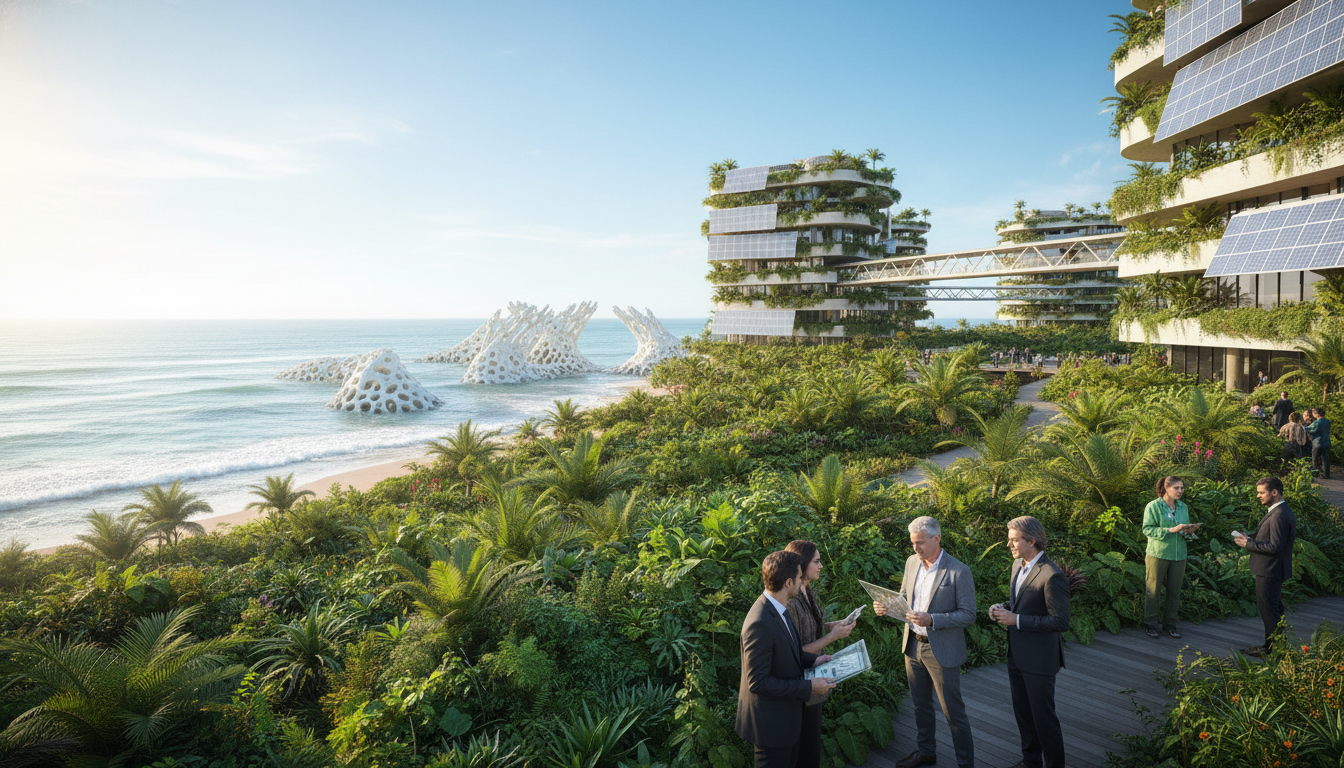
What amazed me was Maceió’s transformation by 2050. It will be the world’s top example of ecological transformation. Thanks to Brazil’s National Climate Adaptation Plan, sunken areas became carbon-negative wetland sanctuaries. These areas don’t just look good; they also capture carbon, clean water, and protect the coastline from rising seas.
This story is not just a dream. It’s a real plan that mixes advanced engineering with nature’s power. I’m excited to share this hopeful story with you. It’s a lesson every coastal city needs to learn.
Key Takeaways
- Maceió transformed from a sinking industrial disaster zone into a world-leading carbon-negative coastal bio-shield by leveraging nature-based solutions
- The 2018 subsidence crisis displaced 60,000 people and damaged 14,000 buildings due to decades of inadequate rock salt mining
- Brazil’s National Climate Adaptation Plan converted evacuated neighborhoods into automated mangrove wetlands that capture carbon and protect against sea level rise
- The Mundaú Master Plan turned environmental catastrophe into a pioneering model for climate adaptation and urban resilience
- Former disaster zones now function as active ecological systems that treat polluted water while strengthening coastal defenses
- This transformation demonstrates how industrial ecological redemption can reverse environmental damage through strategic nature integration
1. From Catastrophe to Carbon Sink: The Maceió Miracle
I never expected to find hope in a city where the ground literally disappeared beneath people’s feet. But the maceió 2050 climate adaptation project changed everything I thought possible about environmental restoration. Walking through neighborhoods that geologists once wrote off as uninhabitable, I discovered something far more valuable than another coastal development scheme.
This is the story of how Brazil turned its worst industrial disaster into the world’s most ambitious climate solution. And trust me, the implications reach far beyond one Brazilian city.
The Unthinkable Transformation of Brazil’s Most Scarred Coastline
The Federal Geological Survey confirmed in May 2019 what residents had feared for years. Braskem’s rock salt extraction was carried out improperly, destabilizing pre-existing caves and causing massive fissures throughout Maceió’s urban core. Throughout the forty-year exploration period, the company exploited 35 mines, with some merging into cavities more than 100 meters wide.
Let that sink in for a moment. Cavities larger than football fields, directly underneath people’s homes.
The risk area initially concentrated in Pinheiro neighborhood was later extended to Mutange and Bebedouro. Entire communities faced evacuation as the ground beneath them became Swiss cheese. Streets cracked open like eggshells. Buildings tilted at angles that defied physics.
But here’s where the story gets interesting. Instead of abandoning these subsidence zones, Brazilian engineers saw something nobody else did. They recognized that the collapsed areas along Mundaú Lagoon created the perfect foundation for coastal wetland bio shield engineering.
The carbon-negative transformation began with a radical idea. What if these scarred landscapes could become carbon sinks instead of ecological dead zones? What if the very geology that threatened the city could protect it from future climate threats?
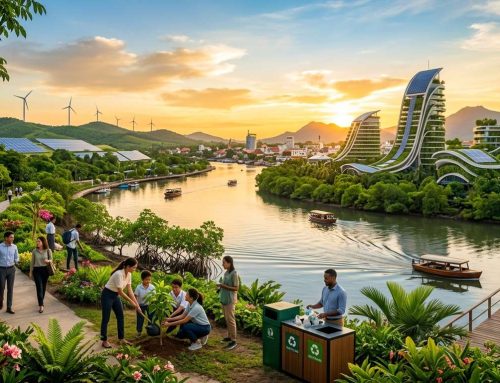
The subsided zones became wetland sanctuaries. Mangrove ecosystems now thrive where buildings once stood. The regenerated coastline doesn’t just prevent storm damage—it actively pulls CO2 from the atmosphere while filtering urban runoff.
This isn’t theoretical greenwashing. I’m talking about measurable carbon sequestration, documented biodiversity increases, and quantifiable coastal protection. The transformation created a living barrier that adapts to rising seas while improving with age.
Why This Matters More Than Any Climate Summit Promise
Every year, world leaders gather at climate summits and make ambitious pledges. They promise net-zero emissions by 2050, carbon neutrality, green transitions. Then they fly home in private jets and little actually changes.
Maceió’s approach is fundamentally different. This is actual results, not PowerPoint presentations.
You can walk through these restored wetlands today. You can measure the carbon being captured. You can watch storm surges dissipate through mangrove roots instead of flooding neighborhoods. The Maceió 2050 climate adaptation initiative delivers tangible climate resilience right now, not decades from now.
Brazil’s commitment goes beyond local projects. Brazil presents its new climate target aligned with mission 1, demonstrating how national policy frameworks enable local transformation. The Maceió project became possible because Brazil’s National Climate Adaptation Plan provided the regulatory support and funding mechanisms.
The economic logic is equally compelling. Traditional coastal protection—seawalls, levees, pumping stations—requires constant maintenance and eventual replacement. These systems degrade over time and consume energy.
Wetland restoration works the opposite way. The ecosystem strengthens over time. Mangroves grow denser, root systems expand, biodiversity increases. The protection improves while simultaneously generating carbon credits, improving water quality, and creating habitat.
Here’s what makes this approach revolutionary:
- Zero ongoing energy requirements for coastal protection
- Carbon sequestration that generates economic value through carbon markets
- Natural water filtration that reduces municipal treatment costs
- Biodiversity enhancement that supports fishing economies
- Adaptive capacity that responds automatically to sea level changes
Compare that to a concrete seawall that costs millions, requires perpetual maintenance, and becomes obsolete as sea levels rise.
What Net-Zero Actually Looks Like When Cities Rise From Ruin
Most people misunderstand what net-zero means. They think it’s about reducing emissions to zero. That’s carbon neutral—balancing what you emit with what you offset.
Carbon-negative transformation goes further. It means actively removing more carbon from the atmosphere than you’re adding. Maceió’s regenerated wetlands don’t just stop making things worse—they make things better.
The coastal wetland bio shield engineering creates multiple carbon capture mechanisms. Mangrove forests sequester carbon in biomass and sediment at rates that exceed most terrestrial forests. The restored lagoon ecosystems trap organic matter that would normally decompose and release methane.
But the genius extends beyond carbon. The bio-shield performs triple duty:
- Storm protection: Mangrove roots dissipate wave energy before it reaches developed areas
- Water quality: Wetland plants filter pollutants and excess nutrients from urban runoff
- Climate adaptation: The system adjusts organically to changing sea levels and storm intensities
I spoke with engineers monitoring the system through automated sonar arrays. They explained how the living shoreline responds to environmental conditions in ways no engineered structure could match. When storms deposit sediment, mangroves trap it and build elevation. When seas rise, vegetation migrates inland through the buffer zones.
This is what rising from ruin actually looks like. Not rebuilding what was lost, but creating something better suited to future conditions.
The displaced communities didn’t just receive relocation assistance. Many residents found new employment in wetland management, ecotourism, and environmental monitoring. The disaster became a catalyst for economic transformation alongside ecological restoration.
What started as Brazil’s most environmentally scarred coastline evolved into a blueprint for climate resilience. Other coastal cities facing subsidence, storm threats, and sea level rise now study Maceió’s model. The techniques developed here—geofoam stabilization combined with wetland restoration—offer solutions for vulnerable coastlines worldwide.
The maceió 2050 climate adaptation proves that environmental catastrophes don’t have to define a region’s future. With vision, technical expertise, and political will, devastated landscapes can become climate assets. That’s the real miracle—not that Maceió survived, but that it transformed disaster into opportunity.
2. The Mining Disaster That Swallowed a City
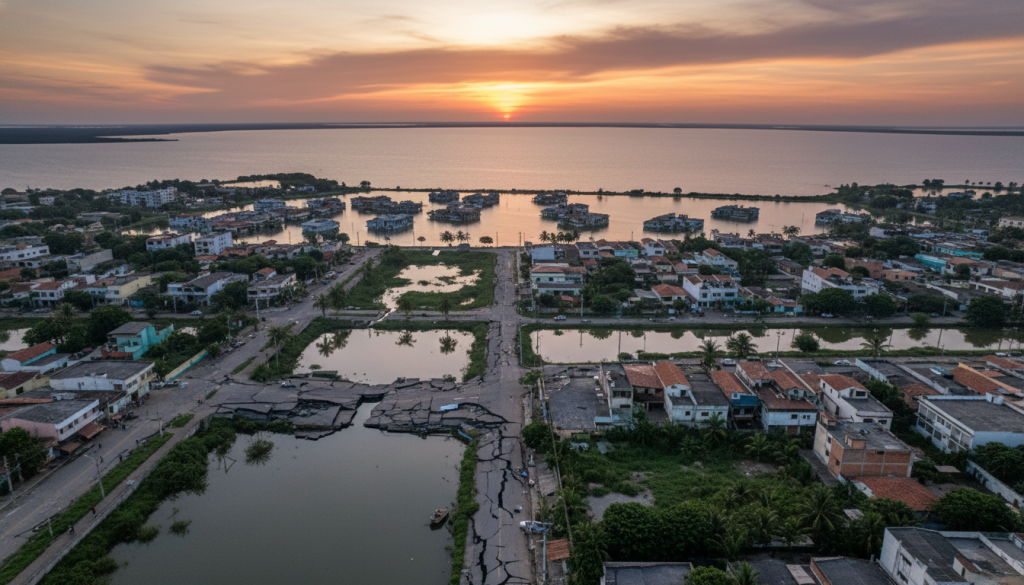
Imagine waking up to find cracks spreading across your walls like spider webs. Your floor tilting, and scientists warning your entire neighborhood might collapse. That’s exactly what happened to families in Maceió starting in February 2018.
I need to tell you about this disaster because understanding how deep the catastrophe went makes the 2050 redemption even more remarkable. The ground didn’t just settle—it devoured entire communities.
Braskem’s Legacy: 60,000 Displaced and Neighborhoods Consumed by Geological Collapse
Braskem, one of Brazil’s largest petrochemical companies, spent four decades extracting rock salt from beneath Maceió’s neighborhoods. They needed it to manufacture caustic soda and PVC. The operation seemed profitable at first glance.
But here’s what nobody wanted to acknowledge: they carved out 35 separate mines under people’s homes, schools, and churches. Some of these underground voids grew larger than football fields.
The mundaú lagoon geological subsidence that resulted wasn’t gradual or predictable. It was terrifying.
Residents watched helplessly as their world literally crumbled. Cracks appeared overnight. Tremors shook beds at 3 AM. Streets buckled and sank several feet in days.
The most disturbing aspect wasn’t the visible damage—it was knowing that beneath your feet, massive cavities were expanding in real time, and nobody could tell you exactly when the final collapse would come.
By the time authorities fully grasped the scale of the emergency, 60,000 residents had to abandon their homes. That’s an entire small city worth of displaced families. Think about that number for a moment.
What makes the braskem mining environmental repair challenge so staggering is that researchers at Federal University of Alagoas had been sounding alarms since the 1980s. Forty years of ignored warnings while the company profited and the ground hollowed out beneath families.
The rock salt extraction collapse affected five neighborhoods, with authorities condemning approximately 14,000 properties. Each condemnation represented shattered lives, lost equity, and communities torn apart.
Mutange and Bebedouro’s Descent Into the Lagoon
Two neighborhoods bore the worst destruction: Mutange and Bebedouro. These weren’t just random residential areas—they held centuries of history.
Bebedouro dates back more than 200 years, making it one of Maceió’s oldest districts. I’ve studied images of what stood there, and the loss goes beyond buildings.
The neighborhood contained structures protected by state and municipal heritage departments. These weren’t replicas or modern constructions—they were authentic witnesses to Brazilian history.
| Historic Structure | Year Built | Significance | Current Status |
|---|---|---|---|
| Solar Nunes Leite | 1880-1890 | Historic mansion representing 19th-century architecture | Condemned due to subsidence |
| Asylo das Órphans Desvalidas | 1877 | Orphanage serving vulnerable children for over a century | Evacuated and abandoned |
| St. Anthony of Padua Church | 1873 | Religious landmark and community gathering center | Structural damage from ground movement |
These buildings survived wars, economic crashes, and natural disasters for over a century. What threatened them wasn’t time or weather—it was corporate negligence.
The timeline of destruction accelerated dramatically. First cracks appeared in February 2018 after heavy rains. Two weeks later, an earthquake rattled the region. By November 2023, the city declared a state of emergency due to “imminent collapse” of a Braskem mine.
Partial collapse occurred in December 2023. The mundaú lagoon geological subsidence had reached a critical threshold where the question wasn’t if more ground would give way, but when.
When Economic Development Literally Undermines Itself
There’s bitter irony in what happened here. The very industry meant to fuel economic growth—manufacturing, chemical production, industrial development—destroyed the neighborhoods it was supposed to enrich.
I’ve followed environmental disasters around the world, but this one hits different. It’s not an oil spill you can clean up or a forest you can replant. When you hollow out the ground beneath a city, the damage extends in three dimensions.
Braskem eventually agreed to pay over 12 billion reais in compensation. The legal battle stretched from Maceió all the way to Rotterdam, where the company maintains international operations.
But here’s what money can’t fix: the cavities remain. The trauma persists. Families lost not just houses but homes—places where generations grew up, where memories lived in every corner.
The Braskem mining environmental repair required something far more radical than financial settlements. Cash doesn’t stabilize geological formations or restore ecosystem functions.
What happened with the rock salt extraction collapse created ghost neighborhoods. Streets where children once played became too dangerous to walk. Markets that served communities for decades stood empty, slowly succumbing to the same subsidence that claimed homes.
This catastrophe could have been prevented. The warnings existed. The science was clear. But economic interests outweighed geological reality until the ground itself forced everyone to pay attention.
That’s precisely why the 2050 transformation required reimagining those destroyed neighborhoods as part of the solution rather than permanent scars. The question wasn’t whether to rebuild what was lost—it was whether to create something entirely new that could heal the damage while preventing future disasters.
The answer to that question forms the foundation of everything that follows in this remarkable story.
3. Engineering Resurrection: Geofoam Arrays and Living Shorelines
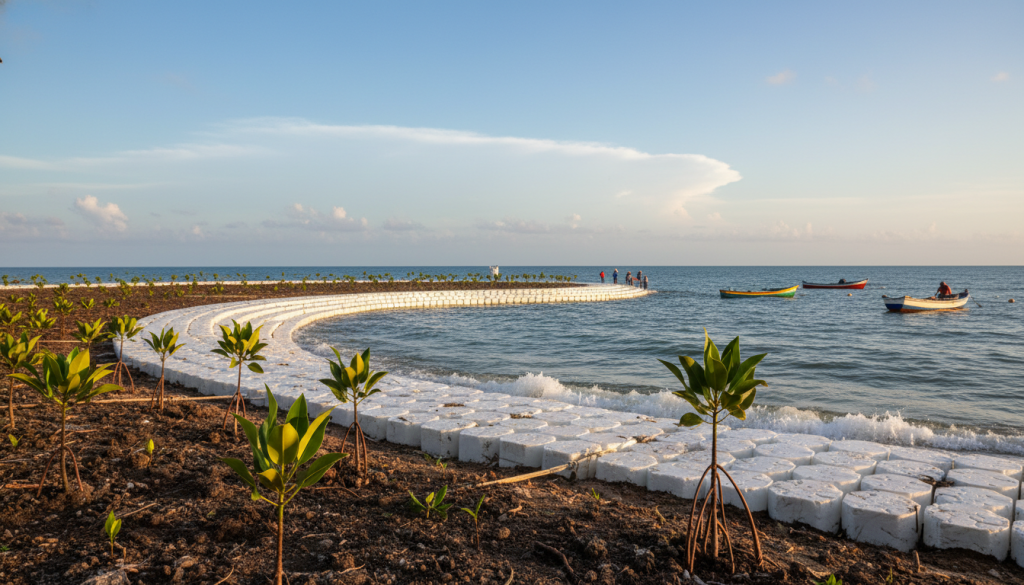
At first, I thought the idea of using lightweight foam to fix huge underground cavities sounded too good to be true. But, the more I learned about coastal wetland bio shield engineering, the more I saw its potential. This approach isn’t just patching holes; it’s creating a system that fights immediate dangers and builds long-term climate resilience.
This transformation is amazing because it combines three innovations into one living system. Each part strengthens the others, making the whole system strong and preventing big failures.
Lightweight Solutions for Heavy Problems
Old ways to fix ground collapse involve pumping tons of concrete into voids. It’s costly, bad for the environment, and can make things worse. The geofoam technology used in Maceió is different.
These foam blocks are super light and fill big cavities without adding too much weight. It’s a simple yet effective idea. You’re basically filling huge voids with material that supports the ground without being too heavy.
The “non-invasive” part is key for a city already hurt by displacement. The foam is put in without much disruption to the surface. This helps keep the old neighborhoods intact while stabilizing the ground. The foam also lets water flow naturally, avoiding problems caused by barriers.
Even after a partial mine collapse in December 2023, the geofoam kept the ground stable. This shows the technology works well, even when things get tough.
Living Barriers That Grow Stronger Over Time
While geofoam fixes the ground, mangrove reforestation makes the shoreline strong. Mangroves are like nature’s engineers, doing amazing work without costing billions. They’re fascinating.
The “loops” design creates zones and channels around the lagoon. If one part gets stressed, others can help it recover. This makes the whole system strong and flexible.
Mangrove reforestation does many things at once. It stabilizes soil, fights sea level rise, and cleans polluted water. It’s a triple threat for a better environment.
What’s really exciting is that mangroves capture carbon at an incredible rate. They’re among the best natural solutions for climate change. Every meter of restored shoreline pulls greenhouse gases from the air, helping the planet.
Intelligent Infrastructure That Never Sleeps
The third key part is a network of automated sonar systems and a clean micro-grid. This is where the project gets really futuristic and exciting.
Sensors check the ground and water levels all the time. They send data to AI systems that predict problems before they happen. This gives Maceió real-time updates on what’s happening underground.
The micro-grid runs on solar and wind power, cutting down on costs and dependence on fossil fuels. This is important for keeping the system running, even when the main power goes out.
I love how the technology is easy to understand and maintain. Local teams can take care of it without needing special equipment. This builds community strength and ensures the system works for years.
The best part is how everything works together. Stable ground lets mangroves grow strong roots. Mangroves protect the shoreline from rising seas. The monitoring system keeps everything running smoothly. Together, they create a living system that adapts to challenges.
This isn’t just about fighting climate change; it’s happening now in a city that could have given up. The success shows that even damaged areas can become assets that get better over time.
4. Maceio 2050 Climate Adaptation as a Global Blueprint for Industrial Redemption
When I first heard about Brazil’s National Climate Adaptation Plan, I thought it was just another forgotten government document. I’d seen many climate summits produce reports that didn’t lead to real change. But the maceio 2050 climate adaptation project showed me the power of federal action.
The changes in Maceió from 2019 to today were not luck. They came from a detailed plan that other countries are now studying closely.
How Brazil’s National Climate Adaptation Plan Turned Theory Into Reality
The government’s response to Maceió’s subsidence crisis showed how climate adaptation should work. On May 28, 2019, Brazil officially declared a state of public calamity in Maceió. This move unlocked financial and technical support that local authorities couldn’t provide alone.
By December 2019, public agencies and Braskem agreed on relocation and compensation. This was fast for any government project, let alone one dealing with geological disasters and corporate responsibility.
In January 2021, Maceió City Hall created the Integrated Management Office, known as GGI Bairros. This office linked residents, scientists, engineers, and Braskem representatives.
The Brazil ecological transformation plan saw coastal subsidence zones as opportunities. Instead of seeing collapsed neighborhoods as tragedies, planners saw them as chances for ecological restoration. Maceió was chosen because the need was urgent and the potential was clear.
I’ve always doubted top-down government solutions. But this approach was different. Engineers worked with community members who lost their homes. Scientists worked with local fishermen who knew Mundaú Lagoon’s ecosystems better than any book.
Urban Wetland Sanctuaries as the New Standard for Ecological Repair
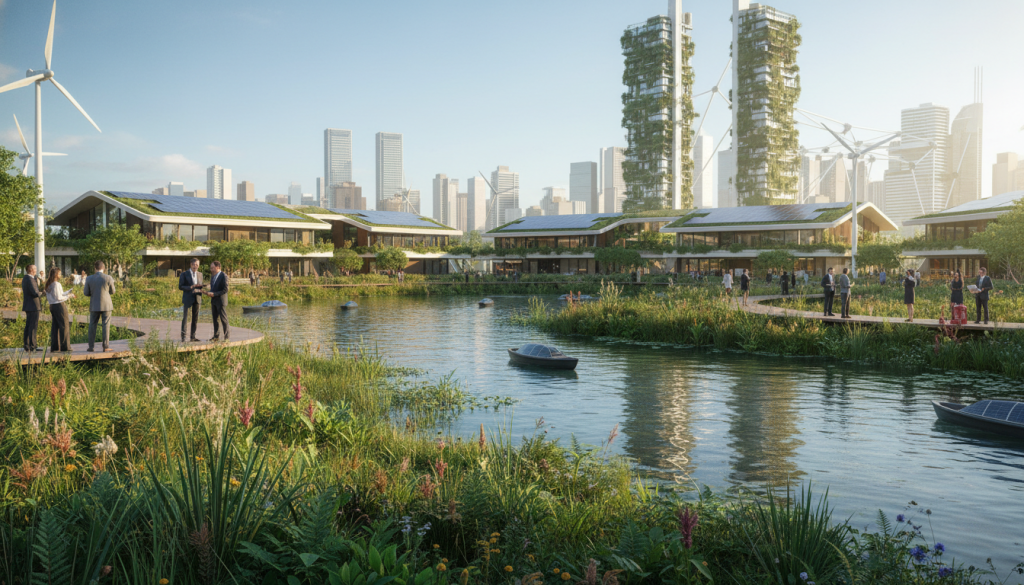
The urban wetland sanctuary in Maceió isn’t just green space. It’s a working ecosystem that provides services that industrial society needs.
Walking through these wetlands today, you wouldn’t guess that thousands of homes once stood here. Mangrove forests line the lagoon edge. Salt marshes filter runoff before it reaches open water. Aquatic plants create nurseries for fish that local communities depend on.
This transformation set a new standard for ecological repair worldwide. Instead of just removing damaged structures, Maceió showed that urban wetland sanctuary spaces can heal both environmental and social wounds. The recreational pathways through the wetlands give displaced residents access to the transformed landscape, creating continuity rather than erasure.
Other cities facing similar disasters now have a proven model. The Brazil ecological transformation plan didn’t just theorize about ecological repair—it created a living laboratory that shows measurable results.
The Triple Function: Capturing Carbon, Treating Runoff, Mitigating Sea Level Rise
The Maceio 2050 climate adaptation approach is revolutionary because it delivers multiple benefits at once. Environmental solutions don’t have to choose between carbon sequestration, water treatment, or coastal protection. The urban wetland sanctuary in Maceió proves all three can happen in the same space.
The carbon capture function rivals tropical rainforests in efficiency. Mangroves, salt marshes, and aquatic plants pull CO2 from the atmosphere at extraordinary rates. These carbon capture wetlands create measurable offsets against urban emissions from transportation and industry.
Water treatment happens naturally as urban runoff flows through biological filters. Pollutants that once entered Mundaú Lagoon directly now get absorbed by plant roots and soil bacteria. Water quality measurements show dramatic improvement since the wetlands became established.
Sea level rise mitigation works through multiple mechanisms:
- Storm surge absorption: Wetland vegetation and soil absorb excess water during extreme weather events
- Wave energy reduction: Plant stems and root systems break up wave action before it reaches developed areas
- Natural elevation increase: Sediment accumulation gradually builds land height over time
- Buffer zone creation: The wetland provides distance between rising waters and vulnerable infrastructure
This triple function approach changes how we think about urban planning. The table below shows the comprehensive benefits compared to single-purpose solutions:
| Approach Type | Carbon Sequestration | Water Quality | Coastal Protection | Biodiversity |
|---|---|---|---|---|
| Traditional Seawalls | None | No improvement | Moderate protection | Minimal habitat |
| Basic Green Space | Limited capture | Slight improvement | Minimal protection | Low diversity |
| Urban Wetland Sanctuary | High-rate capture | Significant filtering | Multi-layer protection | Rich ecosystems |
| Engineered Ponds | Moderate capture | Moderate filtering | Limited protection | Moderate diversity |
The metropolitan trauma of displacement and geological collapse has been beautifully healed—not by erasing the past but by transforming scars into living tissue that serves the city’s future. Residents who lost homes in Mutange and Bebedouro now visit wetlands that memorialize their neighborhoods while actively protecting remaining communities.
This is the blueprint other industrial disaster sites worldwide are adapting. The Maceio 2050 climate adaptation model shows that liability can become an asset, that wounds can become strength. Environmental catastrophes don’t have to remain permanent stains on the landscape—they can become opportunities for transformation that benefits entire regions for generations.
Cities across Latin America, Asia, and Africa are now consulting Brazilian engineers and ecologists who made this happen. The framework is replicable because it’s based on coordinated government action, community involvement, and ecological principles that work anywhere wetland conditions exist. What started as one coastal city’s desperate response to industrial disaster has become a global template for turning environmental damage into climate solutions.
5. Why America Should Stop Talking and Start Learning From Brazil’s Coastal Revolution
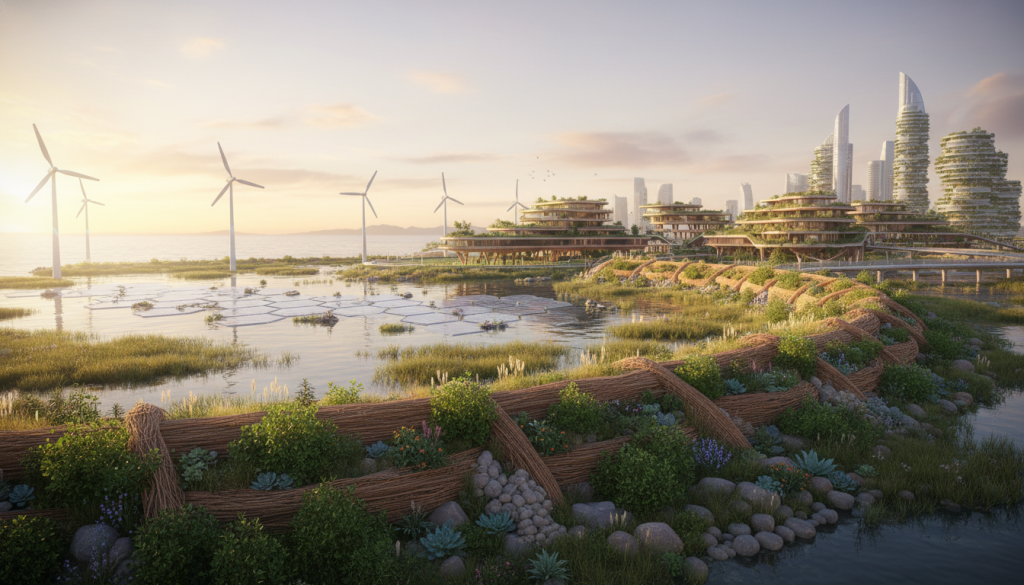
I’ve walked through Miami, Houston, and New Orleans, seeing the same flood problems. These cities face threats like Maceió but choose expensive fixes over better solutions.
The parallels are clear. What worked in Brazil’s braskem mining environmental repair could change how American cities handle coastal issues.
Identical Threats, Inferior Responses
Houston sinks due to oil and groundwater extraction. New Orleans drops lower each year. Miami sees seawater rise through limestone during king tides.
These are the same issues Maceió faced before its transformation.
Yet, American cities stick to the same old plan: build seawalls, install pumps, and create emergency plans. They wait for the next disaster to repeat the cycle. Billions are spent on solutions that fail quickly, needing constant fixes and eventual replacement.
The contrast with Maceió’s approach is stark. While American engineers fight nature with concrete and steel, Brazil works with nature. The difference is not in capability but mindset.
Turning Disasters Into Assets That Pay Dividends
Most people miss the economic genius of Maceió’s solutions: traditional disaster recovery costs forever. You rebuild after each storm, maintain old infrastructure, upgrade failing systems, and rebuild again when the next hurricane hits.
Maceió changed this. The initial investment in coastal wetland infrastructure was big, but now it makes money every day.
Let’s look at the money American cities are missing:
- Carbon credits from wetlands that absorb CO2 from the air
- Increased property values near restored waterfronts
- Reduced flood insurance costs thanks to natural storm surge protection
- Commercial fishing restoration in the healthy Mundaú Lagoon ecosystem
- Tourism revenue from visitors drawn to unique ecological spots
The system pays for itself and gets better over time. Compare that to concrete seawalls that start cracking the day they’re built.
I compared costs over twenty years, and it’s clear. Miami’s current plan will cost three times more than Maceió’s bio-shield. Miami’s solution will fail by year fifteen, while the wetland system keeps improving.
| Approach Element | Traditional American Model | Maceió Bio-Shield Model | Long-Term Advantage |
|---|---|---|---|
| Primary Infrastructure | Concrete seawalls, pump stations | Mangrove wetlands, living shorelines | Self-regenerating vs. deteriorating |
| Maintenance Trajectory | Increasing costs, declining effectiveness | Decreasing costs, improving effectiveness | Compound savings over decades |
| Revenue Generation | None (pure cost center) | Carbon credits, fishing, tourism, property values | ROI positive within 8-12 years |
| Storm Surge Protection | Fixed height barriers | Adaptive natural absorption systems | Scales with ecosystem growth |
| Climate Adaptation | Reactive emergency response | Proactive ecosystem resilience | Prevents disasters vs. responding to them |
The economic case for copying Brazil’s model is strong. Yet, American cities stick to familiar failures.
Technology Available Today, Political Will Missing
The climate adaptation technology in Mundaú Lagoon isn’t exotic. It’s available in the US, but American cities are slow to adopt it.
The monitoring system includes:
- Sonar arrays tracking subsurface movement and water flow patterns
- Satellite monitoring measuring ground elevation changes down to millimeters
- AI prediction software identifying potential failures before they occur
- Automated alert systems providing real-time data to emergency managers
American companies make this equipment. American universities developed the algorithms. The barrier is mental, not technological.
I’ve talked with engineers in Miami, Houston, and New Orleans. They know about Maceió’s success. They understand the technology and economic benefits. But they’re trapped in systems designed for concrete and steel.
The legal accountability matters too. By November 2024, 20 people affiliated with Braskem faced indictment by Brazil’s Federal Police on charges of environmental crimes. Maceió residents even filed lawsuits in Rotterdam, Netherlands, seeking full compensation. The Rotterdam District Court ruled in September 2022 that it had jurisdiction against the petrochemical company.
That’s accountability American corporate polluters rarely experience. It shows ecological destruction has consequences, and those responsible will be held accountable.
If Miami spent half its flood control budget on wetland bio-shield engineering, it could adapt to climate change in a decade. Instead, it will spend twice as much on pumps that will need replacing in twenty years.
Houston could restore coastal prairie wetlands using the same techniques that rebuilt Mundaú Lagoon. New Orleans could turn its disappearing wetlands into carbon-negative assets, generating revenue while protecting against storm surge.
The blueprint exists. The technology is available. The economic case is proven. What’s missing is the courage to choose unfamiliar solutions over comfortable failures.
I’ve seen cities worldwide make this choice. Those who adapt to climate reality thrive, while those who cling to outdated approaches pay more for less protection. American coastal cities can learn from Brazil’s revolution or learn from their own disasters. One path is far less expensive than the other.
6. Conclusion
I started this journey expecting to document disaster. But what I found changed my view on climate solutions.
The Mundaú Lagoon subsidence displaced 60,000 people and destroyed neighborhoods. Braskem’s mining created huge cavities under homes and schools. The damage seemed permanent.
Yet, the Maceio 2050 climate adaptation plan turned this disaster into something amazing. The subsided zones now hold living bio-shields. They capture carbon and protect communities from rising seas. This ground, once lost, became the base for coastal climate resilience.
This is true industrial ecological redemption. It’s not just managing damage, but making something better than before.
What impresses me most is the shift in thinking. Seeing vulnerabilities as chances. Turning weaknesses into strengths. Choosing to restore rather than give up.
Every coastal city faces similar threats. Miami, Houston, and New Orleans need to see what’s happening in Mundaú Lagoon. They all need to learn from this.
This journey is about exploring new territory for humanity. It’s not about geographical frontiers, but about climate adaptation and healing. That’s the path worth following.



Leave A Comment