
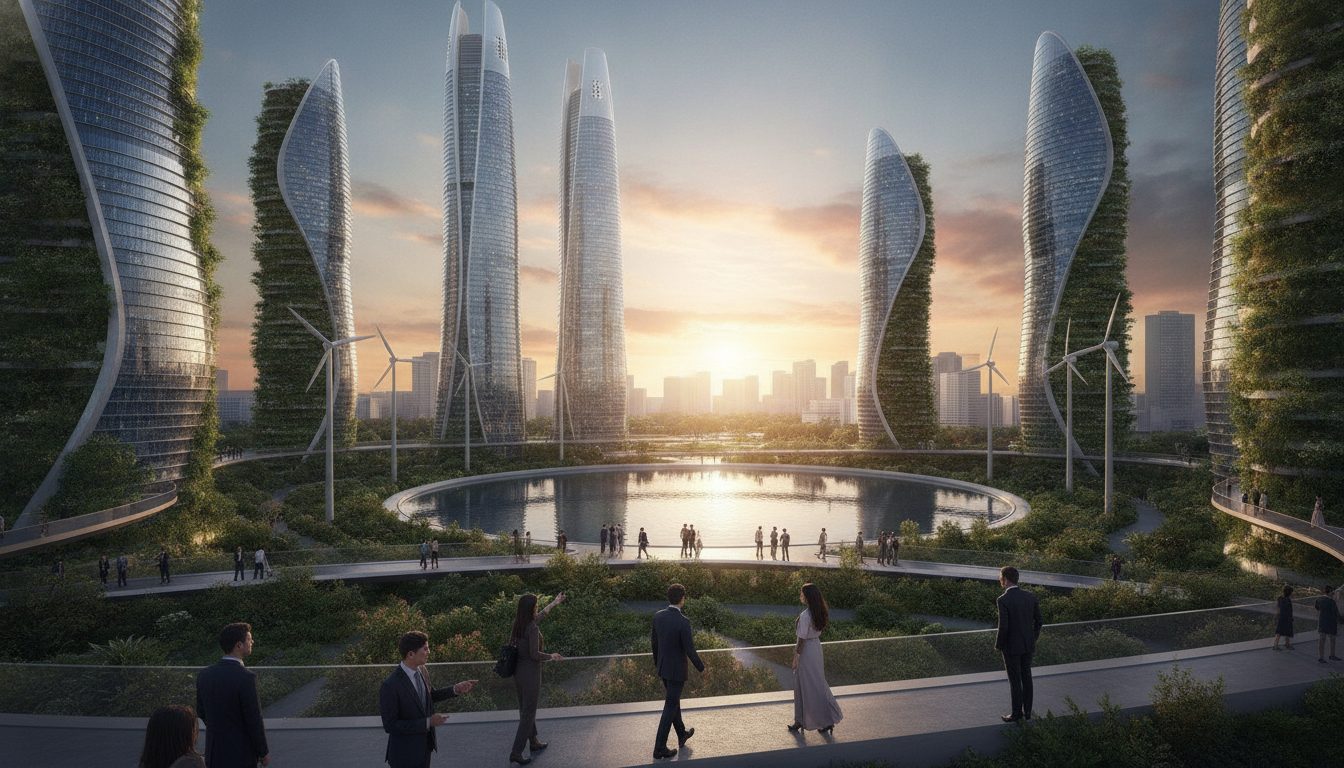
I was in downtown Daegu on a hot August day. My shirt was wet in minutes. The heat seemed to be trapped by the mountains, like a giant bowl.
This memory started this story. South Korea has made a big promise to fight climate change. The Carbon Neutrality Act was passed in 2021 and started in 2022. It aims for a net-zero target by 2050.
Daegu could be a key example for the country. I want to show you what this city might look like in the future. Wind corridors, smart buildings, and underground water systems will change life there. It’s not just about policies. It’s about how a hot valley could become a model for a warmer world.
Key Takeaways
- South Korea’s Carbon Neutrality Act, passed in 2021, legally commits the nation to net-zero emissions by mid-century.
- Climate Action Tracker rates the national plan “Average,” leaving room for individual cities to innovate further.
- Daegu’s basin geography traps extreme heat, making it a real-world test case for climate-smart urban design.
- Mountain wind corridors and biophilic architecture could fundamentally reshape how the city cools itself naturally.
- Underground water systems and industrial microgrids point toward a self-sustaining urban model.
- This transformation could serve as a practical blueprint for other heat-prone cities worldwide.
1. Daegu Future 2050: From Heat Trap to Global Climate Blueprint
Daegu is nicknamed “Daefrica” because of its hot summers. The city is surrounded by mountains that trap heat. I experienced this myself when I walked through Dongseongno without an umbrella. The air felt thick, like walking through soup.
This harsh geography is now Daegu’s strength. Engineers and planners are using it to test new ideas. These ideas could change how cities handle heat.
The Basin Curse — A City Built to Overheat
Daegu is in a natural basin, surrounded by mountains. These mountains block cool winds from reaching the city. This makes Daegu hold heat like a thermos.
Summer temperatures often hit over 95°F. The city’s core stays warm long after sunset. Years of industrial activities have made it worse, with dense asphalt and industrial blocks.
Locals used to think the heat was inevitable. But now, I sense a city ready for change. It’s gearing up for a new future.
Redefining Urban Survival Through Microclimate Engineering
South Korea has made a big commitment to go carbon neutral by 2050. The Carbon Neutrality Act is the law. The government has plans to achieve this goal, including stopping coal use.
Climate Action Tracker says South Korea’s efforts are “Average.” But this is a real commitment. It’s not just talk.
“A city’s geography doesn’t have to define its future — it can become the blueprint for reinventing it.”
Daegu is using this framework to its advantage. Instead of fighting its geography, it’s working with it. The city is using wind corridors, water systems, and building design to cool itself.
The story of Daegu future 2050 is inspiring. A city built to overheat is becoming a model for others. The next sections will explore how they’re doing it, starting with mountain winds.
2. Riding the Mountain Wind: The Palgongsan Corridor Revolution
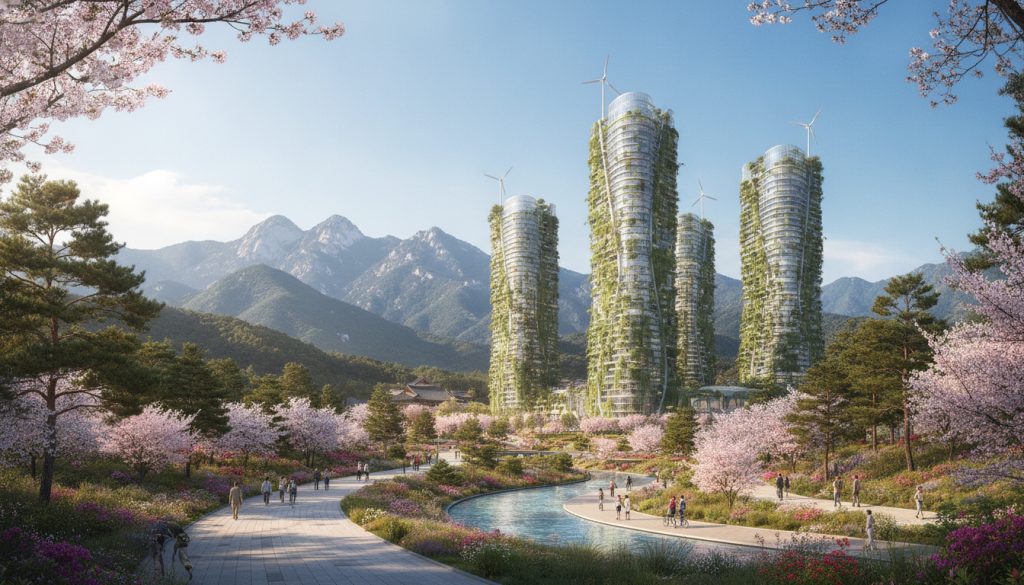
I never thought a mountain breeze could become part of city planning. But Daegu made it happen. They fought the heat by using wind, which changed city design forever.
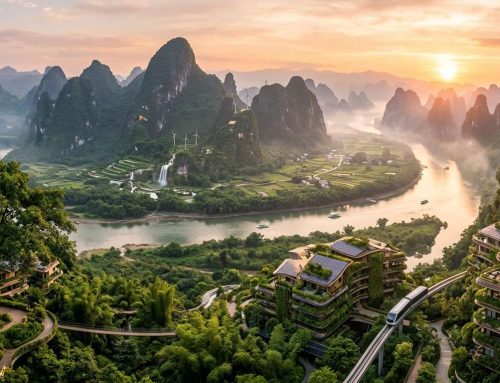
People still hike Mount Palgongsan’s trails. But now, its slopes help cool the city. Engineers mapped the mountain to send cool air into Daegu’s heart.
Engineering the Palgongsan Urban Wind Path
The Palgongsan urban wind path is more than an idea. It’s a real path, free from tall buildings that block air.
Planners set height limits and created parks. This keeps air flowing from the mountain to downtown Daegu.
Temperature sensors show the path’s impact. Street-level readings inside the wind path run several degrees cooler than nearby blocks during summer afternoons.
This corridor changes airflow across downtown. It pulls fresh mountain air into the city, block by block.
High-Albedo Streets and the Rise of Vertical Biophilic Architecture Carbon Neutral Design
Once mountain air hits the streets, Daegu’s pavement helps keep it cool. They use reflective, high-albedo streets.
Dark asphalt absorbs heat and releases it later. Daegu’s streets bounce sunlight away instead.
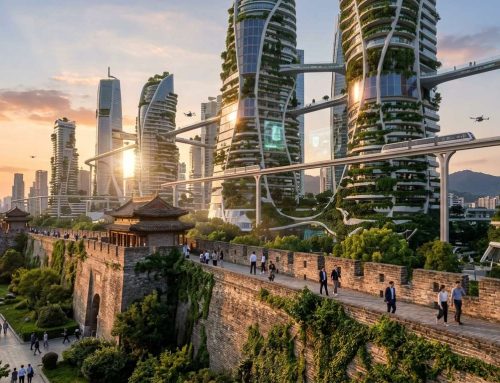
Daegu’s towers are more than just buildings. They have living facades that filter carbon dioxide and release oxygen.
These towers also collect rainwater for their greenery. This way, they don’t strain the city’s water supply.
Standing beneath one of these towers, I actually felt the temperature drop a few steps in. It’s a small thing, but it adds up across an entire neighborhood.
Here’s how the main design elements work together along the corridor:
| Design Element | Function | Cooling Impact |
|---|---|---|
| High-albedo pavement | Reflects sunlight instead of absorbing heat | Cuts surface temperature by up to 10°F |
| Vertical green towers | Filters air and adds shade to streets | Lowers nearby air temperature 2-4°F |
| Open wind corridor zones | Channels mountain air into downtown | Improves airflow across several city blocks |
| Rooftop gardens | Insulates buildings and manages rainwater | Reduces building cooling energy use |
This kind of thinking is crucial for South Korea’s clean energy goals. BNEF’s New Energy Outlook shows a tenfold increase in clean energy capacity by 2050 is needed.
Daegu’s Palgongsan corridor shows how cities can rethink land use. It’s a step towards a cleaner future, one street and tower at a time.
Walking through this stretch, I imagined shaded sidewalks and cool air. It felt like a place I could visit tomorrow.
3. The Sincheon River Sponge Corridor: Reviving a City’s Water Memory
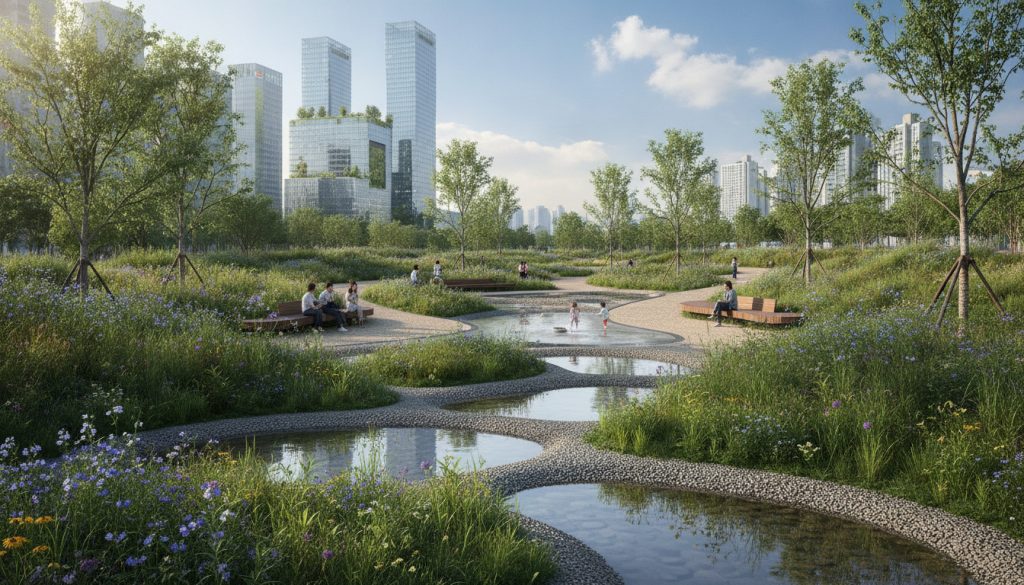
Every river in a city tells us about its crisis handling. The Sincheon stream in Daegu is no exception. It’s the heart of the Sincheon River Sponge Corridor. This plan aims to catch, store, and reuse water instead of losing it.
South Korea faces a unique challenge: harsh summer monsoons followed by dry spells. Fixing this is costly. BNEF says the country needs over $2.7 trillion for climate infrastructure by 2050. Projects like this show where that money could go.
Subsurface Hydrologic Heritage Engineering Beneath the Stream
Under the Sincheon stream, engineers are reviving old drainage paths. This method, subsurface hydrologic heritage engineering, combines history with modern technology. It uses old flow paths and new vaults under the riverbed.
These vaults catch stormwater before it floods streets. The water then flows through underground channels, not straight to the sea. It’s a quiet but crucial system during Korea’s monsoon season.
Closed-Loop Reservoir Stormwater Harvesting for a Monsoon City
Water in the vaults doesn’t just sit there. A closed loop reservoir stormwater harvesting system moves it between storage and treatment. This keeps water in use, not released downstream.
Daegu’s summer rains can overwhelm drains. The reservoirs absorb the excess water, releasing it slowly. This matches supply with demand.
- Captures seasonal monsoon runoff before it becomes flash flooding
- Recycles filtered water into the district’s zero-emission cooling network
- Reduces dependency on external freshwater sources during dry spells
I find this part genuinely exciting. Water that once caused chaos during monsoons now cools city streets months later.
| System Type | Water Handling | Climate Benefit |
|---|---|---|
| Traditional Drainage | Fast runoff to sea | High flood risk, wasted resource |
| Sincheon Sponge Corridor | Captured and stored underground | Flood control plus cooling reuse |
| Closed-Loop Reservoirs | Recycled continuously | Drought resilience, lower water stress |
Stadium Porous Asphalt Stormwater Drainage as Urban Infrastructure
Parking lots near Daegu’s stadiums also play a role. Stadium porous asphalt stormwater drainage lets rain soak through the pavement. This prevents pooling and rushing into storm drains.
Water filters down through layers beneath the asphalt, joining the underground network. It’s a small design choice with a big impact. Thousands of square feet of pavement quietly help the environment.
This detail made me see city surfaces in a new light. A parking lot doesn’t have to be dead space. It can be part of a living water system that keeps a city cooler and drier during heavy rains.
4. Capillary Cooling: How Daegu Breathes Cold Water Through Its Streets
Every city has a pulse, but Daegu’s runs cool on purpose, and I felt it first underfoot on Dongseongno.
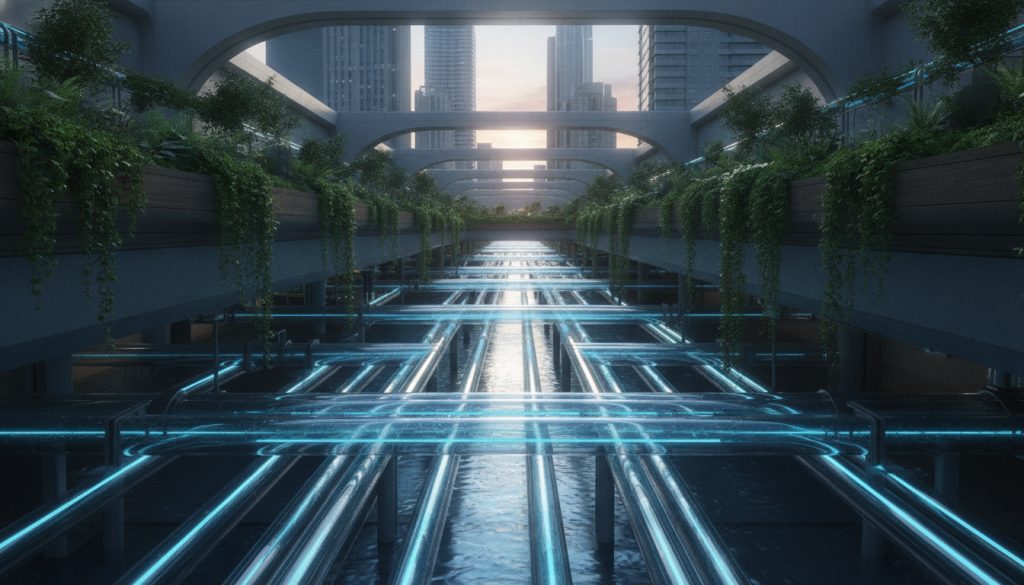
The water captured upstream in the Sincheon corridor doesn’t just sit in a reservoir. It travels through a fine web of underground pipes, much like blood moving through capillaries. This is the quiet engine behind capillary cooling, one of the boldest pieces of the Daegu future 2050 plan. Filtered water flows beneath sidewalks and through building systems, pulling heat out of the air without burning a single watt of fossil fuel.
I didn’t expect to feel infrastructure. But standing on a summer afternoon in downtown Daegu, I did.
Dongseongno’s Zero-Emission Cooling Network
Dongseongno is Daegu’s most famous shopping street, packed with stores, food stalls, and crowds all summer long. It’s also ground zero for the city’s zero-emission cooling network. Filtered water runs in a loop beneath the pavement, absorbing heat from the asphalt before it ever reaches the soles of your shoes.
That same water connects into nearby buildings through simple heat-exchange units. Instead of running air conditioners at full blast, shops and offices pull cool water through their systems, cutting energy use while still keeping interiors comfortable. No extra electricity gets added to the grid. Gravity and smart plumbing do most of the work.
Walking the street, the network reveals itself in small details:
- Recycled stream water drawn straight from the Sincheon corridor
- A grid of underground pipes running beneath high-traffic pavement
- Building-level heat exchangers replacing older, energy-heavy cooling units
- Sensors that track surface temperature and adjust water flow in real time
The result is a street that stays several degrees cooler than nearby areas without a single new power line.
Duryu Park as a Living Cooling Lung
If Dongseongno is where the cooling happens, Duryu Park is where the system breathes. The park pulls in hot city air, cools it through dense tree cover and open water features, then releases that cooler air back into the surrounding neighborhoods.
I sat on a bench there one evening and noticed the shift almost immediately. The air felt heavier near the entrance, then lighter and cooler as I moved deeper under the tree canopy. That’s not an accident. Duryu Park anchors the whole capillary cooling system, feeding cooled air back toward Dongseongno and the surrounding downtown grid.
Together, the park and the street work like two organs in the same body, one drawing heat in, the other pushing cool relief out.
| Component | Primary Function | Cooling Method | Energy Source |
|---|---|---|---|
| Dongseongno Street Grid | Reduces surface and pedestrian-level heat | Underground filtered water circulation | Gravity-fed, zero emission |
| Duryu Park Green Core | Cools and releases air into downtown | Tree canopy and open water evaporation | Passive, solar-independent |
| Underground Capillary Pipes | Transports filtered water across the district | Closed-loop water circulation | Minimal low-voltage pumping |
| Building Heat-Exchange Units | Lowers indoor cooling demand | Water-to-air heat transfer | Recycled stream water, low energy |
5. Suseong Alpha City: The Hydrogen Heart of Industrial Daegu
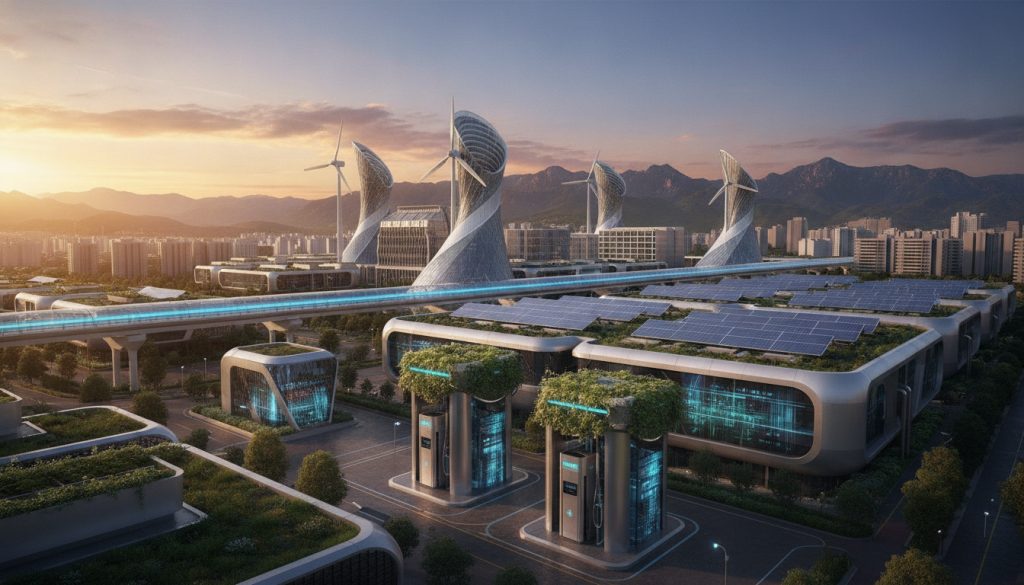
When I think of Suseong Alpha City, one idea stands out. Transformation doesn’t mean forgetting where we came from. Daegu’s history in manufacturing, textiles, and heavy industry is deep and valuable.
Instead of erasing this history, I see Suseong Alpha City rebuilding its industrial core. Old fossil-fuel plants are replaced by cleaner, smarter, and locally powered ones. It’s about rewiring the past, not tearing it down.
Green-Hydrogen Microgrids Replacing Legacy Power
South Korea’s plan to cut carbon emissions is huge. Solar and wind power need to grow tenfold by 2050. This will cost $2.7 trillion to reach net zero.
Suseong Alpha City is key to this plan. I see green-hydrogen microgrids taking over old power systems. These microgrids let areas make and store their own clean energy, reducing reliance on a strained national grid.
Carbon capture and storage is also crucial. It’s needed for 41% of South Korea’s carbon cuts. This shows that big industrial changes are essential, not just optional.
“Reaching net zero in South Korea demands a complete restructuring of how industrial regions generate and consume power.”
Autonomous Mobility and the Suseong Alpha City Smart Grid
Clean power is just the start. Moving people and goods is also vital. That’s where autonomous mobility comes in.
The Suseong Alpha City smart grid connects everything. It manages hydrogen production, energy storage, and self-driving vehicles in real time. This makes moving goods and people emission-free and efficient.
This part excites me the most. It shows how an industrial area can go green without losing its productivity. Suseong Alpha City is not just cleaning up Daegu’s past. It’s setting a new standard for industrial futures everywhere.
6. Vertical Biophilic Architecture: Carbon Neutrality Built Into the Skyline
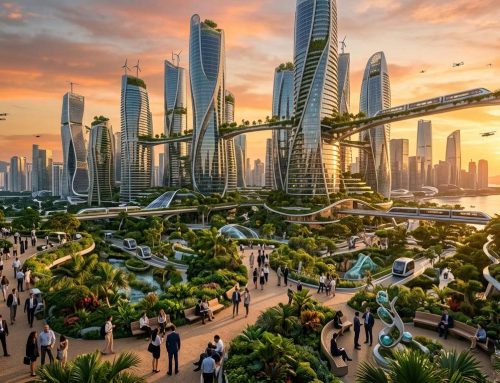
After exploring wind paths and water channels in Daegu, I looked up. The city’s most daring climate move was above me. Vertical biophilic architecture carbon neutral design was rising from the skyline.
These towers are more than just decorations. They’re a vertical part of Daegu’s climate strategy. This strategy started on the ground and now reaches up.
Living Towers as Active Climate Infrastructure
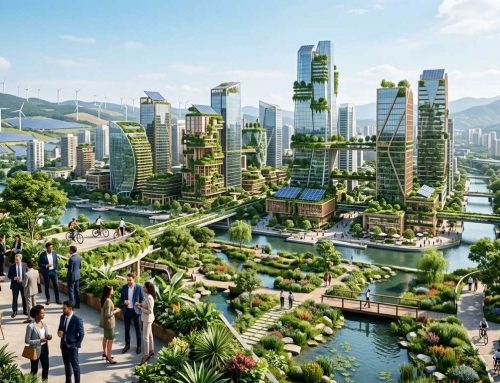
Standing by one of these buildings felt unique. Vines wrapped around columns. Terraces stacked up like green shelves.
I saw a building that acted like a forest turned vertical. That’s the goal.
These living towers are not just shelters. They’re active parts of the climate system. They do several jobs at once:
- Carbon absorption through dense plant walls and rooftop greenery that filter city air
- Shade generation that cools sidewalks and reduces the urban heat island effect below
- Natural ventilation channels that pull breeze from the Palgongsan corridor straight through open-air atriums
- Rainwater capture systems tied into the same sponge-city logic used along the Sincheon River
These functions work together. A tower’s ventilation connects to mountain wind paths. Its water tanks link to reservoir networks.
Every green spire becomes a small climate station, feeding into the bigger system I’d been following all week.
Walking past one at sunset, I noticed the air near its base was cooler. This is not a coincidence.
From Steel Mills to Green Spires — An Industrial Legacy Reimagined
Daegu wasn’t always green. It was built on textiles, steel, and heavy manufacturing. Smokestacks once dominated its skyline, like glass and greenery do now.
The Carbon Neutrality Act and 2050 Scenarios don’t allow for looking back. Daegu turned this mandate into a bold architectural statement.
Old steel mill sites are getting a new life. Instead of being torn down, they’re being turned into carbon-neutral towers. The industrial bones stay, but the function changes.
| Feature | Legacy Industrial Structure | Vertical Biophilic Tower |
|---|---|---|
| Primary emissions source | Coal-fired furnaces and steel processing | Zero on-site fossil fuel combustion |
| Building envelope | Steel and concrete, heat-retaining | Green facade with high-albedo finishes |
| Water handling | Industrial runoff, minimal treatment | Rainwater capture and reuse systems |
| Urban role | Production hub, closed off from public life | Public green space plus active climate infrastructure |
This transformation moved me deeply.
A city that once measured its strength in tons of steel now measures it in tons of carbon avoided.
This change shows something big about Daegu. The same determination that built its industrial past drives its green future.
This isn’t about rejecting the past. It’s about reusing it, with modern green and environmental designs. Every green spire shows that industrial cities can have both history and future.
Daegu is building both, one tower at a time.
7. Conclusion
As I leave this basin city behind, one thing is clear. Daegu’s future in 2050 isn’t about escaping its geography. It’s about turning a weakness into a winning strategy.
The mountains that once trapped heat now let wind flow through the streets. The rivers that used to flood now absorb storms like a sponge. Steel mills are being replaced by hydrogen grids and green towers. This is a full circle worth noticing.
But this isn’t just a dream. South Korea has made a law to reach net-zero by 2050. They plan to invest around $2.7 trillion, according to BloombergNEF. This real investment gives this vision a solid foundation.
What impresses me most is Daegu’s mix of old-world toughness and new environmental tech. A city once known for its hot summers might teach the world how to cool down without using more fuel.
If you’re a traveler who seeks out unique stories, watch Daegu. This basin city could become a surprising climate success story in the next decades. I’m excited to see how it develops.


Leave A Comment