

The home of Valencia CF is about to change more than at any time since 1923. A new ground is rising, and the old one is headed for redevelopment.
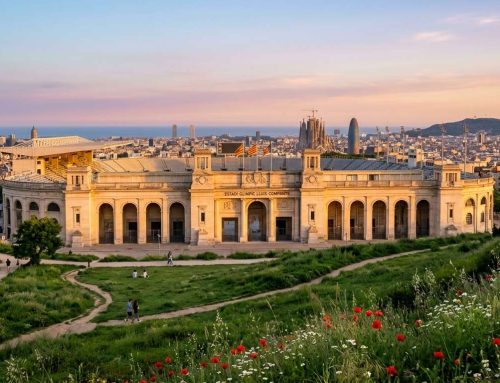
I have always been drawn to steep, loud football grounds. Mestalla is one of them, a concrete bowl where the fans seem to lean right over the pitch. I wonder what happens to a place like that when the club leaves.
Here is the plain split. What is real today: Nou Mestalla is under construction, and the old site is planned for new uses. What is imagined: my own 2050 sketch for the old ground. I will keep real facts and my own daydreaming clearly apart.
Key Takeaways
- Nou Mestalla is the real next home of the club, built in Valencia.
- The old ground sits on a site planned for homes, offices and a garden.
- The new roof uses 50 steel pillars and a giant compression ring.
- Season-ticket holders choose seats in stages before the first season.
- My 2050 ideas for the old ground are daydreams, not plans.
- Follow club news before you book any trip.
Mestalla Stadium future 2050: what happens to the old ground and the new one
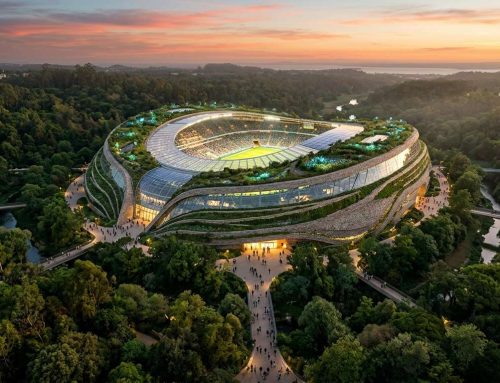
By 2050, football should be played at Nou Mestalla, not at the old ground. The new stadium has 70,044 seats, against about 49,430 at Mestalla, so the Mestalla Stadium future 2050 capacity answer is a gain of roughly 20,600 seats.
The club aims for the 2027-28 season. Valencia CF restarted construction on January 10, 2025 and appointed FCC Construcción to oversee the work. By 2050 Nou Mestalla should have been home for over two decades.
| Feature | Mestalla | Nou Mestalla |
|---|---|---|
| Seats | About 49,430 | 70,044 |
| Steepest stand incline | About 45 degrees | About 36 degrees |
| Opening | 20 May 1923 | Summer 2027 |
The old site covers 90,000 square meters. Plans say it could hold more than 500 homes, commercial space, offices and a public garden. Non-binding offers were reported at around £130 million, with the sale expected to close in October 2026.
The sale and the urbanisation deadline are plans in motion, so dates can still slip.
The club had to submit the urbanisation project by October 27, 2026. It covers roads, green spaces and demolition of the existing stadium. The old site’s fate depends on the sale closing and that plan being filed.
How Nou Mestalla is being built
The roof alone weighs 4,800 tons and rests on 50 S355 steel pillars. As of April 15, 2026, 30 pillars and 21 compression rings were in place. Each pillar is about 38 meters high and weighs about 30 tons.
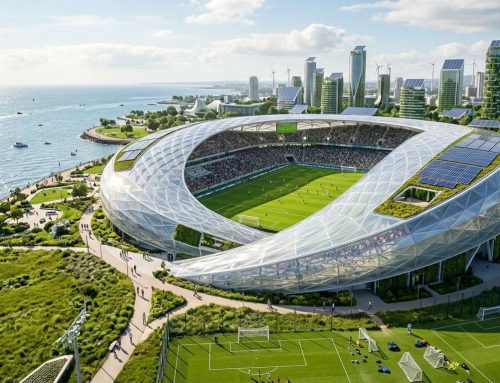
The roof covers about 41,000 square meters and is built to filter Mediterranean light. It should shield every seat from sun and rain. The cantilever reaches up to 70 meters.
The 4,800-ton roof and the Big Lift
The compression ring is a steel ring around the edge of the roof, squeezed as cables pull inward on it. Here it runs about 800 meters. Cable roofs rely on tension and pre-stress, and the London 2012 Olympic Stadium used a similar ring.
The Big Lift uses synchronized hydraulic jacks on the compression ring. The steps run in this order:
- Lift the radial cables.
- Add the hangers.
- Assemble the struts.
- Tension the elements.
- Fit the secondary roof structure and technical walkways.
- Add the arches and outer membrane.
Entrances, seats and year-round use
The lower tier has 22,007 seats, the middle tier 14,675 and the upper tiers 31,389. About 6,500 are hospitality seats, over 9% of the total. Restaurants will overlook the pitch, and the club museum and an auditorium sit inside. On match days the auditorium serves as a press room.
Concerts are considered for summer, but they are not a cornerstone and need cooperation with authorities. Outside, the project adds 20,000 square meters of public space and a sports center for Benicalap residents. A 6,000 square meter square sits beside Avenida de las Cortes Valencianas.
Fans can ride Metro lines 1 and 2 to Beniferri. The pitch sits about 9.2 meters below street level. The Nicasio Benlloch Street side has a change in elevation, so the walk in differs by gate. Approach from Cortes Valencianas for a ground-level entrance.
Estadio Benito Villamarin future.
Salt air, floods and fan power: a 2050 vision for the old ground
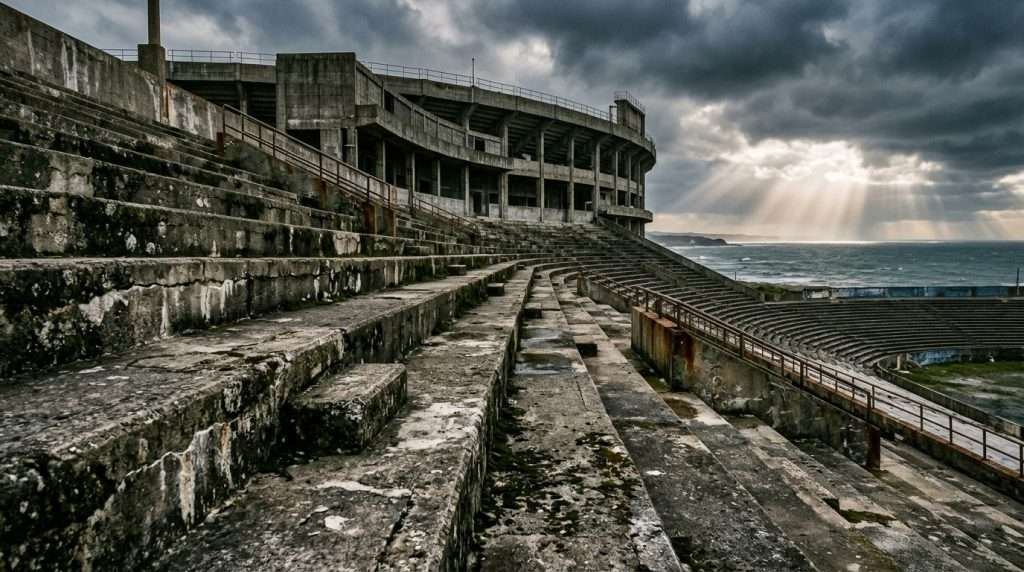
I like to imagine Mestalla in 2050, standing as a steep concrete stand shaped by salt and water. This is a daydream, not a plan. Still, the new ground gives real clues about green thinking.
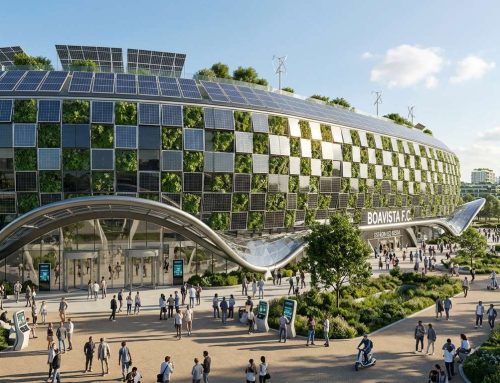
Nou Mestalla’s design includes a solar installation on its roof. Its roof structure is meant to cut the carbon footprint through low steel use. Those are real steps.
Now my picture. I imagine breathable mineral glazes that keep Mediterranean salt air from eating the steep tiers and bare cantilevers. The concrete would keep its raw look. I imagine a fan could still touch the old stone.
Water matters here. The Turia river flooded Valencia in October 1957 and damaged the old ground. So I imagine underground vaults beneath the plazas, catching flash-flood water along the old Acequia canal line. That water could feed a closed cooling loop.
I also imagine plates under the Curva Nord that turn fans jumping into power. A carbon-negative arena of 49,430 seats is a lovely thought. It is a daydream, and the real test is what gets built.
Conclusion
The next few years decide how Valencia remembers its steep old ground. Two things stand out to me. The next home is real and arrives in 2027, and the old ground’s story is still open.
Before planning a trip, follow the club’s announcements and check the Metro Beniferri route for match day. Check the club’s season and seat-selection news before booking travel.









Leave A Comment