

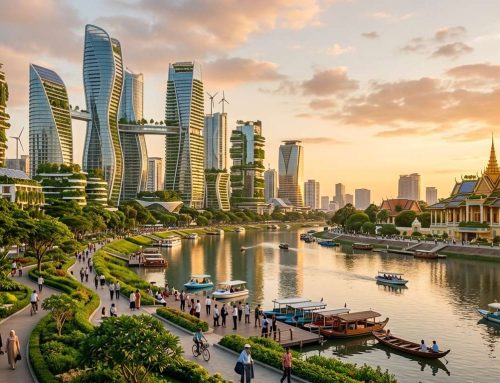
I never expected to find the blueprint for tomorrow’s sustainable cities on a tropical Indonesian island. It’s just a short ferry ride from Singapore. That’s where I discovered the transformation happening across this archipelago.
Today, Batam is home to cutting-edge digital gateway Indonesia infrastructure. The Nongsa Digital Park attracts hyperscale data center operators. Also, $5 billion in AI infrastructure investment is flowing into this Special Economic Zone of 1.3 million people.
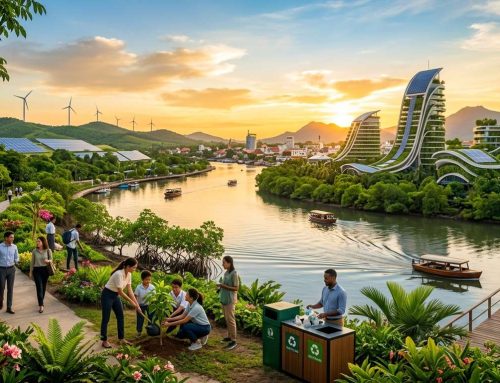
The vision for 2050 is ambitious. It’s not just about adding solar panels to factories. We’re talking about a complete net-zero transformation. This vision reimagines how archipelagic communities can achieve energy independence while staying economically competitive.
I’ve walked the current Barelang Bridge connecting three islands. I tried to picture the expanded networks planned ahead. Offshore wind farms will power autonomous container terminals. AI-driven ports will achieve zero emissions. This journey represents sustainable island development at its most ambitious scale. It offers lessons for coastal cities worldwide facing similar challenges.
Key Takeaways
- Strategic location advantage: Positioned just 20 kilometers from Singapore, creating unmatched connectivity for Southeast Asian trade routes
- Massive infrastructure investment: $5 billion committed to AI and data center development, establishing digital economy foundations
- Bridge-connected archipelago: Existing Barelang Bridge infrastructure provides the spine for unified island logistics and mobility networks
- Carbon-neutral industrial vision: Complete transition from traditional manufacturing to zero-emission autonomous port operations powered by renewable energy
- Special Economic Zone framework: Regulatory advantages supporting rapid development and innovation across maritime and digital sectors
- Hyperscale data capabilities: Nongsa Digital Park already attracting global operators, positioning the region as Asia’s emerging cloud hub
The Archipelagic Paradigm Shift: Why Batam’s 2050 Vision Matters Globally
Batam’s transformation is more than just a city project. It’s a test to see if heavy industry and green living can go hand in hand. I’ve been following this island’s journey since its early days. It’s challenging old ideas about how we grow industries.
In 1973, Batam started as an industrial area with 6,000 people. By 2025, it had grown to 1.3 million residents. This rapid growth is thanks to its strategic spot in the Indonesia-Malaysia-Singapore Growth Triangle. It’s now Indonesia’s third-largest tourist entry point.
The numbers show Batam’s success. In the first half of 2023, it attracted $1.2 billion in foreign investment, mostly from Singapore. Its low labor costs and close ties to Singapore’s finance hub made it a hub for shipbuilding and electronics.
From Industrial Workhorse to Maritime-Digital Masterclass
The 2050 plan for Batam is what really catches my eye. It’s not giving up on its industrial roots but completely reimagining what industry can be today.
Batam is moving towards a maritime-digital economy. This is a big step, unlike anything else I’ve seen. While Singapore stopped big data centers to cut carbon, Batam saw a chance. It became a “digital bridge” between Singapore and Indonesia, showing that growth and green living can go together.
This change is important. Batam shows that making manufacturing green doesn’t have to cost more. This is the shift the world needs to see.
The Strategic Bet on Carbon Neutrality and Hyper-Connectivity
The batam bintan inter island bridge is key to Batam’s success. It connects islands, making it easier to use green energy. This is something that can’t be done in separate areas.
I’m keeping a close eye on this. Batam’s success could help many island communities worldwide. They face similar challenges: updating industries, getting energy from themselves, and being climate-ready.
This small Indonesian island needs attention from anyone interested in green cities. Batam’s journey could show Indonesia’s leadership in sustainability. It could also prove that island nations can be economically strong without harming the environment. The outcome is crucial and very exciting to watch.
The Batam-Bintan Inter-Island Bridge Connectivity: Unifying the Fragmented Archipelago

At the ferry terminal, I saw cargo waiting for the next boat to Bintan. It made me think about the lost potential in archipelagic gaps. Batam’s Barelang Bridge connects Batam, Rempang, and Galang islands since the 1990s. But, the Riau Strait between Batam and Bintan blocks everything, forcing reliance on weather-dependent ferries.
The 2050 vision aims to bridge this gap with Batam Bintan inter island bridge connectivity. It will change the regional economy. I’ve seen how new infrastructure changes development patterns, and this project is exciting.
Engineering Marvel Across the Waters
The proposed bridge is a game-changer for archipelago infrastructure. It’s not just a simple bridge. It has lanes for different transit modes, energy transmission, and is built to withstand the sea.
This design learns from past challenges. Batam’s current setup includes five ferry terminals and a Trans Batam BRT system. The new bridge will connect these systems, not replace them.
Speed Meets Automation
The vision combines high-speed rail Indonesia with autonomous cargo transit. Passenger trains will travel between islands in minutes. Dedicated lanes for goods will move continuously.
I’ve seen high-speed rail in Japan and Europe. Bringing it to archipelagos solves unique problems. The autonomous cargo transit runs 24/7, optimized by AI, reducing delays and emissions.
One Seamless Economic Organism
The bridge will change the islands’ economy. The Batam Bintan inter island bridge connectivity does more than move vehicles. It enables continuous energy grids, digital networks, and industrial planning.
Imagine electric autonomous carriers and high-speed trains on the bridge. The Riau Strait becomes a backbone for renewable energy, automated ports, and digital infrastructure. This is true regional transformation.
The Automated Smart Port Logistics Grid: Reimagining Zero-Emission Maritime Trade

I’ve seen ports in Jakarta and Manila. Batam’s 2050 plan is a game-changer. It introduces an automated smart port logistics grid that changes everything. Most ports still use diesel cranes and manual tracking.
Batam is going for complete autonomy with renewable energy.
AI-Driven Port Operations Achieving True Net-Zero Status
The project aims for real net-zero emissions, not just offsets. Every machine will run on Batam’s wind farm electricity. This needs comprehensive infrastructure that links energy and operations.
The AI-driven port operations use smart algorithms. Cranes and vehicles work without humans. Software optimizes thousands of tasks to save energy and time.
Managing Global Shipping Flows with Algorithmic Precision
The digital heart of this system is impressive. Batam gets fast internet from submarine cables. This lets it handle autonomous maritime logistics like no other port.
It manages global shipping with AI. It processes huge data in real-time. This includes vessel arrivals and cargo tracking.
Port operators see how operations improve automatically. They adjust based on weather and schedules without humans.
Why Traditional Ports Cannot Compete with Batam’s Model
Legacy ports can’t keep up with Batam’s vision. They’re stuck with old infrastructure and practices. Upgrading is hard due to sunk costs and union rules.
Batam starts fresh. Its history and current status give it a strategic edge. The 2050 plan isn’t limited by old facilities or practices.
| Port Feature | Traditional Model | Batam 2050 Vision | Competitive Gap |
|---|---|---|---|
| Energy Source | Diesel/fossil fuels | 100% renewable electricity | Zero emissions vs. carbon-intensive |
| Equipment Operation | Human-operated machinery | Fully autonomous systems | 24/7 precision vs. shift limitations |
| Cargo Management | Manual tracking + basic software | AI algorithmic optimization | Real-time efficiency vs. reactive processes |
| Digital Infrastructure | Standard connectivity | Ultra-low-latency fiber networks | Millisecond response vs. delayed coordination |
| Operational Model | Incremental improvements | Ground-up redesign | Revolutionary vs. evolutionary change |
Batam’s net-zero emissions and automation give it a big edge. It’s close to Singapore’s trade routes, too. Traditional ports will find it hard to keep up for years.
This vision doesn’t just compete. It makes old ports seem outdated.
The Renewable Industrial Energy Fabrication Hub: Offshore Wind as Economic Backbone

Standing on Batam’s shoreline, I’ve felt the steady tropical breezes. These winds are key to changing the island’s future. Batam currently relies on traditional power grids, making it vulnerable to energy price changes.
The 2050 vision aims to change this. It plans to make Batam a renewable industrial energy fabrication hub powered by offshore wind.
This isn’t just about going green. It’s about gaining a strong competitive edge that traditional zones can’t match.
Advanced Wind-Energy Grid Powering Industrial Transformation
Offshore wind farms in Batam’s waters will create a new energy network. The Riau Strait’s wind patterns offer great generation potential. These farms will power everything from manufacturing to data operations.
The offshore wind energy Indonesia infrastructure will be reliable. Batam’s stable geology helps ensure this. I imagine vast turbine arrays powering the island’s economic shift.
From Fossil Dependency to Energy Sovereignty
This transition excites me because it changes how we view industrial competitiveness. Manufacturing economies struggle with unpredictable energy costs. Batam’s current grid makes it vulnerable.
Having offshore wind means stable prices, unlike fossil fuels. This attracts businesses looking for long-term cost predictability. A wind-powered grid offers stable pricing, independent of global markets.
This move is more than just going green. It’s about creating a strong competitive edge.
How Renewable Infrastructure Attracts Global Investment
Global investment is moving towards sustainable infrastructure. Manufacturing and digital operations face pressure to be carbon neutral. Batam’s renewable backbone makes it attractive for these operations.
Imagine companies choosing Batam for 100% renewable power. This is impossible in most Southeast Asian zones still using fossil fuels. Batam’s renewable infrastructure, location, and government support make it a unique investment opportunity.
For energy-intensive industries, Batam’s wind-powered grid is key. The island becomes a strategically irreplaceable location for sustainable operations.
Hyperscale Green Data Center Campus: The Biophilic Digital Revolution

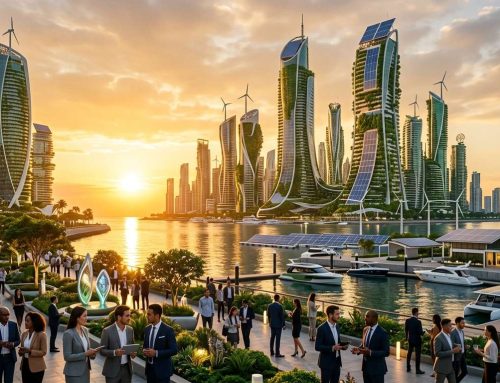
Batam’s hyperscale green data center campus is a game-changer. It combines industrial computing power with environmental harmony. Unlike most data centers, these facilities are designed to work with nature, not against it.
The island is set to become Southeast Asia’s top digital hub. Nongsa Digital Park got Special Economic Zone status in June 2021. Big names like GDS, GAW Capital, and BW Digital are building 80 MW campuses that focus on being green and efficient.
Green-Data Superstructures Redefining Environmental Physics
Biophilic data centers might sound strange at first. Data centers usually use a lot of energy and harm the environment. But Batam’s green-data superstructures change this.
I see green walls and roofs that help cool the air. The buildings are designed to catch natural breezes. They also use waste heat to create useful energy, not just waste it.
PDG Group’s $1 billion investment shows they believe in this approach. The Equator Gate System Batam plans a $5 billion AI data center project that follows these principles.
Heat-Absorbing Architecture as Competitive Advantage
Traditional data centers fight nature. Batam’s hyperscale green data center campus works with nature. This gives them a big edge over others.
Several things make Batam special for this change:
- Seismic stability means no worries about earthquakes
- Submarine fiber optic cables are just 5 kilometers away, offering great connectivity
- Maritime climate allows for natural cooling all year
- Renewable energy integration from offshore wind powers operations sustainably
These aren’t small changes. They’re a complete rethink of how data centers are built. They turn environmental challenges into advantages.
Why Batam Will Host the Region’s Digital Backbone
Singapore’s 2019 ban on hyperscale data centers created a big need. Batam seized this chance with Nongsa Digital Park. But the 2050 vision is even bigger than just filling the gap.
I picture walking through these future data centers. They’re filled with living walls that cool the air naturally. It’s a place where technology and nature work together seamlessly.
Batam has the right mix of advantages and new ideas. It’s not just building biophilic data centers. It’s setting the new standard for digital infrastructure in Southeast Asia.
Why Batam Future 2050 Redefines Municipal Longevity and Trans-Island Trade Efficiency
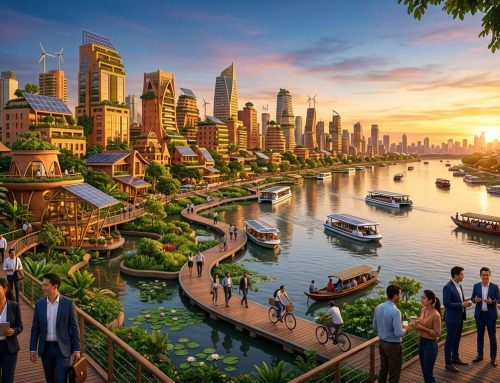
Standing at Batam’s shoreline today, I see it’s more than just a sustainability project. It’s a new way for island cities to thrive. From 6,000 people in 1973 to 1.3 million by 2025, Batam has grown a lot. What’s exciting is how it combines old maritime skills with cutting-edge environmental innovation.
Batam is key in the Indonesia-Malaysia-Singapore Growth Triangle. Law No. 44/2007 made it a 70-year free trade zone. This attracts global investment.
How Coordinated Planning Creates Unbreakable Foundations
Batam stands out because of its integrated approach. It’s not just adding green projects to old systems. Instead, everything works together to make the city strong.
The renewable energy hub powers the smart port and green data center. The bridge connects islands for easy cargo and energy flow. This planning makes the city strong from the start, not just adding green later.
The Advantage Competitors Cannot Easily Replicate
BP Batam’s fast planning helps the city grow together. This is hard for others to do because of old ways of governing.
Others face a big challenge: they’re up against a whole system, not just parts. The table below shows why.
| Development Approach | Infrastructure Coordination | Energy Independence | Competitive Resilience |
|---|---|---|---|
| Traditional Port Cities | Fragmented departments managing separate systems | Fossil fuel dependency with volatile pricing | Vulnerable to disruption and competitive pressure |
| Retrofit Green Initiatives | New sustainability projects added to existing infrastructure | Partial renewable integration with grid limitations | Moderate improvement but legacy constraints remain |
| Batam Integrated Model | Coordinated systems designed to reinforce each other | Complete energy sovereignty through offshore wind | Compound advantages creating difficult-to-replicate moat |
What Other Island Nations Can Learn From This Blueprint
Batam’s model is useful for other island nations. The Philippines, with over 7,000 islands, can learn from it. Indonesia’s other islands also face similar challenges.
Even non-island cities can learn. Key lessons include:
- Design infrastructure as coordinated ecosystems from the start
- Use maritime and industrial strengths to build new capabilities
- Have long-term rules that attract investment
- Big sustainability changes can give you an edge when done right
Walking through Batam, I see that going green and being competitive can go hand in hand. The 2050 vision combines Batam’s history with new systems that others can’t match.
The Transformation Worth Tracking
I started looking into Batam’s future in 2050, expecting just another dreamy plan. But what I found changed my mind. The billions going into green energy, the bridge projects, and the data center moves from Singapore are real. They’re making Batam a new place right now.
What makes me think Batam’s vision might work is how it tackles challenges. The city links bridges, ports, green energy, and digital stuff together. The wind powers the data centers, and the bridges help the logistics network. It all fits into a plan for a zero-carbon island.
BP Batam’s Special Economic Zone team works fast, unlike many cities. Its spot between Singapore and Indonesia gives it a big edge. Plus, Batam knows how to handle complex operations.
For those who love to see places change, Batam is special. It’s a live example of sustainable growth, seen in construction, energy projects, and planning. I’ll keep coming back to see how it all comes together. If Batam succeeds, it will teach lessons to cities all over the world.
FAQ
What makes Batam’s 2050 vision different from other smart city projects in Southeast Asia?
How will the batam bintan inter island bridge connectivity actually work?
What does “automated smart port logistics grid” mean in practical terms?
How realistic is achieving true net-zero emissions across Batam’s entire industrial base by 2050?
Why did Singapore’s data center moratorium benefit Batam?
FAQ
What makes Batam’s 2050 vision different from other smart city projects in Southeast Asia?
Batam’s vision is unique because it focuses on integrating systems, not just adding green elements. It aims to achieve complete energy sovereignty through offshore wind farms and a unified logistics spine. This approach is different from other projects that focus on one aspect.
How will the batam bintan inter island bridge connectivity actually work?
The bridge will connect Batam and Bintan with a high-speed rail and electric cargo vehicles. It will reduce travel times and make transportation efficient. Autonomous cargo lanes will also optimize freight movement without human drivers.
What does “automated smart port logistics grid” mean in practical terms?
It means AI will manage every operation in the port. This includes autonomous electric cranes and self-navigating cargo vehicles. The goal is to minimize energy waste and maximize throughput.
How realistic is achieving true net-zero emissions across Batam’s entire industrial base by 2050?
Batam has a good chance of achieving net-zero emissions by 2050. It has renewable energy, autonomous systems, and a bridge plan in place. The timeline is aggressive, but the foundation is strong.
Why did Singapore’s data center moratorium benefit Batam?
Batam benefited because it’s close to Singapore and has advantages like submarine fiber optic cables. It can serve Singapore’s market with low latency and sustainability. PDG Group’s
FAQ
What makes Batam’s 2050 vision different from other smart city projects in Southeast Asia?
Batam’s vision is unique because it focuses on integrating systems, not just adding green elements. It aims to achieve complete energy sovereignty through offshore wind farms and a unified logistics spine. This approach is different from other projects that focus on one aspect.
How will the batam bintan inter island bridge connectivity actually work?
The bridge will connect Batam and Bintan with a high-speed rail and electric cargo vehicles. It will reduce travel times and make transportation efficient. Autonomous cargo lanes will also optimize freight movement without human drivers.
What does “automated smart port logistics grid” mean in practical terms?
It means AI will manage every operation in the port. This includes autonomous electric cranes and self-navigating cargo vehicles. The goal is to minimize energy waste and maximize throughput.
How realistic is achieving true net-zero emissions across Batam’s entire industrial base by 2050?
Batam has a good chance of achieving net-zero emissions by 2050. It has renewable energy, autonomous systems, and a bridge plan in place. The timeline is aggressive, but the foundation is strong.
Why did Singapore’s data center moratorium benefit Batam?
Batam benefited because it’s close to Singapore and has advantages like submarine fiber optic cables. It can serve Singapore’s market with low latency and sustainability. PDG Group’s $1 billion investment shows this advantage is recognized.
What are “biophilic Green-Data superstructures” and how do they actually work?
They use vegetation to manage heat and reduce cooling energy. This approach turns environmental challenges into advantages. It’s a way to create carbon-absorbing infrastructure.
How does the renewable industrial energy fabrication hub provide competitive advantage beyond environmental benefits?
It offers price stability and attracts high-value operations. Industries prioritize long-term energy costs and sustainability. Batam’s renewable backbone guarantees 100% renewable energy for operations.
Can other archipelagic nations replicate Batam’s model?
Yes, other nations can replicate Batam’s model. The Philippines, Indonesia, and Pacific nations face similar challenges. Batam’s integrated approach offers frameworks for other nations to follow.
What role does AI play across Batam’s 2050 systems?
AI is the coordination layer for Batam’s systems. It manages operations, optimizes energy, and balances supply and demand. AI requires ultra-low latency, which Batam’s fiber optic connectivity provides.
How will the transformation affect current Batam residents and existing industries?
The transformation will require workforce transition to new roles. Batam will build on its strengths, not erase them. The Special Economic Zone framework will support workforce programs.
What are the biggest implementation risks facing Batam’s 2050 vision?
Financing and technological execution risks are significant. Workforce transition and coordination across levels are also challenges. But, the foundation is already moving, and investments are flowing.
How can travelers and investors follow Batam’s transformation progress?
Visit regularly and track updates from Nongsa Digital Park and government announcements. Batam offers authentic experiences of municipal evolution. It’s a journey worth documenting.
billion investment shows this advantage is recognized.
What are “biophilic Green-Data superstructures” and how do they actually work?
They use vegetation to manage heat and reduce cooling energy. This approach turns environmental challenges into advantages. It’s a way to create carbon-absorbing infrastructure.
How does the renewable industrial energy fabrication hub provide competitive advantage beyond environmental benefits?
It offers price stability and attracts high-value operations. Industries prioritize long-term energy costs and sustainability. Batam’s renewable backbone guarantees 100% renewable energy for operations.
Can other archipelagic nations replicate Batam’s model?
Yes, other nations can replicate Batam’s model. The Philippines, Indonesia, and Pacific nations face similar challenges. Batam’s integrated approach offers frameworks for other nations to follow.
What role does AI play across Batam’s 2050 systems?
AI is the coordination layer for Batam’s systems. It manages operations, optimizes energy, and balances supply and demand. AI requires ultra-low latency, which Batam’s fiber optic connectivity provides.
How will the transformation affect current Batam residents and existing industries?
The transformation will require workforce transition to new roles. Batam will build on its strengths, not erase them. The Special Economic Zone framework will support workforce programs.
What are the biggest implementation risks facing Batam’s 2050 vision?
Financing and technological execution risks are significant. Workforce transition and coordination across levels are also challenges. But, the foundation is already moving, and investments are flowing.
How can travelers and investors follow Batam’s transformation progress?
Visit regularly and track updates from Nongsa Digital Park and government announcements. Batam offers authentic experiences of municipal evolution. It’s a journey worth documenting.




Leave A Comment