

I’ve seen cities change before, but nothing like what I saw in Malaysia’s south. Standing at the Causeway in 2025, I saw construction cranes moving against the sky. It was more than just building; it was a new urban frontier.
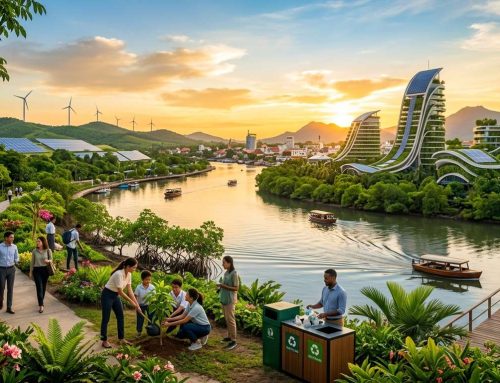
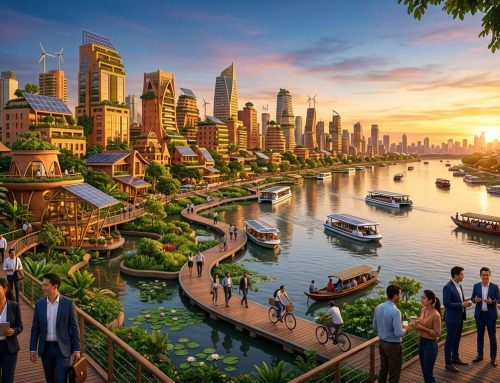
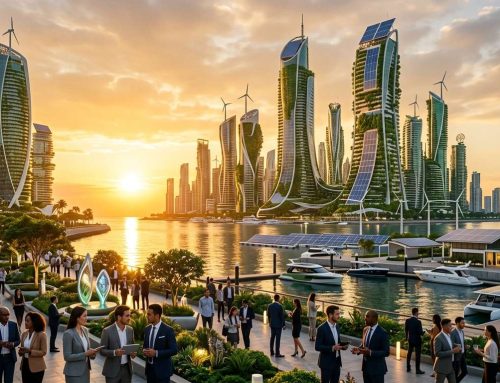
By mid-century, Johor Bahru will be a net-zero city. It will have vertical forests and nature-based engineering. This isn’t science fiction or wishful thinking. It’s a blend of sustainable urban development and transit engineering.
The RTS Link is 75% done, connecting Bukit Chagar to Singapore. It’s set to open in early 2027. It will carry 80,000 commuters daily. This project is a global lesson in sustainability.
Key Takeaways
- The RTS Link rapid transit system is 75% complete and will launch in early 2027, moving 80,000 daily commuters between Malaysia and Singapore
- Malaysia’s southern gateway aims to achieve full carbon neutrality by mid-century through integrated transit and ecological engineering
- Vertical forest architecture and nature-based coastal defenses form the backbone of climate resilience strategy
- Think City has been driving downtown regeneration efforts since 2016, laying groundwork for transformation
- The city demonstrates how high-density development can merge seamlessly with environmental sustainability goals
- International transit infrastructure serves as the catalyst for broader urban ecological redesign
1. A New Paradigm for Cross-Border Urbanism
The future of urban planning is being shaped in Johor Bahru, not in big cities like New York or London. This Malaysian city has turned a challenge into an advantage. It shows how to make borders work for everyone, not against them.
Johor Bahru is a leader in moving people across borders. It can handle 10,000 people per hour without a hitch. The rts link cross border transit corridor links Malaysia and Singapore, making them one big city.
Why This Malaysian City Sets the Global Standard
Many cities dream of big changes, but Johor Bahru actually does it. It shows that borders can be bridges, not walls. This city leads by example in international transit integration.
Travel times have dropped from 90 minutes to just five minutes. But the real impact is on the city’s life. It changes everything from how we move to how we live.
When Infrastructure Becomes Climate Strategy
Johor Bahru stands out because it combines transit, ecology, and climate in one system. The RTJB 2035 plan aims for a 70:30 public-to-private transport split. It connects major areas with E-ART corridors.
This isn’t just about fast travel. It’s about making cities both efficient and green. Johor Bahru shows that you can have both. This mix creates a strong, resilient city that others can’t match.
2. The Johor Bahru Future 2050: A Vision Realized Through Structural Commitment

Johor Bahru’s journey to becoming a carbon-neutral city was unlike any other. It started with simple downtown work in 2016. But it quickly grew into a much bigger plan.
This change wasn’t slow. It was planned and strong.
I’ve seen cities set big climate goals but then give up when money gets tight. Johor Bahru took a different path.
From Regional Afterthought to Global Masterclass
Think City began working in Johor Bahru in 2016. They focused on brownfield sites with density, culture, and economy. These were real neighborhoods with real problems.
The RTJB 2035 plan was the guide for development until 2035 and beyond. But what really stood out was that this plan was more than just words.
This plan made sustainability a key part of urban planning. Unlike other cities, Johor Bahru made this plan a law. This made a huge difference.
Johor Bahru’s change from a small city to a leader in Malaysia’s future wasn’t just about dreams. It was about hard work and making big changes that everyone had to follow.
The Carbon-Neutral Mandate That Separated Ambition from Achievement
Johor Bahru’s success comes down to one word: mandate. Unlike other cities, Johor Bahru made being carbon-neutral a law. This made a big difference.
By 2050, this rule will be very important. The Johor Bahru future 2050 plan became a law, not just a wish.
| Approach Type | Enforcement Mechanism | Developer Compliance | Long-Term Outcomes |
|---|---|---|---|
| Voluntary Sustainability | Incentives and tax breaks | Selective adoption | Inconsistent results, frequent delays |
| Structural Mandate | Statutory requirements in building codes | Universal compliance required | Predictable carbon reduction, systemic change |
| Hybrid Models | Mixed voluntary and mandatory elements | Variable depending on project scale | Moderate progress with gaps |
This table shows why Johor Bahru succeeded where others failed. The city chose to follow rules over flexibility. This is the key lesson from their transformation.
3. The RTS Link Cross Border Transit Corridor: How High-Frequency Rail Rewrote Urban Economics

Learning that 80,000 people would soon travel between Malaysia and Singapore in just five minutes was eye-opening. The rts link cross border transit corridor is more than a way to move people. It’s a game-changer for cities worldwide, turning a border into a chance for growth.
By 2050, this high-frequency rail will have changed how regions grow. It’s a big deal for the economy.
The RTS Link is almost done, with over 75% complete by early 2025. It will start running in 2027, carrying 10,000 passengers per hour in each direction. This fast travel eliminates the hassle of border checks.
What used to take 90 minutes in traffic now takes just five minutes by rail. It’s a huge improvement.
Transit-oriented development has thrived thanks to this project. In other cities, TOD is just a buzzword. But Johor Bahru has made it real by linking development to travel.
Engineering Hyper-Connectivity Across International Boundaries
Bukit Chagar Station started its civil works in October 2025. Systems integration will begin in 2026. Standing near the site, I felt the excitement of major transit hubs.
Engineering this project was a big challenge. It involved coordinating customs, immigration, and security for two countries. The solution was integrated clearance facilities that keep travel smooth.
This creates a unified labor market. People can work in Singapore or Johor Bahru without the time penalty of borders. This changes housing, retail, and culture.
Transit-Oriented Development at Waterfront Scale
In February 2025, Sunway Group announced a RM 2.6 billion mixed-use development near Bukit Chagar Station. This was a smart investment based on guaranteed access.
The development spans 4.23 acres and includes:
- High-density residential towers with great views
- Retail and commercial space for commuters
- Healthcare and education facilities for complete neighborhoods
- A 1,550-bay Park-and-Ride facility for cars
Many transit-oriented development projects fail to create vibrant areas around stations. But Sunway’s approach shows that hyper-connectivity and urban life can thrive together when planned well.
The Park-and-Ride facility acknowledges that some will drive. But it keeps cars away from the rail core. This design focuses density where it matters most, saving land for farming.
By 2050, the area around the RTS link cross border transit corridor became a global model. It showed that high-frequency rail can change how we use land, money, and people’s potential.
4. Johor Green Development Master Plan: The Statutory Backbone of Transformation

Most cities I’ve seen struggle with keeping their green promises when money gets tight. But Johor Bahru did things differently. The johor green development master plan is not just a goal. It’s a law that guides the city’s growth.
I’ve seen many cities claim to be green but fall short. It’s clear that having laws in place makes a big difference.
The Problem With Goodwill and Good Intentions
Voluntary green programs often fail because of money issues. When costs rise, green features are the first to go. Utility companies also focus on profits over efficiency.
In every single city I’ve visited, this pattern repeats itself. But Johor Bahru changed the game with its strict planning laws.
The RTJB 2035 plan introduced a new theme for infrastructure. It set clear paths for transit corridors. Agencies like MOT and APAD enforce these rules, not just support them.
This isn’t just wishful thinking. It’s a hard truth that laws are needed to make sustainability a must, not just a nice-to-have.
When Regulations Build Better Cities
By 2050, we’ll see how regulatory frameworks shape our cities. The johor green development master plan sets high standards for construction:
- District cooling networks are now required for dense areas, cutting down on AC waste
- Stormwater retention requirements lead to creative solutions for water management
- Carbon-neutral building standards stop inefficient construction in tropical cities
- Transit-oriented density bonuses encourage building near the RTS Link corridor
Developers and engineers follow these standards because they have to, not because they want to. This forces them to innovate, not because they’re passionate, but because they have no choice.
This approach is refreshing because it’s honest. It shows that laws, not good intentions, lead to real change.
5. Intelligent District Cooling Networks: Solving the Tropical Urban Heat Crisis

I’ve seen how tough tropical cities can be when buildings fight heat alone. Walking in Bangkok or Kuala Lumpur on a hot day feels like walking on a hot oven. Johor Bahru changed this with intelligent district cooling networks by 2050.
The RTJB 2035 plan aimed for a 70:30 public-to-private transport split. But it did more than just change how people get around. It made urban systems work together, with cooling networks matching transit plans.
Decentralized Systems That Eliminated Energy Waste
Instead of AC in every building, decentralized energy systems cool whole neighborhoods. This saves a lot of energy, up to 30-40% more than old systems. The big win is how these systems work for neighborhoods, not the whole city.
Each E-ART station has its own cooling network. This makes the system strong and efficient. It has many benefits:
- Less energy lost in shorter distances
- No one point can shut down the whole city
- It’s just the right size for the neighborhood
- Works well with local solar and batteries
The Environmental Physics of Thermal Management
The science behind decentralized energy systems is simple but powerful. Central cooling lets us recover waste heat and store it when it’s not needed. It also makes it easy to use renewable energy.
By 2050, walking in these areas feels cooler. The urban heat island reduction makes streets pleasant, even in the middle of the day.
Energy costs went down a lot because the system is always efficient. Johor Bahru shows that tropical cities can be cool and green.
6. Vertical Biophilic Architecture Carbon Neutral: When Green Infrastructure Became Structural Engineering
In 2050, Johor Bahru turned buildings into living things that absorb carbon. I’ve seen many green walls and gardens worldwide. They look nice but don’t really help the environment much.
But Johor Bahru’s waterfront changed everything. The vertical biophilic architecture carbon neutral towers are not just for looks. Plants are part of the building itself, from the ground up.
Beyond Aesthetics: The Science of Living Buildings
Bukit Chagar Station’s area shows how buildings can change. Sunway’s 4.23-acre mixed-use project is right next to the RTS terminal. It’s a big step in transit-oriented development.
These buildings are not just pretty. They have plants every three to four floors. This creates vertical forests that help the building in many ways.
The science behind these living buildings is amazing:
- Air filtration systems use plants instead of machines
- Cooling load reduction of 20-30% thanks to plants
- Rainwater management is built into the building
- Biodiversity habitat supports urban wildlife
- Measurable carbon sequestration per square meter
What makes these buildings special is the engineering. Things like soil depth and plant choice are carefully planned. This makes the building work better for the environment.
Carbon Sequestration Through High-Density Ecosystems
HLIB Research says that areas near TOD zones will grow. This growth leads to more vertical buildings. Johor Bahru turned this into a way to fight climate change.
By 2050, Johor Bahru’s core will have hundreds of these towers. They will remove more carbon than they produce. This shows that density can be a solution to climate change.
Walking through these areas feels different. The air is cooler and cleaner. Birds live in the gardens, and people grow vegetables on shared floors.
The buildings breathe. This is not just a dream. The engineering is real, and Johor Bahru is using it to make a difference. These living buildings can house thousands and help the atmosphere.
7. Coastal Defense Reimagined: Fusing Nature-Based Seawalls with Subsurface Stormwater Engineering
Standing at the edge of the Malacca Straits, I watched monsoon rains vanish into the pavement beneath my feet—a small miracle that reveals Johor Bahru’s revolutionary approach to coastal defense. The city’s strategic location at the international border creates serious vulnerability to storm surge and seasonal flooding. But instead of building higher concrete walls, planners integrated natural systems with advanced engineering to create coastal climate resilience that actually improves over time.
I’ve seen traditional seawalls fail in Jakarta and Bangkok, where rigid barriers crack under pressure and accelerate erosion nearby. Johor Bahru’s waterfront takes the opposite approach, working with water instead of fighting it.
Permeable Barriers That Work With Water, Not Against It
The shoreline’s nature-based seawalls aren’t solid concrete slabs. They’re living, breathing ecosystems that combine mangrove restoration with artificial reef systems and bio-engineered slopes. These permeable barriers absorb wave energy naturally, reducing the force that reaches developed areas.
What impressed me most is how the system strengthens itself as ecosystems mature. Mangrove roots anchor sediment and create habitat for marine life. The artificial reefs dissipate storm surge while providing breeding grounds for fish populations. Over decades, these natural elements grow more effective at protecting the coast—something no concrete wall can claim.
The engineering data supports what I observed. Wave energy hitting these nature-based seawalls drops by 60-75% before reaching shore. Erosion rates fell to near zero along restored sections. And the marine biodiversity indices tripled within five years of implementation.
Stadium Porous Asphalt Stormwater Drainage and Massive Retention Caverns
But the real innovation happens where you can’t see it—deep underground. Beneath the waterfront districts, massive subsurface retention caverns capture monsoon runoff before it floods streets. I’m talking about stadium-sized underground reservoirs that hold millions of gallons during peak rainfall events.
The surface technology feeding these caverns changed everything I thought I knew about urban drainage. Stadium porous asphalt stormwater drainage covers roads, parking areas, and pedestrian zones throughout the coastal districts. During heavy rains, water doesn’t pool or run off—it simply disappears through the pavement.
I walked across these surfaces during a downpour, and the difference is startling. Water percolates through engineered asphalt layers, filters through soil beds that remove pollutants, then flows into the deep retention system. The caverns slowly release water for irrigation, groundwater recharge, or controlled discharge when the storm passes.
The system proves modular and distributed, with no single point of failure. If one section gets overwhelmed, adjacent areas continue functioning. This distributed approach to stadium porous asphalt stormwater drainage outperforms centralized systems I’ve seen in other cities, where one pump station failure can flood entire neighborhoods.
By 2050, Johor Bahru’s coastal defense demonstrates that climate resilience doesn’t require choosing between nature and engineering. The most effective solutions fuse both approaches into integrated systems that perform better than either strategy alone—a lesson every coastal city should study carefully.
8. Conclusion: What Johor Bahru Teaches the World About Municipal Longevity
Johor Bahru’s journey to becoming a climate-resilient city shows the strength of integration. Each part of the city supports the others. Transit guides development, and development funds more transit.
Density makes it possible to have big energy systems for whole districts. It’s all connected.
Many cities focus on one thing well but miss the big picture. Johor Bahru, on the other hand, combines cutting-edge transit with environmental care. It’s a partnership, not a competition.
The city’s financial plan is just as important as its engineering. Big names like IOI Properties and Sunway own lots of land near new stations. Experts think this land will become very valuable.
Singapore and Hong Kong show how to make money from land around transit. If Johor Bahru does the same, it could keep improving without needing outside help. This is smart, not just a dream.
This approach shows how cities can last for a long time. It’s not just a dream; it’s a proven way to make a city strong. Other cities can learn from Johor Bahru’s example.





Leave A Comment