
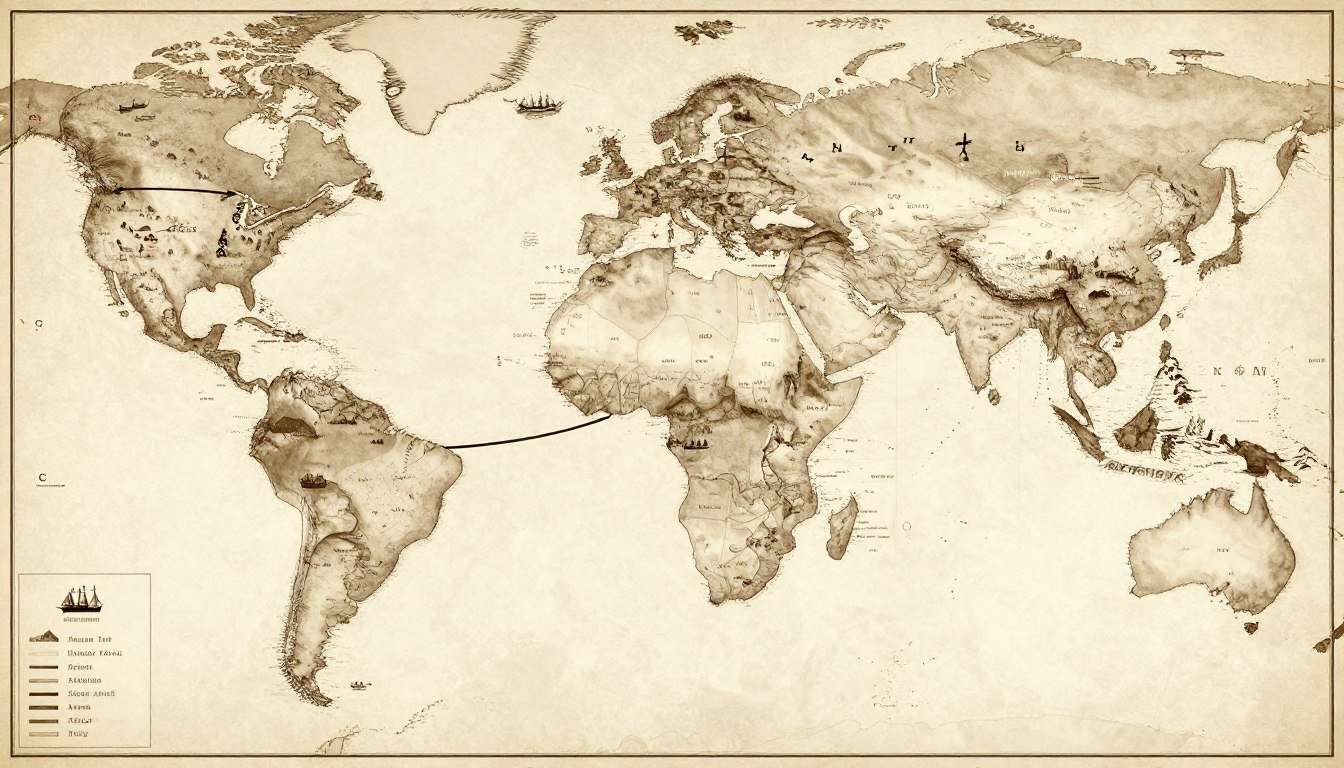
Origins and the Global African Diaspora
The African diaspora created global connections that would transform cultures worldwide
The story of Black history around the world begins with Africa—the cradle of humanity and home to sophisticated civilizations that thrived for millennia. From the Kingdom of Kush to Great Zimbabwe, from Mali to Songhai, these societies developed advanced systems of governance, trade networks, and cultural achievements long before European contact.
The forced displacement of millions of Africans through the transatlantic slave trade created what we now call the African diaspora—communities of African descent spread across the Americas, Europe, and beyond. This involuntary migration would forever change the cultural, economic, and social landscape of the world.
While the transatlantic slave trade is perhaps the most well-documented cause of this diaspora, other historical movements—including the East African slave trade to the Middle East and South Asia, as well as voluntary migrations in later centuries—have contributed to the global presence of Black communities today.
Deepen Your Understanding of the African Diaspora
Explore our comprehensive timeline of African diaspora movements and their global impact through an interactive digital resource.
Black History in the Americas: Beyond Borders
The Americas hold some of the most significant chapters in global Black history, with stories that extend far beyond the United States. From Canada to Argentina, Black communities have shaped national identities, fought for freedom, and created vibrant cultural traditions.
Caribbean Revolutions and Independence
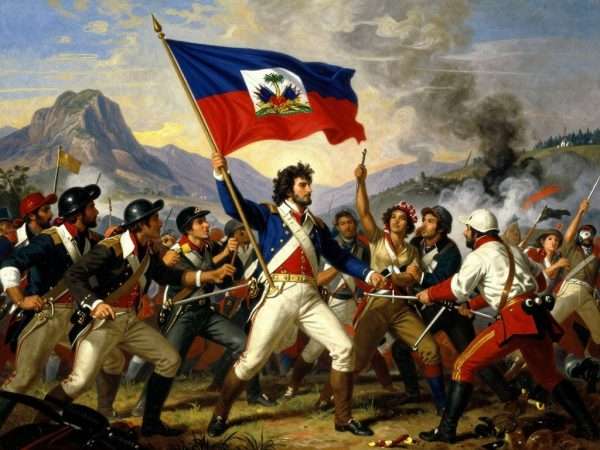
The Haitian Revolution (1791-1804) established the world’s first Black republic and inspired liberation movements globally
The Haitian Revolution stands as one of the most significant events in global Black history. Led by Toussaint Louverture and Jean-Jacques Dessalines, enslaved Africans overthrew French colonial rule and established the world’s first Black republic in 1804. This unprecedented revolution sent shockwaves through slave-holding societies and inspired liberation movements throughout the Americas.
In Jamaica, Maroon communities led by figures like Queen Nanny successfully resisted British colonial forces, establishing independent settlements in the mountains. Their guerrilla warfare tactics and preservation of African cultural practices created lasting legacies of resistance.
Latin American Black History
In countries like Brazil, Colombia, and Venezuela, Black communities have made profound contributions to national identity. Brazil, which received more enslaved Africans than any other country, has a rich Afro-Brazilian culture evident in music (samba, capoeira), religion (Candomblé), and social movements for racial equality.
Figures like Zumbi dos Palmares, who led the independent settlement of Quilombo dos Palmares in Brazil for almost a century, exemplify the long history of Black resistance in Latin America. In Colombia, San Basilio de Palenque—founded by escaped slaves in the 17th century—remains one of the oldest free African towns in the Americas.
North American Connections
While U.S. Black history is often well-documented, less attention is paid to Black communities in Canada, where the Underground Railroad led thousands to freedom. Cities like Nova Scotia and Ontario became important centers for Black Canadian culture and activism.
The interconnected nature of Black liberation movements across North America demonstrates how ideas, people, and resistance strategies crossed borders, creating a shared history of struggle and achievement.
Key Figures in Latin American Black History
- María Remedios del Valle – “Mother of Argentina”
- José Padilla – Puerto Rican composer
- Benedita da Silva – Brazilian politician
- Gaspar Yanga – Founded first free African town in Mexico
- Machado de Assis – Brazilian literary master
Caribbean Freedom Fighters
- Queen Nanny – Jamaican Maroon leader
- Bussa – Led Barbados slave rebellion
- Dutty Boukman – Haitian Revolution spiritual leader
- Carlota Lucumí – Cuban rebellion leader
- Cécile Fatiman – Vodou priestess in Haitian Revolution
Black Presence and Influence in Europe
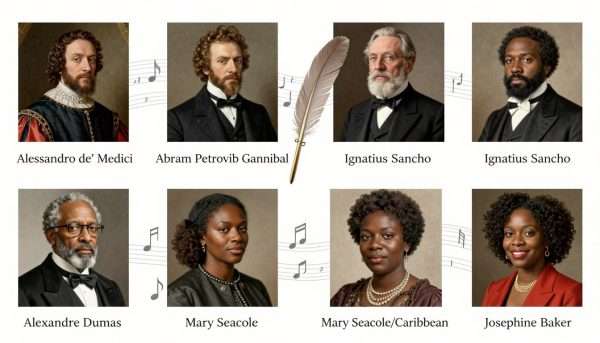
Black Europeans have shaped the continent’s history, arts, and politics for centuries
The Black presence in Europe dates back to ancient times, with African soldiers serving in the Roman army and North African scholars contributing to medieval European intellectual life. By the Renaissance, Black Europeans were documented in art, literature, and royal courts across the continent.
Britain’s Black History
In Britain, figures like Ignatius Sancho—the first known Black Briton to vote in a parliamentary election—and Olaudah Equiano, whose autobiography detailed his experiences in slavery and freedom, helped shape the abolitionist movement. The Black presence in Britain expanded significantly after World War II with migration from Caribbean colonies, leading to vibrant communities in cities like London and Bristol.
The Windrush Generation, who arrived from Caribbean countries between 1948 and 1971, made profound contributions to British society despite facing discrimination. Their struggles and achievements have become an essential part of modern British history.
Continental European Black History
France has a long and complex Black history, from the revolutionary general Thomas-Alexandre Dumas (father of the famous novelist) to the artistic contributions of Josephine Baker. The presence of African students and intellectuals in Paris during the early 20th century created a hub for pan-African thought and cultural exchange.
In countries like Germany, the Netherlands, and Portugal, Black communities have histories dating back centuries, often connected to colonial relationships. These histories are increasingly being recognized and studied as integral parts of European national identities.
Explore Black European Heritage Sites
Discover significant locations across Europe that tell the story of Black European history through our interactive map and travel guide.
African Resistance and Independence Movements
The story of modern Africa includes powerful narratives of resistance against colonialism and the fight for independence. These movements were led by visionary leaders who challenged European domination and asserted African dignity and self-determination.

African independence leaders transformed the continent and inspired global movements for self-determination
Anti-Colonial Struggles
From the Maji Maji Rebellion in Tanzania to the Mau Mau Uprising in Kenya, African resistance to colonial rule took many forms. These movements laid the groundwork for the independence era that would transform the continent in the mid-20th century.
Leaders like Kwame Nkrumah of Ghana, who led his country to become the first sub-Saharan African nation to gain independence in 1957, articulated visions of pan-Africanism that connected liberation struggles across the continent and throughout the diaspora.
Apartheid Resistance in South Africa
The struggle against apartheid in South Africa represents one of the most significant chapters in global Black history. Figures like Nelson Mandela, Winnie Madikizela-Mandela, and Steve Biko led a movement that combined internal resistance with international solidarity to dismantle a system of legalized racial segregation.
The anti-apartheid movement demonstrated the power of global Black solidarity, with activists around the world supporting South African freedom fighters through boycotts, divestment campaigns, and cultural initiatives.
Cultural Renaissance and Identity
Alongside political liberation, African nations experienced cultural renaissances that celebrated indigenous traditions while creating new expressions of national identity. Writers like Chinua Achebe and Wole Soyinka, musicians like Fela Kuti and Miriam Makeba, and filmmakers like Ousmane Sembène created works that asserted African perspectives and challenged colonial narratives.
These cultural movements were deeply connected to similar expressions throughout the diaspora, with ideas and influences flowing between Africa, the Americas, Europe, and beyond.
“For to be free is not merely to cast off one’s chains, but to live in a way that respects and enhances the freedom of others.”
Black History in Asia and the Pacific
The presence and influence of Black communities in Asia and the Pacific represent some of the less explored dimensions of global Black history. From ancient connections between East Africa and Asia to more recent migrations, these histories reveal the truly global nature of the African diaspora.
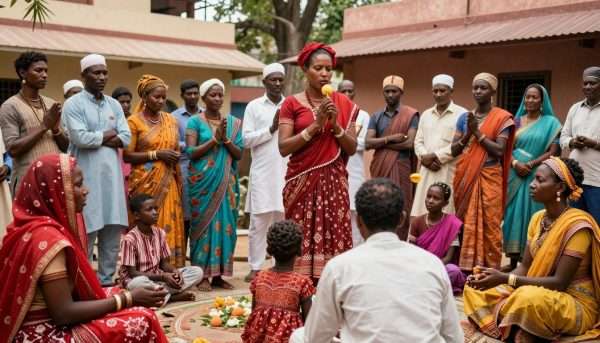
The Siddi community in India traces its origins to East Africa, with a history spanning many centuries
African Connections to Asia
The Siddi communities of India and Pakistan, descended from Africans who arrived as sailors, merchants, slaves, and soldiers, have maintained distinct cultural traditions while becoming integral parts of South Asian society. Some rose to positions of significant power, including the Siddi rulers of Janjira State who maintained independence for centuries.
In China, small communities of African descent have histories dating back to at least the Tang Dynasty. The most famous example is Zheng He, the Ming Dynasty admiral of partial African ancestry who led massive maritime expeditions throughout Asia and East Africa in the early 15th century.
Black Experience in the Pacific
In Australia, the history of African and Caribbean peoples includes both the experiences of those who arrived during colonial times and more recent migrations. Aboriginal Australians also formed connections with global Black movements, finding common cause in anti-racism and indigenous rights struggles.
Throughout the Pacific Islands, connections with the broader Black world have emerged through cultural exchange, political solidarity, and shared experiences of colonization and resistance.
How did African communities first establish themselves in Asia?
African communities in Asia were established through multiple pathways: trade networks across the Indian Ocean that connected East Africa with South and Southeast Asia; military service, with African soldiers serving in various Asian armies; forced migration through slave trades; and diplomatic missions. Some of these connections date back over a thousand years, creating longstanding African diasporic communities throughout the continent.
What cultural contributions have Black communities made in Asia?
Black communities in Asia have made significant contributions to music, dance, spiritual practices, cuisine, and language. The Siddi community in India, for example, maintains distinctive musical traditions with clear African influences. In Japan, the influence of African American music transformed the country’s cultural landscape in the post-WWII era. These cultural exchanges represent important chapters in global Black history that are often overlooked.
Global Cultural Impact of the African Diaspora
Perhaps the most visible aspect of Black history around the world is the profound cultural impact of the African diaspora. From music and dance to literature, cuisine, and spiritual practices, African-derived traditions have transformed global culture in countless ways.

African musical traditions have transformed global culture, creating new forms from jazz to reggae to hip-hop
Music and Performance
The global reach of Black musical traditions is extraordinary, with African rhythms and sensibilities influencing virtually every contemporary musical genre. Jazz, blues, rock, reggae, salsa, samba, and hip-hop all have roots in African musical traditions that were preserved and transformed throughout the diaspora.
These musical forms often served as vehicles for cultural resistance and identity formation. From the spirituals sung by enslaved people in the Americas to the freedom songs of South African anti-apartheid activists, music has been a powerful tool for expressing Black experiences and aspirations.
Literature and Intellectual Traditions
Black writers and intellectuals around the world have created powerful literary traditions that explore themes of identity, freedom, and belonging. The Harlem Renaissance in the United States, Négritude movement in Francophone regions, and Black Consciousness movement in South Africa represent just a few examples of literary and intellectual movements that have shaped global thought.
Figures like Aimé Césaire (Martinique), Léopold Sédar Senghor (Senegal), and C.L.R. James (Trinidad) developed ideas that transcended national boundaries and connected Black intellectual traditions across continents.
Spiritual and Religious Practices
African spiritual traditions have survived and evolved throughout the diaspora, creating syncretic religious practices like Vodou in Haiti, Santería in Cuba, Candomblé in Brazil, and various forms of African-influenced Christianity. These traditions have preserved important philosophical concepts and worldviews while adapting to new contexts.
The global spread of these spiritual practices represents one of the most significant ways that African cultural elements have been preserved and transformed throughout the diaspora.
Musical Innovations
- Jazz (United States)
- Reggae (Jamaica)
- Samba (Brazil)
- Highlife (Ghana/Nigeria)
- Afrobeat (Nigeria)
- Hip-hop (Global)
Literary Movements
- Harlem Renaissance (US)
- Négritude (Francophone)
- Black Arts Movement (US)
- Sophiatown Renaissance (South Africa)
- Caribbean Literary Movement
- Contemporary African Literature
Spiritual Traditions
- Vodou (Haiti)
- Santería (Cuba)
- Candomblé (Brazil)
- Obeah (Caribbean)
- African American Church Traditions
- Rastafarianism (Jamaica)
Explore Global Black Cultural Expressions
Discover the rich tapestry of Black cultural contributions worldwide through our curated collection of music, literature, and art resources.
Scientific and Intellectual Contributions
Black scientists, inventors, and scholars have made groundbreaking contributions to human knowledge across disciplines, often overcoming significant barriers to their participation in scientific and academic communities.

Black scientists and inventors have advanced human knowledge across numerous fields
Medical Breakthroughs
In medicine, figures like Dr. Charles Drew, whose research on blood plasma saved countless lives during World War II, and Dr. Mae Jemison, the first Black woman in space and a medical doctor, exemplify the contributions of Black scientists to global health and exploration.
In Africa, traditional medical knowledge has been preserved and developed by generations of healers, with some of these practices now being studied by modern pharmaceutical researchers for their potential applications.
Innovation and Invention
Black inventors have created technologies that transformed daily life, from Lewis Latimer’s improvements to the light bulb to Garrett Morgan’s traffic signal and gas mask. In agriculture, George Washington Carver’s research on crop rotation and plant-based products revolutionized farming practices in the American South.
Contemporary Black scientists continue this legacy of innovation across fields including computer science, biotechnology, and environmental science.
Academic and Philosophical Thought
Black scholars have developed influential theoretical frameworks that have transformed our understanding of society, culture, and history. From W.E.B. Du Bois’s pioneering sociological studies to the philosophical contributions of Frantz Fanon and the historical research of Cheikh Anta Diop, these intellectual traditions have challenged dominant narratives and expanded human knowledge.
Today, Black scholars around the world continue to make groundbreaking contributions across academic disciplines, from STEM fields to the humanities and social sciences.
“The function of education is to teach one to think intensively and to think critically. Intelligence plus character—that is the goal of true education.”
Contemporary Global Black Movements
The struggle for Black liberation and equality continues in the 21st century, with movements around the world building on historical foundations while addressing contemporary challenges. These movements increasingly recognize their interconnected nature, with solidarity across borders becoming a defining feature.
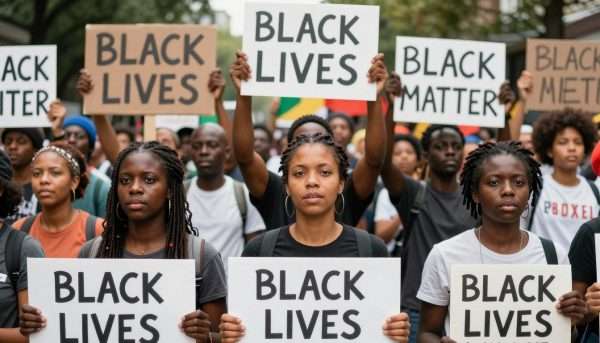
Contemporary Black movements connect struggles for justice across national boundaries
Global Black Lives Matter Movement
What began as a hashtag and movement in the United States has evolved into a global phenomenon, with Black Lives Matter protests occurring on six continents. These movements address not only police violence but broader issues of structural racism and inequality specific to each national context.
In countries like Brazil, France, and the United Kingdom, Black Lives Matter has connected with longstanding anti-racism movements, creating new coalitions and strategies for addressing racial injustice.
Digital Activism and Global Solidarity
Social media has transformed how Black movements organize and connect across borders. Hashtags like #BlackLivesMatter, #RhodesMustFall, and #EndSARS have created virtual spaces for sharing strategies, showing solidarity, and amplifying voices that might otherwise go unheard.
These digital connections build on a long history of international Black solidarity, from pan-Africanism to the anti-apartheid movement, while creating new possibilities for coordination and mutual support.
Cultural Reclamation and Celebration
Alongside political movements, there has been a global resurgence of interest in celebrating Black cultural heritage and reclaiming historical narratives. From the success of Afrobeats music worldwide to the growing recognition of Juneteenth and Emancipation Day celebrations, these cultural expressions affirm Black identity and history.
Museums, universities, and cultural institutions around the world are increasingly acknowledging and celebrating Black contributions, though much work remains to fully integrate these perspectives into mainstream historical narratives.
Stay Informed About Global Black Movements
Receive monthly updates on Black history, culture, and contemporary movements from around the world.
Educational Resources and Heritage Sites
For those seeking to deepen their understanding of Black history around the world, numerous museums, heritage sites, and educational resources provide opportunities for immersive learning experiences.
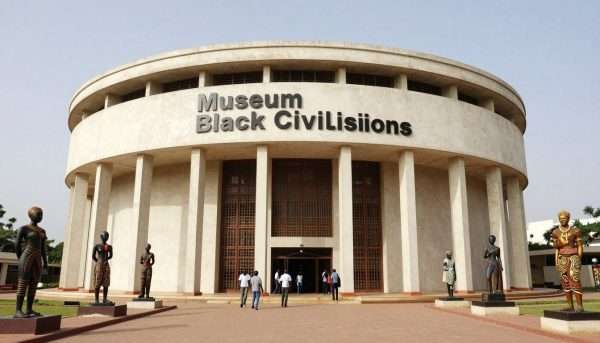
The Museum of Black Civilizations in Dakar, Senegal celebrates the contributions of Black cultures globally
Museums and Cultural Institutions
Museums dedicated to Black history have emerged around the world, from the National Museum of African American History and Culture in Washington, DC to the Museum of Black Civilizations in Dakar, Senegal. These institutions preserve artifacts, documents, and oral histories that tell the story of Black experiences across time and place.
Smaller museums and cultural centers in communities around the world also play vital roles in preserving local Black histories that might otherwise be forgotten.
Historic Sites and Heritage Tourism
From the slave castles of West Africa to maroon communities in the Caribbean, historic sites connected to Black history offer powerful opportunities for learning and reflection. Heritage tourism focused on these sites has grown significantly, allowing visitors to engage directly with the physical spaces where history unfolded.
Routes like the Civil Rights Trail in the United States and the Slave Route project designated by UNESCO connect multiple sites into cohesive educational experiences that reveal the complexity of Black history.
Digital Resources and Academic Programs
The digital revolution has democratized access to information about Black history, with online archives, virtual museum tours, and educational websites making resources available to global audiences. Academic programs in Black Studies, African American Studies, and African Diaspora Studies have expanded at universities worldwide, producing new research and training future scholars.
Community-based educational initiatives also play crucial roles in preserving and teaching Black history, often focusing on local stories and traditions that connect to broader global narratives.
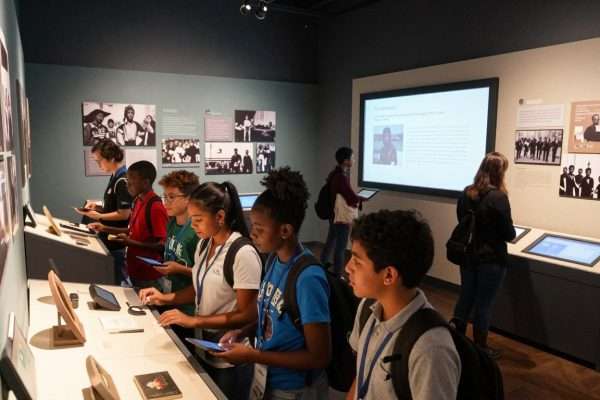
Interactive educational experiences help new generations connect with global Black history
Notable Black History Museums
- National Museum of African American History and Culture (USA)
- Museum of Black Civilizations (Senegal)
- Black Cultural Archives (UK)
- Slave Lodge Museum (South Africa)
- International Slavery Museum (UK)
- Studio Museum in Harlem (USA)
Significant Heritage Sites
- Elmina Castle (Ghana)
- Gorée Island (Senegal)
- Nelson Mandela’s Robben Island Cell (South Africa)
- Citadelle Laferrière (Haiti)
- Maroon Town (Jamaica)
- Underground Railroad sites (USA/Canada)
Future Perspectives on Global Black History
As our understanding of Black history around the world continues to evolve, new perspectives and approaches are emerging that promise to deepen our appreciation of this rich global heritage.

Digital preservation and collaborative research are transforming how we document and share Black history
Decolonizing Historical Narratives
Scholars and activists are increasingly working to decolonize historical narratives, centering Black perspectives and challenging Eurocentric interpretations of global history. This approach recognizes the agency and contributions of Black communities rather than defining their history primarily through oppression.
These efforts include recovering overlooked histories, translating sources from African and diaspora languages, and developing new methodologies that better capture oral traditions and non-written forms of historical knowledge.
Connecting Local and Global Stories
The future of Black history scholarship lies in better connecting local experiences to global patterns, recognizing both the shared aspects of Black experiences worldwide and the specific contexts that shaped different communities. This approach reveals how seemingly isolated events were often part of larger transnational movements and exchanges.
Digital tools and collaborative research networks are making these connections more visible, allowing scholars and community historians to share information across borders and disciplines.
Preserving Living History
As elder generations pass on, there is an urgent need to preserve their memories and knowledge. Oral history projects, community archives, and digital preservation efforts are working to ensure that these perspectives are not lost to future generations.
These preservation efforts extend beyond text to include music, dance, culinary traditions, and other cultural practices that embody historical knowledge and collective memory.
“History, despite its wrenching pain, cannot be unlived, but if faced with courage, need not be lived again.”
Embracing the Global Legacy of Black History
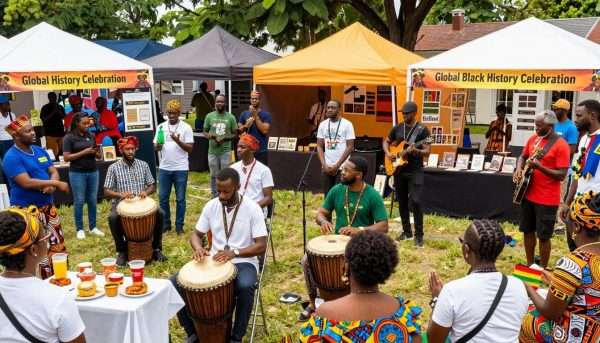
The celebration of Black history brings communities together across cultural and national boundaries
Black history around the world is not a separate narrative but an integral part of human history. The experiences, contributions, and resilience of Black communities across continents have shaped our shared global heritage in profound and lasting ways. From ancient African civilizations to contemporary movements for justice, this history continues to unfold and inform our present.
By embracing a truly global perspective on Black history, we gain a more complete understanding of our interconnected past and present. The cultural exchanges, intellectual contributions, and liberation struggles that characterize Black history around the world offer valuable lessons about human creativity, resilience, and the ongoing quest for dignity and freedom.
As we continue to uncover, preserve, and share these histories, we create opportunities for greater cross-cultural understanding and appreciation of our diverse yet interconnected world. The story of Black history around the world is still being written, with each generation adding new chapters to this remarkable global legacy.
Continue Your Journey Through Global Black History
Explore our comprehensive reading list featuring the best books on Black history from around the world, curated by leading scholars and educators.












Leave A Comment